
Unlocking Potential: The Role of Tow Trucks in Parking Garages
As local businesses strive to maintain a competitive edge, understanding the nuances of parking solutions becomes increasingly crucial. Parking garages serve as essential infrastructures, especially in bustling commercial areas where space is at a premium. But what happens when a vehicle needs to be towed? This brings us to the importance of tow trucks in parking garages-an intersection that can significantly affect both a business’s operational efficiency and its customer satisfaction.
The ability of a tow truck to fit into a parking garage is not just a technical consideration; it’s a vital aspect that can impact a myriad of factors, from emergency response capabilities to day-to-day operations. For local auto repair shops, car dealerships, property managers, and resort operators, understanding tow truck dimensions helps optimize parking space and ensure that assistance is readily available when needed. Likewise, for commercial fleet operators, the efficiency of managing vehicle spaces can be a pivotal factor in maintaining seamless service delivery.
This article aims to demystify the relationship between tow trucks and parking garages while providing insights that are tailored for industry professionals. Whether you’re managing a fleet, operating a car dealership, or coordinating parking for guests at a resort, this guide offers valuable information to enhance your operational strategies. Join us as we delve into the specifics of how tow trucks can effectively navigate parking garages and what this means for your business.
Common Tow Truck Dimensions: What to Consider for Parking Garages
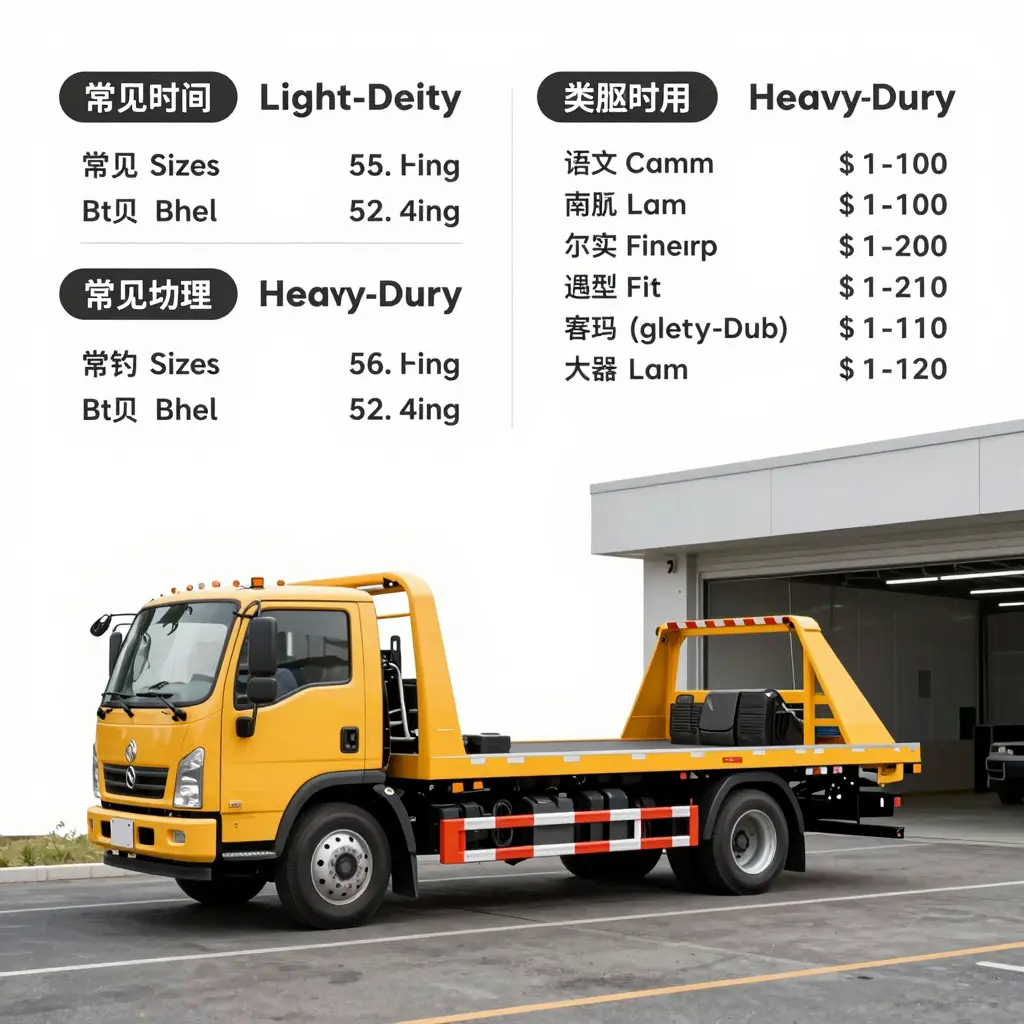
When it comes to fitting tow trucks into parking garages, understanding the specifications and dimensions of both light-duty and heavy-duty trucks is crucial. Here’s a detailed look at what these dimensions usually entail, which also relates to broader tow truck specifications and parking garage size requirements.
Light-Duty Tow Trucks
- Weight Capacity: Generally between 8,500 lbs and 10,000 lbs.
- Dimensions: Typical length ranges from 19 to 24 feet, with a width of around 7 to 8 feet.
- Height: Common heights are about 8.5 feet, which can fit into standard parking garage heights.
- Applications: Used for personal vehicles, motorcycles, and lighter commercial vehicles, making them ideal for urban environments.
- Examples of Models: Ford F-350, Chevrolet Silverado 3500.
- Links for more: Understanding the Difference Between Light-, Heavy-Duty Towing
Heavy-Duty Tow Trucks
- Weight Capacity: Exceeds 26,000 lbs, capable of towing large vehicles like buses, trucks, and RVs.
- Dimensions: Length generally ranges from 25 to 30 feet, with a width between 8.5 to 9 feet.
- Height: Typically around 10-12 feet, which poses challenges for fitting into parking garages with standard clearances.
- Applications: Specialized for heavy-load transportation and recovery, essential for commercial operations.
- Examples of Models: Freightliner M2, International Durastar.
- Links for more: Heavy-Duty vs. Light-Duty Towing: Which Is Right for You?
Parking Garage Requirements
- Standard Parking Dimensions: A parking stall is often 8.5 feet wide, while accessible parking spaces must be at least 8 feet wide.
- Height Restrictions: Parking garages generally have clear heights ranging from 10.5 to 12.5 feet, impacting the ability of heavier tow trucks to enter.
- Maneuverability: Adequate space is necessary for trucks to maneuver into and out of parking spots safely, stressing the importance of parking bay width designs for accommodating larger vehicles.
- Links for more: What are some typical standards for parking garage functional design?
Conclusion
Understanding tow truck specifications and how they relate to parking garage sizing is essential for property managers, auto repair shops, and fleet operators. Proper planning can prevent inconveniences and ensure that the right vehicles are parked safely and effectively.
Comparing Parking Garage Clearance Heights
Understanding the average clearance heights of different types of parking garages is essential for ensuring that standard tow trucks can navigate and operate effectively within confined spaces. Below is a comparison table highlighting the average clearance heights for residential, commercial, and resort parking garages alongside standard tow truck heights.
| Type of Garage | Average Clearance Height |
|---|---|
| Residential Garage | 7 ft |
| Commercial Garage | 7 ft |
| Resort Garage | 8 ft 2 in |
| Standard Tow Truck | 8 ft 10 in (2.7 to 3.5 m) |
| Standard Usage Height | 8 ft 4 in |
Insights on Tow Truck Compatibility
Given the data, standard tow trucks often exceed the height limits of most parking garages, particularly residential and commercial types that typically offer a maximum clearance of 7 to 8 feet. This raises the question of whether tow trucks can conveniently access these areas without restrictions.
Specialized low-clearance tow trucks are available that fit better within these types of garages, allowing for efficient service without compromising safety. For property managers and operators, understanding these clearance heights can be vital for planning and emergency preparedness in confined spaces.
For more information on ensuring safe towing practices, check out our guide on emergency preparedness for island fleets.
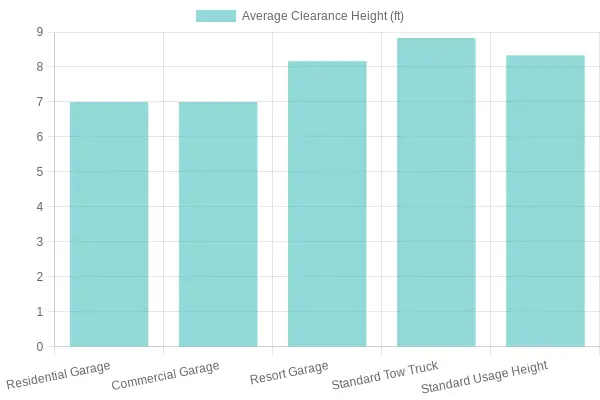
This chart illustrates the average clearance heights for various garage types, assisting in planning for tow truck operations in confined spaces.
In urban areas, local towing regulations play a critical role in determining where tow trucks can park and the operational practices of towing companies. These regulations are established to maintain order, enhance public safety, and ensure an orderly parking environment. Property managers, commercial fleet operators, and local auto repair shops must navigate these regulations carefully to avoid unnecessary fines and operational disruptions.
Understanding Local Towing Regulations
Towing ordinances vary by city, often setting guidelines on aspects such as maximum towing fees, notification periods for vehicle owners, and specific parking restrictions. For example, in San Francisco, the maximum towing fee can reach $500, with a required notification period of ten days before a vehicle is considered abandoned. This compliance is essential for towing companies to avoid legal repercussions and maintain community trust.
Property managers must stay abreast of these regulations to ensure that they do not inadvertently facilitate illegal towing practices. Many cities enforce strict parking restrictions to prevent unauthorized vehicles from occupying valuable spaces. For instance, in cities like Chicago and Los Angeles, specific hours are designated during which parking is prohibited, usually for street cleaning or construction work. Tow truck operators must be strategic in their parking locations during these hours to remain compliant and efficient.
Implications for Property Managers and Commercial Fleets
For property managers, understanding local towing laws can be a considerable asset. Ensuring that residents and visitors are informed about these regulations can prevent conflicts and enhance tenant satisfaction. Creating clear signage about parking rules and towing policies can mitigate misunderstandings and reduce the likelihood of unauthorized parking, which in turn supports local towing operations.
Commercial fleet operators also face unique challenges when navigating these regulations. With an increasing emphasis on environmental sustainability and responsible public use of parking spaces, fleets that operate in urban areas must create strategies to comply. Implementing a robust emergency preparedness plan can ensure that fleet vehicles are dispatched only when necessary and parked legally. For more in-depth emergency strategies, consider reviewing our guide on fleet emergency response strategies.
Real-World Examples of Towing Regulations
The chart below illustrates maximum towing fees and notification periods in select U.S. cities:
| City | Maximum Towing Fee | Notification Period (days) | Parking Restrictions |
|---|---|---|---|
| San Francisco | $500 | 10 | No parking in tow zones |
| New York | $185 | 5 | Alternate side parking rules |
| Los Angeles | $400 | 10 | Restricted hours on streets |
| Chicago | $200 | 7 | No parking during street cleaning |
| Houston | $250 | 5 | Pay attention to signage |
These regulations underscore the importance of understanding local laws to avoid fines and maintain safe, efficient operations in urban environments.
By embracing a cooperative approach to towing regulations, property managers, fleet operators, and service shops can work together to create a well-managed parking environment that benefits all residents and visitors. For more on effective operational practices, consider checking our article on emergency preparedness for island fleets.
In conclusion, remaining vigilant about local regulations not only helps businesses comply but also fosters a sense of community accountability and trust in shared urban spaces.
“Parking garages often present unique challenges for tow operators, including tight turns and height restrictions that necessitate specialized equipment. Without proper tools and techniques, maneuvering can become a significant ordeal.” – Arndt’s Towing and Recovery
Truck Sizes vs Garage Dimensions
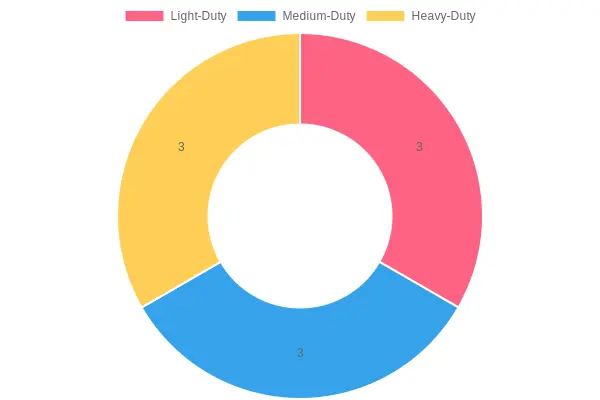
Understanding whether tow trucks can fit into parking garages is crucial for auto repair shops, car dealerships, and property managers. The following chart illustrates the relationship between different truck sizes and standard garage dimensions. This guide helps ensure that essential vehicles can be parked safely and conveniently in various garage settings.
| Truck Type | Dimensions (Length x Width x Height) | Standard Garage Dimensions (Single-car / Double-car / Commercial) |
|---|---|---|
| Light-Duty | 20-22 feet x 8 feet x 8.5 feet | Single-car: 12×20 feet / Double-car: 20×20 feet / Commercial: 24×40 feet |
| Medium-Duty | 22-26 feet x 8.5 feet x 10 feet | Single-car: 12×20 feet / Double-car: 20×20 feet / Commercial: 24×40 feet |
| Heavy-Duty | 26-30 feet x 8.5 feet x 10-12 feet | Single-car: 12×20 feet / Double-car: 20×20 feet / Commercial: 24×40 feet |
Impact on Local Businesses: The Role of Tow Trucks
The ability-or inability-of tow trucks to access parking garages significantly impacts local businesses, especially auto repair shops and car dealerships. Much like the pulse of a community, these businesses thrive on maintaining smooth operations and providing customer convenience. When a car is stranded or has been involved in an accident, swift towing services become paramount. However, towering structures like parking garages often pose a challenge for larger tow trucks, limiting their ability to perform essential services.
Importance of Towing Services
Towing services serve as a lifeline for businesses reliant on customer traffic. Auto repair shops often depend on timely vehicle transportation to and from their locations. If tow trucks cannot fit into a parking garage, this can lead to delays in service, leaving customers frustrated. A happy customer not only returns but also spreads positive word-of-mouth, an essential aspect of local business growth. In one insightful article, the partnership between towing companies and local businesses highlighted how seamless operations could translate to reduced stress for customers and increased business opportunities for repair shops and car dealerships (learn more about local business partnerships).
Moreover, for car dealerships, the inability to tow vehicles from tight parking spots could lead to safety hazards, fines, or worse-a negative reputation. A well-coordinated towing operation can facilitate the movement of cars that need service or are simply blocking key areas, ensuring that the flow of business remains uninterrupted.
Community Importance
The relationships that towing services forge within the community are invaluable. They are not just about moving vehicles but also about fostering trust and collaboration between different entities. Effective towing ensures that roads remain clear and safe, thus enhancing the overall efficiency of local traffic management. Towing companies can also provide emergency assistance, which is paramount in keeping vehicles operational and reducing burnout for businesses, particularly in high-traffic metropolitan environments.
As auto repair shops and dealerships look toward community growth, integrating reliable towing services into their operational framework becomes essential. It’s clear that efficient towing solutions not only serve a functional role but are integral in cultivating community relations and supporting the local economy.
Through thoughtful partnerships and a clear understanding of each other’s challenges, both local auto shops and towing services can create an environment that benefits everyone involved. The operational efficiency brought by proper towing practices symbolizes a larger commitment to the community and underscores the essential role towing plays in the day-to-day functions of local businesses.
Lastly, understanding and addressing the complexities around tow truck sizes in relation to parking garages could pave the way for innovative solutions that enhance service delivery and improve customer relations, thus ensuring businesses keep thriving.
Conclusion
Understanding whether tow trucks can fit in parking garages is paramount for efficient operations within urban settings. With the challenges of varying garage dimensions, it’s clear that not all tow trucks are created equal. Compact wheel-lift and hook-and-chain models tend to have better chances of maneuvering through low-clearance environments, while larger flatbeds often fall short due to height restrictions. With many parking facilities having limited space, operators must consider the specifications of both their trucks and the garage to avoid costly damages and service delays. Embracing the right towing strategies and using specialized equipment can certainly enhance efficiency and safety when navigating these confined spaces.
For property managers, auto repair shops, and commercial fleet operators, understanding these challenges is essential. At The Island Tow Truck, we pride ourselves on our ability to address these needs head-on. Our team is equipped to handle unique towing situations, ensuring that your vehicles are safely moved without hassle.
If you’re interested in optimizing your emergency response strategies, don’t hesitate to learn more about essential fleet emergency response strategies. For all your motorcycle and towing needs, reach out to Summit Fairings today. With our expertise, we’ll help you navigate the complexities of motorcycle care and vehicle recovery with ease! Get in touch for tailored solutions and expert advice to handle your unique towing and vehicle maintenance needs.
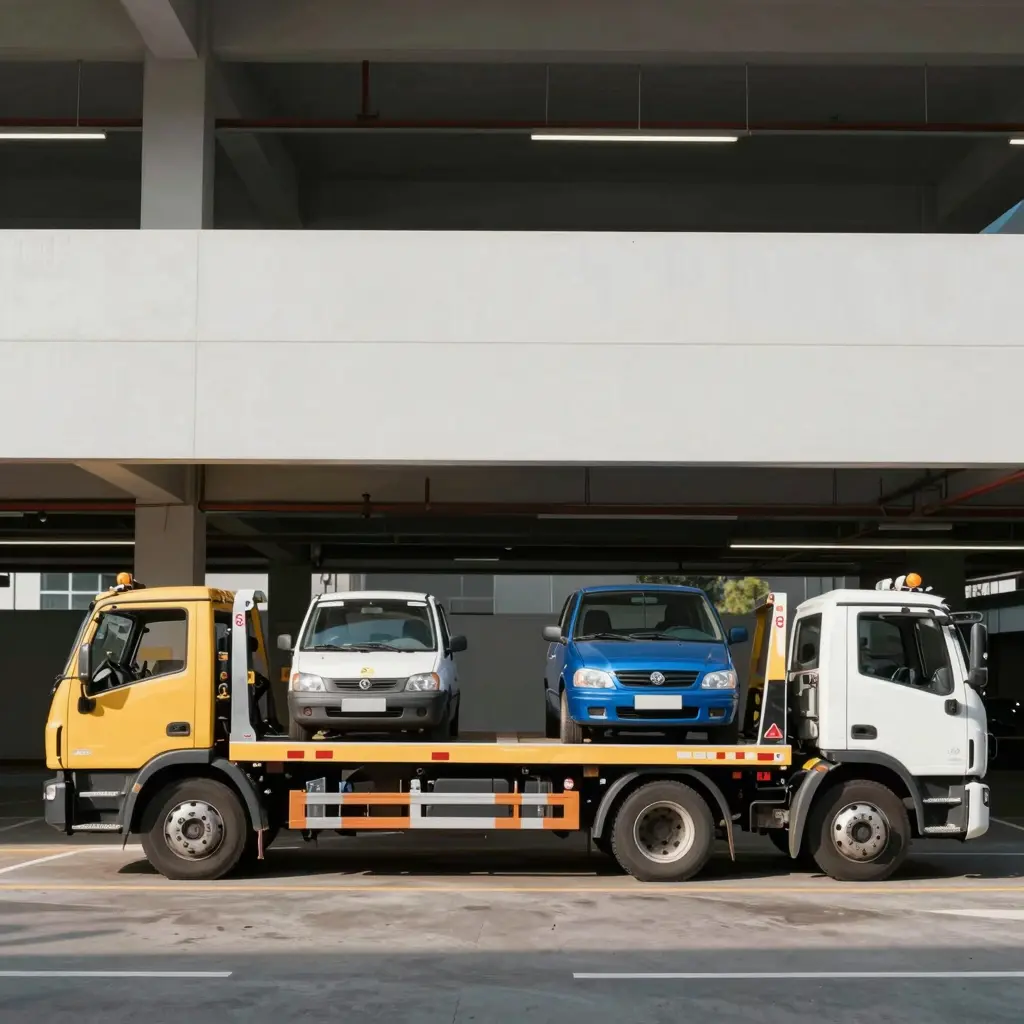
Image Description: A visual representation of various types of tow trucks alongside a parking garage, showing height restrictions and fit challenges.
FAQs on Tow Trucks and Parking Garage Compatibility
When it comes to tow trucks and their compatibility with parking garages, numerous questions arise. The complexity of tow trucks, combined with parking regulations and garage dimensions, often leaves property managers and auto businesses wondering about feasibility. Here are some frequently asked questions to address these common concerns:
1. Can all types of tow trucks fit in parking garages?
No, not all tow trucks can fit in parking garages due to height and width restrictions. For instance, heavy-duty tow trucks often exceed height limits of standard garages, which typically range from 6.5 to 8 feet in clearance.
2. What is the minimum height clearance needed for different types of tow trucks?
The height requirements vary by truck type:
- Flatbed Tow Truck: Typically requires a minimum of 6.5 feet.
- Wheel Lift Tow Truck: Can fit in garages with as low as 5 feet clearance.
- Low-Profile Tow Truck: Similar to wheel lift, generally needs about 6.5 feet.
- Medium-Duty Tow Truck: Clearance often needed around 7 feet.
- Heavy-Duty Tow Truck: Generally requires heights of over 8 feet. See the full comparison here.
3. What challenges do tow trucks face when entering tight garages?
In tight garages, tow trucks face obstacles such as low ceilings, narrow entrances, and tight turns. These challenges can complicate the towing process, especially if a vehicle must be towed from an underground garage. Learn more about towing services.
4. Are low-profile trucks a reliable solution for garage towing?
Yes, low-profile tow trucks are specifically designed to maneuver in tighter spaces and lower-clearance situations. This makes them suitable for residential complexes and urban areas with difficult parking conditions.
5. What should property managers consider for tow truck parking functionality?
Property managers should evaluate the type of tow trucks that will frequently operate in their area. This includes assessing the dimensions of the garage, understanding the types of vehicles to be towed, and ensuring that any towing service is equipped with the proper truck models for potential garage entry issues.
By answering these questions, we hope to clarify common concerns regarding tow truck compatibility with parking garages and offer insights into effective towing strategies that ensure smooth operations for both property managers and towing services.