
Introduction
As a truck owner or operator in our idyllic island community, navigating the challenges of towing capacity can feel overwhelming. Whether you’re ferrying heavy equipment for local construction projects or hauling your beloved boat for a weekend getaway, understanding your truck’s towing capabilities is crucial. The question on every islander’s mind is often, “Can my truck tow it?” This is where the can my truck tow it calculator becomes an indispensable tool.
Many of us rely on our trucks not just as vehicles, but as essential partners in our daily lives and businesses. Each of us has faced that moment of uncertainty at some point, especially when considering the weight of trailers, boats, or equipment. This experience is compounded by the unique geographical challenges we encounter on our island, where limited resources make accurate towing assessment a must.
Auto repair shops and fleet operators in our community understand this struggle firsthand. They see the demand for reliability and performance, and that’s why the right tools and knowledge matter. Embracing technologies like towing calculators enhances safety and efficiency, fostering an informed approach to towing dynamics. Trust us; understanding your vehicle’s capabilities is the first step toward a safe and satisfying towing experience.
For those who want to deepen their understanding of this critical topic, consider viewing our resources on emergency preparedness for island fleets or explore strategies for essential fleet emergency responses.
Common Towing Mistakes Made by Truck Owners
Evaluating a truck’s towing capacity is essential for safe and effective towing. However, many truck owners fall into common traps that can jeopardize safety, performance, and compliance. Below is a list of common towing mistakes made by truck owners along with practical tips for avoiding these errors:
-
Ignoring the Manufacturer’s Specifications
Many truck owners rely on intuition or general knowledge rather than the official towing capacity provided in the owner’s manual. Always check the manufacturer’s guidelines to determine the truck’s Gross Combined Vehicle Weight Rating (GCVWR) before towing. -
Underestimating Total Weight
It’s easy to underestimate the weight of both the trailer and its cargo. Be sure to weigh each component and remember to include the weight of any passengers and equipment in the truck. Use certified scales to weigh your setup accurately. -
Using an Incompatible Hitch
A common mistake is employing a hitch that’s not compatible with the truck’s towing capacity. Always use a hitch rated for at least the maximum weight of the trailer to prevent failures. This means verifying the specifications from professional sources like the TruckTough capacity guide. -
Neglecting Load Distribution
Failure to distribute weight evenly can lead to unstable towing, which affects steering and braking. Ensure that 10-15% of the trailer’s weight is placed on the trailer’s tongue for optimal load distribution and stability during towing. -
Not Accounting for Road Conditions
Many truck owners overlook the impact of road conditions on towing. Uphill climbs and rough terrains require more power, while downhill slopes can affect your ability to brake. Adapting your driving techniques to these conditions is critical for safe towing. For practical advice, consider reading the NHTSA’s towing safety regulations. -
Neglecting to Prepare the Truck
Failing to check the truck’s maintenance status can lead to several problems. Before towing, inspect tires, brakes, and the cooling system to ensure everything is functioning properly. -
Forgetting about Insurance Coverage
Some truck owners might forget to update their insurance coverage to include towing. Consult with your insurance provider to ensure that your policies cover towing activities.
By avoiding these common mistakes, truck owners can promote safer towing practices and enhance the lifespan of their vehicles. Always prioritize safety with thorough assessments before hitting the road with a trailer. If you’re looking for more insights on emergency preparedness for towing, check out our post on emergency preparedness for island fleets.

This image showcases a range of truck models, each demonstrating their towing capabilities with different items such as trailers and construction materials against a picturesque island backdrop. It’s a great visual representation for readers interested in the ‘Can My Truck Tow It’ calculator, illustrating the versatility and utility of trucks in various scenarios, especially for local audiences in need of reliable towing solutions.
Understanding Towing Capacity in Truck Specifications
When assessing whether a truck can tow an object safely and efficiently, understanding the towing capacity is crucial. This specification varies widely among manufacturers and models, influencing the choice for various applications, from personal use to commercial operations. This guide provides an overview of towing capacities from notable truck manufacturers, helping potential buyers leverage our ‘can my truck tow it’ calculator effectively.
1. Popular Truck Models and Their Towing Capacities
Towing capacity can dramatically differ depending on the truck’s configuration. Here’s a comparative look at several popular truck models:
| Model | Manufacturer | Year | Engine Type | Horsepower (HP) | Torque (Nm) | Towing Capacity (kg) |
|---|---|---|---|---|---|---|
| Toyota Hilux | Toyota | 2023 | 2.8L Diesel | 204 | 500 | 3,500 |
| Great Wall Poer | Great Wall | 2023 | Electric | 354 | 800 | 3,500 |
| 解放J7 | 一汽解放 | 2023 | 15L Diesel | 660 | 3,200 | 40,000+ |
| 江淮K7 | 江淮重卡 | 2023 | 14.5L Diesel | 660 | 3,200 | 35,000+ |
| 福田火星7 2023款 精英型 | 福田汽车 | 2023 | 2.0L Diesel | 163 | 380 | 2,000 |
Note: Towing capacities can be influenced by the truck’s configuration, such as axle ratios, transmission type, and whether it’s a single cab or crew cab configuration.
2. Relevance to the ‘Can My Truck Tow It’ Calculator
For commercial fleet operators, property managers, and auto repair shops, understanding these specifications is more than just technical knowledge-it’s essential for efficient and safe operations:
- Application-Specific Choices: Different models cater to different needs. For example, if you require substantial towing power for heavy loads, trucks like the 解放J7 or the Great Wall Poer may be ideal due to their extraordinary towing capacities.
- Safety and Legal Compliance: Adhering to towing capacity limits ensures you avoid potential accidents and legal issues. This is particularly crucial for businesses that rely on fleet vehicles for transportation and logistics.
- Improving Towing Efficiency: Matching your towing tasks with the right vehicle enhances fuel efficiency and ensures the longevity of both the truck and the towed item.
3. Conclusion
The towing capacity of trucks varies significantly by manufacturer and model. It’s imperative to consult truck specifications before engaging in towing tasks, as the right knowledge can save time, expenses, and increase safety. For more insights on operational safety practices and emergency preparedness in fleet management, learn more about emergency preparedness for island fleets or check out our guide on essential fleet emergency response strategies.
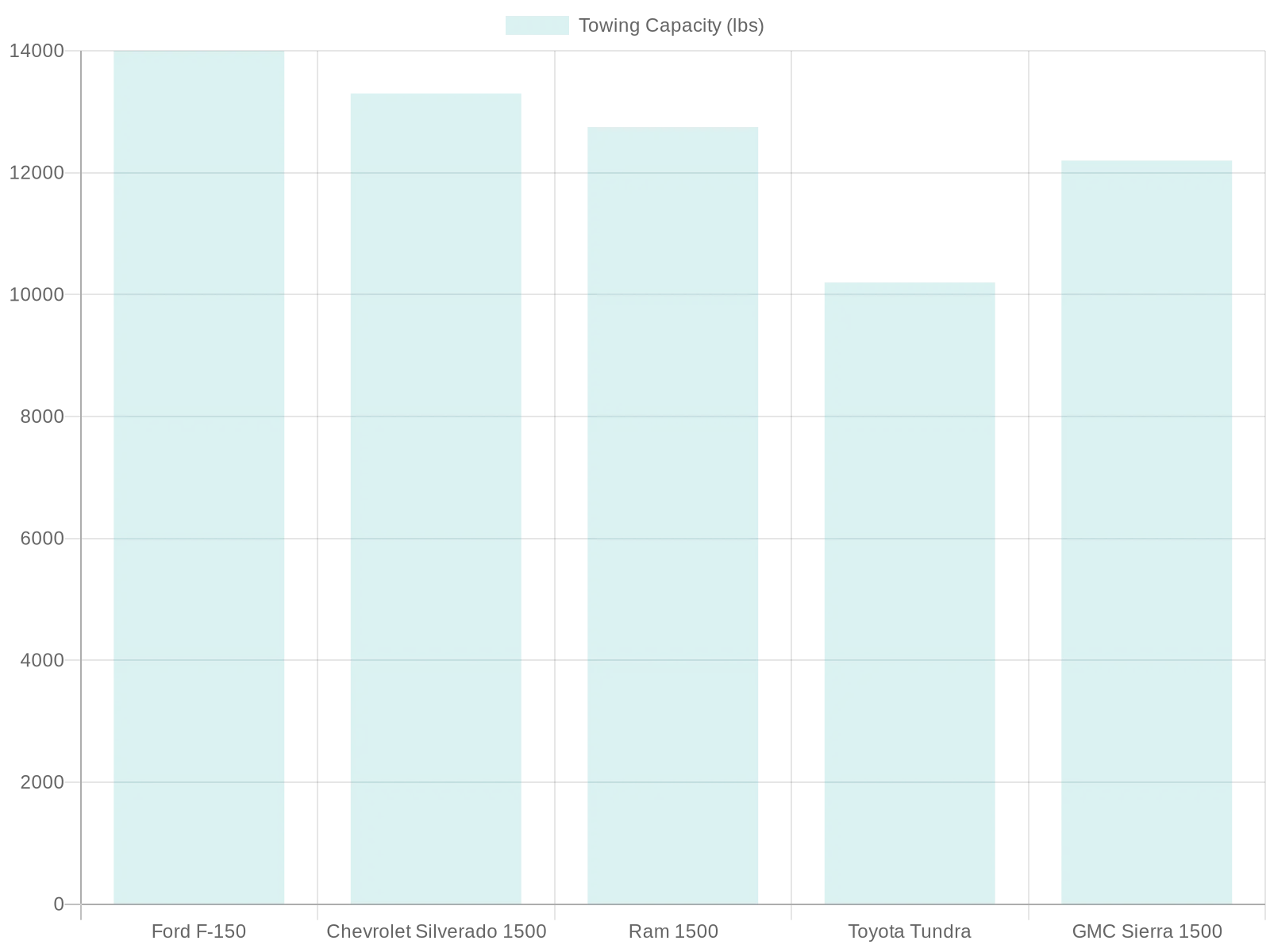
| Truck Model | Towing Capacity (lbs) | Common Uses |
|---|---|---|
| Ford F-150 | 14,000 | Recreational towing, utility tasks |
| Chevrolet Silverado 1500 | 13,300 | Trailers, boats |
| Ram 1500 | 12,750 | Light-duty towing, camping |
| Toyota Tundra | 10,200 | Off-road trailers, heavy-duty recreational use |
| GMC Sierra 1500 | 12,200 | Work trailers, boats |
Sources: Ford Motor Company, General Motors (Chevrolet & GMC), Stellantis (Ram), Toyota Motor Corporation – official vehicle specifications as of 2026.
Enhance Your Towing with Essential Accessories
When it comes to towing, relying solely on your truck’s capacity isn’t enough. This is where additional towing accessories play a vital role in ensuring both safety and performance. The right equipment can make a significant difference in your towing experience.
Hitches: The Backbone of Towing
Hitches are crucial for establishing a proper connection between your truck and the trailer. A correctly rated hitch ensures a secure link, reducing the risk of trailer detachment while on the road. Not only does a well-chosen hitch enhance safety, but it also contributes to better handling and towing performance.
- Class Ratings: Towing hitches come with various class ratings, from Class I (up to 2,000 lbs) to Class V (exceeding 18,000 lbs). Choosing the right class for your towing needs can prevent mechanical failures and accidents.
- Weight Distribution Hitches: For larger loads, weight distribution hitches can help distribute the trailer’s weight across the truck, which enhances stability and braking efficiency. This is crucial when navigating hilly terrains typical on our island roads.
Trailer Brakes: A Critical Safety Component
Trailer brakes are essential for maintaining control, especially when transporting heavier loads. According to a comprehensive study by SAE International, using brakes on trailers can reduce stopping distances by up to 40%. This is a game-changer for safety, particularly on steep grades seen on many island routes.
- Reduce Stopping Distance: The addition of brake systems enhances your truck’s braking capability, reducing wear on the vehicle’s brakes and increasing stopping power.
- Legal Compliance: Many jurisdictions require trailers over a specific weight to have brake systems. Failing to comply can lead to legal penalties and unsafe driving conditions.
Harnesses and Integrated Systems
Modern towing systems often include integrated wiring harnesses that simplify the connection between the trailer lights and the truck’s electrical system. This allows for better visibility and signaling on the road, which is vital for safety.
- Integrated Brake Controllers: Some advanced systems come equipped with brake controllers that automatically engage trailer brakes when the truck brakes are applied. This feature is especially beneficial for maintaining control during sudden stops.
By investing in reliable towing accessories, truck owners can enhance their vehicle’s towing capabilities, ensuring safer and more efficient transport. This is especially significant for our local auto repair shops and commercial fleet operators who regularly manage heavy loads across varied terrains. Learn more about essential fleet emergency response strategies to ensure your operations run smoothly.
Evolution of Towing Capacities in Trucks Over the Last Decade
The towing capabilities of trucks have significantly evolved in the last decade, reflecting advancements in engineering and technology. Below is a line chart that captures the progress of average towing capacities for three popular truck models:
- Ford F-150
- Chevrolet Silverado 1500
- RAM 1500
Average Towing Capacity (2016-2026)
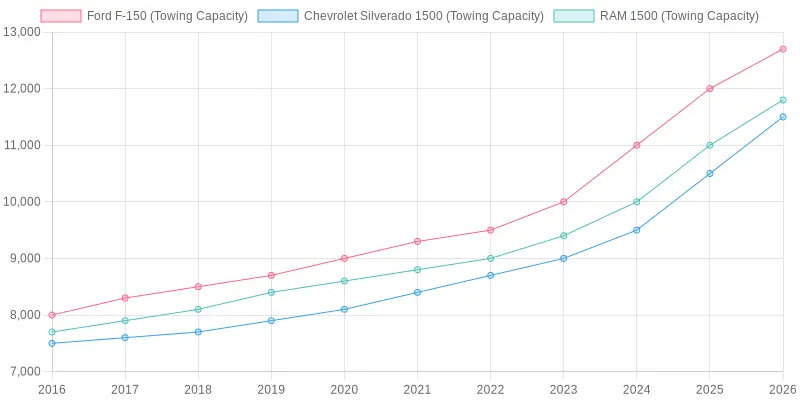
Figure: This chart illustrates the progression of average towing capacities in popular truck models from 2016 to 2026.
| Year | Ford F-150 (Average Towing Capacity) | Chevrolet Silverado 1500 (Average Towing Capacity) | RAM 1500 (Average Towing Capacity) |
|---|---|---|---|
| 2016 | 8,000 lbs | 7,500 lbs | 7,700 lbs |
| 2017 | 8,300 lbs | 7,600 lbs | 7,900 lbs |
| 2018 | 8,500 lbs | 7,700 lbs | 8,100 lbs |
| 2019 | 8,700 lbs | 7,900 lbs | 8,400 lbs |
| 2020 | 9,000 lbs | 8,100 lbs | 8,600 lbs |
| 2021 | 9,300 lbs | 8,400 lbs | 8,800 lbs |
| 2022 | 9,500 lbs | 8,700 lbs | 9,000 lbs |
| 2023 | 10,000 lbs | 9,000 lbs | 9,400 lbs |
| 2024 | 11,000 lbs | 9,500 lbs | 10,000 lbs |
| 2025 | 12,000 lbs | 10,500 lbs | 11,000 lbs |
| 2026 | 12,700 lbs | 11,500 lbs | 11,800 lbs |
Key Features of Progression
- 2016-2019: Gradual increase in towing capacity, improving mainly from slight refinements in engine performance and weight optimization.
- 2020-2022: Significant advancements in hybrid technology particularly reflected in the Ford F-150 PowerBoost Hybrid, showcasing a peak capacity of 12,700 lbs by 2026.
- 2023-2026: The introduction of advanced towing technologies and materials has enabled trucks to accommodate higher capacities while ensuring safety and efficiency.
This chart and data provide an insightful look into how far towing technology has come, allowing commercial fleet operators and property managers to make informed decisions regarding vehicle purchases and upgrades. To ensure a safe operation, you might also find value in essential fleet emergency response strategies as you plan for towing needs.
User Testimonials About Towing Experiences
Hearing firsthand accounts from truck owners can provide invaluable insights into the towing experience, especially when using the ‘Can My Truck Tow It’ calculator. Below are some testimonials highlighting various aspects of towing, from triumphs to challenges:
“After switching to a new towing setup, I was amazed at how much smoother everything felt. The ‘Can My Truck Tow It’ calculator helped me choose the right hitch, and now I hardly experience any trailer sway! It’s a game changer when you’re hauling heavy loads across the state.”
- Mark T., Long-haul Truck Driver from Texas
“I’ve shared the road with some rough elements in winter, and last year was particularly tough. I used the calculator to ensure my truck could handle a significant increase in payload when I was hauling construction materials. The reliability has been remarkable – zero breakdowns in the harshest conditions!”
- Lisa K., Small Business Owner from Oregon
“Towing heavy loads can be daunting, especially with trailer sway in the mix. There were countless times I felt uneasy on the road. But after I invested in a proper weight-distributing hitch recommended by the calculator, my confidence improved immensely. I can now focus on my routes without fearing an accident.”
- Dan H., Fleet Manager from Idaho
“I’ve experienced my share of challenges, from overheating brakes while descending hills to issues with coupling heavy loads. The feedback from truck owners and the tips from the calculator really helped me address these problems effectively. It’s crucial to have the right equipment for peace of mind on the road!”
- Susan R., Professional Truck Driver
These testimonials reflect not just the triumphs of successful towing but also the challenges faced by owners. Proper tools, calculations, and equipment can make all the difference in ensuring a safe and efficient towing experience. For more insights into the challenges of vehicle stability and towing safety, check out our emergency preparedness guide and strategies for fleet emergency response.
From these experiences, it is evident that knowledge and preparation can significantly enhance the towing process, ensuring that both personal and professional hauls are handled safely and effectively.
Addressing Towing Challenges for Island-Centric Truck Owners
When it comes to towing on islands, truck owners face a unique set of challenges that can significantly affect their operations. One of the most daunting aspects is navigating water crossings, which are common in many island locales. Whether it’s a flooded road after heavy rains or a natural waterway, truck drivers must carefully assess their vehicle’s capabilities to prevent damage or getting stranded. Water can easily undermine a vehicle’s weight distribution, leading to accidents or delays.
Aside from water obstacles, uneven terrains present additional difficulties. Many island roads are not only steep but also riddled with ruts and muddy patches, particularly during and after the rainy season. Standard tow trucks often struggle in such conditions, risking mechanical failure or loss of control while towing heavier loads. According to reports, using standard vehicles on rough terrains increases towing failure rates significantly due to mechanical stress on axles and drivetrains, not to mention the potential for reduced traction and maneuverability. Island-centric truck owners need to be equipped with heavily reinforced trucks specifically designed for rugged landscapes, with all-terrain capabilities that include specialized tires and advanced suspension systems to manage stress effectively.
Local auto repair shops and property managers, therefore, play a pivotal role in ensuring that the fleets operating on these islands are adequately maintained and equipped for the challenges they face. Support systems that consist of well-stocked parts inventories for all-terrain capabilities can help prolong the life of the vehicles and minimize downtime during critical towing operations.
For instance, employing trucks with reliable, all-terrain performance features-such as high ground clearance, differential locks, and specialized mud-terrain tires-can greatly enhance stability and reduce the likelihood of getting stuck or stranded. It’s also essential to maintain proper tire pressure, as under-inflated tires can exacerbate the risks posed by uneven surfaces.
Additionally, as with any industry, ongoing training and preparedness are key. Local auto shops should promote workshops focusing on towing safety and equipment management, ensuring that both truck operators and property managers understand the best practices in using their equipment effectively.
In summary, towing on islands involves more than just utilizing a truck; it means understanding the unique environmental challenges presented by water crossings and uneven terrains. By ensuring that trucks are appropriately equipped and well-maintained, local fleets can minimize risks and emergencies while enhancing service efficiency. For a deeper dive into emergency preparedness strategies for island fleets, check out our article on emergency preparedness for island fleets to learn more about strategies that can ensure safety and efficiency in towing operations.
Conclusion
In conclusion, understanding your truck’s towing capabilities is vital for optimizing performance, ensuring safety, and enhancing efficiency in every towing task. As we’ve seen, 2023 has showcased remarkable advancements in truck towing technology, with manufacturers pushing the boundaries of what our vehicles can achieve. Bigger capacities, improved stability, and enhanced braking systems help to not just meet the demands of the road but also maintain the crucial safety standards necessary for towing effectively.
The data underscores that the market for towing equipment is rapidly evolving; with many new models featuring capabilities that far surpass those of their predecessors. Consider the increase in towing capacities and updates in technology that assist in managing heavier loads. Investing in the right vehicle and the right equipment is essential to stay at the forefront of operational productivity.
As you contemplate the best options available for your towing needs, it’s clear that upgrading to high-performance fairings is an essential step toward achieving optimal towing outcomes. Trust Summit Fairings; our advanced fairings are designed to enhance your truck’s towing performance while providing the reliability that islanders depend on. Make the leap today towards efficient and safe towing by contacting Summit Fairings to discover how we can assist you in enhancing your ride’s capability to tow effectively, meeting both your personal and commercial needs. Don’t hesitate-optimize your towing experience now! Learn more about Summit Fairings here.
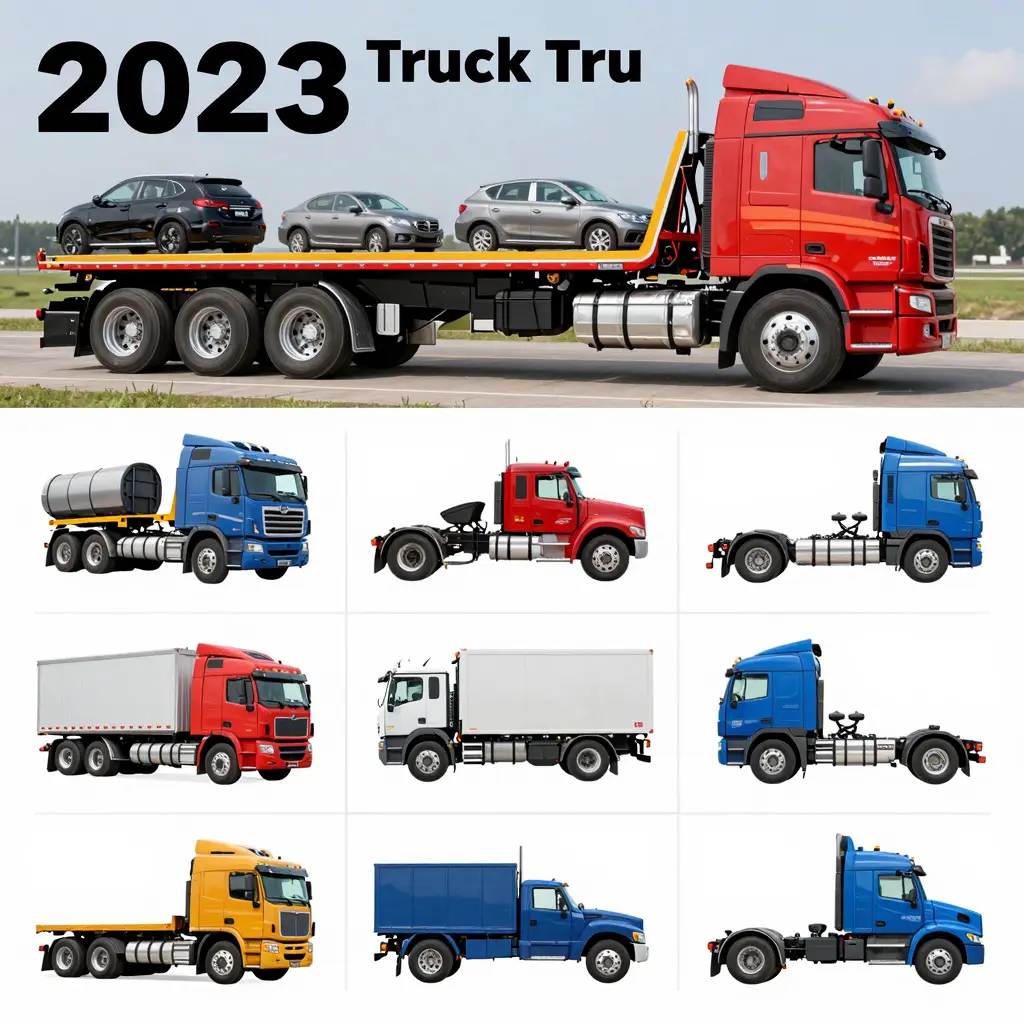
This chart displays the latest advancements in truck towing capabilities for 2023.