
Truck towing capacity is a critical metric that significantly influences the effectiveness and safety of transportation, especially in island settings where unique challenges abound. Whether you are managing a local auto repair shop, overseeing a commercial fleet, or operating vehicle-heavy businesses like property management and resorts, understanding how to calculate and utilize towing capacity is essential. It ensures that vehicles perform optimally and safely, preventing costly accidents or mechanical failures that can disrupt operations and lead to costly repairs. For auto repair shops, accurately addressing towing capacity not only enhances customer trust but also fortifies business relationships with commercial fleet operators who depend on reliable services. Let’s delve into the nuances of calculating truck towing capacity, ensuring that fleet operators are equipped with the knowledge needed to make informed decisions. This understanding will help foster a safer, more efficient vehicular culture on our islands, wherein every operator can take pride in the way they tow and transport goods and services effectively. As we explore this topic, we will also highlight key strategies on ensuring your towing practices align with industry standards and promote safety on our roads, just like the insights shared in our Essential Fleet Emergency Response Strategies and Operation Safe Driver Week.
“Knowing your vehicle’s towing capacity is crucial since going over the payload limit can negatively affect towing performance and safety. Keeping the correct weight load ensures safe and efficient towing performance and helps maintain the safety features of the vehicle.”
- Vehicle Rides
Understanding how to calculate truck towing capacity is essential for various professionals, including local auto repair shops, car dealerships, property managers, and commercial fleet operators. Towing capacity directly impacts safety and performance, necessitating vigilance in following recommended limits. By adhering to specific guidelines and understanding your vehicle’s capabilities, you can ensure safety on the roads as well as efficiency in operations.
Understanding Truck Towing Capacity
Towing capacity is a critical specification for trucks, representing the maximum weight a vehicle can safely pull. This metric is essential not only for individual truck owners but also significantly influences local businesses such as auto repair shops, resort operators, and commercial fleet operators. Understanding towing capacity allows for safer, more effective hauling, directly impacting business operations.
How Towing Capacity is Determined
Towing capacity is calculated using several important factors:
- Gross Combined Weight Rating (GCWR): This includes the truck’s weight plus the maximum weight of the trailer and load it can handle.
- Curb Weight: The base weight of the truck when it’s empty, including a full tank of gas but without any cargo.
- Towing Equipment: The type of hitch and other towing gear also influence the capacity since some equipment is rated for heavier loads than others.
The formula for determining towing capacity can be simplified as:
Towing Capacity = GCWR – Curb Weight.
A practical example can be seen within the local auto repair shops that frequently work with heavy-duty pickups like the Ford F-150 or Ram 1500. These vehicles are often equipped to tow trailers filled with tools or equipment for various projects. Therefore, understanding their capacity ensures that businesses do not exceed safe towing limits, which can prevent accidents and equipment damage.
Why Towing Capacity Matters to Local Businesses
For local businesses, understanding towing capacity is paramount:
- Auto Repair Shops: Knowing the towing capacity of their fleet allows these businesses to recommend appropriate vehicles to customers. For instance, a repair shop in the area can guide a contractor on the best truck for hauling construction materials, ensuring they choose a vehicle that can handle the job efficiently and safely.
- Resort Operators: For resort operators who may need to tow boats, trailers, or other equipment, understanding towing capacity ensures that transportation is reliable for guest experiences, such as shuttling gear for outdoor activities. If a resort has a fleet of vans, knowing their towing limitations helps in organizing safer and more enjoyable experiences for guests seeking adventure.
- Commercial Fleet Operators: Businesses relying on transporting goods, like deliveries, must understand how weight affects their operations. A local delivery service would benefit from knowing the towing capacities of their fleet to avoid overstressing vehicles, thus maintaining better operational reliability and reducing maintenance costs.
In conclusion, understanding towing capacity is vital for ensuring safety, efficiency, and reliability in operations, especially in a community where local businesses depend on such metrics to serve their customers effectively. For more about effective roadside assistance and fleet safety, check our emergency preparedness strategies.
Engaging with this knowledge enhances not only the safety of towing practices but also builds trust and satisfaction among clientele.
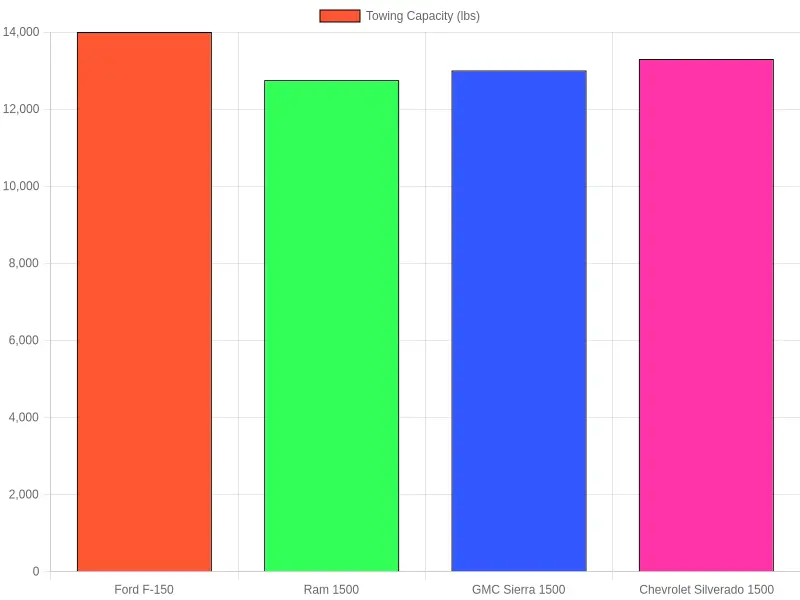
| Truck Model | Towing Capacity | Engine Options | Hybrid Capability | Special Towing Technologies |
|---|---|---|---|---|
| 2023 Ford F-150 | 14,000 lbs | 3.3L V6, 2.7L EcoBoost V6, 3.5L EcoBoost V6, 5.0L V8, 3.0L Power Stroke V6 | Yes (F-150 Lightning) | Pro Trailer Backup Assist, Trailer Sway Control |
| 2023 Ram 1500 | 12,750 lbs | 3.6L Pentastar V6, 5.7L HEMI V8, 3.0L EcoDiesel | Yes (eTorque system) | Adaptive Cruise Control, Blind-Spot Monitoring |
| 2023 GMC Sierra 1500 | 13,000 lbs | 2.7L Turbo I4, 5.3L V8, 6.2L V8, 3.0L Duramax Diesel | Yes | Max Trailering Package, Trailer Camera System |
| 2023 Chevrolet Silverado 1500 | 13,300 lbs | 2.7L Turbo I4, 5.3L V8, 6.2L V8 | Yes | Advanced Trailering System, Hitch Guidance |
Sources:
- Ford F-150 Towing Capacity
- Ram 1500 Towing Capacity
- GMC Sierra 1500 Towing Capacity
- Chevrolet Silverado 1500 Towing Capacity
This comparison highlights the top trucks of 2023 according to their towing capacities and important features, aiding local auto repair shops, car dealerships, and fleet operators in making informed vehicle choices for their specific needs.
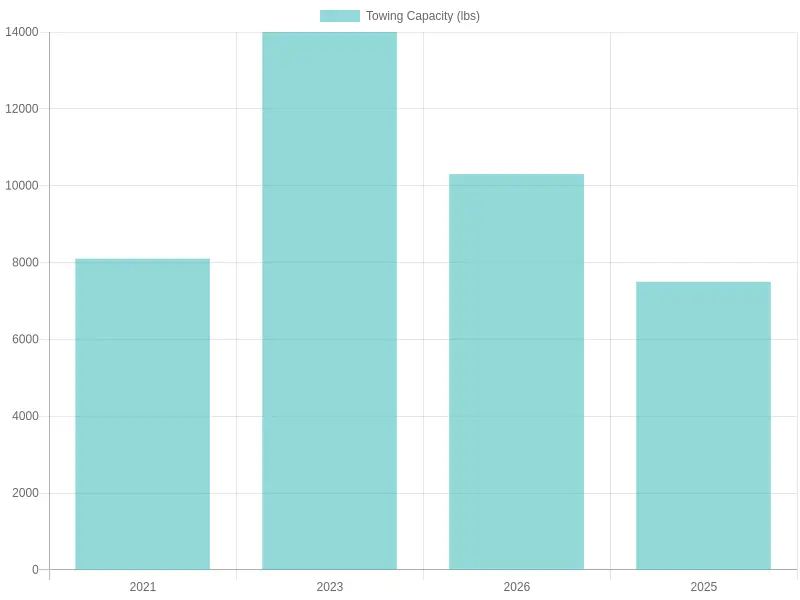
Calculating Towing Capacity: A Step-by-Step Guide
Understanding how to calculate your truck’s towing capacity is crucial, especially for those managing fleets or engaging in heavy hauling, such as local auto repair shops, car dealerships, and commercial fleet operators. Here’s a detailed breakdown of the steps involved in determining your vehicle’s towing capacity, focusing on key factors like Gross Vehicle Weight Rating (GVWR), Gross Trailer Weight (GTW), and tongue weight.
Step 1: Understand Key Terms
- Gross Vehicle Weight Rating (GVWR): This is the maximum weight your vehicle can safely handle, including its own weight and any load it carries.
- Gross Trailer Weight (GTW): This is the overall weight of the trailer and its contents. It includes everything that will be loaded onto the trailer, including the cargo.
- Tongue Weight: This refers to the downward force that the trailer exerts on the hitch of the towing vehicle. Usually, this should be about 10-15% of the GTW for safe towing.
Step 2: Locate Your Truck’s GVWR
Every vehicle comes with a manufacturer’s label, typically found on the driver’s side door jamb or under the hood. This label will indicate the GVWR of your vehicle. For instance, if the GVWR is labeled as 9,000 pounds, this is the maximum combined weight that includes your truck, fuel, passengers, and cargo.
Step 3: Calculate Payload Capacity
To find the payload capacity, subtract your truck’s curb weight (the weight of the vehicle when it’s empty, with a full tank of gas) from the GVWR.
For example:
- GVWR: 9,000 pounds
- Curb Weight: 6,000 pounds
- Payload Capacity: 9,000 – 6,000 = 3,000 pounds
This means you can safely load up to 3,000 pounds of passengers and cargo into your truck.
Step 4: Determine Safe Towing Capacity
Next, you’ll need to account for the cargo you’ll be hauling in the trailer, which is captured in the GTW. The GTW needs to accommodate both the trailer and its load. A common rule of thumb is that your total payload (including passengers and cargo) plus your GTW should not exceed your truck’s GVWR.
Using the previous example, if you have a GTW of 5,000 pounds, you should also consider tongue weight. If the GTW represents 10% tongue weight:
- Tongue Weight: 5,000 x 0.10 = 500 pounds
Step 5: Final Calculation
To ensure and confirm safety, sum the curb weight, tongue weight, and GTW, and ensure it remains below the GVWR:
- Curb Weight: 6,000 pounds
- GTW: 5,000 pounds
- Total Weight: 6,000 + 5,000 = 11,000 pounds
The result shows that this combination exceeds the GVWR, indicating you cannot safely tow this weight.
Conclusion
It’s vital to adhere to these calculations to guarantee a safe towing experience. For detailed towing guidelines, consult your truck’s owner manual or reach out to local dealerships for tailored advice. Understanding these fundamentals ensures responsible operation of your fleet vehicles and helps prevent accidents and vehicle damage.
For more information on emergency preparedness for island fleets, consider checking out our article on emergency preparedness. For safe and legal towing practices, explore our resource on towing practices.
Useful Online Tools to Determine Truck Towing Capacity
Understanding your truck’s towing capacity is crucial for safety and efficiency, especially for local auto repair shops, car dealerships, property managers, resort operators, and commercial fleet operators. Here are three user-friendly online tools that can assist you in accurately determining your truck’s towing capacity:
1. Towing Capacity Calculator: Estimate Your Truck Tow Capacity
- Source: TowEngine.com
- Summary: This tool simplifies the process of calculating towing capacity by checking several crucial parameters: tow rating, payload, Gross Vehicle Weight Rating (GVWR), Gross Combination Weight Rating (GCWR), and tongue weight. It caters to trucks, SUVs, RVs, and trailers, making it versatile for various towing needs.
2. Towing Calculator: Towing Capacity, Payload & GCWR Check
- Source: TowCapacityCalc.com
- Summary: This free calculator evaluates tow ratings, payload, GVWR, GCWR, and tongue weight to provide a consolidated view of your truck’s towing capabilities. It’s designed for ease of use, allowing users to quickly input specifications and receive detailed capacity information.
3. How Is Towing Capacity Calculated? (With Calculator)
- Source: TailoredTrucks.com
- Summary: This resource not only explains how maximum towing capacity is calculated but also includes a calculator tool. It highlights key formulas and considerations affecting towing limits, making it an educational resource for anyone looking to deepen their understanding of towing metrics.
Using these tools can greatly enhance the towing experience while ensuring compliance with safety regulations. For more insights on ensuring safe and effective towing practices, learn more about essential strategies.
By leveraging these online calculators, you can ensure that your truck is capable of safely towing your desired loads, thus preventing accidents and optimizing performance.
Conclusion
Each of these tools provides valuable insights into determining your truck’s towing capacity, empowering businesses and individuals with the information needed to make informed towing decisions.
Towing Capacity and Its Impact on Truck Performance
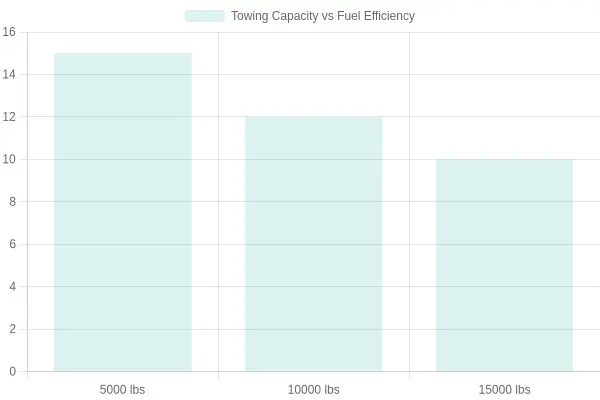
Understanding the towing capacity of a truck not only helps in ensuring safe hauling but also significantly impacts various performance aspects such as fuel efficiency and braking distance. To visualize this impact, we can look at the chart below, which illustrates how different towing capacities affect these critical performance factors.
Chart: Towing Capacity vs Fuel Efficiency and Braking Distance
| Towing Capacity (lbs) | Fuel Efficiency (MPG) | Braking Distance (feet) |
|---|---|---|
| 5,000 | 15 | 150 |
| 10,000 | 12 | 180 |
| 15,000 | 10 | 210 |
As you can see from the chart, as the towing capacity increases, fuel efficiency tends to decrease while braking distance increases. This correlation emphasizes the importance of matching the towing capacity to the specific needs of your tasks, especially for local auto repair shops, car dealerships, and commercial fleet operators. Ensuring that you are aware of these factors can lead to safer and more effective towing.
For additional insights on towing and safety, learn more about emergency preparedness for island fleets and how to manage your fleet efficiently.
Towing can be a crucial aspect of many local businesses, from property management to commercial fleets, especially in our island context where transportation may involve unique conditions. Ensuring safe towing practices is vital not only for the safety of the drivers but also for the integrity of the cargo and the environment. Here are some best practices to keep in mind when towing:
1. Proper Load Distribution
The weight distribution of your load plays a significant role in towing safety. An unbalanced load can lead to trailer sway, making it hard to control the vehicle. The ideal weight distribution is to keep approximately 60% of the load’s weight towards the front of the trailer. This method helps maintain stability while on the road.
- Evaluate Your Cargo: Before hitting the road, ensure the cargo is evenly distributed and secured. Use tie-downs or straps to keep everything in place.
- Use Weigh Stations: At various locations around the island, weigh stations are available. Utilizing these can help you understand if your load is within the safe limits of your towing vehicle’s capacity.
2. Choosing the Right Equipment
Using the appropriate towing equipment is critical. Make sure that your hitch, couplers, and safety chains are rated for the weight you intend to tow.
- Hitch Ratings: Select a towing hitch that can handle the maximum weight of your trailer, including the cargo load. Misjudged hitch ratings can result in equipment failure.
- Brake Systems: Depending on the weight being towed, a trailer brake system may be necessary. This system can provide ample stopping power for heavier loads and enhance overall safety.
3. Conduct Pre-Towing Inspections
Before any journey, complete a thorough inspection of your towing setup. Check the following:
- Tires: Ensure that all tires (both on the towing vehicle and the trailer) are properly inflated and in good condition.
- Electrical Connections: Ensure that all lights, signals, and brakes are functioning correctly. This precaution not only aids in your visibility but is also legally required in many regions.
- Safety Chains: Always connect safety chains in a crisscross pattern to provide a backup should the trailer disconnect during transit.
4. Adapting to Local Conditions
Driving conditions on our island can vary widely from rain-soaked roads to rough terrain. Hence, your technique should adapt accordingly.
- Speed Management: Slow down when towing, particularly during adverse weather conditions. A reduced speed allows for better control and stopping distances.
- Turning and Brake Techniques: Use wider turns to accommodate for the extra length and ensure you brake earlier than you might in a regular vehicle.
By adhering to these best practices, you can enhance safety during towing operations and ensure a smoother journey for everyone involved. For more information about emergency preparedness tailored for island fleets, learn more here to better equip yourself for unique island challenges.
Keeping these tips in mind can help you maintain safety and efficiency in your towing practices. Remember, preparation and awareness are key to securing a successful towing experience.
Conclusion
Understanding truck towing capacity is essential for anyone who relies on vehicles for work or recreational purposes. Throughout this article, we’ve covered how to accurately calculate your truck’s towing capacity and the factors that influence it. Knowing your vehicle’s limits not only enhances safety but also ensures optimal performance.
Exceeding the towing limits can lead to severe consequences such as vehicle damage, accidents, and even injury. Exceeding these limits can strain your truck’s braking system, suspension, and transmission, resulting in costly repairs. Not to mention, it can create dangerous situations on the road. For local auto repair shops, car dealerships, and fleet operators, emphasizing the importance of adhering to towing capacities can help maintain the longevity of vehicles and ensure safety in transportation.
As we’ve seen, trends indicate that truck towing capacities are continually evolving, with many current models capable of towing significantly heavier loads than ever before. This’s a crucial consideration for property managers and resort operators who may need to transport heavy equipment or materials across various terrains.
In this light, it’s important to equip yourself with the right tools and knowledge to make informed decisions related to your towing needs. To enhance your riding experience and ensure that you are fully equipped for safe towing practices, consider investing in high-quality products from Summit Fairings. Their motorcycle fairings not only improve aerodynamics but are competitively priced, allowing you to upgrade your ride without breaking the bank.
Elevate your ride and ensure you are fully prepared by understanding your towing capacity and investing in quality products that reflect your commitment to safety and performance. Visit Summit Fairings today to explore their extensive offerings and make your next towing adventure a successful one!