Do You Tip a Tow Truck Driver After a Motorcycle Tow?
No, you don’t have to, and no operator worth hiring will act as though you do. If the bike came off the truck exactly as it went on and the driver was careful with the straps, handing over ten or twenty dollars in cash is a normal thing to do. If you’d rather not, that’s a reasonable call too.
The tip, though, is the smaller half of the decision you’re making at the curb. The larger half is how the bike gets strapped to the truck, and getting that right costs nothing.
The Part That Protects Your Bike
Every motorcycle tow comes down to two things: what you hand the driver at the end, and what the operator brought to the job. Flatbed versus wheel lift is the choice that decides most of your damage risk. A flatbed carries the whole bike on a deck, held by its frame, forks, and proper tie-down points. A wheel lift picks up one end and lets the rest of the machine trail behind, which some bikes tolerate and others don’t: fairings, fork tubes, and steering parts take the punishment. Knowing which truck is coming before it arrives is the difference between a rough night and a repair bill. And if a driver starts rigging something that looks genuinely unsafe, riders can report it.
How Motorcycle Towing Is Billed (and Why a Tip Sits Outside the Invoice)
Towing is billed against a fixed set of charges, not against how dramatic the night looked. Once you see the line items, whether to tip tends to answer itself.
The Standard Line Items
Most invoices carry the same five lines:
- Base hook-up or dispatch fee – the flat charge for sending a truck and crew out, covering dispatch, arrival, and securing the bike.
- Per-mile charge – the mileage rate for the distance from the pickup point to your destination.
- Winch or recovery labor – charged when the bike has to be lifted, winched, or recovered rather than simply rolled on.
- After-hours and weekend surcharges – added when the call lands outside regular business hours.
- Storage – a daily fee if the motorcycle sits in the yard after the tow instead of going straight to you or a shop.
Those five lines explain the total, and they explain why two tows a mile apart can cost different amounts. A clean daytime pickup near home and a late-night recovery out of a ditch are the same category of service and very different amounts of work.
Why a Tip Isn’t Folded Into the Bill
If a tip were expected, it would show up on the invoice. It doesn’t, and that’s deliberate. Towing isn’t a tipped-wage business the way restaurants are. Drivers are paid by their company through wages, an hourly rate, or a commission built into the rates you’re charged, so the quoted price already covers the labor.
The bill is the bill. A tip is a separate judgment about work that stood out, and it shouldn’t behave like a hidden surcharge. Read the itemized charges, pay them as written, then decide on your own whether the driver’s care earned anything extra.
That distinction matters more for riders than for most customers. If your bike was strapped down properly, handled with respect, and you were kept informed during a stressful hour, that’s worth acknowledging. If the service was correct and unremarkable, paying the invoice in full is a complete transaction. Knowing what the driver’s job involves on a roadside call makes it easier to tell routine competence from careful work.
Checking the Bill Without Being Awkward
Ask for the itemized invoice before you pay, and ask which charges applied and why. A reputable operator will walk you through the hook-up fee, the mileage, and any recovery labor without hesitation. Tipping, if you choose to, comes after that conversation. It never substitutes for asking questions, and it shouldn’t be used to smooth over charges nobody explained.
The table below is the short version of how the two common hookups compare, so you know what normal looks like when the truck backs up. If the setup you get doesn’t match either row, our guide to reporting dangerous towing practices is worth a read.
| Flatbed vs Wheel Lift: Motorcycle Towing at a Glance | |||||
|---|---|---|---|---|---|
| Towing Method | How the Bike Is Supported | Contact Points on the Motorcycle | Typical Damage Risk | Best Suited For | Customary Tip Expectation |
| Flatbed with soft straps | Bike stands upright on its own tires; four soft straps gently stabilize it. | Soft nylon straps loop around lower triple clamp, handlebars, or frame. | Low, though over-tightened straps can mark paint or pinch cables. | Sportbikes, baggers, and faired bikes with delicate plastics and electronics. | 10-15 percent of the hook-up fee; more for extra care or a long load. |
| Flatbed with wheel chock and canyon dancers | Front wheel locked into a chock; canyon dancers hold the bars steady. | Front tire seated in chock; bar ends or grips via canyon dancer straps. | Low, but bar-end pressure can harm heated grips, mirrors, and throttle housings. | Long highway hauls and bikes with clean, unobstructed handlebar ends. | 10-15 percent of the hook-up fee; a few dollars more for careful bar protection. |
| Wheel lift with soft strap cradle | Bike rests on a padded cradle under the frame or engine, rear lifted. | Padded cradle under frame rails, plus soft straps to forks or frame. | Moderate; poor cradle placement can stress exhaust, fairing lowers, or oil lines. | Cruisers and naked bikes with exposed frames on shorter tows. | 10-15 percent of the hook-up fee, or a flat $10-$20 on an easy local hookup. |
| Wheel lift with J-hooks or metal hooks | Metal hooks grip the frame or forks and lift; the bike hangs suspended. | Bare steel J-hooks on frame tubes, fork lowers, or triple tree. | Highest; hooks can scratch, bend, or crack cast parts and brake lines. | Older steel-framed bikes when flatbed access is impossible. | Tip only after inspection; many riders withhold gratuity if damage appears. |
Damage risk depends more on the operator’s technique than on the method’s label.
Why Flatbed Towing Is the Preferred Method for Motorcycles
With a flatbed, the driver tilts the deck down to the pavement and the bike is rolled up instead of hoisted. The front wheel drops into a chock, straps pull the bike forward and down into that pocket, and the deck levels out flat. From that point the motorcycle rides on the truck’s four wheels. Nothing hangs in the air, no wheel turns, and no suspension component carries the weight of the bike.
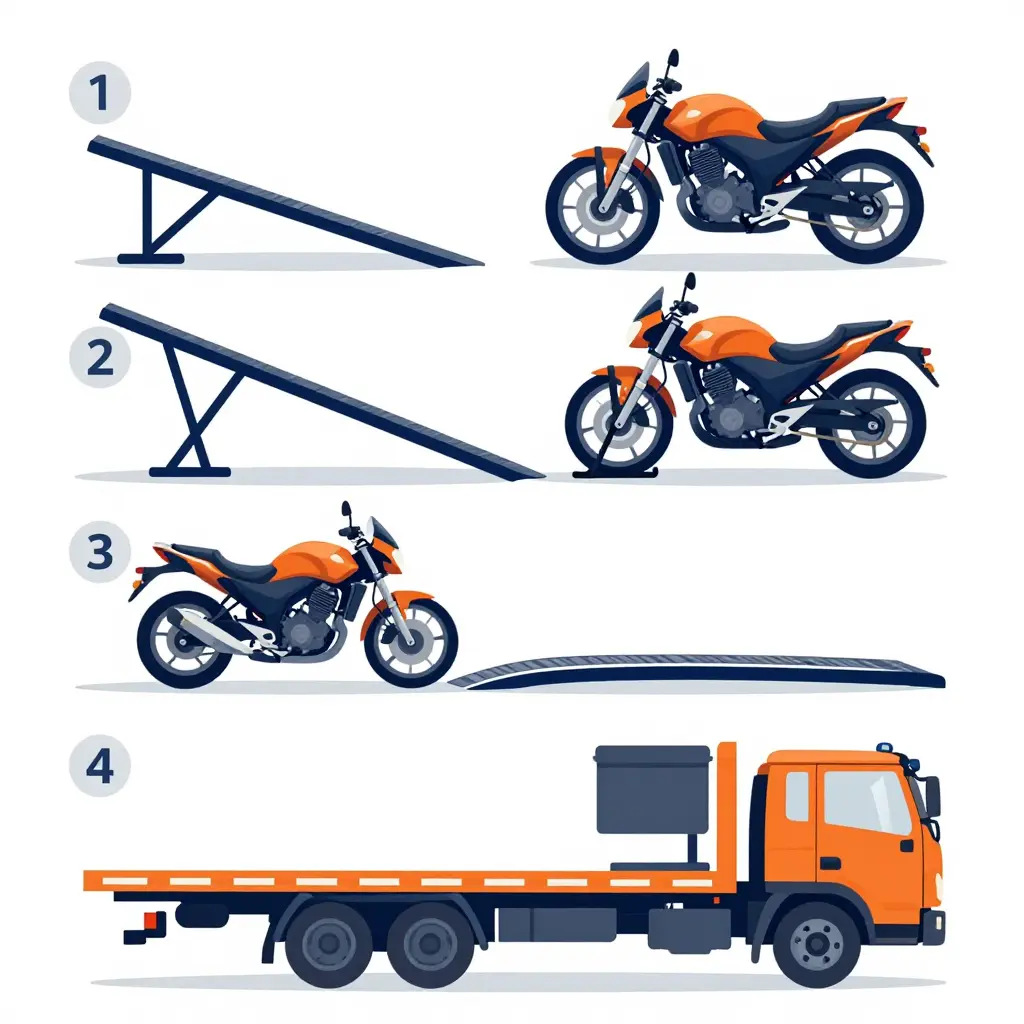
That geometry is where the safety comes from. A wheel lift raises one end and leaves the other wheel to turn on the pavement, and on a shaft-drive bike that means the final drive and the gearbox output shaft turn with the engine off and no oil pressure behind them. A wheel-lift cradle also squeezes the fork tubes and the trim around them, which is where bent tubes, scratched sliders, and stressed seals come from. On a flatbed, nothing lifts at the rear, no driveline turns, and no cradle compresses the forks. The bike also stays in the driver’s mirrors, so a load that settles or a strap that loosens gets caught before it becomes a dropped motorcycle.
When to Insist on a Flatbed
- Bikes with bodywork, low ground clearance, or exposed driveline parts – lowered bikes, cruisers with fairings and saddlebags, and anything with a single-sided swingarm. These are the machines where a wheel-lift cradle has the least room to work and the most to scratch, crack, or pinch.
- Bikes with shaft drive or electronic chassis systems – shaft-drive models and motorcycles with electronic ride-height or traction systems should ride with both wheels down, so the driveline stays unloaded and no sensor or actuator is asked to hold a position it was never designed to hold.
If a company shows up with a wheel-lift truck anyway, that’s a conversation worth having on the spot. It also helps to know what unsafe towing looks like before the bike is strapped down.
Wheel Lift Towing: Where the Damage Comes From
Wheel lift towing lifts one wheel into a cradle or sling while the other rolls on the road, which makes it fast, cheap, and easy to dispatch. The catch is that a rolling wheel turns the bike into a lever, pushing load into components that were never designed to carry the machine’s weight at that angle. This is the part of the flatbed vs wheel lift comparison that reaches your wallet.
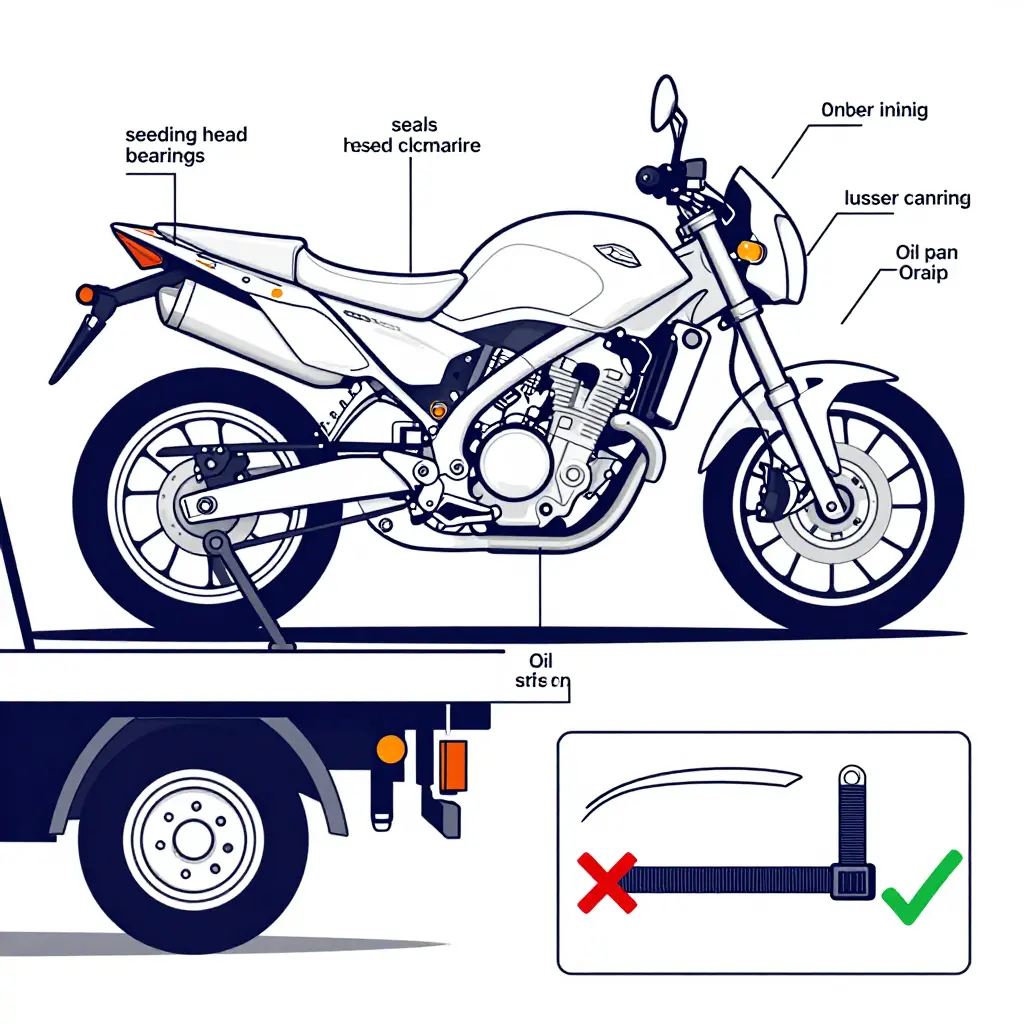
Front Lifted: Fork Seals and Steering-Head Bearings
With the front wheel in the cradle, the fork tubes and steering-head bearings absorb force aimed in a direction they rarely see. A tired fork seal can start weeping oil, and a marginal bearing race can develop a notch you feel as a catch in the steering. Check for oil film on the fork legs and side-to-side play in the steering before you ride away.
Rear Lifted: Swingarm and Shock Linkage
Lifting the rear puts the swingarm, pivot bearings, and shock linkage under the bike’s full mass plus strap tension. Those bearings are small, exposed, and quietly expensive to rebuild once they’ve been stressed or allowed to twist. Insist the cradle sits under the tire itself, not under the muffler or along the swingarm arm.
Clearance: Exhaust, Lower Fairing, Oil Pan, Drain Plug
Cradle arms and sling hardware regularly contact the exhaust canister or lower fairing on low-slung bikes. The oil pan and drain plug sit at the same height, and a cracked pan or sheared plug ends your season on the spot. Point out those low points to the operator before the lift moves an inch.
| Lift Point | Parts Under Load | Inspect After the Tow |
|---|---|---|
| Front wheel lifted | Fork seals, steering-head bearings, triple clamp | Oil film on fork tubes, steering play, cable and brake line routing |
| Rear wheel lifted | Swingarm, pivot bearings, shock linkage | Linkage play, exhaust alignment, cradle contact marks |
| Cradle or sling hardware | Exhaust canister, lower fairing, oil pan, drain plug | Scrapes, cracks, oil seepage at the plug |
| Straps and hooks | Paint, plastic, fender, rim, brake lines | Hook marks, bent spokes, chipped rim lip |
Straps and Hooks: The Real Source of Motorcycle Tow Damage
J-hooks and bare metal hooks touching painted or plastic parts are the most common cause of fairing, fender, and rim damage. A hook dropped over a rim lip can chip the bead seat or bend a spoke before the truck even pulls away. Soft straps looped around the lower triple clamp or the frame spread the load, stay off the bodywork, and are the safer practice.
Ask the operator to use soft straps only, and never let a bare hook touch your bike.
A driver who resists that request is telling you something. Learn the warning signs by reading up on unsafe towing practices in your area.
Where the Load Sits: Flatbed vs. Wheel Lift
The difference is easiest to see as a stress map. On a flatbed, the front wheel sits in a chock, two thin straps cross over the front and rear, and the bike is pinned at four points. Load spreads across the deck, and the straps mostly keep the bike from walking. On a wheel lift, the rear wheel sits in a U-shaped sling while the front stays on the ground; the cradle contact area and the swingarm carry the whole rear of the bike, which is why cradle width, strap condition, and swingarm health matter so much there. Same bike, very different load path.
So when a driver’s setup matches neither of those, look closer: no chock, straps crossing painted plastic, or a cradle biting into the swingarm are all reasons to ask a question before the straps go on.
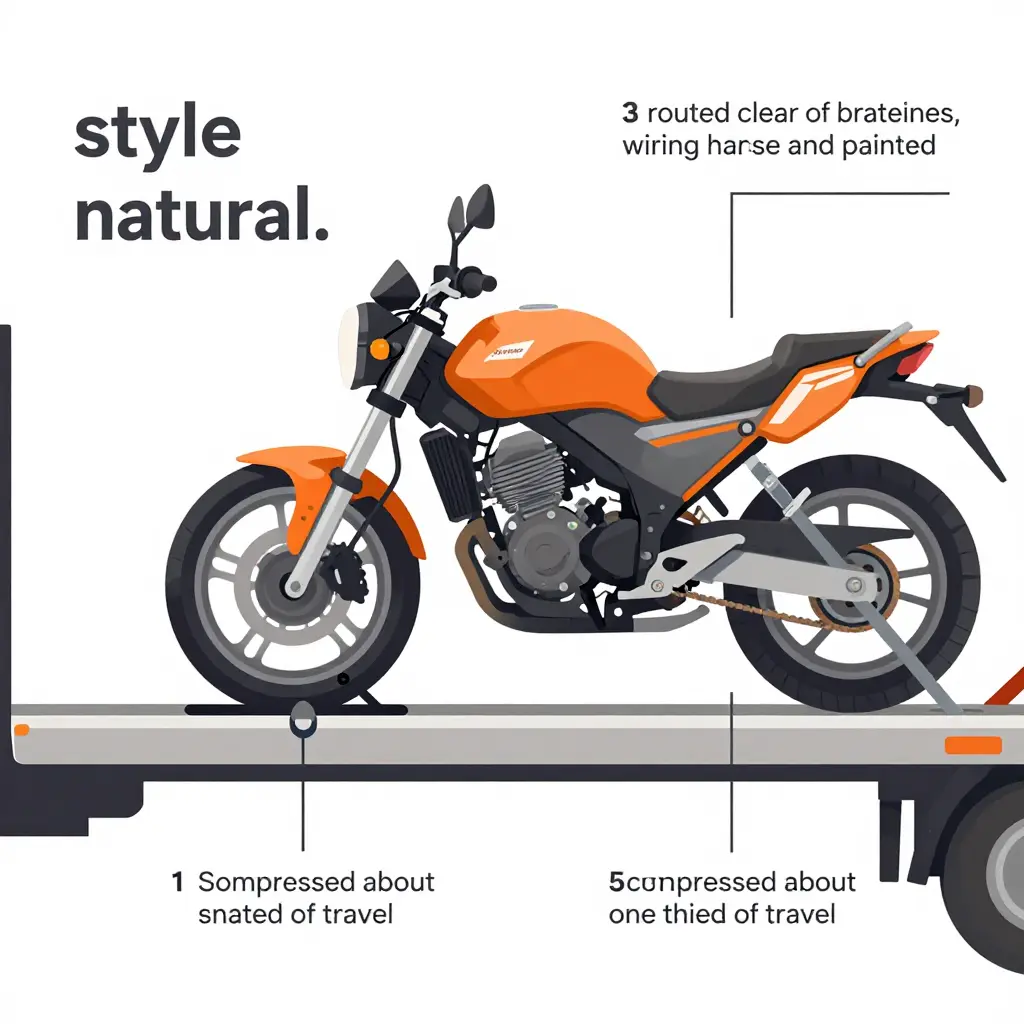
Two minutes with your hands on the bike before the ratchet starts clicking is the cheapest insurance your paintwork will ever get. Run this walk-around while the driver sets up, and again right before the deck rolls out. Use it to catch damage risk with your own eyes instead of discovering it at the drop-off:
- Confirm out loud which method the driver is using and why it suits your bike. A flatbed with a proper chock is the gentler default for faired sportbikes; a wheel-lift cradle under the frame needs extra care around bodywork. If the setup looks improvised, brush up on the practices that get tows reported.
- Verify that soft nylon straps loop around the fork tubes or triple clamp rather than bare steel hooks touching the bike, and check that every hook is clipped shut to the deck rail so it cannot swing into chrome.
- Run your hand along each strap and confirm it never touches brake lines, wiring harnesses, or painted panels. Reroute anything that could rub once the bike is pulled down.
- Sight down the front wheel and make sure it sits straight and fully seated in the chock. A crooked wheel steers the whole bike sideways on the first corner.
- Press down on the handlebars to test fork compression and aim for roughly a third of travel, which holds the bike firm without punishing the seals.
- Photograph the bike from four angles (front, rear, left, right) before departure, with the straps visible in each frame, so any damage claim has a timestamped baseline.
- Confirm the driver’s destination and exact drop-off point, plus who will be there to receive the bike, before the truck pulls away from the curb.
- Check that the rear strap angles rearward and ask the driver to leave the bike in gear with the kickstand up, so the rear wheel cannot creep forward.
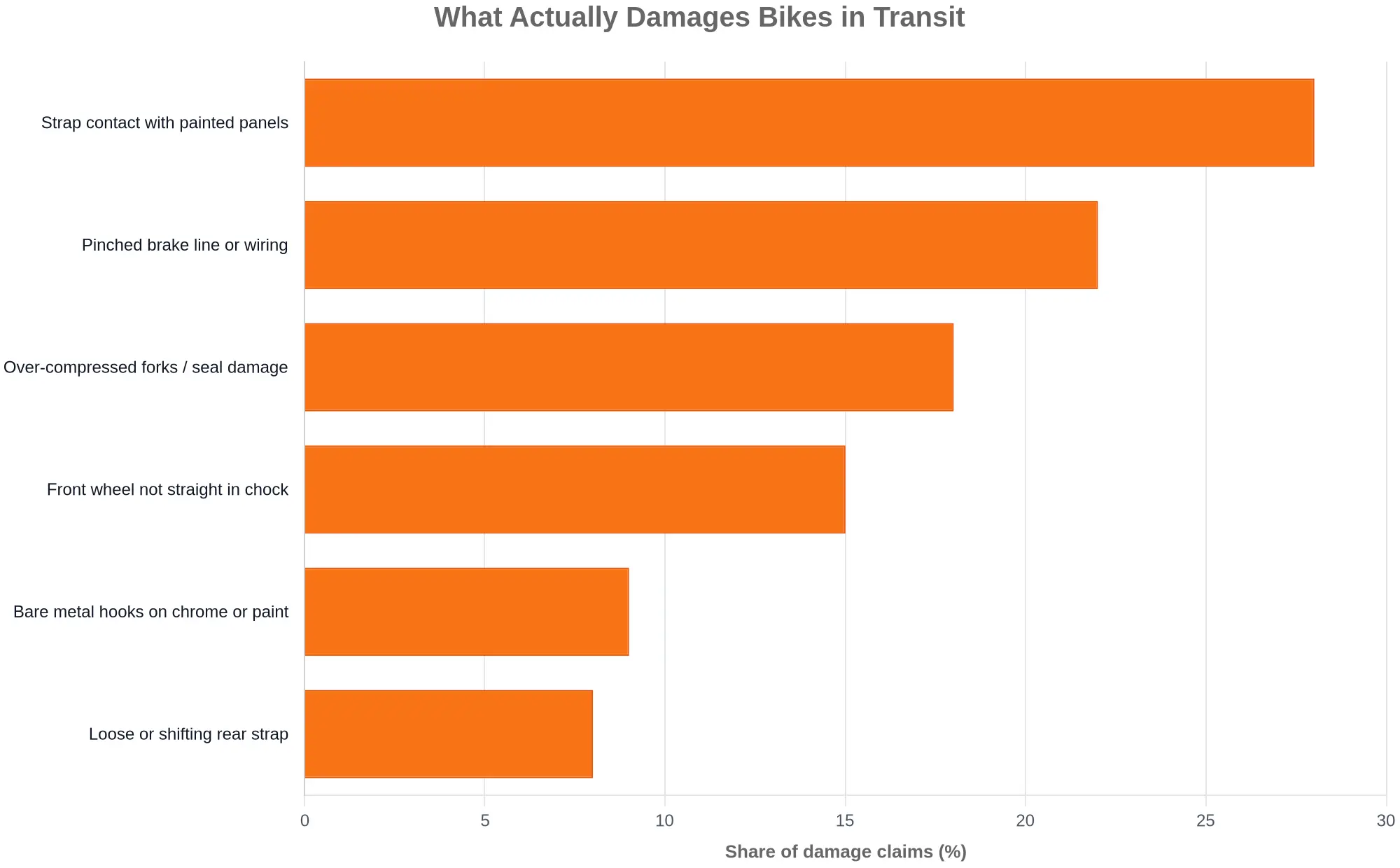
Illustrative shares, not the results of a published survey. The ranking is the point; the exact figures are not.
Notice how many of those causes are caught by one glance at where a strap is sitting. Walk the list once, take the photos, and the conversation about the tip at the end of the tow stays about service instead of scratched fairings.
Where the risk lives
Before you hand over your keys, it’s worth seeing how much of the damage question comes down to equipment versus hands. The chart below ranks five common setups on a simple 1-to-10 relative risk scale, from a flatbed with soft straps to the bare metal hooks that make riders wince. The takeaway isn’t that wheel lifts are bad. It’s that the contact point is everything, and a strap that cradles your front wheel behaves nothing like an iron hook gripping a fork tube.
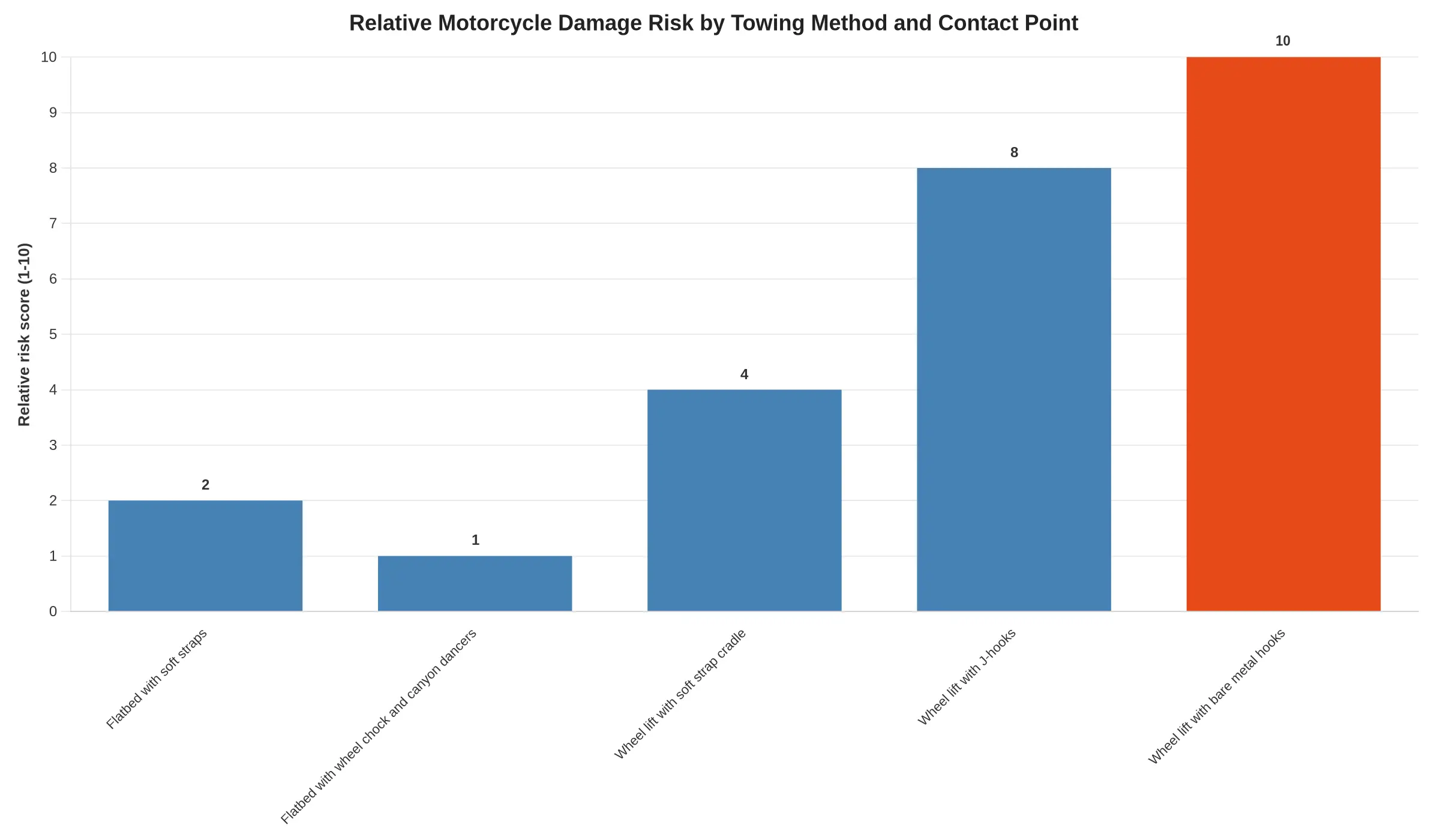
Relative motorcycle damage risk by towing method and contact point. These scores are illustrative composites drawn from common industry practice and inspection findings rather than a formal study, so treat them as directional. Operator technique outweighs method: a careful driver with a wheel lift will usually protect your bike better than a rushed driver with a perfect flatbed.
If something on scene feels off, whether it’s hooks on painted tubes, straps over brake lines, or a bike rocking on its sidestand, you are allowed to stop the job. Here is how to recognize and report dangerous towing practices in your own community.
What Decides Whether a Tow Truck Driver Deserves a Tip
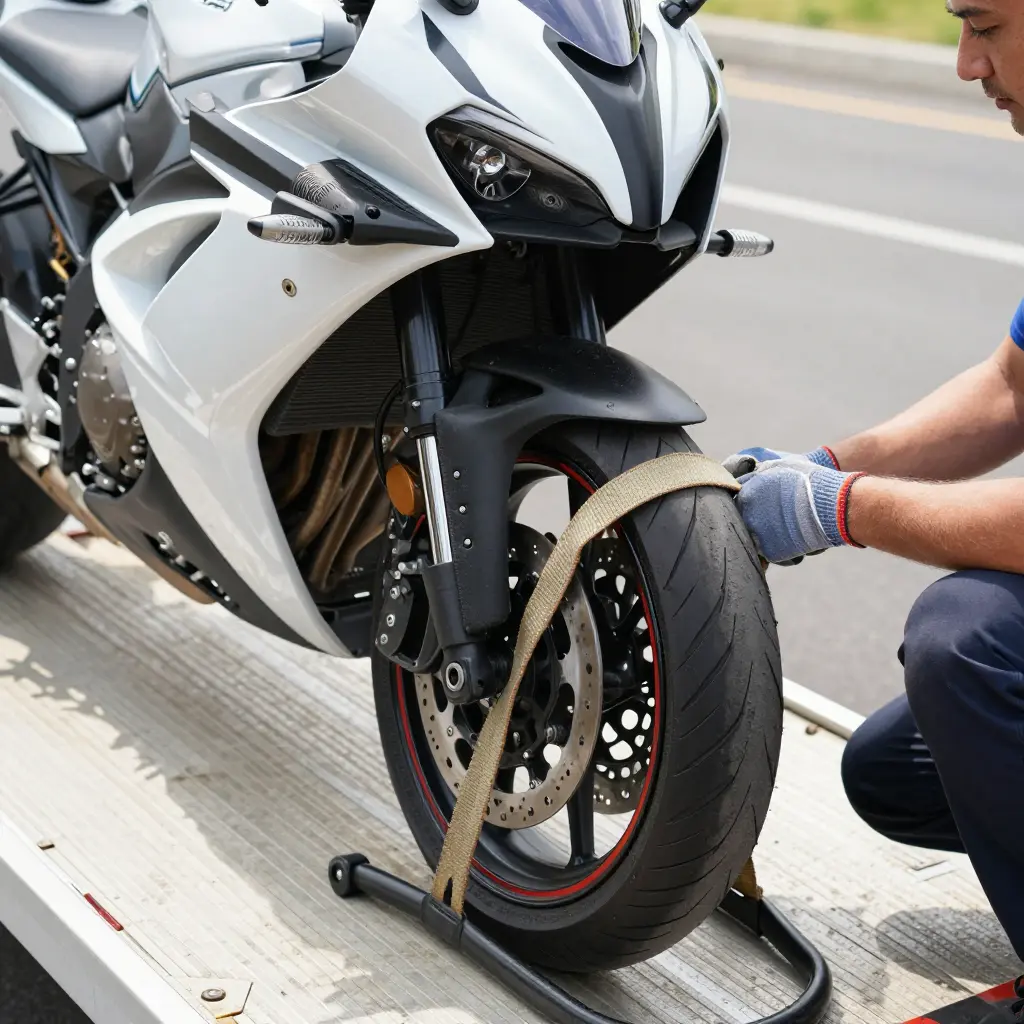
Most riders don’t agonize over this. The decision usually settles in the first ten minutes, based on what you can see while standing there in your helmet watching a stranger handle the bike you depend on.
Every factor below is something you can watch happen, so you’re grading the work in front of you rather than guessing at the driver’s attitude.
Did the driver show up in a reasonable time?
Reasonable means what dispatch promised, adjusted for weather and traffic. If the driver called ahead, gave an honest ETA, and arrived close to it, that counts. If the arrival was quick on a busy night, that’s the kind of effort a tip is meant to recognize.
Did the driver use the method you asked for?
You asked for a flatbed and a flatbed rolled up: good start. If you requested something specific because of a lowered suspension, a single-sided swingarm, or a locked front brake, watch whether that request was honored or quietly overridden. A driver who explains why an alternate approach is safer is being professional. A driver who ignores your request without a word is not.
Were soft straps and proper padding used?
Look at the contact points: soft straps or sleeves around the fork tubes, clean rags or foam between strap and paint, no bare hooks biting into metal. This is the difference between a crew that tows bikes weekly and one that tows them occasionally.
Was extra care taken with fairings and luggage?
Fairings, mirrors, panniers, and a top box all need clearance from straps and from the deck. A careful operator checks that a strap isn’t crushing a turn signal or bearing down on a plastic panel before tightening.
Did the driver handle a difficult recovery well?
A bike down in a ditch, dropped on its side, or rolling with a locked front brake takes skill to load without dragging it. Watch for a controlled approach, spotters, ramps positioned properly, and no scraping of the lower fairing on the deck edge.
Was the cost explained upfront?
Hearing about the hookup fee, mileage, and any recovery surcharge before the winch starts turning builds trust. Surprises on the invoice at the end do the opposite.
When to keep your money instead
A rushed, careless hookup that causes damage is a clear reason to withhold a tip. Photograph the damage, note the driver’s name and truck number, and raise it with the company in writing rather than arguing at the curb. Report it properly and the next rider doesn’t inherit the same problem.
Three situations where a tip is not owed:
- The driver damaged paint or bodywork because straps were routed carelessly, or tightened before checking clearance.
- The driver used a method you explicitly declined, without explanation or consent, and put the bike at avoidable risk.
- The quoted price changed at the end with no warning and no explanation for the added charge.
Everything else is a judgment call. A driver who arrived when they said, used soft straps and padding, took a second look at your fairings, and told you the price honestly has done the job well. That is the version of the job worth tipping for.
How Much to Tip a Tow Truck Driver: Practical Ranges
A tip for a motorcycle tow goes straight to the driver, either as cash at drop-off or through the app after the job closes, and it never appears on the company invoice. That’s the whole of tow truck tipping etiquette: the number on your paperwork is the company’s rate, and the cash is a thank-you to the person who strapped your bike down.
When you’re working out how much to tip a tow truck driver, start here:
- 10-15% of the hook-up fee for a standard daytime tow. If the base hook-up runs $100, that’s $10-$15. It covers a clean, on-time pickup where the driver used soft straps and checked clearance before rolling.
- 20-25% (or an extra $20-$40) for after-hours, weekend, holiday, or bad-weather calls. A driver who leaves dinner at 11 p.m. in freezing rain to rescue a bike with a dead electrical system has done more than the daytime rate covers.
- A flat $10-$20 for a short local tow. Under five miles, ten minutes of work, no recovery involved: a small discretionary amount is plenty and always appreciated.
- $40-$100 for a complex recovery. Ditch extractions, drop-offs, loading a locked or crashed bike, or swapping from wheel lift to flatbed mid-job are all hands-on, damage-risk work. Tip on the higher end if the crew handled it carefully and kept you informed.
- Zero when the service was careless or the bike was damaged. Scraped fairings, straps over the tank, a refused request for a flatbed, or a driver who ignored your instructions are all reasons to pay the invoice and nothing more.
Regional norms move these numbers around, so a range that feels generous in one city can look thin in another, and metro drivers usually see more tips than rural ones. Island and rural routing costs push tips upward too, since long deadhead miles and ferry timing mean the driver absorbed far more unpaid windshield time than you see on the bill.
If you want to understand what a good crew deals with on a call, and why a thoughtful tip is easier to justify, it’s worth reading about the real role drivers play in roadside emergencies.
How Riders Approach Tipping After a Motorcycle Tow
In our experience, tipping after a motorcycle tow has less to do with the final invoice than with how the call felt from the roadside: clear communication, a careful strapping job, a driver who treated the bike like their own. The doughnut chart below breaks those attitudes into four rough camps, from riders who tip every time to riders who never do.
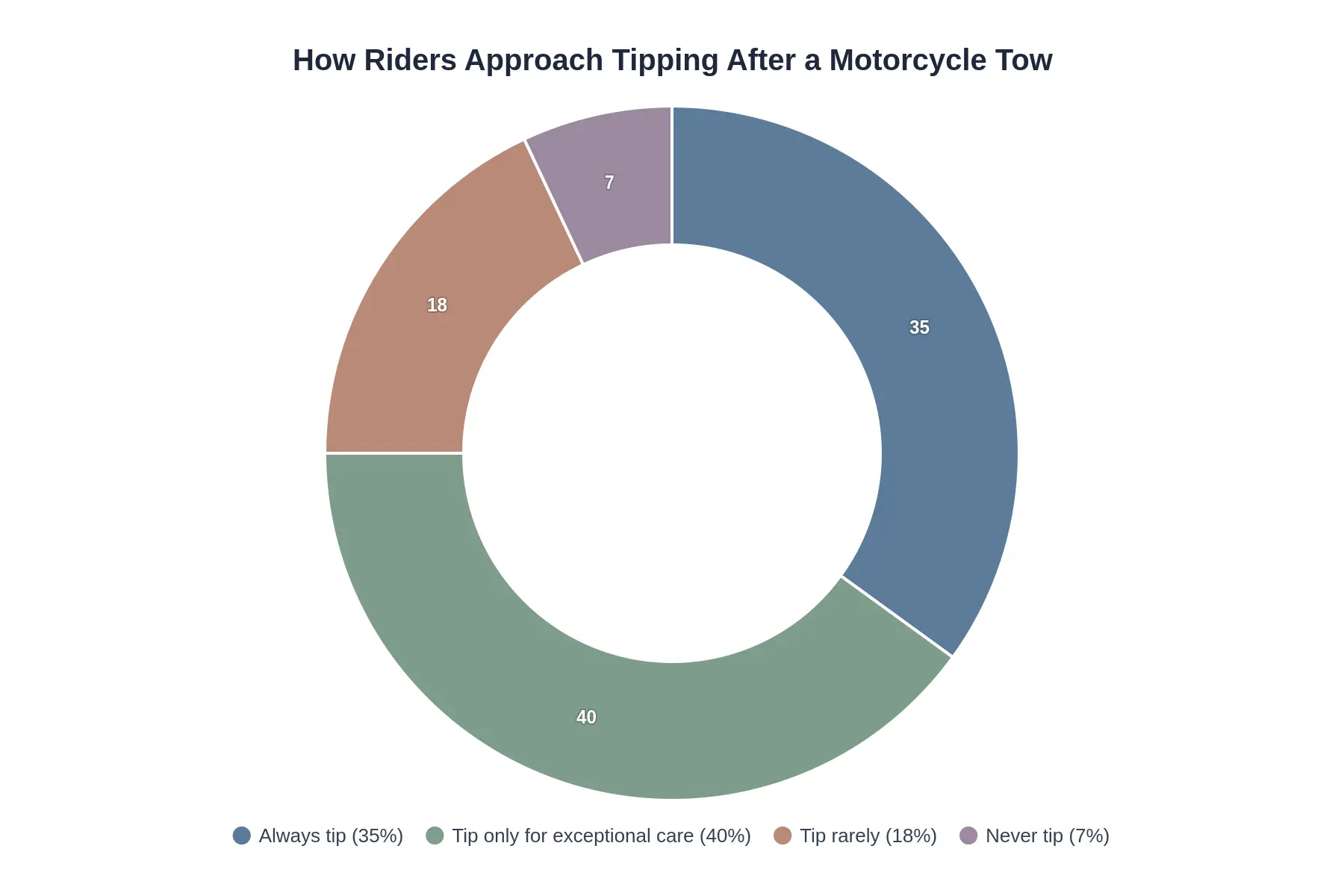
Caption: The shares shown here are illustrative estimates representing common rider attitudes, not the results of a published survey. Actual tipping behavior varies widely by region, by call type, and by how smooth or stressful the recovery turned out to be.
If you want to see what a good roadside response looks like, the kind riders gladly tip for, read about what the driver’s role involves in a roadside emergency.
Questions to Ask Before the Bike Is Loaded
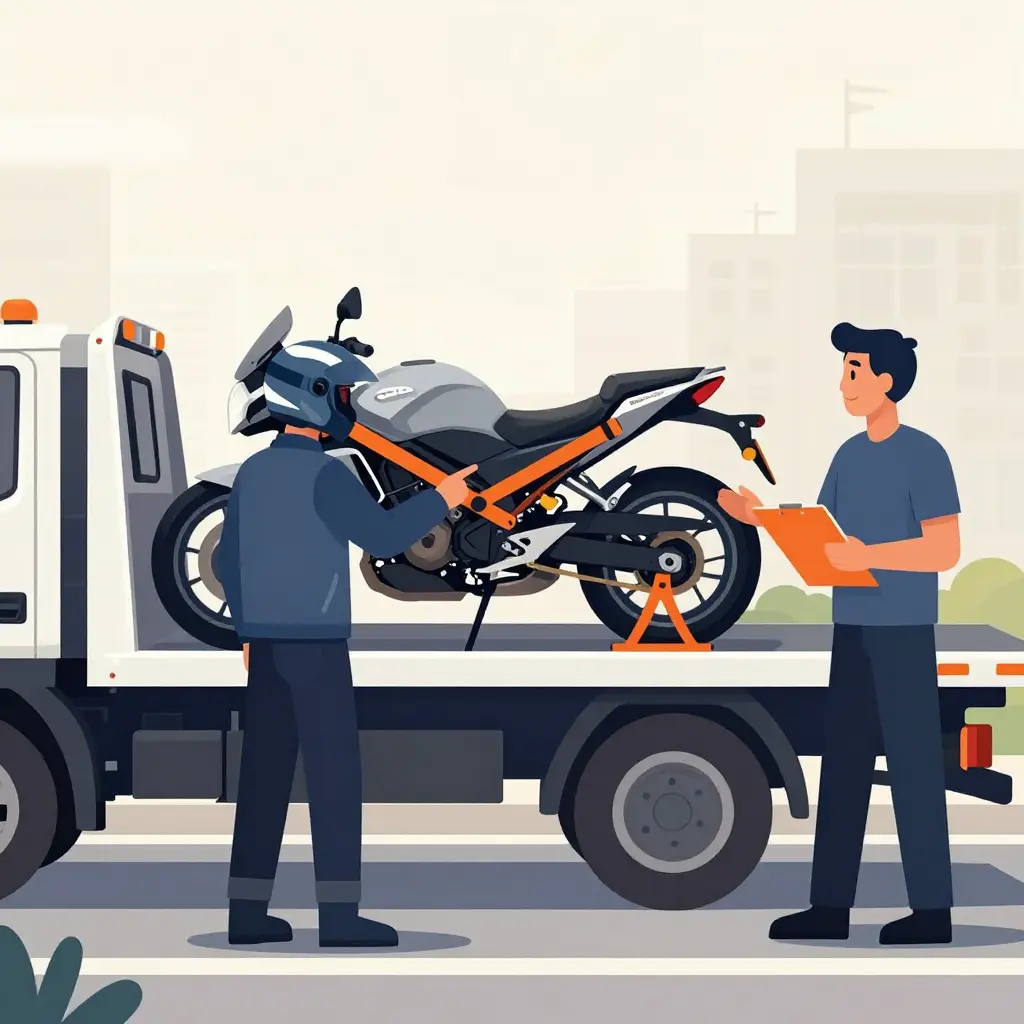
Settle the equipment question with the dispatcher, not with the driver at the curb. Ask what exactly is being sent and whether a flatbed is available for your bike. The flatbed vs wheel lift decision matters more than most riders expect: a flatbed carries the machine on four wheels with the frame supported, while a wheel lift lifts one end and leaves the rest hanging off the back. On faired sport bikes, lowered cruisers, and heavy touring models, that hanging load is where fork seals, steering head bearings, and bodywork take avoidable punishment.
Straps, Cradles, and Contact Points
Ask point-blank whether soft straps are already on the truck. Bare ratchet hooks and chain come off a truck bed and straight onto painted forks, handlebars, and engine cases. You also want to hear that a front-wheel cradle or chock and clean, dry tie-down points come with the job. A driver who answers those details without hesitating has probably done this before.
Experience With Your Machine
Ask whether the driver has handled this model or size before. A 350-pound dual-sport and an 850-pound bagger don’t load the same way, and knowing where the straps belong on a fully faired bike is a skill worth confirming. It’s fair to ask how long they’ve been running motorcycle calls, and it helps to understand what the job involves beyond hooking up a truck.
Cost and Damage Contact
Ask what the total will include, not just the hook fee. Confirm the per-mile rate, after-hours or weekend surcharges, winch charges, and any storage fee that starts the moment the bike lands at the yard. Then ask who to contact if damage occurs. Get the company’s claims channel in writing or by text before loading, and photograph the bike from several angles.
Finally, record the driver’s name, company, and truck number before the bike leaves the ground. Riders who know how to recognize and report illegal towing practices tend to resolve disputes faster, and knowing how agencies such as the California Highway Patrol alert drivers to unsafe towing practices keeps your expectations grounded in what the rules require.
FAQ: Towing Tips and Towing Methods for Motorcycle Riders
Do you tip a tow truck driver after a motorcycle tow?
It’s optional, but it is common, and it’s appreciated when the operator treats your bike like their own. A $10 to $20 tip is normal for a short local tow, while $20 to $40 fits longer runs or extra work like strapping down a lowered or already damaged bike. If you want to tip a tow truck driver, do it after the bike is unloaded and you have walked around it once.
Is a flatbed always better than a wheel lift for a motorcycle?
No. The flatbed vs wheel lift decision depends on the bike, not on one method being universally superior. A flatbed is the safer choice for lowered, vintage, custom, or damaged motorcycles because every wheel sits on the deck with no suspension load. A wheel lift can move a stock motorcycle safely when the operator uses soft ties, a front-wheel cradle, and recognized loading standards.
How much should I tip for an after-hours motorcycle tow?
Plan on 20 to 25 percent of the bill, or roughly $20 to $40, when the tow happens late at night, on a weekend, or in rough weather. After-hours calls usually carry overtime rates and mean a driver left home to reach you. A tip in that range acknowledges the inconvenience without inflating an already pricey bill.
Should I tip if the driver damages my bike?
No. Skip the tip and document everything instead. Photograph the damage from several angles, ask the driver to note it on the invoice, and file a repair claim with the towing company the same day. A tip signals good service, so paying one after damage only muddies the record.
Can a wheel lift damage a motorcycle’s fork seals or swingarm?
Yes. Wheel lift towing can damage fork seals, fork tubes, or a swingarm when straps are over-tightened or hooked to the wrong points. Most damage risk comes from strap pressure compressing the front suspension for miles, not from the lift itself. Ask the operator to secure the bike at the lower triple clamp and rear frame points with soft ties.
Does tipping get my bike loaded more carefully?
No, because the quality of the work is set before any money changes hands. Careful loading comes from choosing an experienced operator, asking how the bike will be secured, and checking the straps before the truck pulls away. Tipping afterward rewards good work, but it can’t retroactively change how your bike was handled.
The Bottom Line: Tip for Care, Choose the Method for Protection
Nobody worth hiring will make you feel obligated to tip. Tipping is discretionary, and the fairest gauge is the care the driver shows: patience with the straps, a second look at your kickstand, a straight answer about where the hooks go. Reward that when you see it, and let go of any guilt when you don’t.
If you carry one thing away from this guide, make it this: the flatbed vs wheel lift decision matters far more to your motorcycle than the tip ever will. A tip is a thank-you. The towing method is a physical decision about how your bike travels down the road. A flatbed rolls the whole machine onto a stable deck and removes most of the contact points where damage risk lives. A wheel lift suspends one end and lets the other wheel track the pavement, which is workable for short, gentle hauls in experienced hands and far less forgiving when something goes sideways. Either way, know the warning signs of unsafe towing practices before the truck backs up.
Four things to take with you:
- Ask about the method before the price. Confirm whether the truck being sent is a flatbed or a wheel lift, and don’t let that detail get lost in the quote.
- Match the truck to the bike. Faired sportbikes, low-clearance cruisers, and heavy touring models generally benefit most from a full deck.
- Tip on effort, not expectation. Cash for a careful, communicative driver is a fair call. A tip for a rushed strap-and-go job is not required.
- Photograph before and after. A quick set of photos of your bike on the truck protects you if you spot something later.
None of that takes more than a minute, and all of it keeps you in charge of how your bike leaves the roadside. The most useful sentence you can say on the phone is simple: name your preferred method before the truck is dispatched, and you set the terms of the tow before it begins.