
Understanding Towing Capacity: A Necessity for Multiple Stakeholders
Towing capacity is more than just a number-it’s a vital consideration for many professionals, including auto repair shops, fleet operators, and property managers. For those in the automotive industry, understanding the nuances of what trucks can tow is essential in advising clients and ensuring safety on the road. Similarly, fleet operators rely heavily on accurate towing capacities to manage their logistics effectively and avoid costly mistakes. In island communities, where transportation can often be challenging, the importance of towing capabilities is even more pronounced. Ensuring that vehicles can handle specific loads not only affects the functionality of operations but also ensures the safety and reliability of transport services. Given the unique demands of island life, it is critical for auto shops and fleet managers to have a solid grasp of these figures. After all, understanding how much a truck can tow helps in making informed decisions, enhancing operational efficiency, and ultimately provides peace of mind for all stakeholders involved-be it a repair shop mechanic or a fleet operator racing against time to deliver goods or assist an emergency. Learn more about emergency preparedness for island fleets
As we delve deeper into this topic, we will explore the factors that influence towing capacity and the repercussions of not adhering to these limits. Whether you are familiar with towing or just beginning to understand its significance, this guide aims to equip you with the knowledge necessary to make safe and productive decisions.
An image illustrating a truck towing different types of trailers, including campers, boats, and flatbeds, effectively demonstrating various towing capabilities. This visual representation engages readers and helps them understand the functionality and diversity in towing options available.
Trailer Types Overview
| Trailer Type | Details |
|---|---|
| Campers | Designed for recreational camping, often includes sleeping and cooking areas. |
| Boats | Trailers designed to transport boats, typically have supports to hold the hull. |
| Flatbeds | Versatile trailers used for various cargo, including vehicles and equipment. |

Image Caption: A truck in action towing different types of trailers, showcasing the strength and versatility needed for various towing tasks.
Truck Towing Capacity Comparison
Understanding the towing capacities of various truck models is essential for many local operators, including auto repair shops, property managers, and fleet operators. The following chart provides a clear comparison of the towing capacities of some of the most popular truck models in 2023. This information is invaluable when deciding on the best trucks for your towing needs.
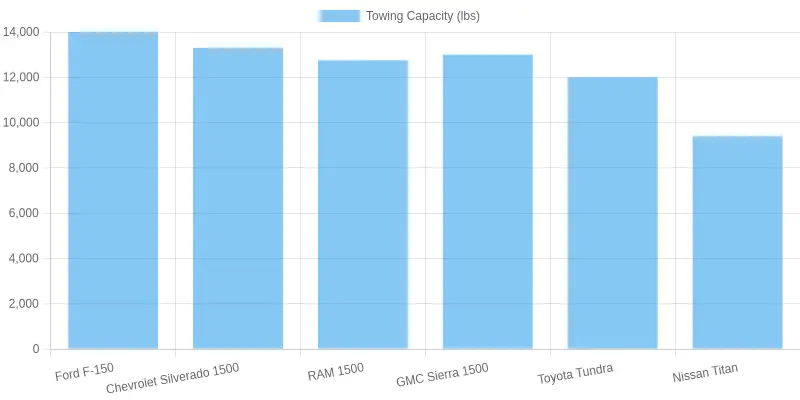
Comparison Chart
| Truck Model | Towing Capacity (lbs) |
|---|---|
| Ford F-150 | 14,000 |
| Chevrolet Silverado 1500 | 13,300 |
| RAM 1500 | 12,750 |
| GMC Sierra 1500 | 13,000 |
| Toyota Tundra | 12,000 |
| Nissan Titan | 9,400 |
This chart illustrates the maximum towing capacities available across several truck models, guiding you in making informed choices. For fleet operators and others relying on towing capabilities, ensuring that you have the right vehicle for your tasks is paramount. Learn more about emergency preparedness for island fleets and how to effectively assess your fleet’s needs.
Additionally, if you’re interested in essential fleet emergency response strategies, understanding towing capacity is just one part of the bigger picture.
This comparison serves as a foundation to assess which model might best fit your specific requirements, be it for heavy-duty towing or regular usage.
Factors Influencing Towing Capacity
When considering how much a truck can tow, several key factors come into play. Understanding these factors is crucial for local auto repair shops, car dealerships, property managers, resort operators, and commercial fleet operators to ensure safe and effective towing practices. Here’s a breakdown of influential elements:
-
Engine Size: The horsepower and torque output of a truck’s engine directly impacts its towing capacity. A larger engine generally provides more power, allowing it to carry heavier loads. Trucks equipped with turbocharged engines often have better performance in towing scenarios.
-
Vehicle Weight: The weight of the truck itself affects towing capacity. Heavier trucks usually can tow more weight due to their robust structures and materials designed to handle increased strain.
-
Towing Equipment: The type of hitch, ball mount, and other towing equipment significantly influence how much a truck can tow. High-quality components designed for heavy-duty use enhance safety and performance.
-
Suspension and Brakes: The truck’s suspension system allows it to endure the additional stress from towing. High-capacity brakes are also essential to safely stop heavier loads, making robust braking systems a requirement for effective towing.
-
Gear Ratios: Trucks with lower rear axle ratios tend to have higher towing capacities since they provide more torque at low speeds, making it easier to tow heavy trailers.
-
Vehicle Type: Different truck configurations (e.g., half-ton, three-quarter-ton, one-ton) have varying towing capacities. For instance, one-ton trucks are built specifically for heavy-duty towing and can manage significantly heavier loads than half-ton trucks.
-
Weather and Road Conditions: External factors like weather conditions and road terrain can affect a truck’s ability to tow safely. Slippery or uneven surfaces might decrease effective towing capacity due to traction loss.
-
Load Distribution: Properly distributing weight within a trailer is vital. An imbalanced load can lead to instability and less overall towing capacity, impacting safety.
In summary, all these factors contribute to determining a truck’s towing capacity. For those relying on towing for business or recreational activities, understanding these elements is essential for safe operation and compliance with regulations. For additional insights into operational safety, you might consider learning more about emergency preparedness for island fleets or exploring essential fleet emergency response strategies.
These considerations ensure you have the right vehicle configurations and practices in place, aligning with the demands of your towing requirements.
| Class | Towing Capacity (lbs) |
|---|---|
| Light Duty | Up to 7,000 – 8,500 |
| Medium Duty | 3,501 – 5,000 |
| Heavy Duty | 10,000 – 34,000 |
| Super Duty | 34,000 + |
Sources
- Wikipedia – Truck classification
- Tiny House Blog – Choosing The Right Tow Vehicle For Your Tiny House
- Santamaria Towtruck – The Ultimate Showdown: Discovering the Truth…

Truck Classes Towing Capacity
This visual representation illustrates the towing capacities across different truck classes to help you make informed decisions for your towing needs.
Common Misconceptions About Towing
When it comes to towing, many drivers harbor misconceptions that can lead to poor decision-making and safety hazards. Understanding the realities behind these myths is essential for anyone involved in towing, whether you’re a property manager, fleet operator, or even an auto repair specialist. Here, we address several prevalent misconceptions regarding truck towing capacities:
1. All Trucks Have the Same Towing Capacity
Reality: Towing capacity is not universal. Each truck possesses a unique towing capacity determined by various factors, including make, model, engine type, axle ratio, and transmission. For instance, a heavy-duty truck can safely tow significantly more than a light-duty pickup. Additionally, configurations such as extended cab versus single cab can also influence these capacities.
- Source: Massey’s Towing
2. Towing Capacity Is Always Listed Accurately
Reality: While manufacturers provide towing capacities, these figures often reflect ideal conditions-unladen trucks on flat surfaces perhaps. Real-world factors, such as terrain, cargo weight, and additional passengers, can reduce these capacities. Always consult the owner’s manual or manufacturer for accurate, situational towing capacities.
- Source: Zores Towing
3. Maximum Towing Capacity Is Safe for All Scenarios
Reality: Operating at maximum towing capacity is not advisable in every situation. This figure does not account for additional weights such as passengers or gear. Exceeding these limits can lead to mechanical failures, overheating, and sway, posing significant road safety risks.
- Source: Valencia Auto Center
4. Bigger Trucks Can Always Tow More
Reality: Although it may seem intuitive that bigger trucks have higher towing capacities, this isn’t always true. Towing stability relies on specific features like weight distribution, design, and build quality, not just size. Such details are crucial for effective towing.
- Source: Drive Trucks
5. All Tow Ratings Apply to Every Vehicle
Reality: Tow ratings can significantly differ based on vehicle configurations. Factors such as the engine type and axle ratios impact these ratings. Hence, relying on generic ratings can lead to unsafe situations.
- Source: Tigerdroppings
To help visualize these misconceptions and the essential truths behind them, refer to the following chart:

Understanding these realities is crucial for informed decisions when it comes to towing. For businesses and commercial fleet operators, grasping the limits and responsibilities tied to vehicle capabilities can prevent accidents and ensure a safer towing experience. For additional safety guidelines, consider exploring our article on essential fleet emergency response strategies.
“Understanding your vehicle’s towing capacity is not just a matter of numbers-it’s a crucial aspect of safety. For auto repair shops and fleet operators, recognizing the limits of the vehicles they work with ensures not only the integrity of the vehicle itself but also the safety of everyone on the road. Overloading can lead to brake failure and accidents, making it imperative to prioritize this knowledge in all towing operations.”
Benefits of Understanding Towing Capacity for Property Managers and Fleet Operators
Understanding the towing capacity of vehicles is crucial for property managers and commercial fleet operators. Here are some key benefits:
-
Enhanced Safety: Knowing the towing limits helps prevent accidents caused by overloading. Proper towing ensures safer driving conditions, protecting both drivers and the public.
-
Operational Efficiency: With the right towing capacity knowledge, property managers can schedule jobs more effectively, optimizing vehicle usage and minimizing downtime. This is especially vital in island settings where logistics can be complex.
-
Cost Savings: Avoiding overloading reduces wear and tear on vehicles, leading to lower maintenance costs. It also helps avoid legal complications associated with towing laws and regulations, saving money on fines and insurance claims.
-
Informed Decision-Making: For fleet operators, understanding towing capacity aids in making informed purchasing decisions when acquiring new vehicles. Choosing vehicles with the appropriate towing capacity can enhance fleet capabilities.
-
Increased Versatility: Knowing towing limits allows property managers and fleet operators to expand service offerings, accommodating more diverse towing needs, whether for construction equipment or recreational vehicles.
For a deeper dive into operational efficiency, check out essential fleet emergency response strategies or emergency preparedness for island fleets.
Conclusion
Understanding truck towing capacities is vital for both safety and efficiency. Knowing how much your vehicle can tow not only helps you avoid potential accidents or damage but ensures compliance with legal standards as well. Properly managing your load can significantly affect truck performance, including acceleration, stopping distance, and fuel efficiency. As emphasized in several resources, exceeding a vehicle’s towing limits can lead to severe safety issues and inadequate handling on the road. Learn more about why proper towing practices matter.
Additionally, for motorbike enthusiasts who seek not only performance but aesthetics, the option of custom-fit fairings can transform your ride. Custom motorcycle fairings don’t just enhance the look of your bike; they also offer essential benefits such as wind protection, improved handling, and durability against elements. Whether you’re looking to personalize your motorcycle or enhance its capabilities, investing in custom-fit fairings is a decision you won’t regret. Transform your bike experience today with Summit Fairings and ensure every ride is not only stylish but also performance-driven. Discover the advantages of custom motorcycle fairings.
How Much Can a Truck Tow? Case Studies and Current Statistics
When it comes to truck towing capacities, understanding the metrics involved is essential for safe and effective operations. Here are some insightful statistics and case studies from recent resources that highlight the importance of towing capacity in both commercial and personal applications.
Recent Truck Towing Capacities
- 2023 Ford F-150: Depending on the engine configuration, the F-150’s towing capacity ranges from 7,900 to 14,000 lbs. This makes it an excellent choice for commercial fleets that require heavy hauling capabilities. Learn more about Ford’s towing stats here.
- 2023 GMC Sierra 1500: This model can tow up to 13,300 lbs, suitable for various commercial applications, especially in industries such as construction where heavy materials are often transported. More details can be found on GMC’s official site.
- 2023 Ford Maverick: In some configurations, the Maverick offers towing capabilities of up to 4,000 lbs, providing flexibility for smaller loads and tasks, which can be ideal for local auto repair shops and property managers. More info is available here.
Understanding Towing Capacity
It is crucial to align truck specifications with hauling needs. Several sources emphasize the impact of factors like Gross Vehicle Weight Rating (GVWR) and payload capacity on safe towing practices. For instance, an article from RealTruck discusses how neglecting to understand your truck’s towing capacity can lead to serious accidents. You can read more on their page here.
Towing Capacity in the Industry
The towing industry is witnessing significant growth. According to IBISWorld, the automobile towing industry in the USA is experiencing a resurgence with more demand for heavy hauling capabilities. This situation stresses the importance of precise knowledge about each vehicle’s towing specs.
Additionally, a comprehensive towing capacity chart published by Tow Ratings in 2023 lists capacities among 34 manufacturers and 2,028 trim configurations, providing invaluable reference for commercial fleet operators looking for the right truck for their needs. You can check out the chart here.
Conclusion
Truck towing capacities are integral to many industries, from auto repair to commercial fleets. Understanding these capacities ensures safety and efficiency in daily operations, making it essential for businesses and service providers to choose the right vehicles based on their towing needs.