
In the bustling world of auto repair shops and resorts, the unexpected is often just around the corner. Whether it’s a stranded customer in need of immediate assistance or a broken-down vehicle disrupting service, having a reliable tow truck can mean the difference between a smooth operation and a costly setback. For businesses like yours, investing in a high-quality tow truck is not just about having the right equipment; it’s about safeguarding your reputation and customers’ trust in your services. The cost implications can be significant. A well-chosen tow truck can minimize downtime, handle emergencies efficiently, and even serve as a marketing tool when it’s aesthetically equipped with your brand. On the other hand, skimping on quality or opting for a cheaper model can lead to increased repair costs and potential safety hazards. It’s essential to weigh the long-term benefits of investing in a robust towing solution against the immediate outlay. To enhance your strategy for ensuring your fleet remains reliable and your reputation intact, consider exploring emergency preparedness for island fleets and essential fleet emergency response strategies.
Overview of Tow Truck Types
Tow trucks are essential vehicles for commercial fleet operators and auto repair shops, as they facilitate the safe and efficient transport of damaged or disabled vehicles. Here’s a look at the various types of tow trucks available in the market, along with their features, pros, and cons.
1. Flatbed Tow Trucks
Features:
- A flat, level platform that can carry various vehicles.
- Equipped with hydraulic lifts.
Pros:
- Versatile and safe for all vehicle types, eliminating the risk of further damage during transport.
- Ideal for cars that are not drivable.
Cons:
- Requires more space for loading/unloading.
2. Hook and Chain Tow Trucks
Features:
- Uses hooks and chains to lift vehicles by the axles.
Pros:
- Cost-effective for light-duty towing.
- Suitable for older model vehicles.
Cons:
- Less secure for vehicles; may cause damage to vehicle components.
3. Wheel-Lift Tow Trucks
Features:
- Employs a yoke to lift either the front or rear wheels of the vehicle.
Pros:
- More compact and efficient for standard vehicles.
- Lesser vehicle contact reduces the risk of damage.
Cons:
- Limited to lightweight vehicles, which may restrict use in certain situations.
4. Integrated Tow Trucks
Features:
- Combines wheel lift and flatbed capabilities.
Pros:
- Highly versatile for different towing needs, accommodating various types of vehicles.
Cons:
- Generally more expensive and complex to operate.
Here’s a handy comparison chart summarizing these types:
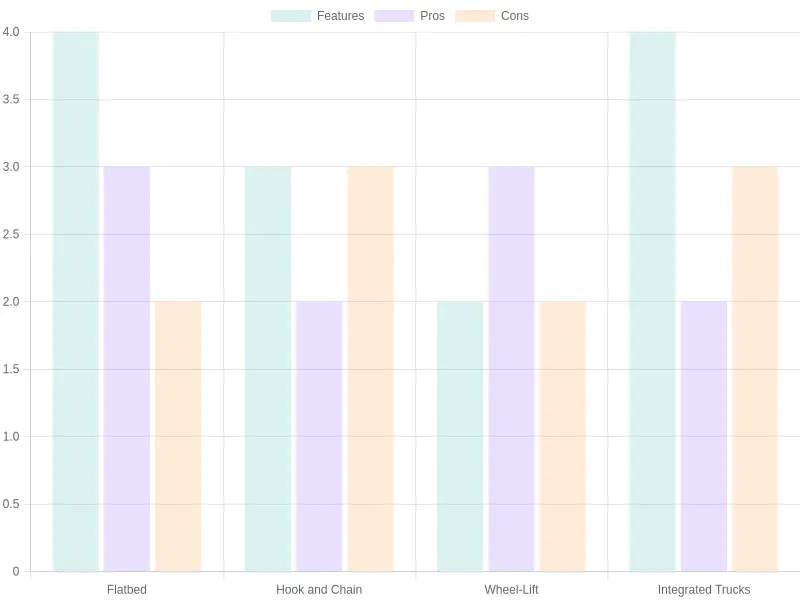
For further insights on emergency preparedness and towing strategies, check this out.
| Type | Brand | Average Cost | Key Features |
|---|---|---|---|
| Light Duty | Ford | $50,000 | Highly maneuverable, ideal for urban areas |
| Medium Duty | Hino | $70,000 | Suitable for hauling cars and light trucks |
| Heavy Duty | Freightliner | $250,000 | Capable of towing large vehicles, equipped with advanced technology |
Chart of Average Costs

These numbers reflect the general pricing for new tow trucks based on brand reputation and features. Specific models may vary, and it’s crucial to consider the needs of your business when selecting a tow truck. For more insights on maintaining a fleet, consider checking our article on emergency preparedness for island fleets. Moreover, keeping your vehicles safe is vital in handling emergency roadside assistance, as discussed in our piece on essential fleet emergency response strategies.
Factors Affecting Tow Truck Prices
Understanding the pricing of tow trucks is essential, especially for business owners in the auto repair, fleet management, and resort operation sectors. Several factors can significantly influence the prices of tow trucks:
1. Brand and Model
Different manufacturers produce tow trucks that vary widely in price. Established brands tend to offer more reliable vehicles with better after-sales support, but they often come at a premium. Models designed for specific tasks (like flatbed towing or heavy-duty towing) also reflect differences in pricing. For instance, the average cost for new flat bed tow trucks ranges from $25,000 to $50,000, depending on specifications.
2. Specifications and Customization
The specifications of a tow truck, such as its payload capacity, drivetrain configuration, and special features (like hydraulic systems), significantly affect its price. Customizations tailored to unique towing needs (like recovery or off-road capabilities) can increase costs, as additional installations and components are needed.
3. Geographic Location
The cost of tow trucks can vary significantly based on the geographical location due to factors like local demand, economic conditions, and state regulations. Urban areas might see higher prices due to increased demand for towing services, whereas rural areas might offer lower competition and pricing.
4. Maintenance and Lifespan
Maintenance costs play a crucial role as well. Tow trucks that are easier and cheaper to maintain may have a higher resale value, while those that incur high maintenance costs will factor into their total ownership price. This is critical for local auto repair shops and commercial fleet operators who need reliable equipment for operations.
Understanding these factors helps in navigating the variability in tow truck prices, allowing businesses to make informed decisions about their vehicle investments. For more about effective service operations, check out our guide on essential fleet emergency response strategies.
Financing Options for Tow Trucks
Acquiring a tow truck is an essential investment for various businesses, such as local auto repair shops, car dealerships, and commercial fleet operators. Given the significant costs associated with these vehicles, understanding the financing options available is crucial for making informed decisions. Here’s an overview of popular financing methods for purchasing tow trucks, along with their terms, interest rates, and benefits.
1. Bank Loans
- Duration: 3-7 years
- Interest Rate: 3% – 7%
- Benefits: Bank loans typically offer lower overall costs due to lower interest rates. They can have extended repayment terms, allowing businesses to manage their cash flow effectively.
2. Equipment Financing
- Duration: 1-5 years
- Interest Rate: 5% – 10%
- Benefits: This option involves fixed monthly payments, helping to preserve cash flow. Equipment financing allows businesses to lease the truck while having the option to buy it later on.
3. Lease Purchase
- Duration: 2-6 years
- Interest Rate: 4% – 9%
- Benefits: Lease purchases provide the benefit of lower monthly payments. At the end of the lease, businesses can opt to buy the truck, making it a flexible solution for many companies starting out.
4. Title Pawn Loans
- Duration: 1-3 months
- Interest Rate: 15% – 25%
- Benefits: This option provides quick cash access without a credit check, although it usually comes with a significantly higher interest rate. It’s suitable for businesses in urgent need of funds.
5. Dealer Financing
- Duration: 2-5 years
- Interest Rate: 0% – 10% (promotions may apply)
- Benefits: Dealer financing can include promotional periods with zero interest and may come with incentives such as service packages, simplifying the application process.
Summary Table of Financing Options
| Financing Option | Duration | Interest Rate | Benefits |
|---|---|---|---|
| Bank Loan | 3-7 years | 3% – 7% | Lower overall cost, long repayment period. |
| Equipment Financing | 1-5 years | 5% – 10% | Fixed payments, preserves cash flow. |
| Lease Purchase | 2-6 years | 4% – 9% | Option to buy at end of term, lower monthly payments. |
| Title Pawn | 1-3 months | 15% – 25% | Quick cash access, no credit check. |
| Dealer Financing | 2-5 years | 0% – 10% (promo) | Incentives, simplified application process. |
For more details on financing and managing fleet needs, check out our resources on fleet emergency response strategies and emergency preparedness for island fleets.
Conclusion
Choosing the right financing option for your tow truck can make a significant difference in your business’s sustainability and growth. Consider the likelihood of increasing your business’s operational capacity, as well as your cash flow management and repayment ability, when selecting a financing solution.

Customer Testimonials on Tow Truck Purchases
1. The Local Auto Repair Shop
Testimonial from Joe Smith, Owner of Island Auto Service
“As a small auto repair shop in our community, having a reliable tow truck has been a game changer for my business. After thorough research, I decided to purchase a medium-duty tow truck that cost around $85,000, well within the average range for such vehicles. The financing options provided by the dealership were flexible, which really helped ease the financial burden.
The impact of this investment on our business has been tremendous. Not only can we now offer towing services, but we also feel more equipped to handle emergency roadside assistance. Our customers appreciate the quick response service, and it’s led to increased trust in our capabilities as a repair shop. I highly recommend investing in a quality tow truck if you’re running a service-oriented business. It has proven to be well worth the cost, considering the additional revenue generated from new towing service contracts. Learn more about emergency preparedness for island fleets.”
2. The Property Manager
Testimonial from Linda Green, Property Manager of Seaside Residences
“Managing properties comes with unexpected challenges, particularly when it comes to vehicle issues on the premises. After I recognized a recurring need for towing services, I decided it was time to invest in a light-duty tow truck. I secured one for about $50,000, which was a reasonable price given its exceptional towing capacity and reliability.
The decision was also influenced by factors such as the trucks’ operational costs and the assurance that my tenants would receive prompt assistance when necessary. The purchase has not only streamlined our vehicle management but also improved tenant relations, as they feel more secure knowing that we can handle potential vehicle issues promptly. If you’re on the fence about purchasing a tow truck, I’d say go for it – you’ll see significant benefits for your operations. Plus, with heavy-duty models costing significantly more, this pricepoint is a great investment! If you’re interested, check out our fleet safety strategies here for additional insights!”
Average Cost of Tow Trucks
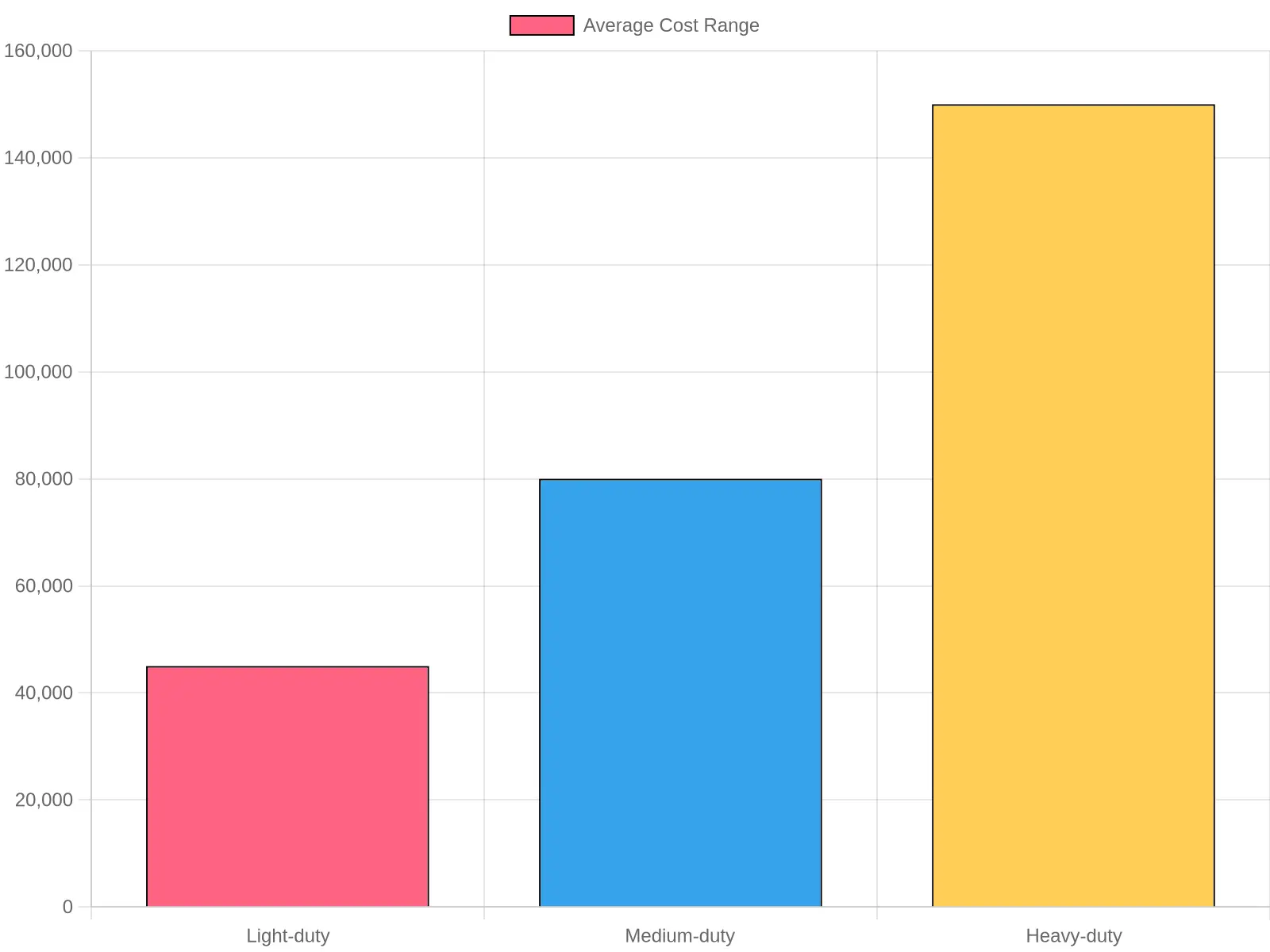
Average Cost Range of Truck Types
| Truck Type | Average Cost Range |
|---|---|
| Light-duty | $30,000 – $60,000 |
| Medium-duty | $60,000 – $100,000 |
| Heavy-duty | $100,000 – $200,000 |
In summary, investing in a tow truck can offer significant advantages for auto repair shops and property managers alike by enhancing service delivery and tenant satisfaction. Some insightful narratives from local operators highlight the importance of considering both upfront costs and long-term benefits when making this key financial investment.
Long-Term Savings from Tow Truck Ownership
Businesses considering the purchase of a tow truck often wonder about the potential long-term savings compared to relying on regular towing services. Below is a comparison chart that illustrates the financial differences between owning a tow truck and outsourcing towing services.
Comparison Chart of Tow Truck Ownership vs. Regular Towing Services
| Data Points | Tow Truck Ownership | Regular Towing Services |
|---|---|---|
| Initial Investment Cost | $100,000 | $0 |
| Annual Operating Costs | $15,000 | $30,000 |
| Revenue Generated Per Year | $50,000 | $0 |
| 5-Year Cumulative Savings | $100,000 | $150,000 |
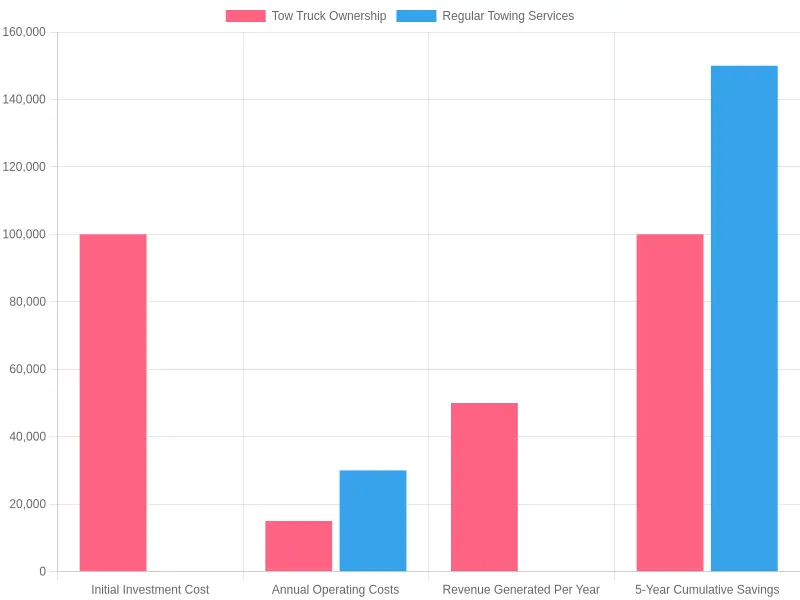
Financial Comparison of Towing Services
Insights into Costs and Savings
-
Initial Investment Cost: Owning a tow truck requires a significant upfront investment, whereas regular towing services do not require any initial purchase. However, this investment can yield substantial returns over time.
-
Annual Operating Costs: When owning your tow truck, your annual operational costs are lower compared to using outsourcing services, which typically incur higher ongoing fees.
-
Revenue Generation: Owning a tow truck allows you to generate revenue directly from services offered, making it more financially viable in the long run.
-
Five-Year Cumulative Savings: Over a period of five years, the savings gained from ownership can be significant, showcasing the benefit of choosing to own rather than outsource towing services.
This analysis helps clarify the financial impact of tow truck ownership versus regularly utilizing towing services. For businesses poised to enhance their operations, ownership often proves to be not only a practical option but an economically advantageous one as well.
For further strategies on fleet management, learn more about essential emergency response strategies that can complement the decision to own a tow truck.
In conclusion, the financial implications of owning a tow truck can be significant, but they come with substantial advantages that can propel your business forward. The average costs of new tow trucks vary, with flatbed tow trucks typically priced between $75,000 to $130,000, while more advanced heavy-duty wreckers can exceed $350,000. Understanding these investments, alongside ongoing operational costs like fuel, insurance, and maintenance, is crucial for efficiency and profitability within your business.
Moreover, owning a tow truck enables businesses in the automotive sector, such as local auto repair shops and car dealerships, to provide valuable roadside assistance, enhancing customer service and loyalty. The flexibility of tow truck operations often allows owners to maintain great work-life balance while capitalizing on steady demand.
As you consider investing in a tow truck, think about the potential for financial growth and the reliability that your own vehicle can provide. Owning a tow truck is not just a purchase; it’s an investment in your business’s future. If you’re looking to build a reliable service network and enhance your operational capabilities, learn more about essential fleet emergency response strategies and how to make your business stand out in the competitive towing market.
“Investing in a tow truck is more than just purchasing a vehicle; it’s an investment in your business’s reliability and operational capacity. A well-chosen tow truck can enhance service efficiency and unlock new revenue streams, especially for local businesses operating in unique environments like islands. Careful assessment of your needs and the right equipment choice are key to long-term success.” – Beacon Funding Industry Expert
For local businesses such as auto repair shops, car dealerships, and resort operators, a dependable tow truck investment ensures smooth business operations and timely roadside assistance. Understanding the financial commitment aids in making informed decisions tailored to island-specific demands.
For more insights on fleet management, check out Emergency Preparedness for Island Fleets and Essential Fleet Emergency Response Strategies.