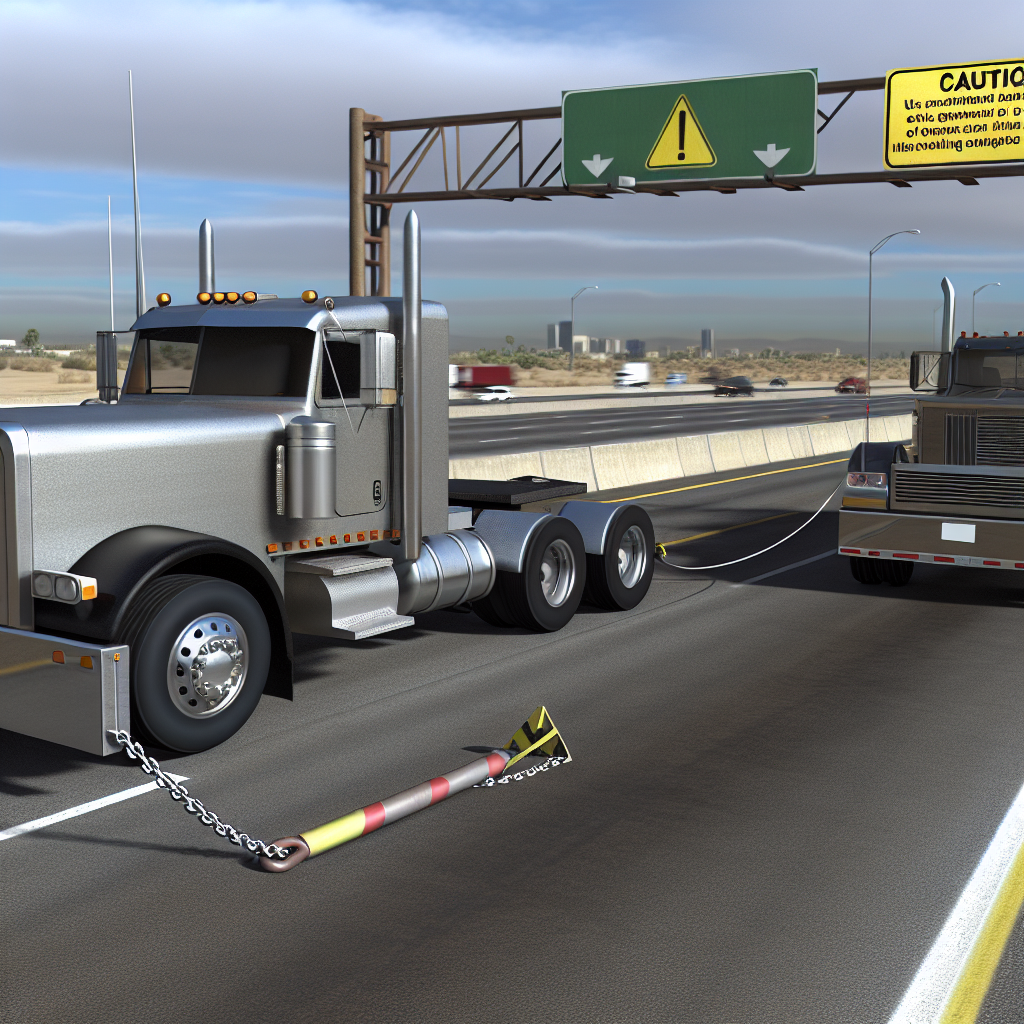
What the Hook Fee Actually Covers
The hook fee — some companies call it a service call fee or dispatch fee — is the fixed charge that applies once a truck is dispatched and the operator starts attaching your vehicle. It pays for getting an equipped truck and a trained operator to the scene, and it is neither a mileage charge nor a storage charge. Whether the tow runs one mile or fifty, the hook fee stays the same flat, up-front number.
What the hook fee includes
- Dispatch and call handling – the office, phone, and routing that sends the right truck.
- Driver time to the scene – the operator’s travel time before any wheel turns with your vehicle attached.
- Liability insurance during the hook – coverage active while the vehicle is being connected.
- Equipment readiness – the wheel lift, boom, straps, chains, and controls kept inspected and available.
What the hook fee does not include
- Miles hauled – billed separately in mileage tiers.
- Winching or recovery – labor beyond a simple hook-up.
- Storage – daily fees once the vehicle sits in the yard.
The fee scales with truck class, because the work and the risk differ. A light-duty wheel-lift handles cars and small SUVs and carries the lowest hook fee. Medium-duty trucks cover vans, box trucks, and larger pickups, priced higher. Heavy duty rescue – rotators and heavy wreckers for tractor-trailers and buses – carries the highest hook fee, since the equipment, staffing, and insurance exposure are far greater. For a closer look at how these rigs are built, see the advancements in heavy duty rescue apparatus.
Time of day moves the number, too. Overnight, weekend, and holiday calls usually cost more, because dispatch runs after hours and labor carries a premium. The rate is fixed per class, not across the clock, so the hook fee and the mileage tiers together decide what you finally pay.
The diagram below shows why the hook fee reads like an umbrella charge: four building blocks – dispatch, driver travel time, insurance coverage, and equipment readiness – funnel into a single “Hook Fee” node.
What each block represents
- Dispatch – the operator answering your call, confirming your location, and assigning the nearest available unit.
- Driver travel time – the deadhead miles and clock time spent getting to you, whether or not anything gets towed.
- Insurance coverage – liability and cargo protection that stays active the moment the truck rolls.
- Equipment readiness – the rig, wheel lift, and recovery gear kept inspected, fueled, and staffed around the clock. You can see how seriously this side is treated in these fleet emergency response strategies.
How Mileage Tiers Work
Few towing companies bill a single flat rate per mile. Most price a tow in mileage tiers: distance bands, each with its own per-mile rate. The structure lets the operator track fuel, labor, and time while still quoting you a figure before the truck rolls.
A typical schedule folds a base distance into the hook fee. That first band – often the opening few miles – is already paid for, so a short local tow carries no separate mileage charge. Once the included distance is used up, the invoice switches to a per-mile rate.
Middle tiers cover longer ranges, and their per-mile rates are set locally rather than by a single industry rule. Some schedules step the rate up as the tow stretches out; others graduate it downward after the first few miles. Either way, fuel and driver hours rise with distance, so a longer pull usually costs more in total even when the per-mile rate falls.
For very long distances, many operators switch to long-haul flat tiers – a fixed price covering a defined range instead of an open per-mile calculation – which protects you from runaway mileage costs on extended tows.
| Tier | Distance band | Billing basis |
|---|---|---|
| Included in hook fee | Opening miles of the tow | No separate mileage charge |
| Middle tier one | Next short range | Rising per-mile rate |
| Middle tier two | Medium range | Higher per-mile rate |
| Long-haul flat tier | Extended range | Fixed flat price |
Why Tier Boundaries Matter
Because the rate can change at each boundary, a one-mile difference can push a tow into a higher tier and change the total. The same vehicle, moved almost the same distance, can land on two different bills. A transparent operator will explain the tiers up front, and unclear billing is one of the red flags worth watching for when reviewing recognizing illegal towing practices. Ask which tier your mileage falls into before you approve the service.
Loaded Miles vs. Deadhead Miles
Loaded miles are the miles the truck travels with your vehicle secured on the deck – the distance actually towed. Deadhead miles are the miles the truck covers getting to you before the tow begins. Some companies bill both; others charge only loaded miles. Knowing which rule applies explains a large part of the gap between two quotes for the same job.
What Can Move the Final Bill
The base rate sets the floor for your tow price, and several variables stack on top of it. These are the ones that shift the final bill most often.
- Base hook fee rate – The flat charge for hooking up your vehicle, which varies by operator and time of day.
- Mileage tiers crossed – Long-distance tows jump into higher rate brackets, so each additional tier raises the per-mile cost.
- After-hours or weekend premium – Nights, holidays, and weekends often carry a surcharge because crews are on standby.
- Winching or recovery complexity – Off-road pulls, rollovers, or ditch extractions demand extra labor and equipment.
- Vehicle size and weight class – Heavier trucks and oversized vehicles need bigger rigs, pushing up the hook fee.
- Storage per day – Every day your vehicle sits in the yard adds a daily storage charge until pickup.
- Fuel surcharge – Rising diesel prices are often passed along as a percentage-based fuel fee.
- Access or location difficulty – Tight garages, gated lots, or remote spots slow the job and increase labor time.
Once you can see how the pieces add up, you can compare quotes on equal terms and question charges that look wrong. Learn recognizing and reporting illegal towing practices in your community to protect yourself before you pay.
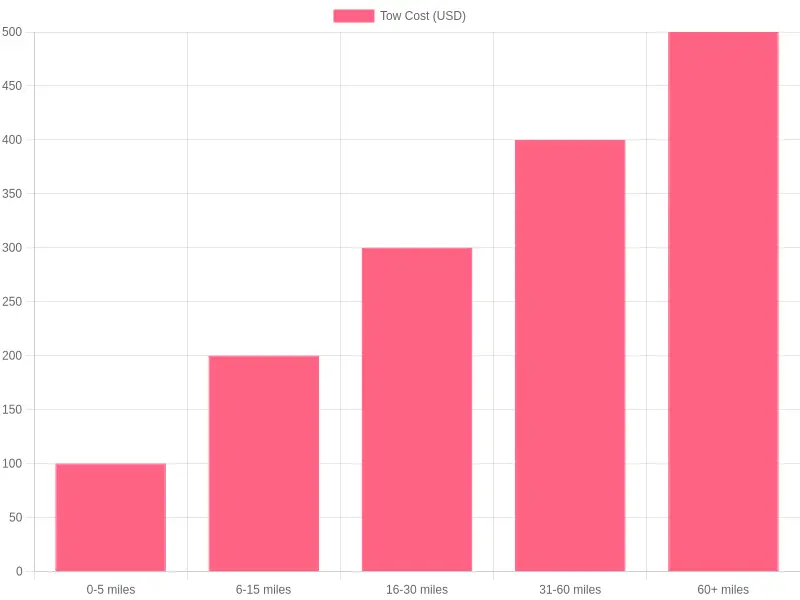
Illustrative Cost by Mileage Tier
What this chart shows
Each bar is a mileage tier. Because the rate changes at every threshold, total cost steps up at each boundary rather than climbing in a smooth line, and crossing into the next tier is where the bill jumps.
Values shown are illustrative only and are meant to explain the tier effect, not to quote an actual price.
The Other Line Items on the Invoice
The hook fee and mileage tiers are the foundation of a tow bill, but rarely the whole of it. A full tow cost breakdown lists several additional charges, each triggered by a specific condition. These are the most common.
Winching and Recovery Fees
A winching fee applies when a vehicle cannot be loaded directly and has to be pulled from a ditch, embankment, mud, or snow. The charge often scales with the number of winch line extensions, the pulling distance, and the rigging required. Recovery can take several pulls, so this fee may stack multiple times before the vehicle ever reaches the truck, and it frequently reflects the realities of roadside emergencies.
After-Hours and Holiday Premiums
An after-hours premium is triggered when service is dispatched outside standard business hours, on weekends, or during holidays. These premiums are often calculated as a percentage of the bill rather than a flat amount, which means they compound the hook fee, mileage, and any winching charges already accrued.
Storage and Yard Fees
A storage fee begins once the vehicle arrives at the lot and is not released immediately. It typically accrues at a daily rate and can include gate, release, or paperwork charges, so the longer a vehicle sits, the more this line item grows.
Fuel and Environmental Surcharges
Fuel surcharges track diesel prices and are common on longer tows. Environmental charges may apply when fluids, oil, or hazardous materials require cleanup, adding a specialized cost to the base amount.
Administrative and Documentation Charges
Administrative fees cover paperwork, lien processing, release documentation, and payment handling. They are usually small but fixed, and they are added after most other charges.
How These Charges Stack
Add-on fees seldom stay isolated. Flat charges are added one after another, while percentage-based premiums pull from the growing subtotal, so a single condition can ripple across the whole tow cost breakdown.
| Charge | Typical Trigger | How It Stacks |
|---|---|---|
| Winching fee | Off-road or stuck recovery | Per line extension |
| After-hours premium | Nights, weekends, holidays | Percentage of subtotal |
| Storage fee | Vehicle held at lot | Daily accrual |
| Fuel or environmental | Distance, spills | Flat or variable |
| Administrative | Paperwork, release | Fixed add-on |
How Your Tow Bill Adds Up
A tow bill is assembled in a fixed order, and it helps to see that order before the numbers. Most people read the total as one flat figure; in practice it is built in layers. The hook fee comes first, because the truck has to attach your vehicle and bring it under control. Mileage comes next, priced by tier, so shorter distances run at a lower rate than long ones. Only after those two are set do add-on fees land on top, covering things like winching, dolly wheels, or after-hours dispatch. The final bill is the sum of everything that came before it.
The flowchart below illustrates that sequence, with each node marking a stage in the calculation and the arrows showing how one step feeds the next on the way to your total.
Why the Same Tow Can Cost Different Amounts
Two drivers can have the same vehicle towed the same distance and still pay noticeably different bills. The difference rarely comes from the tow itself. It comes from where the service happens, who provides it, and how the local market is structured.
Hook Fees and Mileage Tiers Are Local
The hook fee – the flat charge for attaching a vehicle to the truck and beginning the tow – is set locally. A dense urban municipality may cap it, while a rural service area with fewer providers may charge more simply because the truck has to travel farther just to arrive. Mileage tiers work the same way. Some providers bill a flat first-mile rate and then step up per mile; others use graduated tiers where the per-mile price drops after the first five or ten miles. Those tier breakpoints shift by service area and by the size of the provider’s fleet.
Regulated vs. Market-Driven Rates
In many jurisdictions, municipal or provincial authorities publish a maximum allowable towing rate schedule, so the hook fee and mileage charges are fixed and predictable. In other areas no regulation exists, and pricing is entirely market-driven, which means it reflects fuel costs, driver availability, and how many competitors operate nearby. Larger regional fleets often negotiate volume contracts, while smaller operators quote per job.
Guidance for Fleet and Logistics Readers
Before any dispatch, request a written rate schedule. Ask for the hook fee, the mileage tier structure, after-hours surcharges, and any storage fees in writing. This belongs in your fleet planning checklist for emergencies. Confirm your fleet emergency response strategy includes a verified vendor list with current rate schedules on file, so nobody is negotiating pricing in the middle of an incident.
What Actually Drives Your Tow Bill
A tow bill is not one mystery number. It is a stack of specific line items, and two of them do most of the work. The doughnut chart below breaks down an illustrative average tow bill so you can see where the money goes.
The chart assigns the largest slice to mileage charges (35%), followed closely by the base hook fee (25%). Winching and recovery adds 15%, while after-hours premiums, storage, and surcharges fill out the remainder. The hook fee and mileage tiers together account for roughly six out of every ten dollars on a typical invoice, which is why knowing your local rate structure matters more than any single flat quote.
If you want to spot questionable charges before they hit your wallet, it helps to understand how to recognize and report illegal towing practices.
Tow Cost and Billing: Frequently Asked Questions
What exactly is a hook fee?
The hook fee is the base charge for a tow operator to dispatch a truck, secure your vehicle, and prepare it for transport. It covers labor, equipment, and the initial portion of the job, and it appears on your bill regardless of distance traveled. Reading it correctly is the first step in reading any tow cost breakdown.
Why do mileage tiers raise the cost of my tow?
Mileage tiers are distance-based price bands, so the farther your vehicle travels, the higher the per-mile or per-tier rate becomes. Because operators must account for fuel, driver time, and return trips, longer tows shift you into a more expensive tier. That is why two identical vehicles can produce very different final bills.
Is the hook fee refundable?
In most cases, the hook fee is not refundable once the truck has been dispatched and the vehicle secured. It represents completed work and consumed resources, whether or not the tow proceeds to its original destination. If a service is cancelled before the truck arrives, some companies waive it, so confirm the policy in advance.
How do after-hours charges work?
After-hours charges apply to nights, weekends, and holidays, when operators must pay premium labor rates. These surcharges are typically added on top of the hook fee and mileage charges rather than replacing them. Scheduling a tow during standard business hours usually keeps the final bill lower.
Can storage fees be negotiated?
Storage fees are often negotiable, especially when you arrange pickup quickly or move multiple vehicles from a single lot. Many providers offer reduced daily rates or capped totals for fleet accounts that commit to regular volume. Ask about the daily rate, grace period, and release paperwork before agreeing.
How can a fleet verify a rate schedule before booking?
Fleet managers should request a written rate schedule that lists the hook fee, every mileage tier, and all applicable surcharges in one document. Reputable operators will confirm these figures in a service agreement before any dispatch. Pairing that contract with proven emergency response planning strategies helps teams budget accurately and avoid billing surprises.
Key Takeaways on Your Tow Cost Breakdown
Two elements drive most of the total on any towing invoice: the hook fee, which covers dispatching a truck and securing your vehicle, and the mileage tier, which sets the per-mile rate once the tow is underway. They scale together, and between them they shape the largest share of what you pay.
Everything else is layered on top. Winching covers recovery when a vehicle is stuck or off-road, after-hours fees apply to nights, weekends, and holidays, storage charges accumulate for every day a vehicle sits in the yard, and administrative surcharges reflect fuel, paperwork, or regulatory costs. Individually these look small; together they add up quickly.
The practical step for drivers, fleet managers, and logistics teams is the same: request an itemized rate schedule before you authorize dispatch. Knowing the hook fee, the mileage tiers, and every possible add-on in advance turns a stressful surprise into a predictable expense. Staying aware of how roadside emergencies are handled helps you anticipate these costs with more confidence. Keep the two core variables in mind, and the rest of your tow cost breakdown becomes far easier to read.