
Understanding the costs associated with flatbed tow trucks is crucial for local auto repair shops, commercial fleet operators, and resort managers. As you navigate your business needs, determining the right investment for towing services becomes essential. This article delves into the pricing breakdown, factors influencing costs, comparisons across brands, and current market trends. Each chapter offers insights designed to empower your business decisions and ensure you’re making an informed purchase.
Pricing and Practicalities: Unraveling Flatbed Tow Truck Costs for Fleet Decisions
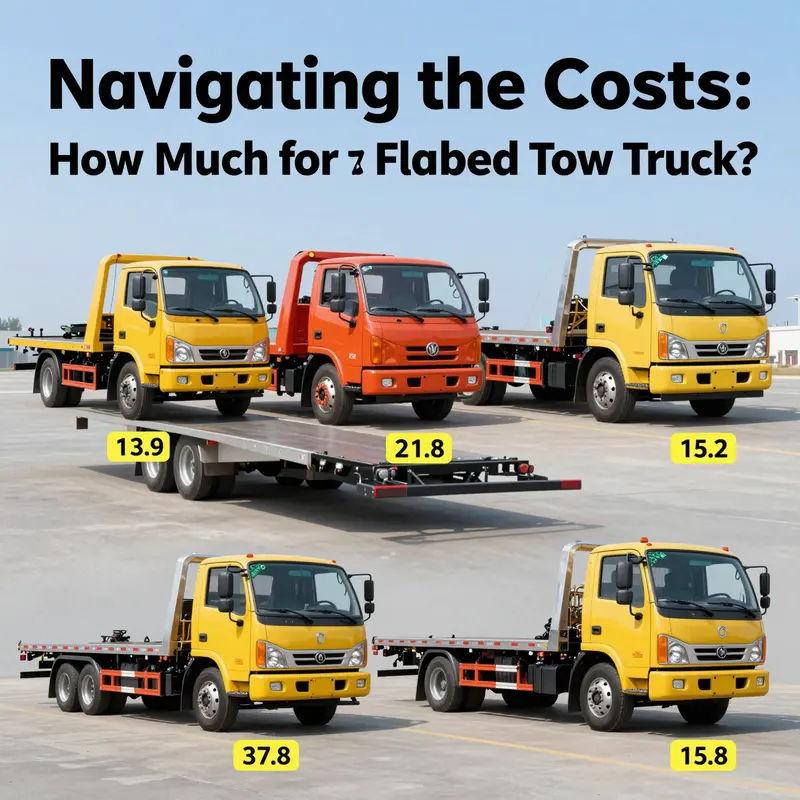
When a fleet manager sits down to plan the next purchase, the question how much for a flatbed tow truck quickly becomes a conversation about more than sticker price. Price is the most visible piece, but it sits inside a larger puzzle that includes capacity, build quality, drivetrain configuration, hydraulic systems, and the intended workload. The spectrum of flatbed tow trucks ranges from light duty models designed for routine roadside work to heavy duty units built for highway recovery and industrial transport. Understanding how these variables interact helps a buyer translate a price tag into a viable return on investment. At the core, the price you see reflects not only the raw lifting capacity and chassis strength but also the sophistication of the hydraulic package, the presence of auxiliary gear such as winches or cranes, and the level of redundancy and durability desired for daily operation. For operators evaluating options, the starting point is to anchor price to the expected job mix. If the typical fleet task involves moving compact passenger vehicles from on site to a repair shop, a light to mid range flatbed with modest crane capability can cover most needs. If the work involves heavier trucks, construction equipment, or frequent long hauls, plans should tilt toward higher capacity platforms that justify their higher upfront costs with improved uptime and faster response times. As a practical guide, the market shows a tiered pattern that mirrors the workload brackets most fleets encounter. Light duty, usually in the 2 to 5 ton range, tends to be the most affordable segment while still offering the versatility needed for roadside recovery and routine towing. In many cases a compact flatbed with a small integrated lifting mechanism is sufficient for a broad set of tasks. In price terms, you often see a range from roughly 15 500 up to 29 000 for new or lightly used units in this category. The exact number depends on the precision of the hoisting hydraulics, the robustness of the wheel lift system, and the overall build quality of the platform. Heavier use opportunities, such as moving multiple vehicles per shift or dealing with longer tows, push buyers toward the mid tier that covers 5 to 10 tons. Here the price envelope typically expands well beyond 35 000 and can extend toward 70 000 or more, depending on how the truck is equipped. This tier allows for stronger hydraulic systems, greater stability during operation, and the inclusion of features that improve both safety and efficiency. Think of a mid tier unit as the balance point between capable performance and cost efficiency, suitable for fleets that encounter a steady flow of heavier cars and light trucks, or for operators who need a resilient platform for occasional industrial tasks without stepping into the most extreme end of the market. For the most demanding assignments, the heavy duty category now starts at roughly 75 000 and can reach 150 000 for new configurations. These are the units built for high usage, with long reach booms, more powerful hydraulics, and the ability to manage large payloads with confidence. The more specialized the capabilities, the higher the price tends to rise. Rotator configurations with rotating booms, engineered for complex recoveries and high safety standards, move well into the 150 000 to 300 000 plus territory. They are not products a casual buyer will encounter frequently, but for highway incidents, heavy equipment transport, and critical recovery operations, they can define the difference between a timely resolution and extended downtime. Even within these broad tiers, price is influenced by several configuration choices that can swing the bottom line up or down. A four by two is common for lighter usage because of simplicity and lower weight, but four by four drivetrains add traction and control on uneven surfaces and during steep recoveries. The choice between a standard flatbed and a rollback variant also matters; rollbacks carry the benefit of improved vehicle retention during tilt and load operations, which is a critical factor for fleets that prioritize throughput in tight spaces. The crane package, when present, is another major price lever. A basic crane helps with lifting small vehicles and certain light equipment on to the bed, while a larger crane or a dedicated winch system can dramatically expand the truck’s utility but also add to maintenance overhead and initial cost. The crane may also influence the total length and weight of the unit, which in turn affects street legal compliance, license requirements, and fuel efficiency during road operations. The drive to efficiency often leads buyers to consider left hand drive LHD configurations or conversions as a way to align the truck with local traffic norms and towing routes. While such conversions can broaden market compatibility, they usually come with a premium. Another layer of pricing arises from the hydraulic and control system design. A basic on board hydraulic pump with a straightforward valve system will deliver essential bed operation at a lower price point, whereas a more sophisticated system with advanced control logic, multiple circuit options, and higher flow rates provides smoother operation and faster cycle times but at a higher upfront cost. The presence of additional safety features also adds to price but is essential for compliance and risk management. For example, a platform designed with redundant hydraulic lines, conservative weight ratings, and smart fault monitoring offers greater uptime and reduces the likelihood of costly service calls in the field. In practice, buyers often encounter price incentives that reflect the broader market dynamics. Factory direct options, which are sold in bulk from a manufacturer or assembler, may present lower per unit prices when buying multiple units. Conversely, individual buyers may face higher unit costs but gain access to customized configurations or faster delivery. The practical takeaway is that a lower upfront price may not translate into a lower total cost of ownership if it comes with higher maintenance needs, reduced reliability, or a shorter service life. When weighing a purchase, it is valuable to look beyond the sticker price and map the expected maintenance costs, spare parts availability, and anticipated resale value. An added factor is the velocity of the repair ecosystem in the buyer’s region. In areas with robust service networks, parts supply chains tend to shorten downtime, which improves the value proposition of higher priced units with better long term reliability. In more remote markets, the economics can shift, making it critical to assess how quickly a unit can be repaired, what the typical lead times are for parts, and whether a refurbished or remanufactured unit could offer a more favorable balance of cost and reliability. The pricing conversation also benefits from understanding alternative pathways to asset ownership. Some fleets opt for short term financing or leasing arrangements that lower the initial cash outlay while preserving access to a modern platform. Others pursue buy now, pay later schemes or vendor financing options tied to maintenance contracts or training programs. Each path can influence cash flow and total cost of ownership in markedly different ways, which is why a thorough financial model is essential prior to committing capital. A useful heuristic for many operators is to align the procurement decision with the lifecycle phase of the fleet. If the fleet is expanding rapidly or transitioning to higher service levels, a newer model with extended warranty can offer peace of mind and predictable maintenance costs. If the current operation relies on steady demand but requires capital efficiency, a pre owned unit with verified maintenance history or a certified refurbished platform might be the optimal choice. In drawing up the final decision, it helps to sketch a simple scenario. Imagine a typical day that includes several tows, multiple vehicle types, and a few roadside recoveries across varying terrain. A light duty unit may cover most of the common calls, but a heavy duty unit may be needed for a subset of urgent recoveries. The key is to ensure the chosen mix yields a reliable plan for response time, crew safety, and logistical efficiency. The internal calculus will often point to a mixed fleet: one or two light or mid range flatbeds for daily work, and perhaps a single higher capacity unit reserved for specialized tasks. It is not about chasing the highest horsepower or the latest gadget; it is about calibrating a balance between capability, reliability, and cost, so the fleet remains responsive without tying up capital in optional features that will rarely be used. Finally, price is only one axis of a broader procurement strategy that must consider vendor support, warranty terms, training opportunities, and the ability to access spare parts quickly. A well structured buying plan will spell out expected usage patterns, maintenance intervals, and a clear path for upgrades or replacements as the fleet evolves. For readers seeking practical guidance beyond numbers, a useful place to explore how procurement decisions intersect with fleet resilience is the essential fleet emergency response strategies resource. The link provides a framework for aligning vehicle capability with emergency readiness, ensuring that the asset you select will contribute to a faster, safer, and more reliable response in critical moments. See the resource here: essential fleet emergency response strategies. As the chapter moves from price to performance, the next layer of analysis focuses on how to ensure that the chosen platform remains economically sustainable over its life cycle, including the costs of maintenance, training, and ongoing support. In addition to the operational considerations, buyers should acknowledge that the market environment shifts with currency movements, regional demand, and the pace of new technology adoption. Some regions may see price pressure on basic configurations, while others reward customers who invest in more versatile platforms that can handle a wider range of tasks. To anchor these considerations in a real world frame, it is useful to consult external sources that track price ranges and configuration options across manufacturers and platforms. A comprehensive external reference that captures the breadth of pricing, capacity, and configuration options is available through major supplier marketplaces. It provides a snapshot of what is feasible within a given budget and how different feature sets drive total cost. For readers who want to explore concrete price ranges and configurations, see the external resource at the end of this chapter. External reference: https://www.alibaba.com/product-detail/Factory-Price-JAC-Flatbed-Towing-Vehicle_1601255353234.html
What Drives the Price Tag on a Flatbed Tow Truck: Size, Spec, and the Market Behind the Wheels
The price you pay for a flatbed tow truck is rarely a single number rooted only in its bed size. It is the outcome of a braid of factors that begin with the vehicle’s core specifications and extend through the choices buyers make about customization, brand, and the channels through which the purchase is made. When you embark on a procurement journey for a fleet or a single workhorse, the sticker price becomes a conversation about value, risk, and long term compatibility with your operational needs. The most visible element, size and load capacity, sets the floor for what the machine can lift and haul, and it also gates the quantity of steel, hydraulic components, and control systems that the chassis must accommodate. A compact flatbed with a modest capacity will require less steel, lighter structural reinforcements, and simpler hydraulics. In current listings, one might encounter a small to mid range flatbed around three to six tons, with price bands that reflect the basic specification plus a dash of modern reliability. Those bands can span roughly from five thousand five hundred dollars up to eleven thousand eight hundred for a unit, revealing how initial capacity translates into a baseline cost. As payload capability expands toward six tons with multipurpose configurations, the price range widens further to a two digit thousand figure, roughly nine thousand nine hundred dollars to nineteen thousand eight hundred dollars. These numbers are not rigid price tags but indicators of how capacity interacts with design and component choices. They show that a few tons on the scale of capability can push the price substantially as more robust frames, stronger winches, and more capable braking systems enter the design brief. Beyond the three to six ton range, the story grows more complex. Ten ton or fifteen ton flatbeds that include a crane or a rollback mechanism move into the next higher price tier, often listed in the area of fifteen thousand five hundred dollars to twenty nine thousand dollars for a configured set. These models bring added hardware, such as a crane’s hydraulic power, extended reach, and load control systems, which increase not only the purchase price but the eventual maintenance and component wear costs. It is important to note that even within a given tonnage category, the pricing can diverge widely based on the exact configuration. A compact unit with a basic bed, standard hydraulics, and minimal accessories will sit at the lower end of the spectrum, while a well-equipped machine with enhanced safety systems, a high grade engine, ABS braking, all-terrain tires, and a more sophisticated suspension can push the price toward the higher end of the same capacity range. Those features are not ornamental; they translate directly into safer operation, longer fleet life, and reduced downtime, all of which carry their own value when viewed across the lifecycle of the vehicle. The bed itself, which defines the core utility of the machine, is another major driver of cost. The materials used for the chassis and the platform influence both strength and weight. A bed built from high grade steel, or perhaps an alloy that reduces weight without sacrificing durability, commands a premium due to the cost of materials and the engineering required to maintain structural integrity under load. If a buyer prioritizes weight reduction to improve fuel efficiency or payload balance, the choice to use aluminum or lighter alloys further raises the expense but can offer performance dividends in service life and fuel economy. The configuration and equipment present yet another axis of variation. The more sophisticated the system—be it a robust hydraulic circuit, an integrated telematics or remote diagnostics suite, or a computerized control module for load distribution—the more engineering time and manufacturing steps are required. This is where the line between affordable utility and high performance becomes a strategic decision. Those who insist on advanced safety features such as enhanced braking, traction control, and robust anti slip systems will see added costs, but they gain reliability and safety that pay off in reduced incidents and faster, more predictable service. The material choices used in the bed and the chassis compound this effect. Heavier, thicker steel achieves lasting strength and resistance to deformation under heavy loads, but the cost goes up as raw material prices rise and the manufacturing process becomes more involved. Lighter materials like aluminum or high strength alloys can yield a better power-to-weight ratio and longer service life in some conditions, but they demand more expensive fabrication and specialized joining methods. These material decisions ripple through the total cost because they influence not only the upfront price but the ongoing maintenance costs, corrosion resistance, and lifespan of critical components. Brand value and manufacturing origin also shape the price story. A well established-brand vehicle carries a traceable pedigree of engineering rigor, after sales support, and warranty coverage that buyers pay for through a premium. Imported units carry additional costs such as shipping, tariffs, and compliance with foreign standards, which can push the final price higher than domestically produced models with similar specifications. In practice, this means a buyer can encounter the same gross capacity profile produced by different origin blocks that end up with significantly different price tags due to brand reputation and regional support ecosystems. Customization and special requirements demonstrate that a price is not merely a function of mass and horsepower. If a buyer asks for precise dimensions, a special shape of the loading platform, or a bespoke hydraulic system, the design, engineering, and tooling steps add to the cost. Customizations extend into integrated features like GPS tracking, remote diagnostics, and specialized safety systems that are designed to support a specific fleet’s workflows and safety protocols. Each added feature not only elevates the purchase price but also the potential maintenance cost and the complexity of service, which in turn influences the overall lifecycle cost. Market conditions and purchase channels complete the trip from sticker price to real-world cost. When demand surges—driven by infrastructure projects, commercial vehicle procurement cycles, or simply a tight market where supply struggles to keep pace with orders—prices rise. Conversely, during slower periods, producers and dealers may offer more aggressive pricing to move inventory. Raw material prices, particularly steel and rubber, ripple through the cost structure. If commodity prices spike, the cost to produce a flatbed increases and the price the market bears reflects that shift, at least temporarily. The channel through which a buyer purchases also matters. Buying directly from a manufacturer often yields the most competitive price because it curbs distributor markups and adds a straightforward warranty path. Dealers provide convenience, demonstrations, test drives, and localized service arrangements, but those benefits can come with overheads that show up as a higher ticket price. The decision to buy through a dealer versus directly from production lines into service facilities is thus a strategic one, tied to the buyer’s tolerance for risk, the availability of local after sales support, and the speed with which the fleet must be operational. Adding to the price fabric is the service and after sales envelope that accompanies the machine. A higher upfront price frequently encompasses more comprehensive warranty terms, faster response times, and broader technical support. When fleets evaluate total cost of ownership, these assurances can reduce unexpected downtime and repair expenditures, delivering value over the vehicle’s life that outweighs a higher initial outlay. All of these strands—specifications, materials, customization, brand, origin, market dynamics, and the chosen purchasing channel—interweave to explain why two flatbed tow trucks with seemingly similar capacities can sit on opposite ends of the price spectrum. The lesson for buyers is clear: to understand what a particular price means, map it back to the precise combination of capacity, features, and support that the unit represents. Numbers alone tell a story, but the full narrative is found in the details of how the truck is built, where it comes from, what it is equipped with, and how the seller defines value through warranty and service commitments. If you are budgeting for a fleet or weighing a standalone purchase, start by identifying your core operational requirements—your typical load weights, the terrain you operate on, and the frequency with which you must move heavy items. Then align those needs with the level of sophistication you actually require. Do you need a basic, reliably engineered platform, or do you require a more capable machine that can handle heavier loads with greater precision, quicker turnarounds, and more robust diagnostics? The answer will guide you through the ranges described above and help you distinguish between price as a barrier and price as a proxy for long term reliability and efficiency. While the figures help anchor expectations, the real value comes from how well the chosen unit fits the tasks at hand, the environment it will operate in, and the support system that will sustain it. For readers who want to broaden their understanding of fleet readiness and the integration of heavy equipment into island or coastal operations, the Island Tow Truck blog offers practical perspectives on maintenance, emergencies, and routine readiness that connect closely with the themes explored here. the Island Tow Truck blog.
In the end, the path from a price tag to a sound investment rests on disciplined scope management. Outline your required capacity, confirm the non negotiables in safety and performance, assess the value of specialist features, and then compare quotes with an eye toward total cost of ownership rather than upfront price alone. If you approach the decision with that mindset, you will not only buy what you need but also protect your fleet against unexpected downtime and escalating maintenance costs over time. The next stage in this exploration moves from the calculus of price to the practicalities of planning a fleet that remains ready under pressure and capable when every hour counts. For those who are sourcing equipment on a broader commercial scale, consider also consulting external resources to understand market dynamics and supplier incentives. External reference: https://www.alibaba.com
Riding the Price Curve: Understanding Flatbed Tow Truck Costs Across Capacities and Brands
Riding the Price Curve: Understanding Flatbed Tow Truck Costs Across Capacities and Brands
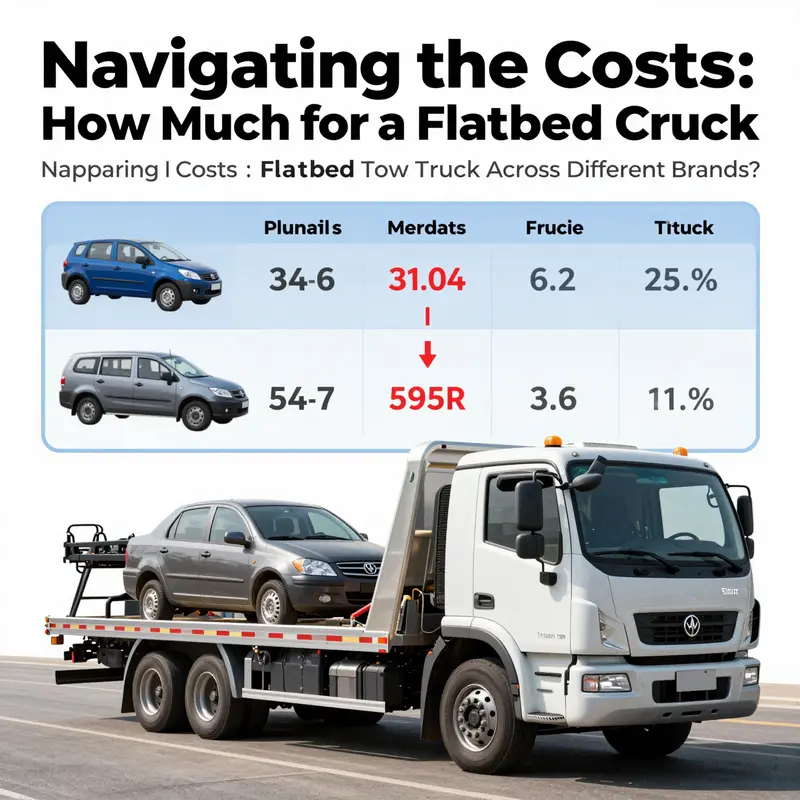
Cost, when viewed through the lens of a fleet operating in the real world, is never a single figure. It is a composite: the chassis, the lifting and loading equipment, and the features that separate a basic recovery unit from a capable, long term workhorse. In the market for flatbed tow trucks, price moves with payload, with the crane or winch, and with how integrated the system is. As fleets consider replacements or expansions, they learn that the sticker price tells only part of the story. The total cost of ownership includes maintenance, downtime, fuel, tires, insurance, and potential resale value after years of service.
To frame the discussion, think in three broad capacity bands, each with its own price ecosystem and typical features. The light-duty segment, roughly 3-5 tons, is where fleets test the waters with a compact, nimble machine. The mid-duty tier, around 5-8 tons, is the workhorse range combining everyday towing with occasional heavier jobs. The heavy-duty category, 10 tons and above, demands the strongest frames, the most capable winches and cranes, and the service networks to match.
Across these bands, price stories diverge in predictable ways. Light-duty models tend to be the most affordable on a per unit basis, but vary with chassis options, hydraulic power, and safety features. Mid-duty units bring more steel, bigger winches, and often a choice between a stronger deck or a crane option. Heavy-duty configurations push into premium territory where high capacity winches, advanced hydraulics, and higher specification materials can push the price well into six figures. Brand lineage matters: globally recognized manufacturers with broad dealer networks tend to command higher prices than newer or regional brands, even when the core function remains the same.
It is also essential to acknowledge a few market realities. New models from large brands tend to carry higher upfront costs than used units, but they come with warranties and longer service intervals. International sourcing adds complexity, including shipping and duties. The market habit of bundling or unbundling options makes apples-to-apples comparisons tricky: a machine with an integrated crane will usually cost more than a tilt-bed with a separate winch, and a unit with advanced diagnostics and telematics may have a higher upfront price but lower downtime costs over time.
With these realities in view, here is a consolidated view of what buyers typically encounter in the 2025-2026 market, based on current listings and industry commentary. While you will see a range of numbers in any catalog, the patterns below help fleets estimate a realistic starting point for budgeting and procurement, while highlighting practical differences that justify price gaps within each capacity tier.
Light-duty flatbed tow trucks (roughly 3-5 tons) tend to be the entry point for many fleets seeking a compact recovery solution that can navigate city streets and smaller lots with ease. Price ranges commonly fall between forty thousand and seventy five thousand dollars per unit for standard configurations. The lower end represents basic hydraulic tilt beds with a straightforward winch, adequate for passenger cars and light vans. The higher end often reflects upgraded hydraulics for quicker bed return, stronger winches with greater pulling power, and extra safety features like reinforced panels and improved lighting. It is not unusual to see mid-range pricing as a practical value point.
Mid-duty flatbed tow trucks, spanning roughly 5-8 tons, enter a zone where price typically climbs to the range of seventy five thousand up to about one hundred thirty thousand dollars, depending on the exact blend of capacity, features, and finish. In this tier, buyers scrutinize frame strength, hydraulic power, and the presence or absence of a crane or boom option. A crane makes a big difference: it increases capacity, reduces the time for certain recoveries, and lowers the risk of injury. Premium versions in this band often feature stronger deck materials, more precise steering geometry, and enhanced electrical systems to support more complex controls and diagnostics. The choice between a single consolidated mechanical system and a modular arrangement with an external crane is a central decision point in cost planning. The service network matters: mid-duty machines from brands with broad dealer coverage tend to command higher prices but come with quicker maintenance and better parts availability.
The heavy-duty category (10 tons and above) constitutes the market’s upper end, where price ranges commonly extend from about one hundred thirty thousand dollars to two hundred fifty thousand dollars or more. This is the realm of high-capacity winches, long deck lengths, and the option to pair with rotating cranes or other advanced tools. Buyers in this space are often focused on total cost of ownership: uptime is critical, so warranties and service support become important as the initial price. It is common to see premium configurations that include advanced safety systems, corrosion resistant coatings, and higher grade steel alloys. Because these machines are often tied to larger fleets and municipal or industrial contracts, service contracts and extended warranties often factor into the decision as much as the upfront price.
An important nuance is the difference between buying new versus used or near-new units. Used listings can present attractive price points, but may carry higher maintenance costs or limited warranty coverage. For smaller fleets, well maintained used units with good history can be a smart choice. For larger operators, the additional cost of a new or certified pre-owned option can minimize downtime risk over multiple years.
Beyond the core price, secondary cost factors shape the overall economics. Shipping and import fees can add thousands to well over twenty thousand dollars depending on origin and destination. Customization choices—GPS tracking, enhanced lighting, specialist winch controls, or reinforced decks—can inject five to fifteen thousand dollars into the final price tag. Warranties and service packages also influence the long term cost picture, sometimes increasing the initial number but often delivering value through preventive maintenance and reduced downtime.
When a fleet manager runs the numbers, the goal is total cost of ownership rather than the lowest upfront sticker price. Cheaper today can mean more expensive tomorrow if warranties are weak or downtime is frequent. A higher upfront investment can pay for itself through reliability, uptime, and resale value. The decision depends on the intended use and the operating environment. For urban fleets with frequent short trips, a nimble light-duty unit with solid warranty coverage can offer value. For operations demanding regular recovery of larger trucks or buses, a heavier platform with strong support might be worth the premium.
As a practical guide, buyers typically weigh payload capacity, presence of a crane versus a bench-type winch, deck material and finish, and the breadth of the support ecosystem. Brand reputation acts as a proxy for service availability and resale prospects. In regions with robust importer networks, long-term cost of ownership often aligns with reputable brands offering maintenance plans and broad parts supply. In less serviced markets, simpler, locally sourced builds may be more common, though downtime can rise.
For readers seeking a quick snapshot of price meaning in practice, consider how the market differentiates between a basic, no-frills light-dut unit and a fully equipped heavy-dut unit. In light-duty, the price is often mid-range; in mid-duty, the price spread reflects whether a crane is included, and how robust the hydraulics are. In heavy-duty, the price delta can be substantial when the configuration supports longer decks, higher capacity winches, and advanced safety systems. The bottom line is to map workload, environment, and uptime against total cost of ownership. For a fleet operating in a busy urban corridor, a nimble unit with reliable warranty can deliver value. For larger operations, the higher upfront price may be justified by better uptime and a more complete service package.
If you want more context on fleet management and maintenance strategies, practical perspectives can be found at The Island Tow Truck Blog. The Island Tow Truck Blog offers insights for operators balancing upfront investment with long-term reliability.
For readers who want to compare real-world listings and trace pricing trajectories, broader supplier platforms that publish ongoing price ranges and MOQs can be valuable. These sources reflect how buyers in different regions negotiate speed, volume, and aftersales support, and emphasize aligning procurement with a fleet’s maintenance strategy and service footprint. External resource: https://www.alibaba.com/product-detail/Inexpensive-Brand-New-10-Tons-Rollback-Flatbed-Tow-Truck_1600854834528.html
Tow Worth and Trajectory: Unpacking Flatbed Tow Truck Prices in 2026
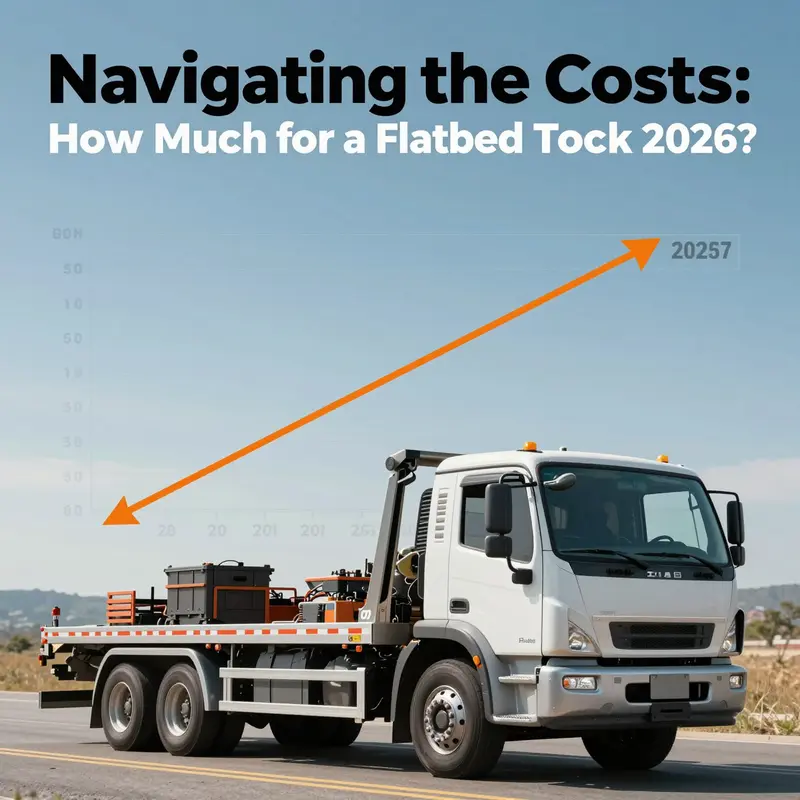
The year 2026 presents a broad and surprisingly nuanced price landscape for flatbed tow trucks. Far from a single price tag, the market mirrors the diversity of the jobs fleets must perform, from quick roadside recoveries to heavy asset transport and on highway rescue operations. The key takeaway is not a single number but a spectrum shaped by capacity, configuration, and the intended duty cycle. In practice, buyers encounter a long menu of options, where a few thousand dollars can separate a basic light duty unit from a highly configured heavy lifter with a hydraulic crane and a tilt bed. Understanding this spectrum can help a fleet manager align procurement decisions with actual operating needs, rather than chasing headline prices or the latest feature set. As with any capital equipment, the cost of ownership extends beyond the sticker price. Depreciation, maintenance, fuel efficiency, insurance, downtime, and aftersales support all ride along with the initial investment, and those factors typically determine the true cost of a flatbed tow truck over its lifecycle.
At the light end of the market, the 3 to 10 ton class forms the backbone of many daily recovery operations. These light-duty flatbeds are built to handle standard vehicles and small multi-vehicle configurations with reasonable turnaround times. The 2026 data show a wide price range here, from roughly five thousand five hundred dollars up to twenty nine thousand dollars for a unit that is ready for immediate road work. The delta is driven by factors such as bed length, bed type (static flatbed versus tilt tray), the presence of wheel-lift or rollback features, and the sophistication of the hydraulic system. In many fleets, the most economical choice is a compact unit that offers a reliable platform with essential recovery capabilities rather than a feature-laden package with capabilities the operation may rarely use. For operators who routinely tow two cars, or who need a slightly longer bed to accommodate odd ballast or dimensioned loads, the upcharge to a two-car carrier or a slightly larger bed is often justified by a reduction in loading time and a lower likelihood of handling scrapes or jams during a tow.
The mid-range category, typically classified as 10 to 20 tons, introduces a noticeable shift in both capability and price. Here, the trucks are expected to move heavier vehicles and, in some cases, construction machinery or other large loads. The 2026 price bands for this tier range roughly from fifteen thousand dollars up to fifty thousand dollars for a set. A large portion of this variance is due to the optional equipment that can accompany the bed, including a robust hydraulic winch, a trombone or boom-style crane, and reinforced chassis components that can withstand repeated heavy cycling. Buyers in this segment often weigh the benefits of a built-in crane versus a dedicated crane on a separate trailer. The crane option, in particular, can swing the total cost by ten thousand dollars or more, but it also unlocks capabilities that dramatically expand the operator’s service envelope. In such configurations, the operator gains the ability to lift and place heavy objects with more precision, which reduces the need for additional equipment on site and speeds up complex recoveries. The alignment between perceived need and actual deployment matters here; a crane-rich package might be excellent for a fleet that intercepts frequent heavy-duty jobs, but could prove less economical for a shop whose typical job involve standard vehicle towing and light recoveries.
Stepping into the higher end introduces heavy-duty and specialized wrecker trucks. These units are designed for highway incidents, serious recoveries, and the transport of unusually large or heavy loads. They often feature powerful cranes and hydraulic platforms, integrated winches, and advanced safety systems. The 2026 data indicate that premium models on this end of the spectrum can start at roughly thirty six thousand eight hundred dollars for a minimal order of several units, climbing to around thirty seven thousand eight hundred dollars for a single unit. The premium price reflects not just the crane’s lift capacity but also the reliability of the hydraulic systems, the robustness of the undercarriage, and the adaptability of the control interfaces. For fleets facing high volumes of complex scenes, the upfront investment in such a machine can translate into meaningful efficiency gains, fewer job delays, and safer operations for drivers working on congested highways or at construction sites where the risk of secondary incidents is nontrivial.
Beyond the truck itself, the market also includes specialized flatbed configurations designed to move heavy items across longer distances and longer payloads. A brick transport flatbed, for instance, typically sits in a price corridor around twenty-five thousand to fifty thousand dollars. A dedicated excavator transport flatbed can run anywhere from twenty-one thousand to forty-eight thousand dollars, depending on bed length, axle configuration, and the presence of tilt or stabilized platforms. These figures emphasize a critical point: the cost of a flatbed is not only about the vehicle’s towing power but also about the bed’s ability to safely and efficiently deliver a payload without compromising on stability or road clearance. For operators whose work regularly involves oversized construction equipment or heavy bricks as part of a project, investing in a purpose-built flatbed makes logistical sense, even if the upfront price is higher than a more general-purpose unit.
In all these ranges, the price structure in 2026 reflects a simple market truth that many buyers overlook in the rush to select features: the value of a given configuration is heavily contingent on matching capabilities to the actual tasks performed. A unit that includes a heavy crane, a long tilt bed, and a high-capacity winch is exceptionally capable, but if the operator seldom needs to lift heavy objects or transport long loads, that same unit can become an underutilized asset and a source of unnecessary carrying costs. Conversely, a more modest unit may excel in steady recoveries and routine tows, delivering reliable performance with a lower total cost of ownership. This balance between capability and utilization is the lens through which any 2026 price survey should be read.
The market for flatbed tow trucks is further shaped by the nature of supply chains and regional pricing. In 2026, manufacturing and distribution networks have continued to evolve, and buyers often encounter different pricing dynamics depending on where the vehicle is produced and where it is delivered. Shorter lead times, favorable exchange rates, and lower duties can tilt the economics in favor of certain regions, while import costs or local labor rates may dampen price competitiveness in others. For fleets that operate across borders or that look to consolidate purchases from a single supplier to benefit from bulk pricing, such regional considerations can translate into meaningful differences in the final outlay. Moreover, the decision to buy new versus used remains a central axis along which price diverges. A late model used unit may deliver a substantial savings, but buyers must weigh the risks of wear, reliability, and the costs of ongoing maintenance against the lower initial price. The reality is that many operators find an optimal position by adopting a staggered strategy: acquire a reliable used base unit for daily workloads, then augment with a newer, specialized configuration for peak demand periods or for high-stakes deployments where reliability and uptime are crucial.
From a financing perspective, the 2026 landscape favors options that distribute risk and preserve cash flow. Many fleets take advantage of flexible financing arrangements, extended warranties, and maintenance packages that align payments with utilization. The total cost of ownership becomes a function of price plus financing terms, maintenance commitments, and the aftersales ecosystem. A unit with a longer warranty and a structured maintenance plan can, in practice, reduce unexpected downtime and thereby improve the fleet’s overall productivity, particularly for operations that schedule tight response times and must keep vehicles on the road with minimal interruption. In this context, the higher upfront ask for a feature-rich unit may be justified if the expected uptime and serviceability align with the operator’s risk tolerance and service-level commitments.
To make sense of these prices, buyers must translate the numbers into operational reality. A useful heuristic is to map the capacity and features to the specific job mix an organization faces. For example, if a fleet often retrieves compact to mid-size vehicles on busy city streets, a 3 to 6 ton surface with a reliable wheel-lift system and a modest bed length could be the sweet spot. If the operation regularly handles larger pickups, municipal fleet calls involving heavy limousines or SUVs, or multi-vehicle recoveries in staging areas, a 10 to 20 ton unit with a robust winch and a crane offers a clear performance edge. For heavy highway incidents or construction sites where heavy lift and precise placement are essential, a 20+ ton machine with a hydraulic platform and a high lift capacity becomes not just a purchase but an investment in service resilience. And then there are the specialist operations, where a brick or excavator transport bed unlocks additional revenue streams and reduces external hauls of third-party equipment or rental trailers. This layered approach helps avoid the pitfall of chasing the most powerful machine without a clear justification for the added cost.
The broader market signal in 2026 also underscores a move toward modularity and configurability. Buyers increasingly seek platforms that can be adapted over time as needs change, rather than committing to a single fixed specification at the outset. A modular flatbed with optional attachments, such as an adaptable winch package, an extendable bed, or a crane add-on, enables fleets to scale capabilities up or down based on immediate demand. This flexibility is particularly valuable for smaller operators who anticipate growth or seasonal fluctuations in load profiles. The willingness of manufacturers to offer configurable bases and drop-in add-ons helps moderate the price risk for buyers who might otherwise overpay for capabilities that rarely get used. In practice, this means a buyer may purchase a leaner baseline unit and plan for incremental upgrades as the business expands or as service expectations evolve.
For readers seeking deeper context or a closer look at concrete listings, one can explore a variety of product catalogs and supplier pages that illustrate the range described here. A practical starting point is to consult industry-focused resources that discuss fleet needs, maintenance planning, and recovery strategies. For additional context and ongoing updates, the Island Tow Truck blog offers insights into fleet operations and emergency response planning that can complement a price-focused chapter like this one. The Island Tow Truck blog.
In sum, the 2026 market for flatbed tow trucks is defined by a wide spectrum of price bands that align with a broad range of use cases. From light-duty performers at the lower end of the price scale to heavy-duty machines with integrated cranes priced at the upper end, the total cost of ownership depends not only on the sticker price but also on the expected uptime, maintenance costs, and the degree to which a given configuration fits the job mix. Packed inside these price points are decisions about bed length, wheel base, crane capability, tilt tray mechanics, and hydraulic performance, all of which translate into the ability to recover more efficiently, deploy faster on scene, and minimize risk to drivers and customers. As fleets look ahead, the best strategy is to anchor procurement in actual operational needs, couple that with a thoughtful plan for maintenance and financing, and remain flexible about future upgrades that can capture incremental gains in productivity without destabilizing cash flow. The result is not simply a purchase price but a carefully crafted investment that sustains service levels, safety, and profitability across a fleet’s lifecycle.
External reference: https://www.alibaba.com/product-detail/New-DFAC-Wrecker-Flatbed-Tow-Wrecker-Truck1600818759510.html?spm=a2700.galleryofferlist.pproductGalleryList.3.63c96b5dKjYqZf&from=productDetail&src=1600818759510
Final thoughts
In wrapping up our exploration of flatbed tow truck prices, it’s evident that understanding market dynamics and your own operational needs plays a crucial role in making an informed investment. As you weigh the options, keep in mind the various factors discussed—from brand differences to the specific requirements of your business. Continuous research and insights into market trends will enable you to not only find the right tow truck but also ensure it serves your island community effectively.