Driving a tow truck encompasses a range of responsibilities that go beyond just maneuvering a large vehicle. For local auto repair shops, car dealerships, property managers, resort operators, and commercial fleet operators, ensuring compliance with driving regulations is paramount. One of the primary legal requirements operators must consider is whether they need a Commercial Driver’s License (CDL) to operate a tow truck. This article will explore the essential federal regulations; delve into state-specific requirements; distinguish between commercial versus personal use; and address safety and legal considerations to keep your operations smooth and compliant.
Tow Truck CDL Essentials: Federal Rules, Weight Thresholds, and the Roadmap to Licensing
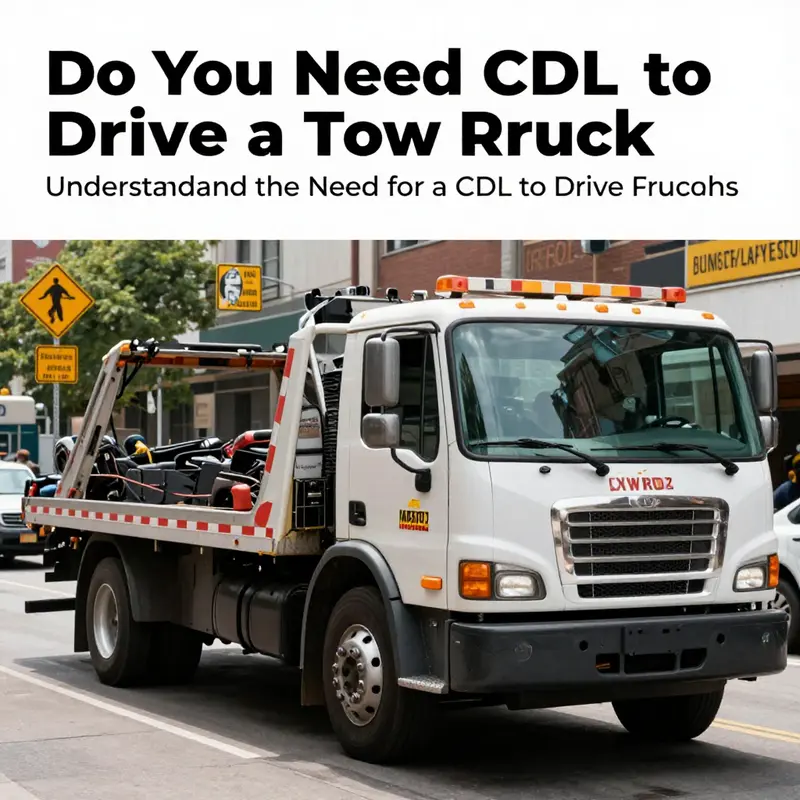
Tow trucks operate at the practical edge of mobility and risk. They are not merely machines that yank a broken vehicle from the roadside; they are mobile workshops, safety enablers, and, in many cases, the first line of response after a breakdown or an accident. The operator who handles a tow truck bears a heavy responsibility: to move people and assets safely, to manage traffic in sometimes chaotic environments, and to do so with a clear understanding of how weight, momentum, and restraint systems influence every decision. In that frame, the question, “Do you need a CDL to drive a tow truck?” cannot be answered with a single yes or no. It requires reading the weight on the truck itself, understanding what is being towed, and knowing where federal guidelines meet state safeguards. The weight thresholds that shape this answer are not merely technical details; they are the practical line between everyday driving and professional licensing that confirms training, medical qualification, and accountability on the road. At the core of this discussion lies the Gross Vehicle Weight Rating, or GVWR, a number that anchors how a vehicle is classified for licensure and how it is treated by regulators and insurers alike. Federal guidance from the agency responsible for highway safety and commercial driving clarifies that a tow truck with a GVWR of 26,001 pounds or more generally falls under CDL requirements. The logic behind this rule is straightforward in concept: as the vehicle grows heavier, the skill set needed to operate it safely grows more complex. Heavier tow trucks demand precise brake control, longer stopping distances, more sophisticated steering dynamics, and heightened awareness of vehicle dynamics under load. They require training that covers not just the basics of vehicle operation, but the specifics of heavy equipment, accident handling, and the safe execution of complex towing procedures. This is not a claim about intimidation or legal rigidity; it is a recognition that power on wheels comes packaged with increased risk and the need for appropriate preparation. The federal standard is clear on this point, and it serves as the baseline for state regulations nationwide. The second reference point in this framework is the transport of hazardous materials. If a tow truck is used to move hazmat, the CDL becomes a necessity irrespective of the vehicle’s GVWR. The logic here is protective: hazmat movements introduce additional responsibilities, including security considerations, routing restrictions, and heightened training requirements. For tow operators who rarely encounter hazmat, this nuance may seem far removed from daily practice, but it remains part of the rulebook that governs what credentials are required for which operations. The federal picture, however, does not end with the weight of the tow truck itself. There is another crucial threshold to consider: when the tow truck, in its proclamation of work, is pulling another vehicle or trailer that exceeds 10,000 pounds. In those cases, the combined weight of the tow vehicle and the towed load can push the operation into CDL territory, even if the truck alone would not trigger the license requirement. This provision captures the reality that towing a heavy vehicle, such as a large bus or a tractor-trailer, creates a different dynamic on the road. The physics of towing a heavy load change the kinetics of a vehicle in motion—the momentum, the leverage needed to recover a withdrawn vehicle, and the braking performance under load all demand a higher level of training. For many operators, the implication is immediate: if your job routinely involves pulling a vehicle over 10,000 pounds, the safe, compliant course of action is to pursue the CDL that aligns with the vehicle’s weight and configuration. The federal guidelines, as described, set a baseline that applies across the nation. Yet they also acknowledge a practical caveat that state jurisdictions sometimes layer on additional requirements. A handful of states may impose stricter rules than the federal baseline, a reminder that licensure is a landing point rather than a destination. In this sense, the DMV or other licensing authority in a given state becomes an essential resource. A driver should not assume that federal guidance alone suffices; the state’s interpretation of the federal thresholds, any endorsements needed for specific towing tasks, and any local restrictions still shape whether a CDL is required for a given tow operation. The importance of this layered system is not a formalism; it is a safeguard. The heavy tow operator must understand that the job is not just about starting the engine and swinging the boom. It requires a measure of ongoing training, medical qualification, and ongoing compliance with safety rules, vehicle inspection protocols, and recordkeeping that tracks licensing status, endorsements, and any waivers or exemptions that might exist in a particular jurisdiction. When a dispatcher assigns a tow task that involves a heavy load, the operator must be able to verify the vehicle’s weight, assess the weight of the towed load, and determine whether the combination falls within the CDL boundary. This process rests on accurate vehicle documentation and a clear understanding of how to interpret the GVWR and GCWR values provided by the manufacturer and the relevant regulatory authorities. The broader purpose behind these licensing rules is not punishment or bureaucratic rigidity; it is safety. Heavy recovery operations introduce complex risks: unstable loads, road debris, lane closures, and the unpredictable behavior of large, slow-moving equipment in close proximity to other vehicles. A properly licensed operator is presumed to have the training to anticipate and mitigate these risks, to apply the correct braking techniques, to manage wheel-lift and dolly configurations with precision, and to coordinate with other responders or traffic control measures. The aim is not only personal safety but the protection of passengers, other drivers, and pedestrians who share the road with a tow operation. For the worker contemplating whether a CDL is needed, the first step is to assess the vehicle at hand. The tow truck’s GVWR is the central metric. If the vehicle’s rating sits at or above 26,001 pounds, a CDL is typically required, and the operator should pursue the appropriate class and endorsements to reflect the vehicle’s configuration. If a hazardous materials placard is carried or used on any scale of operation, the CDL threshold is crossed as a default expectation. If the operation includes towing another vehicle or trailer that, in sum with the tow truck, exceeds 10,000 pounds, a CDL may be necessary, depending on the precise combination and state rules. If the GVWR is under 26,001 pounds and the operation does not involve heavy towed loads, a standard license may suffice, but even in lighter setups, a careful review of state regulations remains essential. The practical implication for fleets and independent operators alike is straightforward: licensing must reflect the vehicles and tasks that are actually performed. The operator cannot count on assumptions about a rule’s reach or the chance that a neighboring job will stay within a lighter regime. The responsible approach is to verify the vehicle’s GVWR, assess the towed load, and consult the state DMV to confirm whether a CDL is required for that specific configuration in that state. This is where the idea of a roadworthy, licensed workforce intersects with the realities of road safety. A CDL is more than a credential; it is a signal of training, a commitment to medical fitness, and a framework for regulatory accountability. It is also a practical tool for fleet managers who need to align operations with legal requirements, insurance policies, and staffing plans. A dispatcher who understands the weight thresholds can assign the right driver to the right job and avoid the complications that arise from misaligned licensing. In a professional towing context, this alignment is part of the business’s integrity. The interplay between federal guidelines and state regulations shapes not only compliance but also the culture of safety within a towing operation. It informs training programs, vehicle maintenance routines, and the selection of equipment that meets safety standards. It informs the decision to adopt or pursue additional endorsements that reflect the types of loads commonly handled, as well as the routes that drivers regularly travel, which may raise weigh station or route-specific considerations. The practical reader gains from this discussion a Working Knowledge: determine the GVWR of the tow truck; determine the weight of the towed load; decide whether the combined weight triggers CDL requirements; confirm whether any hazmat consideration applies; and acknowledge that state rules can adjust the baseline. While the letter of the law provides the minimum threshold, the path to compliance is a careful, proactive engagement with licensing authorities and a commitment to safe practice on the road. For operators and fleet managers, this means documenting weights and configurations, maintaining up-to-date licenses and endorsements, and training drivers to recognize when a job might push past an existing credential. It also means recognizing that licensing is part of a larger safety ecosystem that includes pre-trip inspections, proper use of towing equipment, traffic scene management, and post-recovery debriefs that capture lessons learned. In this sense, licensing is not an isolated formality but a cornerstone of professional competence that supports consistent, predictable performance in high-stakes roadside work. If the discussion in this chapter leaves readers seeking more practical, operation-specific guidance—for example, real-world considerations about how to verify a vehicle’s weight, how to document it for records, or how to navigate a state DMV query—the Island Tow Truck blog offers accessible insights that connect policy to practice. the Island Tow Truck blog. This reference point helps bridge the gap between regulatory phrasing and on-the-ground application, echoing the broader aim of the chapter: to illuminate how federal rules shape everyday decisions in tow operations while acknowledging the variability introduced by state laws and local conditions. For readers who want to verify the formal guidance themselves, the official website of the Federal Motor Carrier Safety Administration provides a reliable anchor for understanding CDL classifications, endorsements, and safety requirements in the context of commercial driving. The FMCSA portal is the authoritative source for interpretation of weight-based licensure, hazmat considerations, and the regulatory framework that governs who may operate a tow truck under different circumstances. Access to that resource is essential for any operator planning a career, expanding a fleet, or simply ensuring that a current operation remains compliant as rules evolve. In that spirit, the key takeaway is pragmatic and actionable: know your weights, know your loads, know your state’s adaptations of federal rules, and pursue the licensing pathway that matches the work you perform. The road to compliance is not a bureaucracy to endure but a structured approach to safer roads, better management, and clearer accountability for every tow that travels through public space. As the landscape of regulation shifts with new vehicle configurations and evolving traffic patterns, drivers and fleet owners alike benefit from staying informed and staying aligned with established thresholds. The next chapter will continue to unpack how these licensing realities intersect with practical fleet strategies, emergency response readiness, and the day-to-day decisions that determine whether a tow operation is simply capable or demonstrably safe and compliant. For the most current official guidelines, practitioners should consult the FMCSA resource linked above and verify any state-specific requirements through their local licensing authority. This approach keeps licensing aligned with the actual work performed and supports a professional standard across the towing industry.
Weight, Rules, and the Road: Navigating State-by-State CDL Requirements for Tow Trucks
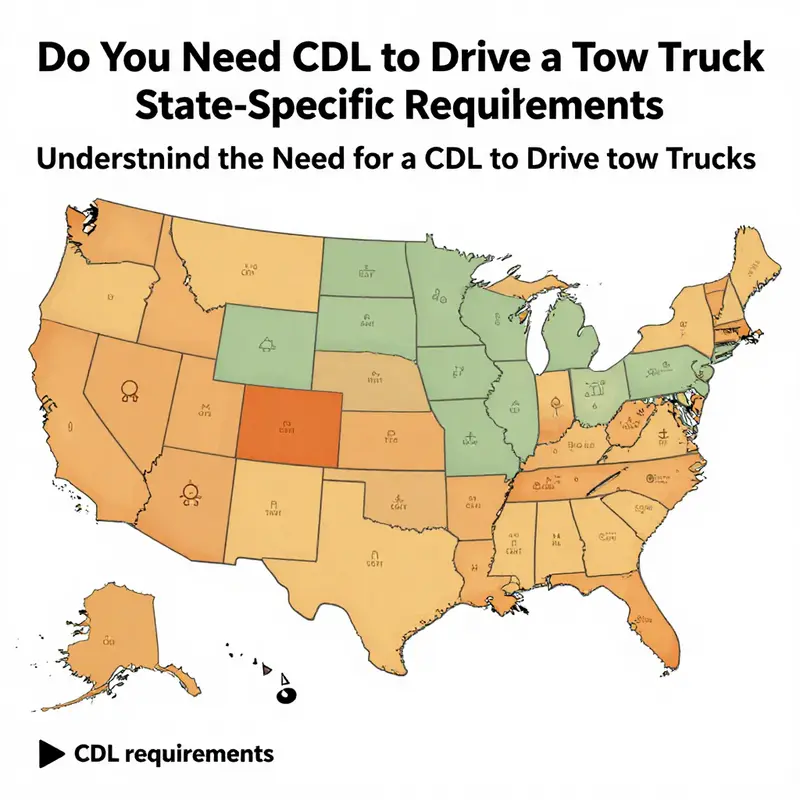
Tow trucks exist in a broad spectrum of shapes and sizes, and so do the rules that govern who may drive them. For many operators, a simple question crystallizes the issue: do I need a Commercial Driver’s License (CDL) to drive a tow truck? The straightforward answer often depends on weight and configuration. In the United States, federal guidelines establish a baseline: if the tow truck’s gross vehicle weight rating (GVWR) is 26,001 pounds or more, or if the vehicle is used to transport hazardous materials, a CDL is typically required. The situation gets more nuanced when the tow truck is pulling another vehicle or trailer that adds significant weight. If the combined weight of the truck and what it tows pushes past 26,001 pounds, many states will require a CDL. These thresholds apply regardless of whether the work is for a private owner or a commercial fleet. It is essential to understand that while federal guidance provides the baseline, state regulations fill in the details and can bend in different directions. The right way forward is to verify with the state’s DMV or equivalent licensing authority to avoid missteps that can lead to penalties, insurance issues, or gaps in coverage when you most need reliability on the road.
The practical impact of these weight thresholds is real. Tow trucks are not uniform in size or purpose. A light-duty wrecker that services local calls may look very different from a heavy-duty rollback designed to handle multiple vehicles or to operate on interstate routes. The GCWR, or gross combination weight rating, adds another layer to the decision. When the GCWR—or the total weight of the tow truck plus the vehicle it is capable of towing—exceeds 26,001 pounds, the rules tend to align with CDL requirements. Yet many states carve out exceptions for certain configurations, specialized equipment, or specific towing tasks. This means that a driver who operates a lighter tow truck with a modest towed load may get by without a CDL in one state, only to be required to hold a CDL in another if the vehicle’s weight or the towed load changes. The bottom line is that the numbers matter, but the interpretation of those numbers is not identical from coast to coast. A driver must know not only the weight of the truck but also the weight of every possible towing scenario the vehicle will encounter.
California, neighboring to the Pacific and home to a large network of towing operators, illustrates the state-specific flavor of the rule. In California, a CDL is required if the GCWR exceeds 26,001 pounds. The state differentiates between engine power, weight, and towing capacity in a way that makes the practical rule of thumb hard to apply without checking the exact configuration. In practice, many tow trucks fall into the Class B category, which corresponds to GVWRs over 26,000 pounds. This means that California operators commonly need at least a Class B CDL to operate standard tow trucks, and additional endorsements can come into play depending on the vehicle’s features and the duties performed. The nuance here matters: a truck that is on the fringe of the GCWR threshold might be treated differently if the operator’s tasks involve long-distance travel, commercial service contracts, or the towing of hazardous materials. The lesson from California is not to assume a blanket exemption but to verify the precise GCWR and intended use with the DMV. It is a reminder that state-specific interpretations can shift the licensing load in meaningful ways for fleets or sole operators alike.
Across the southern tier, Texas presents a contrasting approach that is equally clear in its own right. In Texas, drivers can operate tow trucks without a CDL if the tow truck’s GVWR remains under 26,000 pounds and the combined weight of the tow truck and any towed vehicle does not exceed 26,001 pounds. If either the tow truck or the combination surpasses these limits, a CDL is required. The Texas rule recognizes a tiered system: lighter equipment and modest tows may not trigger a CDL, while heavier configurations—whether the truck alone or in combination—do. For operators who run shorter-range tow services or who recover vehicles in urban or rural settings with smaller equipment, this distinction can make the difference between a straightforward license category and a more demanding licensing path. It also means that fleet planning in Texas can prioritize the use of lighter equipment for non-CDL operations, or, when necessary, a move toward CDL-compliant trucks that can cover larger jobs and broader service areas without licensing friction.
New York presents a more uniform stance in line with its large-density environment and regulatory rigor. In this state, a CDL is mandated for any tow truck with a GCWR over 26,001 pounds, regardless of whether the vehicle is used commercially or privately. The focus here is consistency. Because many towing operations in densely populated areas engage in frequent intercity or interstate work, the state seeks to ensure that drivers operating heavier tow vehicles have the training and oversight associated with a CDL. In practice, this means that operators who routinely work with heavy-duty wreckers or rollback units carrying multiple vehicles are far more likely to hold CDL credentials, which supports safety standards and accountability for commercial activities. The New York approach emphasizes that weight thresholds are not merely an administrative gate but a signal that the driver should have demonstrated a baseline level of knowledge and skill prior to handling heavier towing configurations.
Beyond the letter of the law, a broader set of considerations continues to shape whether a CDL is necessary or prudent. Even in states where the regulation might allow a non-CDL operator for certain lighter configurations, many employers require a CDL as a matter of safety, insurance, or policy. Insurance carriers and risk managers frequently treat a CDL as a credible commitment to training and hazard awareness. They may insist on CDL-based qualifications for drivers who operate tow trucks, particularly in fleet contexts where the risk of damage to vehicles, injury to personnel, or delays in service could trigger substantial liabilities. States also impose restrictions on the type of tow truck a driver can operate without a CDL, which means that the physical equipment, the towing method, and the environment in which the work takes place can all influence licensing requirements. A wrecker used in a high-traffic urban corridor with heavy on-street deployments may face stricter licensing expectations than a private, low-volume operation that mostly handles light tows in a controlled setting. These practical realities underscore a central theme: the licensing path is not merely about a weight threshold. It is about the specific job profile, the operational environment, and the broader risk management framework that governs the fleet.
For individuals and small fleets, the path toward clarity starts with a careful inventory of the weight figures involved. Gather the GVWR of the tow truck, the GCWR if available, and the GVWR or approximate weight of the heaviest towed vehicle you expect to work with. Compute the combined weight in the heaviest practical towing scenario. If that number sits at or above 26,001 pounds, a CDL is likely required, and you should proceed with the licensing steps, training, and testing that accompany CDL eligibility. If the combined weight remains below the threshold, you still face state-specific stipulations that could apply, and your employer’s policies may demand a CDL anyway. The key is not to rely on a single number but to confirm the official interpretation with the state licensing authority. A simple phone call to the DMV, a review of the agency’s online guidance, or a chat with a licensing specialist can illuminate the precise requirement and spare you from costly missteps.
The practical journey toward compliance also involves understanding the nature of the work you perform. If you tow hazardous materials, transport multiple vehicles, or operate beyond local boundaries, you may encounter additional endorsements or licensing conditions. Even if a CDL is not strictly required for the truck itself, some tasks may require a CDL due to the weights involved or the need for specialized training. This is where the concept of “endorsements” becomes relevant in practice, even if the basic license category remains unchanged in your jurisdiction. It is easy to underestimate this dimension, but insurers, employers, and regulatory bodies often view endorsements as a marker of preparedness and responsibility. The effect is modest in some states and more pronounced in others, yet the trend across the country is toward reinforcing professional competence as a baseline expectation for towing work.
Another layer to consider is the difference between operating a tow truck for private reasons versus commercial purposes. In many places, private individuals who tow their own or a friend’s vehicle in a casual setting may avoid CDL requirements when the vehicle remains under weight thresholds. However, the moment the service becomes a business, or the operation engages in paid towing, the licensing landscape commonly tightens. Commercial operations often come with a suite of compliance obligations beyond licensing, including driver training, vehicle inspections, hours-of-service regulations for drivers who haul across state lines, and adherence to insurance requirements that reflect the higher risk profile of commercial towing. These realities reinforce a central message: licensing is not a mere formality. It is an essential component of safety, accountability, and professional integrity in a field where vehicles move quickly, people and property are at risk, and the margins for error are slim.
For operators seeking clarity, practical steps can help map out the licensing pathway without ambiguity. Start by identifying the exact GVWR of your tow truck and the maximum weight you would ever tow in a single operation. If the total exceeds 26,001 pounds, plan for a CDL and consider whether any endorsements or additional training might be prudent given the typical weights and types of towed loads you handle. If the total stays below the threshold, still verify state-specific rules, because some jurisdictions impose stricter rules based on local traffic patterns, the presence of hazardous materials, or operational contexts such as commercial towing districts. After collecting these data, contact the state DMV for an official ruling and request a written summary of the applicable requirements. Keep that document accessible in your fleet files or personal records. It may prove invaluable when renewing licenses, purchasing new equipment, or negotiating insurance terms.
The broader industry context emphasizes a practical, safety-forward mindset. Even when a CDL is not technically required, many operators choose to obtain one as a proactive safeguard. A CDL streamlines employment prospects, expands service scope, and signals a commitment to training and safe operation. It also helps when coordinating with other road users, particularly in densely populated areas or on busy highways where the consequences of a misstep can be severe. The decision to pursue a CDL often aligns with long-term business goals: broader service capability, access to larger contracts, and better resilience in fluctuating demand. In this sense, the licensing decision is not only about compliance but about positioning a towing operation for sustainable growth in a competitive landscape.
This discussion would be incomplete without acknowledging that the state-by-state variations can be tricky to navigate. The difference between a rule that seems straightforward in one state and a parallel rule that looks similar but has subtle caveats in another can be the source of confusion for drivers who move between jurisdictions or operate across state lines. Operators must stay curious and diligent, using official resources to confirm how the rules apply to their specific equipment and duties. A reliable starting point is to consult the state’s DMV or the corresponding motor vehicle authority, which maintains the most current interpretations. For those seeking a consolidated, nationwide reference, federal guidance provides a baseline understanding, and state agencies refine that guidance in ways that reflect local priorities and enforcement practices. When in doubt, err on the side of caution: obtain the CDL if there is any reasonable chance that the vehicle or its load will meet or exceed the weight thresholds, or if the job description suggests that compliance with broader safety and insurance expectations will be beneficial.
If you are reading this as someone responsible for a small fleet or as an individual driver considering a tow-truck career, remember there is value in planning ahead. Tying licensing decisions to the actual metrics of your equipment, your typical towed loads, and your geographic operating patterns creates a pragmatic path to compliance. It also reduces the risk of costly downtime stemming from regulatory questions or insurance exclusions. The next steps involve pulling the relevant specifications for your current equipment, mapping out potential configurations for future purchases, and scheduling a consultation with the licensing authority to confirm the exact requirements that will apply to your operation. In the world of tow trucks, weight and responsibility go hand in hand, and the road to compliance begins with a careful, data-driven assessment rather than assumptions about what a license might or might not require. If you want more context on fleet considerations and towing operations beyond licensing, you can explore related discussions at the theislandtowtruck.com/blog.
To deepen your understanding of the official licensing framework, see the U.S. Department of Transportation’s CDL information, which outlines the baseline rules, thresholds, and safety expectations that shape how states implement their own rules. This external resource provides foundational guidance that complements the state-by-state specifics discussed here and helps align your plans with the nationwide standards that govern commercial driving. External resource: https://www.transportation.gov/aviation/cdl
Tow Trucks on the Line: Weighing CDL Needs for Commercial Versus Private Towing
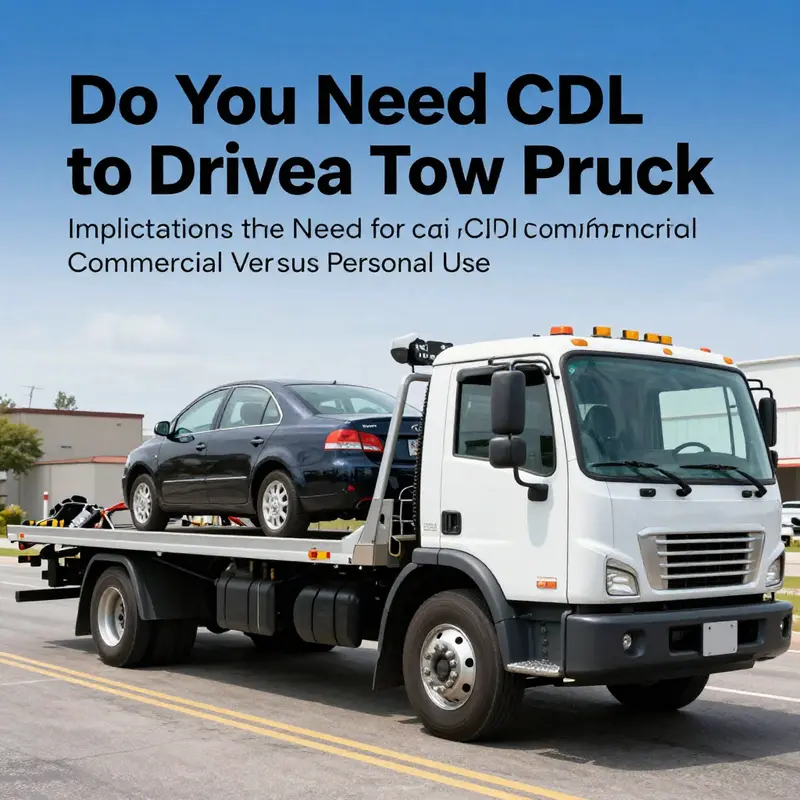
The road has a way of revealing the thin line between what you can do with a standard license and what requires a Commercial Driver’s License (CDL). When you add a heavy tow truck into the picture, that line shifts from a minor nudge to a firm boundary. In the United States, the answer to whether you need a CDL to drive a tow truck hinges on weight, configuration, and how the vehicle is used. It is not simply a matter of personal preference or ambition; it is about federal guidelines that set a baseline, with state regulations that fill in the gaps. The central metric is not the brand of the tow truck or the exact services you offer, but the Gross Vehicle Weight Rating (GVWR) of the vehicle and how that vehicle interacts with the weight of any towed load. When the GVWR is 26,001 pounds or more, or when hazardous materials are involved, a CDL becomes the default requirement. This is not a vague suggestion; it is a standard that many tow operators eventually encounter as fleets expand, as insurance needs become more complex, and as legal responsibilities grow with the size and complexity of the operation. For the curious reader who wants a grounded reference, the U.S. Department of Transportation outlines CDL information that clarifies these thresholds, and states can apply even stricter rules depending on local traffic laws and the nature of the business.
Weight is, in many ways, the simplest yet the most authoritative guidepost. A tow truck with a GVWR at or above 26,001 pounds is, by federal definition, a vehicle that requires a CDL to operate. It does not matter whether you use it for private, hobbyist, or commercial purposes. The moment the vehicle’s capacity crosses that line, the standard driver’s license is no longer enough. The logic extends to when the tow truck is actively pulling another vehicle or trailer that itself crosses certain weight thresholds. If the towed vehicle pushes the overall mass into the “heavy” category, a CDL may be required even if the tow truck’s own GVWR falls below 26,001 pounds. The practical upshot is straightforward: weigh the combination. If the sum exceeds 26,001 pounds, the chances of encountering CDL requirements increase, and the operator should prepare for licensing, testing, and regulatory compliance that come with professional driving qualifications. This approach is designed to keep high-stakes operations—roadside rescue, large vehicle recovery, and fleet towing—safely contained within a framework that ensures trained, tested, and accountable drivers are behind the wheel.
Yet the picture is not black and white for every tow scenario. There are important exceptions, and those exceptions matter a great deal to individuals who are contemplating private use of a relatively heavy tow vehicle. Some states grant leeway for strictly personal use, particularly if the vehicle is not pulling another vehicle or a trailer that pushes the weight into heavy territory. In those cases, a standard driver’s license might be adequate, especially if the tow truck’s own GVWR remains under the 26,001-pound threshold and the combined workload stays modest. However, the exact allowances vary widely from state to state, and those variations can swallow a simple rule in a hurry. The practical recommendation is to check with the local DMV and study the state’s statutes that govern private operation of heavy tow trucks. A careful reading of state manuals will reveal what counts as “private use” versus “commercial use,” and what kinds of towed loads trigger licensing requirements. This is not a one-size-fits-all determination; it is a patchwork of regulations that reflect local road safety concerns and commercial realities.
For those leaning toward the commercial path, the CDL is almost always mandatory. Towing as a business, leasing equipment to other operators, or operating as a professional service all carry the responsibility of licensing that reflects the vehicle’s power and the potential risk on the road. The presence of hazardous materials or passenger transport can complicate matters further, with certain circumstances requiring a CDL even if the GVWR does not reach the heavy threshold. In practice, commercial use is where most operators find themselves aligning with CDL requirements. Your license, insurance, and company policy are all calibrated to reflect the heavy weight and demanding duties of professional towing. This alignment is not merely bureaucratic; it is about ensuring that operators have the education, skills, and disciplined habits necessary to manage demanding tow scenarios, from securing a vehicle at the roadside to handling a live winch operation with the highest safety standards.
The decision tree—CDL or not—often travels with the decision about endorsements and classifications. The CDL system in the United States is layered; it is not simply “CDL or not.” There are different classes—Class A, B, and C—each designed for a broad spectrum of vehicle configurations. A tow truck operator might be dealing with a straight truck, a rollback, or a heavy wrecker; depending on the GVWR and the towed load, you could be looking at a Class B or possibly a Class A license. Endorsements further refine capabilities: the T endorsement (for double and triple trailers in some jurisdictions) or the N endorsement for tank vehicles, or HazMat endorsements for transporting hazardous materials. In many tow operations, HazMat is not typically a concern, but if the business expands to include hazardous materials or specialized loads, the license status must reflect that greater risk and responsibility. The licensure process—written tests, road skills tests, knowledge of safety and weight distribution, and proper equipment operation—becomes an essential training ground for anyone stepping into a professional towing role. The result is not only compliance but a tangible improvement in on-road safety, vehicle control, and incident response.
All of these considerations converge on a practical point: the path from a hobbyist tow operator to a licensed professional is paved with careful measurement of weight, a clear view of how the vehicle will be used, and a willingness to engage with the regulatory framework in a thorough, disciplined way. Those who find themselves at the cusp of the weight threshold should treat the decision as a professional one, not a mere formality. The consequences of operating a tow truck without the appropriate license, beyond the risk to safety, include legal penalties, fines, and potential jeopardy to insurance coverage and business liability. In other words, the cost of misclassifying a tow operation can be high, and the penalties may extend beyond a single citation to ongoing regulatory scrutiny, higher insurance premiums, and, in worst cases, a forced shutdown of business activities until compliance is achieved. The responsible approach is to audit the vehicle’s GVWR, examine the combined weight with any towed load, and then consult authoritative sources before proceeding with any work that could fall into a regulated category.
The conversation about CDL requirements is not merely a matter of crossing the 26,001-pound line and calling it done. It also encompasses how the vehicle handles weight distribution, braking, and maneuverability with attached loads. Tow trucks put additional stress on the roadway, and the towed vehicle creates a dynamic load that can change during operation. A tire blowout, abrupt braking, or a sudden lane change can transform a routine roadside recovery into a high-stakes incident. For this reason, training is essential. Beyond the minimum tests, many employers and professional associations encourage or require ongoing education on load securement, braking dynamics with a towed load, and the precise use of equipment such as winches, wheel straps, and tie-down points. This training is valuable whether you are pursuing a CDL now or simply ensuring that your private-use tow truck remains compliant as your needs evolve.
Into this discussion enters the practical, real-world question that many readers ask: how do I determine which path is mine? Start with the numbers. Find the GVWR on the vehicle’s compliance label, typically located on the frame near the driver’s door or in the owner’s manual. Then, consider what you plan to tow, if anything. If the towed load would push the combined weight well beyond 26,001 pounds, the likelihood that a CDL is required increases. If you are unsure, you should consult the state DMV’s licensing guidelines, which are generally available online and designed to help vehicle owners determine the right classification for their specific vehicle, their intended use, and their region. If you are evaluating whether to pursue a CDL, you may also find it helpful to review the distinctions between private and commercial use in your state’s regulations. The distinction can appear technical, but it matters in practice: private use can be more permissive, yet commercial use triggers robust licensing standards and compliance requirements that are essential to professional towing.
For readers who want a practical reference point while you study, there are online resources that pull together the core concepts in accessible terms. If you want to explore a broader perspective on tow truck licensing and the practicalities of managing an evolving fleet, you might start with a trusted towing industry resource or a professional blog that tracks changes in licensing, vehicle configurations, and best practices. The Island Tow Truck’s blog, for instance, offers a window into the kinds of topics professionals consider as they navigate licensing, equipment choices, and compliance challenges. Reading such material can help you build a robust mental map of the licensing landscape as it applies to tow operations, while also offering some real-world anecdotes about how regulations play out on the ground. For the curious reader who wants a direct path to further reading, one practical route is to visit theislandtowtruck.com/blog. This resource provides narrative context and a sense of how operators approach licensing realities in daily practice, helping to connect the theory of weight-based rules with the realities of roadside service.
As you reflect on these considerations, it becomes clear that the CDL decision lies at the intersection of physics, law, and business strategy. The weight of the vehicle and any towed load is not just a number; it is a predictor of the skills, resources, and regulatory obligations that accompany its operation. If your tow truck exists primarily to support a private vehicle or to serve a small, noncommercial need, you may find room for flexibility within state rules. However, if your aim is to build a professional towing operation, a CDL is typically the right investment. It is an investment in safety, professionalism, and long-term viability—the kind of decision that shapes the trajectory of a fleet, the quality of service you can provide, and the trust you can earn from customers and insurers alike.
In conversation with regulators and industry peers, you will hear a common thread: begin with compliance, then scale. Start by verifying GVWR, then map your expected payloads and towed loads, and finally confirm how those figures translate into licensing requirements in your state. Don’t assume that private-use allowances will always extend to commercial aspirations. The moment the business case or workload changes, rechecking the licensing framework becomes prudent. This disciplined approach reduces the risk of misclassification, which can lead to operational disruptions, changes in insurance terms, and even liability exposure that could threaten the viability of a towing operation. In practice, the process is not a single taxonomic step but a living set of checks that evolve with your vehicle, your fleet, and your intentions for service delivery. As your understanding deepens, the path becomes clearer: weigh the truck; weigh the load; and weigh the use case against the licensing framework. With this approach, you can navigate the CDL question with confidence, aligning your training, your equipment, and your business plan with the regulatory environment rather than drifting into gray areas that could cost you later.
For those seeking a compact takeaway, remember that CDL requirements hinge on GVWR and the nature of use. When in doubt, consult the state DMV to confirm how those factors apply to your specific vehicle and operation. The consequences of misclassification—legal penalties, insurance complications, and reputational risk—are simply not worth the risk. The careful, proactive approach is to treat licensing as a strategic element of your tow operation. This means budgeting time for training, budgeting for testing and fees, and building a safety culture that elevates the quality of roadside assistance you provide. In the broader arc of a towing career or enterprise, the CDL is not merely a credential; it is a formal acknowledgment of the responsibilities that come with moving heavy loads through traffic, managing complex equipment, and ensuring every roadside recovery is conducted with precision and accountability.
External resource references and further reading can help you verify and deepen your understanding. For authoritative, country-wide guidelines on CDL and tow-truck licensing, you can consult external resources such as the DMV licensing guidance page on tow-truck requirements. This information provides a solid baseline for the minimum standards you should expect and helps you map out a plan for achieving compliance if your vehicle or business sits near the regulatory line. By combining weight-aware decision making with up-to-date regulatory knowledge, you can approach tow-truck operations with confidence, knowing you are aligned with both safety best practices and the legal expectations that govern on-road work. To explore official licensing guidance in more detail, the DMV source is a useful reference: https://www.dmv.org/us-ca/vehicle-requirements/tow-truck-licensing.php.
In summary, your CDL decision for a tow truck should be grounded in the GVWR threshold, the potential weight of towed loads, and the intended use of the vehicle. Personal use may offer some flexibility, but commercial operations almost always require a CDL and related endorsements. The best course is to measure, verify, and consult. Treat the licensing question as an essential step in setting up a safe, compliant, and sustainable towing operation. By acknowledging the weight boundaries and translating them into training and certification requirements, you protect yourself, your team, and the people who rely on your service when every minute counts on the roadside. The results, in practice, are clearer roadways, safer recoveries, and a business that can grow within a framework designed to keep heavy vehicles and their loads under careful control.
Heavy Rules, Clear Roads: CDL Essentials for Tow Truck Operators
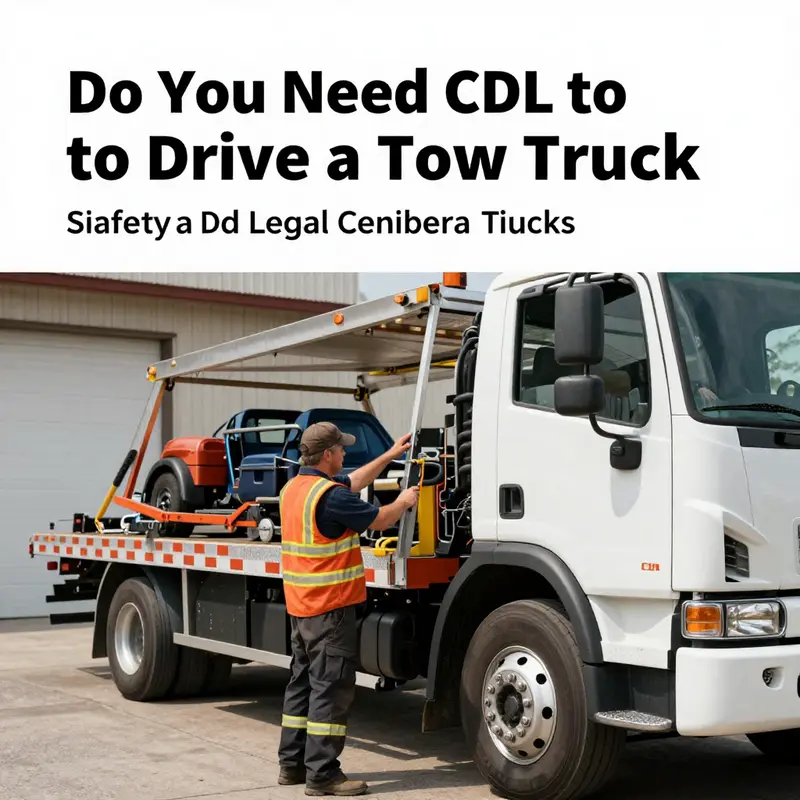
Tow trucks move through the world with a blend of precision and risk, a combination that demands more than streetcraft. It requires a licensing framework that matches the vehicle’s heft and the responsibilities that come with moving others’ property on public highways. In the United States, the question of whether a tow truck operator needs a Commercial Driver’s License (CDL) isn’t answered by a single number. It rests on the vehicle’s weight, its configuration, and what it is tasked with hauling. The baseline is set by federal rules, but states tailor specifics to local roads, insurance considerations, and enforcement priorities. For anyone considering a career in towing or expanding a fleet, understanding these thresholds is not a luxury but a safety imperative. A tow truck isn’t a standard car; it is a heavy-duty machine whose operation requires specialized knowledge and disciplined practice.
The core rule is straightforward in principle: a CDL is required if the tow truck has a Gross Vehicle Weight Rating (GVWR) of 26,001 pounds or more. That number isn’t arbitrary. It marks the point at which the vehicle’s mass, when fully loaded, crosses into a category that regulators deem to demand formal training, medical certification, and a more rigorous testing process. When a truck crosses this line, the operator enters a licensing category that carries heightened expectations for knowledge and skill, along with ongoing compliance duties. It’s easy to mistake the rule as a matter of the truck’s designation alone, but in practice it hinges on the potential consequences of mishandling a heavy vehicle on crowded streets, highway interchanges, or narrow lanes where even a small miscalculation can escalate into a dangerous incident.
Yet the world of tow trucks extends beyond the truck’s own weight. The regulation also considers what is being towed. The combined weight of the tow vehicle and the towed vehicle can push the total beyond the CDL threshold, which means a CDL may be required even if the tow truck itself sits just under the 26,001-pound line. A commonly cited practical guideline is that when the towed load or trailer exceeds about 10,000 pounds, the case for a CDL becomes more likely. This recognizes that towing a heavier vehicle introduces different dynamics: the mass, momentum, and braking demands multiply, and so do the risks. The driver needs the training to manage those dynamics safely, to anticipate how a heavy towed load will respond in a turn or a lane change, and to avoid creating additional hazards for other road users.
Hazardous materials present another, more stringent requirement. If the tow operation involves transporting hazardous materials, a CDL is required regardless of the truck’s weight. HazMat endorsements add layers of testing, background checks, and ongoing compliance responsibilities. While HazMat-focused tows are not the everyday scenario for every tow operator, they do arise in certain contexts—for example, when a wrecker is used to move containers containing dangerous goods or when a recovery involves facilities that routinely handle hazmat shipments. The emphasis here isn’t to alarm but to underscore that certain cargos demand an elevated standard of proficiency, discipline, and readiness to respond to emergencies. Proper handling of hazardous materials hinges on a driver’s ability to recognize risk, secure the load under less-than-ideal conditions, and follow precise procedures for documentation and emergency response.
The interplay of weight, towed loads, and cargo types means there isn’t a single universal answer. State authorities may interpret these criteria with minor variations, and training requirements can differ in breadth and duration. This is why a reliable baseline—founded in federal guidance—works best when paired with direct verification from the state’s Department of Motor Vehicles or the applicable motor carrier regulator. The federal framework, administered by the Federal Motor Carrier Safety Administration (FMCSA), sets the minimum standards for knowledge, testing, medical certification, and ongoing compliance. States may add administrative steps or require additional endorsements for certain configurations. The upshot is that the path to driving a tow truck under a CDL is a shared responsibility: the driver, the employer, and the regulatory environment all contribute to road safety.
For someone entering the field or expanding a fleet, this knowledge is more than a credential checklist. It informs recruitment, insurance, maintenance planning, and day-to-day operations. A driver who operates a tow truck under a CDL carries not just a license but a professional obligation to manage a vehicle that can threaten other road users if mismanaged. The safety dimension cannot be overstated. Tow operations require securing loads with chains, straps, and wheel-lifts; balancing heavy mass on a platform or dolly; and navigating traffic with limited visibility because the towed object can obscure sightlines. The expertise required includes pre-trip inspections that focus on towing equipment, winches, cables, and the integrity of attachment points. There is a subtle art to ensuring the load is attached so weight is distributed evenly, remains stable through turns, and can be released quickly if an emergent hazard arises. These competencies are the core reason CDL training is aligned with heavy-vehicle operation.
The licensing framework itself isn’t a mere formality; it’s a structured path that guarantees baseline proficiency. A Commercial Driver’s License is typically awarded after a sequence of steps: eligibility assessment, knowledge tests that cover the rules of the road and the special considerations for heavy vehicles, and a practical road test conducted in a vehicle representative of the duties the driver will perform. In many jurisdictions, a medical examination is required to certify that the driver can physically manage the demands of a heavy vehicle for long hours and under stress. The process may also include periodic medical certification renewal and ongoing compliance checks. The CDL isn’t just a piece of paperwork; it is the gateway to sustained professional practice. The end-to-end obligations, including routine inspections, maintenance regimes, and accurate logs of hours of service, demonstrate that a tow truck operator with a CDL has committed to a regulated, safety-first role rather than a casual assignment.
Within this framework, endorsements reflect the kinds of loads a driver may encounter. HazMat endorsements require additional testing and clearance, as noted. There are also endorsements related to passenger transport, tanker configurations, and other specialized scenarios. Not every tow operation will require these endorsements, but the possibility exists, and planning for it early can save time and disruption later. The practical takeaway is straightforward: map your CDL plan to the duties you anticipate performing. A fleet manager who understands this is better positioned to align driver qualifications with client demands, service area risks, and the realities of urban driving. The consequence of neglect in this space can be severe: penalties, higher insurance costs, and reputational damage that can undermine growth.
This is not merely about compliance; it is about prudent business practice. A company that deploys heavy tow equipment without the requisite CDL exposes itself to legal penalties, insurance exclusions, and operational disruptions. It also places drivers in challenging situations when they face dense traffic, adverse weather, or complex recovery scenarios that require precise maneuvering of multiple recovery assets. The most effective approach is a thoughtful combination of weight-aware fleet planning, proactive driver development, and clear, enforceable safety protocols. The CDL framework provides a backbone for this approach, ensuring operators are prepared for the realities of heavy vehicle dynamics, the demands of securing heavy loads, and the stress of making quick, safe decisions under pressure.
For readers who want to connect licensing realities with practical, everyday operations, think about how fleets plan, train, and verify readiness. A well-run tow operation maintains a training calendar that blends classroom theory with hands-on practice on wheel-lift equipment, winching techniques, vehicle recovery, and traffic management. It also implements a robust pre- and post-operation checklist that focuses on securing attachment points, capacity limits, hydraulic systems, braking performance, lighting, signaling, and the integrity of the towing arrangement. The emphasis is on building muscle memory for critical moments: the moment when a vehicle is suspended or when a heavy load enters a busy intersection. In these moments, CDL training should translate into calm, decisive action rather than hesitation or improvisation.
As readers consider their own circumstances—the size of their fleet, the types of towed loads, and the typical road environments—this chapter urges a careful, conservative posture. If there is any doubt whether a tow truck requires a CDL, begin with the weight thresholds and the towed load criteria. Confirm the exact rules with the state’s DMV, and be mindful that endorsements may be necessary for specific duties. In parallel, maintain open dialogue with insurers and clients about training, documentation, and safety protocols that set your service apart. The aim is not simply to meet regulatory requirements but to protect people on the road, safeguard cargo, and sustain dependable, high-quality service across shifts and seasons. This approach—weight-aware planning, rigorous training, and disciplined operations—gives a tow business the resilience it needs in a market where reliability and safety are the strongest differentiators.
For readers who want to deepen their understanding, the FMCSA offers official guidance and resources that outline the baseline requirements for CDL holders and the scope of their responsibilities. These resources are essential for anyone who wants to design compliant, safe, and sustainable tow operations that serve communities effectively while protecting drivers and the public. The road to safe towing is paved with knowledge, training, and an unwavering commitment to safety. For further practical guidance tied to fleet safety and regulatory considerations, see the Island Tow Truck blog, which provides field-tested perspectives that complement official rules with hands-on strategies. See the Island Tow Truck blog for discussions that contextualize licensing within daily practice.
External resource: https://www.fmcsa.dot.gov
Final thoughts
The requirement for a CDL to operate a tow truck is informed by various factors including federal standards and state-specific regulations. By understanding these complexities, local auto repair shops, car dealerships, property managers, resort operators, and commercial fleet operators can navigate the legal landscape effectively. Ultimately, ensuring that your operations are compliant not only safeguards your business but also promotes a higher standard of safety across the industry. Stay informed and make sure to adhere to the necessary guidelines for a successful towing operation.