Do You Tip a Tow Truck Driver When Insurance or Roadside Assistance Already Pays the Bill?
If a tow is covered by insurance or a roadside assistance plan, you are not expected to tip. There is no rule that says you have to, and most drivers won’t be standing there waiting for cash. That said, a tip is never out of place when the service stands out. Knowing who actually pays the driver makes the call easier.
When an insurer or a roadside program dispatches the truck, it pays the driver, not you. A tip on top of that is a genuine extra, not a fee. For a sense of what the job involves, see the driver’s role in roadside emergencies.
Budget, effort, and how the whole call went usually decide it. Good service earns a few dollars gladly; nothing is owed.
Below, we cover the payment chain, the situations where a tip makes sense, and how much to give.
- How payment works when insurance or roadside assistance pays the bill
- What influences whether a tip is appropriate in different situations
- How much to give if you choose to tip
Who Actually Pays for the Tow?
When a flatbed pulls up, it is fair to wonder who is paying for it and whether the person hooking up your car expects something extra. In a covered situation, the money rarely comes straight from your pocket. Here is how it moves.
Membership Programs (Roadside Assistance Plans)
AAA and manufacturer roadside packages work the same way: you pay a yearly fee, and the program arranges the tow. When you call, it dispatches a towing service and settles the invoice with the provider directly.
- You pay your membership dues up front.
- The program pays the tow company.
- You typically just sign a form confirming the service.
Since the program already pays the driver, nothing about the arrangement suggests you should hand over cash.
Auto Insurance Towing Coverage
Many policies include insurance-covered towing, either as an add-on or a standard feature. If yours does, the insurer pays the tow company directly or reimburses you after you submit a receipt.
- Confirm your coverage limit before you call.
- Save the invoice if you pay first and get reimbursed later.
- Keep in mind that reimbursement usually caps out at a set dollar amount.
Out-of-Pocket Tows
Sometimes nothing is covered. Maybe your membership lapsed, or your plan only covers a short distance. Then you pay the towing service yourself, often by card or cash at the scene. This is the one case where the transaction lands squarely on you.
Why Tipping Isn’t Expected When a Third Party Pays
When a company or program pays the driver, their time and labor are already covered. That is why you are not expected to tip a tow truck driver in a covered situation.
A small gesture is still welcome if the driver went out of his or her way, whether that meant calming you down on a bad night or treating a vintage car like it mattered. That is a thank-you, not a fee. To see how these crews operate in the field, read about the role drivers play in roadside emergencies.
Bottom line: with a covered tow, the program or insurer pays, so a tip is optional. With an out-of-pocket tow, you are the customer, and a tip is a warm option rather than a rule.
The table below shows when a gratuity tends to make sense.
When to Tip a Tow Truck Driver: Scenario Cheat Sheet
| Scenario | Who Pays | Is a Tip Expected | Suggested Tip Range |
|---|---|---|---|
| Insurance-covered tow | Your insurer pays the invoice | No, not expected | $0-$10 if service was excellent |
| Roadside assistance membership tow | Your membership provider | No, not expected | $0-$15 for smooth, friendly help |
| Out-of-pocket emergency tow | You pay the bill directly | Customary but optional | 10-15% of the bill or $5-$20 |
| Long-distance tow | You (or insurer, per policy) | Rarely expected | $10-$20 for the extra time |
| Driver went above and beyond (waited, lockout, jump-start) | Whoever covers the base bill | Yes, genuinely appreciated | $10-$40 based on effort |
Treat the table as a starting point. Your budget, the driver’s attitude, and how much extra work the call required should shape the final decision.
Weighing the Human and Practical Factors Behind a Tip
Whether to tip a covered tow comes down to values and circumstance, and there is no single right answer. Towing etiquette is far looser than it is at a restaurant or a barbershop. What matters is what actually happened on the road and how you feel about it.
Rather than treating a tip as automatic, think of it as a response to effort. A driver who hooks up your car and drops it at the shop did the job they were paid for. One who wrestles a stubborn wheel in freezing rain, or takes a minute to explain what went wrong, gave you something more. You decide whether that deserves a little extra.
Practical Factors to Weigh
- Quality and speed of service. A prompt, careful job leaves a very different impression than a slow, careless one.
- Whether the driver went beyond the basics. Extra patience, useful advice, or a reassuring manner can tip the scales.
- Weather and hazard conditions. Working through extreme heat, storms, darkness, or dangerous traffic adds real risk and discomfort.
- Distance and difficulty. Long hauls, tight spaces, and awkward recoveries demand more skill and time than a simple flatbed lift.
- Professionalism and courtesy. Clear communication, respect for your vehicle, and a calm, polite manner count for a lot.
The final call is yours. Some drivers tip whenever the service feels exceptional; others only when conditions were genuinely tough or the driver clearly went out of their way. There is no scorecard to fill out and no obligation to meet. A tip is a gesture of appreciation, not a required fee.
Tipping Etiquette Checklist for Towing Situations
When the truck pulls away and your car is safe, the awkward moment arrives: do you tip, and how much? A quick mental checklist helps you decide on the spot.
- Confirm who is actually paying the invoice. If your insurer or roadside assistance program is covering the bill, the driver is already paid, so any tip is purely a personal thank-you.
- Gauge the effort and difficulty of the job. A five-minute jump-start in a sunny lot is very different from a two-hour recovery in a downpour, a ditch, or a narrow driveway.
- Keep a little small cash on hand for emergencies. A few singles or a $5 and $10 bill tucked in the glovebox means you are never caught empty-handed when a tip feels right.
- Tip based on service quality, not obligation. Friendly, careful, and fast service earns a gratuity; rushed or dismissive work does not create a debt you owe.
- Match the tip to the situation, not a rigid rule. A couple of dollars for a quick assist or a larger amount for a tough recovery is a sensible range to keep in mind.
- Stay polite regardless of the outcome. Even if you decide not to tip, a genuine “thank you” costs nothing and leaves the interaction on good terms.
- Ask before assuming a tip is expected. A simple “Is there anything the insurance doesn’t cover?” clears up confusion without making things awkward.
Think of this as a gut check, not a rulebook. When you know what the driver is actually responsible for, these calls get easier. Let kindness and fairness guide you, and you will rarely get the etiquette wrong.
How Tow Truck Drivers Are Actually Paid (And Why Tips Are a Bonus)
Before you reach for your wallet, it helps to know where a tow driver’s money really comes from. The chart below breaks down the typical mix.
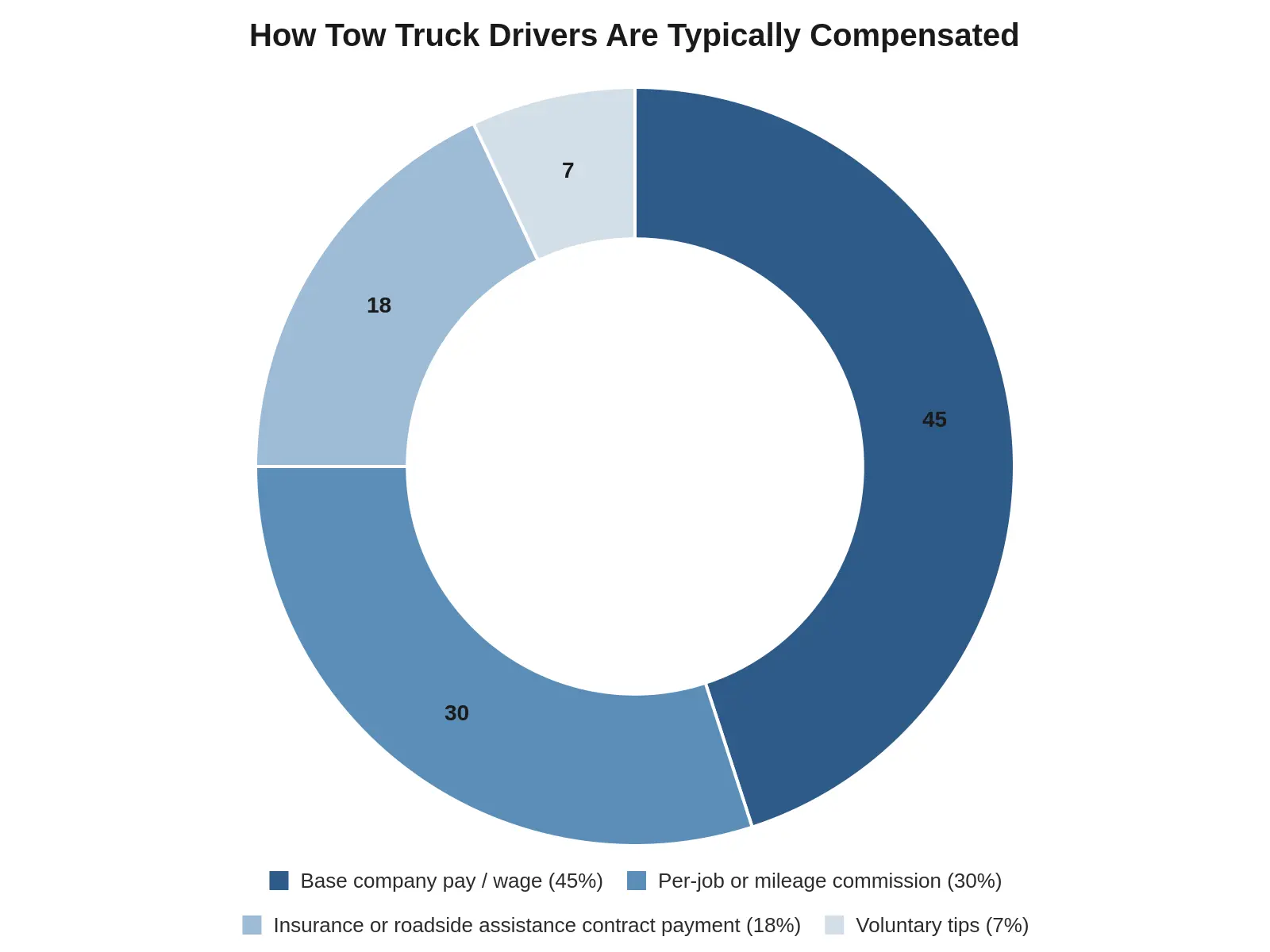
Caption: The typical compensation mix for tow truck drivers. Base wages and per-job commission make up the overwhelming majority of a driver’s income, while voluntary tips account for only a small slice.
The point is simple: your driver is almost certainly paid a wage or commission by the company, not by you. The money your insurance or roadside assistance provider sends goes to the towing company, and part of it shows up in the driver’s pay. Even the 18% attributed to insurance and roadside assistance contracts is a business-to-business payment, not something you are expected to match. The 7% tips slice is exactly what it sounds like, a discretionary top-up for a job done well. Nothing about a routine service call obligates you to tip.
How Much Should You Tip a Tow Truck Driver?
Even when insurance or roadside assistance picks up the tab, plenty of people still hesitate. The answer is that it is entirely optional. A tip is a thank-you, not a fee, and zero is a perfectly acceptable amount when the service was covered and routine.
If the driver went above and beyond, here is a range to work from.
Rule-of-Thumb Ranges
| Situation | Suggested tip |
|---|---|
| Standard tow, covered by insurance or roadside assistance | $5-$10 flat |
| Standard tow, paying out of pocket | 10-15% of the bill |
| Difficult job (winch-out, tight space, rough weather) | $20-$50 flat |
| Extended job (long wait, late night, extra effort) | 15-20% or $20-$40 |
| Above-and-beyond service | Whatever feels right to you |
Cash or App-Based Tip?
Both work, but they are not quite the same. In-app tips can take days to reach the driver, and some apps don’t pass along the full amount. Cash, handed over directly with a quick thank-you, is the clearest way to show appreciation. No cash on hand? A card or app tip is still far better than nothing, and a sincere “thanks” costs you nothing at all.
A covered tow does not obligate you to tip, and it does not stop you either. The driver still spent fuel, time, and effort getting you safely back on the road. Professional crews train for exactly these situations; see how teams approach effective roadside assistance day in and day out.
The Bottom Line
There is no wrong answer as long as you are kind. Tip $5-$10 for a smooth, standard tow, more for tough or lengthy jobs, and nothing at all if that is what your budget allows. Drivers appreciate generosity, but they also understand when it is not there.
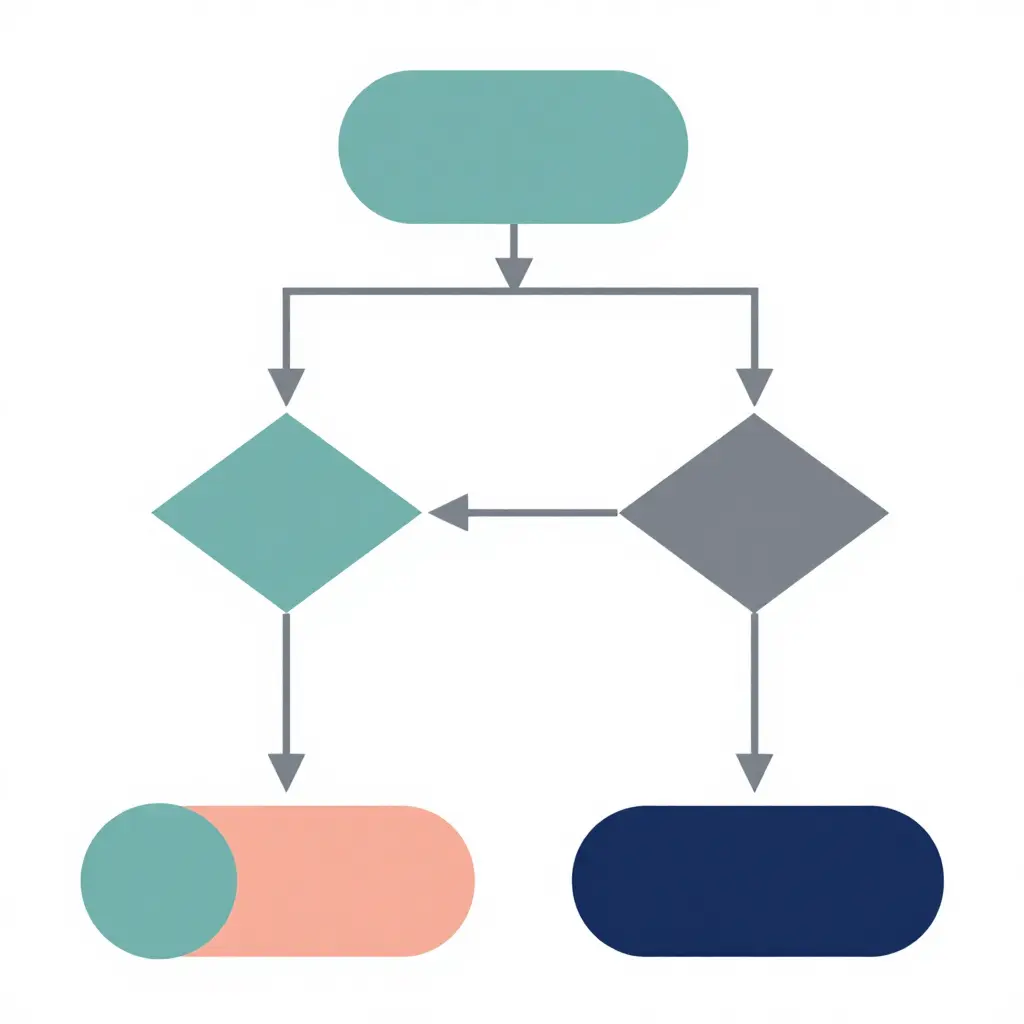
Figure: When a tow is covered by insurance or roadside assistance, the tip decision comes down to two quick questions – who is paying the invoice, and whether the driver went above and beyond.
The flowchart follows the same logic: if a third party already covers the bill, a tip is never mandatory, but a small optional gratuity is a nice gesture whenever the driver delivered standout service.
Insurance and Roadside Assistance Nuances Most Drivers Miss
When your insurer or a roadside membership program pays for the tow, the money story gets murky fast. Here are the details that usually stay buried in the fine print.
Who sets the rate – and who it constrains
When an insurer dispatches a contracted provider, the company typically pays a pre-negotiated, capped rate. The contract sets that rate, not the operator standing on the shoulder. In practice, a driver can’t fold a “tip” into the price, and shouldn’t need to.
How program drivers actually get paid
Not every tow operator you meet owns the truck. Some programs pay drivers a flat salary; others compensate per call. Either way, the driver’s paycheck is already handled, so a tip is a personal thank-you rather than a wage subsidy. It also helps to know that the person helping you may be following a program’s script rather than freelancing.
Tipping rules and restrictions
Some membership programs forbid staff from accepting cash outright, mainly to avoid any appearance of impropriety. Others allow it but ask drivers to log it. If a driver politely declines, respect the policy and don’t push.
A program-dispatched tow vs. one you call yourself
Call a tow company directly and you are the customer, setting the expectations. When a program dispatches the truck, the program is the client, and the driver answers to them first. That shift affects everything from response priorities to tipping norms, and it is why well-organized programs lean on trained roadside assistance crews to keep standards consistent.
The bottom line on tipping
Covered or not, a tip is never required, but it is also never wrong. Receiving a paid tow does not make tipping improper; it simply makes the gesture optional. If a driver went above and beyond, offering a few dollars is perfectly proper. Knowing what happens behind the scenes is what makes that choice feel confident.
Frequently Asked Questions About Tipping Your Tow Truck Driver
Do you have to tip a tow truck driver if insurance pays?
No. When insurance-covered towing settles the bill, the driver is already paid for the service, so a tip is purely optional. A small cash tip — often $5 to $20 — is a genuinely kind gesture when the driver was fast, careful, or worked in rough conditions.
Is it rude not to tip?
Not at all. Tipping etiquette around towing is far more relaxed than at a restaurant, where servers rely on gratuities to make a living. There is no expectation baked into the service, so politely skipping the tip won’t offend most drivers. A little extra for exceptional or after-hours work is appreciated, never demanded.
How much should you tip for a roadside assistance jump-start?
For a quick jump-start, $5 to $10 is plenty, while a longer or messier job might justify $10 to $20. There is no fixed percentage because roadside assistance is billed by the call, not by the total on your car’s value. Think of it as a thank-you rather than an obligation.
Can you tip through the roadside assistance app?
Many apps now include an optional tip prompt at checkout, so you can add a gratuity without digging for cash. If your provider doesn’t offer that option, it helps to keep a few small bills in the glovebox. Drivers generally prefer cash since it lands in their pocket right away.
Should you tip a tow driver who only towed a short distance?
Short tows still take time, fuel, and real skill, so distance is a poor measure of effort. A modest $5 to $10 tip is a thoughtful nod for a quick job. If the driver was friendly and handled your car with care, even a short haul can deserve a little extra.
What if the driver was rude or damaged something?
A tip is never mandatory, and a poor experience is a fair reason to hold back. If you have a legitimate complaint or damage, document it and contact the company directly rather than punishing the driver with silence. When service is solid, though, tipping is a simple way to say thanks.
The Bottom Line: Tipping Is Your Call
When insurance or roadside assistance already covers the bill, choosing to tip a tow truck driver is a gracious, optional gesture rather than a requirement. There is no fixed obligation, no standard percentage, and no rule that makes a tip mandatory simply because someone arrived to help. The decision rests on your budget, your satisfaction with the service, and your personal comfort level. If the driver was quick, careful, and kind during a stressful moment, a small tip is a thoughtful way to say thank you, especially given the long, unpredictable hours these calls often demand. If money is tight or the service was simply standard, you can skip it without any guilt.
That is really the heart of tipping etiquette: the choice stays voluntary from beginning to end. Whether you hand over a few dollars or simply offer a sincere thank you, both are valid responses to a job well done. The next time you need a tow, trust your own judgment, value good service when you receive it, and never feel pressured to give more than you comfortably can.