
In the diverse landscape of island operations, understanding the towing capacity of various truck models is not just a luxury; it’s an essential component of daily logistics and management. For local auto repair shops, car dealerships, property managers, resort operators, and commercial fleet operators, the ability to reliably tow cargo can significantly impact efficiency, safety, and ultimately, profitability. Recognizing the nuances of towing capacity empowers businesses to make informed decisions when selecting their vehicles, ensuring that they can handle the demands of their specific operational environments. This knowledge is vital not only for routine transport tasks but also for responding to emergencies, where every second counts. With the unpredictable nature of island life, having a truck that can securely and effectively tow heavy loads becomes a lifeline. Therefore, becoming well-versed in the specifics of towing capabilities enables stakeholders to enhance their service provision and maintain peace of mind, knowing they have the right tools for the job. Learn more about emergency preparedness for island fleets and discover essential fleet emergency response strategies for comprehensive solutions.
Towing Capacity Basics
Towing capacity refers to the maximum weight that a vehicle, such as a truck, can safely pull behind it. This critical specification ensures not only the efficiency of the vehicle but also the safety of its operation. Towing capacity is determined through a series of calculations, primarily based on the vehicle’s Gross Combined Weight Rating (GCWR) and its curb weight. The formula is straightforward:
Towing Capacity = GCWR – Curb Weight.
- GCWR is the total weight that includes the vehicle, passengers, cargo, and the trailer.
- Curb Weight is the vehicle’s weight when fully equipped but not carrying passengers or cargo.
Several factors influence a truck’s towing capacity: the engine’s power and torque, transmission type, drivetrain efficiency, axle ratios, and the structural integrity of the chassis, suspension, and brakes. Manufacturers conduct extensive testing to establish these limits, emphasizing safety and performance under load.
Understanding towing capacity is vital for truck owners, especially for those in commercial sectors. Exceeding this rating can lead to severe risks, including brake failure, overheating, and potential vehicle damage, which can compromise safety. Additionally, legal penalties may arise for operating over these limits, making adherence crucial even for local auto repair shops and commercial fleet operators. Proper setup, like selecting the right hitch and ensuring adequate trailer brakes, is essential even within capacity limits. Emphasizing these practices not only enhances safety but also preserves the truck’s longevity and operational efficiency. For those interested in fleet safety strategies, learn more about essential fleet emergency response strategies.

Factors Affecting Towing Capacity of Trucks
Understanding what influences a truck’s towing capacity is essential for safe and effective towing. Here are the key factors:
- Engine Type: The engine’s horsepower and torque significantly impact towing power. Larger engines (e.g., V8) typically provide more pull compared to smaller ones.
- Drivetrain: Four-wheel drive (4WD) vs. two-wheel drive (2WD) can affect traction and control, with RWD often favoring towing capacity.
- Axle Ratio: A higher axle ratio enhances torque for towing but might decrease fuel efficiency.
- Vehicle Weight: Curb weight and payload impact the overall towing capacity; lighter trucks can typically tow more.
- Transmission Type: Automatic transmissions often provide smoother towing experiences over manuals.
- Braking System: The efficiency of the braking system is critical to safely manage towed loads.
For more detailed insights on the importance of towing capacity, learn more here. For tips on safe towing practices, check this article.
Methods to Find Towing Capacity
Finding the towing capacity of your truck is essential for safe towing practices. Here’s how to get accurate figures:
1. Check the Owner’s Manual
Start by reviewing the owner’s manual. Most manuals have a section dedicated to towing capacity, often listed under ‘Specifications’ or ‘Towing’. Look for:
- Gross Combined Vehicle Weight Rating (GCWR)
- Maximum Trailer Weight
This information is specific to your model and configuration and is the best place to start.
2. Visit Manufacturer Websites
Many truck manufacturers provide detailed towing capacity information directly on their websites. For example, you can access:
- Ford’s Official Towing Capacity Guide
- Chevrolet’s Towing Specifications
You can typically enter your vehicle’s VIN or select the model and trim to retrieve the exact specifications relevant to your truck.
3. Use Online Towing Calculators
If you prefer a quick and interactive method, online towing calculators are a fantastic option. Websites such as Truck Lovers allow you to input relevant information like:
- Year, make, and model
- Engine type
- Transmission and axle ratios
These calculators can provide an estimate of your truck’s towing capacity based on the latest manufacturer data and engineering principles.
4. Consider Additional Factors
Keep in mind that your truck’s actual towing capacity can be influenced by:
- Payload (the weight of what you’re carrying in the truck)
- Trailer weight distribution
- Hitch type and configuration
- Environmental conditions (like terrain)
5. Consult Industry Reports
For a broader perspective, industry reports can reveal typical towing ranges for various truck models. For example, in 2023, a Ford F-150 typically tows between 11,000 to 14,000 lbs, while RAM 2500 can manage up to 22,000 lbs. For a detailed comparison, refer to the summarized chart below:
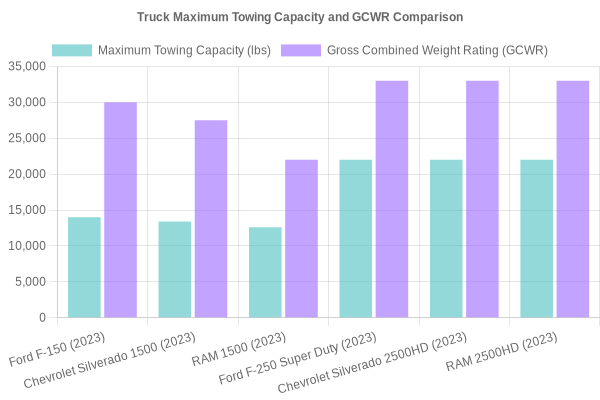
By following these steps, you’ll ensure that you accurately determine your truck’s towing capacity, which is vital for optimal performance and safety during towing activities. If you’re in doubt, consult with our experts at The Island Tow Truck for personalized support or insights on safe towing practices.
| Truck Model | Towing Capacity (Conventional) | Towing Capacity (Gooseneck) |
|---|---|---|
| 2023 Ford F-250 Super Duty | 22,000 lbs | 22,700 lbs |
| 2023 Ram 2500 Heavy Duty | 20,000 lbs | 20,000 lbs |
| 2023 GMC Sierra 2500HD | 20,000 lbs | 22,430 lbs |
| 2023 Chevrolet Silverado 2500HD | 20,000 lbs | 22,430 lbs |
| 2023 Toyota Tundra | 12,000 lbs | N/A |
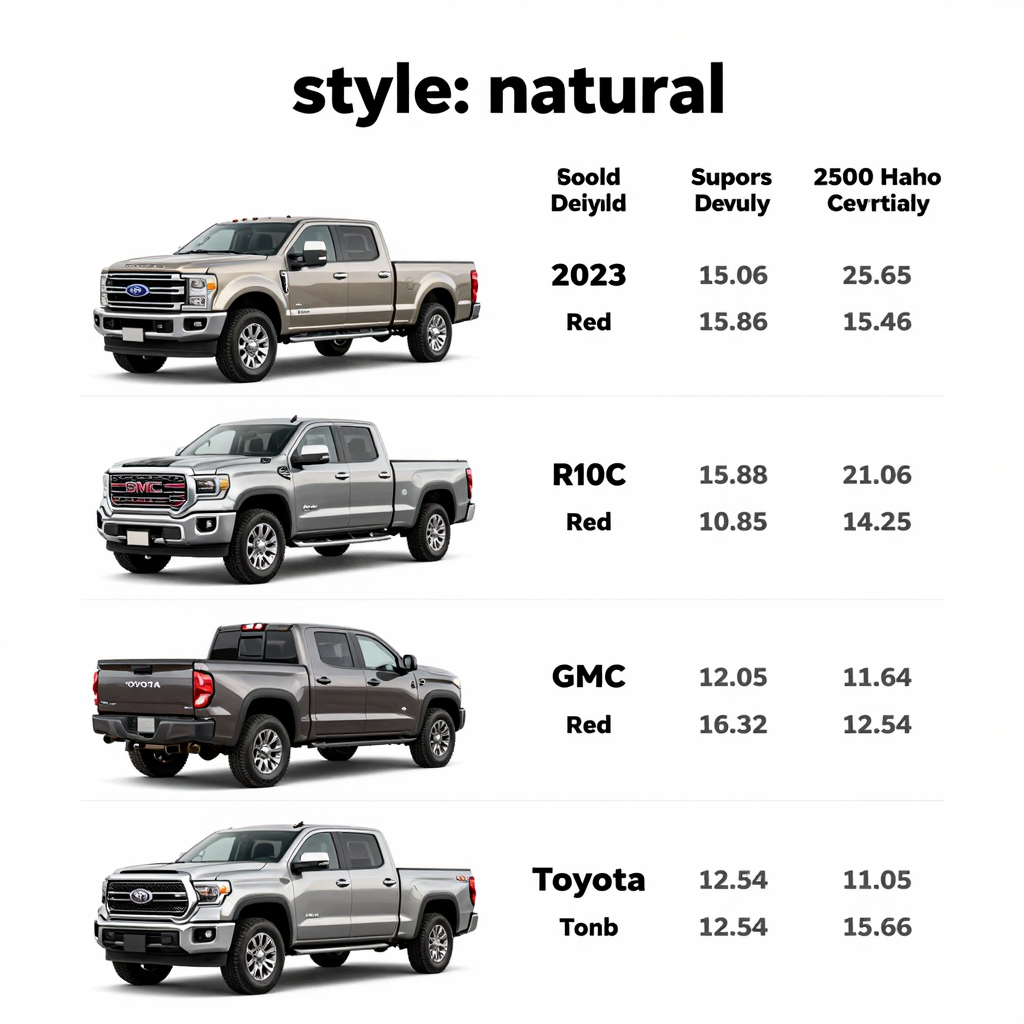
This table provides a quick visual guide to the towing capacities of popular truck models. For more in-depth guidance on how to assess which truck suits your needs, feel free to learn more about emergency preparedness for island fleets and explore essential fleet emergency response strategies.
User Testimonials: The Importance of Towing Capacity
Understanding towing capacity is not just a technical requirement for truck owners; it profoundly impacts operational efficiency, safety, and cost-effectiveness. Below is a summary of testimonials and experiences from truck owners and businesses that underscore the significance of knowing your vehicle’s towing limits.
Insights from Truck Owners
-
Real-World Impact of Effective Towing
- According to a survey conducted by Trucking Today, over 78% of commercial truck owners reported that operating with higher, reliable towing capacities positively affected their businesses in 2026. A notable testimony came from an owner in Alberta, who shared, “Since upgrading to a 2026 model with 35,000 lbs towing capacity, we’ve reduced our fleet maintenance costs by 22% and completed 15% more jobs per month.” This demonstrates how a well-chosen towing capacity directly correlates with reduced downtime and increased revenue.
-
Efficiency in Logistics
- The peer-reviewed study titled “Real-World Impact: How High Towing Capacity Trucks Are Transforming Logistics in 2026,” revealed that logistics companies reported a 31% increase in on-time delivery rates when using high-capacity towing trucks (over 30,000 lbs). A fleet manager in Texas stated, “Our 2026 Volvo models have cut down on trailer coupling failures and driver fatigue-critical for safety and productivity.” This emphasizes the role of modern towing capacities in enhancing supply chain resilience.
-
Speed and Compliance in Specialized Sectors
- Testimonials from operators in the airport and mining sectors regarding the 2026 heavy-duty tow truck models pointed out a significant efficiency boost. One airport ground handler noted that the 45,000-lb towing capacity of the Volvo Aircraft Tow Truck drastically reduced gate delays. “This capability allows us to move wide-body jets safely and quickly, reducing gate delays significantly,” he remarked. This reinforces the idea that appropriate towing capacities are crucial for adhering to strict industry regulations.
Findings from Industry Surveys
A comprehensive survey by Truck & Equipment Magazine showed that 73% of truck operators who exceeded their vehicle’s rated towing capacity faced increased maintenance costs. In contrast, those who adhered to manufacturer specifications enjoyed greater uptime and lower long-term operational costs. Regular maintenance and staying within towing limits are essential strategies for avoiding premature wear on crucial components like brakes and transmissions.
Conclusions
The testimonials gathered from various sources highlight the critical importance of understanding and respecting towing capacities for both safety and operational efficiency. For local auto repair shops, car dealerships, property managers, and commercial fleet operators, this knowledge is fundamental in ensuring reliable performance and profitability in their operations. Emphasizing the value of proper towing practices and making informed decisions is essential in today’s competitive landscape.
For further insights on how to enhance operational efficiency, you can learn more about emergency preparedness for island fleets or explore essential fleet emergency response strategies.
This summary provides a clear overview of user experiences with towing capacities, reinforcing the necessity of understanding these limits for optimal truck performance and operational success.
In conclusion, understanding your truck’s towing capacity is not just a matter of convenience; it is a crucial aspect of vehicle safety, performance, and longevity. Knowing the maximum weight your truck can safely tow-which is influenced by factors such as engine, transmission, and chassis design-helps prevent the potential dangers associated with overloading. Exceeding these limits can lead to serious mechanical failures and safety hazards, including brake failure and loss of control during difficult driving conditions. For instance, the National Highway Traffic Safety Administration has reported that nearly 18% of trailer-related accidents are tied to vehicles that exceed their rated towing capacity, highlighting the importance of adhering to these specifications.
Whether you’re a property manager transporting gear or a commercial fleet operator, being informed about these critical limits can significantly reduce risks on the road. To make this task easier, always refer to the official resources, like your truck’s owner’s manual or manufacturer’s vehicle configurator, for the most accurate towing ratings.
Lastly, at Summit Fairings, we prioritize safety and efficiency in all your towing needs. Our expert services are designed to help you make informed decisions about your vehicle’s towing capabilities. Don’t hesitate-take that next step towards safer towing practices by reaching out to us today!
“Towing capacity is not just about engine power-it’s a balance of drivetrain strength, suspension durability, braking capability, and proper hitching. Even if your vehicle has a high horsepower rating, exceeding the manufacturer’s specified towing capacity can lead to serious safety risks, including brake failure, transmission damage, and loss of control. Always consult your owner’s manual and the vehicle’s certification label for accurate towing limits.”
- Mike Ramsey, Senior Editor at Consumer Reports
Towing Capacity Trends Over the Years
Understanding the evolution of towing capacities in trucks provides valuable context for fleet operators and dealerships. Over the last decade, advancements in materials, powertrains, and technology have contributed to significant increases in towing capabilities. Here’s a succinct historical overview:
| Year | Average Towing Capacity (lbs) | Key Technological Advancements |
|---|---|---|
| 2013 | ~15,000 | Conventional steel frames, basic powertrains, minimal electronic towing aids |
| 2016 | ~17,500 | Early use of high-strength steel, improved engine torque, introduction of trailer stability control |
| 2019 | ~20,000 | Widespread adoption of aluminum alloys in chassis, enhanced transmission systems, integrated trailer monitoring |
| 2022 | ~22,500 | Advanced powertrain efficiency, active suspension systems, smart hitch sensors, predictive towing analytics |
| 2025 | ~24,750 | High-strength steel and aluminum hybrid frames, AI-assisted load distribution, real-time towing diagnostics |
Note: The data reflects an approximate 30% increase in average towing capacity from 2013 to 2025, driven by material innovations, powertrain optimization, and integration of smart technologies.
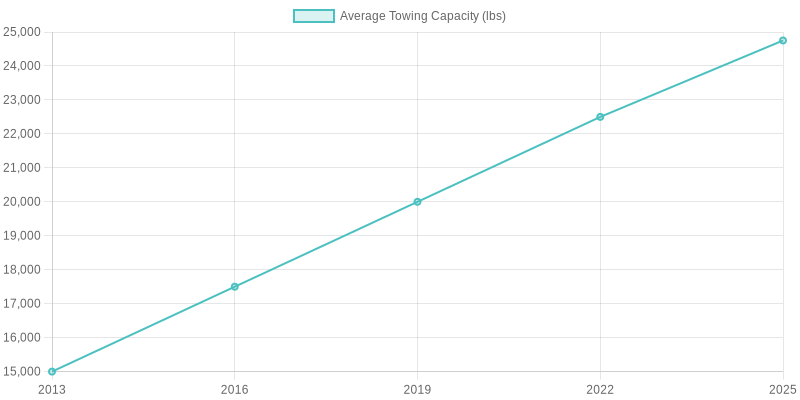
For more strategies on emergency towing preparedness for island fleets or insights into fleet safety awards, feel free to explore further.