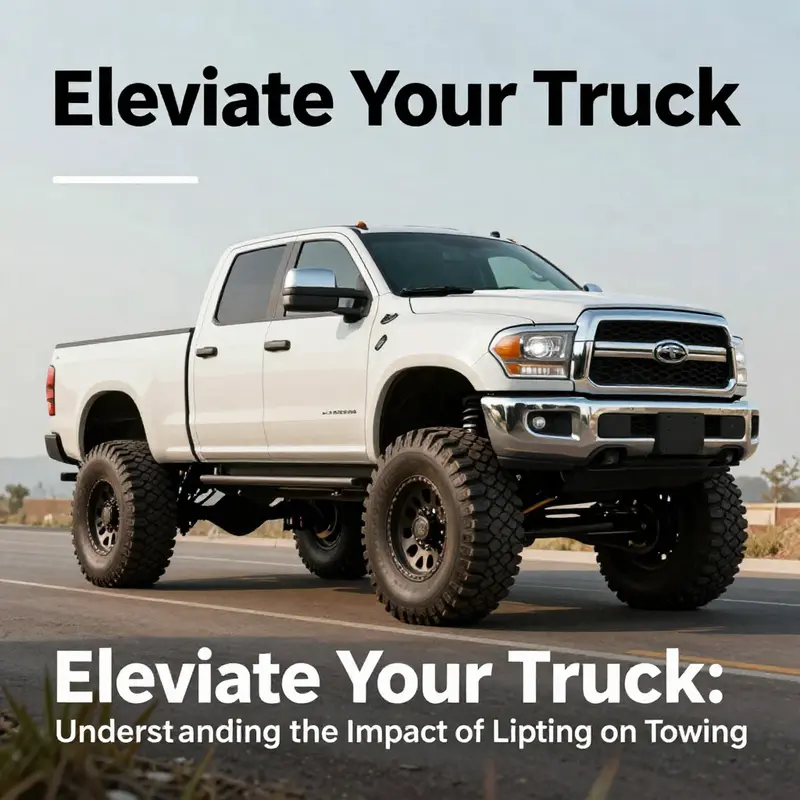
Lifting a truck can enhance its visual appeal and off-road capabilities but significantly alters its towing capacity and handling. For local auto repair shops, car dealerships, property and resort managers, and commercial fleet operators, understanding these changes is crucial. As we delve into altered weight distribution, reduced towing capacity, and stress on suspension and axles, it will become evident that lifting a truck requires careful consideration for anyone planning to tow. This holistic overview will equip you with the knowledge to assess and mitigate risks associated with lifting modifications, ensuring safety and performance remain priorities.
Lifting Landscapes: Navigating the Shifting Dynamics of Towing After Truck Modifications
Lifting a truck is more than just an aesthetic upgrade or a means to conquer off-road obstacles; it creates a fundamental change in operating dynamics that directly influences towing performance and safety. In this comprehensive narrative, we explore how the very act of elevating a truck modifies its weight distribution, alters the stress on critical components, challenges handling traits, and necessitates careful adjustments if the vehicle is to continue towing heavy loads with reliability and security.
When a truck is modified with a lift kit, the first and most notable effect is the alteration in weight distribution. Manufacturers calibrate trucks with precision, ensuring that the balance between the front and rear axles performs optimally under standard configurations. A lift, however, shifts the vehicle’s center of gravity upward, often resulting in an uneven load spread across the axles. This shift is not merely a trivial change in the truck’s stance but a significant modification that affects every aspect of towing dynamics. The suspension system, designed for the original ride height, suddenly faces a new set of circumstances. The gravity-induced load now causes increased pressure on certain components. For instance, if the front of the truck begins to carry more weight than originally designed, traction can suffer during acceleration, and braking efficiency may decline, ultimately resulting in potential instability when hauling a trailer. This altered distribution can lead to scenarios where the rear axle, which powers and stabilizes the truck during towing, becomes underloaded. Such underloading reduces the tire grip that is critical when starting from a stop or during sudden maneuvers.
In addition to compromised traction, the shift in weight distribution creates a host of challenges for the truck’s mechanical components. The drivetrain, suspension, and braking systems are all calibrated for a specific balance of forces. Raising the truck disrupts this symmetry, increasing the strain on key components. The axles and chassis, initially designed to deal with the forces generated under the stock configuration, now endure higher levels of stress that may lead to premature wear or even catastrophic failure during extended towing operations. The modifications may also void manufacturer warranties, leaving vehicle owners without recourse should these systems fail. For drivers who rely on their trucks for both everyday duties and heavy-duty towing, this dual role becomes a balancing act between performance and longevity. The enhanced stresses on the rear axle and suspension components require a reassessment of the towing capacity. Many experts suggest reducing the maximum towing rating by 10–20% after a lift to account for the increased risk. This safety margin is crucial because every pound of additional load or misdirected force multiplies the demands on the vehicle’s structure and braking systems.
Safety concerns extend further than just mechanical strain. The dynamics of a lifted truck can interfere with proper alignment between the truck and its trailer. In a standard configuration, trailer hitches are engineered to align with the tow vehicle’s frame in a way that evenly distributes the load and minimizes stress on any one component. However, with an increased vehicle height, the coupling angle—the line at which the trailer meets the truck—might not be optimal. An improper coupling angle leads to an imbalance, often causing the trailer to sway or fishtail, particularly on uneven terrain or when navigating curves. This misalignment not only places additional stress on the hitch assembly but also increases the likelihood of accidents, as the stability of the entire towing setup is compromised. The risk is further exacerbated when towing heavy or improperly balanced trailers, where even minor deviations from the ideal coupling angle can translate into significant safety hazards on the road.
Handling is another critical factor impacted by lifting a truck. The elevated height changes the vehicle’s behavior during braking, acceleration, and cornering maneuvers. With a higher center of gravity, the truck becomes more susceptible to rollovers, especially during abrupt stops or when executing sudden turns to avoid obstacles. The braking system, under these altered conditions, might not perform as efficiently because the weight transfer during braking now follows a different trajectory than what the stock vehicle was designed to handle. Without careful consideration and possible upgrades to braking components, the risk of brake fade or even complete loss of stopping power increases when towing heavy loads. The end result is a vehicle that can be less predictable in emergency situations—an unpredictable factor that any driver would prefer to avoid when pulling a heavy trailer.
The challenges posed by an altered weight distribution extend beyond just the physics of motion. There are legal and regulatory repercussions as well. Local and national transport regulations often have strict guidelines about vehicle modifications, particularly those affecting the safety features of a truck. Modified vehicles may not only be subject to increased scrutiny during inspections, but if the modifications are not specifically approved for towing purposes, they can result in fines or even render the vehicle ineligible for commercial use. This is particularly significant for fleet operators who depend on the consistency and reliability of their vehicles for emergency responses or critical service calls. These operators must ensure that any modifications, including lifts, adhere strictly to both manufacturer guidelines and local regulatory requirements. Maintaining compliance becomes all the more challenging as the vehicle’s configuration moves further away from its stock setup.
Beyond the mechanical and legal considerations, the decision to lift a truck has profound effects on driver confidence and operational strategy. Drivers accustomed to a certain feel and performance profile may find that their vehicle behaves unpredictably once lifted. This is not merely a matter of mechanical recalibration but a psychological challenge as well. The altered behavior, such as increased body roll or delayed braking response, forces experienced operators to adapt their driving techniques. In many cases, it is recommended that drivers who have modified their trucks seek additional training to understand the new dynamics. This is particularly important for those who routinely undertake long-distance hauling or operate in environments where precise vehicle control is paramount.
The need for a balanced approach becomes evident when considering the broader implications for vehicle longevity and passenger safety. For those planning to use a lifted truck for towing, it is not sufficient to simply install a lift kit and assume that all systems will perform adequately under new loading conditions. Instead, a comprehensive overhaul of the suspension and braking systems might be necessary to accommodate the new dynamics. Reinforcing the truck’s frame, upgrading the shock absorbers, and implementing a weight-distributing hitch are among the modifications that can help mitigate the risks associated with altered weight distribution. These additional measures help to redistribute the load more evenly, ensuring that neither the front nor the rear of the truck is unduly burdened. In many cases, the adoption of such changes improves overall towing performance, though at the cost of added complexity and expense.
For enthusiasts who value both the off-road prowess and high towing capacity of their trucks, the decision to lift presents a complex challenge. It is an exercise in compromise: gaining ground clearance and a rugged, commanding appearance comes at the potential cost of reduced towing capacity and increased safety risks. The truck, once a precisely calibrated machine, now requires continuous recalibration and attentive maintenance to function within safe limits when towing. This balance is delicate, underscoring the importance of detailed consultation with mechanics or specialists in vehicle modifications. A trusted professional can assess the impact of the lift on various components, recommend suitable upgrades, and help outline safe operational practices that neither compromise performance nor endanger the driver.
In practical terms, one of the most effective measures to counteract the negative impacts of altered weight distribution involves the use of weight-distributing hitches. These devices, when properly installed, help to reallocate the weight between the truck and trailer more evenly during towing. By redistributing the load, these hitches alleviate some of the stress placed on both the vehicle and the trailer coupling. The result is a more stable towing system that reduces the likelihood of sway and improves overall control. This solution is not a panacea; rather, it is part of a broader set of best practices that include continuous monitoring of the truck’s performance under load and adherence to modified towing capacity guidelines. For those seeking further insight into safe towing practices, resources such as a detailed analysis available on a comprehensive towing safety insights page on the Island Tow Truck website can provide valuable information to ensure that all modifications meet the required standards.
It is equally important to consider the long-term implications of operating a lifted truck, particularly when it comes to regular maintenance and repair. The increased stress on components such as the shocks, springs, and control arms can accelerate wear and tear, necessitating more frequent inspections and replacements. Maintenance protocols that were once standard may no longer be sufficient, and drivers must adopt a more proactive approach to ensure that every part of the system is functioning as intended. In many cases, specialized maintenance schedules and parts designed specifically for lifted vehicles are required, reinforcing the idea that modifications should always be approached with caution and a clear understanding of their cascading effects.
Moreover, operating a lifted truck in towing scenarios calls for an awareness of environmental factors that might amplify existing challenges. Road conditions, weather, and terrain can all interact with a lifted truck’s altered dynamics in complex ways. For instance, navigating wet or icy roads in a truck with a higher center of gravity can lead to increased instability, making it crucial for drivers to adjust their speed and handling strategies. Similarly, steep inclines and declines demand a refined approach since weight distribution can further shift during travel on uneven surfaces. These factors emphasize the necessity for heightened vigilance and flexibility when towing with a lifted truck, requiring drivers to constantly adjust their approach based on real-time road conditions.
The integration of advanced technology in modern towing setups has provided some relief to these challenges. Many contemporary trucks, even those modified with lifts, now incorporate electronic stability control, advanced brake assist systems, and traction control programs. These systems work in concert with the vehicle’s mechanical components to provide a more stable and predictable towing experience. However, while technological innovations can help mitigate some of the adverse effects of altered weight distribution, they do not eliminate the fundamental challenges posed by physical modifications. Relying solely on technology without addressing the underlying mechanical disparities can lead to overconfidence, ultimately reducing safety margins. Therefore, a holistic approach must combine both technological enhancements and mechanical reinforcements to achieve optimal performance.
A crucial consideration for those modifying their trucks for better off-road performance is the potential impact on insurance and liability. Insurance providers often scrutinize modifications that significantly alter a vehicle’s original operating parameters. A lifted truck that has not been properly assessed and certified for towing may result in higher premiums or even void coverage in the event of an accident. This financial aspect adds yet another layer of complexity to the decision-making process, calling for detailed consultations with both insurance experts and vehicle engineers. Insisting on professional certification not only ensures legal compliance but also conveys a measure of safety assurance to all parties involved, from vehicle operators to insurers.
The psychological impact of making such modifications should not be underestimated either. Drivers who modify their trucks may experience a sense of empowerment, believing that the increased clearance and aggressive stance translate to improved capability. However, the shift in weight distribution and the consequent decrease in stability when towing can sometimes lead to a misalignment between perceived and actual performance. This misperception can be dangerous, as overconfidence in the modified vehicle’s capabilities may lead to risky behavior on the road. Thus, it is imperative to approach any vehicle modification with a clear understanding of both its benefits and its limitations. Continual education, professional guidance, and adherence to recommended towing practices can help bridge the gap between expectation and reality.
Ultimately, the decision to lift a truck when towing heavy loads is one that must be made with careful assessment of multiple factors. The phenomenon of altered weight distribution does not occur in isolation; it interacts with suspension dynamics, brake performance, axle stress, and overall vehicle safety. For drivers, this means that any lift modification will necessitate a series of compensatory adjustments—be it mechanical reinforcements, updated maintenance protocols, or revised towing capacity guidelines—to ensure that the vehicle remains safe and effective under load.
With the inherent challenges in mind, those considering lifted trucks for towing purposes are strongly advised to seek professional advice. Consulting with a qualified mechanic or a specialist in vehicle modifications can unveil insights that are not immediately apparent from a superficial inspection. Professionals can help identify potential pitfalls, suggest targeted modifications, and offer a clear picture of what adjustments are essential to maintain safety and performance. Such consultations not only provide peace of mind but also help align the vehicle’s mechanical capacities with its new operational demands.
In conclusion, while lifting a truck offers undeniable advantages in terms of ground clearance and off-road capability, it also introduces a cascade of challenges that can significantly affect towing performance. The altered weight distribution and subsequent shifts in load balancing place additional stress on the drivetrain, suspension, and braking systems, potentially reducing the overall towing capacity and compromising the stability of the vehicle. Adjustments such as installing weight-distributing hitches, upgrading mechanical components, and adopting modified maintenance schedules are necessary to counterbalance these risks. For those who rely heavily on their vehicles for towing, ensuring that every aspect of the truck is tuned to accommodate the new dynamics is essential. As such, the act of lifting is far more than a cosmetic modification; it represents a fundamental change in how the vehicle interacts with the forces of motion and gravity.
For a deeper dive into the intricacies of towing safety and the impact of vehicle modifications, readers may find additional information by visiting a resource with comprehensive towing safety insights from experts in the field, available on the Island Tow Truck blog. This resource offers practical advice, case studies, and detailed discussions that further illustrate the challenges and considerations outlined above. It is imperative that truck owners, especially those who modify their vehicles, remain both informed and vigilant to ensure sustained performance and, more importantly, safety on the road.
Reflecting upon all these considerations, it becomes clear that successful towing with a lifted truck does not happen by chance; it demands a proactive approach to vehicle management. Every aspect—from increased suspension stress to the critical alignment of trailer couplers—must be scrutinized and adjusted accordingly. Advances in technology and professional oversight help guide owners through this transition, yet the core principles of physics and engineering remain unchanged. The principles of balance, stability, and safety are paramount, and it is the responsibility of every operator to ensure that these are never compromised in the pursuit of enhanced aesthetics or off-road capability.
For more detailed regulations and safety standards pertaining to vehicle modifications and towing, readers are encouraged to consult the official guidance provided by the U.S. Department of Transportation at DOT. This authoritative resource outlines the key standards and inspections required for modified vehicles, ensuring that each step taken in the pursuit of a personalized truck aligns with federal safety requirements and best practices.
By understanding the multifaceted impacts of lifting a truck on towing performance, operators can make informed decisions that prioritize safety without sacrificing the benefits of a modified vehicle. The journey to achieve this balance is one of continuous learning, careful planning, and regular maintenance. In the ever-evolving landscape of automotive customization, awareness and adherence to established safety guidelines will ensure that the increased perspectives offered by a lifted truck do not come at the cost of compromised control or reduced performance. Embracing a holistic approach that includes proper mechanical upgrades, diligent maintenance, and informed driving habits, truck owners can navigate the challenges of altered weight distribution with confidence and skill.
When Elevation Disrupts Stability: How Lifting a Truck Reduces Towing Performance
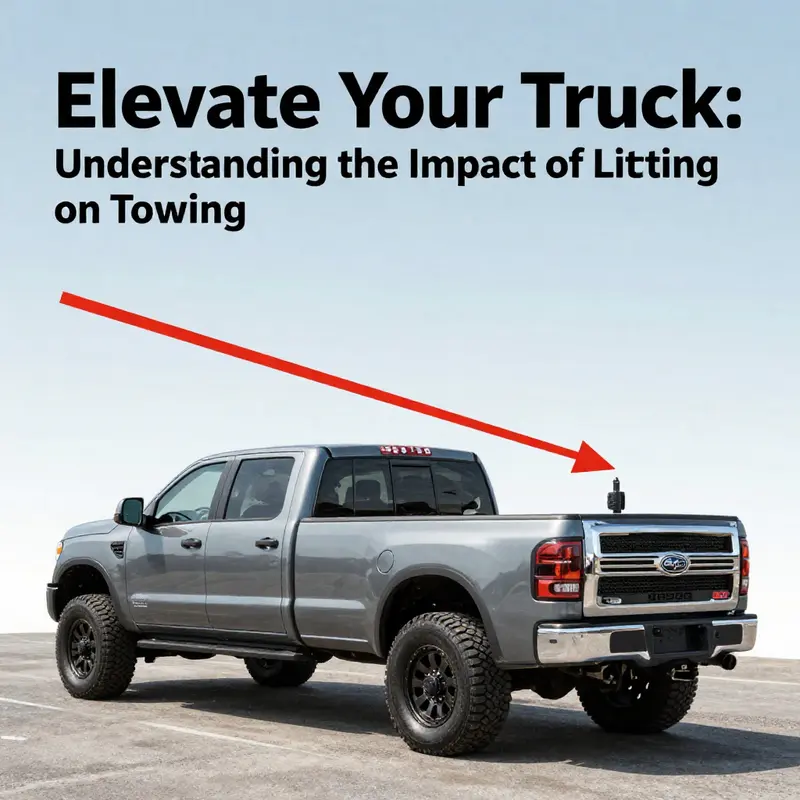
Lifting a truck is a popular modification among off-road enthusiasts and those looking to achieve a rugged appearance, but the elevation that many see as a symbol of enhanced strength and style comes at a significant cost when it comes to towing performance. The increase in overall height may provide better clearance for rough terrain and a more commanding view of the road, but it also leads to an unintended consequence: a reduced towing capacity that can compromise both safety and overall vehicle performance.
At the heart of this issue is the alteration of the truck’s center of gravity. By raising the body of the truck, the center of gravity is also raised, making the vehicle inherently less stable. In a stock configuration, truck manufacturers carefully design the suspension, chassis, and weight distribution to ensure optimum performance when towing heavy loads. However, lifting the body disrupts this delicate balance. The higher center of gravity means that even slight maneuvers, such as a sharp turn or sudden lane change while towing, can shift the weight distribution far more dramatically than intended by the original design. This increased potential for instability can lead to dangerous scenarios like excessive trailer sway, fishtailing, and in the worst cases, an increased risk of rollover.
Closely linked to this instability is the effect of a lift on the suspension components. When a truck is modified with a lift kit, it often requires a complete overhaul of the suspension system. Stock shocks, springs, and control arms are engineered with specific parameters to handle the loads they are expected to carry. However, with an increased ride height, these components are frequently replaced with parts that are designed to cope with an off-road environment rather than the high demands of towing a heavy trailer. This can result in uneven distribution of stress across the vehicle’s frame, putting an inordinate amount of pressure on the drivetrain, rear axle, and even the chassis itself. The original suspension is finely tuned for stability during towing; once it is modified, the alignment of the drive train is disrupted and can lead to mechanical inefficiencies that further reduce the safe towing capacity.
For instance, even when stronger springs and shocks are installed to compensate for the increased height, they do not perfectly match the original engineering specifications intended for maximum towing safety. The slight misalignment created by these modifications may seem negligible during everyday driving, but when towing a heavy load, every fraction of a difference counts. This is further compounded by the altered geometry of the vehicle. A lifted truck may experience an increase in torque on both the engine and the transmission, thereby accelerating the wear and tear of these systems under the additional strain created by towing. Drivers may notice that after modifications, the truck feels less responsive, and the suspension seems overburdened when additional weight is applied. Maintenance costs can increase, as the extra stress means that parts and systems may require replacement sooner than originally scheduled.
Another critical aspect to consider is the degradation of tire performance. Tires are one of the primary contact points between the truck and the road, and their performance is deeply influenced by the vehicle’s weight distribution and alignment. In a standard configuration, the wheels are perfectly aligned with the truck’s body, ensuring that traction and braking are optimized for safety. However, lifting the truck disrupts this stock alignment, often leading to uneven tire wear and a reduction in overall grip—a factor that is crucial when towing heavy trailers. The loss of traction becomes particularly concerning on slippery or unfamiliar road conditions, where the stability of the vehicle is already in jeopardy due to the raised center of gravity.
The braking system is another area that is significantly impacted by lifting a truck. In its original configuration, the braking system is calibrated to deal with a specific weight distribution and dynamic load transfer during deceleration. With a lifted truck, the changes in weight distribution mean that brakes must work under conditions they were not originally designed for, particularly when a trailer’s mass is added into the equation. The increased height intensifies the forward momentum during braking as a result of the higher center of gravity, causing the braking distance to extend. This places not only the truck but also the connected trailer in a potentially hazardous state, where the brakes may fail to provide the expected level of stopping power, leading to prolonged stopping distances and an increased risk during emergency braking situations.
A further consequence of lifting a truck is the misalignment it creates between the truck’s frame and the trailer hitch. In stock trucks, the hitch and the frame are designed to work in unison, ensuring an optimal coupling angle that maximizes towing efficiency while minimizing wear on both the hitch and the trailer connections. When the truck is lifted, this carefully engineered relationship is thrown off balance. The result can be a misalignment that places additional stress on the coupling points. Over time, the constant strain on the hitch assembly may lead to premature wear or even a failure during towing. Such misalignments not only degrade the durability of the trailer connection but also increase the likelihood of safety hazards on the road that could lead to accidents.
It is also important to mention that many truck manufacturers explicitly state that any modifications, including lifts, may void the original warranty. This voiding is often tied to the manufacturer’s guarantee of towing capacity. Since the vehicle is now operating outside of the parameters for which it was originally designed, the engineered towing limits are no longer reliable. For those who depend on their truck for heavy-duty applications such as hauling trailers, boats, or large loads of equipment, this represents not simply a loss in towing capacity, but also an increased level of uncertainty that can affect insurance rates, vehicle inspections, and even legal compliance in various jurisdictions.
Given the various factors at play, drivers who are considering lifting their truck and continuing to use it for towing must approach the situation with a strong sense of caution and thorough research. Experts within the automotive field frequently recommend that any significant modifications come with an appropriate reduction in the rated towing capacity. A common guideline is to reduce the original towing capacity by 10–20 percent, as a safety margin to account for the altered dynamics of the vehicle. It is critical that vehicle owners consult the manufacturer or a certified mechanic before making modifications, as these professionals can provide insight into the necessary adjustments to the suspension, axle reinforcement, and braking systems to compensate for the lift.
Despite the primary focus on safety and performance, some drivers are often willing to accept the trade-off for the raw aesthetic appeal and enhanced off-road ability that a lift offers. However, it is crucial to understand that the drive from rugged imagery and improved ground clearance does not automatically translate to enhanced hauling capabilities; in fact, it usually does the opposite. It is worth noting that not all lifts are created equal, and those specifically engineered with towing requirements in mind can help mitigate some of the negative effects. For example, a minimal lift of two or three inches that uses components designed for added towing demands might help preserve some of the original towing precision, but even then, the intrinsic challenges of a higher center of gravity remain.
In discussions about towing performance after lifting a truck, a recurring theme is the compromise between off-road capability and on-road stability. When a truck is primarily used for off-road adventures away from high-speed highways and urban centers, a lift may indeed offer benefits by providing better clearance, allowing drivers to navigate through rocks and uneven terrain without damage to the undercarriage. However, the demands of towing are fundamentally different from those of off-road driving. Towing a heavy trailer imposes constant stress on a vehicle’s braking system, suspension, and overall stability. In such cases, the risks introduced by lifting the truck may outweigh the benefits of improved off-road capability, especially if the truck is used for dual purposes—both recreational off-roading and regular towing on highways.
Furthermore, lifting a truck creates a scenario where every road condition is amplified. On smooth, flat highways, the adverse effects might be minimal and manageable, but when the truck encounters uneven roads, steep curves, or adverse weather conditions, those minor imperfections quickly become significant challenges. The altered geometry may result in a harsher ride, as the suspension is forced to absorb irregularities with less finesse due to the increased distance from the ground. In the context of towing, the trailer amplifies these effects, leading to oscillations and swaying that are far more pronounced than they would be in a stock truck setup. Over extended periods and under consistent heavy loads, the cumulative effect can lead to accelerated wear on the vehicle components and even catastrophic failures in extreme circumstances.
The wear on suspension systems comes not only from the increased vertical travel but also from the horizontal stresses that develop due to the shift in weight distribution. Every time the vehicle negotiates a road curve or makes an abrupt maneuver, the forces acting on the suspension amplify in ways that the original components were never intended to handle. The forced adaptation might involve aftermarket parts that, while robust, cannot fully replicate the naturally balanced performance of factory-designed systems. Over time, these components might begin to deteriorate at an accelerated rate, leading to what many mechanics describe as a domino effect—where one failing component places undue strain on another, eventually compromising the entire structural integrity of the truck.
Safety is another dimension that cannot be overlooked when evaluating the impact of a lift. A lifted truck that is tasked with towing not only becomes harder to handle but can also create hazardous situations for other road users. The increased risk of rollover during sudden maneuvers, combined with the extended braking distances, creates scenarios where both the driver and passengers in the truck, as well as those in the towed trailer, are at elevated risk of injury. For fleets or commercial operations that depend on the reliability and safety of their vehicles, these factors are paramount. For instance, fleet managers might find that the projected savings from a visually impressive lift are quickly negated by the higher costs associated with repairs, premature wear, and potentially higher insurance premiums.
For individuals seeking additional information on truck modifications and their impact on towing performance, resources from respected industry authorities can provide valuable insights. A well-curated source, such as the National Highway Traffic Safety Administration, offers guidelines and detailed analyses that help drivers understand the complexities of vehicle dynamics post-modification. Moreover, enthusiasts and professionals alike often share their experiences and recommendations on platforms like the Island Tow Truck blog, where practical advice and firsthand accounts contribute to a broader understanding of how modifications affect overall performance.
The challenge of balancing aesthetics, off-road capability, and towing performance is one that requires a nuanced approach. Many truck owners are drawn to lifting kits for the promise of a rugged, capable vehicle, unaware that the modifications carry hidden compromises that only become apparent under heavy load conditions. Towing, unlike off-road driving, is a continuous test of a vehicle’s structural integrity and dynamic equilibrium. Every factor—from the height of the center of gravity to the configuration of the suspension system—plays a role in ensuring that the vehicle performs safely under stress. As such, the decision to lift a truck should come with a full understanding that what one gains in appearance and off-road prowess might be counterbalanced by a significant loss in towing capability.
In practice, the reduction in towing capacity after a lift is not typically a linear relationship but rather a multifaceted outcome of several compounded engineering changes. For example, the need to safeguard against faster-than-anticipated wear and misalignment demands that truck owners adjust their expectations and practices when it comes to towing heavy loads. Often, this means recalculating safe towing limits by applying a conservative reduction—usually in the ballpark of 10–20%—to the manufacturer’s original ratings. Such adjustments are a common recommendation among experts to ensure that the altered vehicle maintains a reasonable margin of safety in all operating conditions.
Additionally, the very nature of towing involves complex interactions between the vehicle’s structure and the attached trailer. Every upward shift resulting from the lift has a direct influence on the coupling geometry, which, if not properly aligned, can lead to issues such as hitch separation during sudden shifts in load or while navigating uneven surfaces. The hitch, often seen as a small accessory, becomes a critical link in the overall chain of safety. When this link is compromised, the entire towing system falls at greater risk of failure. The synergy between the truck’s modified suspension and the trailer’s connection must be recalibrated to accommodate the new dynamics introduced by the lift.
Exploring further into the realm of braking dynamics, it is essential to consider that braking is not merely about stopping power; it is about controlling the energy release accumulated by the vehicle during operation. A lifted truck, with its altered weight distribution, collects and transfers energy in ways that the original brakes were not engineered to manage. The result is that every braking event—whether a routine stop or an emergency intervention—exerts additional stresses on the brake pads, rotors, and associated hydraulics. These increased mechanical stresses can lead to faster degradation of brake components, which ultimately affects the vehicle’s ability to halt momentum reliably when towing significant loads. The rippling effect of these minor degradations can culminate in a situation where the braking system no longer performs within safe limits, thereby exacerbating the inherent risks of towing with a lifted truck.
Moreover, the financial and practical implications of reduced towing capacity extend far beyond the immediate performance issues. For many truck owners who rely on their vehicles for commercial purposes or regular heavy-duty towing, the depreciation of safe towing limits can have substantial economic repercussions. The need for more frequent maintenance, potential modifications to the brake and suspension systems, and even the eventual need to replace compromised parts can build up costs that far exceed initial expectations. In commercial fleet settings, any modification that affects the vehicle’s reliability directly translates into lost revenue, increased downtime, and higher insurance premiums. In these cases, the decision to lift a truck must be carefully weighed against the potential financial liabilities that come with reduced operational efficiency.
In essence, while a lifted truck may be an appealing symbol of power and versatility, the engineering realities of such a modification paint a more cautionary picture. The interplay between stability, weight distribution, suspension performance, braking efficiency, and overall mechanical durability establishes a complex network of factors that collectively diminish the towing performance of a once well-balanced vehicle. This multifaceted challenge should prompt any responsible truck owner to engage in a detailed assessment of their vehicle’s intended use, their towing requirements, and the potential risks associated with altering its fundamental structure.
A well-informed decision in this regard often means accepting that any significant aesthetic or performance gain in one area might incur a corresponding loss in another. The elevated stance of a lifted truck, while beneficial in specific off-road contexts, necessitates compensatory measures to safeguard its performance on highways and during heavy towing operations. Drivers who are enthusiastic about customization must therefore adopt a holistic view of vehicle modification—one that encompasses not only the immediate visual or off-road benefits but also the long-term implications for safety, durability, and overall functional performance.
For anybody considering a lift on their truck, it is imperative to emphasize that the modification should be thought of as only one part of a broader vehicle upgrade strategy. Reinforcing structural components, recalibrating suspension and braking systems, and even considering software adjustments for stability control are all necessary steps to ensure that the modified truck can still handle towing demands reasonably well. Often, manufacturers and certified mechanics are the best sources of guidance in this area, as they can provide critical insights into how best to maintain a harmonious balance between visual modifications and functional integrity.
In summary, the transformation that comes with lifting a truck is not merely a change in appearance or off-road capability; rather, it is a comprehensive alteration of the vehicle’s core performance metrics, especially when it involves towing. The elevated center of gravity, altered suspension geometry, compromised tire and brake performance, and increased strain on key mechanical components collectively contribute to a noticeable decline in towing capacity. This decline is not simply a matter of scaling numbers down on a specification sheet—it directly affects the safety, reliability, and economic viability of the vehicle in real-world operations.
For detailed guidelines and authoritative perspectives on how vehicle modifications may impact standardized towing metrics and safety protocols, it is advisable to consult resources like the National Highway Traffic Safety Administration at NHTSA. As towing remains an integral part of many drivers’ daily and professional lives, understanding these engineering dynamics is essential for making decisions that are both safe and economically sensible in the long term.
Ultimately, while lifting a truck can provide undeniable advantages in terms of off-road functionality and aesthetic appeal, it is accompanied by significant trade-offs that may render the vehicle less than optimal for heavy towing. By approaching this modification with a clear-eyed understanding of its impact on stability, suspension, steering, and braking dynamics, truck owners can better navigate the challenges of maintaining a vehicle that is at once rugged and reliable. This balanced perspective ensures that the pursuit of style and off-road capability does not come at the expense of fundamental safety and performance standards that are crucial for any towing operation.
Higher Stakes and Shifting Loads: How Truck Lifts Reshape Towing Dynamics and Safety
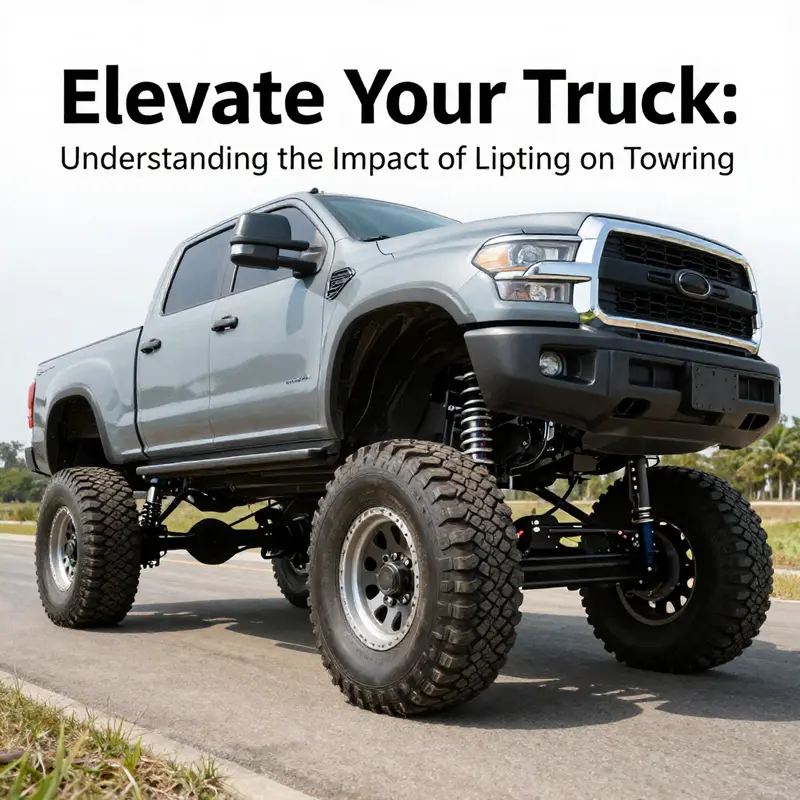
When a truck is altered with a lift kit, the impact on towing performance is far more complex than simply a change in ride height. The interplay between a raised chassis, altered center of gravity, and modified suspension geometry creates a dynamic scenario in which the physics of towing are fundamentally reshaped. In a stock configuration, trucks are designed with specific weight distributions, brake systems, and suspension geometries calibrated to handle expected loads. However, after a lift, even a modest body lift of one to three inches, these parameters are shifted in ways that require careful consideration. It is not only a matter of aesthetics and off-road capability; towing safety becomes a critical concern when the truck’s inherent stability is compromised by modifications that alter load transfer, suspension behavior, and overall handling characteristics.
This transformation begins with the change in the truck’s center of gravity. In an unmodified truck, the center of mass is purposely designed to be as low as possible to enhance stability during maneuvers such as cornering or sudden stops. When a lift kit is installed, the overall height of the vehicle is increased. This seemingly simple change has a cascading impact on the physics of driving. With the center of gravity raised, any lateral forces—whether from sudden turns or uneven road conditions—pose a greater risk. When towing a heavy trailer, these risks are magnified because the combination of a higher center of gravity and the extra load from the trailer can lead to a dangerous propensity for sway, fishtailing, or even rollover. The importance of maintaining a balanced weight distribution becomes a paramount design consideration, reminding operators that any deviation from the original specifications should prompt a reassessment of towing practices. Even the slight misalignment between the truck’s hitch and the trailer can become critical, leading to unanticipated stresses and potential instability on the road.
Manufacturers determine a truck’s towing capacity with precision based on the original suspension geometry, drivetrain strength, and chassis design. These ratings are rooted in complex engineering estimates and rigorous testing under real-world conditions. By lifting a truck, you stray from that calculated balance, and manufacturers typically do not endorse towing with modifications in place. In many cases, lifting a truck voids manufacturer warranties because even minor changes in suspension geometry can result in stresses that the original components may not be designed to handle. The increased load on the drivetrain and axles, combined with the altered weight distribution, often necessitates a derating of the maximum allowable towing capacity. In practice, this means that even if a truck was originally rated for a certain weight, the safe and effective towing capacity could be reduced by 10 to 20 percent as a precautionary measure. Such a modification demands that operators perform a rigorous reassessment of the vehicle’s overall capabilities before venturing out with heavy loads.
The dynamics of suspension systems are also heavily impacted by truck lifts. A lift kit, while designed to offer additional ground clearance and improve off-road capability, often alters the geometry between the truck and the trailer. Even in cases where a body lift is applied—where the suspension system remains unchanged—the overall height increase leads to a misalignment between the trailer hitch and the towing apparatus. This misalignment can result in uneven tire wear and suboptimal braking performance. When braking, weight transfer plays a critical role in how effectively a vehicle decelerates. A raised center of mass can disrupt the natural load transfer to the truck’s front brakes, leading to reduced braking efficiency and potential instability when coming to a stop. Over time, the uneven stresses on the drivetrain and suspension components can accelerate wear and tear, potentially leading to mechanical failure if not inspected and maintained vigilantly.
In an environment where every component is expected to behave within well-defined parameters, the slightest disruption can have far-reaching consequences. The introduction of a lift not only affects the ride height, but it also compromises the precision with which the truck and trailer interact. Trailer hitches and couplers, for instance, are designed to operate within a specific range of vertical alignment. With a lifted truck, the hitch may no longer align properly with the trailer coupler. This misalignment can introduce additional stress on key components such as the hitch ball and coupler assembly, resulting in excessive wear or even catastrophic failure under duress. It is critical that these components are inspected regularly if the vehicle is altered from its original configuration, and operators need to be aware of the fact that even slight deviations can result in significant safety hazards during towing operations.
Beyond the mechanical challenges, there is also a matter of driver awareness and responsiveness. The change in suspension dynamics and center of gravity means that any emergency maneuvers—such as sudden evasive actions or rapid braking—will impact a lifted truck differently than a stock version. Drivers may find that the handling characteristics become more sluggish or that the vehicle feels less responsive when attempting to correct its path. These changes can lead to a false sense of security if the driver is not aware of the altered dynamics. It is essential to adjust driving habits, allowing extra time for maneuvers and reducing speed when towing. Regularly testing the modified vehicle in controlled environments helps drivers become familiar with the new handling characteristics, ensuring that they are prepared for unexpected situations. Every driver should assess the modified vehicle’s performance on short local trips before attempting long-distance towing with heavy loads.
An often overlooked aspect of truck lifts is the increased stress placed on suspension components and the rear axle. Despite the introduction of heavier-duty springs or upgraded shock absorbers that are sometimes included with quality lift kits, the stresses induced by the increased height do not simply disappear. In fact, the amplified forces during loading and unloading, and the elevated angle at which loads are applied to the axle, can exacerbate existing issues. The rear suspension is designed to work within a narrow envelope of dynamic conditions. When that envelope is expanded—especially under the weight of a trailer—the extra strain can hasten component fatigue. This makes routine maintenance and prompt repairs an absolute necessity. A thorough inspection of the suspension system and related components should be part of any regular maintenance schedule, particularly when the truck is used for towing. Ignoring these elements may not only reduce the vehicle’s lifespan but can also lead to safety hazards that are both costly and dangerous.
One must recognize that the challenges posed by a lifted truck extend into the realm of legal compliance as well. Many states and municipalities have specific regulations regarding vehicle modifications. Laws governing safety inspections, aftermarket modifications, and even highway usage may all come into play when a truck’s suspension is altered. A lift kit may necessitate additional certifications or modifications to ensure that the vehicle continues to meet safety standards. Non-compliance with local regulations can result in fines, failed inspections, or even the revocation of operating privileges. Operators must be proactive in researching the legal implications of any modifications and should consult with certified mechanics or local authorities before undertaking significant changes. Such due diligence not only protects the driver from legal repercussions but also contributes to overall road safety.
Beyond the practical mechanical and regulatory implications, there is a philosophical aspect to modifying a vehicle in this manner. Enthusiasts often view lift kits as a means of personalizing and enhancing their driving experience. However, these modifications have consequences that ripple out into every part of the truck’s operational profile. Responsibility lies with the vehicle owner to balance desire with safety. A lifted truck may provide a more commanding presence on the road and improved off-road performance, yet these benefits must be weighed against potential reductions in towing capacity and overall vehicular stability. In many ways, the decision to modify a truck is an exercise in compromise. The enhanced aesthetics and off-road capabilities come at a price—a price measured in altered performance characteristics and the need for constant vigilance in maintenance routines. Rather than relying solely on modifications to achieve certain performance goals, vehicle owners should take a holistic approach that factors in both the mechanical realities and the human elements of safe driving. For further insights into vehicle modifications and the balance of performance and safety, you might find additional perspectives in a number of related discussions available on the industry’s blog sites, such as those found on the official blog.
In terms of addressing these challenges, it is advisable to remain in constant consultation with experts who specialize in truck modifications. Not every lift kit is created equal, and some are designed specifically with towing considerations in mind. Quality systems are engineered to uphold as many of the original vehicle’s characteristics as possible, minimizing the risks associated with an elevated center of gravity. These kits often include additional components such as reinforced control arms, upgraded shock absorbers, and specialized sway control devices that work in harmony with the altered geometry. Under no circumstances should one simply apply a generic lift kit without considering the full spectrum of towing dynamics. The integration of these modifications should be approached as a complete system tweak rather than a single, isolated change. Precision in engineering is imperative, ensuring that every element of the vehicle works together to provide safe and reliable towing performance. It is a reminder that while modifications can expand the versatility of a truck, they must be accompanied by equally rigorous attention to mechanical detail and safety protocols.
A critical component of ensuring towing safety with a lifted truck is the use of any available safety devices and load management systems. Technologies such as electronic sway control, trailer brake controllers, and even advanced load distribution systems can help mitigate some of the inherent risks associated with an elevated ride height. Sway control devices, for instance, are specifically designed to counteract the lateral movements that occur when towing heavy loads. By reducing the degree of fishtailing and correcting alignment issues during sudden maneuvers, these systems play a central role in maintaining control even in adverse conditions. Load distribution systems also provide a critical function by ensuring that the trailer’s weight is shared more evenly across the towing vehicle’s axles. The implementation of these technologies does not eliminate the risks introduced by a high-mounted center of gravity, but they significantly reduce the potential for catastrophic failure. By complementing the physical modifications with modern electronic assists, drivers can enjoy improved performance and a substantially higher margin for safety. Each safety device is an integral gear in the complex machinery of towing that must operate seamlessly to protect both the driver and the cargo.
Even minor changes in vehicle alignment can have a compounded effect on overall towing performance. The slight angular differences introduced by a lifted body cause differential forces to act on both the tires and the drivetrain components. These forces may result in uneven tire wear, particularly on the trailer and the tow vehicle. Over time, this uneven wear can lead to premature replacement of tires, as well as increased maintenance costs due to the need for balancing and alignments. In addition, the mismatch between the truck’s raised stance and the trailer’s coupling height can shift the dynamic loading patterns, placing undue stress on the hitch assembly. This situation not only compromises the safety of the towing operation but also reduces the efficiency of the vehicle’s braking system. It is incumbent upon vehicle operators to regularly inspect and adjust these components, ensuring that any misalignments are corrected before they have time to compound into significant mechanical issues. The process of troubleshooting and rectifying these adjustments should be integrated into routine maintenance schedules to avoid unexpected failures on the road.
As drivers become more accustomed to the altered mechanics of a lifted truck, it is important that they also reconsider their overall towing strategy. A holistic approach to towing with a modified vehicle requires a deliberate shift in how loads are approached and managed. One fundamental recommendation is to reduce the towing capacity by a margin of 10 to 20 percent as a buffer for unexpected shifts or increases in load stresses. This built-in safety margin serves as a protective mechanism, ensuring that even if the road conditions or load distributions change suddenly, the vehicle remains within safe operational limits. Regular communication with a certified mechanic who understands both the original manufacturer’s parameters and the additional stresses induced by lift modifications is essential. This ongoing dialogue helps to preemptively identify potential failure points before they turn into actual incidents on the road. The commitment to safety should extend beyond the initial modification process and be part of the vehicle’s lifecycle, requiring periodic reassessments as components wear and conditions evolve.
Beyond the technical specifics of vehicle dynamics, there is a broader cultural aspect to consider in the world of towing and vehicle modification. Enthusiasts and professionals alike are often driven by the thrill of customization and the desire to push vehicles beyond their factory limits. However, this enthusiasm must be balanced with a deep understanding of the risks involved. Lifting a truck should be seen not just as a stylistic change, but as a comprehensive alteration that affects the entire system of vehicle operation. The decision to modify must, therefore, be accompanied by a commitment to thorough education, continuous maintenance, and the willingness to adapt driving habits. Safety is a multifaceted goal that does not depend solely on mechanical enhancements but also on the mindset of those behind the wheel. This integrated approach is essential for ensuring that every journey—whether on challenging off-road routes or long stretches of highway—is undertaken with complete awareness of the vehicle’s revised capabilities and limitations.
In conclusion, the impact of lifting a truck on its towing capacity and safety is profound and multifaceted. The interplay of a raised center of gravity, altered suspension dynamics, and misalignment of the trailer hitch collectively demands a redefinition of safe towing practices. Every element—from the design of after-market lift kits to the integration of advanced sway control technologies—plays a role in mitigating the inherent risks introduced by these modifications. Drivers must be aware that even small changes can lead to significant impacts on performance, requiring not only adjustments in riding techniques but also strict adherence to maintenance routines and regulatory guidelines. The challenges posed by truck lifts underscore the importance of approaching modifications holistically, recognizing that enhanced aesthetics and off-road capabilities come with the responsibility of ensuring every aspect of towing safety is addressed. For in-depth technical guidance on this subject, interested readers can review the detailed standards outlined in the SAE Technical Standard – ASAE-STD427, which provide a comprehensive framework for understanding how truck lift modifications influence towing dynamics and structural integrity.
Ultimately, the decision to lift a truck should never be made lightly if towing heavy loads is a regular part of its use. The modifications not only alter the physical geometry of the vehicle but also necessitate a complete reevaluation of how towing is approached—from load management and suspension reinforcement to the integration of modern safety technologies and adherence to legal standards. With careful planning, regular mechanical assessments, and an unwavering commitment to safe driving practices, the challenges posed by lifted trucks can be managed effectively. The journey of adapting a truck for both enhanced off-road performance and towing capability is complex, intricate, and laden with technical nuances. It is a reminder that in the world of automotive modifications, every change in one area reverberates throughout the entire vehicle system. With informed strategies and a deep respect for the underlying physics, drivers can navigate these challenges successfully and continue to enjoy the benefits of a well-modified, high-utility vehicle.
Final thoughts
Understanding how lifting a truck affects its towing capabilities is essential for ensuring safe and effective towing practices. The modified weight distribution, potential reduction in towing capacity, and stress on suspension and axle components can combine to create significant challenges. For auto repair shops, dealerships, property managers, and fleet operators, prioritizing safety regulations and best practices when modifying a truck is vital. Adopting a thoughtful approach not only enhances your vehicle’s performance but also ensures the safety of all road users. Remember, the best modifications are those that balance aesthetics with functionality.