
When planning a move or transportation of large items, the capability to tow can be essential for ensuring a smooth process. Rental trucks often come into play during such activities; hence, understanding whether these vehicles come equipped with tow hitches is crucial, especially for property managers, commercial fleet operators, and resort operators who may frequently require this feature. This article delves into the nuances of towing with rental trucks, comprising a comprehensive overview of available hitches, types, specifications, and important rental company policies. We also explore key considerations when renting trucks equipped with hitches, ensuring you make informed choices that align with your unique transport needs.
Tow Ready on the Road: A Practical Guide to Tow Hitch Availability in Rental Trucks
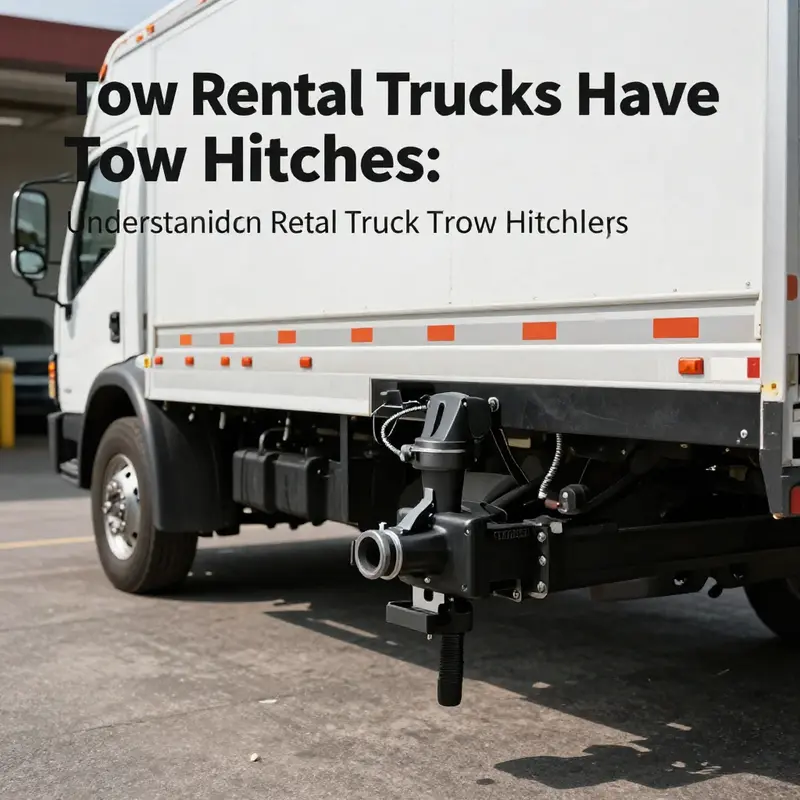
Towing opens up possibilities that many moving tasks depend on, from hauling a small trailer full of furniture to pulling a boat onto a launch ramp. Yet the simple question, do rental trucks have tow hitches, rarely has a single, universal answer. The truth lies in model variety, fleet strategy, and the logistics of vehicle configuration. In many rental fleets, especially those that feature medium to large trucks designed for moving and heavy-haul tasks, a tow hitch is a standard feature. These trucks are designed to support towing, which means the hitch, receiver, and the associated hardware are part of the truck’s baseline capability. But not every truck in every fleet is built the same, and a significant number of rental companies balance cost and versatility by offering tow hitch options as add-ons or providing hitch kits on request. The result is a practical landscape in which a renter benefits from planning ahead, verifying the exact equipment on the specific vehicle, and understanding the limits of the hitch system that accompanies the truck they plan to rent.
A closer look at the typical equipment reveals a pattern that helps orient expectations. In a standard lineup, you’ll commonly encounter larger cargo vans, 15-foot or bigger box trucks, and certain heavy-duty pickup configurations that are prepped for towing. These models are often equipped with a hitch receiver—most commonly Class III or Class IV—and, crucially, the corresponding payload and towing capacities. The Class III and Class IV designations are not merely labels; they reflect a balance of weight, stiffness, and stability that supports a wide range of towed loads, from utility trailers carrying household goods to larger campers or boats. The presence of a receiver does more than enable a ball mount; it signals that the truck’s structure and drivetrain have been calibrated to support towing tasks without compromising safety or performance.
If you’re renting a larger truck with a towing remit, you’ll usually find a hitch already installed as part of the rental configuration. These vehicles are commonly marketed as towing-capable or heavy-haul ready, with the hitch integrated into the vehicle’s chassis and the electrical connections pre-wired to support trailer lighting. The trailer wiring is a critical detail because it ensures that brake lights, turn signals, and tail lights on the trailer synchronize with the truck’s lighting system. Without proper wiring, even a perfectly matched hitch can create a hazard on the road or a compliance issue in a state or province that enforces trailer lighting standards. The practical implication is clear: for a renter whose plan is to tow, selecting a truck built for towing reduces the number of variables and the friction of the moving process.
But not all rental trucks carry the same pedigree. Smaller vans and compact pickup options frequently fall outside the towing comfort zone. In many fleets, 10-foot cargo vans or compact pickups may come without a tow hitch entirely. The absence of a hitch on these smaller options is often a deliberate choice to keep the vehicle’s price point and maintenance complexity manageable. If your move hinges on towing, these smaller models may not be suitable unless the rental company offers a hitch kit or a trailer hitch add-on that can be installed or rented for the duration of your rental. The practical takeaway is straightforward: before you settle on a truck, confirm whether it includes a hitch, and if so, verify the receiver size and the hitch class. The difference between a 2-inch receiver and a 2.5-inch option, for instance, can be non-trivial when you’re trying to connect a specific trailer or equipment. And even when a hitch is present, you should confirm the exact tolerance and rating for your planned load.
To navigate these choices smoothly, the rental process often includes an add-on ecosystem. If a truck in your desired class doesn’t include a hitch by default, many rental companies offer a trailer hitch kit upon request or provide a hitch as an add-on service. These add-ons are typically designed to be user-friendly, with a ball mount, pin, and sometimes a basic wiring harness. In some cases, the rental location may provide the hitch kit for a small fee, particularly if the truck itself does not normally come with towing hardware. The overall experience then becomes one of clarifying expectations at the outset: confirm the hitch’s presence, understand whether you’ll need a harness or extra adapters, and inquire about any associated fees.
The pre-rental verification step cannot be overstated. It is essential to consult the vehicle specifications online or speak with the rental agent to confirm that the truck you plan to rent has the necessary towing equipment. This due diligence reduces the risk of discovering a mismatch after you’ve signed the rental agreement and loaded your cargo. If you’re carrying a trailer with a notable weight, you’ll also want to know the hitch’s class and rating, as well as the trailer’s gross vehicle weight rating (GVWR) and tongue weight. A practical approach is to align your trailer’s weight with the truck’s rated capacity, ensuring you stay within safe margins for braking, acceleration, and handling. The chapter of a rental agreement that covers towing equipment is worth scanning with a fine-tooth comb. It may specify restrictions on towing certain types of trailers, mandatory use of a brake controller, or limits on towing distances and speeds. In some regions, legal requirements around trailer braking systems and lighting become codified in the rental agreement, reinforcing the need to check these details before you hit the road.
The practical reality of hitch availability reflects broader industry standards and manufacturer guidelines. It is not only a matter of whether a hitch exists but whether the hitch system is compatible with your intended load, whether the vehicle’s electrical system supports the necessary trailer connections, and whether the rental company enforces certain limits tied to the vehicle’s configuration. For people who want to dig deeper into the standard frameworks that govern towing equipment, references from industry bodies offer additional context about hitches, wiring, and safety practices that inform how rental fleets are configured. These guidelines help manufacturers and rental companies alike ensure that a hitch-equipped truck can perform reliably under common towing scenarios. When you combine these standards with the rental company’s operational policies, you get a robust picture of how towing capability is delivered across a fleet and how renters can plan effectively for their move.
In practice, a renter may begin with a simple question: what am I towing, and how heavy is it? A small utility trailer loaded with household goods in a 2,000 to 3,000-pound range will ride differently than a mid-sized enclosed trailer or a boat trailer that nears the upper limits of a Class III hitch. The hitch is not a standalone device; it is part of a system that includes the ball mount, the safety chains, the wiring harness, and, for longer or more complex tows, a braking system that may require a brake controller installed in the vehicle. If you anticipate prolonged or frequent towing, you’ll want to ensure you have all the essential components in place and understand how they work together. The process may involve temporary upgrades to your rental agreement, additional hold or deposit for the towing equipment, or a briefing from the rental agent on the safe and legal use of the hitch and trailer.
For renters who want a window into practical guidance on towing, the broader towing community offers a steady stream of insights via blogs and resource hubs. If you’re looking for hands-on, experience-based commentary on towing gear and best practices, you can explore the The Island Tow Truck blog. It provides context and practical notes that complement the official rental information. The Island Tow Truck blog can serve as a useful ancillary reference as you prepare to tow with a rental truck, while keeping the focus on safety and efficiency in real-world scenarios. The overarching takeaway is that hitch availability in rental fleets is a real and workable option for many users, but it requires proactive preparation: confirm the vehicle’s specs, understand the hitch’s rating, and plan your move with the appropriate hardware in place.
The decision to tow with a rental truck also invites reflection on broader safety and compliance considerations. A well-equipped hitch system makes towing more predictable, but it does not substitute for prudent operational practices. One important principle is to stay within the vehicle’s and the trailer’s rated limits, including gross vehicle weight, tongue weight, and gross trailer weight. Exceeding these limits can compromise braking efficiency, steering stability, and overall stopping distances. Weather and road conditions compound these factors, so a cautious approach—especially when negotiating hills, curves, or urban environments with frequent stops—helps ensure that the towing operation remains under control. Brake management becomes especially important for longer tows; some trailers require efficient braking to avoid trailer sway, which can escalate quickly on windy days or at high speeds. If your load is near the hitch’s upper capacity, consider a weight-distribution hitch or trailer with robust braking capabilities as an upgrade rather than a constraint.
For many travelers and movers, the practical decision comes down to planning. You may begin with a larger truck that naturally lends itself to towing and then determine whether that truck’s configuration aligns with your trailer’s requirements. If the hitch is present but the electrical connections are unfamiliar, a quick walk-through with the rental agent can clarify whether you have a standard 4-flat connector, a 7-way round connector, or another arrangement. In some cases, adapters may be needed, or a separate harness may be required to match the trailer’s lighting system to the truck’s electrical system. If you anticipate requiring an adapter, size the adapter in advance and test the trailer’s lights at the rental facility, ideally before leaving the lot. This minimizes the risk of a roadside encounter where the trailer’s lights are nonfunctional.
From a renters’ perspective, it’s also worth considering how towing affects the overall rental experience. The presence of a hitch can influence insurance coverage, roadside assistance, and the vehicle’s return conditions. Some rental agreements include specific language about towing and may require renters to report any towing incident or damage to the hitch or hitch mounting points. If you have any doubts about coverage, confirm the terms with the rental provider before you sign. In the end, the most reliable answer to the question do rental trucks have tow hitches is: yes, often, but not universally. Availability hinges on the truck model, fleet configuration, and the rental company’s policies. The safest path is to verify the exact specifications for the specific vehicle you intend to rent and to plan your towing approach with a clear sense of the equipment’s limits and responsibilities. For readers who want to continue exploring related topics, the tireless work of towing and fleet safety communities offers ongoing education on best practices that support safer, more efficient towing experiences. If you want to explore more perspectives on towing gear and related best practices, visiting the industry blog can be a helpful addition to your planning routine.
External reference for further detail on towing equipment and integration with rental fleets: https://www.enterprise.com/en/vehicles/towing-equipment.html
Tow Hitches on Rental Trucks: From Ball Mounts to Goosenecks—A Practical Guide to Towing Readiness

When you rent a truck to move a household, haul a trailer, or tow something behind you, a quiet question often sits at the edge of the booking screen: does this rental truck have a tow hitch? The short answer is nuanced. Many medium to large rental trucks do come with hitch receivers as a standard or readily added feature, but not every vehicle in a fleet is equipped, and the type of hitch, along with its weight ratings, can vary by model, configuration, and even by location. This means that a reliable plan for towing starts with a careful check before you reserve and a precise understanding of what your hitch can handle once you hit the road. The broader implication is simple: towing is not simply about pulling a trailer; it is about matching the hitch, the trailer, and the truck to a safe, legal, and efficient operation. In practice, renters who anticipate towing should treat the hitch as a foundational specification, not an afterthought, and should approach the rental process with clear questions, a careful eye for ratings, and a readiness to adjust plans if the vehicle in question cannot meet the task.
On the road between the lot and the open highway, the landscape of hitch types reveals why one truck may feel perfectly suited to a light utility trailer while another, identical-looking model cannot safely haul something larger. The most common setup on rental pickup trucks and larger cargo vehicles is the ball mount hitch, also known as a receiver hitch. In this configuration, a receiver tube—often 2 inches or 2.5 inches in diameter—is mounted in or near the bumper or in the truck bed. A ball mount is inserted into that receiver, and a hitch ball—the contact point with the trailer coupler—provides the mechanical link that allows the trailer to pivot as the vehicle turns. The capacities attached to this arrangement follow a familiar language in the industry: Class III hitches typically handle up to about 6,000 pounds of Gross Trailer Weight (GTW) and around 600 pounds of tongue weight. In bigger, more capable trucks, a Class IV hitch may be present, offering GTW ratings in the neighborhood of 10,000 pounds. In everyday terms, this means you can tow a wide range of light to medium trailers—utility trailers full of gear, small campers or pop-up units, and boat trailers that stay within the hitch’s limits. The key point here is that the presence of a 2-inch or 2.5-inch receiver and its class rating governs what you can legally tow. The trailer you attach must stay within those numbers, and the weight distribution on the hitch must be managed with care.
But not every rental truck in a fleet carries a ball mount or a standard receiver. Some smaller or specialized units—10-foot cargo vans or compact pickups—may not have a hitch installed as part of the baseline equipment. In such cases, renters who need to tow face a fork in the road: either select a truck model that explicitly includes a hitch or arrange a hitch add-on. Rental companies often offer hitch rental as an accessory, sometimes with a daily fee that scales with the hitch’s rated capacity. A few locations may also stock a hitch kit for temporary use, especially when the vehicle is a model that does not traditionally include a hitch. If you’re planning a move that requires towing, it’s essential to confirm not only the existence of a hitch but also the exact type, the receiver size, and the rated capacity before you finalize the reservation. A quick call to the rental office or a careful review of the vehicle specification sheet at the time of booking can save you from a last-minute scramble on pickup day.
Beyond the ball mount, there are two additional hitch configurations that appear less frequently in standard rental fleets but surface in particular use cases. The fifth wheel hitch, for instance, is a fixed installation that lives in the bed of a long‑bed pickup. When available, it is designed to tow very large trailers—typically over 15,000 pounds of GTW and well beyond. The fifth wheel arrangement requires a trailer with a compatible king pin and is not a one-to-one substitute for a standard bumper pull trailer. Its availability in rental fleets is limited, and it often signals a vehicle marketed for heavy hauling or RV towing. The gooseneck hitch shares a similar scale of capability, with a ball mounted in the truck bed that connects to a corresponding gooseneck trailer coupler. Goosenecks are robust and capable of towing substantial weights, often 20,000 pounds GTW or more, and they are commonly used for livestock trailers, large equipment haulers, or specialized heavy trailers. Because of their weight and the specialized trailers they require, gooseneck and fifth wheel configurations are not standard fare in most everyday rental fleets and are typically found only in select long‑haul or RV-focused rentals. A few vans or larger trucks may also carry a tow bar system designed to tow another vehicle behind the moving truck, though this is not a traditional hitch and is generally limited in weight and use case. Central to all of these variations is the reminder that the mere presence of a hitch does not guarantee suitability for every load; the hitch’s class, weight rating, and the truck’s towing systems must align with the trailer’s weight, tongue weight, and coupler configuration.
The actual towing task dictates the practical importance of understanding hitch types and ratings. A common scenario involves a homeowner who needs to move a utility trailer loaded with boxes, garden equipment, or even a small boat. In this case, a ball mount hitch with a 2-inch receiver and a Class III or IV rating often suffices, provided that the combined weight of the trailer and its cargo does not exceed the hitch’s rating and the vehicle’s own towing capacity. The tongue weight—the portion of the trailer’s weight pressing downward on the hitch—should typically be about 10 to 15 percent of the trailer’s GTW. Exceeding this limit can undermine steering control, cause excessive wear on the hitch, or even compromise the structural integrity of the receiver. To stay within safe margins, renters should ensure that the trailer’s rating and the vehicle’s gross combined weight rating (GCWR) are both greater than the sum of the vehicle’s own curb weight, the trailer’s weight, and the cargo’s weight. In practice, this often means choosing a trailer that keeps the overall load well within the vehicle’s GCWR and leaving some headroom for acceleration, braking, and maneuvering. It also means preparing for emergent conditions such as sudden braking in traffic, crosswinds, or uneven road surfaces, all of which can magnify the consequences of an overloaded hitch system.
A crucial, sometimes overlooked, dimension of hitch readiness is installation and compatibility. Some hitches are permanently installed in a vehicle, especially in higher‑end or longer‑term rental arrangements where the truck is prepped for heavy towing. Others may be removable, offering flexibility for customers who only occasionally tow. If a hitch is removable, the process may involve attaching a ball mount, securing a pin, and connecting a trailer electrical harness and brake controller, if the trailer requires one. In contrast, permanently installed hitches usually come with the harness connections integrated into the vehicle and may even include a standard trailer wiring connector built into the bumper area or behind a rear panel. In all cases, renters should verify whether the hitch they intend to use is already installed and functional, whether they need to install any components themselves, and whether the rental agreement includes equipment for wiring, brakes, or trailer lights. Any missing piece can lead to legal issues or unsafe towing conditions if not addressed before departure.
Another layer that must be clarified before you head out is the policy language concerning fees and restrictions. Some rental companies price hitch usage separately, particularly for higher‑capacity options such as those associated with heavy‑duty ball mounts, fifth wheels, or goosenecks. There may also be restrictions based on the trailer type, the distance of towing, or the state’s regulations governing heavy vehicle operation. A few locations offer hitch kits for a flat or daily charge, while others might require customers to bring or rent their own components, especially if the rental fleet is configured to support typical household moves rather than commercial or RV-grade towing. These policies can alter the overall cost of the rental and influence the plan you set for moving, so it is wise to ask about both the base vehicle price and the towing add-ons when you shop. In addition, you should confirm whether the rental truck’s electrical harness and lighting system for the trailer are functional, as a fault in the lighting can lead to traffic violations and unsafe conditions for your trailers, especially at night.
An important, practical step in the decision process is to confirm the exact hitch type, receiver size, and weight ratings in the reservation notes. Do not assume a vehicle with a hitch in the photos is ready for all towing tasks. For any trailer with a GTW that approaches or exceeds the usual Class III range, you should explicitly verify the Class and GTW rating with the agent. If your plan involves a trailer with a heavy tongue weight, a larger receiver, such as 2.5 inches, and a higher rating might be necessary. Always cross-check the trailer’s coupler with the hitch plate: if the trailer uses a ball with a certain diameter or a different mounting pattern, you must ensure compatibility. A ball size mismatch can prevent safe coupling and even damage the hitch hardware. The system should also be checked for adequate clearance when turning and for any potential interference with exhaust components, doors, or body panels. In some cases, the location of the hitch—whether it is mounted behind the bumper, in the receiver behind a bumper, or integrated into the bed—can influence approach angles and the trailer’s alignment when reversing into a loading spot. These mechanical realities underscore why a straightforward, one-size-fits-all approach to towing with rental trucks rarely exists; each vehicle can present a unique set of constraints that demand careful attention.
From a safety perspective, towing with a rental truck demands disciplined preparation. Even when the hitch rating seems sufficient, the trailer’s weight and the distribution of that weight can affect steering, braking, and stability. If a trailer uses surge brakes or electric brakes, you must confirm that the truck’s braking system can accommodate them, and you should test the trailer lights and brake signals before you leave the site. The trailer’s signal lamps must synchronize with the truck’s lights; a mismatch can create dangerous situations on the road and attract violations from law enforcement. If a load requires a weight distribution hitch or a brake controller, you should determine in advance whether the truck is equipped to handle those systems or whether you need to request additional equipment. The reality is that some rental fleets offer only basic hitch configurations, designed for standard utility trailers, while others provide more specialized setups. If your tow plan includes a heavier trailer or a combination of trailers, you may need to select a vehicle from a different segment of the fleet that is expressly designed for such work.
In the end, the question of whether a rental truck has a tow hitch is not a single yes or no answer. It is a spectrum that runs from a basic ball mount in a mid‑size pickup to more robust options in specialty long‑haul trucks. The hitch’s class and the receiver size constrain the kind of trailer you can tow, while the vehicle’s own ratings ensure that the whole towing system remains within safe limits. The only reliable way to move from curiosity to action is to verify the hitch type and its ratings before you book, confirm any add‑on costs, and ensure that the trailer you plan to tow aligns with the hitch and the vehicle’s GCWR. If you want a deeper dive into the practicalities of towing readiness and how fleets prepare for emergencies and varied loads, you can explore related discussions in the Island Tow Truck blog. It offers practical perspectives that echo the themes of safe towing and responsible vehicle use. the Island Tow Truck blog.
As you plan, remember that the road ahead is not just about matching a trailer to a hitch. It is about matching a hitch to a trailer, a trailer to a truck, and a truck to a plan that keeps everyone safe. The hitch is a link in a chain of decisions that involve weight, balance, speed, and route selection. The more intentional you are about confirming hitch type, capacity, and compatibility, the smoother your move or haul will be. It is a practical discipline that can save time, prevent damage, and ensure compliance with highway rules. The towing reality for rental trucks is not simply about the hardware in the hitch; it is about aligning the hardware with the task, the environment, and the people sharing the road with you. To navigate this landscape with confidence, start with a clear understanding of the hitch class, receiver size, and tongue weight, then proceed to the specifics of the rental agreement and the trailer you intend to tow. In this way, your rental truck becomes a capable partner for the journey, rather than a source of uncertainty on the highway. And if you want to keep exploring how fleets manage towing readiness in practical, real-world terms, the shared insights from industry discussions and fleet resources reinforce the core idea: verify, verify again, and tow within the tested limits.
External resources that offer broader context on hitch classifications and towing standards can provide supportive background. For official standards and classifications, consult industry resources that outline the expectations for hitch classes, weight ratings, and safety practices. These guidelines complement the practical advice in this chapter and help you interpret the numbers you see on rental vehicle specifications. In particular, the automotive standards community emphasizes consistency across manufacturers and fleets, which is why the same basic framework—receiver size, class rating, tongue weight, and gross trailer weight—reappears across vehicles. Keeping that framework in mind helps you read rental vehicle sheets with lucidity and ask the right questions before you sign a contract. For further reading on standards and classifications, you may refer to SAE International’s standards resources, which provide a structured approach to hitch systems and towing safety. https://www.sae.org/standards
Tow Hitches on Rental Trucks: Reading the Fine Print, Add-Ons, and Safe Towing Realities
The question of whether rental trucks have tow hitches is more nuanced than a simple yes or no. On the surface, a rental fleet seems to exist for moving boxes, furniture, and other household goods, not for towing trailers at highway speeds. Yet behind the scenes, the policies that govern what equipment a rental truck carries, and what responsibilities fall on the renter when towing, reveal a landscape shaped by risk, demand, and the practical realities of vehicle design. For many people, the need to tow a trailer while renting a truck arrives as a one-off challenge—perhaps they are transporting a boat to a marina, towing a utility trailer filled with equipment, or moving a vehicle as part of a larger relocation plan. In those moments, the difference between a truck that can simply haul furniture and one that can anchor a trailer safely becomes crucial. What emerges from industry practice is a clear pattern: tow hitches are not standard equipment on most rental trucks, especially the smaller, more common moving vans; they exist as add-ons or as features limited to certain models within the fleet, and even then with important caveats about installation, compatibility, and liability. The broader context matters as well. Tow hitches are, at their core, a family of mounting systems designed to couple a trailer to a vehicle, with variations in receiver size, tongue weight, and trailer gross weight capacity. Those notions translate directly into how rental fleets operate. A medium- to large-sized rental truck—the sort that moves a household’s worth of belongings—may carry a hitch receiver, but only if the specific model and configuration intended for towing is chosen or requested. The typical 15-foot or larger moving truck, or a larger cargo van, often relies on a design that prioritizes payload and interior space, not towing capability. When a hitch is present, it is usually a receiver compatible with standard trailer balls and couplers, and the capacity is commonly calibrated to handle substantial but not limitless weight, sometimes approaching the high end of several thousand pounds. The practical effect for renters is that towing is not a given, but it is a possibility under constrained conditions and with careful advance planning. The research results reflect a consistent thread across major rental companies: towing features are not included as a default, and the provision of a hitch, when possible, is governed by model availability, location, and the renter’s explicit needs. In terms of policy language, rental agreements frequently emphasize that the truck is intended to move goods, not to act as a tow vehicle, and they place limits on towing activity that can be performed without staff oversight. This constraint is partly about liability and partly about the complexities of towing within a rented vehicle, which involves not just the hitch itself but a trailer, brake controllers, lighting circuits, braking performance, and the added load on the vehicle’s suspension and transmission. The economic logic behind this policy is straightforward: installing and maintaining hitch hardware, training staff to verify compatibility, and managing the increased risk of accidents and equipment damage all contribute to higher operating costs. For many customers, the warranty of insurance coverage depends on adherence to the rental agreement’s towing provisions, and deviations—from installing a hitch without authorization to towing beyond rated limits—can jeopardize coverage. That is not to say towing is categorically off-limits when renting. Some locations and models do offer hitch add-ons, albeit with caveats. The add-on approach allows a renter to select a truck that already includes a hitch or to attach a hitch kit as a supplemental service for a fee. Such arrangements are typically model- and location-specific, and they require advance reservations. The reason this exists at all is pragmatic: not every truck is built with a hitch receiver in mind, and not every customer needs towing. In practice, the decision to supply a hitch hinges on balancing customer demand with the company’s risk management. Renters who anticipate towing must do their homework well before departure. The first step is to confirm the vehicle model and its configuration with the rental agent and to verify whether a hitch receiver is present, what class the hitch is, and what the maximum trailer weight the setup can safely handle. The distinction between a 2-inch and a 2.5-inch receiver, though technical, matters for compatibility with standard trailers. Knowing the trailer’s gross weight and tongue weight is essential; if the hitch limits are exceeded, the towing plan cannot proceed, or a different vehicle must be selected. The next critical step is to understand the trailer’s requirements. Trailers often demand more than just a hitch: a working braking system, trailer lights that sync with the truck’s electrical system, and sometimes a brake controller installed in the cab. Some trucks can power these systems directly, while others require aftermarket installations, which the rental company may not permit or guarantee. The safety implications here are real. Towing with a rental truck introduces a higher risk environment: limited braking distance relative to the trailer’s weight, altered stability, potential sway at highway speeds, and a longer overall stopping distance. The vehicle’s original design is a factor; many rental trucks are designed to haul heavy goods, but not to tow other sizeable masses behind them, especially if the trailer adds significant length and weight. Renters must factor in not just the hitch capacity but also the overall gross vehicle weight rating (GVWR) of the truck when a trailer is attached. If the trailer and its cargo approach the vehicle’s GVWR, performance and control can suffer. A responsible renter will also review the rental agreement for any language related to towing, liability, and insurance. Some agreements clearly state that towing is prohibited unless the truck is specifically configured for that purpose and that any towing performed without explicit authorization is a breach of contract. Others may permit towing but require a trip to a service location or a preapproved setup by a staff member. In practice, this means a renter should expect some combination of a preauthorized hitch, a confirmed trailer compatibility, and an explicit acknowledgment of liability for any damages caused by towing. The complexity of these considerations underscores why the default position for many rental fleets is to avoid generic, universal towing capabilities. The result is a spectrum rather than a binary answer: a given truck may or may not have a hitch, a hitch may or may not be compatible with the renter’s trailer, and the renter may or may not be able to tow without extra steps and approvals. When a hitch is available, the renter is typically responsible for its proper installation and ensuring compatibility with the trailer. This responsibility is not simply mechanical. It covers the correct attachment points, the securement of safety chains, correct electrical connections for trailer lights, and the verification that the trailer’s weight does not exceed the hitch’s rated capacity. Rental companies frequently emphasize that they provide the equipment but do not assume liability for towing mishaps arising from improper setup. This distinction can matter significantly when a claim arises after an incident; the rental company may argue that the renter deviated from the stated requirements, leading to a denial of coverage. Given these dynamics, the practical advice for someone planning to tow with a rental truck is to engage in proactive planning. Before arriving at the counter, determine whether the specific truck you intend to rent can support your towing plans. If it can, ask about the hitch class, the mounting points, and the permissible trailer weight. Confirm whether the location offers the hitch add-on as an optional service and whether a kit is available for the model you want. If a hitch is not standard, consider alternatives such as renting a vehicle that is designed for towing, or using a professional towing solution for the trip. The importance of advance planning cannot be overstated, because the availability of a hitch, the compatibility with your trailer, and the cost of any add-ons can vary by location, time of year, and inventory. For the practical-minded traveler and mover, this often means making a couple of phone calls and weaving the information into a broader plan that includes route selection, weight management, and contingency options in case the towing setup cannot be secured. When you do have the hitch and the trailer ready, comfort with the setup matters as well. Take a few moments to inspect the hitch receiver, the safety chains, and the electrical connectors. Ensure the trailer lights are functioning correctly and that the tongue weight is within the hitch’s capacity. If the trailer requires a brake controller or a dedicated electrical harness, verify that these components are installed correctly and that they are compatible with the truck’s electrical system. These checks are not mere formalities; they influence the vehicle’s handling, braking response, and stability on the road. If the rental chain cannot provide a reliable towing solution, or if there is any doubt about the feasibility of the plan, consider consulting a professional towing or moving service. This may introduce an additional cost, but it can significantly reduce risk, particularly for long trips or routes that include challenging road conditions. The narrative described above aligns with the broader understanding that while some rental fleets can accommodate towing, this is neither universal nor guaranteed. It requires active verification, attention to model specifications, and a clear-eyed assessment of safety, liability, and overall trip objectives. For readers who want a succinct, field-ready pointer: do not assume a hitch comes standard with a rental truck. Do not assume you can simply attach to any trailer. Do not assume that you can tow without discussing the plan with the rental agency and securing written confirmation. If towing is essential, plan thoughtfully, confirm details in advance, and be prepared to adjust the plan if necessary. For further practical insights and guidance on towing equipment and policies, you can explore resources in the Island Tow Truck blog, which offers hands-on perspectives drawn from field experience. Island Tow Truck blog. For a broader reference on standards that govern hitch sizing, compatibility, and safe towing practices, consult the American National Standards Institute guidelines and related safety standards resources available online. External standards information can be found at https://www.ansi.org/.
Tow Hitches on Rental Trucks: Navigating Availability, Types, and Safe Towing When You Rent
When you rent a truck with an eye toward towing, the question of whether the vehicle includes a tow hitch quickly becomes part of the planning. The short answer is nuanced: many rental fleets do not include towing hardware as standard, but larger, heavier-duty trucks may offer hitch options, either installed or available as add-ons. The distinction matters not only for what you can tow, but for safety, legality, and the overall feasibility of your move or hauling project. Understanding the landscape requires looking at the range of vehicle sizes, the way rental fleets configure their trucks, and the practical limits that apply when you plan to tow trailers, campers, boats, or even small vehicles with a rental truck. It also means recognizing that the hitch is only one part of a larger towing system, which includes the truck’s engine torque, transmission cooling, suspension, brakes, and the trailer’s own weight and braking requirements. In short, a hitch can exist in a rental truck, but it is not a universal feature, and the specifics can determine whether you can tow what you plan to tow and how safely you can do it.
The most important takeaway is that the presence of a tow hitch correlates with the truck’s size and intended use. In many rental fleets, the smallest and lightest cargo vans and compact pickups arrive without towing hardware. These vehicles are designed for standard passenger and cargo duties, and adding a hitch would add maintenance concerns and potential liability for the rental company. As a result, if you know you will need to tow, you should not assume the vehicle you reserve includes a hitch. Instead, contact the rental company in advance to confirm whether a hitch is available and what type it is. This proactive step helps you avoid a last-minute scramble at the counter or, worse, discovering a mismatch between your trailer and the truck once you arrive to pick up.
When a hitch is available, the most common configuration you’ll encounter on larger rental trucks is a receiver hitch, typically a Class III or Class IV design. These are standard in many medium- to large-sized vehicles, including box trucks and larger cargo vans, and they provide a 2-inch or 2.5-inch receiver opening. The Class III/IV labels indicate towing capacities that can reach into the range of several thousand pounds—often up to about 10,000 pounds or more for properly equipped equipment. The practical implication is straightforward: if your trailer, boat trailer, or camper falls within that weight range and is correctly ball-mounted and wired, you can tow it with a truck that offers one of these hitches. But there are critical caveats. First, the truck’s own payload and gross vehicle weight rating place ceilings on what you can safely tow. The trailer’s tongue weight, hitch rating, and the vehicle’s axle load all factor into a safe, legal towing limit. Second, not all hitch setups are created equal. A receiver hitch is only one part; it must be matched to the trailer’s hitch ball size, weight rating, and proper electrical connections. The risk of misalignment or overloaded components rises quickly if any part of the system is wrong.
To complicate matters, some rental fleets reserve or price hitches as add-ons. In practice, this means a hitch may be available for an extra daily fee, especially on heavier trucks where towing is more common. In other cases, the rental location may stock a hitch kit that can be attached to a vehicle that does not ordinarily include towing hardware. The logistics behind this arrangement can vary from one location to another, and even from week to week, depending on demand and maintenance schedules. For this reason, it is essential to specify not only that you need a hitch, but also the exact trailer you plan to tow, the expected total weight, and the required hitch class. With that information, staff can verify whether the truck you reserve can safely and legally tow your load, and they can warn you about any constraints or additional requirements.
For those who require more specialized towing configurations, such as fifth-wheel or gooseneck setups, the availability in rental fleets shrinks considerably. Fifth-wheel hitches, which mount inside the truck bed near the cab, require particular mounting points and, most often, a long-bed truck. These requirements are not commonly offered by standard rental fleets, and even when a truck with a compatible bed is available, installation may involve a professional service beyond the scope of casual add-ons. If you truly need a fifth-wheel arrangement, your best bet is to either rent a truck that already has the appropriate long bed and mounting hardware or to bring in a third-party hitch solution that you purchase or rent separately and have installed by a professional. This is not a do-it-yourself scenario you should undertake without ensuring compatibility with your trailer, weight distribution, and safety standards.
As you weigh your options, keep in mind that the presence or absence of a hitch is not the sole determinant of whether a rental truck will suit your towing needs. The trailer itself must be matched to the vehicle, not only in weight but in tongue weight, braking requirements, and overall load distribution. Many trailers require electric brake controllers and lighting systems that synchronize with the tow vehicle. If the rental truck does not come equipped with a compatible brake controller, you may need to rent one or use a trailer that relies on the vehicle’s own braking system without supplemental brakes—though the latter is typically only advisable for very light loads and within legal limits. In addition to electrical connections, you will need safety equipment such as safety chains, proper ball hitch sizing, and secure load distribution mechanisms. The towing setup becomes a collaborative system in which the hitch is an essential component, but not the sole determinant of safety or legality.
To avoid guesswork, it helps to plan a careful, methodical inquiry when you call or visit a rental counter. Ask specifically about the truck’s hitch type, receiver size, and rated towing capacity. Confirm whether a gooseneck or fifth-wheel hitch is available, and whether installation is possible, any associated fees, and the required bed length. If you are towing a heavy load, request the largest, most capacity-conscious model that the fleet can provide, and ask whether the truck’s transmission cooler, exhaust, and suspension are tuned for longer haul or heavier duty work. You may also want to inquire about whether the truck’s battery, alternator, or other systems have been optimized for extended towing scenarios. Some rental fleets provide guidance on how to maximize safety and efficiency while towing, and a knowledgeable staff member can walk you through the process of selecting the appropriate hitch and trailer combination.
In practical terms, many renters are surprised to learn that the default stance for most standard rental trucks is “no hitch” until proven otherwise. This reality underscores the importance of advance planning and clear communication with the rental provider. If you need a hitch, do not assume it will be automatically included with your reservation. Instead, specify that you require a hitch, ask about the hitch class and size, and confirm the trailer’s weight and required braking. If the rental agreement reveals a hitch option for an additional fee, consider whether the extra cost aligns with the overall value of the haul you intend to complete. In some cases, it may be more cost-effective to select a different vehicle in the fleet that already includes towing hardware, even if it means slightly adjusting your pickup date or mileage terms.
Beyond the mechanical and logistical considerations, there is a safety ethic to towing with a rental truck that deserves careful attention. The decision to tow must be accompanied by a sober appraisal of the trailer’s weight, balance, and the vehicle’s capacity. The hitch rating is not a free pass to exceed limits. A trailer that pushes the vehicle’s gross combined weight rating (GCWR) over the allowed threshold elevates the risk of brake fade, tire failure, and steering instability. It can also put you in conflict with local traffic regulations that limit towing to certain speeds or require additional escort or permit for oversized loads. The safest approach is to plan for a conservative load and, if in doubt, err on the side of a lighter trailer or a vehicle with a higher towing rating. And if you are new to towing, consider practicing with smaller, lighter setups before attempting longer hauls or heavier loads.
For readers who want to deepen their understanding, there are practical resources that explore hitch compatibility and towing guidelines. You can explore a dedicated guide on fifth-wheel and related hitch systems at industry reference sites, which provide detailed explanations of hitch types, mounting requirements, and safety standards. This knowledge helps you assess whether a trailer’s hitch design will work with your rental truck and what modifications, if any, are necessary to achieve a safe, compliant towing arrangement. In tandem with this, it’s beneficial to consult manufacturer guidelines and code standards that can help you verify that your towing configuration aligns with best practices and legal requirements. The goal is to approach towing with a clear checklist, not a guesswork approach, so you can complete your move or haul with confidence and minimize risk to yourself and others on the road.
To connect this topic to broader planning resources, you might find it helpful to review related guidance from community and fleet-management perspectives. For instance, when coordinating an island fleet or any vehicle fleet that includes a variety of truck sizes and configurations, emergency response and maintenance readiness come into play. The ability to tow safely and reliably can impact response times and the effectiveness of a fleet in urgent situations. If you’re managing such a fleet, you’ll benefit from ensuring that staff and drivers have access to up-to-date information about which trucks are tow-capable, how to install or rent hitches when needed, and how to verify trailer compatibility before deployment. For more on related fleet considerations and emergency planning, see resources that address broader fleet readiness and towing considerations, which complement the specific guidance in this chapter. And for readers seeking broader, ongoing guidance on towing topics and fleet readiness, engaging with long-form resources and community insights can be a valuable complement to the practical, vehicle-specific information provided here.
In practice, your best route is a careful, forethoughtful check before you arrive for pickup. Call ahead, confirm the exact truck you will drive, and request written confirmation of the hitch availability and the exact hitch type. If your trailer demands a higher-capacity setup than the truck offers, be prepared to switch to a different vehicle within the same rental tier or to adjust your plans to a vehicle that can accommodate the hitch and the load. If you need a more specialized arrangement like a fifth wheel, accept that this will likely require a long-bed truck and possibly a separate rental or third-party hitch option, with installation and safety checks handled by professionals. By treating the hitch as a component within a broader towing system rather than a standalone accessory, you maintain a more accurate forecast of safety, compliance, and feasibility for your tow.
This approach also emphasizes a practical mindset about costs and arrangements. A hitch addition may carry a per-day or per-trip fee, and professional installation for certain hitch types can add to the total. Budget for these possibilities as you would for fuel and mileage. If hitch availability is uncertain, consider a contingency plan: a slightly larger or more capable rental truck that already includes towing hardware, or a plan to rent a hitch kit from a third-party supplier for installation by a qualified technician. In every case, ensure that all components—hitch, trailer, electrical connections, brakes, tires—are compatible and in good working order before you set out. And remember that the hitch system is just one link in an entire chain of safety that begins with the driver’s preparation, continues through the trailer’s setup, and culminates in a careful, well-practiced drive.
For additional context and ideas drawn from related towing discussions, you can explore broader guidance on the Island Tow Truck blog, which offers practical insights and examples that illuminate the practical realities of towing with rental and everyday vehicles. The Island Tow Truck Blog
In sum, rental trucks can be equipped to tow, but it is not a universal feature. Plan with purpose: identify the truck’s hitch type, confirm the trailer’s weight and braking needs, and verify safety equipment and legal limits. If a fifth-wheel or gooseneck configuration is essential, prepare for longer lead times, professional installation, and a careful match between vehicle bed length and hitch mounting. By asking precise questions, documenting the answers, and aligning your plan with the vehicle’s capabilities, you can ensure that your rental experience stays smooth, compliant, and safe from start to finish. As you prepare to book, remember that hitch availability is a meaningful constraint—yet a manageable one when you approach it with clarity, patience, and a readiness to adapt to the fleet you have access to. For readers seeking deeper technical detail on hitch types and compatibility, consult the external resource noted in the appendix of this chapter, which offers a thorough guide to fifth-wheel and related hitch systems: https://www.truckaccessoriesandtowing.com/fifth-wheel-hitch-guide.
Final thoughts
Understanding the availability and specifications of tow hitches on rental trucks is critical for a variety of stakeholders, including property managers, commercial fleet operators, and resort owners. By exploring models equipped with hitches, the types and specifications that suit towing needs, and the policies of rental companies, those involved can make well-informed decisions that enhance efficiency and effectiveness in transporting goods. With a clear grasp of these essential elements, you can confidently navigate your rental options and ensure that your hauling requirements are met seamlessly.