
Towing isn’t just about hooking up a trailer; it’s an intricate blend of engineering, safety, and reliability. For local auto repair shops, car dealerships, property managers, resort operators, and commercial fleet operators, understanding tow packages on trucks is crucial. These packages transform standard vehicles into robust towing machines, ensuring safety and efficiency while handling heavy loads. In this guide, we delve into the key features of tow packages, compare various truck models, emphasize the importance of these systems for safe towing, and explore future trends shaping the towing landscape. Each chapter builds a clearer picture of how tow packages serve as an invaluable asset in towing operations, providing essential insights for better service, enhanced customer satisfaction, and informed decision-making.
Inside the Tow Package: How Truck Upgrades Turn a Pickup into a Confident Hauler
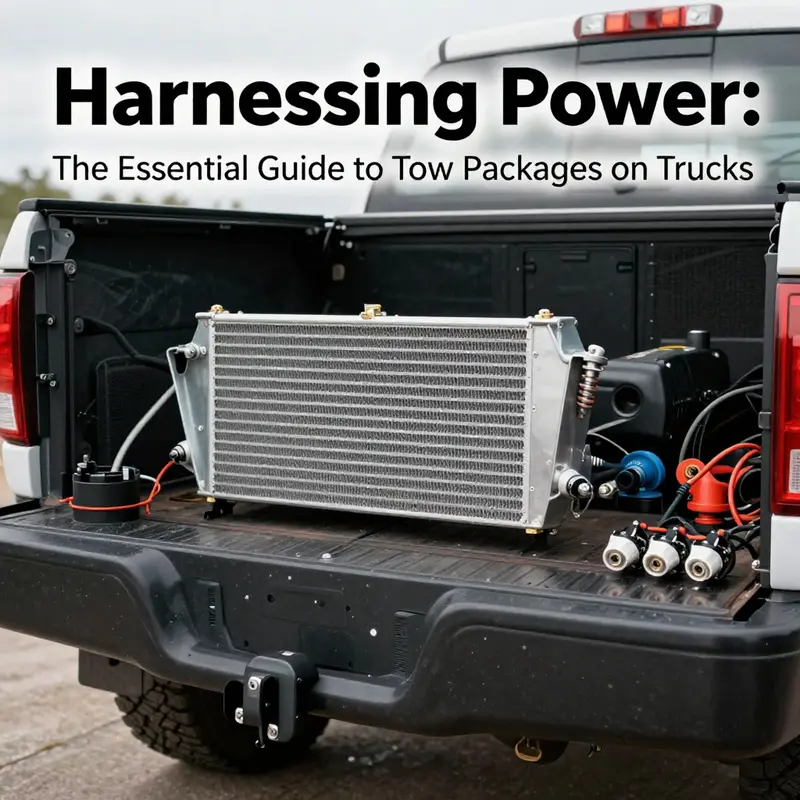
Core features and how they work together
A tow package is more than a list of add-ons. It is a coordinated set of upgrades that transform a truck from a daily transporter into a reliable towing platform. Each element responds to a specific stress that towing adds: heat, weight, electrical demand, and lateral force. When these elements are specified and installed by the manufacturer, they are designed to work together. That integration reduces risk and improves control when you pull a trailer, boat, or camper.
At the center of any tow package is the ability to handle more load without sacrificing safety. A reinforced frame and stronger mounting points absorb the vertical and horizontal forces that occur at the hitch. Without reinforcement, repeated towing can cause frame flexing, fastener failure, or deformation. Reinforcement also stabilizes the hitch geometry, keeping the trailer in line with the tow vehicle and reducing wobble at highway speeds.
Heat is one of the most overlooked enemies of towing. Prolonged load increases engine and transmission temperatures. Manufacturers counter this with upgraded cooling systems. Larger radiators, dedicated transmission coolers, and auxiliary oil coolers increase heat rejection capacity. Those components keep temperatures in safe ranges during slow climbs and long hauls. When cooling is underspecified, automatic transmissions can overheat, shift erratically, and suffer accelerated wear.
Suspension upgrades are equally important. Springs, shocks, and sometimes air-assist systems are selected to support extra tongue weight and trailer inertia. Stiffer or progressive-rate springs limit sag and maintain roll control. Heavy-duty shocks reduce oscillation and improve tire contact with the road. For heavy or frequent towing, adjustable or air suspension offers a way to fine-tune ride height and balance, keeping headlights aimed correctly and brakes effective.
Braking capacity must match the increase in total mass. Tow packages often include larger brake components or provisions for integrated trailer brake control. A built-in trailer brake controller allows the driver to modulate trailer braking force from the cab. This integration reduces trailer push and improves stability during deceleration. In many cases, the tow package also includes upgraded master cylinder or brake cooling provisions to handle the higher thermal load.
Electrical capacity is another essential consideration. Trailer lights, electric brakes, and accessory carriers create higher electrical demand. Tow packages typically include a higher-capacity alternator and sometimes a secondary battery. That prevents drained batteries and electrical faults when trailer systems draw current. Wiring harnesses with multiple-pin connectors provide standardized circuits for taillights, turn signals, auxiliary power, and brake output. Typical connectors include four-pin and seven-pin arrangements, while other markets or models may use different pin configurations.
The trailer hitch receiver itself is a core component. Tow packages specify the hitch class and include heavy-duty receivers bolted directly to reinforced mounts. Properly engineered hitch receivers manage shear and bending forces from the trailer coupling. They also specify tongue weight limits and compatible ball sizes or couplings. A quality hitch minimizes stress concentrations and allows safe attachment of weight-carrying accessories, such as bike or cargo carriers, without compromising structural integrity.
Tow/haul driving modes and powertrain programming are subtle but valuable elements of many packages. These modes adjust transmission shift points, throttle mapping, and, in some vehicles, stability control thresholds. The result is crisper downshifts for engine braking, reduced hunting between gears, and smoother power delivery under load. Software changes like these help preserve driveline components and provide the driver with greater confidence when climbing grades or merging onto highways.
Integrated tow packages often include factory-calibrated trailer sensing and stability aids. These systems monitor yaw and lateral motion and apply selective braking to damp trailer sway. Because they are calibrated to the truck’s dynamics and the trailer connector signals, their interventions are typically smoother and more predictable than aftermarket solutions.
Electric and hybrid vehicles present special towing considerations. Their packaging places heavy components and cooling systems in different locations than traditional trucks. When a towing provision exists for such vehicles, it is usually limited in capacity and tightly specified. For example, some electric sedans offer weight-carrying hitches intended for small accessory loads. Those hitches have strict vertical loading limits and recommendations about accessory placement. Following the manufacturer’s guidance is essential. Improper accessory installation can damage structure or compromise handling. For official guidance on towing limits and accessory installation for particular electric vehicles, refer to the manufacturer’s owner manual: https://www.tesla.com/support/model-3-towing-and-accessories
Different buyers have different towing needs. Light towing for occasional use demands different components than heavy, repeated hauling. Tow packages are often offered at multiple levels to match those needs. A basic package might include a receiver, wiring harness, and upgraded cooling. A more comprehensive package could add heavy-duty suspension, integrated brake control, and a higher-capacity alternator. Heavy-duty packages for commercial or towing-specific models go further, with reinforced frames, upgraded axles, and substantial factory-rated towing capacities.
Diesel-powered crew cab trucks and larger chassis-cab models are examples of vehicles often equipped with the highest-capacity tow packages. Their turbocharged engines deliver high torque at low rpm, which benefits heavy towing. These vehicles commonly pair reinforced drivetrains with heavy-duty cooling, oversized brakes, and dedicated transmission coolers. Buyers who need sustained towing performance, or who run fleets, typically prioritize these engineered packages over aftermarket modifications.
Beyond factory tow packages, specialized towing rigs deserve a brief mention because they demonstrate the limits of what a package can accomplish. Flatbed tow trucks and rollback carriers use hydraulically actuated beds to carry an entire vehicle. These designs eliminate the need to transfer drive forces to the towed vehicle’s wheels. They are ideal for all-wheel-drive cars, low-clearance vehicles, and high-value payloads. However, flatbeds have trade-offs: higher cost, added vehicle length, and reduced maneuverability in tight areas.
Installation and safety are recurring themes. Even factory tow packages require careful setup and inspection. Hitch fasteners should be checked at recommended intervals. Electrical connectors must be corrosion-free and secure. Trailer wiring must be routed safely and protected from abrasion. When using accessory carriers, calculate the combined mass and verify that the center of gravity is within safe limits. Overhanging loads or improperly balanced gear can produce excessive tongue weight and destabilize the truck.
Weight distribution is critical to safe towing. Tongue weight should typically fall within a specific percentage of the trailer curb weight. Too little tongue weight allows the trailer to yaw and oscillate. Too much tongue weight overloads the rear axle and reduces steering control. Ball mount selection also affects pitch and level. A level trailer improves braking performance and reduces wear on driveline components.
For fleet operators and those who rely on towing for work, planning around emergency response and vehicle readiness is prudent. Preconfigured tow packages reduce downtime by limiting the need for aftermarket retrofits. Fleets should document trailer connections, routinely inspect critical components, and train drivers on towing procedures. Resources tailored to fleet emergency planning offer practical guidance on readiness, driver training, and equipment checks. For guidance aimed at fleet managers and island operations, see this resource on emergency preparedness for island fleets: https://theislandtowtruck.com/emergency-preparedness-for-island-fleets/
Finally, rely on manufacturer documentation when choosing and using a tow package. Ratings for towing capacity and tongue load are vehicle-specific and based on engineered limits. Modifying a vehicle beyond those limits can void warranties and increase the risk of mechanical failure. When a tow package is factory-installed, its components and calibrations reflect the vehicle’s tested envelope. That provides a more predictable and safer towing experience than piecemeal aftermarket retrofits.
A well-specified tow package gives you predictable behavior and peace of mind. It balances cooling, braking, suspension, electrical power, and structural strength. It preserves driveline health and improves control under load. Whether you tow once a season, regularly move heavy trailers, or manage a fleet that must respond in remote conditions, choosing the right tow package matters. Understanding what each component does helps you match a package to your needs, maintain it correctly, and use it safely.
How Tow Packages Differ Between Truck Models and Real-World Towing Needs
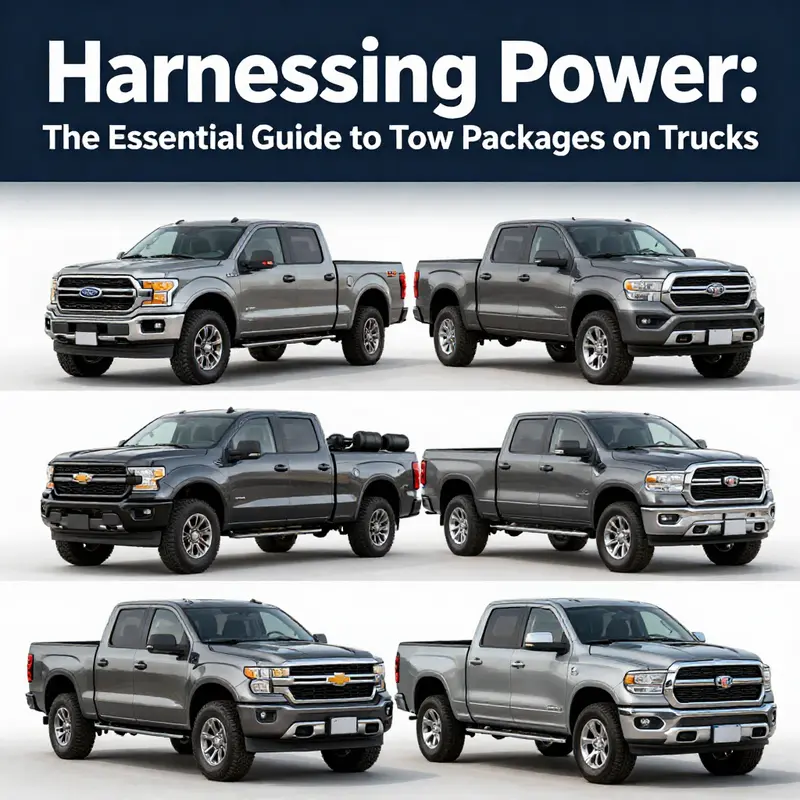
Matching tow package design to the job starts with understanding what a tow package actually does. At its core, a tow package is a set of factory-installed upgrades that improves a truck’s ability to haul trailers, campers, boats, or heavy equipment safely and reliably. But not all tow packages are built the same. Differences in chassis design, cooling systems, electrics, hitch hardware, and integrated controls change how a truck behaves under load. The result is that a tow package that suits one operator or fleet may be ill-fitting for another.
Begin with the platform. Body-on-frame trucks usually carry higher towing loads than unibody platforms because their frames resist twisting and concentrate stress through reinforced rails. Manufacturers adapt tow packages to those structural limits. Where a stronger frame exists, upgrades focus on harnessing that capacity: heavier hitches, larger suspension components, and reinforced mounting points. On unibody or crossover-based trucks, packages emphasize cooling, software calibration, and modest hitch capacities to avoid overtaxing the chassis.
Cooling is one of the most visible and important differences between packages. A heavy-duty radiator and enlarged transmission cooler keep temperatures within safe ranges during prolonged climbs or repeated towing runs. Trucks intended for commercial or heavy towing often include multiple coolers or an auxiliary oil cooler. Lighter-duty packages might offer a single upgraded radiator and a modest transmission cooler. The presence and capacity of these components dictate how long a truck can tow heavy loads without risking overheating or premature transmission wear.
Electrical capacity is another division point. Modern trailers require power for lights, brakes, and accessories. Tow packages vary between offering a simple four-pin connector and a full seven-pin harness with a dedicated circuit for trailer brakes. Higher-tier packages commonly include an integrated trailer brake controller. That controller connects directly to the truck’s braking system and modulates trailer brakes automatically. In addition, trucks built for severe duty often get a higher-capacity alternator and battery, preventing voltage drops when trailer systems draw current. If a fleet runs winches, hydraulic systems, or workshop power from the truck, those electrical upgrades become essential rather than optional.
Hitch hardware and mounting also differentiate packages. Standard receivers vary by class—Class III, IV, or V—each rated for specific tongue weight and gross trailer weight. The strongest packages include reinforced hitch frames welded to the truck’s main rails. Some packages integrate a fifth-wheel or gooseneck prep kit. A gooseneck-ready bed requires reinforced crossmembers and mounting points, changes that go beyond simple hitch swaps. The type of hitch available affects not just towing capacity, but payload distribution, trailer handling, and safety under emergency braking.
Suspension and braking upgrades are often paired with hitch and cooling changes. Tow packages commonly include heavier springs, upgraded shocks, or air suspension systems that stabilize sag and maintain ride height under load. Firms that haul uneven or shifting loads favor adjustable air springs that maintain control while protecting chassis and cargo. Braking upgrades might include larger brake rotors, stronger calipers, or dedicated trailer brake wiring. Together, these components change how the truck responds during evasive maneuvers and long descents.
Software and driveline calibration are subtle but critical. Tow or haul modes tune shift points, throttle mapping, and engine braking to control speed and torque under load. Some packages integrate adaptive shift logic that learns a driver’s habits and trailer weight over time, optimizing performance and fuel economy. Transmission cooling ties into this; software can modulate shifts to keep transmission temperatures manageable. In many trucks, installing a tow package also updates stability control and traction algorithms, recalibrating anti-lock braking systems and roll mitigation for towing conditions.
Real-world application reveals why these differences matter. Urban recovery operations prioritize compact, nimble trucks with integrated lift systems. For such units, a tow package emphasizes mounting strength and electrical integration for lights and winches, rather than extreme cooling capacity. Fleet transport and dealership deliveries benefit most from flatbed-compatible packages. Slide-bed or hydraulically tilting beds need reliable power take-off (PTO) options and strong rear mounts. The package for those trucks focuses on bed integration and hydraulic reliability.
At the extreme, heavy-recovery vehicles demand packages designed for maximum reach and lift. These packages center on robust powertrains, large cooling arrays, and reinforced chassis points for booms and winches. They also require operator-accessible control systems and additional safety features, such as remote controls and integrated cameras. Fuel consumption and maintenance needs rise with these capabilities, so total cost of ownership plays a larger role than initial purchase price.
Operators should also consider maintenance and serviceability when comparing packages. Simpler packages with fewer integrated systems are cheaper to maintain and easier to retrofit. Complex packages with built-in controllers, air suspension, and extensive hydraulics increase downtime risk and demand specialized technicians. If a fleet operates in remote areas, choose packages with components that local shops can service.
One important but sometimes overlooked area is compatibility with aftermarket accessories and towing hardware. Some OEM tow packages include proprietary connectors or mounting schemes that complicate aftermarket hitch or electrical upgrades. Others follow standard industry designs, making it easier to add accessories later. When planning long-term fleet expansion, prefer packages that align with common hitch classes and electrical standards.
Training and operational procedures should factor into the selection process. Packages that provide advanced braking control and adaptive towing modes perform best in trained hands. Operators should be familiar with the tow/haul mode, integrated brake controller settings, and proper tongue weight distribution. Improper use of advanced features—such as overrelying on electronic aids instead of proper load balancing—can create safety risks. Investment in operator training often yields higher resale values and lower accident rates than selecting the highest-capacity package without matching skills.
Safety systems integrated into tow packages deserve attention. Some trucks include cameras, proximity sensors, and trailer sway mitigation software that collectively reduce the risk of accidents. These systems change how a driver perceives trailer position and movement. However, drivers must still practice traditional safety checks. Electronic aids are supplements, not replacements, for secure tie-downs, correct hitching, and balanced loads.
When comparing tow packages between models, also evaluate legal and insurance implications. Higher advertised capacity does not remove responsibility for correct loading and safe operation. Ensure the truck’s gross combined weight rating (GCWR) matches expected trailers and cargo. Insurance underwriters often expect certain factory upgrades for the cover to apply to specific operations. Confirming how a tow package affects regulatory compliance and insurance premiums can prevent surprises later.
Cost considerations naturally influence choices. Entry-level packages improve basic capability with incremental investments. Mid-tier packages add electrical and cooling upgrades that unlock heavier towing while keeping costs moderate. Top-tier packages transform a truck into a dedicated towing platform with reinforced frames, integrated brake systems, and advanced suspension. The cheapest option is not always the best value; a well-matched mid-level package can reduce fuel and maintenance costs over time.
Finally, make selections based on holistic needs rather than single metrics. Tow capacity numbers are helpful but incomplete. Look at sustained towing capability, electrical resilience, hitch design, suspension behavior, and service needs. Match the package to the operation: urban recovery, fleet transport, emergency response, or heavy roadside recovery. For fleets that must combine mission readiness with predictable maintenance intervals, consider the wider suite of fleet preparedness guidance available in the industry, such as the resource on essential fleet emergency response strategies.
For readers who want technical specification examples from manufacturers, a comprehensive model-level data sheet can illustrate how arm lengths, winch systems, and mounting designs translate into capacity and reach. One such external resource gives detailed specifications for several recovery-oriented chassis. https://www.dongfeng-truck.com/en/products/wrecker-trucks/csc20230530.html
Choosing the right tow package requires balancing performance, maintainability, operator skill, and long-term costs. A properly selected package harmonizes vehicle design and mission profile. It ensures safe, efficient towing across the broad range of conditions operators face every day.
How a Tow Package Keeps Your Truck Stable, Compliant, and Ready to Haul
How a Tow Package Keeps Your Truck Stable, Compliant, and Ready to Haul
A tow package is more than a few add-ons bolted to a truck. It is a coordinated set of engineering choices that change how the vehicle performs under load. When a truck pulls a trailer, dynamics shift. Weight moves rearward. Heat builds in drivetrain components. Electrical demands rise. A properly specified tow package addresses those changes across systems, not as isolated fixes but as a unified approach to safety and reliability. Understanding why this matters helps drivers and fleet managers choose the right equipment and avoid risks on the road.
At the center of a tow package is the hitch receiver. This component creates the physical link between truck and trailer. A factory-installed hitch is designed, tested, and rated to match the vehicle’s frame and suspension. That matching matters because towing forces transmit into the frame during acceleration, braking, and cornering. A hitch that is not designed for the truck can concentrate stress in a small area. Over time, that focus can cause cracks or failure. The factory hitch spreads load appropriately, reducing the chance of structural damage.
Cooling upgrades are another critical element. Engines and transmissions generate far more heat while towing. Prolonged towing climbs or long highway hauls can push coolant and transmission fluid beyond safe temperatures. Heavy-duty radiators and enhanced transmission coolers keep operating temperatures within safe limits. That prevents premature wear and sudden failures that often occur when components overheat. Maintaining steady temperatures also preserves engine power and transmission shift quality, which is essential for maintaining control and stopping distances.
Braking integration is a safety pivot. A tow package usually includes wiring for trailer lights and electric brake systems. More advanced setups include an integrated trailer brake controller that works with the truck’s braking system. This synchronization allows the trailer to decelerate in proportion to the tow vehicle. Without it, mismatched braking can produce jackknifing or trailer sway. When brakes on both vehicles act in harmony, stopping distances shorten and control improves, even when hauling heavy loads.
Suspension and axle reinforcements complete the safety picture. Tow packages often add stiffer springs, upgraded shocks, or auxiliary air springs. These changes reduce sag at the rear, restoring proper ride height. They also improve weight distribution, which reduces the tendency for trailers to wag. Reinforced axles, stronger U-bolts, and upgraded control arms help the truck handle concentrated loads and repeated heavy use. Those parts reduce fatigue failures and preserve alignment, improving tire life and steering response.
Electrical upgrades are less visible but equally important. A higher-capacity alternator and larger battery help maintain electrical systems when towing. Trailer brakes, lighting, auxiliary devices, and brake controllers all draw power. Heavy electrical loads can dim lights, reduce charging capacity, and impair electronic controls. A tow package’s electrical upgrades ensure devices receive stable voltage. That stability prevents erratic sensor readings and reduces the risk of unexpected system faults.
A tow/haul mode and transmission calibration are software-level improvements included in many packages. These adjustments change shift points and throttle response to suit heavy loads. A transmission that holds lower gears longer reduces hunting between ratios during climbs. That maintains torque and reduces heat buildup. Throttle modulation helps drivers manage acceleration without jerking the trailer. Together, these calibrations improve fuel economy, reduce wear, and make towing more predictable.
Weight ratings and testing underpin every element. Factory tow packages come with load ratings based on engineering tests. These ratings include gross combined weight rating (GCWR) and tongue weight limits. They ensure the truck and the hitch are matched to real-world stresses. Adhering to these numbers is essential. Overloading a truck can alter braking distances, handling, and regulatory compliance. It also increases the likelihood of mechanical failure.
Beyond hardware, a tow package contributes to regulatory compliance. Many jurisdictions require trailers and towing rigs to meet specific standards for lights, brakes, and safety chains. Factory wiring harnesses and brake controllers simplify meeting those standards. Certified hitch assemblies often include documentation that verifies their load ratings. That paperwork matters for commercial operations, as inspections and permits may hinge on it. For fleets hauling heavy or hazardous loads, documented compliance reduces liability and operational friction.
Industries that depend on towing know these benefits well. Construction crews pull heavy equipment and material trailers across job sites and highways. Agricultural operators tow feed wagons and implement trailers across rough terrain. Transportation services move cargo, often under tight schedules. In each case, a tow package reduces downtime by preventing heat-related failures, electrical faults, and structural fatigue. It also improves driver confidence, which translates into safer, more consistent operations.
Reliability is also cost-effective. A truck with the proper tow package resists early component failures. That lowers repair costs and reduces unplanned downtime. For fleets, the difference can be measurable. Preventative engineering reduces maintenance intervals and preserves resale value. For owner-operators, the peace of mind that comes from factory-matched components can justify the initial investment quickly, especially when hauling frequently.
A tow package also supports everyday driver safety habits. Integrated systems make checks easier and more reliable. Wiring harnesses with quick-connect plugs reduce the chance of loose lighting connections. Built-in brake controllers provide visible feedback and a direct adjustment point for trailer braking force. Cooling monitors and transmission temperature gauges give drivers advance warning of trouble. Those features make it simpler to spot issues before they escalate on the road.
Choosing the right tow package requires attention to intended use. Tow packages vary by capacity and feature set. Some prioritize heavy-duty cooling and reinforced suspension for long, frequent tows. Others emphasize electrical upgrades and integrated controls for towing smaller trailers with complex electronics. Match the package to the expected loads and duty cycle. Overbuilding can add unnecessary weight and cost. Underbuilding invites damage and danger.
Proper installation and inspection are non-negotiable. Even factory-installed packages must be checked after severe off-road use or accidental impact. Fasteners can loosen and wiring can chafe. Regular inspections of hitch bolts, electrical connectors, fluid levels, and suspension components catch problems early. A simple inspection routine before each trip reduces the chance of roadside failures and improves overall safety.
Training and driver technique remain part of the equation. A tow package improves performance but does not eliminate risk from poor loading or driving. Distributing cargo properly, using weight-distributing hitches when necessary, and observing legal weight limits are essential. Drivers should know how to use the truck’s tow/haul mode and how to adjust the integrated brake controller. Practicing maneuvers, like backing with a trailer and controlled braking, increases confidence and reduces mistakes.
Emergency preparedness complements a good tow package. A tow-ready truck with proper tools and spares can reduce the impact of breakdowns. Carrying a basic kit—extra hitch pins, spare fuses, emergency lighting, and a small toolkit—addresses minor failures quickly. For fleets, formal emergency response plans improve outcomes. Managers should integrate tow package specifics into those plans so responders know where key components and controls are located. For guidance on coordinated fleet planning and emergency strategies, see essential fleet emergency response strategies.
In daily operation, the tow package shows its value in subtle ways. During long climbs, the engine maintains power and the transmission stays cool. During sudden braking, the trailer brakes help stabilize the rig. When electrical loads spike, the alternator meets the demand. Those moments, repeated over miles and years, prevent the failures that cause accidents and costly repairs. A tow package is an insurance policy written in metal, fluid, and software.
Selecting and maintaining the right tow package protects drivers, cargo, and the vehicle itself. It reduces the mechanical risks associated with hauling heavy loads. It supports compliance with safety regulations. It improves stability, braking, and heat management. For anyone who plans to haul trailers regularly, the tow package should be considered an essential investment rather than an optional convenience.
For a deeper technical comparison of tow packages and hitch systems, consult this analysis from a respected automotive source: https://www.caranddriver.com/features/a47892816/what-is-the-difference-between-a-tow-package-and-a-hitch/
Tow Packages Reimagined: How Technology and Efficiency Will Shape the Next Generation of Truck Towing
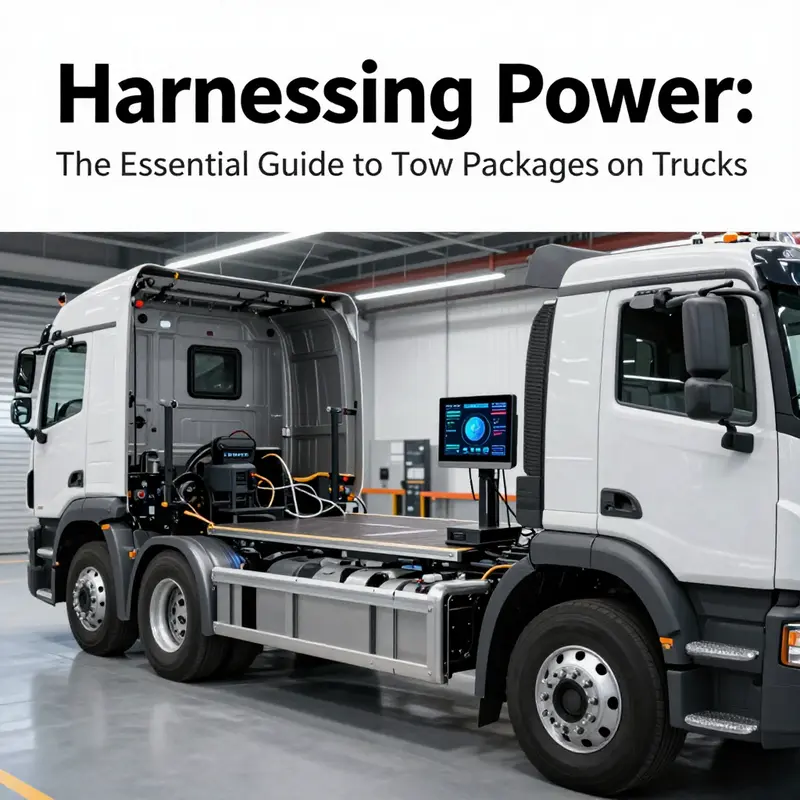
The next chapter in tow package evolution blends mechanical strength with digital intelligence. As towing demands rise, manufacturers and fleet managers seek systems that are safer, smarter, and kinder to the environment. This shift moves tow packages beyond simple hardware bundles. They become integrated platforms that manage load, preserve vehicle health, and reduce risk. The result will change what drivers expect from a tow-capable truck.
At the center of this evolution are advanced recovery and stability systems. Traditional upgrades focused on heavier radiators, stronger suspensions, and larger hitches. Those elements remain essential. But future tow packages will pair physical reinforcement with active systems that react to conditions in real time. Imagine a truck that senses an off-camber pull on rough terrain and instantly adjusts damping, brake bias, and torque distribution. That capability prevents trailer sway early, reduces driver workload, and lowers the chance of rollovers. These systems rely on a dense array of sensors working together: gyroscopes, accelerometers, load cells at the hitch, and high-resolution cameras. The data lets the vehicle interpret dynamic forces and respond in fractions of a second.
Telematics integration will push tow packages from passive tools into managed services. Fleet operators will no longer guess which truck to assign based on vague capacity figures. Live metrics—gross combination weight, hitch load, and temperature readings from engine and transmission coolers—will stream to central dashboards. That data enables smarter dispatching and ensures trucks operate within safe limits. Telematics will also capture hitch engagement status and wiring integrity. Alerts will notify drivers before a connector fails or a brake controller slips out of calibration. For fleets, this reduces roadside emergencies and unscheduled downtime.
The telematics layer also supports predictive maintenance. Tow-heavy duty cycles put unique stress on cooling systems, transmissions, and suspension hardware. Instead of replacing parts on a schedule, data models will predict fatigue and wear. A transmission cooler might show rising temperatures under certain loads. The system will recommend cooler upgrades, fluid changes, or a different gear calibration based on measured duty cycles. Predictive alerts reduce catastrophic failures and extend component life.
Environmental pressure is simultaneously shaping tow package engineering. Regulatory limits and buyer expectations are motivating the development of cleaner powertrains that still deliver towing power. Hybrid systems will be common for heavy towing, blending electric torque with combustion endurance. Pure electric trucks designed for towing must address range loss under load. Future tow packages will therefore include battery thermal management tuned for towing, smart regenerative braking that accounts for trailer inertia, and dedicated high-capacity alternators or power modules to support trailer power needs. Alternative fuels and fuel-cell systems are also entering the conversation for fleets that require long range and high payloads.
Software will be as important as metal. Tow/haul mode will evolve into intelligent driving profiles that adapt to trailer type, weight, and road conditions. Drivers will select a trailer profile or the truck will auto-recognize it through hitch sensors and trailer telematics. Shift maps, engine braking intensity, and traction control will adjust continuously. Over-the-air updates will deliver improved algorithms, new safety features, and towing optimizations without shop visits. This modular approach allows tow packages to improve post-sale and keeps older trucks relevant through software enhancements.
Integrated trailer electronics will receive a significant upgrade. Wiring harnesses and connectors will be smarter, supporting not only lights and brake activation, but also data exchange. A standardized communication channel between truck and trailer will relay brake temperatures, ABS status, tire pressures, and trailer battery health. This transparency prevents failures that would otherwise occur unnoticed. Smart connectors will also provide encrypted links to protect against tampering and ensure correct trailer identity.
Safety is a recurring theme and will be reinforced through several pathways. Active trailer braking systems will become more precise and coordinated with the truck’s ABS and stability control. Sway mitigation will combine electronic braking on specific axles with torque modulation. Lane-keep and blind-spot systems will be trailer-aware, adjusting thresholds and alerts when a trailer is attached. Driver assistance systems will present clearer, context-aware warnings—differentiating between a trailer-induced vibration and a suspension fault.
The human factor remains crucial. Even the most advanced tech needs informed operators. Tow packages will increasingly include driver training integration. Digital owner’s manuals, in-cab tutorials, and augmented reality guides will teach hitching, load distribution, and pre-departure checks. Fleets can combine that guidance with telematics records to ensure compliance. Training reduces accidents and optimizes fuel use.
Electrification presents unique challenges and opportunities. Heavy loads dramatically affect battery drain. Tow packages for electric trucks will therefore prioritize cooling and thermal buffering. Dedicated power circuits will supply trailer systems without plunging vehicle range. In some cases, modular battery packs dedicated to towing may be offered as part of a package. These supplemental packs activate only during heavy towing, preserving baseline range for ordinary driving. For longer hauls, fast-charging networks designed to service towing needs will be crucial. Tow package design will increasingly consider interoperability with charging infrastructure.
Cybersecurity cannot be an afterthought. As trucks and trailers exchange data, attackers could exploit communication channels to interfere with braking, steering aids, or telematics. Tow packages will incorporate secure boot processes, encrypted communications, and authentication layers for trailer devices. Manufacturers and fleets must adopt rigorous update policies and monitoring to keep systems safe.
Another key trend is modularity and customization. Not every owner needs full heavy-duty hardware. Future tow packages will be offered as modular suites. Buyers can choose a base mechanical upgrade and add telematics, predictive maintenance, or an advanced cooling module. This approach broadens access and lets customers pay for capabilities they need. It also simplifies aftermarket upgrades and retrofits.
Regulatory and standards bodies will influence how features evolve. Standardized trailer-to-truck communication protocols will foster interoperability. Uniform testing for sway mitigation and braking integration will give buyers clearer comparisons. Standardization benefits fleets that mix vehicle models, allowing a single fleet management platform to interpret data from all trucks and trailers.
For island and remote fleets, these innovations carry special value. Predictive telemetry and robust recovery systems can mean the difference between a quick fix and a prolonged service interruption. Fleets operating in isolated regions will use telematics to coordinate emergency responses and pre-position spare parts. For operators seeking more on fleet emergency planning, a useful resource outlines essential approaches to prepare for roadside emergencies and operational disruptions: essential fleet emergency response strategies.
Finally, cost and resale considerations will shape adoption. Advanced tow packages will add upfront cost. But fleets and buyers must weigh that against reduced downtime, lower repair bills, improved safety, and higher resale value. As tow technologies mature and scale, unit costs will fall. Leasing models and subscription services for telematics and software features will make advanced packages accessible without prohibitive capital outlay.
The practical implications for buyers are clear. When evaluating tow packages, consider not just the raw towing capacity. Look for systems that integrate cooling, active stability, and telematics. Prefer modular systems that can be upgraded. Demand clarity on how software updates are delivered. Ask about cybersecurity measures and data ownership. For fleets, insist on open standards to avoid vendor lock-in.
Tow packages are moving from bundled hardware to adaptive ecosystems. They will combine stronger mechanical components with sensors, software, and cloud services. The smartest packages will optimize performance, improve safety, and cut operating costs. They will also align with environmental mandates while delivering real-world towing capability.
As these trends solidify, buyers and fleet managers will find more choices and greater differentiation. Tow packages will no longer be a simple checkbox. They will be strategic investments that determine a truck’s usefulness, safety, and total cost of ownership. For a deeper look into market forces and emerging innovations that influence this direction, industry research provides useful context and projections: https://www.marketsandmarkets.com/Market-Reports/heavy-duty-tow-trucks-market-3216.html
Final thoughts
Tow packages are essential for anyone who relies on trucks for heavy hauling. Understanding their features, comparing options across models, and recognizing their importance for safe towing can significantly impact operations for local auto repair shops, dealerships, property managers, resort operators, and commercial fleet managers. As technology advances, staying informed about future trends will ensure your fleet remains competitive and equipped for all your towing needs. These insights not only enhance safety but also improve the efficiency and reliability of your towing operations, allowing you to focus on the road ahead.