Purchasing a used truck is an exciting venture, especially for local businesses, fleet operators, or property managers who often rely on dependable towing capabilities. Understanding the truck’s towing capacity is crucial for safe and effective operations. This article breaks down the process into three comprehensive chapters, guiding you through checking vehicle documentation, inspecting the vehicle’s placard, and utilizing the VIN for vehicle history reports. By following these steps, you can make an informed decision and ensure that your truck meets both your requirements and safety regulations.
From Paper to Performance: Verifying Towing Capacity Through Vehicle Documentation When Buying a Used Truck
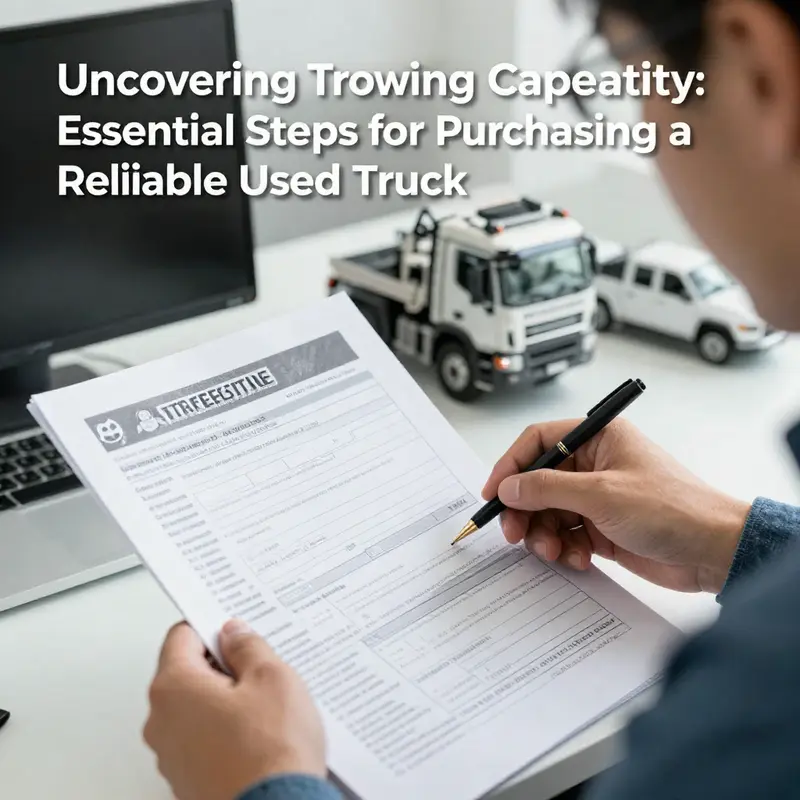
When you’re in the market for a used truck, the lure of a sharp price or a clean exterior can cloud what matters most: its ability to tow what you need it to pull, safely and legally. Towing capacity isn’t a vague ambition; it’s a precise calculation that must align with the loads you plan to carry behind the truck. The most reliable, direct way to confirm that alignment is to examine the vehicle’s official documentation. This isn’t just a bureaucratic step. It’s a practical shield against buying into a rating that doesn’t actually apply to the truck you’re considering. In the simplest terms, towing capacity is not a single number printed on a sticker somewhere; it’s the result of specific ratings that originate from the truck’s design, its engine, its brakes, and its chassis. When you verify these numbers, you’re measuring the truck against the reality of your intended use before you commit to a purchase.
The starting point is the vehicle’s documentation itself. The most authoritative source is the title or registration certificate, often colloquially referred to as the title or pink slip. These documents typically carry the Gross Combined Vehicle Weight Rating, GCWR, and the Gross Vehicle Weight Rating, GVWR. GCWR is the maximum allowable weight of the vehicle together with any trailer it tows. GVWR, on the other hand, is the maximum weight that the truck can carry in its own cabin, bed, passengers, and cargo without compromising safety. The relationship between these two numbers is what enables you to derive the legal towing capacity. Subtract GVWR from GCWR and you obtain the maximum weight the combination can legally tow behind the truck. This is the cap you must respect when you’re planning a hitch-load of any kind. It’s a straightforward arithmetic that relies on two independent ratings: one that defines the truck’s own mass limits, and one that defines its combined mass limits when a trailer is attached.
This is where the nuance begins to show up in real-world shopping. A truck can be advertised with a certain towing figure, but that figure must be supported by the GCWR and GVWR found in the title, or it might be inconsistent with the truck’s actual configuration. If you’re evaluating a used truck, the first thing you want to verify is that the GCWR and GVWR on the title or registration match the numbers you see in the owner’s manual or the manufacturer’s official spec sheets, and that they correspond to the exact drivetrain and axle setup on the vehicle you’re considering. It’s common for salvage titles, prior accidents, or frame damage to lead to a mismatch between the vehicle’s advertised towing capability and its real possible performance. In some cases, the truck may have been altered or misrepresented, with aftermarket components that affect weight distribution or braking performance. The title and registration are your anchor, but you shouldn’t stop there.
A practical approach to this alignment begins with careful reading of the numbers themselves. GCWR is the sum of the vehicle’s maximum allowable weight and the weight of the trailer that is being towed, including the trailer itself and everything loaded on it. GVWR is the vehicle’s own weight capacity: it accounts for fuel, passengers, cargo in the bed, and any installed equipment. Here, precise math matters. If the GCWR is 20,000 pounds and the GVWR is 6,000 pounds, the maximum legal towing capacity—the trailer weight you can pull behind the truck—would be 14,000 pounds. This simple subtraction is the bedrock of safe, legal towing. It should be noted that this calculation reflects standard or factory configurations. If a vehicle has been modified—by heavy-duty suspension upgrades, heavier wheels, a different drivetrain, or a non-standard hitch—the actual towing capacity could differ from the factory numbers. In those cases, you’ll need to reassess in light of the modifications and, ideally, obtain a fresh professional assessment.
The documentation path doesn’t end with the title and registration. The next anchor is the vehicle identification number, VIN, which serves as the truck’s fingerprint. A VIN is more than a serial code; it is the key to the exact original build of the vehicle. You can use a VIN to access the manufacturer’s specifications, including engine type, axle ratio, and whether the truck was equipped with a factory towing package. A VIN decoder service, whether free or paid, pulls together data from the vehicle’s build sheet and official records. The result is a detailed snapshot of the chassis and drivetrain configuration. These details are not cosmetic; they have a direct bearing on towing performance. For instance, the axle ratio influences how efficiently the engine can pull a certain load and how quickly a given engine speed translates into trailer motion. The engine type can determine how much torque is available at the hitch, which affects not only the maximum load but also the control you’ll experience during acceleration, braking, and hill climbs while towing.
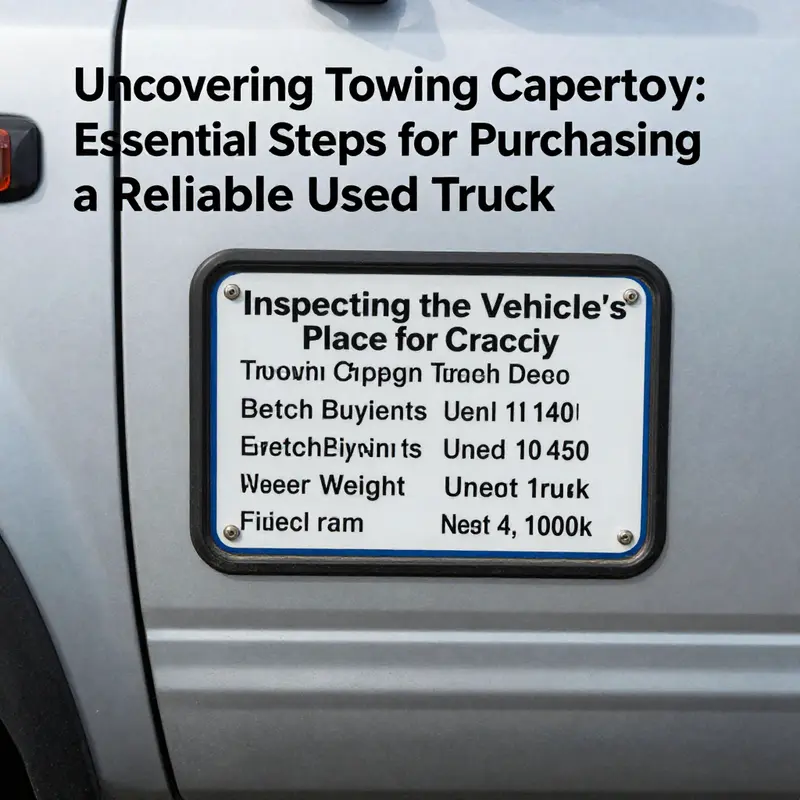
When you locate the VIN, you should cross-check the generated build sheet with the numbers on the title and in the owner’s manual. The build sheet often reveals factory-rated towing capacity, which is the rating the manufacturer assigns for the vehicle’s current configuration. If the build sheet lists a specific towing capacity, you want to ensure that it aligns with or supersedes what’s printed on the title sticker—the placard inside the driver’s door jamb. This door placard is the legally required, manufacturer-certified reference based on the truck’s chassis, engine, transmission, braking system, and suspension setup. The placard is your quick, on-the-spot reference, showing maximum towing capacity, maximum trailer tongue weight, and GCWR. If you’re inspecting a used truck, the placard serves as a primary confirmation that the truck’s current configuration is within the bounds of what the manufacturer intends for it to tow. Any discrepancy between the placard and the GCWR/GVWR on the title or the VIN-derived spec sheet should trigger deeper scrutiny.
A thorough review also involves confirming that the owner’s manual, or the digital equivalent found on the manufacturer’s site, supports the numbers on the title and the placard. The owner’s manual is the official guide to the truck’s towing capabilities in relation to its drivetrain and suspension configuration. It describes how the vehicle behaves under load, the recommended hitch class, permissible tongue weight, and the safe operating window for speeds, braking, and maneuvering while towing. Access to a digital manual often requires entering the VIN on the manufacturer’s site, which can yield a page or a downloadable PDF tailored to the exact build. This ensures you aren’t misreading a general specification sheet that doesn’t reflect a particular vehicle’s country of origin, engine choice, or transmission. In short, the manual ties the numbers to the actual vehicle you would own and operate.
Beyond the numbers, there is a practical, human-facing layer to this verification: the door jamb placard and the trailer-tow information. The placard lists the maximum towing capacity and the maximum tongue weight. The latter—tongue weight—is typically a percentage of the trailer’s total weight and is crucial for weight distribution when you’re towing. A trailer tongue that is too heavy or too light for the hitch or the vehicle can cause sway, reduced braking effectiveness, and unsafe handling. The placard’s figures are based on the vehicle’s rated hitch class and braking system. If the truck has a nonstandard hitch or aftermarket braking equipment, the actual safe towing limits may shift. When you’re shopping, you want to see that the placard numbers align with the GCWR and GVWR in the title and the VIN-derived spec sheet. If a seller has replaced a hitch or altered the suspension after purchase, those changes may affect towing capability, and they should be disclosed clearly and verified against the technical documentation.
The conversation you have with a seller isn’t only about numbers; it’s about consistency. As you pull the documents from the glove box, the glove-like sense that you are building a picture of the vehicle’s true capabilities should grow. The VIN, the build sheet, the placard, and the owner’s manual together form a compact evidentiary chain. If you discover that the numbers don’t align, or that the truck has undergone modifications that the manufacturer would not sanction for heavy towing, you should treat that as a red flag. It does not automatically disqualify the vehicle, but it does demand a more cautious assessment. In such cases, a professional pre-purchase inspection can be a wise investment. A mechanic who specializes in trucks and towing can verify the curb weight, confirm the axle and suspension condition, and assess whether the current configuration matches the factory race of towing capacity. They can also spot signs of overloading that could compromise safety, such as worn shocks, bent springs, or damaged mounting hardware that hints at heavy-duty use beyond the original design.
For many buyers, the ideal sequence is a layered verification: start with the title/registration GCWR and GVWR, confirm with the VIN-derived build sheet, cross-check the placard inside the driver’s door, and then consult the owner’s manual for the formal towing guidance. If the information consistently points to a certain maximum trailer weight, that figure becomes your baseline. You can then compare that baseline to the actual load you plan to tow. If your intended trailer weight approaches or exceeds that baseline, consider whether the truck’s other features—braking performance, transmission cooling, steering stability, and suspension durability—will hold up under steady towing. If you’re in the process of negotiating, having this alignment documented strengthens your position. It helps you justify the need for a price concession, a hitch upgrade, or even a different vehicle that better matches your tow requirements.
It’s also worth acknowledging that numbers don’t exist in a vacuum. Real-world performance is influenced by condition. A used truck that has seen heavy towing, long highway commutes with a load, or frequent stops and starts over rough roads may exhibit wear that reduces nominal capacity. The simple arithmetic of GCWR minus GVWR assumes a vehicle in good condition with original components intact. If there are signs of prior overloading—excessive wear on suspension components, damaged springs, or brake issues—that capacity could be compromised even if the documents read perfectly. This is where the combination of documentation with a careful visual and mechanical inspection becomes essential. A pre-purchase inspection by a qualified mechanic can validate the actual condition and ensure that the documented capacity translates into safe, survivable performance on the road.
If you want broader context on towing-readiness and the practical implications of these numbers, the island tow truck blog offers thoughtful perspectives on the realities of heavier loads, hitch setups, and the ways fleets manage weight and safety in the field. You can explore more at the island tow truck blog.
In the end, the goal of this documentation-focused chapter is not to discourage you from buying a used truck but to empower you to make an informed, responsible choice. The procedure—start with the title/registration numbers for GCWR and GVWR, verify with the VIN-derived build sheet, confirm with the door placard and the owner’s manual, and finally assess the vehicle’s condition through a professional inspection—provides a robust framework. It protects you from overestimating a vehicle’s capabilities and from unknowingly taking on a towing arrangement that may exceed what the truck can safely handle. It also clarifies what you’re actually buying. Sometimes a truck with a lower advertised towing rating but in pristine mechanical condition and correctly configured for a given load can be a safer and more economical choice than a higher-rated unit with uncertain modifications.
To anchor these ideas, consider how the GCWR–GVWR difference translates into your day-to-day use. If you’re routinely towing a nose-heavy travel trailer with a steep mountain grade, you’ll want a comfortable safety margin between your trailer’s weight and the truck’s maximum tow capacity. If your typical loads are light, you may still prefer trucks with a higher GCWR and GVWR to maintain better reserve capacity, longer component life, and more predictable braking performance. These are not vanity metrics; they reflect the truck’s ability to handle the demands you place on it, under the regulatory oversight that governs weight, safety, and roadworthiness.
The process of verifying towing capacity through documentation—while it can feel meticulous—is fundamentally about avoiding mismatches between expectation and capability. It’s about ensuring that when you strap a weight behind your new-to-you truck, you’re operating within legal limits and within a safety envelope that keeps you, your passengers, and others on the road out of harm’s way. In this sense, the documents are not a mere formality but a reliable map that guides you to a purchase that will perform as promised, preserve safety, and reduce the risk of costly surprises once you’re already behind the wheel.
If you found this approach helpful, you may also want to reference broader guidance on vehicle readiness and towing. The island tow truck blog provides additional context on towing equipment, weight distribution, and practical considerations for everyday towing scenarios. For a deeper dive into official weight ratings and how they are applied to different truck configurations, you can consult external resources on vehicle weight ratings and towing guidelines available from government and safety organizations. External resource: https://www.nhtsa.gov/equipment/towing
null
null
Beyond the VIN: Verifying a Used Truck’s Towing Capacity with Confidence
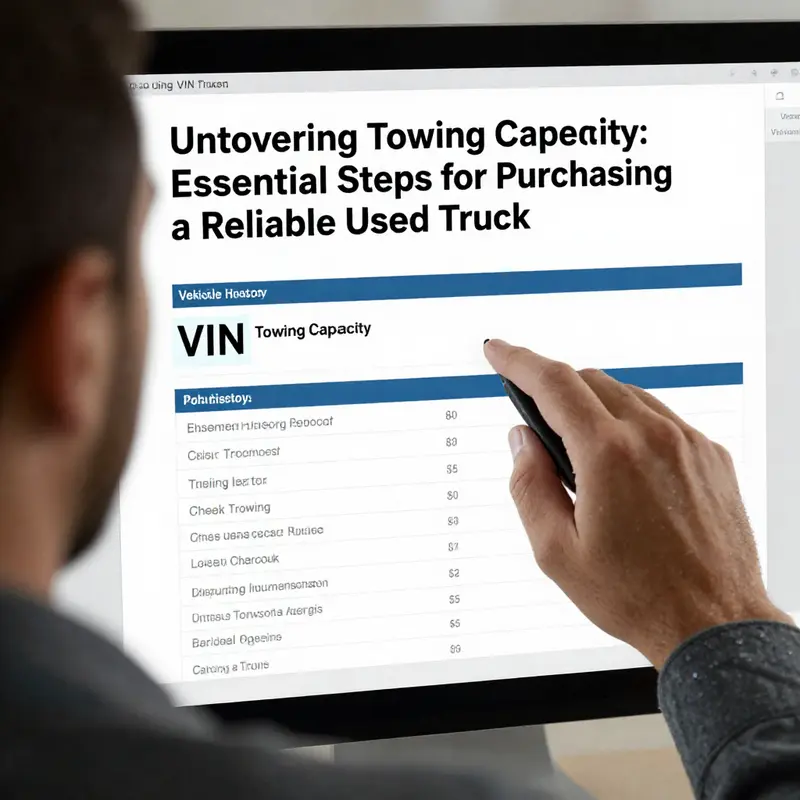
A used truck carries a history you can uncover with a VIN, but the towing capacity you actually need to know sits in a different lane of the information highway. The VIN opens doors to identity, manufacture details, past ownership, accidents, service records, and title status. It helps you confirm that the truck you’re looking at is the same one you think you’re buying and that no red flags exist in its past. Yet when the question turns to how much load it can pull behind it, the VIN is only a starting point. Towing capacity is a defined mechanical specification, stamped into the vehicle’s official limits by the manufacturer. It is integrated into the chassis, engine and transmission setup, braking system, and hitch compatibility. In practice, you should treat the VIN as a tool for verification and traceability, not as the final authority on tow limits. The most reliable way to determine what a used truck can legally and safely tow is to consult the primary sources of specification—your owner’s manual and the data plate—while using the VIN to confirm that the vehicle being evaluated matches the original configuration described there and to check for any modifications that could have altered its towing capability. This approach saves you from a misread of a history report or a misinterpretation of aftermarket changes that can erode safety margins.
Begin with what the manufacturer considers the official source of truth. The owner’s manual holds the detailed specification page that includes the maximum towing capacity, but it also carefully differentiates towing capacity from payload capacity. Towing capacity is the weight the vehicle can pull, behind it, while payload capacity refers to what the truck can carry in its bed and cabin. This distinction matters in practice. A truck might be able to tow a substantial load on paper, yet if the payload is already near its limit from passengers and cargo, the margin for a heavy trailer shrinks quickly. In truth, both values need to be understood in conjunction with the intended use. It’s easy to fixate on a single number, but towing a heavy trailer safely is a systems problem—engine torque, transmission cooling, braking capability, suspension stiffness, and hitch rating all have to align with the load profile you plan to tow.
The owner’s manual often hides in plain sight. It’s commonly available in digital form from the manufacturer’s site when you enter the vehicle’s VIN. The act of retrieving the manual this way is more than a gesture; it’s a cross-check against any discrepancy you might find on third-party listings or in the vehicle history report. If you’re examining a candidate and you cannot locate a digital manual using the VIN, you should pause and request a hard copy or a certified digital version as part of your due diligence. The manual is not a brochure; it is the specification bible for that exact build, without the guesswork that sometimes accompanies used vehicles where owners or sellers may not recall every detail or where aftermarket changes have been made.
Next, turn to the data plate, commonly found on the driver’s side door jamb or inside the door frame. The data plate is compact, but it carries essential numbers that anchor the truck’s towing reality. Among these figures you will usually find the Gross Vehicle Weight Rating (GVWR), the Gross Combined Weight Rating (GCWR), and sometimes the maximum trailer tongue weight. GVWR tells you the maximum weight of the vehicle itself when fully loaded with passengers, cargo, and aftermarket additions. GCWR is the ceiling for the combined weight of the vehicle and the trailer it tows. The maximum towing capacity is typically the GCWR minus the curb or vehicle weight, with the caveat that you should use the curb weight published by the manufacturer or measured under standardized conditions when possible. If the data plate lists a direct “maximum trailer weight” or “towing capacity,” that figure is the manufacturer’s certified limit, reflecting the complete system including the brakes, hitch, and suspension as originally designed. Because the data plate is legally binding under federal and state regulations, it remains the most trustworthy source for a given build when you’re evaluating a used truck.
The VIN plays a crucial supporting role in this process. It lets you pull the original build sheet or the vehicle’s configuration on the manufacturer’s site through an official VIN lookup. This build sheet can reveal the specific towing package or heavy-duty components installed at the factory, which is particularly relevant if you’re dealing with a used truck that may have had a dealer-installed or aftermarket tow package. The nuance here matters: a seller might claim the truck is “towe-ready” or has a “heavy-duty hitch,” but unless the build sheet confirms the exact components and ratings, there is room for misalignment between perception and reality. VIN-based checks help you confirm that the truck’s claimed configuration aligns with what the factory originally produced for that chassis and drivetrain combination. They also help identify modifications, such as re-rated suspensions, upgraded braking systems, or non-standard hitches, which can all affect towing performance and safety. In short, the VIN helps you validate identity and configuration, but it does not replace the data plate, the manual, or the manufacturer’s official specification in the towing equation.
Vehicle history reports, such as those generated from the VIN, are powerful for their primary purpose: they illuminate events in the vehicle’s life—accidents, title issues, service records, and prior ownership. They are not typically the place to look for precise, current towing limits. A history report can warn you of a frame damage or a prior accident that might compromise the integrity of the structure supporting a tow load, or reveal a prior owner’s attempts to upgrade or alter the towing setup. It can also reveal misalignments between the claimed configuration and what was originally built into the truck. If a history report shows a trailer hitch installation, for example, you’ll want to know whether that installation was OEM-approved or an aftermarket retrofit, and whether the hitch is rated to handle the weight you intend to tow. These are not the kind of data points you should rely on to establish towing capacity, but they can flag issues that would demand closer verification of the official numbers from the manual and data plate. Therefore, while the VIN is essential for accessing a comprehensive history and verifying identity, it is not, by itself, the determinant of towing capability.
From a practical standpoint, the steps you take to verify towing capacity should move in a logical, layered fashion. Start with the source of truth—the owner’s manual and the data plate—then corroborate with the build sheet accessible via the VIN through the manufacturer’s lookup tool. If the owner cannot produce the manual or the data plate is illegible, you should request high-resolution photographs of the door jamb label and a digital copy of the manual from the current owner or dealer. When you encounter contradictions—on the page in the manual versus a misread stamp on the plate, or a discrepancy between what the VIN builder sheet shows and what a seller claims—treat the inconsistency as a red flag. In such cases, a pre-purchase inspection by a qualified mechanic becomes a prudent investment. A skilled technician can measure the curb weight with reasonable accuracy, inspect the engine and cooling systems for signs of strain or overuse, test the braking system and trailer brake controller, and confirm that the suspension and frame have not suffered deformation from heavy towing or overloading. They can also verify that any aftermarket installations align with factory specifications and that the hitch is rated appropriately for the intended load.
There is a natural tension a buyer must manage when evaluating used trucks: you want to know the truth about towing capacity, but you also want to avoid over-constraining your choices with a number that is out of reach or that would force you to compromise on other capabilities. The towing capacity is not just a single figure; it is the product of the vehicle’s structural strength, its drivetrain robustness, and the reliability of its braking and suspension systems under load. A truck with a high towing capacity on paper may perform differently if its brakes are worn or if the suspension is sagging under load, or if a previous owner has overhauled the trailer’s balance with a heavy tongue weight. This is why the narrative of how to check towing capacity when buying a used truck reads like a careful ritual more than a quick glance at a single number. It requires you to read the manual, to inspect the data plate, to verify the build sheet through the VIN, to review the vehicle history for potential red flags, and to perform or commission a hands-on inspection that tests critical components under simulated real-world conditions. The goal is to arrive at a confident conclusion about whether the exact vehicle you’re considering will tow the specific load you have in mind, with a margin for safety, durability, and compliance with applicable regulations.
To ground this approach in a practical mindset, imagine you intend to tow a particular trailer with a target weight. You’ll want to confirm that the GCWR is not exceeded by the combined weight of the truck and trailer under load, including fuel, passengers, and cargo. If the GCWR is the ceiling, you can estimate the permissible trailer weight by subtracting the truck’s curb or unloaded weight from that GCWR. However, because the curb weight can vary depending on options and configurations, the most reliable method is to use the data plate’s numbers or the manufacturer’s build sheet rather than trying to infer from a rough guess based on other similar trucks. When the manual specifies a maximum tongue weight as part of the towing package, you should also account for how much weight sits on the hitch itself, since tongue weight reduces the available payload capacity and shifts the dynamic of steering and braking. In practice, the safer path is to seek a consistent set of numbers from the data plate and the manual and treat any aftermarket equipment as a separate, checkable factor that must meet or exceed the original ratings. If you must buy without a full set of documents, you should insist on a professional inspection and a clear, written statement from the seller about the exact towing-related equipment installed on the truck, including hitch class, brake controller capability, and any electronic or mechanical modifications.
The narrative above doesn’t diminish the value of the VIN in the larger evaluation. It remains indispensable for confirming that the vehicle you’re considering is the same vehicle that has those documented specifications. It helps you verify the chassis, engine, transmission, and braking system configuration that the manufacturer used to determine the towing limits listed in the manual and on the data plate. It helps you detect mismatches between the claimed configuration and the actual build, which could occur through salvage titles, improper repairs, or dealer-installed options that were not part of the original factory setup. But when you’re tallying up your towing capacity, the VIN’s role is subordinate to the official data bank of manufacturer-owned information. You should always compare the VIN-derived build sheet against the data plate and the manual to ensure alignment. If there is a discrepancy, treat it as a signal to pull back and investigate further before making an offer or signing a purchase agreement.
For readers who want a practical touchstone to see how these threads come together in real life, consider this recommended path: obtain the manual from the manufacturer’s site using the VIN, photograph and read the data plate, obtain a current vehicle history report to check for modifications or incidents that could impact towing, and schedule a comprehensive inspection if any doubt remains. The process may seem meticulous, but it pays dividends in safety and long-term peace of mind. A truck that is truly tow-ready will reveal itself through consistent numbers across the manual, the data plate, and the build sheet, with no inconsistencies or dubious alterations lurking in the shadows of the history report. And while the VIN unlocks the broader story of the vehicle, it’s the combination of official documents, precise labels, and expert verification that ensures you know exactly what the truck can pull and how safely it can do so over the miles ahead.
If you’re looking to extend your understanding beyond the action of checking documents and plates, there is value in exploring how experienced buyers approach this stage of the purchase. The practical mindset often involves building a checklist that prioritizes the most critical numbers first—GCWR, GVWR, and tongue weight—then cross-checking them against the trailer you intend to use, including its weight distribution and braking demands. The tongue weight, for instance, is a crucial factor in how the trailer will feel when you accelerate, brake, and steer. A tongue weight that’s too heavy can push the front axle beyond its design limit and reduce steering response, while a too-light tongue weight can cause trailer sway and instability at highway speeds. A balanced, manufacturer-aligned towing setup minimizes these risks and leads to predictable handling, which is especially important on unfamiliar roads or during long highway trips. A careful buyer also considers runoff effects, such as how road grade, wind, and trailer crosswinds influence the actual performance, because the rated capacity is a static number, and real-world conditions can change the effective load the vehicle must handle.
The interplay between information sources is the backbone of confidence in a used-truck purchase. You start with the data plate and the manual—the two anchors that carry the weight of the warranty and the law. The VIN-based build sheet, while not the primary source for towing capacity, helps you confirm that the configuration matches the official documentation you’ve found. Vehicle history reports then fill in the story about prior incidents, modifications, and maintenance that could affect towing capabilities. The final pieces—the physical check, the brake controller, and the observation of how the truck behaves under light load during a test drive—round out a complete assessment. In the end, your decision rests on the alignment of all these threads: the manufacturer’s numbers, the build sheet, the real-world condition of the truck, and your intended use. If any one of these elements is out of step with the rest, you owe it to yourself to pause, seek a second opinion, or walk away. Towing capacity is not merely a number to be memorized; it is a practical standard that protects your property and the people on the road. And because it sits at the intersection of engineering, safety, and law, you owe it to yourself to be thorough and deliberate in your checks.
To summarize the path clearly: begin with the door-jamb data plate for the certified limits, confirm those limits and the math with the owner’s manual, use the VIN to pull the build sheet and confirm the presence of any factory towing packages, review a vehicle history report for any red flags that could alter towing safety or legality, and finally, conduct a careful physical verification and, if needed, a professional pre-purchase inspection. This approach does more than protect your investment; it safeguards the people who will be on the trailer, the trailer itself, and the roads you will share. If you want a concise pointer to guide your reading as you explore practical resources online, you can reference the broader guidance available at the Island Tow Truck blog, which ties together maintenance, readiness, and the realities of towing in a way that complements the steps outlined here: theislandtowtruck.com/blog/. For readers who prefer to consult an external safety framework, a reputable national resource on towing safety provides additional context on how to load trailers, distribute weight, and drive with a heavier load on board. External resource: https://www.nhtsa.gov/vehicle-safety/towing-safety
Final thoughts
Understanding how to check the towing capacity of a used truck is vital for ensuring safety and functionality for your business needs. Begin with detailed documentation, check the vehicle’s placard, and leverage the VIN for thorough reports. Armed with these insights, you can confidently select a truck that meets not only your towing requirements but also complies with safety standards. Making informed decisions ensures a reliable and capable partnership with your vehicle.