
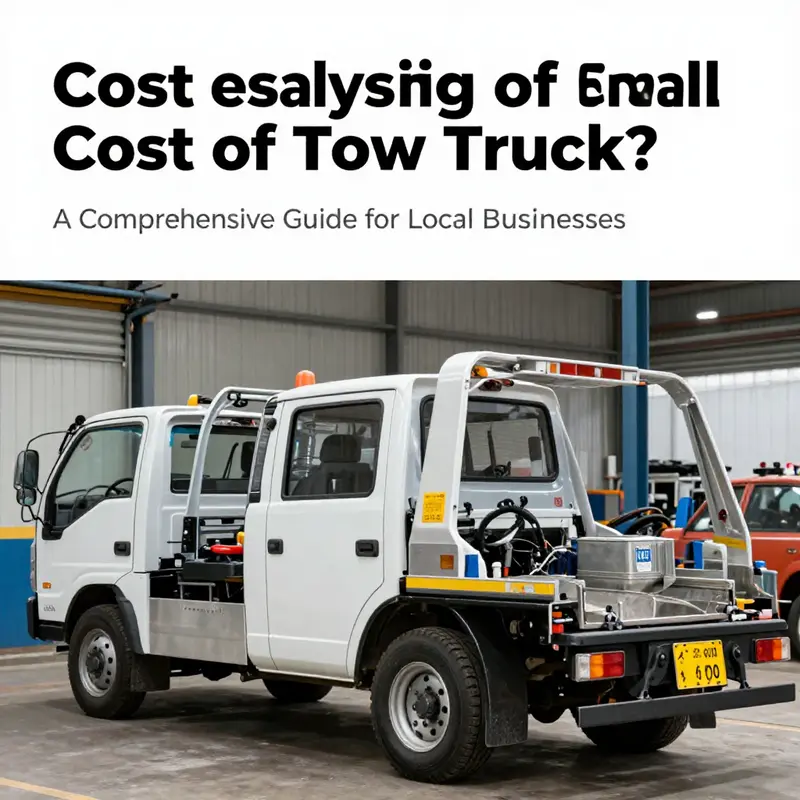
Tow trucks play a critical role in supporting local auto repair shops, car dealerships, and commercial fleets. In our island community, understanding the costs associated with these vital vehicles is key to making informed decisions. This article will explore the pricing of small to medium tow trucks, delve into the expenses surrounding heavy-duty models, address ongoing maintenance and operational costs, and discuss the financial considerations of tow truck ownership. Each chapter will provide specific insights tailored to the unique needs of property managers, resort operators, and commercial fleet operators, ensuring you grasp the full financial picture of tow truck investment.
null
null
Tow Truck Valuation Unveiled: Unpacking the Costs of Heavy-Duty Recovery Machines
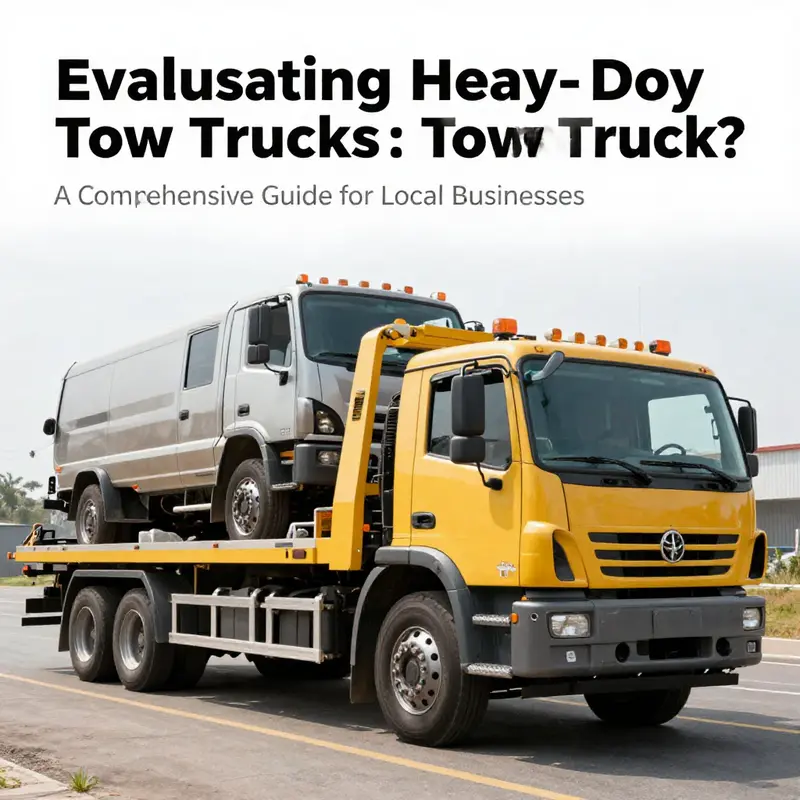
Prices for tow trucks are not a single number. They reflect what the vehicle is built to do, how much load it can haul, and the environments it will operate in. Buyers should calibrate expectations against the job list—standard recoveries, fleet duty, or heavy urban tow and long-haul recoveries. The range is wide because the needs of fleets differ, and the devices that move those needs—from compact 5-ton units to multi-ton heavy-duty wreckers—come with distinct configurations, capabilities, and life-cycle costs. To understand what a realistic budget looks like, it helps to map the market in tiers and then connect those tiers to the tasks at hand. A practical approach is to start with capacity, then consider the technologies that bolster uptime, safety, and efficiency on the road. This framework keeps price in perspective as part of a broader investment in fleet reliability and service quality, rather than as a one-off purchase decision.
In the light to mid-range segment, where many fleets begin their upgrade or expansion, most tow trucks fall into the 5- to 8-ton category. These machines typically start around the low five figures. In many markets, a straightforward 5- to 8-ton rig with a winch and essential hydraulics lists around $18,000 to $28,500, with some configurations edging toward $30,000. A more precise snapshot within this band shows that a 5-ton to 8-ton setup with a reliable winch and robust safety features often lands near $27,500 to $28,500. That window captures the balance between basic recoveries and the added reliability that an operator expects in daily use. It is not unusual for buyers to see variations from one supplier to the next due to differences in controls, wiring harness quality, pump speed, and the durability of the chassis, but the fundamental price band remains anchored in this range. For fleets evaluating a first purchase or a modest expansion, this tier represents the baseline cost of entry into professional recovery work.
Moving up in heft, the heavy-duty segment—roughly 15 tons and above—begins at higher price points but still offers a broad spectrum. A 15-ton heavy-duty wrecker, built to handle larger vehicles and more demanding jobs, typically lists between $24,000 and $35,000. This band reflects a significant jump in torque, hydraulic reach, stabilizing systems, and chassis strength, all of which enable safer and faster recoveries under tougher conditions. As demand for more capable machines grows, many buyers opt for higher-spec configurations that push the price beyond $35,000, incorporating stronger winches, longer booms, and upgraded safety packages. These upgrades are not merely conveniences; they translate directly into reduced turnaround times and improved fleet safety, especially when lifting heavy or awkwardly positioned loads.
The price picture becomes even more expansive when the tonnage climbs toward the heavy-duty frontier. In some markets, a 40-ton heavy-duty wrecker commands a price range that can be strikingly wide—from roughly $150,000 up to $300,000 or more. This leap reflects several converging factors: premium chassis and driveline components, specialized hydraulics designed for extreme loads, longer booms with greater outreach, more robust safety systems, higher speed of operation, and the inclusion of advanced recovery features that support long-haul or industrial-scale work. Buyers entering the 40-ton class typically weigh the benefits of greater weight capacity against the larger upfront cost, while also considering ongoing maintenance, spare parts availability, and the network of service centers that can support such a complex machine. In contrast to this high-end tier, there are powerful 50-ton units that, in some markets, can be priced from roughly $40,000 to $70,000. The apparent discrepancy arises from market segmentation, chassis choices, and whether the package emphasizes raw lifting power, multi-axle stability, or integrated recovery tools. It is not unusual for a specific 50-ton configuration to be more affordable in one region due to supplier incentives, module options, or favorable financing terms, while remaining expensive in another where import duties, logistics, and local demand push prices higher. The key takeaway is that higher tonnage does not guarantee a monotonic price increase; instead, price is a function of how the machine is built to fit the intended use, with the safest, most capable configurations commanding the premium.
Among the heavy-duty options, the science of price hinges on the included equipment and the engineering choices that drive performance in real-world loads. A 40-ton class often sits at a much higher price band because it is designed for industrial projects, long-haul recovery, and environments where reliability is paramount. Buyers must assess what those features deliver in practice: hydraulic systems engineered for repeated, heavy lifts; winches with greater line pull and drum capacity; extended booms that reach awkward angles; and safety enhancements that reduce the risk of personnel injury during challenging recoveries. The equipment list—hydraulic power units, winches, cable or rope arrangements, booms, stabilizers, and control systems—accumulates value directly in the field. The decision to invest at the higher end should be grounded in expected utilization, uptime, and the potential to attract premium service contracts rather than in a reflex to chase the most powerful machine on the market.
Another factor that quietly but decisively shapes price is the type of recovery platform. Flatbed, or rollback, tow trucks carry different costs than wreckers. Flatbeds are highly valued for their ability to transport vehicles without adding further damage through contact with the vehicle’s body or frame. The premium usually lies in the hydraulically inclined platform, integrated loading system, and the complexity of the loading controls. These models require careful alignment, space for operation, and operator training, all of which contribute to higher upfront costs and, often, higher ongoing maintenance expenditures. Conversely, wreckers with a boom and integrated winch can be more straightforward to operate in certain environments, which can translate into more favorable purchase prices per ton of lifting capacity, especially when the fleet’s job mix comprises frequent short-distance recoveries or urban calls. In practice, many buyers weigh the total cost of ownership, not just the sticker price, and consider how the platform type aligns with service patterns, driver skill sets, and garage layout.
Beyond the mechanics of the machine, the global market has reshaped pricing dynamics, with manufacturing shifts changing the value equation. China has emerged as a dominant force in the global heavy-duty tow truck market. Domestic producers in regions such as Hubei, Shandong, and Hebei offer competitive pricing and scalable production, delivering a compelling blend of cost efficiency and performance for international buyers seeking value without compromising quality. The presence of mature supply chains and cost-efficient production makes it possible to access newer, better-equipped units at prices that previously would have seemed out of reach for many fleets. This development has reshaped procurement strategies, encouraging buyers to weigh not only the machine cost but also the potential savings from integrated parts supply, warranty terms, and service networks that can be more robust when sourced from a manufacturer with a global footprint.
For fleets seeking a structured path to pricing, it is useful to reference procurement resources that distill supplier expectations, performance metrics, and best practices. The idea is to move beyond a price hunt toward a disciplined evaluation of total value. The discussion often benefits from a market-oriented guide that catalogs supplier capabilities, delivery times, and after-sales service commitments tied to specific tonnage classes and platform types. As with any major fleet investment, the decision is not solely about the initial price. Total cost of ownership, reliability, maintenance cycles, and the strength of the service network are equally decisive. The procurement lens helps buyers frame questions about uptime guarantees, spare parts readiness, and the support structure that will keep the truck on the road when it matters most.
For ongoing fleet insights and practical context on how these decisions play out in the field, readers can explore industry perspectives at the The Island Tow Truck Blog. This resource provides extended discussions about fleet strategies, emergency-response readiness, and the operational realities of maintaining a reliable recovery fleet in demanding conditions. The Island Tow Truck Blog.
In the end, the ticket price is a starting point. It is the outset of a financial conversation about how a tow truck will serve a fleet over years of service. Buyers should map out a clear use case: the expected number of recoveries per month, the typical vehicle mix, the climate or terrain, and the required response times. These factors determine whether a 5-ton unit with modest specs will suffice or a 40- to 50-ton machine with extensive safety and automation features is warranted. Fleet managers should also model maintenance costs, potential downtime, fuel efficiency, and the availability of spare parts and skilled technicians. The total package—the machine, the platform, and the ecosystem around it—will define the true value of any heavy-duty tow truck purchase. When planned carefully, the price becomes a proportionate investment in uptime, driver safety, and customer satisfaction.
For readers seeking a broader snapshot of market pricing and supplier insights, see the external market overview at https://www.equipmentmarketwatch.com/tow-truck-pricing-2026. This external resource provides current market context that complements the chapter’s practical guidance and helps align purchase decisions with broader industry trends.
Tow Truck Longevity: The Hidden Price of Keeping Your Fleet Rolling
Owning a tow truck is a price question, but the real cost unfolds over years. The price bracket for tow trucks covers a broad range: smaller models around the low tens of thousands to specialized heavy-duty rigs that command much more. This variation mirrors how operators choose equipment based on the market they serve, the typical vehicle mix, and the distance to the scenes they respond to. For a standard fleet that handles everyday recoveries, a 5-ton to 8-ton class is often the core workhorse, while urban responders and larger fleets lean toward heavy-duty 15-ton and above. The lifetime cost, however, is driven by utilization, maintenance demands, and how well a shop controls wear and tear.
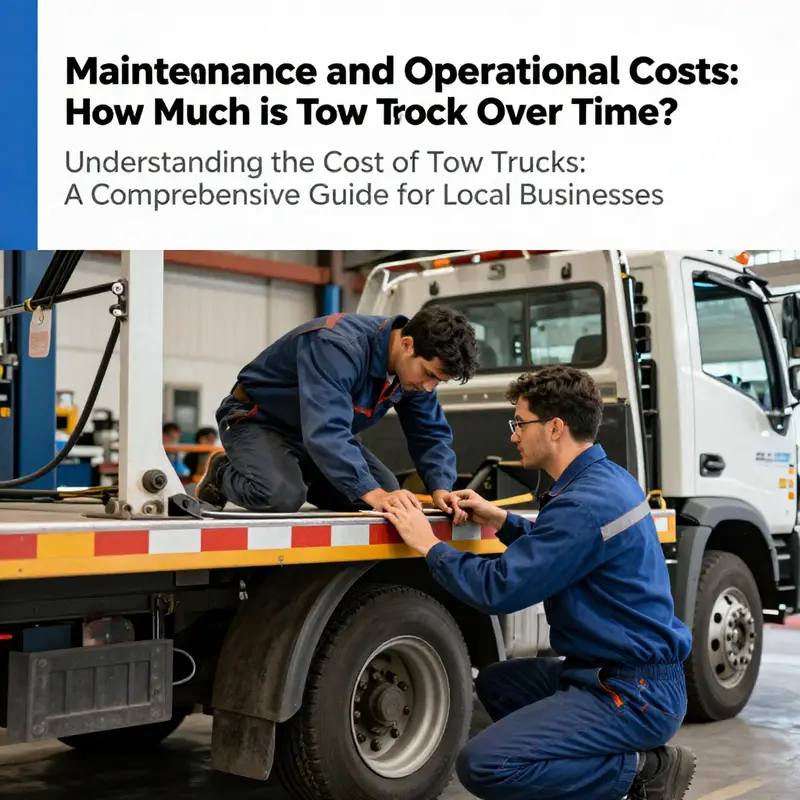
Annual costs form the heartbeat of the ongoing expense, and two levers dominate: fuel and maintenance. When a tow truck is run hard, fuel costs climb quickly, and maintenance scales with mileage and duty cycle. Across typical operations, fuel and routine maintenance can range from $8,000 to $20,000 per year. This spread reflects how intensively a vehicle is used and how many service intervals the fleet schedules. Heavy-duty trucks amplify these numbers because the engines and hydraulic systems bear more stress, leading to bigger ticket items. A single heavier maintenance service can approach $2,000, and if a shop follows a disciplined plan of roughly five such services per year, annual upkeep can reach around $10,000. Over a lifecycle of substantial use, such as 200,000 kilometers, the maintenance tab may accumulate to as much as $20,000 for the most demanding rigs. These figures are not mere line items; they translate into downtime that translates into lost response capacity and, ultimately, less reliable service for clients.
Beyond the obvious, there are capex-to-opex transitions and recurring costs that quietly shape profitability. Financing a tow truck, even when the purchase price is modest, introduces loan interest that compounds with time. Tolls can add up, especially when responding through city corridors and across bridges, and insurance is a fixed cost that scales with the vehicle’s weight, usage, and the regulatory landscape of the operating region. Wear and tear—the fate of moving parts—limits the life of winches, tires, hydraulics, and the safety-critical systems that keep the unit functional. The data emphasize that these costs are not static; they shift with the fleet’s age and with any tightening of emission or safety standards. As regulations evolve, the parts catalog expands and labor becomes more specialized, pushing repair bills higher at each maintenance cycle.
Aging fleets demand a prudent lens on replacement timing and reliability. The correlation between age, repair frequency, and downtime is not linear but compounding. When a truck nears milestones, the probability of unexpected failures rises, and that risk hits the bottom line through unplanned service windows that disrupt dispatch and extend overtime in the workshop. Operators who track kilometric age, service history, and component wear find that a proactive replacement policy—paired with a robust maintenance schedule—can yield a lower total cost of ownership than waiting for a breakdown to force a swap. The maintenance regimen, then, becomes more than a cost center; it becomes a strategic lever that preserves uptime, service levels, and crew safety.
The toolkit of cost containment rests on understanding the essential equipment and tools behind reliable towing. The investment isn’t limited to the chassis and engine; it includes the mechanical apparatus and safety gear that carry the job from scene to site. A well-equipped unit relies on winches, straps, wheel lifts, towing dollies, axle pads, and the lighting and communications that keep crews coordinated and visible. Each item has a life cycle: the winch drum wears, hydraulics bleed down, tires wear unevenly when steering loads or tracking on rough pavement, and lighting arrays face corrosion or bulb failures under constant vibration. The cost to replace or upgrade this equipment is a predictable annual line item in the five-year cash forecast. The goal is not just to minimize the purchase price but to optimize uptime and safety, because downtime compounds operating costs and erodes customer confidence.
From a planning perspective, the five-year horizon is not a theoretical exercise but a practical framework. A well-structured cash flow plan accounts for purchase price, depreciation or tax benefits, financing costs, maintenance cadence, fuel consumption, insurance, and incidental expenditures such as tolls and permits that may be required in certain jurisdictions. The plan also weighs the option of staggered replacement, where a fleet maintains a mix of newer, lower-maintenance units and some longer-serving workhorses that still meet safety and regulatory standards. Such a mix can smooth budgets and reduce the risk of a single-point failure that cripples a response network. To keep the narrative grounded, operators should couple the forecast with a live ledger that tracks actuals against projections, updating assumptions as utilization patterns shift and new regulatory demands emerge. For readers seeking a deeper, real-world perspective, the Island Tow Truck blog offers case studies and practical scenarios that illuminate how other operators balance costs and reliability in diverse environments. Island Tow Truck Blog
The layered nature of costs also means that every decision—the size of the unit, the configuration of the wrecker system, the number of optional safety devices—ripsples through the operating budget. Larger, more capable rigs may reduce call-out time on difficult recoveries, but they demand more fuel, more maintenance, and higher insurance. Conversely, smaller builds may lower immediate outlays but force more frequent replacement cycles as workload grows or job complexity increases. The middle path, often pursued by larger fleets operating in urban and suburban settings, emphasizes modularity: trucks that can be upgraded with stronger winches or additional mounting points, and a spare parts strategy that minimizes field downtime. This approach keeps service levels high while ensuring that maintenance costs remain predictable. For those planning for an uncertain macro environment, it pays to simulate scenarios that stress both utilization and supply chain disruptions. Such exercises reveal how resilient a tow operation is to sudden spikes in demand, and they can guide how to allocate capital between fleet expansion and back-end maintenance reserves.
In the end, the question “how much is tow truck over time?” resolves into a disciplined discipline of cost awareness and strategic procurement. The price tag for the vehicle is only the first line item; the real investment is the reliability and longevity that maintenance, equipment, and planning deliver. Emissions standards, wear patterns, and the need for proactive replacement color the annual equation. As soon as operators integrate the maintenance cadence into a broader business plan, the path toward sustainable profitability becomes clearer. The five-year view helps convert unpredictable breakdowns into manageable budgets and predictable service levels. It also creates space for continuous improvement—reducing unnecessary downtime, refining parts inventories, and sharpening response times to meet client expectations. The chapter on ownership costs that follows will build on this foundation, detailing how fleet owners interpret these costs in the context of insurance, financing, and risk management, and how a well-structured program translates into steadier margins and more resilient operations.
For a detailed, up-to-date guide on tow truck ownership costs, see this external resource: https://www.towtruckowners.com/ownership-costs-guide
Tow Truck Investment Decoded: From Purchase Price to Everyday Operating Costs

Vehicles built to haul, recover, and stabilize damaged or repossessed cars carry a language all their own. When people ask, “how much is a tow truck?” they are really asking about a spectrum: how large, what capabilities, and what level of reliability will the business require? The truth is, price is only part of the story. The size and configuration of the tow truck you choose will shape not only the upfront cost but also the day-to-day expenses, the capacity for revenue, and the pace at which you can turn an operation into a sustainable enterprise. In markets where every hour on the road matters, the sticker price of a truck must be weighed against anticipated workflow, maintenance cycles, and the specialized tasks the fleet intends to tackle. A practical starting point is to acknowledge that there is a broad ladder of options, from modestly priced used units to high-end, purpose-built machines designed to tackle the most demanding jobs. The consequence is a wide price spread, and the most prudent buyers take time to align equipment choices with the expected mix of duties.
In the used market, smaller classes that run five to eight tons for standard vehicle recovery can be tempting because they whisper a lower initial price. Typical listings in this range might hover from the upper teens to the low forties in thousands of dollars. A common example of this tier is a five- to eight-ton wrecker equipped with a winch; prices there can settle around the mid- to high-tens of thousands or, in some cases, inch toward $28,000 to $40,000 depending on age, condition, and the specifics of the hydraulic, lifting, and recovery systems. These numbers reflect a marketplace where quick turnarounds and shorter service intervals dominate, and the trucks themselves are often procured as practical, immediate tools rather than long-term investments that carry heavy depreciation. While they may be financially attractive at the outset, they also come with trade-offs in reliability, resale value, and compliance with evolving safety standards. For a business aiming to grow into more complex tasks, this tier serves as an entry point rather than a permanent home for a fleet.
As operations scale, the calculation becomes more nuanced. For buyers who want a new baseline with predictable performance and warranty protection, standard tow trucks typically fall into a different, more substantial price band. A standard new tow truck—one designed for urban accident recovery, repossession operations, and mid-range towing tasks—generally sits between $75,000 and $150,000. The sticker here is not just about the chassis and the engine; it encompasses a bundle of capabilities that matter to service level and productivity. Hydraulic systems, lifting capacity, and towing configurations are central to the decision. Operators weigh the benefits of boom, winch, or wheel-lift configurations, choosing a setup that harmonizes with their most frequent calls. The urban operator, for instance, may prioritize compact design for tight streets and rapid dispatch, while the repossession-focused fleet might emphasize lifting power and a robust winch to manage a wide variety of vehicles in constrained spaces. In this segment, maintenance expectations, warranty coverage, and the potential for future upgrades also shape the total cost of ownership.
Then there are the specialized beasts—the rotators. A rotator tow truck, with its 360-degree rotating boom, is built for the most stubborn scenarios: overturned vehicles, rollover recoveries, and difficult access sites where the normal boom and wheel-lift combinations fall short. The price range here expands dramatically, typically from about $150,000 to well over $300,000. The higher upfront cost is a reflection of capability and speed in crisis situations, where the ability to reposition a vehicle without multiple trips translates into quicker incident resolution and the potential for higher service fees. But these advantages come with consequences: greater fuel consumption, more complex maintenance demands, and a need for operators who are trained to manage the intricacies of a rotating system. The rotator’s premium is justified in markets with frequent, high-stakes recoveries or in fleets that position themselves as emergency-response partners, yet the decision to invest must be tempered by a thorough assessment of call volume, terrain, and training commitments.
Flatbed models offer another path, valued for their safety and versatility. A flatbed tow truck, with a hydraulically tilting bed, is praised for transporting vehicles without wheel contact and for handling wide-ranging vehicle types—including all-wheel-drive models and low-clearance cars—without causing ground contact. Pricing for these machines generally mirrors standard models, ranging from roughly $75,000 to $150,000 as a new unit. The appeal of flatbeds lies in reduced risk of damage during loading and in simpler maintenance profiles compared to rotators. They are well-suited to fleets prioritizing vehicle safety, ease of use, and lower maintenance overhead, especially in operations that handle routine recovery, flatbed loads, and remote-to-urban transfers where curbside efficiency matters.
Price, however, is not the whole story. The base vehicle is just the doorway to a broader ecosystem of equipment and services that keep a tow operation productive. Beyond the chassis, owners must budget for a suite of essential gear that multiplies the tool’s practicality on the road. Winches are fundamental for secure vehicle retrieval; straps and wheel lifts enable stable positioning; towing dollies and axle pads expand the range of vehicles that can be moved without risk. Then there are safety and communications systems—light bars, sirens, radios, and related interfaces—that ensure the fleet can manage incidents with clarity and authority. All of these add-ons accumulate quickly. When counting the total investment to operate a towing business effectively, the initial purchase price becomes only one line item in a much longer statement.
This broader financial picture is not just a matter of capex. It requires a deeper look at ongoing costs that determine the true profitability of a tow operation. Fuel burn is a practical consideration, especially for larger trucks that spend long hours in urban traffic or ferrying vehicles between sites. Maintenance costs compound as equipment ages, parts wear, and specialized systems require skilled technicians. Insurance premiums reflect the risk profile of heavy-duty towing and the liabilities associated with roadside recovery, accident response, and vehicle transport. Training is another enduring expense; skilled operators are not merely drivers but technicians who understand hydraulics, torque specifications, brake lines, and the nuances of safety-critical procedures during recoveries. Licensing and compliance add administrative layers that can influence both the timing of procurements and the structure of financing.
These factors coalesce into a total-cost reality that goes far beyond the sticker price. In a consolidated view, the total investment necessary to outfit and operate a tow truck business can easily surpass the $200,000 mark when one accounts for the truck itself plus the gear, training, and regulatory compliance needed to perform effectively in real-world conditions. This figure, reported by a comprehensive guide published in early 2026, anchors the budgeting process for prospective owners and underscores why careful market research and financial planning are indispensable. The implication is clear: a successful tow operation is built on strategic choices about vehicle class, mission profile, maintenance planning, and the cadence of equipment upgrades, not on a single purchase price alone.
For fleets seeking to embed resilience into their procurement, the path is to align equipment choices with the anticipated work mix and to plan for progressive investment. A reliable baseline may begin with a sturdy, standard-new tow truck to handle everyday recoveries, paired with a clear maintenance schedule and a robust set of essential accessories. If the business aims to differentiate itself through rapid-response capabilities or complex recoveries, a rotator may become a strategic asset, provided the call volumes justify the higher ongoing costs and the required training is in place. The safety and versatility provided by flatbed configurations further broaden a fleet’s service envelope, supporting a wider range of vehicle types while curbing some of the routine wear and tear associated with heavier-duty units. In all cases, prudent budgeting must anticipate not only the initial outlay but the cumulative expense of upkeep, fuel, insurance, and upgrades as market demands evolve.
To explore a detailed pricing and equipment breakdown, many operators consult industry guides that synthesize data from manufacturers, dealers, and end users. Within the discipline of fleet management, this approach supports a holistic view of total ownership costs. It also reminds buyers to factor in the ancillary costs of running a tow business—dispatch software, fuel cards, maintenance contracts, and the staffing required to operate and maintain a modern fleet. For those who need a concrete reference as they navigate early planning or late-stage expansion, an external reference such as the Tow Truck Ownership Costs Guide offers a structured framework to quantify these components and project long-term financial performance. Meanwhile, fleets can support their strategic development with targeted internal resources, such as essential fleet emergency-response strategies, to ensure preparedness and operational resilience in the face of roadside emergencies.
In sum, the question “how much is tow truck?” has no single answer. It is a question of scale, capability, and the business model you intend to sustain. A modest used unit may open doors to entry, but growth often requires stepping up to new-standard equipment, or even specialized rotators, if the market demands speed, complexity, and the ability to recover in challenging environments. Equally important is recognizing that the true cost of ownership extends well beyond the initial purchase. The combination of up-front price, ongoing maintenance, fuel usage, insurance, training, and the added gear that enables safe and efficient recoveries all feed into a blended cost that determines profitability over the life of the asset. Financial planning, market awareness, and a clear sense of the service niche you aim to own will determine not just the price you pay for a tow truck, but the price you are willing to pay to keep your business moving forward.
External resource: https://www.towtrucksnews.com/tow-truck-ownership-costs-guide
Final thoughts
Grasping the cost of tow trucks is essential for local businesses that rely on them. From the initial pricing of various models to the long-term expenses related to maintenance and necessary operational investments, each element contributes to understanding whether a tow truck is a viable addition to your business. By analyzing these factors, you can make knowledgeable decisions that benefit your operations and ensure you are well-equipped to support your community effectively.