
For local auto repair shops, car dealerships, property managers, resort operators, and commercial fleet operators, without question, investing in a tow truck can be a pivotal business decision. Not only does it offer roadside assistance, but it also provides a reliable service to a clientele that demands quick, efficient recovery. However, the fundamental question remains: How much is it for a tow truck? This article delves into the varying price ranges, factors that influence costs, and the different types of trucks available in the market today, thereby equipping you with heightened awareness to navigate this important purchase. Each chapter is meticulously designed to enhance your understanding, from pricing overviews to critical buying considerations.
null
null
Counting the Cost on the Road: What Determines Tow Truck Prices and Why They Vary So Much
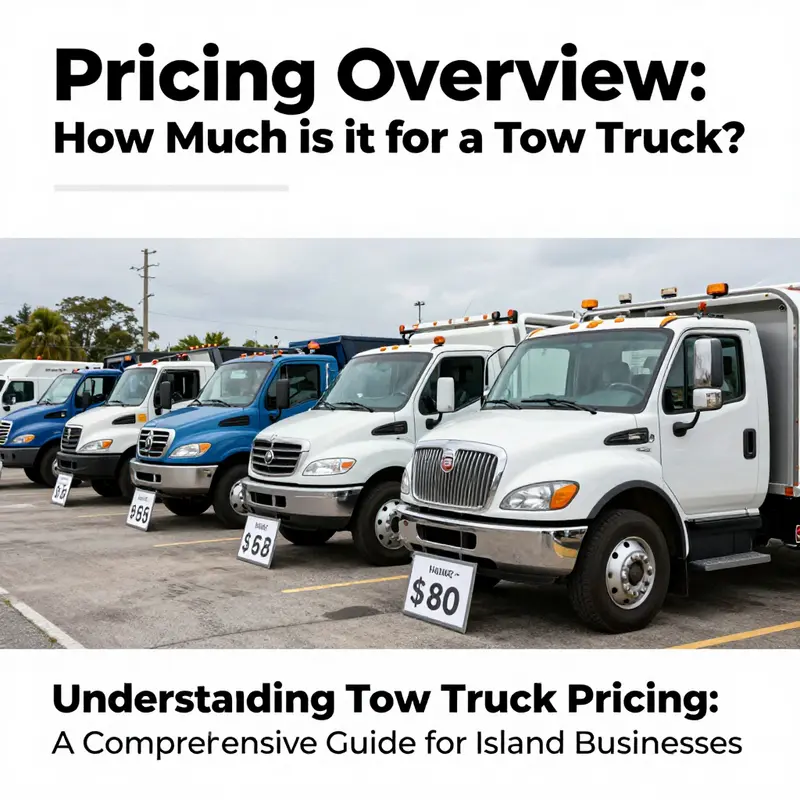
When buyers ask how much a tow truck costs, they usually expect a single number. Yet the price is rarely a flat figure. It rests on a constellation of choices, from the vehicle’s size and lifting power to the equipment tucked onto its chassis and the commitments a manufacturer backs with a warranty. The latest market snapshot from early 2026 shows a broad spectrum. A heavy-duty four-by-two wrecker with a 15-ton capacity can land between roughly twenty-four thousand and thirty-five thousand dollars per unit. Move up to a heavy-duty eight-by-four, with a fifty-ton potential, and the price range expands to about forty thousand to seventy thousand dollars. Smaller workhorses—four-by-two configurations delivering around five tons—sit elsewhere, from about eighteen thousand to close to forty thousand dollars. And for winch-style trucks in the five- to eight-ton class, including flatbeds or pickup-style builds, the typical price bracket sits around twenty-seven and a half to twenty-eight and a half thousand dollars. A hotly traded pickup in a platform-tow setup might look like twenty-nine thousand eight hundred ninety dollars for a small run, or just under nineteen thousand if volume discounts apply, moving from one to four pieces, to encourage larger orders. These numbers surface from current quotations and reflect the normal wiggle room caused by customization, delivery cost, and regional market dynamics. They set the stage for a larger conversation about what truly drives price and how a fleet manager can navigate the purchase without overpaying while still securing a unit that fits the job at hand.
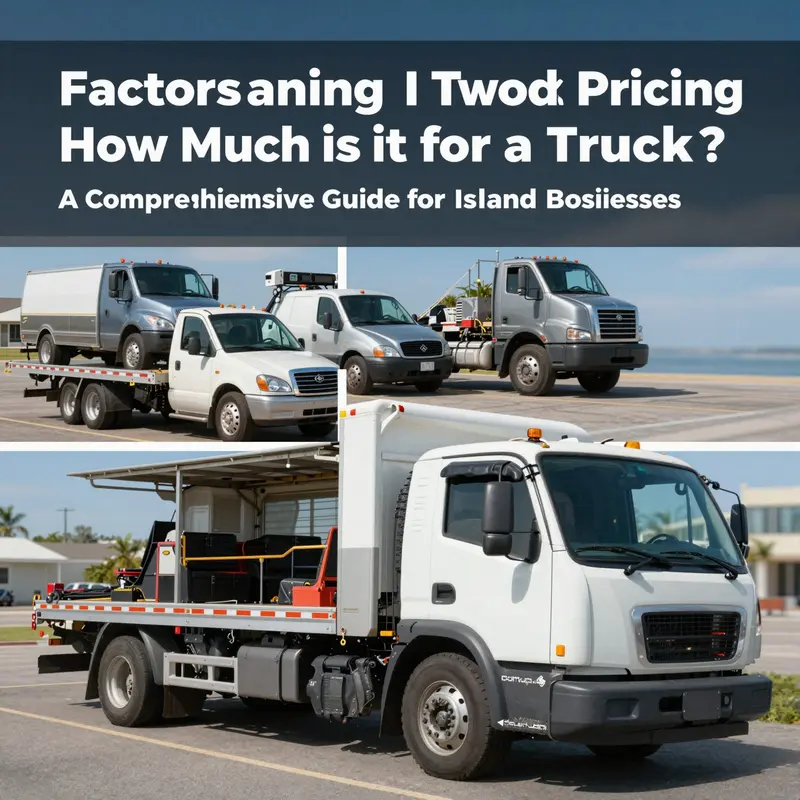
Pricing a tow truck is less about chasing the bottom line than balancing capability with cost over the vehicle’s life. The most obvious factor is the type and size of the truck. Light-duty, medium-duty, and heavy-duty classifications correspond to the weight and size of the towed assets they can handle, and those headlined capabilities alone push price in clear, predictable directions. A compact unit designed for light towing is much cheaper than a heavy-duty platform intended for commercial fleets and frequent, high-stress deployments. The configuration—whether a traditional wrecker, a flatbed, or a pickup-style model—also matters. A flatbed, with its bed and slide-out ramps, carries a higher upfront cost but can offer lower risk of secondary damage to towed vehicles and longer service life in certain fleets. In markets with dense traffic and high accident rates, operators chase higher-capacity configurations to reduce turnaround times and widen their service windows. In quieter zones, the economy often favors smaller bodies with lower upfront costs and simpler maintenance.
The next layer is lifting capacity. Tow trucks are not all built to grab a car and call it a day. Some units lift modest loads appropriate for standard passenger vehicles, while others are engineered to hoist heavy-duty commercial trucks or buses. The higher the lifting power, the higher the price, and the more robust the hydraulic systems, winches, and control mechanisms required to manage those forces safely. The cost of such hydraulic architecture grows not only with the raw power but with reliability features—redundant relief valves, protected hoses, and advanced diagnostics that help prevent expensive failures on the road.
Specialized equipment and safety features add further heft to the price tag. Beyond the basic winch and hydraulic arm, many units carry multiple towing arms, advanced stabilization jacks, and emergency lighting packages. Some trucks implement more precise load-sensing systems, anti-sway mechanisms, and integrated braking assist for recovery operations in adverse conditions. The more sophisticated the payload handling, the greater the upfront investment and the longer the potential payback period, particularly for fleets that operate in complex environments or under tight time constraints. The price also reflects the engineering and testing behind these features, as manufacturers balance performance with durability in tough field conditions.
Brand reputation plays a quiet but persistent role in pricing. In the tow-truck space, certain manufacturers are known for durability, parts availability, and long-term service support. Those reputations translate into a premium, even when the visible differences between two units may seem minor. For managers, this means weighing the value of a known reliability curve against the flexibility of newer, less established options. The decision often hinges on a mix of past experience, service-network accessibility, and the speed at which a fleet can return to operation following a breakdown.
New versus used is another crucial axis. A brand-new unit comes with the latest safety features, warranties, and the confidence of pristine condition. Its price reflects that status. A well-maintained used tow truck can offer meaningful savings and a depreciated price point. The trade-off is potentially higher maintenance needs, shorter warranty protection, and uncertain residual value. For fleets, the calculus usually favors new equipment when uptime is mission-critical and budget certainty matters, while a used model can fill essential coverage gaps when capital is tight or when a vehicle serves in a secondary role.
Market demand and regional variations introduce a more nebulous, yet very real, pricing force. Urban markets with dense traffic and frequent incidents tend to push prices higher, given the scarcity of time and the premium on quick, reliable service. Rural or lower-demand regions may see more competitive pricing, as suppliers compete for fewer jobs and longer operational cycles. Fuel prices, labor costs, and regulatory frameworks further color the cost of ownership. In markets where environmental regulations or emissions standards are stringent, manufacturers may need to add certified components or tuning to meet compliance, which can nudge the initial purchase price upward and influence ongoing operating costs.
Operating costs, especially fuel efficiency and routine maintenance, must be folded into the long-term value of any tow truck purchase. A higher upfront cost can be offset by lower fuel usage, reduced maintenance downtime, and longer intervals between major repairs. Fleet managers often run models that compare total cost of ownership across several configurations, projecting yearly fuel burn, expected maintenance, and the cost of downtime. Those calculations reveal that the cheapest option on the sticker price might not always deliver the best long-term value, especially when heavy-use scenarios or frequent, rapid deployments are the norm. In the end, a unit’s economic viability rests on more than the initial invoice; it rests on how long it keeps you moving without disruptive surprises.
Warranty coverage and regulatory requirements can also sway the price. A robust warranty can add to the upfront cost but deliver peace of mind over years of service. Regulations—ranging from safety standards to emissions rules—may require compliant builds that, while more expensive upfront, avoid penalties or retrofit costs later on. For fleets with multi-jurisdiction needs, these considerations become especially important, as a truck bought in one region may face different rules upon deployment elsewhere. The net effect is a more deliberate, longer horizon view of price. Fleet leaders who compare options with this lens often identify a preferred balance point where upfront investment aligns with predictable maintenance, compliance, and uptime.
All these factors coalesce into the numbers cited in market guides and supplier quotations. A four-by-two, mid-range heavy-duty wrecker might be priced in the mid two-to-three tens of thousands, while a broader, higher-capacity eight-by-four can push toward the upper end of the mid to upper tens of thousands, depending on accents, safety gear, and optional features. The smallest five-ton units drift closer to the lower end of the spectrum, and even here, extras like enhanced winches or supplementary stabilization features can tilt the scale. For a fleet contemplating a mixed lineup, the strategy often centers on segmenting tasks by expected use. Light, quick-turnaround shifts can be efficiently supported by smaller, cheaper units, while high-demand routes and fleets with complex recovery needs demand the additional investment in larger, more capable trucks.
For readers who want a practical compass, a first step is cataloging functional requirements with blunt honesty: what weight classes are most common in service? How critical is speed of response in peak hours? Which features translate directly into safer, faster recoveries, and which are nice-to-haves? Then, map these needs against price ranges in the current market. In many regions, the real price a buyer experiences will reflect not only the base unit but also delivery, setup, onboarding, and optional aftersales support. This is where a careful procurement plan pays dividends. A well-framed inquiry can reveal reasonable volume discounts or bundled maintenance packages that make even pricier configurations economically viable over the long run.
To keep the narrative grounded, consider the practical implication of a pricing decision on fleet operations. If a shop aims to maintain high readiness with minimal downtime, investing in a slightly more capable, newer unit may reduce loss time and avoid expensive emergency calls. In contrast, a smaller operator may achieve desired coverage with one or two mid-range units and a robust used-truck strategy, allocating more capital toward service contracts or training. Either path benefits from listening to frontline operators who confront real-world constraints daily and from referencing up-to-date market data. For ongoing insights and practical perspectives on fleet pricing and equipment considerations, you can explore The Island Tow Truck Blog.
In sum, the price of a tow truck is not a single fixed point; it is the product of choices about size, capacity, configuration, and added capabilities, all tempered by market forces and regulatory realities. The numbers tell one side of the story, but the right choice hinges on aligning those numbers with the actual, on-the-ground needs of a fleet. When buyers approach the market with a clear picture of how each feature translates into performance and uptime, they position themselves to secure a unit that not only meets today’s demands but remains dependable tomorrow. As with any substantial fleet investment, the aim is to balance initial expenditure with long-term efficiency, reliability, and compliance—knowing that the road ahead will throw a few curves and that a well-chosen tow truck should help navigate them with confidence. For a deeper, structured exploration of pricing factors, consult external industry analyses, such as https://www.trucktow.com/tow-truck-pricing-factors/.
Counting the Cost on the Road: A Unified View of Tow Truck Prices by Type
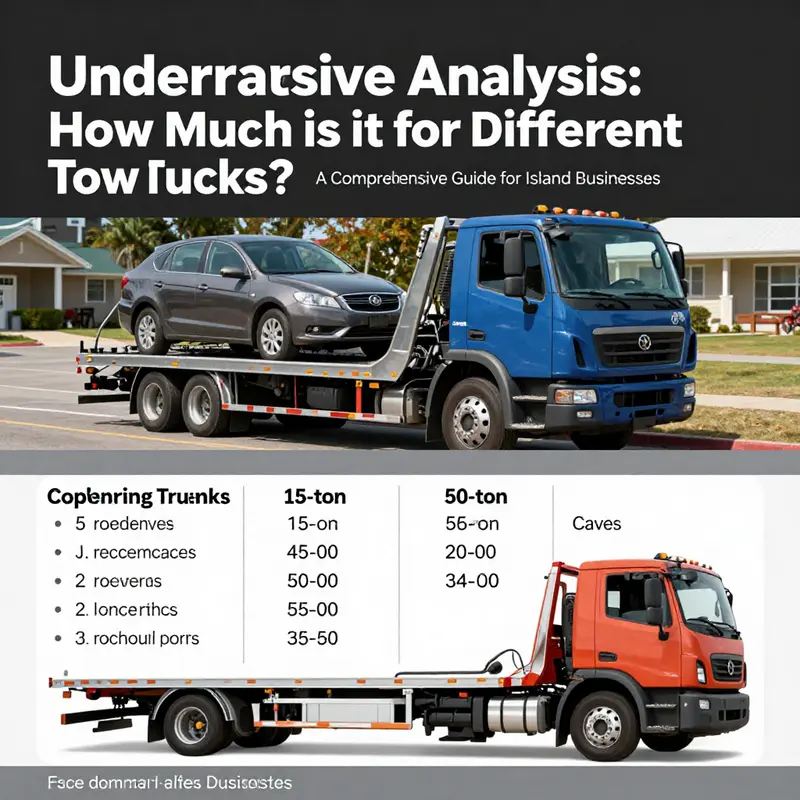
Tow trucks arrive in a spectrum of forms, each engineered for a distinct set of tasks, and price follows that logic. A buyer weighing a light-duty recovery tool versus a heavy-duty road service platform quickly learns that capacity, configuration, and intended use shape the sticker price far more than aesthetics or branding. In imagining a fleet or a single-purchase decision, it helps to see price as a function of purpose as much as of size. At the practical end, basic winch-equipped trucks and small flatbeds deliver affordable reliability for routine tows and light recoveries. These units typically sit in the lower end of the market, where the primary investment is the chassis and a simple hydraulic setup. The price range for these compact workhorses generally falls between seven thousand five hundred and fifteen thousand dollars. They are enough for everyday needs: roadside pulls, weekend mishaps, and simple recoveries in orderly conditions. Yet even within this segment, the bed and winch configuration can tilt the cost up or down. A longer bed, a beefier winch, or a slightly more robust hydraulic package can nudge the price toward the upper portion of the range, while compact builds with lighter specifications keep closer to the bottom. The result is a straightforward relationship: smaller tasks, smaller price tags, and a compact footprint that eases maneuvering in tight spaces.
For operations that require more than a basic setup, the midrange category introduces standard flatbed tow trucks. These machines use hydraulically tilting beds that allow vehicles to be driven or winched onto the platform with a gentler touch, reducing risk of damage during loading. The price brackets for these units typically run from around fifteen thousand up to thirty thousand dollars. The bed length, the sophistication of the hydraulic system, and the base chassis all influence the final figure. A longer, higher-quality bed and a more responsive tilt mechanism translate into a higher upfront cost, but the gains in safety and efficiency often justify the premium for fleets handling a broader mix of vehicles or operating in environments where vehicle damage must be minimized. In many everyday fleets, the flatbed represents the sweet spot between cost, capability, and risk management, offering a practical balance for routine departures and arrivals while still accommodating a reasonable range of vehicle sizes.
As needs grow beyond flatbed functionality, the field widens to include multi-purpose options such as rotators or boom trucks. These are designed for complex recoveries and challenging angles. They are not merely stronger; they are smarter, featuring rotating booms and advanced hydraulic systems that can lift, tilt, and rotate to retrieve vehicles from odd positions or overturned scenarios. The price of these high-end machines begins well above the midrange and can climb rapidly into the six-figure territory, commonly ranging from one hundred fifty thousand dollars to three hundred thousand dollars or more. The steep investment reflects not just the hardware but the precision engineering, sophisticated control systems, and the specialized training required to operate them safely. For fleets that regularly encounter multi-vehicle crashes, heavy rollovers, or scenes with limited access, a rotator becomes a strategic asset rather than a mere tool, justifying the premium with faster recovery times, fewer secondary damages, and stronger incident response capabilities.
Beyond the rotator tier lie the heavy-duty and specialized rescue vehicles that are built for extreme demands. These units are designed to tackle large trucks, tractor-trailers, and hazardous or uniquely challenging conditions. They can feature robust crane capabilities, heavy-duty winches, and dual-functionality designed for both rescue and recovery at scale. The price range for these heavyweights typically starts around thirty-five thousand dollars and can exceed eighty thousand dollars, depending on configuration, engine power, transmission, and the extent of customization. A few exceptionally capable models and configurations in this class push the envelope even further, reaching into the upper ranges when high-performance hydraulics, extended reach, or heavy towing capacity is required. As with higher-end rotators, these machines are investments tied to the scope of operations and risk profile. They are not everyday workhorses but are essential tools for highway emergency response and high-stakes recoveries, where speed, reliability, and capability directly affect outcomes.
The used market adds another layer to the price mosaic. The appeal of second-hand tow trucks lies in substantial savings, but age, mileage, maintenance history, and the condition of critical systems determine whether a used unit still delivers dependable service. In the resale space, prices for used models can drop to around two thousand dollars for the oldest, least specialized platforms, while well-maintained flats and midrange rotators can sit in the range of ten thousand to twenty thousand dollars or more. The variability is high: a well-kept vehicle with low-hours and updated components may perform like a newer unit for a fraction of the new-price cost, whereas aging equipment with dated hydraulics and worn components can incur frequent repairs that erase any initial savings. Prospective buyers should pair a careful inspection with a clear maintenance history to separate dependable bargains from quick fixes that will prove costly over the life of the fleet.
The numbers in the market are influenced not only by capacity and configuration but also by branding, new versus used status, and the scope of included features. A widely observed entry-level price for a five-ton wrecker platform on the market is near the upper mid-range of the light-duty bracket when new, and it can converge toward the flatbed territory as options expand. A typical five-ton platform with a simple winch and a standard bed might price around twenty-eight to thirty thousand dollars new, while a larger five-to-eight-ton winch configuration can sit near the three- to four-tens of thousands when new. Volume discounts also shape the final figure. A common tiered pricing approach sees a notable price advantage for orders of five or more units, where per-unit costs drop substantially compared with single-piece transactions. A representative example shows a five-ton wrecker priced near twenty-nine thousand dollars at smaller quantities, but closer to nineteen thousand dollars when five or more units are purchased. Such tiered pricing invites fleet managers to think not just in terms of immediate needs but in terms of ongoing maintenance, spare parts, and lifecycle planning across a growing operation.
In practice, the price story for any tow truck starts with a clear assessment of what the job demands. Is the fleet primarily performing light roadside assistance, or does it encounter frequent heavy-duty recoveries and complex scenes? Is the primary concern vehicle damage during loading, or is the aim to minimize turnaround time and maximize safety in unpredictable environments? Answering these questions helps bridge the gap between sticker price and total ownership cost, which also includes delivery costs, training, maintenance contracts, warranty coverage, and potential financing or leasing arrangements. As with most industrial equipment, the “true” cost of ownership emerges when one looks beyond the initial price tag to the long arc of utilization, downtime, and reliability. The data points from early 2026, while revealing, are only the starting line: the most accurate pricing comes from direct conversations with suppliers, inspection of build quality, confirmation of warranty terms, and a realistic assessment of annual utilization. For teams building out a budget, it makes sense to consider not just the unit price but the costs of fueling, maintenance, and the inevitable upgrades that keep a fleet ready for the road. When these pieces are put together, the overall cost picture aligns with the operational strategy, ensuring the investment supports both daily demand and unexpected emergencies.
For fleet planners seeking a practical synthesis, the question often narrows to whether to prioritize a lean, high-turnover setup or to reserve capital for a premium, long-term recoveries strategy. A lean approach favors basic winch-equipped units or compact flats that deliver essential service at a modest price point, with the flexibility to expand one or two additional units as demand grows. A premium strategy, by contrast, equips the fleet with higher-capacity flats, rotators, or heavy-duty rescues intended to handle the most challenging scenes and reduce response time in critical events. In either case, the pricing signals are consistent: capacity and sophistication drive the cost, and scale can soften the per-unit price. The path a fleet chooses should reflect its baseline demand, risk environment, and the willingness to invest in uptime, safety, and rapid incident management. As part of a broader procurement plan, many managers also consult industry resources that discuss budgeting, emergency readiness, and fleet optimization to align spending with strategic goals. For those seeking a consolidated starting point, a resource such as Essential Fleet Emergency Response Strategies offers practical perspectives on budgeting and deployment that complement the raw price data described here. Essential Fleet Emergency Response Strategies.
External resources also provide contextual anchors for pricing trends across markets and regions. A broader article on tow trucks and recovery equipment clarifies how scale, geography, and operating requirements influence cost beyond the unit price alone. This external reference underscores the principle that price is not a single number but a function of purpose, risk, and lifecycle planning. For readers who want to explore the wider landscape of tow truck pricing, the following resource offers additional background and practical context: https://en.wikipedia.org/wiki/Tow_truck.
Tow Truck Pricing in 2026: Reading the Market Across Class, Capacity, and Configuration
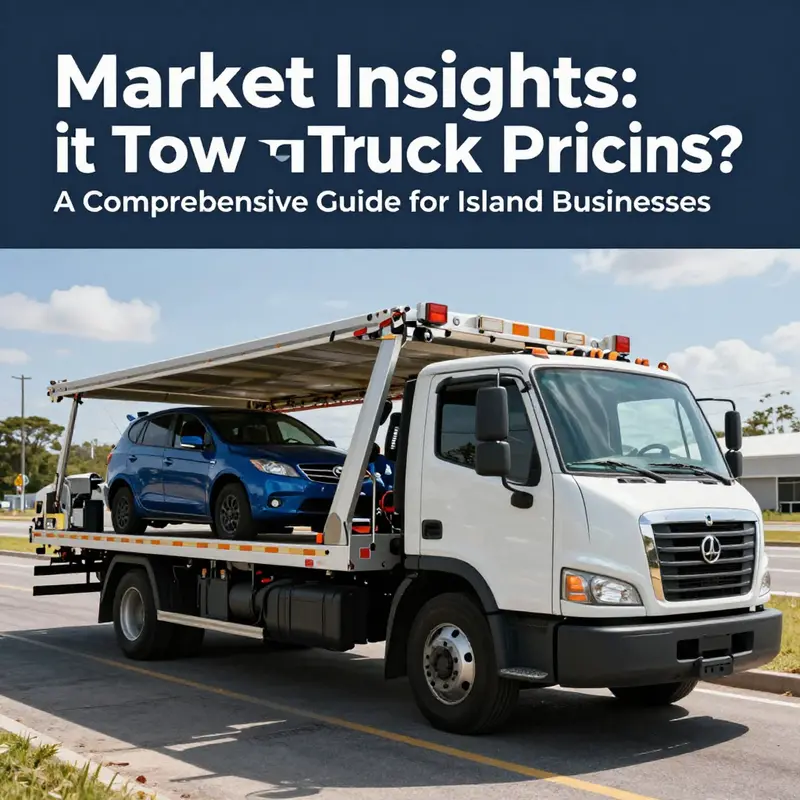
Pricing a tow truck in 2026 unfolds as a study in range, not a single price tag. Fleets seeking a dependable tool for recovery, roadside assistance, or fleet emergency response must balance capacity, configuration, and intended duty cycle against a spectrum of prices that reflect regional markets and technology adoption. The market data from early 2026 reveals a ladder of options from compact light-duty recoveries to heavy-duty, multi-axle configurations designed for highway incidents and heavy wrecks. The key is matching the truck’s physical ability to the operational need while recognizing how small shifts in configuration or intent can move the price considerably.\n\nAt the light end, a compact 3-5 ton recovery vehicle commonly sits in a price niche around the low to mid twenty-thousands of dollars. In practice this means a vehicle with a sturdy winch, basic recovery gear, and a reliable platform—enough to handle routine calls and smaller recoveries without the higher operating costs of larger platforms. When the configuration includes a more robust chassis or higher spec safety features, the figure can rise into the upper twenty-thousands or approach thirty thousand depending on the dealer, standard safety equipment, frontend or rear-mounted winch, or reinforced bed. Such machines are often the entry point for fleets seeking quick deployment without heavy maintenance or complex training.\n\nMoving up a tier to the mid-weight class—the 5-ton to 8-ton winch tow trucks—prices tend to cluster in a narrow corridor. Equipment focusing on a reliable winch with enough pull and a versatile bed configuration—flatbed or pickup-style—tends to be priced around $27,500 to $28,500 per unit. This range reflects frequent urban callouts, moderate highway tasks, and reliability without tipping into premium customization. It also leaves room for upgrades like enhanced lighting, digital controls, or safety features.\n\nFor heavier work, the market expands dramatically in capability and price. A 4×2 heavy-duty wrecker capable of around 15 tons sits roughly between $24,000 and $35,000 per unit. With an 8×4 configuration and 50 tons of towing capacity, prices commonly land between $40,000 and $70,000 per unit. The jump mirrors engineering complexity, weight distribution challenges, and the need for more sophisticated braking and electronics to manage large loads. A few thousand dollars of difference at this level can translate into months of operational resilience or risk depending on crew experience and the incidents the truck is expected to handle.\n\nThere are pricing nuances fleets should not ignore. Volume discounts may apply for a 5-ton platform tow truck, where a single unit might be listed near $28,990 for 1–4 units but drop to around $18,990 when purchasing five or more. These economies reward higher-volume procurement but may come with longer lead times or customization for large fleets or municipal departments with replacement cycles. For mixed fleets of light and medium-duty units, tiered pricing becomes a critical lever in total cost of ownership, especially when maintenance contracts and spare-parts are factored in.\n\nA final anchor in the market is the compact but capable end of the spectrum—lightweight recovery trucks that sit between a pickup and a full wrecker. In some markets these 3-5 ton or 4-6 ton units appear around the low twenty-thousands, with FOB terms commonly cited in international transactions. FOB matters because it affects what the buyer pays at export and what freight costs are added to the final delivered price. The practical takeaway is that a lower sticker price may be accompanied by higher logistics, currency risk, and post-sale service considerations that shift the total cost of ownership over the first few years.\n\nFrom a global view, pricing varies as production ecosystems differ. In the Chinese market, official guide prices for small flatbed platforms sit in RMB bands, with flatbeds priced around 152,800 RMB to 159,800 RMB. Larger and more specialized vehicles, including electric heavy-duty tractors, show a different rhythm. For example, all-electric heavy-duty tractors might be priced near 1,066,400 RMB, with other electric tractors ranging from roughly 463,200 RMB to 654,000 RMB. These figures illustrate how electrification can reshape pricing even as up-front costs remain substantial.\n\nFor practitioners, the decision calculus is a narrative of fit and risk. A smaller, cost-conscious fleet might prioritize a 3-5 ton model for city calls, while mid-sized operations may gravitate toward 5-8 ton winch trucks for reliability and flexibility. Larger fleets with heavy incident exposure will consider heavy-duty configurations that push toward the higher end of the price spectrum but offer the stamina and capacity that minimize downtime. And for a longer horizon, the Chinese market’s electric tractors illustrate a shift: the initial outlay is high, but total cost of ownership can improve with fuel savings and reduced maintenance.\n\nA practical acquisition approach begins with mapping operational needs against this price landscape and factoring in total cost of ownership—maintenance, parts, downtime, and training—alongside sticker price. A phased plan often begins with baseline 3-5 ton units to cover everyday calls, then adds 5-8 ton configurations as demand grows. Volume discounts can unlock meaningful price relief, but timing should align with maintenance planning and spare-parts stocking to avoid inflated lifecycle costs. For fleets pursuing a comprehensive emergency response strategy, these pricing realities should be integrated with broader planning. See essential-fleet-emergency-response-strategies for guidance on aligning purchases with readiness and incident response. Ultimately, the numbers tell a story of variety rather than a single path, with the right vehicle matched to the right duty reducing risk, improving response times, and keeping a fleet moving when minutes count. If you need broader context, industry resources provide broader market data and trend analysis to complement the concrete numbers outlined here.
Tow Truck Price Blueprints: Decoding Cost, Capacity, and What You Get for Your Money
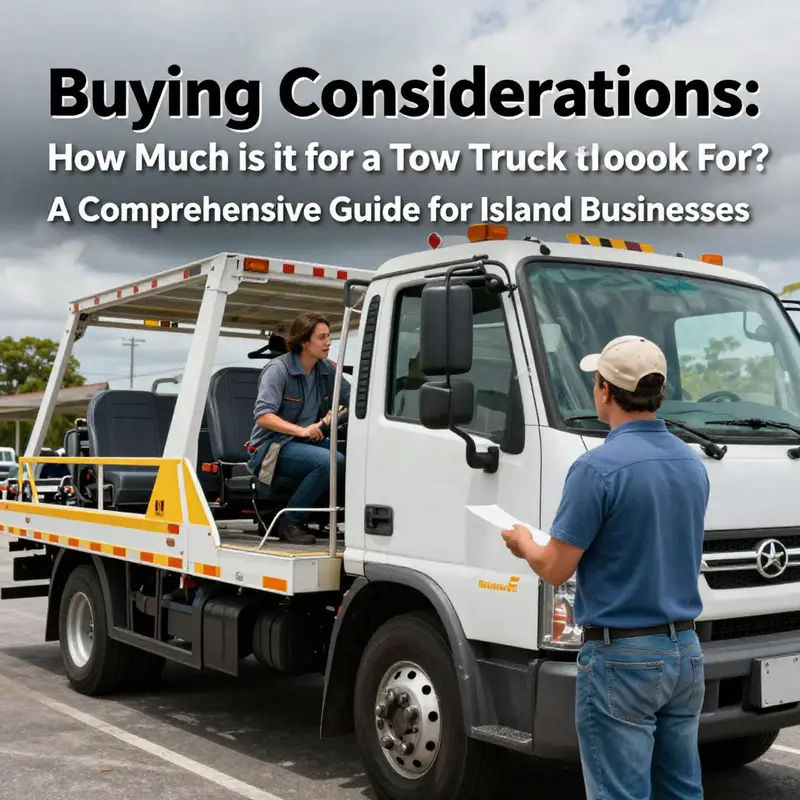
Choosing a tow truck is less a quick bargain and more a calculated investment. The sticker price you see is only a starting point, because the final cost over the vehicle’s life depends on a constellation of factors: size, capacity, configuration, and the specific towing equipment installed. In early 2026 market data, the spread between entry level, compact flatbeds and heavy duty wreckers can be vast, reflecting the different jobs these machines are designed to perform. For fleets and independent operators alike, understanding how these numbers translate into daily capability is essential to avoid overpaying for gear you may not fully use, or underbuying and paying in lost time and increased maintenance later on. The truth is that price correlates directly to the scale of towing tasks a unit is expected to handle, the sophistication of its lifting and recovery systems, and the level of robustness required for frequent, high stress deployments on busy roads or industrial sites. To interpret the numbers clearly, it helps to categorize tow trucks by their core roles and typical configurations, then map those roles to realistic price ranges that reflect current supply, customization options, and regional delivery considerations.\n\nThe most approachable category for many operators is the basic flatbed, or rollback, configuration. These machines are designed for versatility in urban environments and light to mid range recoveries. When sizing up a flatbed’s value, two practical questions emerge: how much weight can the bed and winch safely handle, and how quickly can the unit be deployed in tight traffic or on a highway shoulder. The data from early 2026 shows that entry level flatbeds generally fall into a broad spectrum—from roughly twelve thousand eight hundred dollars up to around thirty nine thousand eight hundred dollars per unit. This range captures variations you might expect from different chassis bases, bed lengths, hydraulic systems, and the winch’s pulling power. The accompanying winches in these configurations typically span roughly three to five thousand kilograms of lifting capacity, with higher-end setups delivering more secure control over a heavier vehicle and reducing the risk of damage during loading or towing. For a buyer focused on utility and reliability, this category represents a sensible starting point—not the cheapest solution, but a pragmatic compromise between cost and capability for many everyday towing tasks.\n\nBeyond the basics lie the heavy-duty wreckers, where the price ladder climbs steeply in step with capacity, reach, and feature sets that support aggressive recovery work. These units are engineered for industrial or emergency-response use, where the ability to lift, pull, and maneuver large vehicles can be a matter of seconds rather than minutes and can involve complex terrain management, extended reach, and resilience under prolonged operation. The pricing signals in this tier are unambiguous: a high-capacity wrecker designed for demanding environments can command substantial investment, often in the range from the low six figures to well into six figures and beyond. The practical takeaway is that the leap from light to heavy duty is not simply about heavier steel and bigger booms; it also reflects more sophisticated hydraulics, advanced rotation and stabilization features, and the engineering to sustain repeated, intense cycles without compromising safety or uptime. A buyer should expect that a heavy-duty setup with a rotating boom and full 360-degree lifting capability carries a premium and, realistically, could exceed the two-hundred-thousand-dollar mark depending on configuration and options. This category is where fleets encounter the most pronounced total-cost-of-ownership considerations, including maintenance intervals, spare-part availability, and the specialized training that operators will require to use the gear safely and efficiently.\n\nBetween these extremes sits a middle ground that often proves attractive for regional operations. Five to eight-ton winch tow trucks, including flatbed or pickup-style configurations, present a practical compromise between daily utility and capital outlay. The documented price band for this segment typically falls between roughly twenty-seven thousand five hundred and twenty-eight thousand five hundred dollars per unit. The narrowness of that range reflects standardized components and relatively common configurations, while still allowing room for modest upgrades such as enhanced wheel-lift systems, more capable winches, or better lighting and safety packages. In real-world terms, this mid-range class is where many small fleets and independent operators find the most reliable return on investment, balancing upfront expense with predictable maintenance and steady deployment across a mix of urban and regional tasks.\n\nAnother glimpse into price dynamics comes from occasional volume-based pricing for popular, mid-sized platforms that can be configured for a range of bodies and task profiles. A notable example from early 2026 data shows a model widely used in lighter on-road work being offered at about twenty-eight thousand nine hundred dollars for orders of one to four units, with a stepped-down price around eighteen thousand nine hundred dollars when buyers place five or more units. That structure—modest unit-level discounts for larger purchases—highlights a broader market pattern: if a shop or fleet anticipates needing multiple units, negotiating power increases, potentially translating into meaningful savings over the fleet’s entire life cycle. The takeaway for buyers is not merely the per-unit price, but the total cost of outfitting a small to mid-size fleet, including spare parts, maintenance cycles, and the logistics of field support and training for multiple operators.\n\nAll these price contours exist within a broader context of ownership costs that extend long after the initial purchase. A core consideration is the total cost of ownership, which includes ongoing maintenance, fuel efficiency, rotor and hydraulic system wear, and the need for trained operators who can maximize the equipment’s uptime. Even with a well-priced unit, frequent heavy use or exposure to harsh environments can drive up maintenance intervals and spare-part consumption, underscoring the importance of a durable design and after-sales support. On the other hand, newer models or newer designs—even when they carry a higher upfront tag—may deliver lower operating costs through better fuel efficiency, lighter weight designs that still meet strength criteria, or smarter diagnostics that help preempt failures before they strand a truck on the road. Operators should also weigh the costs of additional equipment often associated with safe and compliant towing, such as wheel lifts, dollies, heavy-duty lighting kits, and safety systems that improve visibility and reduce the risk of accidents.\n\nIn weighing these factors, the intended use of the vehicle matters as much as the numbers on the sticker. A fleet focused on urban towing and short-hop recoveries will value swift setup times, a compact footprint, and a respectable bed capacity without overinvesting in features that add little return in that setting. A highway-recovery operation, by contrast, gains disproportionate value from a high-torque winch, rapid deployment, and a chassis engineered to hold up to long shifts in variable weather. For industrial or remote-site work, the priority shifts toward extreme durability, extended reach, and the ability to operate with minimal downtime under demanding conditions. With every decision, the question remains: how many of these capabilities are essential for your operation, and what is the expected volume of tows or recoveries you will perform? The closer your choices align with actual needs, the more the price, once viewed as a hurdle, reveals its true strategic value as a lever for reliability, safety, and profitability.\n\nFor readers seeking further practical context on ownership costs and decision frameworks, practical discussions and case studies are explored in industry resources that synthesize price with maintenance, training, and return on investment. The Island Tow Truck blog offers accessible perspectives on equipment choices and operational planning, which can help situate the numbers in a real-world workflow. More detailed, data-driven discussions on ownership costs and cost-of-ownership tradeoffs are available in external analyses that examine the lifecycle implications of fleet investments and the budgeting decisions that accompany large-ticket purchases like tow trucks. External readers can explore broader insights at Understanding Tow Truck Ownership Costs – A Complete Guide For Prospective Owners. You can also consult authoritative industry guides to compare different configurations and plan a purchase strategy that matches your business objectives. https://www.towtruckownersguide.com/ownership-costs.
Final thoughts
Ultimately, understanding how much is it for a tow truck means looking beyond the numbers. A tow truck is often more than just an investment; it represents a commitment to service reliability and business growth. By considering pricing dynamics, various models, and essential features, businesses can make informed purchasing decisions that align with their operational needs. This comprehensive guide serves to illuminate the many aspects crucial for such an investment, empowering island businesses to thrive in their endeavors with the right towing solutions.