
Navigating vehicle troubles can be stressful, especially for local auto repair shops, car dealerships, property managers, and commercial fleet operators in our unique island environment. When a tow truck driver arrives to assist, an important question arises: how much should you tip them? This guide is designed to demystify the tipping process, examining how service quality, situational factors, and local customs influence tipping etiquette. As we explore each chapter, you will gain valuable insights that help you understand when tipping is appropriate, how much to give, and dispel common misconceptions surrounding this topic, ensuring that your experiences with tow services are both rewarding and respectful.
null

null
Reading the Road: What Shapes the Tip You Leave for a Tow Truck Driver
The moment you realize you need a tow is rarely a moment of calm. Fear, urgency, and a host of practical concerns collide as you confront a sudden breakdown, a crash, or a vehicle stuck in an awkward place. In that moment, the decision about tipping a tow truck driver might feel small, almost inconsequential, but it sits at the intersection of courtesy, fairness, and practical realities. Tipping is not a universal obligation in this line of work, and the specifics can vary as widely as the routes they cover. Yet when a driver goes beyond the call of duty—when they show care, expertise, or resolve in a difficult situation—many customers reach for a gesture of appreciation. To understand why and how tipping emerges in towing, it helps to consider a tapestry of factors that shape that choice, from the quality of service to regional habits, from company policies to the particular challenges of the job.
Service, effort, and outcome thread together in a way that makes the tipping decision feel personal rather than procedural. The most immediate factor is the level of service provided. A tow truck driver who shows up promptly, communicates clearly about what they can do, and handles your vehicle with care often leaves you with a sense of relief rather than a knot of frustration. If the driver not only retrieves your car but also offers practical guidance—for example, explaining how to arrange a secure transport, what to expect with a next-step repair, or what information to share with an insurer—that extra courtesy can tilt a routine transaction into a moment worthy of a tip. The sense of being supported during a stressful episode matters. When a driver restores order in a chaotic moment, a tip can feel like a small, proportional acknowledgement of the care they provided.
The difficulty of the job naturally feeds into tipping decisions as well. Some tow calls are straightforward: a vehicle is on the shoulder, the process is efficient, and the vehicle is loaded without drama. Others are more laborious: a car buried in a ditch, a vehicle that requires winching in tight spaces, or a tow in hazardous or icy conditions. In these cases, the time, skill, and risk involved are higher, and a tip may be more warranted. The emotional weight of an emergency—when time matters and every minute feels valuable—also factors in. If a driver arrives quickly and completes a complex maneuver under tight constraints, many people feel a higher obligation to express their gratitude with a larger gesture.
Regional customs also play a meaningful role. Tipping norms in the service sector can vary from coast to coast, city to rural area, and even neighborhood to neighborhood. What feels customary in one place may feel excessive or insufficient in another. Those local expectations can guide a customer’s instinct about whether to tip and how much to offer. To some extent, the geographic and cultural context shapes what a reasonable courtesies looks like in the moment. It’s not uncommon for drivers to encounter a spectrum of expectations from different clients across the same company or region, which can add a layer of ambiguity to the decision.
Beyond my personal judgment or the driver’s conduct, the policies of the towing company itself matter. Many firms have explicit stances on tipping, and some discourage it because drivers are compensated through service fees. In those cases, tipping could be considered redundant or even awkward, especially if the bill already includes a full charge that the company expects to cover labor. Conversely, other outfits may not have a formal policy but do encourage gratuity as a way to recognize exceptional service. It can be worth inspecting the invoice or asking a quick, respectful question before deciding whether to tip. If you’re dealing with an insurance-backed or roadside-assistance arrangement—for instance, a policy that covers the tow fee—the expectation around tipping may be different. In many of these scenarios, tipping is not expected, as the service fee has already accounted for the professional labor. The practical takeaway is simple: read the bill, ask when appropriate, and then decide whether the service you received feels like it warrants a tip.
Another layer to consider is the idea of standard tipping amounts. There is no universal rulebook for tow services, but many people anchor their tipping decisions to a range that feels fair given the circumstances. A commonly cited guideline is a percentage of the tow cost, typically around 10% to 20% if the service was helpful or exceptional. For example, if the tow costs $150, a tip between $15 and $30 would be reasonable. When the job is straightforward, some customers offer a smaller amount or none at all, aligning with the sense that no extra effort was required beyond the expected service. In contrast, when the driver goes above and beyond—such as retrieving a car from a difficult location, maneuvering through challenging terrain, or providing time-saving ancillary help like coordinating with a repair shop or arranging an alternative ride—a higher tip, closer to 20% or more, may feel appropriate.
An alternative framing you might encounter emphasizes the absolute amounts rather than the percentage. In some conversations about towing etiquette, practitioners and customers alike have noted ranges such as $20 to $50 as a meaningful tip for exceptional service, particularly in complex or time-consuming scenarios. In this framing, the dollar amounts reflect the added effort and risk the driver undertook rather than the cost of the tow itself. The tension between a percentage-based approach and a flat-dollar approach can arise in the moment, and choosing between them often depends on what feels most fair given the specific service you received. If the driver’s work was routine and the service was smooth, a modest tip is appropriate; if the service was rugged, painstaking, or unusually helpful, a more generous gesture can be appropriate.
Candidly, there are occasions when tipping may not be expected at all or not advisable. If a driver was rude, unhelpful, or if the service failed to address the core problem, many customers decide not to tip. The quality of the result matters too: if the vehicle remains in a nonfunctional state or if the driver’s advice proved inaccurate or unhelpful, you may choose to withhold a tip or offer a smaller one. This is not a punitive judgment but rather a practical reflection of the service outcome. It’s also worth noting that many towing companies explicitly discourage tipping, given that drivers are compensated through service fees. In these cases, a tip could create an awkward dynamic, especially if the service was merely adequate rather than outstanding.
The way you pay can also influence the tipping decision. If you’re paying with a card, the option to add a tip on the receipt can be convenient, but some people prefer cash to ensure the driver receives the gratuity directly. Tipping in cash can feel more personal and immediate, and it reinforces the social ritual of expressing gratitude in the moment. If you’re using a roadside assistance program or a service arranged through an insurer, it may feel less natural to tip, given the payment channel and the expectations of the program. When in doubt, a courteous, succinct acknowledgment of the driver’s help can signal appreciation without complicating the payment process. A brief note along with the tip about what specifically you valued—the driver’s promptness, care in handling the vehicle, or informative guidance—can be meaningful and memorable.
There is also value in considering a practical, thoughtful approach to tipping that aligns with broader etiquette for roadside services. The literature on tipping etiquette, including guides that discuss various service contexts, emphasizes that gratuities should reflect your satisfaction and the level of service you received, rather than a fixed rule. It encourages readers to assess the moment, balance fairness with generosity, and respond with a gesture that matches the effort expended. For readers who want a broader view on tipping practices in this context, there are reliable references that discuss similar dynamics across different roadside and repair scenarios. See, for example, a practical guide on tipping within the broader landscape of car-related services, which helps situate towing in the wider etiquette framework. If you want to explore that broader context further, a reputable resource covers how tipping intersects with costs and service quality in towing contexts, including the possibility that gratuity is absorbed into the fee or deemed optional by the company.
A practical tip for many travelers and drivers is to carry small bills or a portable payment option that allows you to deliver a tip promptly if you feel moved to do so. The moment you choose to tip is part of the service experience itself. A simple, direct expression of thanks—paired with a tip where appropriate—can reinforce a positive interaction and acknowledge the professional effort that goes into stabilizing a difficult situation. It’s not a bare transactional impulse but a human acknowledgment that the driver’s skill, patience, and courtesy helped you regain momentum at a moment when momentum felt crucial. In that light, the act of tipping becomes part of a broader culture of mutual support that sustains road service work, often under demanding conditions.
If you want to anchor your understanding in a broader frame while staying grounded in the specifics of your situation, you can read more about towing costs and related factors that influence decisions around service value and tipping. The discussion around tipping often intersects with the underlying costs of towing, labor, and logistics, and a credible external resource provides a wider lens through which to view your own choice. For additional context on how towing costs are shaped and how that influences tipping norms, consider the comprehensive guide from a major automotive resource that explores towing costs and related considerations. This reference can help you think about the tipping decision as part of a larger financial equation rather than a standalone act.
In the end, tipping remains discretionary. The decision hinges on your personal judgment and the particular circumstances of your encounter. If the driver displayed courtesy, efficiency, and professionalism, a small tip is a kind and prudent way to show appreciation. If the service was routine, or if the driver’s performance fell short of expectations, you may decide not to tip or to offer a modest amount. The important point is to align your action with the service you received and to respect company policies while staying mindful of regional norms. If you’re curious to see how others navigate these moments, you can explore perspectives and practical tips on the island tow truck blog, which offers a range of reflections on roadside assistance and related topics. The link to that resource is embedded here as a gateway to broader discussion and context: the island tow truck blog.
As you step back from the incident and consider your next steps—whether arranging repairs, coordinating with an insurer, or simply continuing your journey—the tipping choice becomes a small, human detail that complements the overall experience. It acknowledges the driver’s skill and the care they extended at a moment of need. It also reflects a broader understanding of tipping as a social practice: not a rigid obligation, but a discretionary gesture that communicates appreciation when warranted and respects the realities of the service you received. In that sense, tipping a tow truck driver is less about chasing a fixed rule and more about recognizing the bridge between help provided and help received. It’s about acknowledging the effort that goes into moving a vehicle from danger to safety and honoring the professionalism that makes that movement possible, even on the most trying days on the road.
For readers who want to further explore the practical side of towing costs and to situate tipping within that framework, a trusted external resource offers an accessible overview of the factors that affect what you’ll pay for a tow. This context helps you think about tipping as part of a broader calculation rather than a standalone add-on. It reinforces the idea that tipping is a personal, situational choice—an expression of gratitude when the service warrants it, and a choice not to tip when the circumstances don’t justify it. In the end, the most important guideline is simple: treat the driver with respect, consider the specifics of the job, and let fairness and sincerity guide your decision.
External reference: For a broader look at towing costs and tipping considerations, see https://www.aaa.com/autorepair/towing-costs.
When Gratitude Hits the Road: A Practical Guide to Tipping Tow Truck Drivers in Real-Life Situations
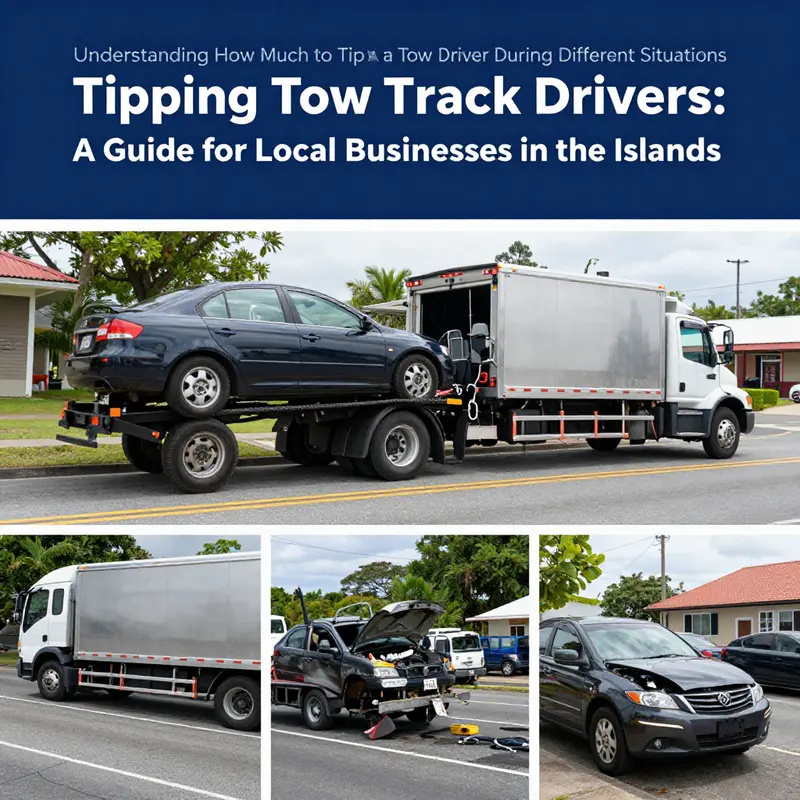
Tipping a tow truck driver sits at the intersection of courtesy, practicality, and context. It is not a universal ritual, and the expectations shift with location, the nature of the call, and the driver’s demeanor and effort. In many parts of the United States, tipping is not a formal obligation because the base fee you pay for towing already covers the core service. Yet the best moments in which a driver goes beyond the bare duties of hauling a vehicle often invite a gesture of appreciation. This chapter explores how to read the road between obligation and generosity, without pretending certainty where there is none. It is about discernment, fairness, and a small act that recognizes hard work when it shows itself in a tense moment.
In emergency moments, timing can matter as much as the service itself. A tow truck arriving late at night, under the glare of headlights in a slick or icy stretch, faces the same hazards you do, but with the added pressure of navigating unfamiliar terrain and potential risks to themselves. In these cases, a tip is less a formula and more a signal of gratitude for the driver’s availability and willingness to work through the delay and discomfort. You may not be thinking about a percentage, but a modest tip—whether in cash or added to a bill if the company permits—can acknowledge the extra miles traveled, the quiet professionalism, and the choice to stay on the clock when most people would prefer to be home.
When the situation grows more complex, the question of tipping can become subtler still. Picture a recovery job that involves pulling a car out of a ditch, maneuvering in tight spaces, or dealing with terrain that requires precise handling and a higher level of risk. These operations demand time, patience, and sometimes repeated attempts. The service feels heavier because it is. In such scenarios a tip is often appropriate as a token of appreciation for the driver’s skill and perseverance. Even if the overall cost reflects a standard tow, the additional effort can justify a higher gesture, provided you feel the driver truly earned it through technique, safety, and efficiency.
Exceptional customer service deserves its own space in this quiet calculus. There are moments when a driver goes beyond merely transporting your vehicle. They might offer you water, check your car’s condition for signs of trouble, help you contact your insurance provider, or explain the process in a calm, confident way. They may also take a moment to ensure you’re safe and warm while the situation unfolds. In these instances, a tip becomes less about the economics of the job and more about recognizing thoughtful conduct, clear communication, and a sense of stewardship that elevates a routine tow into a controlled, humane experience. The gesture reinforces trust, and it may influence how you feel about the interaction long after the vehicle has been recovered.
To frame tipping in practical terms, a commonly cited range is between $10 and $20, though many drivers and observers would extend that into the $10–$20 zone or broaden it to as much as a 10% to 20% share of the total tow fee, depending on the effort involved. For example, if the tow costs $150, a tip between $15 and $30 would be reasonable when the service has been helpful or exceptional. The differences between these numbers are not rigid rules but reflections of context, effort, and your own level of satisfaction. If the job is routine and the driver has done nothing beyond what is expected, a smaller tip or no tip at all is a defensible choice. When the work feels more challenging, a larger gesture can express genuine appreciation without becoming a social obligation you cannot meet.
An important caveat concerns company policies. Some towing firms explicitly discourage accepting tips, or they designate gratuity guidelines in their own way. Before you tip, it is prudent to review the invoice or ask the dispatcher or driver about tipping practices. In a similar vein, tipping may be unnecessary when a service is covered by an auto insurance policy or a roadside assistance program. If the fee is bundled or billed through a third party, the driver’s compensation structure may already include compensation that reduces or eliminates the expectation of a tip. In other cases, the fee itself might already incorporate gratuity, or the policy could disallow tips. A quick, respectful inquiry ensures you do not put the driver in an awkward position and helps you decide whether a tip is appropriate.
Regional and cultural differences also influence tipping norms. In Canada and parts of Europe, tipping tow services is often less expected, because the service fee can be comprehensive and the practice of tipping may not be as deeply entrenched as it is in some parts of the United States. In such cases a tip is still possible if the driver’s service stands out, but it’s wise to gauge the local expectation and respect the company’s stated guidelines. Understanding these customs means you can adapt your gesture to the setting, rather than apply a blanket rule that may feel out of place. The moment benefits from a grounded sense of respect for local norms and the specific circumstances you face, rather than a rigid protocol that might not fit.
Beyond percentages and regional norms, your personal evaluation of the service matters most. If the driver’s conduct was courteous, efficient, and professional, a small tip can be a thoughtful closing note to a stressful episode. If the service was perceived as routine or the driver encountered no particular difficulty, you may choose to forego a tip. The act of tipping remains a discretionary one, anchored in your sense of gratitude and the qualitative experience rather than a mandatory dividend of the transaction. The most vital message is that tipping should reflect your honesty about the service you received and your own budget, not a social pressure to perform a certain amount.
For readers who want to hear a broader perspective from the field, there are industry voices that offer deeper context and ongoing discussion about tipping within roadside services. The conversations often emphasize evaluating the driver’s responsiveness, the safety measures observed, and the degree to which the driver assisted beyond the basic requirement. If you are curious about more nuanced insights, you can explore the broader conversations on industry blogs and guides. For a wider discussion and practical perspectives, see The Island Tow Truck blog. This resource takes readers through a number of real-world scenarios and helps frame tipping within the realities of towing work, including what to ask and how to respond in a respectful, practical way. The Island Tow Truck blog.
Ultimately, tipping is a personal decision anchored in context, fairness, and gratitude. It should not be a hurdle or a source of resentment, but a small signal that validates the driver’s effort when that effort stands out. If you do choose to tip, a modest amount that aligns with the situation and your budget is appropriate. If you decide against tipping, a courteous thank you and a positive word to the dispatcher can still convey your appreciation for a job well done. The core principle is simple: acknowledge service that goes beyond the ordinary, while staying mindful of company policies, local norms, and your own financial comfort in a moment that is often filled with stress and uncertainty.
For readers seeking a concise reference to practical tipping decisions across different tow scenarios, remember that the guidelines are flexible and situational. The most important part is to respect both the driver and the process. A fair, thoughtful response to a driver who has shown skill, patience, and care will usually be well received, while a lack of extra effort may prompt a more conservative approach. In either case, the focus remains on the human element—the acknowledgment that someone has worked to restore movement and safety when you needed it most.
External resource for further reading: Consumer Reports tipping guide
Tow Truck Etiquette Across Places: How Much to Tip a Tow Truck Driver, and Why the Answer Isn’t One-Size-Fits All
The moment the tow truck slides to a halt on a shoulder or in a parking lot, the whole scene shifts from crisis to collaboration. The driver brings tools, calm instruction, and practical problem solving to a moment when time is tight and every decision matters. In such moments, tipping is a courtesy, not a rule carved in stone. It exists in a gray area where service quality, location, and the particular challenges of the job all color the decision. The amount you choose to tip a tow truck driver can reflect a mixture of gratitude, fairness, and awareness of the broader pricing structure that governs roadside assistance. The service, after all, is usually priced based on time, distance, and the vehicle’s condition, rather than the emotional weight of the labor. That distinction matters because it helps explain why tipping isn’t universally expected in towing—yet it remains a meaningful gesture when the driver goes beyond the basics to ease a stressful situation.
Across different places, the practice can look different. There is no universal standard for tow-truck gratuities, and the norms fluctuate with local customs, weather, traffic patterns, and even the company’s own policies. In some markets, drivers may be accustomed to tips as a standard part of the interaction, while in others a tip is viewed strictly as a personal thank-you rather than a transactional add-on. The realities of tipping for emergency services diverge from the familiar rhythms of dining rooms or ride-share rides, where tipping is more deeply embedded in customer expectations. Tow services are framed as emergency assistance, and their invoices are driven by service time, distance, and the complexities of the vehicle situation. That framing can temper expectations, but it also makes tipping a clearer signal of appreciation when the service stands out.
General guidelines emphasize that tipping is not mandatory. The choice to tip should reflect the driver’s conduct and the level of assistance provided. When the truck arrives, you can assess the total fee and consider whether the driver’s actions added value beyond the core task of towing. If the driver arrived promptly, explained the options clearly, and kept you informed at a tense moment, those behaviors merit recognition. If the job is straightforward and completed efficiently, a tip may still be appropriate but more modest. In this spirit, a practical starting point is to think in percentages, much like you would in other service contexts: 10 to 20 percent of the total tow cost is a common neighborhood for “good, solid service.” For a tow that costs around $150, a tip in the range of $15 to $30 would be reasonable if the driver’s performance met or exceeded expectations. If the fee is higher due to a long haul, difficult maneuver, or an unusual hazard, leaning toward the higher end of that range—or even a bit above it—can reflect the extra effort involved.
In some situations, the math of tipping looks different because the driver has already absorbed costs that you don’t see. Some towing companies bundle gratuity into their pricing, or they may have policies that discourage accepting tips to avoid internal disputes. Before you reach for cash, it’s prudent to check the invoice and, if possible, ask the driver or the dispatcher whether tipping is welcomed or prohibited. This tiny step can save awkwardness and ensure that you’re acting in line with company policy. When you’re dealing with roadside assistance programs or insurance-backed services, the norms shift again. In many cases, tipping is not expected because the fee is already covered by the program or policy. Your sense of fairness and gratitude still matters, but the practical obligation to tip can be nil in those contexts.
What, then, justifies a tip? The chapter of etiquette that governs tipping in this niche is less about a mandated percentage and more about the quality of service at a time when people feel most vulnerable and unsettled. If the driver goes beyond the basics—such as providing extra blankets for warmth in cold weather, assisting with insurance or claim documentation, or patiently coordinating with you while you navigate insurance contact details at the scene—these acts can transform a routine tow into a more considerate, humane experience. In such moments, a small cash gesture, around $5 to $10, is a commonly accepted sign of appreciation. It’s not an attempt to “paid for” a favor, but rather a public acknowledgment that the driver’s courtesy, flexibility, or extra care made the situation easier to bear.
This nuanced approach—recognizing exceptional care while respecting policy and local custom—also leads to practical steps you can take in the moment. First, observe whether the driver is comfortable accepting a tip. If you’re not sure, you can phrase it as a question: “Is it okay if I tip you for the extra help?” If the driver declines, respect that boundary and consider a more generous compliment instead, or simply express appreciation verbally. If tipping is permissible, you can choose cash, as it remains the most direct and universally accepted method. In an age where many transactions are digital, some drivers may be comfortable with card tips, but cash tips still offer immediacy and ease of use in roadside contexts. When possible, keep a small reserve of bills in your glove box for moments like this, so you can respond without delaying the driver’s workflow.
The broader landscape of towing etiquette also involves awareness of how the service is presented and priced. A straightforward, transparent invoice that clearly lists charges for hookup, distance, time, and any special equipment helps you gauge whether a tip is warranted and how much it should reflect the overall value provided. If the invoice contains a line item that seems unusually inflated or if the driver has timed to the minute to complete the job, you might reassess, ensuring your gratuity aligns with perceived value. Conversely, when the operation includes a calm briefing at the scene, patience while you gather information, and help coordinating with your insurer or a roadside assistance program, those are hallmarks of service that deserve recognition.
Context matters, too. Geographic location can shape expectations subtly but meaningfully. In urban centers with dense traffic and higher living costs, tips in the 10–20 percent range still feel fair, but the absolute dollar amounts may swing higher because of the higher price base. In rural areas where drivers may face longer distances or tougher driving conditions, a tip in the same percentage range might translate into slightly larger dollars, especially if the job required additional safety measures or long waits. And in densely regulated environments, where a company policy discourages tipping, the prudent path is to honor the driver’s stance while offering thanks in a non-monetary form, such as a kind word, a note of appreciation to the company, or a recommendation to others. The point is not to chase a universal rule, but to tune your response to the specific mix of service quality and local practice.
If you’re navigating an emergency with insurance involvement, the dynamic shifts again. Some policies authorize direct coordination between the driver and the insurer, reducing the emotional burden on you but also sometimes reducing the perceived need for tipping. In those cases, you can still acknowledge excellent service with a modest tip if you feel it’s appropriate and allowed. The key is to stay attentive to the driver’s own comfort and to be mindful of the broader relationship between service and compensation. A respectful, small gesture can help ensure that the driver feels their work is valued, which can matter when the next time you find yourself in need of help—or when a driver recalls your courtesy to colleagues at a later call.
While tipping is not compulsory, it is a tangible way to reinforce positive behavior and a professional standard. It signals gratitude for reliability, clarity, and the kind of practical empathy that helps someone navigate a hazardous or inconvenient situation. And it can contribute to a better overall experience for all involved, including bystanders, insurance agents, and dispatchers who hear the story of a driver who went above and beyond. In that sense, tipping becomes a small, social act that supports a workforce that often operates in high-stress, time-sensitive environments. If you leave the scene with a clear sense that the driver treated you with respect, explained options clearly, and completed the job efficiently, that sense of satisfaction is often worth a tangible tip.
For readers seeking broader context about towing service norms and customer interactions, a helpful overview can be found in the Island Tow Truck Blog, which explores roadside service culture and practical guidance for customers navigating these moments. Island Tow Truck Blog.
In sum, tipping a tow truck driver is a personal decision shaped by the service you receive, the cost of the tow, the location, and the company’s policies. A small tip in the range of $5 to $10 is a reasonable gesture when a driver goes beyond the basics and helps you manage the situation with warmth and efficiency. If the service is straightforward and the driver remains professional and punctual, a modest tip or even no tip can be perfectly appropriate. The important thing is to approach the moment with courtesy, respect for boundaries, and an awareness of the broader system—one that values safety, clarity, and human decency as much as it values speed and technical skill.
As you reflect on tipping, remember that the act is as much about recognizing goodwill as it is about acknowledging your own relief. The next time you find yourself in a roadside bind, you’ll have a clearer sense of when to offer a tip, how much to offer, and how to express thanks in a way that supports the service culture you depend on. The guidance here is designed to help you navigate the nuance without overthinking the moment, so you can respond with both practicality and grace when the tow truck arrives.
External reference: For a broader perspective on professionalism and pricing in towing services, see AAA Towing Tips: https://www.aaa.com/autorepair/towing-tips
Beyond the Fee: Debunking Common Myths About Tipping Tow Truck Drivers
Towing emergencies arrive with urgency and uncertainty. A car on a dark highway, a stalled truck, a flat tire in a rainstorm. The driver arrives with tools, a calm demeanor, and a clear plan. People often ask, should I tip? how much? when? The short answer is yes, maybe, and with some nuance. Tipping is not a universal rule, but many drivers appreciate recognition when service is helpful beyond the basic job. The real question is how to tip fairly, given the pricing structure that governs tow services and the variability of each call. In this moment, a small gesture can carry weight, especially when the driver handles a tough situation with skill and patience.
Myth and reality often collide in the moment you need a tow. A widespread belief is that tipping is unnecessary because the fee already covers the driver’s labor. In truth, pay structures vary widely. Some operators are paid per job, others by distance, and some by time on the road. A base fee might cover the equipment and transport, but not the extra effort required in heavy snow, a vehicle stuck in mud, or a rescue from a ditch. When the driver spends additional minutes, lines up with insurance or roadside assistance, or negotiates with dispatch to get you moving again, a tip can be a meaningful signal of appreciation for service that goes beyond the ordinary. Understanding this helps you decide when an extra gesture makes sense.
Another common misconception is the temptation to apply a fixed percentage, like 15 to 20 percent, the way one might in a restaurant setting. The truth is that towing prices aren’t a simple menu of services with standard margins. Fees depend on distance, vehicle type, time on scene, and job complexity. A straightforward pull on a quiet street may justify a modest tip, while a rescue on a busy highway in adverse weather might deserve more. The overall rule is flexible rather than fixed: tip according to the quality of service and the effort required, not a universal percentage. For example, if a tow costs about 150 dollars, a tip in the range of 15 to 30 dollars is reasonable if the driver arrived quickly, explained the process clearly, and completed the job efficiently. If the driver faced hazards, navigated a complicated situation, or assisted beyond the call of duty, leaning toward the higher end of that range is appropriate.
Geography often shapes expectations, but the subsisting truth is that service quality matters more than where the tow happens to occur. It is easy to imagine that tipping is only warranted for private driveways or remote locations, yet a driver who calmly manages a roadside emergency on a congested interstate may deserve more credit than a routine pull in a quiet neighborhood. The driver’s professionalism—clear communication, safe vehicle handling, and steady progress—has as much to do with value as the trip distance. When the environment is chaotic, the driver’s ability to keep you informed, to protect your safety, and to minimize downtime matters most. In such moments, a tip is often a direct and practical acknowledgment of the added effort.
A further misunderstanding concerns the attitudes and policies of the drivers themselves. Some people worry that tipping is discouraged by company rules or that it will create awkward pressure. The reality is more nuanced. While certain large operators may discourage tips to maintain uniform compensation, many independent or small operators rely on tips to supplement earnings, especially when the job is physically demanding or time-consuming. Company policy can vary widely, and it may not reflect the day-to-day needs or desires of the driver who is on the ground with you. If you are unsure about tipping etiquette, a polite question to the driver or a quick check of the company’s policy can prevent missteps. More often than not, tipping remains a voluntary act anchored in your satisfaction with the service, not a compulsory extra.
The way you decide the amount of a tip also hinges on the invoice and the broader pricing structure. Some services embed gratuity or service charges within the price, in which case tipping may be redundant. If no tip line exists, you can still tip, but you should tailor the amount to reflect the situation. The important point is to calibrate your gesture to the actual effort involved. A driver who clears obstacles, secures your vehicle, or assists with insurance paperwork has shouldered more labor and cognitive load than a routine lift and tow. In such cases, tipping acknowledges both the physical labor and the problem-solving that kept you safe and moving forward. This approach helps you avoid tipping too little when the job was demanding, and it also avoids tipping excessively when the service was satisfactory but unremarkable.
Cash remains a straightforward and widely accepted method of tipping. It travels directly from you to the driver and avoids potential delays or digital glitches. If you prefer other methods, some drivers accept tips via apps or electronic payments facilitated by the company. If you are unsure, a discreet inquiry can prevent awkward moments at the scene. A tip given promptly at the end of the call signals appreciation for timely service, while a tip placed in a post-service window may feel less immediate and less connected to the actual effort. Either approach can be appropriate so long as it reflects the quality you experienced.
Beyond the mechanics of tipping, there is a broader human dimension to the moment. A tow emergency can rattle nerves, disrupt plans, and thrust a person into unfamiliar chaos. In such moments, the driver’s demeanor—courtesy, patience, and steady competence—can be as valuable as technical skill. Politely asked questions, clear explanations of what is happening, and a calm, respectful tone can de-escalate stress and help you think more clearly about the next steps. When the driver handles questions about insurance, payment, or additional services with clarity and empathy, it is reasonable to respond with a more generous gesture. In situations that are particularly challenging, a larger tip or a longer note of appreciation can reinforce the value of the driver’s careful handling and thoughtful communication.
The decision to tip also intersects with the broader context of roadside assistance and insurance arrangements. If you obtain service through an auto insurer or a roadside program, tipping expectations may be different. Some programs include the fee as part of your coverage, and tipping may be optional or explicitly discouraged by policy. In these cases, verifying whether gratuity is included or prohibited before tipping is prudent. The main idea remains consistent: let your response reflect your satisfaction with the service. If the driver’s professionalism, efficiency, and safety-conscious approach made a real difference, a tip is a justifiable expression of gratitude, but it should never be compelled by policy or convenience.
For those seeking a deeper dive into tipping etiquette in demanding, time-sensitive contexts, there is value in looking beyond the immediate scene. The tipping conversation in the service sector has broader implications for how workers are compensated and how customers balance fairness with practicality. A well-timed tip can help bridge gaps between base pay and the realities of irregular hours, physical risk, and the emotional toll of crises. It can also encourage a culture of respect and acknowledgment for people who operate in high-pressure environments. In short, tipping is not a universal mandate, but a flexible tool you can wield to recognize genuine value when it appears.
If you want to explore more practical perspectives on handling emergencies and the ethics of roadside support in real-world scenarios, you can consult The Island Tow Truck blog, which offers reflections on professional conduct, safety, and the interplay between speed and care in tow operations. The Island Tow Truck blog
Beyond this chapter, it is useful to bear in mind that tipping remains a personal choice shaped by service quality, situational complexity, and your own financial means. In many everyday calls, a modest tip paired with a sincere thanks feels appropriate. In tougher circumstances, a thoughtful, larger gesture can reflect the additional effort and risk that the driver assumed to help you regain mobility. When you are uncertain, err on the side of acknowledgement rather than harsh judgment, and let your experience inform your future decisions.
External resource: For a broader look at tipping, labor compensation, and how service norms evolve across industries, see BBC News coverage. BBC News coverage
Final thoughts
Tipping a tow truck driver is not just a courteous gesture; it acknowledges their effort and ensures quality service continues in our island communities. By understanding how much to tip based on service quality and situational factors, and by being aware of local customs, you contribute positively to the ecosystem of roadside assistance. Remember, every situation is unique, and your gratitude, expressed through a considerate tip, can make all the difference in someone’s day. Embrace this opportunity to foster goodwill and support those who serve our roads.