
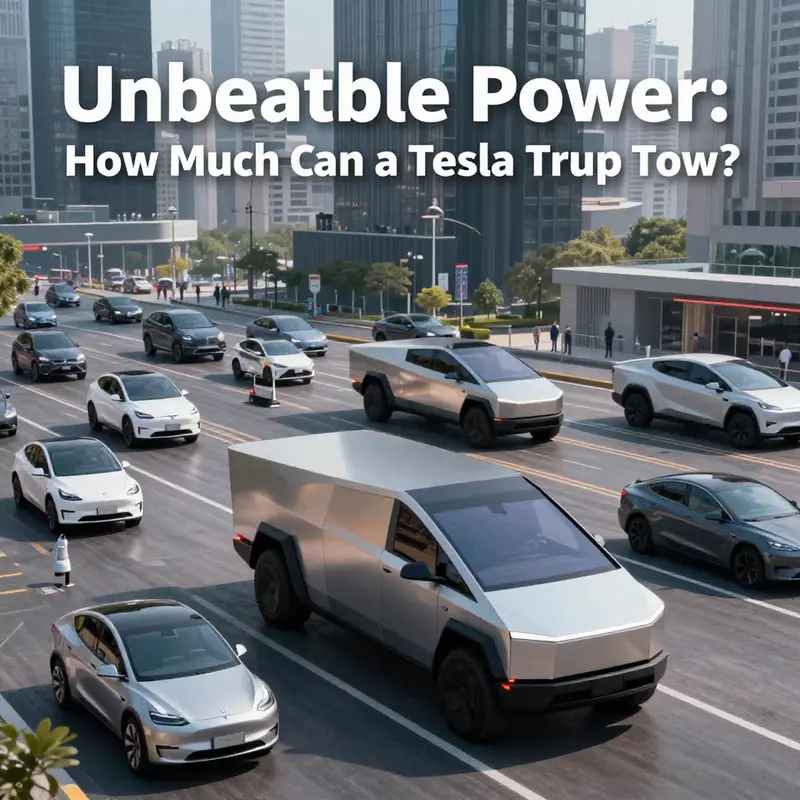
Understanding the towing capabilities of a Tesla truck, particularly the Cybertruck, is crucial for various businesses, from auto repair shops to commercial fleet operators. This exploration opens up a dialogue about the performance of electric vehicles against traditional pickup trucks and the evolving market demands. Each section will delve into specific aspects, from comparing Tesla’s leading model to traditional options and exploring its efficiency to examining what this means for the future of the automotive industry.
Tri‑Motor Performance Edition: The Real-World Tow Power of an Electric Full‑Size Pickup
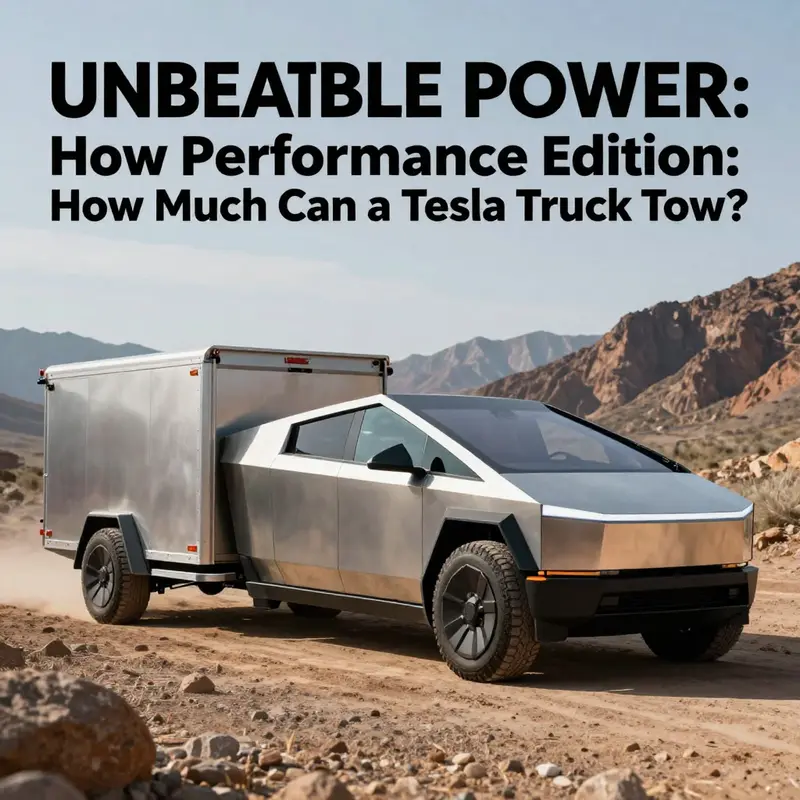
Tow capacity has long been a defining line between utility and performance in the pickup segment. As manufacturers electrify the class, that line shifts from merely hauling a heavy payload to pulling large trailers with instant torque, refined battery management, and new approaches to efficiency under load. Among the electric trucks that aim to redefine what a consumer-ready vehicle can tow, one configuration stands out for combining robust raw capability with the kind of acceleration that makes a daily commute feel as if it’s powered by a different chassis entirely. In this discussion, the focus is on the tri‑motor, all‑wheel‑drive variant of the electric pickup that has been positioned as a leading option for serious haulers. The official specification places its maximum towing capacity at 11,000 pounds, or roughly 4,990 kilograms. This is not a nominal figure drawn from a lab test; it is framed as the practical ceiling under typical conditions, and it signals that electric powertrains have evolved to meet the needs of demanding towing tasks without sacrificing everyday usability. The same configuration that can propel the vehicle from 0 to 60 miles per hour in about 2.9 seconds also has to manage the physics of pulling a sizable trailer through wind, down grades, and various road surfaces. That juxtaposition—astonishing acceleration paired with heavy tow capability—remains one of the most compelling narratives in the ongoing transition to electric mobility in the towing market. For readers tracking the exact on-paper specs, the official sources provide the most direct reference, but the broader implications are felt in the way drivers approach heavy-haul tasks with an electric pickup as their tool of choice.
What makes this 11,000-pound ceiling possible in real-world terms? It starts with torque. An electric powertrain that delivers substantial torque at near-zero RPM translates to strong towing performance at the hitch, especially in urban environments and on rolling terrain where momentum matters. A tri‑motor setup—three independent drive units coordinating their output—enables rapid adjustments to wheel torque, which helps maintain traction when the trailer load is uneven or when the vehicle is negotiating grades. The result is not simply a high hitch rating but a dynamic capability: the vehicle can maintain a controlled, stable pull while negotiating climbs and decelerating in response to changes in grade or wind load. This is particularly important when towing trailers that demand consistent braking control, like enclosed cargo carriers, boats on trailers, or large utility haulers that require predictable speed management on rural roads or long highway stretches.
Yet, towing power is not the sole measure of capability. The same vehicle that can yank a heavy load forward must also manage that load without compromising handling, stability, or the ability to brake effectively. The design philosophy includes attention to weight distribution, suspension tuning, and braking performance under load. A heavy trailer shifts the vehicle’s center of gravity and increases vertical load on the hitch, which in turn influences handling, tire wear, and braking distance. In this balancing act, the electric pickup leverages its energy-dense battery pack and advanced control systems to modulate power delivery, assist with weight transfer, and coordinate stability programs that respond to trailer sway or crosswinds. The result is a vehicle that feels confident at the tow limit, rather than one that merely meets a static rating. This level of control matters precisely because the rating is only as meaningful as the conditions under which it can be realized. The rating assumes a set of conditions—trailer type, hitch quality, weight distribution, and terrain—that are within the manufacturer’s testing framework. Real-world haulers may encounter heavier tires, longer trailers, or steeper grades that push the system closer to its limits. In those moments, the driver’s understanding of how to manage weight and momentum becomes as important as the machine’s raw power.
The chart of towing capability is complemented by another essential consideration: range. When a fully electric pickup is tasked with pulling a large trailer, energy use increases sharply. The powertrain, cooling circuits, and regenerative braking behavior all contribute to efficiency under load. A heavy tow can noticeably shorten the vehicle’s range, particularly in environments with frequent climbs or sustained highway speeds. The takeaway for prospective buyers is not that towing automatically negates the benefits of electrification, but that towing strategy must account for range expectations. This might mean planning for shorter trips between charges or adjusting payload and trailer weight to keep travel times reasonable. It also underscores the value of real-world testing and careful pre-tow planning. Even with high-torque electric drivetrains, the physics of weight, friction, and air resistance remain constant, so drivers must factor those realities into trip design and permit considerations.
As we widen the frame beyond the single figure, the context matters. The electric truck is not alone in the conversation about heavy hauling. There is a contrasting category: the heavy electric freight hauler designed to move much larger payloads. In that segment, the vehicle is explicitly built for cargo movement rather than towing a trailer behind a consumer-grade pickup. The gross vehicle weight rating for this class in its designed context runs into the tens of tons, and the vehicle is engineered to manage that mass with the same essential ideas—torque, control, and efficiency under load. The contrast between the two approaches helps illuminate the spectrum of capability in electric heavy-duty applications. For the consumer-focused truck, the 11,000-pound towing limit is a landmark figure, signaling that a family-friendly, everyday-use pickup can perform genuinely heavy-haul tasks when equipped with the right configuration and towing hardware.
There is also a practical dimension to consider: the trucking realities that can influence whether you reach that 11,000-pound ceiling in daily use. Towing performance is not merely about the rating on a spec sheet. It is conditional on the quality of the hitch, the trailer’s braking and suspension setup, and the tongue weight that the ball is carrying. If the trailer’s setup places too much weight behind the hitch, the vehicle’s stability can be compromised. Likewise, a trailer with poorly synchronized brakes can impose unusual load patterns on the tow vehicle’s braking system, requiring a more deliberate driving approach and, possibly, a higher level of driver skill in managing speed on descents. In practice, many operators aim for a tongue weight at the lower end of the ideal range, which improves steering feel and reduces the likelihood of trailer sway, while staying mindful of the need to keep the trailer securely behind the hitch. The cultural shift here mirrors the broader move in towing and vehicle technology: when capability is paired with intelligent car-to-trailer communication and driver assistance features, the actual experience of towing becomes more predictable and manageable.
For those who are comparing options and planning a practical test drive, the decision is seldom about one single number. It’s about how a vehicle’s performance envelope aligns with your typical tasks. If your work involves moving heavy gear, large boats, or substantial construction trailers on a regular basis, you may find the tri‑motor configuration’s torque delivery and front-to-rear power balance reassuring as you approach the upper end of the rating. If your towing needs are more occasional or predominantly in city environments with lighter trailers, the same setup delivers a blend of nimble road manners, quick acceleration, and the confidence that comes with a robust powertrain. Regardless of the use case, it is prudent to confirm that your towing plan aligns with the vehicle’s stated capacity, including the handling of weight distribution, gross combination weight, and any regional towing regulations that may apply to high-demand loads.
The discussion would be incomplete without acknowledging that the towing landscape also includes broader commercial and fleet considerations. A full electric truck in a fleet setting is not merely a vehicle; it is part of a larger system of operations, maintenance planning, and energy management. Fleets often weigh the total cost of ownership, which includes charging infrastructure, duty cycle, downtime for maintenance, and the ability to schedule trips around charging opportunities. In this context, the 11,000-pound rating becomes a practical ceiling that helps fleets plan routes, deliverables, and maintenance windows with predictable energy budgets. It also implies that when a fleet needs to move heavy loads on a routine basis, the electric option can be a compelling alternative to traditional internal-combustion pickups, provided that the operation is planned with the vehicle’s powertrain characteristics and charging needs in mind. To readers who want to explore practical fleet and towing considerations, the following resource offers targeted perspectives and applied guidance: the Island Tow Truck blog. the Island Tow Truck blog.
In pursuing a deeper understanding of how towing is managed in electric pickups, it’s important to keep in mind the distinction between the vehicle’s rated capability and the realities of road use. The maximum number is not a blank check to haul anything and everything at full speed. It is a ceiling defined by engineering, safety, and regulatory constraints, designed to ensure that the vehicle remains controllable and predictable under the most challenging load scenarios. When you combine this with the vehicle’s other strengths—the rapid acceleration, the refined handling, and the integration of advanced driver-assistance systems—the overall package offers a compelling answer to those who need a capable, versatile, electric hauler. Whether you are a contractor, a boat owner, or a weekend warrior who regularly tows a sizeable trailer, the right configuration demonstrates that electric power can meet the demands of heavy-duty hauling without surrendering everyday usability or comfort.
For readers who want to verify the official specifications and gain a fuller understanding of the design choices that support this capability, the official specifications are published by the manufacturer and can be consulted for the most current data. In addition, broader context about how such capabilities fit into the evolving landscape of electric trucking and towing can be explored through trusted external resources that discuss the technology and its practical implications. Official specifications and broader context can be found here: https://www.tesla.com/cybertruck
Tow Power in an Electric Era: How a Modern Electric Pickup Stacks Up Against Gas Powered Counterparts
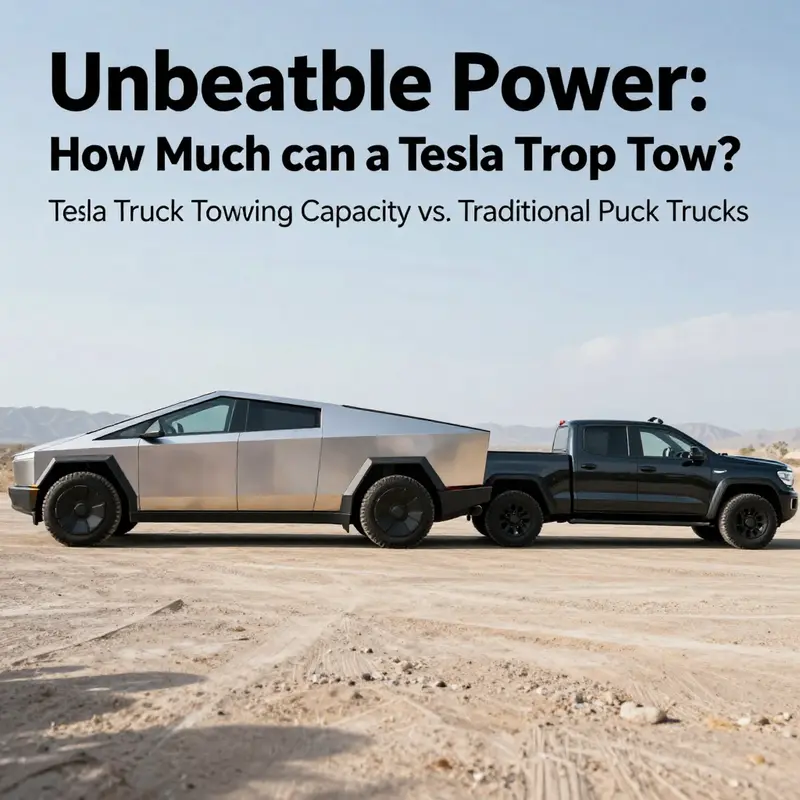
Tow power in an electric era invites a closer look at what towing really takes in today’s driving and hauling reality. Electric pickups combine instant torque, advanced traction control, and sophisticated power management, while gasoline pickups bring decades of chassis tuning and high peak capacities to the table.
On the electric side, the upper end of towing capability sits around 11,000 pounds, or roughly 4,990 kilograms, for the most capable versions.
Gas powered light duty pickups can tow in the neighborhood of 13,200 pounds in some configurations, illustrating that peak capacity remains a strength of traditional platforms.
A broader look across the gasoline segment shows even higher numbers in top configurations around 13,400 pounds, though these gains come with tradeoffs in engine warmth, gearing, and long term efficiency.
Payload capacity matters too. The electric platform discussed here can carry meaningful payload up to about 1,134 kilograms, roughly 2,500 pounds, which matters because the total weight of the rig must account for trailer mass and braking.
Beyond raw numbers, the real world experience is shaped by instant torque, trailer sway mitigation, heat management, and electronic stability systems that help keep the trailer controlled under acceleration and braking.
For users who regularly haul heavy loads, the electric option offers predictable handling and efficiency, while those who need maximum peak towing capacity may still prefer a gasoline setup on certain tasks. The best choice depends on the use case, including typical loads, routes, and how often the vehicle operates with a trailer attached.
Towing Weight in the Electric Era: How Much Can an Electric Pickup Tow—and What It Means for Real-World Hauling
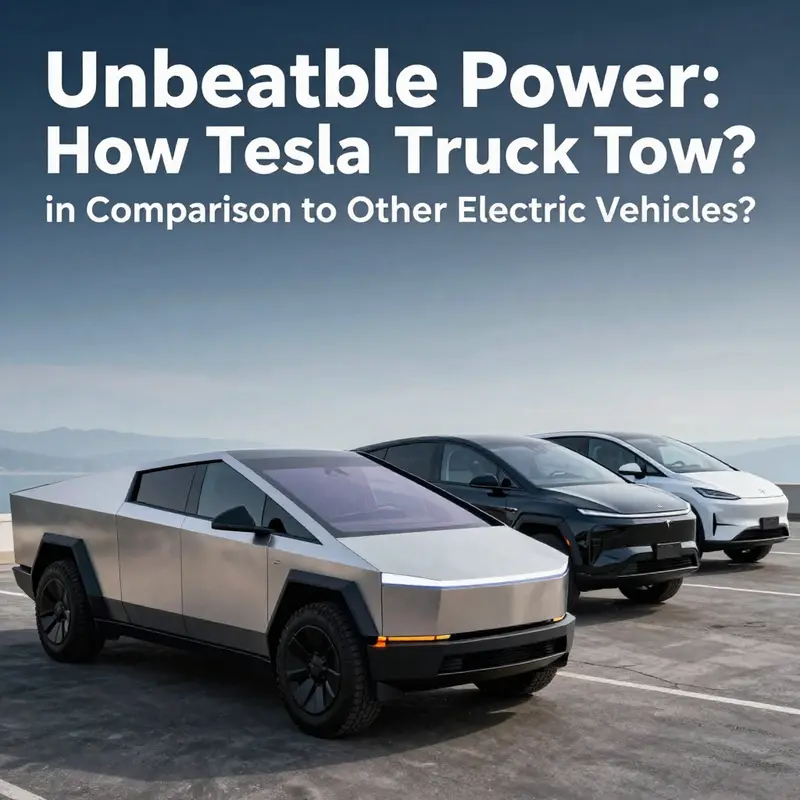
Towing capacity is a keystone specification, but real-world performance depends on trailer weight distribution, tongue weight, aero drag, and how the powertrain manages torque and energy. Modern electric pickups typically advertise a maximum towing figure around 11,000 pounds, with the understanding that range and handling will vary with trailer design, weather, and terrain. Some competitors push higher numbers, such as 14,000 pounds, demonstrating how wheelbase, suspension tuning, and torque delivery influence practical limits. Beyond pickup payloads, heavy-duty electric freight tractors emphasize payload plus GVWR, with typical options designed for long hauls and substantial energy efficiency. For everyday users, keeping tongue weight within recommended ranges, ensuring trailer brakes are functional, and planning trips with expected energy use helps maintain steering feel, braking confidence, and overall safety. Fleet operators add considerations such as braking performance, telematics, maintenance, and reliability, recognizing that the headline towing figure is a guide rather than a guarantee across all scenarios. In the end, buyers should read the data as a spectrum: strong towing capability paired with intelligent design, efficient energy management, and predictable handling that translates into real value on the road.
Tow Power in the Electric Age: Measuring How Much an Electric Pickup Can Tow
In the evolving conversation about electric pickups, towing capacity is not a single number but a window into how engineers balance torque, traction, and range. The most current results clusters around three distinct configurations, each tuned for a different use case, yet all revealing the same underlying truth: high towing capability does not have to come at the expense of efficiency when the powertrain, battery architecture, and control systems are designed to work in concert. The tri-motor AWD variant leads the pack, with an official towing figure near 11,000 pounds (about 5,000 kilograms) and a practical range approaching 500 miles on a single charge when the vehicle is not under load. A notch below, the dual-motor AWD version delivers about 8,500 pounds of towing capability and up to roughly 450 miles of range. The single-motor RWD model, while less clearly quantified for heavy towing in the available materials, remains suitable for light to moderate hauling tasks. Taken together, these figures illustrate a broad, flexible approach to tow capability that mirrors how EVs redefine what towing means in the modern era.
What makes the tri-motor setup so compelling is not merely raw power, but how that power is managed. Three independent electric motors allow precise torque vectoring, an effect that translates into superior traction and control when a trailer magnifies the demands on the drivetrain. With all wheels being actively driven, the vehicle can modulate torque to each wheel in real time, dampening wheel slip on wet ramps, gravel, or uneven surfaces. The result is not only higher towing capacity on paper but more confident handling in the real world, where a heavy trailer can amplify the importance of precise traction control. This is especially valuable in situations that demand steep climbs or rapid deceleration while negotiating an on-ramp or a long downgrade. The tech behind the tri-motor arrangement is a practical orchestration of energy and force, turning a demanding task into something more predictable and safer to undertake.
The dual-motor configuration still commands a robust towing presence, effectively delivering excellent performance for an EV pickup without the premium price tag of the top tier. With 8,500 pounds of towing capacity, this variant remains well within the range of what many light-duty and mid-size trailers require. The dual-motor layout can still deliver strong torque and responsive acceleration, attributes that are particularly valuable when merging onto a highway with a loaded trailer in tow. Range remains competitive, with up to about 450 miles under ideal conditions, a testament to the efficiency of the electric drivetrain and battery management that maintain performance without sacrificing distance. And while the single-motor RWD model is not the choice for heavy towing, it represents a different balance—one that prioritizes efficiency and affordability for lighter hauling needs while still offering meaningful capability for everyday tasks.
Beyond the numbers, the engineering philosophy behind these configurations speaks to a broader truth about electric powertrains. Torque in electric machines is available instantly, and multiple motors open the door to sophisticated control strategies. In towing, that means better stability, reduced pitching, and more deliberate control over weight transfer during acceleration and braking. Regenerative braking plays a meaningful role here as well. When the vehicle decelerates, the drivetrain can capture a portion of the kinetic energy back into the battery, partially offsetting energy losses that come with dragging a heavy load. In practice, the well-integrated system uses energy recovery to sustain range during long hauls, a factor that becomes more important the longer the trailer and the farther the destination.
The efficiency story also depends on the nature of the load and the road. Towing a trailer introduces greater rolling resistance, aerodynamic drag, and, in some cases, heavier suspension dynamics. The tri-motor configuration, with its broadened torque distribution, helps manage traction across varied surfaces, but the weight of the trailer still imposes a meaningful penalty on range. The engineering teams behind these vehicles have therefore focused not only on peak towing numbers but on how the powertrain responds across a spectrum of real-world conditions. The result is a towing profile that remains high-performing without a dramatic, uniform erosion of range, a balance that can empower drivers to plan longer trips with fewer stops for charging, provided the route aligns with the vehicle’s efficiency envelope. The narrative here is not simply “how much can you tow?” but “how far can you go while towing,” a distinction that becomes increasingly relevant as customers consider tow-heavy use cases, such as camping with gear, moving houses, or supporting small-business operations that require transporting equipment over continental distances.
In comparing these configurations to traditional internal-combustion pickups, the electric options on offer push the envelope in two key ways. First, the highest towing capacity achieved among these electric variants sits at a level that rivals or exceeds many conventional diesel-powered trucks in similar classes. Second, the energy management embedded in the powertrain enables this capability without the same proportional hit to efficiency that large diesel engines typically incur under heavy load. This is where the electric approach diverges from its fossil-fuel counterparts: rather than accepting a binary choice between payload or range, the system can sustain meaningful tow performance while preserving a substantial portion of range. In practical terms, this means that a well-planned trip—one that accounts for truck weight, trailer weight, terrain, and weather—can be executed with fewer compromises than might be expected from a traditional pickup.
The conversation about towing capacity would be incomplete without acknowledging the broader family of electrified heavy-duty transport associated with the same automaker. While not typically categorized as a tow truck, the heavy electric freight hauler in this lineup is rated with an enormous gross vehicle weight rating, around 80,000 pounds, equating to roughly 36,000 kilograms, and a payload capacity of about 36.3 tons. This staggering spec reflects the other end of the spectrum: a vehicle architecture optimized for moving vast masses over long distances. Even when fully loaded with cargo, this freight hauler can achieve ranges in the vicinity of five hundred miles on a single charge, illustrating how advanced battery technology and drivetrain efficiency can sustain operation under intense static and dynamic loads. The juxtaposition of a high-tow electric pickup and an ultra-heavy electric freight hauler makes one point clear: electric powertrains are capable of delivering remarkable performance across a broad spectrum of hauling tasks, so long as the system is properly matched to the mission and managed with intelligent energy stewardship.
For readers who want to ground these capabilities in practical decision-making, it helps to consider not only the headline towing figures but how they translate into real-life scenarios. A trailer’s weight, tongue weight, the density of the cargo, roadway grades, headwinds, and even ambient temperature all influence how a vehicle behaves when pulling a load. The tri-motor setup’s advantage in traction becomes most evident on slick grades or off-proad access where wheel slip could otherwise degrade control. The torque reserve that electric motors provide can mitigate that risk, letting drivers maintain momentum without excessive throttle input, which in turn supports more efficient energy use over the course of a journey. In urban or suburban towing tasks, the ability to maneuver with confidence, park with a large trailer, and negotiate tight entrances can be as valuable as the absolute towing statistic itself. These are the kinds of practical considerations that guide fleet managers when choosing configurations for different duties, from routine service calls to long-haul deliveries.
To enrich the reader’s understanding from a fleet perspective, one can explore case studies and practical discussions from industry-focused outlets. For readers who want a deeper dive into how towing performance translates to real-world operations, a visit to The Island Tow Truck Blog offers curated insights into heavy-duty vehicle usage, maintenance, and emergency-handling strategies that can inform how heavy payloads and trailers are managed in a variety of contexts. The Island Tow Truck Blog
As this chapter progresses, the emphasis remains on the interplay between capability and efficiency. The core takeaway is that the highest towing figures are achieved with a tri-motor architecture that uses independent motors to deliver precise, responsive traction while maintaining an extraordinary range for an EV pickup. The dual-motor variant remains a close second, combining strong towing with broad practicality. The single-motor version, while not the strongest option for towing, still provides meaningful hauling utility for lighter loads and emphasizes efficiency and affordability. In all cases, the driving experience under load reflects a careful balance of power delivery, energy management, and chassis tuning that acknowledges the realities of towed weight, terrain, and temperature. This is the essence of towing in the electric era: not merely a test of height or mass on the back but a dynamic performance profile that measures how far you can go while pulling what you need.
For readers seeking a definitive reference to the official specifications and the most up-to-date figures, the best source is the manufacturer’s dedicated product page. This resource confirms the numbers described above and provides the latest refinements as the technology continues to mature and as new configurations or regional options emerge. External references offer a broader perspective on how these capabilities compare across the industry and how different engineering approaches affect the practical limits of towing with electric drivetrains. As with any long-haul planning, potential buyers and operators should consider the full ecosystem around towing—charging infrastructure, maintenance cycles, trailer coupling systems, and safety features that help ensure reliable performance under load. For a broader sense of the official specifications and the latest updates, see the product page on the external site: https://www.tesla.com/cybertruck
null
null
Final thoughts
The advent of the Tesla truck, especially the Cybertruck, marks a significant shift in capability and perception of electric vehicles in commercial settings. With its unparalleled towing capacity, businesses can reassess their vehicle needs, leaning towards electric options not only for environmental benefits but also for performance. The impact on traditional towing capacities and the larger automotive market will undoubtedly redefine utility and efficiency in this industry.