
For businesses across the islands—from auto repair shops to resort operators—the capability to tow efficiently is vital. With so many options in the 1/2 ton truck range, it’s essential to recognize what your vehicle can handle. Understanding the nuances of towing capacity can not only optimize your operations but also ensure safety and compliance with regulations. In this exploration, we’ll dissect the fundamentals of towing capacity, the impact of engine and drivetrain on performance, the significance of towing packages, and present comparisons of various models and brands. Additionally, we will delve into safe towing practices and regulations to keep your operations running smoothly.
Tow Truths and Limits: Decoding How Much a 1/2-Ton Truck Can Tow
A half-ton pickup is designed to haul big loads, yet the range of what it can tow is surprisingly wide. Owners and prospective buyers often imagine a simple, linear rule—one truck, one number. In reality, the towing capacity is a product of many moving parts: the specific model, the engine’s muscle, the drivetrain you choose, and whether you opt for a towing package that tunes the chassis for heavier work. This complexity is why the same category of vehicle can pull trailers that look almost identical in the haul chart yet feel entirely different on the road. A careful approach begins with credible expectations: the capacity is not a fixed badge but a ceiling defined by the combination of vehicle weight, power output, steering control, braking ability, and the trailer’s own weight and balance. Read correctly, the numbers become a practical guide for safe, confident towing rather than a risk assessment in disguise.
From the outset, a practical picture emerges. Base models of a half-ton truck, equipped for everyday towing, often fall into the upper single digits—capable of hauling solidly built trailers, boats, and campers up to the mid range of the commonly cited figures. The detailed breakdown many technicians and reviewers publish points to a more specific reality: base configurations typically hover in a broad band that alternates between just under eight thousand pounds and around ten thousand pounds. This is the capacity that suits lighter travel trailers, small utility trailers, and boat trailers that are within public-road norms. It is not a ceiling, but it is a reliable reference point that reflects the weight the truck can manage when it is loaded with gear and people and the trailer is properly connected and braked. The distinction matters because the actual load on the engine, transmission, and brakes changes with every adjustment a driver makes—payload in the cab, cargo in the bed, and the weight of passengers. These elements add up quickly and shift the practical towing capability away from the exaggerated, mythic number and toward a careful, real-world limit.
The spectrum broadens dramatically when a truck is equipped with higher-level towing packages. A configured half-ton with a max-tow setup or comparable enhancement can approach far higher capacities. In the most capable configurations, the figure can edge toward fourteen thousand pounds, a threshold that makes possible larger travel trailers, substantial work trailers, or heavier equipment transport. This is not universal; it hinges on how the drivetrain delivers power under load, how the engine breathes when it must exert itself, and how the suspension and cooling systems manage sustained heavy use. The practical takeaway is that the “half-ton” label is a category, not a guarantee. The label signals a vehicle built for serious work, but the exact number depends on the precise configuration chosen at the factory or through a dealer. It is essential to consult the manufacturer’s specifications for the exact model you intend to use and to understand how the GCWR—the Gross Combined Weight Rating—frames the scope of safe operation. The GCWR is the total allowable weight of the vehicle plus the trailer plus everything in it, including passengers and cargo. Keeping the GCWR in mind ensures that you do not exceed the combined weight that the truck’s braking, transmission, and frame were designed to handle.
To interpret these capacities responsibly, one must distinguish towing capacity from related measures such as payload and tongue weight. Payload refers to what the truck can carry in its cabin and bed, including fuel, passengers, cargo, and accessories. Tongue weight is the portion of the trailer’s weight that presses downward on the hitch; it is typically recommended to be around ten to fifteen percent of the trailer’s gross weight. If tongue weight is too light, the trailer can sway; if it’s too heavy, it can overload the hitch and the rear axle. The trailer itself has a GVWR (gross vehicle weight rating) that must be considered in tandem with the truck’s capacity. The GCWR adds a layer of safety by accounting for the sum of all weights involved in a towing scenario. The clear implication is that you cannot simply add the trailer’s weight to the truck’s curb weight and assume you are within limits. Instead, you need a careful balance: the truck must have enough gross combined weight margin to absorb the moving mass without compromising braking distance, steering response, or the ability to accelerate out of a hazard.
Within this framework, several factors color the final towing reality. Make and model matter because different manufacturers tailor the chassis, cooling, exhaust, and transmission gearing to different performance envelopes. Engine type and size influence how readily the power is available when towing uphill or into headwinds. The driveline configuration—whether two-wheel drive or four-wheel drive—shapes traction and stability, especially on uneven surfaces or during transits through rain or snow. A dedicated towing package often includes upgraded cooling, enhanced transmission calibration, a higher-capacity alternator, improved hitch geometry, and sometimes a reinforced frame. The practical effect is that two trucks that look identical on the surface can behave very differently when towing the same trailer through the same terrain. The capacity rating is a ceiling, not a guarantee of comfortable performance in every situation; real-world towing demands thoughtful preparation, prudent speed, and a rescue plan in case conditions change.
Equally important is the discipline of verification. The most reliable numbers come from the manufacturer’s official specifications for your exact vehicle. The GCWR, tongue weight guidelines, recommended hitch classes, and braking requirements are all spelled out precisely in the manual or guide published for that model. It is not enough to calculate based on a rough estimate of “what a truck should pull.” Weight distribution, trailer brakes, and tire load ratings all feed into a safe, predictable towing experience. The caution here is not to overestimate the potential for a particular day’s load and to respect the weight you have in the trailer as well as the weight you carry in the cab. Proper hitching and weight distribution are essential, and so is ensuring that the trailer’s braking system is functioning and matched to the towed load. Driver skill remains central; even the most capable half-ton can be overwhelmed by a poorly chosen trailer, a bad sway condition, or abrupt maneuvers. On the road, steady pace, prudent following distances, and smooth steering inputs matter just as much as the numbers on the page.
Beyond the specifics of horsepower and rating, there is a broader discipline of safety and preparedness that keeps towing practical and responsible. The same careful approach that governs how a trailer is loaded also informs how a vehicle operates in potentially challenging environments. For instance, when considering heavy towing in island or coastal contexts, the emphasis on safety, planning, and emergency readiness becomes even more relevant. This is why the broader discussion of towing capacity naturally leads to a related frame of mind—planning that aligns with the realities of road conditions, weather, and the need to respond to unexpected events. The aim is to cultivate a mindset that treats the towing decision as a small, contained risk with well-understood limits rather than a gamble with uncertain outcomes. For readers who want to connect this safety mindset to other lines of work and preparedness, resources focused on emergency readiness for island fleets offer a complementary perspective and practical frameworks to apply in more isolated or high-demand operations. Emergency Preparedness for Island Fleets.
In the end, understanding how much a 1/2-ton truck can tow is about translating model specs into real-world choices. It is about recognizing that base configurations might perform admirably with lighter or moderate trailers, while properly equipped upper-range configurations unlock the kind of capability that supports larger recreational setups or larger job trailers. It is also about acknowledging that the numbers alone do not guarantee safe operation; proper hitching, weight distribution, and adherence to safety standards are essential. The manufacturer’s GCWR and tongue-weight recommendations are the compass, and the owner’s manual is the map. The best practice is to verify the exact figures for your vehicle, ensure your trailer’s weight falls within those limits with an appropriate margin for contingencies, and approach each towing scenario with a plan built around steady speeds, prudent braking, and deliberate, smooth maneuvers. For readers who are exploring the nuances of towing within broader safety and preparedness contexts, the ongoing conversation across industry sources emphasizes that the half-ton category remains remarkably capable when used with respect for its limits and a commitment to thorough preparation. For those seeking a more detailed, model-specific catalog of capacities and configurations, industry guides and manufacturer-sourced data offer in-depth, precise figures that reflect the true diversity of half-ton towing capabilities. As a practical takeaway, treat the number on the window sticker as a ceiling, not a target, and approach each journey with the same measured caution you would bring to any demanding task.
For readers looking for additional, external context on how these capacities are interpreted in practical terms, a comprehensive guide from a respected industry voice offers a detailed breakdown of half-ton towing capacities and the real-world implications of different configurations. This resource can help translate the theory of GCWR and tongue weight into actionable decisions about trailers, routes, and safety equipment. https://www.trucktrend.com/trucks/half-ton-truck-towing-capacity-guide/
Tow Power Unveiled: How Engine and Drivetrain Shape a 1/2-Ton Truck’s Tow Ceiling
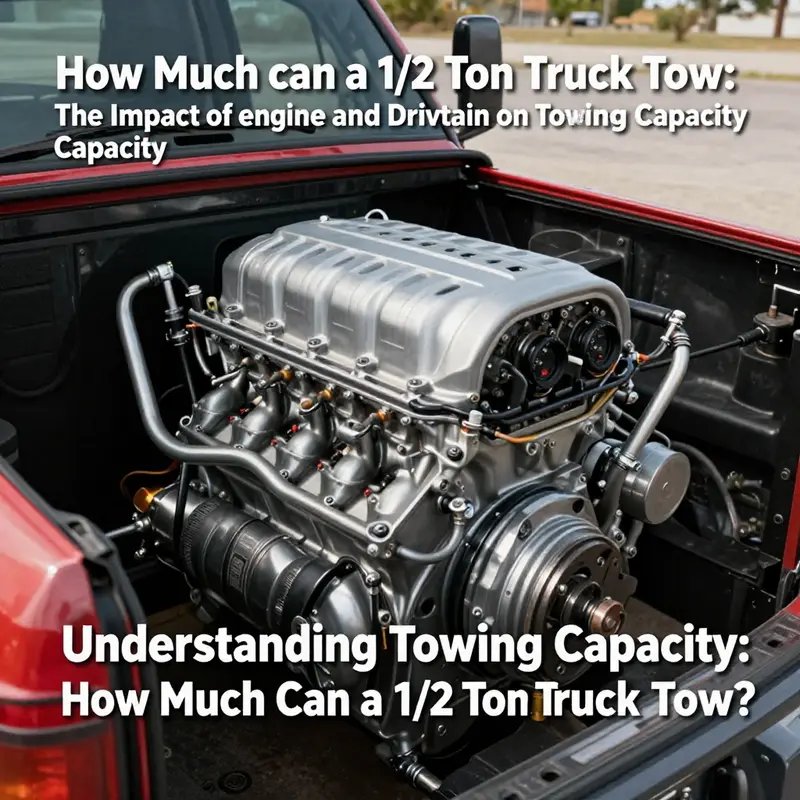
The question of how much a 1/2-ton pickup can tow hardly has a one-size-fits-all answer. The broad range exists because the phrase half-ton is a label that encompasses a family of trucks with different engines, drivetrains, suspensions, and optional towing packages. In the simplest terms, base models often hover around 7,000 pounds of potential towing capacity, while the most capable configurations with the right equipment can approach the upper teens in thousands, close to 14,000 pounds. That spectrum matters because it reframes towing from a static number into a practical conversation about the powertrain and how it is paired with the rest of the vehicle. The actual capacity for any given truck is found in the manufacturer’s specifications, typically in the owner’s manual or the towing guide, and it reflects the sum of many carefully tuned components working in concert. Understanding this interplay helps prevent the misstep of treating a half-ton as an all-purpose hauler for any large trailer or heavy load and instead frames it as a choice that should fit the job at hand with margin for safety and reliability.
Central to the story is the engine. The engine is the primary determinant of towing strength because it supplies the torque necessary to move heavy loads from a standstill and to maintain momentum when hauling uphill or into headwinds. Modern light-duty pickups routinely employ high-output gasoline engines that pair turbocharging with advanced intake and exhaust flows to deliver robust low-end torque. That torque is more than just a horsepower figure; it is the real workhorse that helps the truck bite into a heavy trailer’s resistance and create the initial momentum that keeps the vehicle rolling. When you turn off a trailer to back into a dock or begin a climb on a steep grade, it is the engine’s torque that does the heavy lifting, complemented by the transmission and the driveline to keep that power usable across the varying conditions of a real road.
The role of the drivetrain cannot be overstated either. The drivetrain defines how effectively the engine’s power is transferred to the wheels and how traction is managed under load. Four-wheel drive or all-wheel drive systems, for instance, improve grip on slippery surfaces or uneven terrain, which can be the deciding factor between a powerful pull and a trailer that slips or fishtails when the surface is wet, muddy, or snow-covered. A robust automatic transmission with a broad gear spread helps maintain a steady pull by smoothing torque delivery as the trailer’s weight shifts the vehicle’s dynamics. In towing, you often see technology such as trailer sway control, which works with sensors to modulate braking and power to keep the rig stable when crosswinds or sudden steering inputs threaten to destabilize the trailer. The sum of these features—engine torque, drivetrain traction, and transmission coordination—tells a tale of capability that goes beyond a single number and into the realm of drivability and safety under load.
Towing packages, which can include heavy-duty cooling systems, upgraded suspensions, reinforced springs, enhanced hitch assemblies, and sometimes integrated braking enhancements, are an important piece of the equation. A base model with a modest engine might still operate adequately for small trailers or light boats, especially when paired with a standard hitch and normal cab and bed configuration. But when a manufacturer outfits a truck with the maximum towing package, the configuration shifts. The cooling system is sized to manage sustained engine water and oil temperatures under heavy load, reducing the risk of heat soak during long pulls. The suspension may be tuned to handle the added weight behind the rear axle, improving braking stability and ride quality. The hitch system itself is designed to withstand higher dynamic forces, and the electronic aids, including trailer sway control or integrated trailer braking features, become more capable, offering both confidence and safety during long trips or challenging terrain. All these package-level details work in tandem with the engine and the drivetrain, and they are the practical levers that raise or constrain the towing ceiling.
Performance, however, remains a balance between capability and the realities of daily use. A truck that can tow near 14,000 pounds in the right configuration usually carries that burden with some reserve; the same model delivered at base spec would struggle with the same load. For many owners, it is not just about the maximum possible tow rating but about the predictability and steadiness of that performance across typical operating conditions. A strong engine with ample torque provides the baseline, but the drivetrain’s traction, the transmission’s ability to hold a steady gear under load, and the stability aids that modulate sway and control are what allow the crew to feel confident pulling a sizable trailer on a winding road. It is easy to assume that more power equals better towing, yet the practical experience of towing is shaped by how that power is delivered, controlled, and managed through the vehicle’s chassis and electronic systems. The human factor—driver experience, weight distribution on the trailer, and the chosen hitching arrangement—also influences how effectively the power translates into safe, efficient moving weight on the highway.
When plotting a tow plan, it helps to remember several guideposts. First, always start from the vehicle’s published ratings, and verify the exact configuration in the manual. The numbers can shift with wheels, tires, payload inside the cab, or even driving altitude. Second, consider the specific load characteristics, including trailer length, height, and whether cargo is centralized over the axles or biased toward the tongue. Tongue weight, the downward force the trailer exerts on the hitch, is a critical part of this equation; too little tongue weight can lead to trailer sway, while too much can overload the rear axle and affect steering. Third, account for the conditions you’ll encounter. Climbing long grades, towing into headwinds, or traveling through rain or snow requires extra margin in both the engine’s torque delivery and the drivetrain’s traction support. Fourth, plan for redundancy. The best practice is to choose a configuration with a comfortable safety factor above the typical load you expect to carry. In other words, think of the towing rating as a ceiling that you should not constantly chase; instead, select a setup that leaves room to accommodate contingency conditions, spare fuel, or passengers who may ride along while you haul your gear.
For readers who want practical, on-the-ground guidance beyond the spec sheets, there is a growing repository of real-world guidance and insights that can illuminate the decisions you face when choosing a half-ton truck for a particular towing job. For hands-on perspectives, you can consult resources from the long-standing blog community that covers towing scenarios, rigs, and logistics in everyday settings. The Island Tow Truck Blog offers a variety of practical discussions and considerations that can help you translate a spec sheet into a usable plan for your own trailer and load. You can explore their insights here: The Island Tow Truck Blog.
Ultimately, the question of how much a 1/2-ton truck can tow is not answered by a single line in a brochure. It is a synthesis of engine torque, drivetrain traction, transmission behavior, and the optional towing enhancements that a manufacturer packages with the truck. The same model can perform markedly differently depending on which engine you choose, whether you opt for 4WD, and how heavily the vehicle is equipped for towing. For some buyers, a base model with a robust drivetrain and a modest-but-consistent trailer may be the perfect fit. For others, the highest-tow configuration may be the practical choice to handle large travel trailers or substantial equipment with confidence. In either case, the prudent path is to align your trailer’s weight and your typical usage with the truck’s rated capabilities, adjust for actual on-road conditions, and respect the margin between rated capacity and the real-world demands of the journey. This approach ensures not only that the load moves efficiently but that the operation remains stable, predictable, and safe from start to finish. For the next chapter, we will connect these engineering realities to the everyday practices of planning and safe operation, including how to match your trailer, hitch, and vehicle to the routes you take and the loads you expect to haul. External reference: https://www.ford.com/trucks/f-150/towing/
null
null
null
null
Tow Limits in Real Life: Reading the 1/2-Ton Truck Towing Range for Everyday Adventures
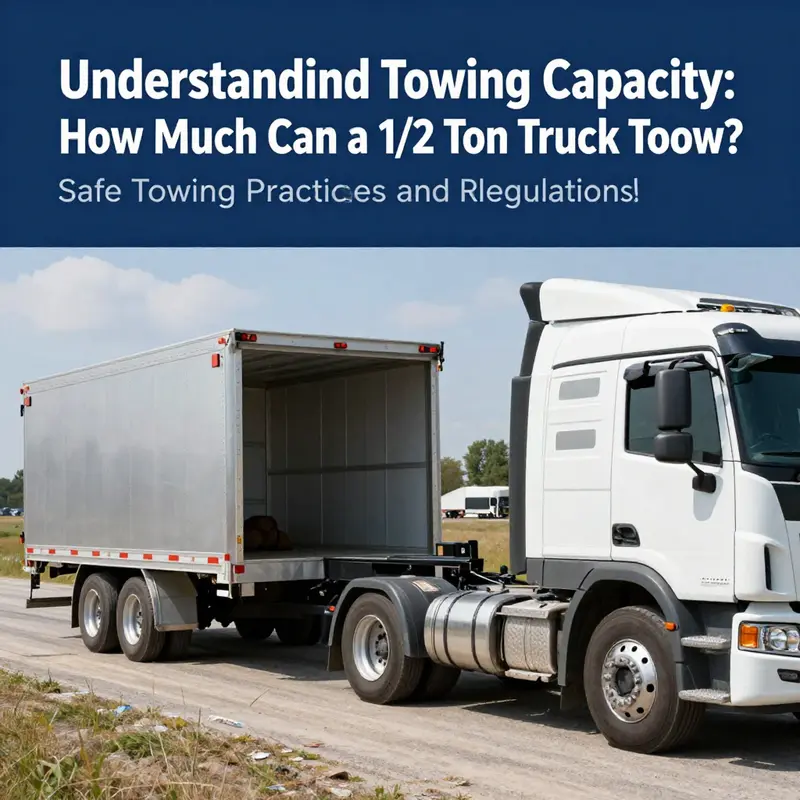
A half-ton pickup, once defined largely by its payload ceiling, has evolved into a remarkably diverse family of trucks. Today’s 1/2-ton lineup ranges from economical work trucks to high-output variants that feel closer to full-size, heavy-duty machines when it comes to capability. This expansion matters because the towing figure you see on window stickers or in marketing materials is not a single fixed limit for every truck wearing the same badge. It’s a careful balance of engine choice, drivetrain, axle ratio, and the presence or absence of a dedicated towing package. The result is a broad spectrum: some base models with modest towing numbers that suit small trailers or light boats, and others with max-tow configurations that approach, or in some cases nearly reach, 14,000 pounds. The practical takeaway is simple yet important: always verify the exact rating for your specific truck and configuration in the owner’s manual or the manufacturer’s guide, and treat the published figure as a ceiling rather than a target.
The base models typically land around 7,000 pounds of towing capacity. This figure works well for most campers under a certain size, small utility trailers, and light industrial trailers used for everyday tasks. On the other end of the spectrum, top-tier variants fitted with high-output engines and the full towing package can push toward 14,000 pounds. This is not a universal guarantee for every half-ton, however; it reflects what a well-equipped version of the truck can manage under controlled testing conditions. Real-world results can differ due to payload, fuel load, weather, and road grade. When you’re comparing options, it’s essential to understand that the vehicle’s advertised towing rating sits alongside several other performance limits. The payload rating, the Gross Vehicle Weight Rating (GVWR), and the Gross Combined Weight Rating (GCWR) all shape what you can safely pull and carry at once. A higher towing number is meaningful only when the rest of the vehicle’s capabilities align with the load, not when it’s used in isolation.
Crucially, the precise figure for your specific truck is found on the VIN placard located on the driver’s door jamb and in the owner’s manual. The VIN placard lists the vehicle’s GVWR, GAWR (Gross Axle Weight Rating) for front and rear axles, and the GCWR. The GCWR represents the total weight the vehicle can safely handle when the engine, transmission, hitch, trailer, and cargo are all considered. Exceeding any of these limits compromises braking, steering, and stability, and it can void warranties or violate regulations. This is why the process of choosing a trailer or deciding to tow depends on more than a single number. It’s about validating compatibility across the vehicle’s entire performance envelope and planning for contingencies like slope, wind, and uneven road surfaces. For that reason, you’ll see the same careful caution in professional fleets and in family driveways alike.
To understand the practical implications of those numbers, imagine you’re selecting a trailer for a weekend trip or a small work project. A widely available small travel trailer, a mid-sized utility trailer, or a lightweight boat trailer can fall within the lower end of the spectrum. If your plan includes frequent long hauls or full-time camping with a sizeable trailer, you’ll want to explore the higher end of the range—but only if your truck’s configuration supports it. This is where optional towing packages, upgraded engines, and more capable suspensions come into play. The towing package typically adds components such as enhanced cooling for the engine and transmission, an upgraded hitch receiver, a higher-capacity radiator or transmission cooler, and sometimes upgraded steering and sway control. These features collectively improve stability and reduce the risk of overheating or loss of control during a long pull or a windy day. Yet even with all those upgrades, you still must respect the limits set by the manufacturer. The numbers you rely on are a guide, not a dare.
Beyond the numerical ceiling, the way you load and distribute weight plays a decisive role in how well a given tow performs. Load distribution is not a cosmetic concern; it directly affects stability, braking effectiveness, and the ease of maneuvering a heavy trailer through turns and down grades. Heavier items should sit low in the trailer’s floor and toward the front to keep the tongue weight within the recommended range. An imbalanced load or a trailer that sits tail-heavy can promote sway, reduce steering response, and increase the risk of jackknife situations in emergency maneuvers. A weight distribution hitch becomes highly desirable when you’re towing near the upper limits or when you’re dealing with a larger trailer on a winding road. It helps spread the trailer’s tongue weight across both axles of the tow vehicle and the trailer wheels, producing a more predictable, less pogo-like ride. It’s a simple, highly effective tool for stabilizing the combination and protecting your tires from uneven wear or overheating.
Proper tire pressure is another foundational piece of safe towing. The tire pressures for the truck and the trailer must be set to the values specified by the manufacturers, which are often higher for the trailer tires than for typical passenger vehicle tires. Underinflated trailer tires are a frequent cause of blowouts, especially on long trips or when crossing hot pavement. The right pressure helps the tires maintain bead seal integrity, reduces heat buildup, and supports even wear. Don’t overlook the trailer’s brake system either. Many larger trailers rely on electric or surge brakes to assist stopping power. If the trailer brakes aren’t correctly matched to the weight of the load and the truck’s braking capacity, stopping distances can extend dramatically. In turn, that extends the chance of following too closely in traffic or hitting emergency brakes suddenly. The towing setup should always be verified for functional lights, brake signals, and turn indicators, because a trailer with faulty lighting creates a hazard for other drivers and can cost you fines in some jurisdictions.
The drive itself demands attention to technique. Elevate your awareness of crosswinds, rolling hills, and road surface irregularities. Winds from the side can push the trailer, even when the truck tracks straight, requiring small but deliberate steering corrections. When you’re near the top end of the load range, keeping a steady, moderate speed helps reduce sway that can arise from gusts or passing larger vehicles. Emergency maneuvers should be anticipated and practiced in a safe, controlled environment rather than attempted on public roads. That practice translates into a smoother ride for everyone on board and for your equipment.
While the numerical range provides a useful roadmap, there’s a broader set of considerations that influence whether a given half-ton is a practical tow vehicle for a particular load. The age and condition of the truck matter; wear on the suspension, tires, and braking system can erode capability. The trailer itself matters: its gross vehicle weight, tongue weight, and braking configuration all set the stage for how the tow behaves in real life. A trailer with its own brakes creates a more balanced stopping dynamic, but only if its braking system is functioning correctly and is compatible with the truck’s systems. In contrast, a trailer without brakes or with inadequate braking capacity can push the tow vehicle toward instability, especially on downhill stretches or in heavy traffic. And there’s a regulatory side to this, too. Each region imposes rules around trailer lights, brakes, and load limits. Safety and compliance go hand in hand, and both require that you keep the vehicle’s actual capabilities at the center of planning and decision making.
With all these elements in mind, the practical approach for most people becomes a simple sequence: start with your truck’s published towing capacity, and then verify your trailer’s weight and tongue load. Subtract the payload you intend to carry inside the truck from the GVWR to confirm you won’t exceed the truck’s safe payload. If you’re towing near the upper range, consider equipment designed to improve stability and control, and never exceed GCWR. When you’re planning a trip or a job, set conservative margins and test your setup in a controlled environment before traveling. The goal is not to stretch the truck’s capacity but to align it with the task at hand, preserving control, comfort, and safety for everyone on the road.
For readers managing broader fleet operations or planning for scenarios that require careful equipment readiness in challenging environments, there is value in drawing broader lessons about preparedness and maintenance. See Emergency preparedness for island fleets for a broader perspective on how to prepare equipment and crews for demanding conditions, including towing-related contingencies. Emergency preparedness for island fleets
Externally, authoritative guidance on safety, licensing, and equipment standards continues to emphasize the same principles: stay within the vehicle’s rated limits, maintain your towing gear in good condition, and plan for contingencies with conservative margins. For an overarching framework and detailed regulatory considerations, consult the U.S. Department of Transportation’s resources on towing and vehicle safety at https://www.dot.gov. This external reference reinforces the core message: safe towing starts with accurate ratings, honest self-assessment of your load, and disciplined preparation for every trip.
Final thoughts
Understanding how much a 1/2 ton truck can tow is essential for anyone operating within the commercial sectors of island life. Whether you are a fleet manager, a property owner, or a dealership, knowing the specifications, combining them with the right accessories, and practicing safe towing methods creates a foundation for operations that is not only efficient but also compliant with safety standards. Be informed, remain safe, and let each journey with your 1/2 ton truck be a successful one.