Wrecker tow trucks play a crucial role in maintaining road safety and managing disabled vehicles in island communities. Designed specifically to lift, pull, and transport automobiles that are stalled, damaged, or wrecked, these specialized vehicles are a lifeline for local auto repair shops, car dealerships, property managers, resort operators, and commercial fleet operators. Understanding the different types of wrecker tow trucks provides insights into their operational mechanics and design. Furthermore, we’ve seen the considerable economic impact these services have, as well as their undeniable importance in our society. In the following chapters, we will delve deeper into the types of wrecker tow trucks available, the mechanics and design principles that make them effective, their economic implications, and their societal roles, particularly within island environments.
Wrecker Tow Truck Types: Choosing the Right Rig for Every Recovery
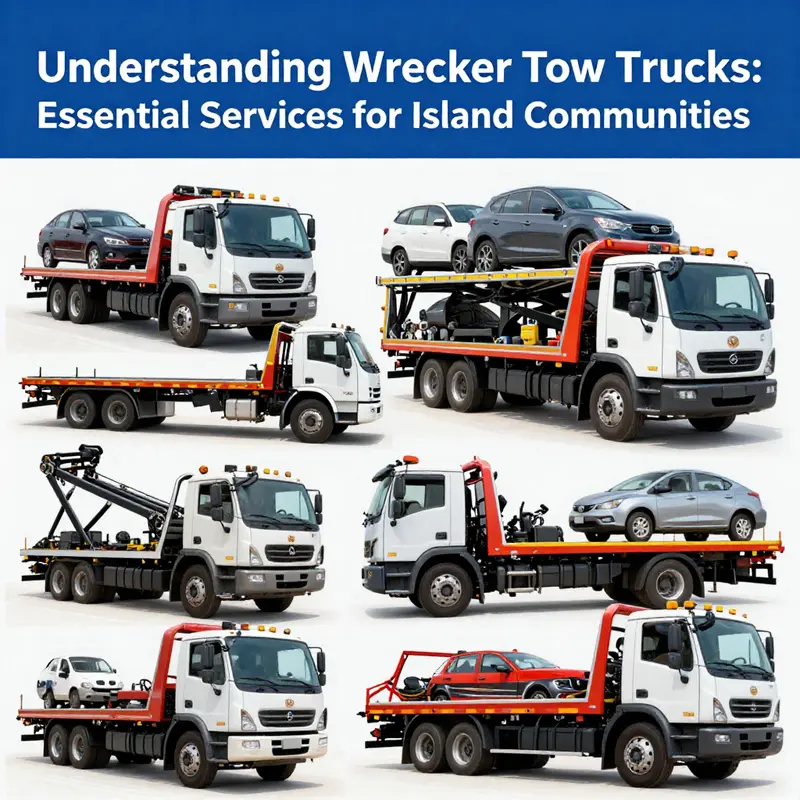
Types of wrecker tow trucks come down to purpose, capability, and context. Understanding each type helps you match a vehicle to the job. This chapter explores the main classes of wreckers, highlights how they work, and explains when each one is the right tool. The goal is practical: to help fleet managers, dispatchers, and drivers recognize the strengths and limits of each rig.
Flatbed wreckers are the most commonly requested. Their bed tilts and slides to become a ramp. Vehicles roll or are winched onto the deck. Once secured, the bed slides back and locks. This design protects drivetrains and bodywork. It also eliminates stress on suspension and tires during transport. Because of this, flatbeds are the favorite for long-distance moves and for vehicles with low ground clearance. They work well for AWD and specialty cars.
Flatbeds are not perfect for every scenario. The bed and hydraulic systems add weight and cost. They need space to lower and align the ramp. In tight city spaces or crowded collision scenes, maneuvering a flatbed can take more time. Storage and recovery yards must accommodate their larger footprint. Still, for transporting damaged vehicles with minimal further harm, flatbeds are the safe bet.
Wheel-lift wreckers use a V-shaped yoke or sling that lifts the vehicle by two wheels. The recovery unit hooks under the tires at the front or rear. This lets operators tow without a full-deck bed. Wheel-lifts are faster to set up in many roadside situations. They are lighter and simpler than flatbeds, and they generally cost less.
However, wheel-lifts transfer loads through the vehicle’s suspension. That can stress axles, control arms, and tires. For older or heavily damaged cars, wheel-lifts may increase risk of additional damage. They are ideal for short-distance moves, local impounds, and quick roadside clearances. For disabled vehicles that must travel farther or are fragile, a flatbed remains preferable.
Integrated wreckers, often called heavy-duty or combination wreckers, bring several tools together. They combine a boom, winch, and wheel-lift into a single, factory-integrated unit. That combination delivers power and control for complex recoveries. Heavy-duty wreckers tow buses, large trucks, and construction equipment. Their frames and hydraulic systems are built for high loads and repeated stress.
Integrated rigs shine in accident recovery and heavy towing. The boom provides reach and lift. Winches pull vehicles from ditches or embankments. The integrated wheel-lift then secures the load for transit. But those capabilities come at a price. These units are expensive to buy and maintain. They require skilled operators and are heavy to store. For many smaller operators, heavy-duty wreckers are a specialized investment used only when needed.
Under-frame or under-boom recovery units hook to a vehicle’s undercarriage or axle housing. They provide a lower center of gravity during towing. That increases stability and reduces sway. Under-frame systems work well for vehicles that cannot be lifted from their wheels. They can be more protective than wheel-lifts in certain cases.
Their downside is limited applicability. Under-frame rigs are typically used for light to medium vehicles. They may not suit badly damaged frames or vehicles with missing components. When a vehicle’s undercarriage is compromised, alternate methods must be used.
Beyond these main types, wreckers vary by class and attachments. Light-duty trucks handle compact cars and light vans. Medium-duty units manage larger sedans, SUVs, and light commercial vehicles. Heavy-duty wreckers handle semis, large buses, and heavy machinery. Each class follows stricter engineering and braking standards. Matching the truck’s Gross Vehicle Weight Rating (GVWR) to the anticipated loads is essential for safety and compliance.
Attachments and accessories shift a wrecker’s capabilities. Winches, snatch blocks, and remote controls aid recoveries from difficult angles. Rotators add a powered, rotating boom for pulling and repositioning loads. Push bumpers and stabilizers protect the towing chassis and enhance stability during winch work. Synthetic rope and rated steel cable choices affect strength and safety. Operators must understand working loads and safety factors. Using undersized gear risks catastrophic failure.
Operator skill and training are as important as the truck itself. Flatbeds require winch and bed control skills. Wheel-lift towing demands precise hook placement and load balancing. Heavy-duty integrated towing often involves rigging multi-point recoveries, setting winch lines, and coordinating with traffic control. The right training reduces vehicle damage and increases worker safety.
Maintenance and inspection differ by type. Flatbeds need regular checks on the bed hydraulics, rollers, chains, and anchoring points. Wheel-lifts require inspection of the lift arms, yokes, and hydraulics. Heavy wreckers need frequent examination of the boom structure, winch drums, and chassis mounting points. A preventive maintenance program extends service life and prevents roadside failures.
Choosing the correct wrecker also depends on the environment. Urban settings favor nimble rigs that can operate in tight spaces. Rural or off-road recoveries often require heavy-duty equipment and winches with long pulls. Weather also matters: mud, ice, and water increase the likelihood of winch-based recoveries and make rotator-capable rigs more useful. An operator who understands local conditions can decide whether a wheel-lift or a flatbed is the better call.
Insurance and liability play a role in vehicle selection. Flatbeds reduce the risk of in-transit damage claims. For that reason, some insurers or fleet managers prefer flatbed transports for expensive or specialty vehicles. Conversely, wheel-lift usage may be more acceptable for routine, short hauls when cost and speed are priorities.
For fleet managers, standardizing on a mix of wrecker types delivers flexibility. A balanced fleet often includes a few flatbeds, several wheel-lifts, and at least one heavy-duty integrated unit. That combination covers most scenarios while keeping procurement and maintenance costs manageable. Fleet planning should account for local traffic patterns, call volumes, and the typical types of vehicles handled.
Dispatch protocols should reflect equipment strengths. When a collision involves overturned or trapped vehicles, send heavy-duty integrated units. For simple breakdowns with intact vehicles, deploy a flatbed if long distance is expected. For quick roadside clearances and short tows, a wheel-lift may be the most efficient response. Clear decision rules reduce on-scene delays and the risk of wrong-rig calls.
Regulatory considerations shape how wreckers operate. Weight limits, axle loading rules, and towing laws differ by jurisdiction. Operators must secure proper permits for oversized loads. They must also follow local rules for scene safety, lighting, and traffic control. Understanding local regulation ensures both legal compliance and safer recoveries.
Finally, planning and preparedness matter. A well-maintained fleet and trained team improve response time. Keeping a documented list of each unit’s capabilities, rated capacities, and limitations helps dispatchers make smart calls. For operations that support isolated or island fleets, specialized emergency protocols improve resilience. See this resource on essential fleet emergency response strategies for guidance on planning and training.
Matching a wrecker to the job is an exercise in compromise. Speed, cost, vehicle protection, and terrain all influence the decision. Flatbeds protect the vehicle and suit long hauls. Wheel-lifts save time and money for short moves. Integrated heavy-duty wreckers solve the toughest recoveries. Under-frame units add stability in select scenarios.
Thinking like a recovery pro means evaluating each incident on its facts. Assess vehicle condition, the surrounding environment, and destination. Consider insurance concerns and legal limits. Then match those needs to the right wrecker. That approach keeps vehicles safer, speeds clearances, and reduces the chance of costly mistakes.
By understanding what each wrecker type does best, you can make better choices on the road. That improves safety, lowers costs, and keeps traffic moving. The right rig is not always the biggest or most expensive. It is the one whose strengths fit the job at hand.
essential fleet emergency response strategies
null
null
Tow Lines of Commerce: The Economic Engine Behind Wrecker Tow Truck Services
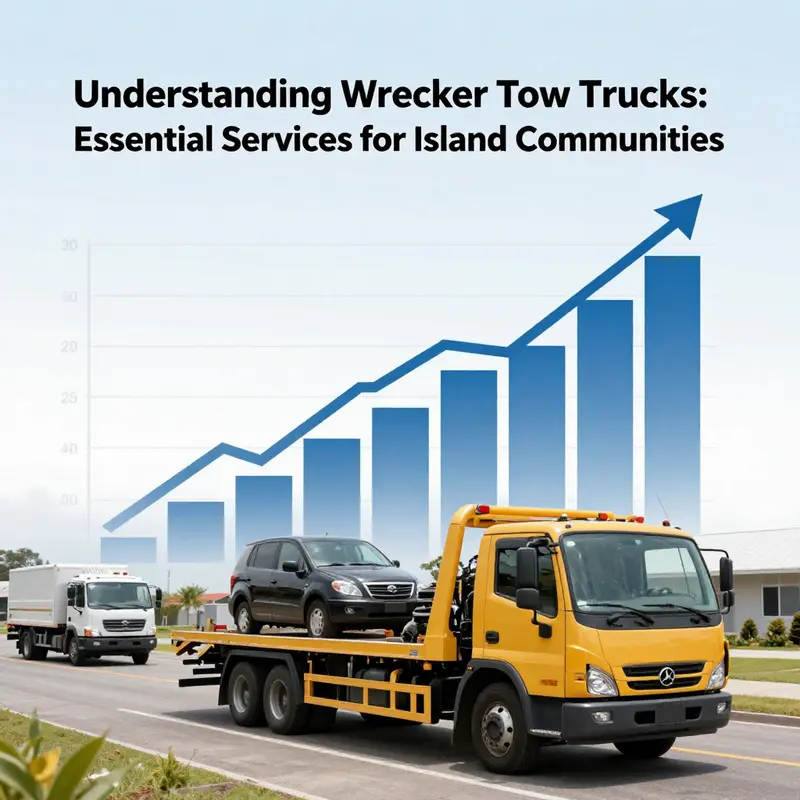
A wrecker tow truck is more than a mobile mechanical arm that reaches, lifts, and hauls. It is a deliberate instrument at the intersection of safety, mobility, and commerce. In many ways, the truck is a quiet driver of economic resilience. When a vehicle breaks down on a busy artery or a crash blocks a highway, the wrecker service is not merely a roadside fix; it is a rapid retooling of traffic flow, a restoration of productivity, and a safeguard for the daily rhythms of business. The work happens behind the scenes, out of the glare of headlines, yet its impact extends through warehouses, delivery routes, and commuter schedules. To understand the economic footprint of wrecker tow truck services is to see how a fleet on standby keeps the gears of modern life turning. It is to recognize that the road network functions as a living system, and wreckers are the emergency maintenance crews that keep that system from grinding to a halt.
One of the clearest economic signals from the wrecker sector is its role in mitigating traffic congestion. Accidents and disabled vehicles can cascade into hours of delay, pushing up costs for logistics, emergency services, and everyday commuters. Even short interruptions on major corridors can ripple across entire regions, delaying shipments, delaying appointments, and increasing fuel consumption as drivers circle to find alternate routes. In mature economies, researchers estimate that the productivity losses from traffic incidents amount to billions of dollars annually. Wrecker services help blunt those losses by shortening clearance times and restoring lane availability, thereby compressing the window of disruption and reducing the downstream costs that a stalled vehicle would otherwise impose on neighboring businesses and workers. The value is not in the tow itself but in the speed with which a dangerous or immovable vehicle is removed from the problem area and returned to a usable state. As uptime becomes a strategic metric for fleets of all kinds, the effectiveness of towing operations translates directly into measurable gains in efficiency and reliability.
Beyond the immediate traffic relief, the wrecker market has grown into a substantial economic sector. The global market for wrecker and tow truck services exists at a scale that reflects rising vehicle ownership, increasingly dense urban environments, and a regulatory environment that emphasizes safety and rapid response. While exact market valuations may vary by source and methodology, industry analyses consistently describe the sector as multi‑billion in size, with expected growth driven by urbanization, intensifying road use, and a growing emphasis on rapid incident response. The trajectory of this market speaks to a broader pattern: as cities expand and logistics networks stretch farther, the demand for dependable, mobile recovery capabilities expands in tandem. The narrative is not a single product story but a system story, in which a core service—safety-first vehicle recovery—binds together disparate economic activities: emergency medical services, highway maintenance, auto repair, insurance settlements, and even municipal planning for incident management.
Because the towing ecosystem depends on highly specialized operations, it also sustains a diverse workforce. The job landscape spans skilled drivers who operate winches, cranes, and flatbeds; technicians who service complex hydraulic systems and safety equipment; dispatchers who orchestrate rapid deployment; and fleet managers who optimize routing, maintenance, and compliance. The diversity of roles reflects the variety of customer needs—ranging from small, urban tow services that navigate tight streets to heavy‑duty operations capable of lifting wrecks on interstates or clearing damaged buses after a mass casualty incident. Premium markets often reward the use of roll‑back or wheel‑lift designs that can provide full vehicle support with minimal risk to valuable or low‑clearance cars. The value is evident not only in the ticket price of a tow but in the longevity of the workforce, the quality of service, and the confidence of customers who must rely on recovery teams during time‑sensitive events.
Technology, increasingly integrated into every link of the recovery chain, has accelerated the efficiency and safety of tow operations. Real‑time GPS tracking, automated dispatch, and digital payment systems streamline workflows that once relied on guesswork and manual handoffs. A dispatcher can identify the nearest capable unit, estimate arrival times, and relay safety guidance to the scene, all while ensuring compliance with local regulations and licensing requirements. On the road, telemetry and onboard diagnostics provide operators with critical feedback about winches, cranes, and stabilization equipment, allowing for adjustments before a lift begins. The result is a service that feels smoother to the customer and safer for operators, with fewer delays and lower incidences of secondary damage to vehicles involved in incidents. The investment in these technologies not only improves immediate service quality but also reduces risk, supporting lower insurance costs and higher throughput for fleets that adopt them.
Public sector demand and the private sector’s appetite for reliable recovery services create a durable economic backbone for the industry. Emergency tow trucks—often deployed by government agencies—are essential for disaster response, road maintenance, and rapid incident management on highway networks. This public demand complements the private sector’s routine roadside assistance, accident recovery, and fleet support needs. Regulatory frameworks—often emphasizing safety standards, environmental compliance, and fair labor practices—shape how services are delivered and how quickly they can be mobilized in a crisis. The alignment of public safety objectives with industry capabilities helps ensure that critical incidents do not paralyze economic activity for long stretches. Compliance with widely recognized standards, such as quality management and environmental guidelines, reinforces reliability and promotes trust among municipalities, insurers, and the public.
The economic significance of wrecker services also unfolds in the way they intersect with insurance, liability, and risk management. When a collision or breakdown occurs, the speed and quality of recovery can influence claim timelines and the overall cost of a loss. Rapid, orderly removal of a disabled vehicle reduces exposure to escalating repair costs and protects nearby traffic from secondary incidents. For insurers and repair networks, the predictability of a reliable towing partner lowers administrative burdens, shortens settlement cycles, and helps customers recover their mobility quickly. In this context, tow companies are not mere contractors; they are integral components of risk management ecosystems that help individuals and businesses minimize downtime and financial exposure.
The spectrum of tow truck models—ranging from compact urban units to heavy‑duty, high‑capacity vehicles—reflects the varied demands of modern road networks. Urban centers require nimble equipment that can operate in tight lanes and dense traffic, while highways demand powerful lifts and stable platforms capable of handling larger or multiple vehicles at once. Roll‑back and wheel‑lift designs balance the need for vehicle protection with the practicality of efficient recovery, particularly for premium vehicles that demand careful handling. These design choices influence market dynamics by opening different price points for service providers and expanding the range of customers who can access timely assistance. As fleets diversify to meet varied terrain and incident types, the industry evolves toward greater specialization, which in turn supports more skilled labor and higher value services.
A key implication of this evolution is the growing emphasis on preparedness and resilience. Roadways are intricate, interconnected systems that support commerce, services, and everyday life. When one component falters, others strain to compensate, and the impact reverberates through supply chains and regional economies. The wrecker services’ role in maintaining the continuity of mobility makes them indispensable for disaster readiness, recovery planning, and ongoing infrastructure maintenance. As municipalities invest in safer road design, better lighting, and incident management centers, the demand for swift, capable recovery teams grows in tandem. This creates a virtuous cycle: improved safety and reliability raise the perceived value of towing services, which then justifies further investment in training, equipment, and technology. The outcome is a more resilient transportation network with fewer days lost to traffic and fewer vehicles stranded in hazardous conditions.
For readers seeking practical ideas on strengthening a fleet’s emergency response capabilities, a body of knowledge already exists in industry hubs and practitioner communities. The Island Tow Truck Blog, for example, offers perspectives on fleet management, response strategies, and seasonal preparedness that can translate into tangible improvements for operators and municipalities alike. The Island Tow Truck Blog provides grounded, field-tested insights that complement the broader market analysis by connecting economic considerations to day‑to‑day operations on the road. By translating macro trends into operational best practices, fleets can align their growth with safety, efficiency, and customer trust.
In closing, the economic footprint of wrecker tow truck services extends well beyond the act of moving a vehicle from point A to point B. It encompasses the reduction of congestion, the stabilization of supply chains, the creation of jobs, and the strengthening of public safety and disaster resilience. It is a sector that knits together the needs of private drivers, commercial fleets, insurers, and government agencies into a cohesive system designed to keep commerce flowing and the roads safe. The chapter’s thread runs through urban planning, insurance assessment, and fleet optimization, reminding readers that tow trucks do more than recover vehicles—they sustain the everyday economy by protecting uptime and enabling rapid, reliable recovery when incidents occur on the nation’s roadways. For anyone involved in fleet operations, public safety planning, or logistics strategy, recognizing the economic dimension of wrecker services can inform smarter decisions about investment, training, and partnerships for a more resilient future.
External resource for further reading: Grand View Research’s Wrecker Truck Market Size Report, 2025. https://www.grandviewresearch.com/industry-analysis/wrecker-truck-market
Restoring Momentum on the Road: The Societal Lifeline of Wrecker Tow Trucks
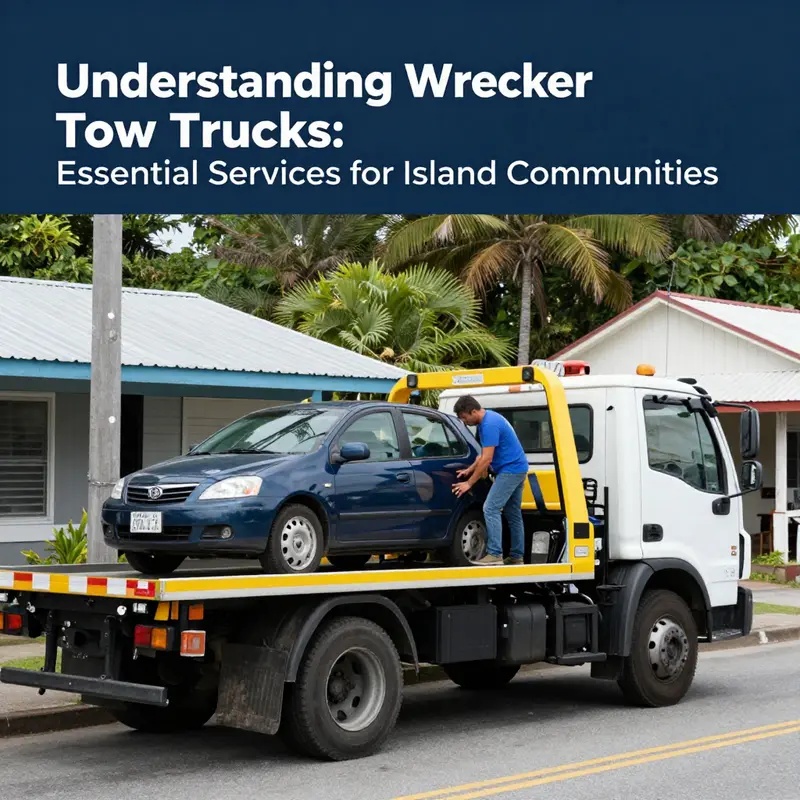
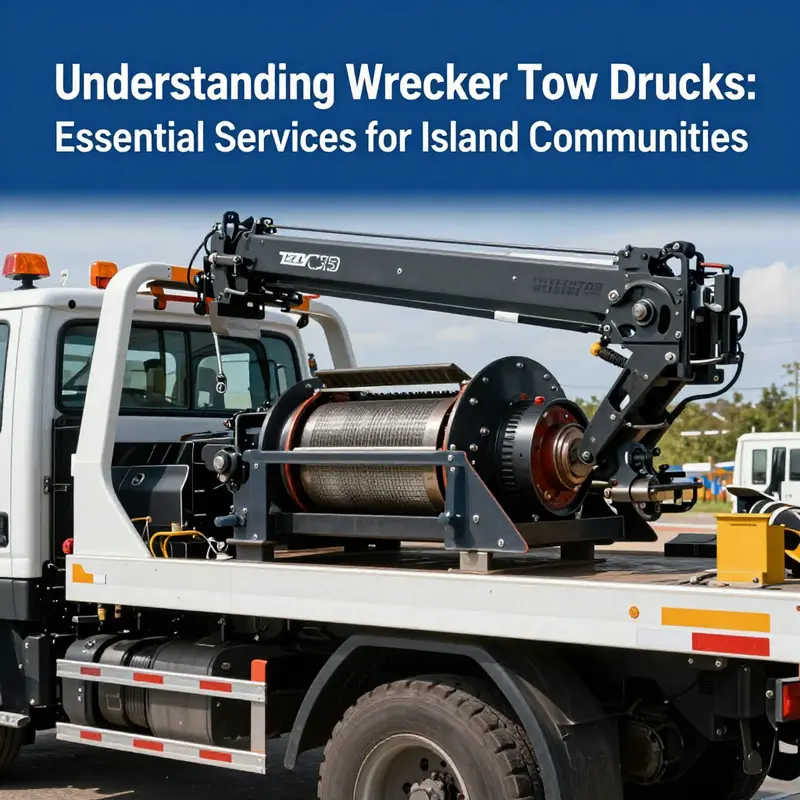
A wrecker tow truck is more than a vehicle designed to haul a car from the shoulder or an accident scene. It is a carefully engineered instrument of mobility, safety, and resilience that threads together the many moving parts of modern society. When a breakdown or a collision disrupts a stretch of road, these specialized machines spring into action, not simply to recover a single vehicle but to safeguard lives, stabilize traffic patterns, and keep essential services humming. The image of a wrecker might be striking in its mechanical presence—a winch drum turning, a crane sweeping to position, a flatbed sliding into alignment—but the deeper story lies in the interconnected roles these trucks play across transportation networks, emergency response frameworks, and the broader economic fabric that depends on reliable, accessible mobility.
Traffic management sits at the core of the wrecker’s societal function. On busy highways and congested urban corridors, a disabled vehicle can become a choke point that ripples outward, triggering hazards, delays, and the potential for secondary accidents. The swift removal of vehicles from high-traffic zones is not just about clearing a lane; it’s about maintaining the rhythm of daily life—commutes, deliveries, school runs, and medical appointments. When responders arrive at the scene, the wrecker’s ability to safely lift, pull, and transport a vehicle away from danger becomes a critical factor in the overall effectiveness of emergency operations. Industry standards reflect this reality, calling for heavy-duty wreckers with dynamic capabilities such as 360-degree crane rotation and robust winch systems designed to manage complex recoveries, including rollover incidents and vehicles trapped in precarious positions. The result is a lean, coordinated sequence: scene stabilization, vehicle removal, traffic redirection, and a return toward normal flow.
Yet the value of wrecker tow trucks extends far beyond accident management. In construction and industrial settings, they facilitate a much larger enterprise: the relocation of heavy machinery and oversized equipment that underpins infrastructure projects, commercial development, and public works. A typical fleet may rely on a spectrum of configurations—from flatbed variants that gently cradle delicate machinery to heavy-duty wreckers capable of grappling with excavators, cranes, and other bulky gear. These machines enable crews to respond not only to breakdowns but to logistics challenges inherent in large-scale projects. They help connect disparate work sites, move equipment between locations efficiently, and minimize downtime that would otherwise ripple across schedules, budgets, and safety plans. In effect, wrecker tow trucks operate as mobile relays, bridging the gap between where equipment is and where it is needed, ensuring that the pace of construction and industry remains uninterrupted even when individual components falter.
The story of the wrecker also tracks the evolution of technology and design. Early salvage operations evolved into a sophisticated field that blends hydraulic power, modular components, and intelligent restraint systems. Modern wreckers often feature innovations such as slip cranes that retract beneath the rear ramp, saving space and improving fuel efficiency, alongside modular hardware that can be reconfigured for different recovery scenarios. These design advances do more than improve performance; they expand the reach of tow operators into riskier environments and more demanding recoveries while reducing downtime and maintenance costs. The result is a fleet that can adapt to the varied demands of today’s roads—rapid responses to minor breakdowns, complex recoveries in off-ramps and medians, and coordinated operations at the scene of a major incident. This adaptability strengthens the reliability of the entire transportation ecosystem, reinforcing public confidence in the infrastructure that keeps cities and regions functioning.
The social value of wrecker tow trucks also intersects with public safety in fundamental, sometimes understated ways. Roadway safety depends not only on the speed of response but on the precision and care with which responders manage a scene. A vehicle that is properly secured, an operator trained in hazard assessment, and a crew that communicates effectively can determine whether a single incident escalates into a more dangerous situation. Wrecker operators, therefore, are not merely drivers and technicians; they are members of a broader public-safety culture. Their work requires discipline, situational awareness, and an understanding of how their actions affect other road users, emergency responders, and nearby workers at a site. Training programs emphasize risk assessment, the handling of unstable loads, and the choreography of multi-agency responses, all aimed at minimizing injuries and preserving life. In this sense, the wrecker embodies a public-service ethos that couples mechanical capability with a dedication to safeguarding people in vulnerable moments.
Beyond immediate safety, wreckers contribute to societal resilience in the face of disruptions—natural disasters, storms, and mass transit interruptions that test the reliability of essential services. In such events, roads become lifelines for relief, evacuation, and recovery operations. Wrecker fleets, when integrated with dispatch centers and emergency management systems, can pivot quickly to clear blocked routes, remove downed vehicles, and facilitate the movement of emergency equipment and supplies. The capacity to mobilize quickly, operate in challenging conditions, and coordinate with fire, police, and EMS units helps communities maintain continuity of care and maintain access to critical resources. This capacity also has economic repercussions. By reducing downtime on major corridors and industrial arteries, wreckers help prevent cascading losses in commerce, service delivery, and supply chains. Grocery deliveries, pharmaceutical shipments, and industrial outputs all ride on the backbone that reliable towing and recovery services uphold.
The social narrative surrounding wrecker tow trucks is not static. As urbanization intensifies and fleets become more complex, the role of the wrecker expands in response to emerging challenges. Cities are investing in more sophisticated incident management, incorporating real-time data, predictive maintenance, and enhanced coordination with traffic control systems. In this ecosystem, wreckers become more than responders; they are partners in a network designed to preserve mobility, protect vulnerable road users, and ensure that infrastructure can withstand shocks and stresses. This shift is not accidental. It reflects a broader understanding that mobility is a public good whose value extends beyond the moment of a breakdown. It encompasses daily rhythms, commercial vitality, and the ability of a community to rebound from disruption. To speak of wrecker tow trucks solely as devices for vehicle recovery would miss the deeper social charge they carry—the quiet assurance that, when trouble arises, the road network will behave as a resilient, adaptive system.
The continuity of this system depends on careful stewardship: well-maintained equipment, trained operators, and standards that promote safety and efficiency. Wrecker fleets require ongoing commitment to preventive maintenance, rigorous inspections, and adherence to safety protocols. Operators must be skilled in winching techniques, load assessment, and delicate handling of damaged vehicles, often under time pressure and in hazardous conditions. Maintenance that reduces failure risk translates directly into fewer roadside incidents and faster clearance. In turn, this reliability reinforces public trust in the legitimacy and effectiveness of the transportation system. In communities where fleets are integrated with local agencies and private partners, the normal rhythms of the road can continue with less interruption, even as incidents unfold. This collaborative model—one that rests on shared standards, interoperable practices, and mutual respect among responders and operators—grounds the wrecker not just in mechanical prowess but in a culture of service and collective responsibility.
A further dimension to consider is the ethical and logistical responsibility that accompanies heavy-duty salvage work. Wrecker operations sometimes involve scenes of significant damage, fragile cargo, or precarious loads. The right approach balances speed with caution, prioritizing the safety of victims, responders, and bystanders. This is why multi-agency coordination, clear scene assessment, and respect for civilian needs are essential components of effective towing work. The public, for its part, benefits when communities communicate clearly about the role and limitations of wreckers, helping people understand why certain actions—such as lane closures or temporary detours—are necessary and how they contribute to overall safety and efficiency. As urban centers continue to grow and fleets adapt to new kinds of traffic and employment patterns, the wrecker’s function will continue to evolve in tandem with the public’s expectations for safety, reliability, and speed.
For readers seeking practical illustrations of how these principles translate into real-world practice, consider the broader ecosystem of fleet and emergency-response strategy. Some organizations emphasize the integration of towing services into comprehensive emergency-response plans, a step that enhances readiness and resilience. For teams looking to strengthen their own fleet responses, you can explore Essential Fleet Emergency Response Strategies. This resource offers insights into coordinating dispatch, risk assessment, and on-scene management so that towing services function as an extension of public-safety operations rather than a standalone response. By weaving towing into the fabric of emergency planning, communities can maximize the effectiveness of every response and ensure that mobility remains a shared, safeguarded resource.
Ultimately, the importance of wrecker tow trucks lies in their ability to restore momentum when it has been interrupted. They are the skilled hands that lift gravity from the abrupt chaos of a breakdown, the steady gears that keep traffic flowing, and the quiet guardians of everyday life who help people reach the places they need to be. Their impact resonates in the lanes we travel, the projects that shape our skylines, and the emergency responses that save lives. In a world that depends on swift movement and reliable infrastructure, the wrecker tow truck stands as a pragmatic emblem of public service—a machine designed not for spectacle but for steadfast service, not for display but for safety, not for a single moment but for the many moments that collectively keep a society moving forward.
External resource: For a broader understanding of how tow trucks fit into roadway safety and emergency response, see the National Highway Traffic Safety Administration’s overview on tow trucks and emergency response at https://www.nhtsa.gov/vehicle-safety/tow-trucks-and-emergency-response.
Final thoughts
Wrecker tow trucks are not merely vehicles; they are an essential part of our communities, ensuring safety and security on the roads. From the types of wrecker trucks that cater to different towing needs to their innovative mechanics that facilitate effective vehicle recovery, these trucks play a pivotal role in local economies and societal welfare. Understanding their importance can help local businesses and residents appreciate the invaluable service they provide, ensuring we all stay safe on our travels. As we navigate the roads of our beautiful islands, knowing that wrecker tow trucks are ready and equipped to assist can give us peace of mind.