Towing a car with a pickup truck can be a daunting task, requiring both knowledge and the right equipment. Whether you are a local auto repair shop, a dealership, a property manager, or part of a commercial fleet, understanding how to tow properly is essential for safety and legality. Island conditions add a unique layer of complexity, and it is vital to be well-informed. This guide will assist you in navigating the legal requirements, choosing the right towing method, preparing your vehicle, and implementing safety measures, ensuring your towing experience is smooth and efficient.
Towing Within the Law: Essential Legal Checks Before Using a Pickup Truck to Tow a Car
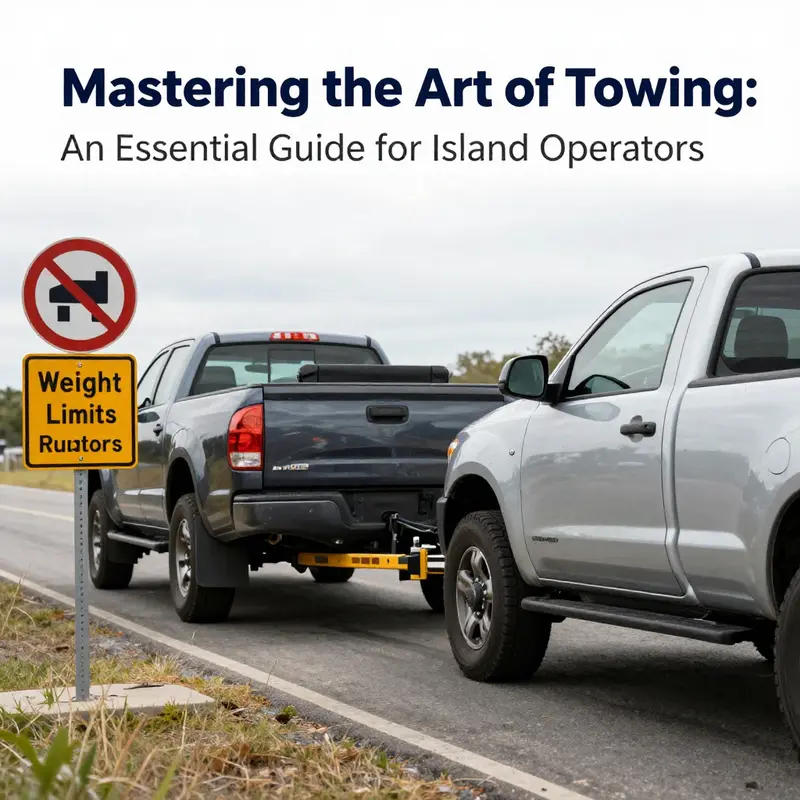
Understanding the legal framework before you hitch up is not optional. Towing a car with a pickup truck combines vehicle mechanics, road safety, and regulatory requirements. Ignoring any of these areas can lead to fines, liability in a crash, or severe mechanical damage to either vehicle. This chapter walks through the concrete legal checkpoints and the practical steps that satisfy them. The aim is to give you a clear, usable checklist so you can determine whether your pickup, your equipment, and your plans meet the law and best practice.
Start with the single most important rule: know your vehicle’s limits. Your pickup’s towing capacity is not an estimate. It is a defined figure in the owner’s manual based on engine output, cooling system capacity, frame strength, brakes, suspension, and Gross Vehicle Weight Rating (GVWR). The GVWR governs the total weight your pickup can legally carry or tow. If the combined weight of truck, passengers, cargo, towing gear, and the towed vehicle exceeds this rating, you are operating outside legal and safe limits. Always confirm the rating and use it as the first pass-fail test.
Next, match the correct hitch and towing equipment to the load. There are different hitches for different jobs: ball hitches, gooseneck hitches, fifth-wheel couplings, and receiver hitches all have distinct weight ratings and intended uses. The hitch you use must be rated for the gross trailer weight you intend to tow. A gooseneck or fifth-wheel setup offers superior stability for heavier loads because the tongue weight sits over the pickup’s rear axle. For heavier or longer hauls, a properly installed gooseneck will distribute forces more safely than a rear-mounted ball hitch.
Proper installation matters legally. A hitch must be attached following the manufacturer’s installation instructions or by a qualified shop. Improper installation that causes failure can expose you to civil liability and criminal charges in some jurisdictions. Keep receipts and documentation for any aftermarket hitch or towing package you install. Those records help prove compliance if a dispute arises.
Weight distribution and tongue weight are not just technical preferences. They are legal safety requirements in many places. The trailer’s tongue weight should usually fall between 10% and 15% of the trailer’s total loaded weight. Too little tongue weight can cause trailer sway. Too much can overload the pickup’s rear axle and reduce steering control. If your trailer is heavy relative to the pickup, use a weight-distributing hitch. Law enforcement and inspectors look for signs of incorrect loading. A visibly sagging rear end, overloaded tires, or a trailer that sways are telltale indicators an officer might stop you.
Brake systems on the towed vehicle and trailer are regulated in many jurisdictions. If the towed mass exceeds a specified threshold, supplemental braking is mandatory. This threshold varies by region, but it commonly lies where stopping distances become unpredictable for a pickup alone. A brake controller installed in the towing vehicle controls electric trailer brakes and meets this requirement. If the towed vehicle’s own brakes cannot be used while towing, a separate braking system on the trailer or tow dolly is required. Check your local rules to determine the exact limits and the required braking type.
Lighting and signaling are legally required and non-negotiable. The law requires functional brake lights, tail lights, and turn signals on the towed vehicle or the trailer. Where the towed vehicle’s lights will not operate while being towed, you must use a legally approved lighting harness or a light board. Many regions require that taillights and indicators be visible and that the electrical connection be inspected before any long journey.
Use of correct attachment points is critical. Drivers sometimes secure tow bars or ropes to bumpers or body panels. That is unsafe and illegal in many places. Use designated towing eyes or structural tow hooks. Safety chains or cables are mandatory in most jurisdictions as a fail-safe against a primary hitch failure. Cross the safety chains under the coupler so they can support the trailer tongue if the coupler detaches. Ensure chains are sized and rated for the load.
Licensing and driver responsibility are legal basics. Some jurisdictions require a special endorsement or license class to tow above certain weights or to tow multiple trailers. Even when no special license is needed, the driver must understand that towing changes vehicle dynamics. Reduced maneuverability, increased stopping distance, and a higher risk of sway impose a duty of care on the driver. Failing to compensate for these changes can be used as evidence of negligence after an incident.
Vehicle inspections and compliance paperwork may be required. Commercial towing and salvage operations commonly need vehicle inspections, registration as a towing business, and specialized plates. Individual owners towing a vehicle for personal reasons might still face inspection requirements if the tow involves a trailer. In some places, tow trucks themselves must be inspected at official centers before use. If you operate in an area with these rules, present the required documents and inspection certificates when asked.
Different jurisdictions add specific caveats. For instance, in China, light-duty pickup trucks can tow passenger cars only under a specified weight limit. In other regions, such as some Australian states, tow truck licensing and initial inspections are mandatory for businesses. These differences mean you cannot rely solely on a general checklist. Always verify local statutes, vehicle inspection rules, and licensing requirements with the relevant authority before towing.
Insurance and liability deserve explicit attention. Your personal auto insurance may not cover damage to a towed vehicle or incidents caused while towing, especially if you lack the proper endorsements. Commercial insurance has separate rules. Before you tow, notify your insurer if the tow is outside ordinary use. If you tow for hire or as part of a business, ensure primary liability and cargo coverage are in place. Documentation that the towed vehicle is authorized and that appropriate permits are secured reduces legal exposure if something goes wrong.
When towing an automatic or a four-wheel-drive vehicle, legal and manufacturer restrictions often apply. Many automatic transmissions cannot be towed with the drive wheels on the ground unless the manufacturer specifies a towing mode. Towing contrary to manufacturer guidance can void warranties and may be considered unsafe by inspectors. Similarly, full-time 4WD systems rarely permit towing with wheels on the ground. When in doubt, use a flatbed or a trailer to comply with safety and legal mandates.
Practical compliance means carrying certain items and checking them before departure. Required items commonly include a properly rated hitch, safety chains, lighting harness or light board, and a brake controller if mandated. Also carry documentation: the vehicle’s towing capacity statement, receipts for installed towing equipment, proof of insurance, and any special permits. If you operate a fleet or manage a vehicle used for towing, record-keeping helps demonstrate consistent compliance.
Enforcement often focuses on visible and immediate hazards. Law enforcement officers look for overloaded vehicles, broken or missing lights, unsecured loads, and improper hitching. An officer will also examine the driver’s ability to control the vehicle combination. When violations occur, penalties range from fines to confiscation of towing equipment, and in severe cases, prosecution. Avoid these outcomes by performing a thorough pre-departure check that addresses both safety and legal compliance.
For fleet operators and those who tow regularly, integrating towing compliance into a broader emergency and maintenance strategy greatly reduces risk. Standard operating procedures, periodic equipment inspections, and driver training programs ensure legal adherence. If you manage a fleet, review industry guidance on emergency response and towing. For operators in island or remote contexts, specialized preparedness resources are useful for compliance and safety planning. See this resource on emergency preparedness for island fleets for practical guidance and strategies: https://theislandtowtruck.com/emergency-preparedness-for-island-fleets/.
Finally, consult local authorities for definitive rules. Regulations change, and some areas impose unique requirements on towing practices, licensing, and inspections. For specific regulatory information in Western Australia, consult the official vehicle licensing and tow truck guidance here: https://www.dpt.wa.gov.au/vehicle-licensing/tow-trucks. Use that official source when planning towing activities that may be subject to inspection or licensing.
By verifying towing capacity, using rated hitches and safety chains, confirming brakes and lights, ensuring driver qualifications, keeping insurance current, and consulting local authorities, you reduce legal risk dramatically. Compliance protects you, your vehicle, and other road users. Treat the legal checklist as an integral part of your towing routine. Adopting those checks turns a risky task into a manageable, lawful operation.
Match the Method to the Machine: Choosing the Right Way to Tow a Car with Your Pickup
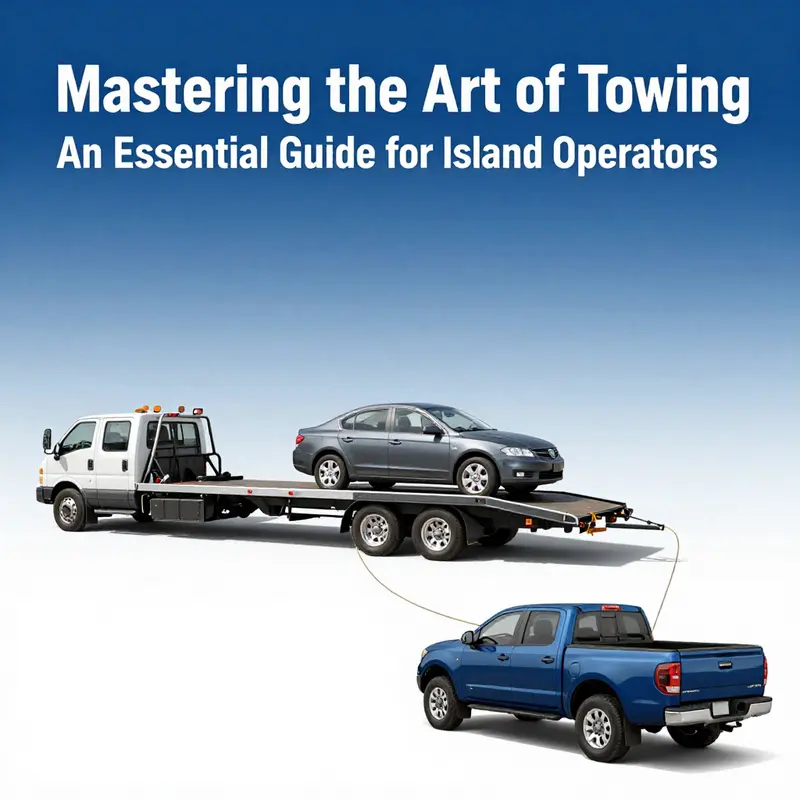
Choosing the right towing method starts with the vehicle being moved, not the truck doing the pulling. Your pickup can offer several ways to tow a car. Each method has clear benefits and hidden risks. Pick the wrong one and you risk drivetrain damage, poor handling, or legal trouble. Focus on the towed car’s transmission type, drivetrain layout, distance, speed, and condition. Also check the pickup’s hitch rating and gross vehicle weight limits. These factors determine whether a tow bar, tow dolly, flatbed trailer, or a short-term rope is appropriate.
A tow bar keeps the towed car’s wheels on the ground and connects rigidly to the truck. It works well for many manual transmission cars, and some older models specifically cleared for it. The technique is simple. Put the towed car in neutral, release the parking brake, attach the tow bar to designated towing points, and ensure lights function. The main advantage is convenience. A tow bar is lighter than a trailer and quicker to set up. It also leaves the truck bed free for gear. But that convenience comes with caveats. If the towed car has an automatic transmission, its drive wheels will turn while the engine is off. That rotation can pump oil incorrectly and destroy transmission seals and pumps in some designs. Modern automatics are often vulnerable. Unless the manufacturer explicitly permits flat towing, avoid this method for automatics.
A tow dolly lifts the front wheels of the towed car off the road. The rear wheels remain on the pavement. This method protects front-wheel-drive drivetrains because those wheels won’t rotate. For many front-wheel-drive cars, a dolly is a cost-effective alternative to a full trailer. It is lighter than a flatbed and uses less fuel. But dolly use introduces other limits. Rear-wheel-drive or all-wheel-drive cars can suffer if their rear wheels remain on the ground and the vehicle’s driveshaft or transfer case turns. Some owners disconnect the driveshaft or lock the hub to avoid damage, but these fixes require mechanical skill and tools. Dollying also concentrates load on the towed car’s rear tires. On long trips, heat buildup or tire wear can become an issue. Finally, a dolly produces a different sway profile than a trailer. Drive cautiously and keep speed down.
Flatbed trailers offer the safest, most versatile solution. The entire vehicle rides on the bed, so wheels, brakes, and drivetrains remain static. Flatbeds eliminate the risk of transmission damage for automatics and for complex 4WD systems. They also allow you to move badly damaged vehicles. For long distances, highway speeds, or high-value cars, a flatbed is usually the right choice. The trade-offs are obvious. Flatbeds are heavier, more expensive, and require a truck with suitable payload and towing capacity. You must also ensure your hitch, brake controller, and wiring can handle the trailer and load. If you tow regularly, consider a well-rated flatbed and professional installation of towing equipment.
Automatic transmissions usually dictate method choice. If you cannot confirm the manufacturer allows flat towing, avoid letting the driven wheels roll. The safest default is a flatbed. Some automatics permit towing with the engine off if a specific procedure is followed, or if a transmission lubrication pump is engaged. Always consult the owner’s manual. If you lack the manual, contact a dealer or a reputable towing pro. Ignoring the rules can mean catastrophic gearbox failure after a short trip.
Four-wheel-drive vehicles complicate decisions further. Part-time systems with selectable 4WD often allow towing with wheels on the ground when set to two-wheel mode, but check the manual. Full-time 4WD or on-demand systems usually circulate oil through differentials and transfer cases even when stationary. Those systems can bind or suffer when towed with wheels rolling. Look for warning stickers like “Do Not Tow” or “Tow on a Flatbed Only.” Many manufacturers include explicit towing instructions because the internal gearing and viscous couplings need precise handling. When in doubt, choose a flatbed.
Weight and capacity cannot be overlooked. The pickup’s towing capacity and payload limits determine what you can carry safely. The hitch class or receiver rating, the truck’s suspension, brake system, and tire load ratings all matter. Use the pickup’s placard or owner’s manual to find gross combined weight rating (GCWR) and maximum tongue weight. Exceeding those numbers affects steering, braking, and stability. If the towed vehicle plus trailer weight push you near or above limits, hire professionals. When matching a dolly or trailer, ensure the dolly’s rated capacity is above the car’s front or total weight. Never improvise with equipment not rated for the job.
Proper attachment points are critical. Factory tow hooks or reinforced frame brackets are designed to take the load. Avoid using bumpers, plastic parts, or weak aftermarket anchors. A tow bar must connect to dedicated brackets on both vehicles. A dolly or trailer won’t be secure unless the vehicle’s frame or axle is supported correctly. Test connections with a gentle pull before entering traffic. If there is play or slop, stop and re-secure. Use safety chains crossed under the tongue on trailers. On a tow bar, a secondary safety cable or chain is a must. These backups prevent runaway separation if the primary link fails.
Lights and brakes protect everyone on the road. The towed vehicle must display turn signals, brake lights, and tail lights tied into the truck’s wiring. For trailers and some dollies, a brake controller in the pickup is required. Electric brakes reduce stopping distance and keep the truck from shouldering the entire braking load. On steep grades or with heavy loads, supplemental braking is essential. Some regions require a separate brake system for the towed vehicle when its weight exceeds a legal threshold. Check local rules before you tow.
Complex or unusual vehicles require tailored solutions. Low-slung sports cars, for instance, may scrape on a dolly during loading. Use a flatbed or specialized low-clearance equipment. Classic cars with fragile drivetrains might need full support on a flat trailer. Heavily damaged vehicles could have suspension parts that fail if towed with wheels on the ground. If the wheels or steering components are compromised, avoid wheel-on-ground methods.
For short, controlled moves, a tow rope can work. Ropes and straps serve in emergencies, like getting unstuck from mud. Use this only at low speeds and over short distances. Ensure someone stays in the towed car to steer and brake. Bright markers improve visibility. Ropes can snap and whip, so keep bystanders clear. Prefer rated tow straps over simple rope. Still, ropes belong to the emergency toolbox, not the long-haul strategy.
Planning the trip influences method choice too. Urban moves and slow local transports often tolerate tow bars or dollies. High-speed interstate travel points to flatbeds. Long distances increase the likelihood of transmission or drivetrain issues with wheel-on-ground methods. Temperature and weather also matter; heavy rain or mountain grades can overheat rear tires on a dolly, or stress brakes on the towing rig. Factor in stops for inspection every 30 to 60 minutes on long trips.
If you lack confidence fitting or installing equipment, consult a professional. Many towing companies or service shops can advise on the correct setup. They can supply and attach a dolly or load and secure a car on a flatbed. Using experienced help reduces risk and prevents mistakes that might cause damage or legal exposure. For fleets or recurring needs, consider formalizing protocols. Good fleet procedures reduce mistakes and ensure compliance with regulations. For a quick read on fleet readiness and emergency planning, see this emergency preparedness resource.
A few practical checks tell you you chose the right method. First, the towed car shows no unusual noises or dragging during a short test pull. Second, both vehicles’ lights and signals sync. Third, the tow connection remains tight under gentle braking. Fourth, handling and steering remain predictable, without excessive sway. If any of those fail, stop and reassess the setup.
Finally, documentation matters. Keep the owner’s manuals for both vehicles handy. Note legal requirements and towing limits. A quick reference card in the truck with weight capacities and brake controller settings helps on the road. If you tow for other people, verify their vehicle’s transmission type and any manufacturer warnings before you attach anything.
Choosing the right towing method is a balance between practicality and protection. When the towed vehicle is automatic, damaged, full-time 4WD, or very valuable, pick a flatbed. For front-wheel-drive cars in good condition on short trips, a dolly is an efficient option. Tow bars suit compatible manual cars for short, careful moves. Reserve ropes for immediate emergencies. Make decisions based on vehicle specifics, the pickup’s rated capacity, and the distance and speed you expect. When in doubt, prioritize the vehicle’s drivetrain and select the method that avoids wheel rotation. This approach prevents costly damage and keeps everyone safer on the road.
For more detailed scenarios and step-by-step comparisons, refer to professional towing guidance at this external resource: https://www.autoblog.com/2024/08/15/towing-a-car-with-a-pickup-truck/.
Emergency preparedness for island fleets
Rigging Readiness: Mastering the Prep of Your Pickup for Safe Car Towing
A tow begins long before the moment the towing hitch lifts a vehicle off the ground. It starts with a careful assessment of the pickup’s readiness, a deliberate choice of gear, and a mindset that safety is a continuous practice, not a single checkbox on a checklist. When you know what to prepare and how to prepare it, you translate a potentially risky operation into a controlled sequence. The goal is simple in theory: keep the weight of the towed car under control, preserve its and the truck’s mechanical integrity, and make the journey to the destination as smooth and predictable as possible. In practice, that means reading the road ahead as a system—the truck, the trailer or tow bar, the cable or chains if used, and the vehicle being towed—all must work in harmony. The preparation stage is the best chance to establish that harmony, because mistakes here transfer into dangerous or costly consequences on the road. As you lay out the plan, you also reinforce a mindset of responsibility, because towing is not just about getting a car from point A to point B; it’s about safeguarding lives and reducing the risk of damage to both vehicles along the way.
The first pillar is a clear understanding of size, weight, and capability. A pickup must be appropriately larger and heavier than the car it tows. This is not a contest of bravado but a matter of physics. A lighter, underpowered truck can struggle to boil down to predictable performance when the weight of the towed car presses down on the drivetrain, the brakes, and the suspension. Before you even hook up, you consult the owner’s manual and any placards on the driver’s side door jamb to verify the towing capacity. That number is not negotiable; it’s the boundary within which safe operation remains feasible. Exceeding it invites a cascade of issues: insufficient braking power, overly warm transmissions, tire overload, and a higher likelihood of swerving in gusts of crosswinds or on uneven road surfaces. If the numbers don’t align—the car weighs more than the pickup’s rated capacity—you do not tow. You arrange a different solution, such as a flatbed or a professional service, rather than testing the limits and hoping for the best. In some regions, the legal frameworks codify these limits; understanding those requirements helps you avoid fines and, more importantly, protects you and others on the road.
Once the basic math is settled, the choice of towing equipment becomes the second decisive act. For most situations where the towed car is non-running or has compromised brakes or steering, a heavy-duty tow bar—often called a hard tow bar—provides a rigid connection that enhances control and stability. The alternative, a tow rope, is only appropriate for short, low-risk recoveries and emergency holdovers. If a rope is used, it must be rated to at least 1.5 times the weight of the towed vehicle and must feature secure, high-strength hooks. The rope’s integrity is everything; frayed strands or stretched connections can fail without warning, producing an abrupt decoupling that endangers the vehicle occupants and anyone nearby. The third option, a flatbed trailer, remains the safest and most versatile solution, especially for automatic transmissions or full-time four-wheel-drive systems that can be vulnerable to wheel-to-ground towing damage. A flatbed eliminates contact between the towed vehicle’s wheels and the road, preserving the drivetrain and reducing the risk of secondary failures, making it an attractive choice when the car’s condition or transmission type demands extra care.
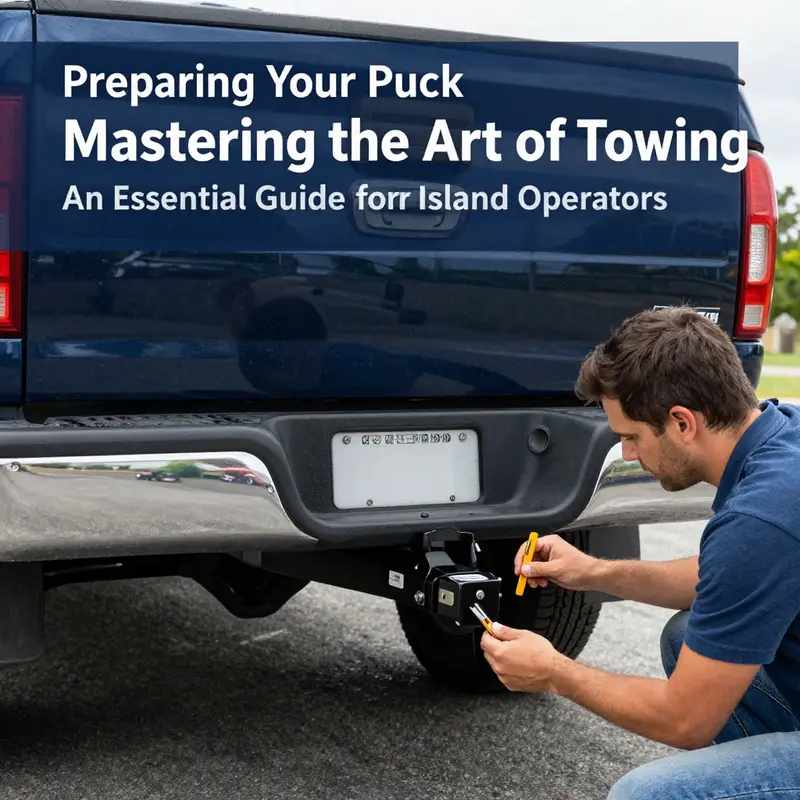
The practical work of preparation then shifts to the truck itself. A pickup’s readiness is not a cosmetic checklist; it is a systems check for performance under load. Start with the essentials: brakes, lights, tires, and suspension. Each plays a crucial role in safety. The towing hitch, whether a traditional receiver or a specialized adapter, must be securely installed and rated for the anticipated load. In some markets, especially where factory towing hooks are not standard, swapping in or adding an aftermarket tow bar or hitch adapter becomes necessary. The integrity of every connection matters: a loose hitch or a worn receiver can turn a controlled maneuver into a crisis. With the hitch in place, connect the tow bar or hitch assembly to the proper tow points on both vehicles. Use designated tow hooks—never rely on bumper mounts as a primary connection. After the physical connection, perform a cautious test pull from the tow truck to confirm there is no sway, no play, and no unexpected movement in the linkage. A firm, deliberate test helps you detect misalignment or loose hardware before the road becomes involved.
At this stage, the attention naturally turns to the vehicle that will be towed. Preparation of the car itself is a meticulous ritual. Manual transmission cars are straightforward: place the car in neutral, release the parking brake, and ensure the steering wheel is unlocked so it won’t bind as the towed vehicle follows the towing vehicle’s steering input. Automatic transmission cars demand more nuance and a strong caveat. The owner’s manual is the ultimate authority, as some automatics tolerate towing with the transmission in neutral, others require special procedures or a temporary neutral mode that involves specific controls or steps. Crucially, never tow an automatic with the engine off unless the manufacturer explicitly permits it—this can quickly damage the transmission’s hydraulic or planetary gear sets. For four-wheel-drive vehicles, the rules tighten further. If the 4WD system is part-time or can be disengaged, it’s often safer to tow with the wheels off the ground or to opt for a flatbed. Full-time or on-demand 4WD systems can complicate matters further; in those cases, a flatbed is typically the prudent choice to avoid drivelines and differential stress. Warning labels commonly reflect these cautions: “Full-time 4WD—Do Not Tow” is a clear signal that wheel-on-ground towing isn’t appropriate unless the system is disabled according to the manufacturer’s directions.
With the vehicles prepared, the practical act of attachment comes next. The aim is to establish a connection that is secure, visible, and easily controllable. You attach the tow bar or rope to the correct towing points on both vehicles. Tow hooks are preferred for safety and reliability. Once connected, you advance slowly to test the linkage in light, controlled motion. There should be no slack, no wobble, and no unexpected movement. The towed car’s lights must operate in sync with the towing vehicle’s indicators and brakes, a test that is ideally verified with a helper who can confirm the lighting behavior from the rear. Lighting is not a decorative accessory here; it’s a critical safety signal, especially on mixed-traffic roads or at dusk when visibility declines. If there’s any doubt about the electrical compatibility or the function of brake lights, signals, or hazard indicators, resolve the issue before beginning the tow. This may involve adjusting connector pins, replacing damaged cables, or adding a simple adapter that ensures a clean electrical feed to the towed car.
The path from preparation to motion is short, but it must be traveled deliberately. Driving with a towed vehicle requires a different rhythm from solo driving. Set a conservative speed, typically well below highway limits, often around 30 mph (about 50 km/h) as a practical ceiling, depending on local laws and the towing setup. The idea is to give the combination enough inertia to stay stable while leaving ample time for braking and lane changes. Turns demand extra room; the towed vehicle follows a wider arc, and your steering inputs must anticipate this added radius. Braking must be progressive and predictable; avoid sudden stops that can ripple through the towed line and stress the hitch. Lane changes require early signaling and smooth execution to prevent any transient hitch movement that could destabilize the arrangement. Regular monitoring is essential: use mirrors to observe the towed vehicle’s behavior, listen for new creaks or metallic sounds, and be vigilant for any looseness in the attachments or tire pressures that could shift under load. On long trips, schedule periodic checks every 30 to 60 minutes to confirm that the connections remain tight, the lights still function, and the tires retain proper pressure. A small, well-timed inspection can avert a major failure later in the journey.
Preparation is not just about the mechanical; it extends to planning the route and anticipating conditions. Where possible, choose flat, low-traffic routes that minimize the need for braking in steep grades or negotiating busy interchanges while managing towed weight. If highways are unavoidable, plan for emergency stopping lanes and ensure occupants of both vehicles remain clear of traffic. Keep a modest, steady pace rather than chasing efficiency through speed. A calm, controlled tempo reduces the risk of sway, bounce, and load shift. Communication between the drivers is vital. A simple, reliable line of communication—whether a handheld radio or a mobile device with hands-free operation—helps coordinate braking, accelerating, or turning actions, especially if one driver notices unusual behavior in the towed car. The use of warning triangles at a safe distance behind the towed vehicle is a prudent precaution on normal roads, with the distance adjusted for higher speeds on highways. In some regions the recommended distance can be 50 meters in regular traffic and increases on higher-speed corridors; following local guidelines is essential.
If something goes awry, the response must be clear and practiced. A broken tow rope or a detach event requires a controlled, deliberate stop. Panicking under a tow can create the exact conditions you aimed to avoid, so the plan includes a methodical emergency routine: slow down gradually, steer to a safe shoulder or service lane, activate hazard lights, and deploy warning measures. Once safely stopped, assess the situation, re-secure or replace the compromised connection, and, if needed, call for professional assistance. In the larger scope of preparation, that contingency is not a failure but a prudent acknowledgement that towing involves variables—road conditions, weather, and the mechanical state of the vehicles—that can suddenly shift. The best-prepared operator treats contingency planning as essential, not optional.
From a broader perspective, the preparation phase is also about aligning practical realities with regulatory and safety considerations. In certain markets, specific mass limits apply, and operators must confirm that their setup complies with local rules. This alignment is not a matter of compliance for compliance’s sake; it is about ensuring that the entire operation remains within the boundaries where engineering and human judgment converge to produce a safe outcome. For the towing operation to be truly seamless, the operator must maintain ongoing awareness of the car’s transmission state, the truck’s braking response, and the integrity of all attachments. It is not enough to know how to connect a tow bar; one must know how to respond when the weight of the towed car shifts, when weather adds resistance, or when a road surface is slick.
Incorporating feedback from practical experiences can refine your approach. It helps to consult non-proprietary resources that discuss general safety practices and real-world scenarios. For ongoing guidance and practical insights, you can explore the broader discussions at the Island Tow Truck blog, which offers perspectives from professionals who regularly navigate similar tasks. The knowledge shared there complements formal guidelines and expands the toolkit for anyone who needs to tow a car with a pickup. For readers who want to deepen this understanding, that resource provides a convenient way to stay informed while you prepare for the next tow.
Ultimately, the art of preparation is about anticipation and control. You anticipate the weight, the dynamics of the linkage, and the complexities of the road ahead. You exercise that anticipation through careful equipment choices, meticulous connections, and disciplined driving. Each element—the compatibility of towing equipment, the correct state of the towed vehicle, the integrity of the electrical system, the load on the truck, and the planned route—works in concert to minimize risk. When these elements are aligned, towing becomes less a test of nerve and more a disciplined operational procedure. The result is a towed vehicle that follows with predictability, a truck that handles the load without strain, and a team of drivers who communicate effectively and respond calmly to the realities of the road.
As you move from preparation into execution, remember that the safety margin you create in the planning phase compounds as you proceed. This is not merely about compliance; it is about confidence built through rigorous checking, careful selection of towing methods, and a mature respect for the physics that govern vehicle dynamics under load. The caravan of towed weight is a shared responsibility, and every participant—driver, spotter, and helper—has a role in maintaining control and safety. With that mindset, preparing your pickup for towing a car becomes a disciplined, repeatable process rather than a spur-of-the-moment improvisation. It is the foundation upon which every subsequent tow rests, a preparation that enables you to arrive at your destination with the same calm efficiency with which you began.
External resources and further reading can reinforce these concepts and provide official guidelines that supplement the practical advice in this chapter. For a comprehensive official overview of towing and trailer safety, consult this authoritative resource: https://www.nhtsa.gov/vehicle-safety/towing-and-trailer-safety.
Safe Towing Practices: Preparing, Connecting, and Driving When Towing a Car with a Pickup
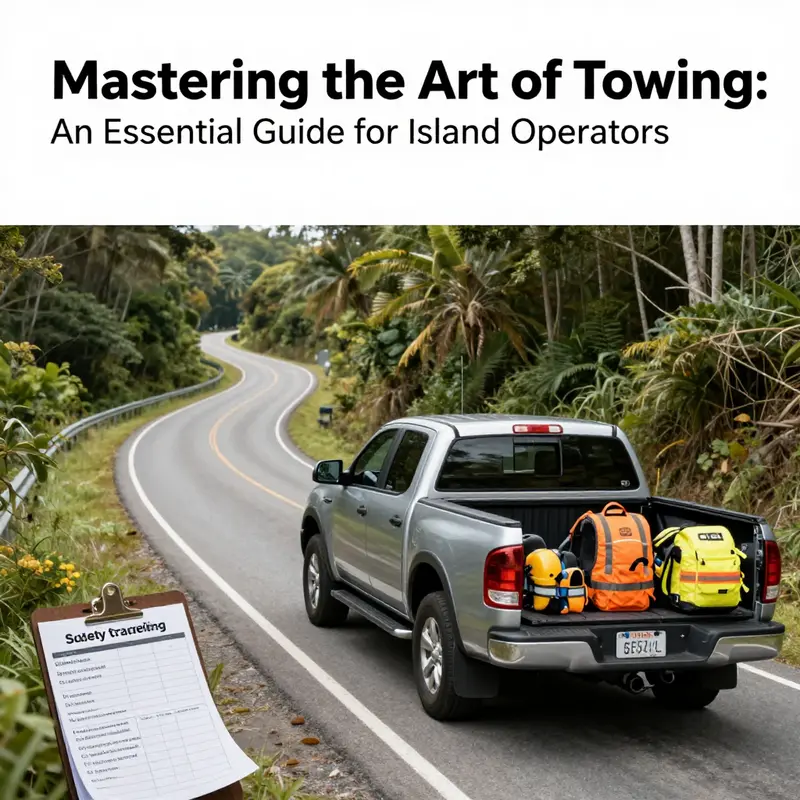
Safety should govern every decision when towing a car with a pickup. From the moment you decide to tow, the choices you make determine whether the trip will be routine or risky. A clear, methodical approach reduces hazards. Start by confirming the towing capacity of your pickup and the tare weight of the vehicle being towed. Consult the owner’s manual and the pickup’s hitch rating. Never assume the truck can handle more than its specified limit. Overloading the hitch, receiver, or suspension creates instability, lengthens braking distances, and can lead to catastrophic failure.
Before coupling the vehicles, run a pre-towing inspection. Check tire pressure on both vehicles, including the spare, and inflate to recommended levels. Underinflated tires increase rolling resistance and heat, which strains the towing vehicle and makes steering sluggish. Inspect the pickup’s brakes, suspension, and lights. Verify the hitch receiver is free of cracks, properly seated, and bolted to factory or rated mounts. If your pickup uses an aftermarket hitch adapter or tow bar, confirm it has the correct class rating for the intended load. Safety chains are essential. Use chains that are in good condition, correctly sized, and crossed beneath the hitch. Crossing the chains creates a cradle that prevents the tongue from dropping to the road if the main connection fails.
Electrical connections must not be an afterthought. Test brake lights, turn signals, and running lights before moving. A helper can press the brakes while you verify light function in mirrors, or you can check with a portable reflector. Secure wiring to prevent dragging or chafing. Use proper connectors and seals designed for automotive use. Loose or exposed wiring can short out, causing lights to fail when you need them most.
Proper attachment points on both vehicles reduce stress on bodywork and prevent damage. Use manufacturer-specified tow hooks or reinforced towing brackets. Never fasten a tow rope or chain to non-structural points like bumpers, suspension arms, or plastic trim. For a tow bar, ensure the bar is rated for both vehicles and that locking pins and safety clips are engaged. When using a tow strap or rope for short, slow moves, pick a strap with adequate working load limit and inspect it for frays. Attach the strap to designated tow eyes and tie a brightly colored flag to the middle. While tow straps are flexible and easy, they are meant for low-speed, short-distance recovery only.
The drivetrain and transmission of the towed vehicle must be managed correctly. For manual transmissions, place the gearbox in neutral and release the parking brake. Ensure the steering column is unlocked and the ignition is on when required to prevent steering lock. Many automatic transmissions are not designed to have their wheels turn without engine lubrication. Towing an automatic with the engine off can destroy internal components. Consult the vehicle’s manual for specific guidance before proceeding with a tow that leaves any wheels on the road. Four-wheel drive systems complicate matters further. If the vehicle has a full-time 4WD system, do not tow it with any wheels on the ground. Part-time systems that can be disengaged may allow wheel-on towing, but only after confirming the transfer case can be placed in neutral or disconnected. When in doubt, use a flatbed trailer or dolly to remove the towed vehicle’s wheels from the road.
Choosing the right method matters. A flatbed trailer remains the safest choice for automatics, all-wheel-drive vehicles, and long hauls. It eliminates drivetrain wear and prevents brake lock-up or overheating. Wheel dollies lift one axle, reducing drivetrain stress while allowing towing at moderate speeds. Tow bars keep the towed car’s wheels on the ground and can be efficient for suitable manual or manufacturer-approved models. Tow ropes, as stated, are for emergencies only. Always match the method to the vehicle’s mechanical needs and the distance to travel.
Connect and test before you leave. After attaching the primary coupling, hook and cross the safety chains. Attach the electrical plug and secure any extra cabling. Gently pull forward a few meters to take up slack. Stop and inspect every connection point. Look for movement, play, or misalignment. A proper connection will hold without surprising jerks. Verify brake light and turn signal synchronization between the two vehicles. If the towed car’s lights cannot be wired, equip the towed vehicle with a visible set of magnetic or clamp-on lights powered independently.
Driving while towing demands a calmer, more anticipatory style. Reduce speed and expand following distance. Towed loads increase braking distances, so give yourself plenty of room. Most local guidelines recommend keeping speeds below 50 km/h (30 mph) on surface roads when towing with a tow bar or rope. On controlled-access highways, follow posted limits and your vehicle’s towing recommendations. Avoid sudden maneuvers, and steer smoothly. Cornering at high speed produces lateral forces that can induce trailer sway or jackknife the towed vehicle.
Braking requires finesse. Brake earlier and more gradually than usual. If you must descend a steep grade, downshift in the towing vehicle to reduce reliance on brakes and preserve brake life. If the towed car has an independent braking system, verify it functions and is set appropriately for the load. Antilock systems can behave differently under tow; be prepared for subtle changes in pedal feel. Scan frequently with mirrors for signs of sway, dragging, or a disconnected chain.
Turn planning into habit. Plan routes to avoid narrow lanes, steep climbs, and low-clearance bridges. Allow wider turning arcs, especially when towing with a rigid tow bar. If you must cross intersections or execute tight turns, reduce speed and compensate for the extra length. When changing lanes, use extra care. Signal early, check mirrors, and move deliberately.
On long trips, stop often. Every 30 to 60 minutes, pull over at a safe spot to inspect the hitch, chains, electrical connections, tire temperatures, and load security. Heat buildup in tires or excessive movement at the hitch can signal developing problems. Use these breaks to adjust straps, retorque bolts, and address any abnormal noises.
Prepare for emergencies. Carry a basic towing kit that includes spare pins, bolts, rated shackles, a short tow strap, gloves, and a high-visibility vest. Keep a set of warning triangles or flares and place them at regulatory distances behind the stopped vehicles. If a connection fails while in motion, slowly reduce speed and pull off the road. Do not brake hard or attempt abrupt steering corrections. Activate hazard lights and set the warning devices at least 100 meters behind the scene when safe to do so. Call for professional assistance if you cannot safely reestablish a secure tow.
When hiring equipment, choose rental providers that offer properly rated trailers, dollies, and tow bars. Many operators also provide delivery and operator assistance for complex loads. Rental options can minimize risk by eliminating mismatched gear. Ask about insurance for the rental, and confirm that the trailer or dolly has been inspected and maintained. Avoid makeshift or improvised solutions.
Legal and compliance issues are part of safe towing. Know local restrictions on tow weight and required lighting. Some jurisdictions mandate additional mirrors or reduced speed limits while towing. Ensure registration and insurance cover the towing arrangement. Keep documentation accessible in the cab in case enforcement asks for proof.
Finally, cultivate a safety-first mindset. Approach towing as a task that requires planning, patience, and respect for mechanical limits. Do not improvise or take risks to save time. When mechanical complications or uncertainties arise, choose the option that minimizes harm to people and property. Using a trailer or professional towing service is often the better choice for complex or long-distance moves.
For fleets operating in constrained or island environments, refer to specialized guidance designed for those conditions. The resource Emergency Preparedness for Island Fleets provides practical strategies for handling limited access and emergency response logistics. It is a useful reference when planning towing operations in remote or constrained settings: https://theislandtowtruck.com/emergency-preparedness-for-island-fleets/.
For a broader practical overview of towing techniques and specific method comparisons, consult this detailed guide: https://www.carinterior.com/towing-a-car-with-a-pickup-truck/.
Adhering to these safety practices reduces the chance of damage, injury, and costly delays. Regularly review procedures and equipment ratings, and never tow beyond the safe limits of either vehicle. Thoughtful preparation and disciplined driving make towing predictable and secure.
Final thoughts
Towing a car with a pickup truck on the islands requires careful consideration and adherence to regulations. From knowing the legal requirements to selecting the right method and ensuring everything is in top condition, each element plays a crucial role in a successful towing experience. By following the safety tips outlined, you can ensure that both your vehicles and everyone on the road remain safe. Understanding these aspects not only equips you for better management but also enhances your service offerings, ensuring you stand out as a reliable operator.