
In the diverse landscape of Canada, tow truck drivers navigate varied financial waters dictated by geography, demand, and market shifts. With an average hourly wage of $17.75, the income for drivers can swing dramatically based on their province and even the specific city in which they operate. This makes understanding the intricate tapestry of earnings essential for local auto repair shops, car dealerships, property managers, resort operators, and commercial fleet operators. As we delve into this exploration, we’ll uncover regional earnings variations in our first chapter, followed by a discussion on market trends that shape the compensation landscape in a changing economy. Each chapter will shed light on the nuances that influence how much tow truck drivers earn, helping stakeholders make informed decisions regarding their towing needs.
null
null
Riding the Tides of Demand: Market Trends Shaping Tow Truck Driver Earnings in a Shifting Economy
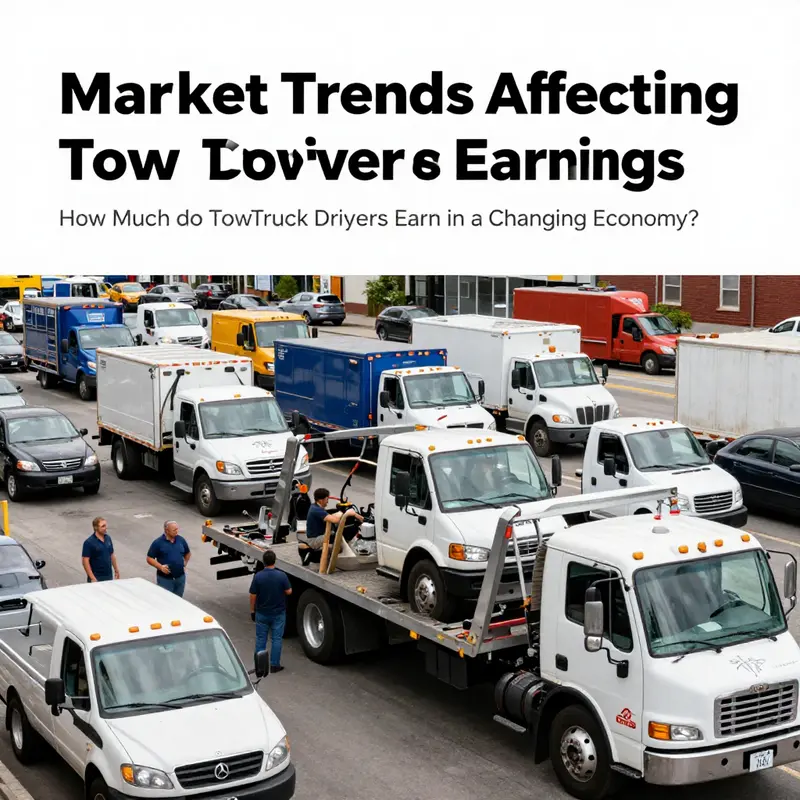
Markets bend beneath the wheels of demand, and tow truck drivers feel every shift as if it were a steep hill after a long descent. The question of how much tow truck drivers earn is not a single-ruler answer but a compass that points in different directions depending on geography, employer needs, and the broader health of the economy. In this chapter, we explore how market trends—rising vehicle ownership, urbanization, and the growth of a global towing market—rewrite the earning map for drivers who keep roads clear and help people in moments of car trouble. The picture is nuanced: earnings swing with location, the type of service offered, and the duration of work that a driver is willing to commit to, from on-call hours to steady full-time shifts. Understanding these dynamics helps illuminate why two drivers in neighboring cities can earn markedly different wages, and why, in the same year, a driver in a high-demand urban center might see both higher opportunity and greater competition for it.
The most immediate driver of earnings is demand. As more people own vehicles and drive them more often, the probability of breakdowns and the need for towing and roadside assistance increases. This is not just a matter of more vehicles on the road; it is about the kinds of services that customers expect and the times when those services are most in demand. Peak demand often aligns with weather disruptions, holiday travel, and weekend evenings when road conditions can deteriorate and traffic congestion rises. For drivers, the implication is straightforward: greater demand can translate into more calls, longer shifts, and, in markets with competitive pay, higher hourly or on-call rates. Yet demand alone does not guarantee higher earnings. The way a market organizes its services—the density of towing companies, the reliance on fleets versus independent tow operators, and the prevalence of emergency or specialized services—creates room for both wage growth and wage compression.
The numbers from developed markets illuminate the variability that makes the earnings question so context-sensitive. In North America, for instance, earnings are notably tiered by region. Across Canada, the national baseline wage sits around the midpoint of the market, with regional variations nudging pay up or down depending on local demand, cost of living, and the competitive landscape. In Canada, a representative national average hovers near a modest hourly rate, with a premium in places that function as logistics hubs or have higher costs of living. Richmond, a city within one of Canada’s busiest metropolitan corridors, emerges as a notable outlier. Here, drivers can see hourly wages that surpass the national baseline by a wide margin, reflecting tight labor markets, high demand for on-demand services, and perhaps more robust dispatch networks that place a premium on availability and reliability. Other urban centers register similarly elevated compensation compared to rural markets, where the cost of living may be lower but demand fluctuates more with the season and with the frequency of incidents.
In a broader North American context, the shift toward higher wages in certain markets aligns with the evolving dynamics of the industry. The United States presents a portrait of earnings that are similarly regionally diverse but anchored by a relatively healthy average that signals the profession’s ongoing appeal. An average annual figure—well above the typical hourly wage in many Canadian markets—reflects a workforce that benefits from a combination of steady demand, the ability to secure long-term relationships with fleets or insurance partners, and the opportunity to monetize a variety of services, from on-site roadside assistance to long-haul and heavy-duty towing where specialized equipment and expertise are required. The figure, when viewed alongside the growth of the broader tow truck market, suggests that drivers are not merely reacting to short-term spikes in demand but are positioned to reap the benefits of a market that is expanding in value.
That expansion is not a promises-to-be-kept dream; it is grounded in measurable market growth. The global tow truck market, according to recent assessments, was valued at roughly USD 1.74 billion in 2024 and is projected to grow at a compound annual growth rate (CAGR) of about 5.1 percent from 2025 to 2032. By the end of the decade, projections place the market value near USD 2.8 billion. This trajectory signals a durable demand for towing services, an industry-wide signal that more vehicles on the road, more complex breakdowns, and more frequent emergencies will require professional assistance. For drivers, sustained market growth signals more opportunities, more competition for the most desirable shifts, and—crucially—potential upward pressure on compensation as companies vie to attract and retain skilled personnel in a tight labor market.
The relationship between market growth and earnings is not linear, however. It is mediated by safety performance, a factor increasingly recognized in the industry and anchored in research from economic and labor analyses. Studies that correlate driver compensation with safety outcomes show that higher wages tend to accompany improved safety performance on the road. Where drivers earn more, carriers often report fewer crashes and more stable operations. The implication for earnings is twofold: competitive pay helps attract and retain higher-quality drivers who are better equipped to manage risk, and a safer, more efficient operation reduces costly turnover and downtime that can otherwise depress effective earnings. In turn, this creates a reinforcing loop: better pay supports better performance, which sustains demand and enables ongoing investment in drivers and equipment.
A driver’s real-world earnings, therefore, depend as much on the structure of employment as on the macro forces shaping the market. In many markets, earnings arise from a blend of hourly wages, on-call premiums, and performance-based incentives tied to service levels, dispatch responsiveness, or time-to-arrival metrics. Regions with a high density of fleets that coordinate with insurance networks and roadside assistance programs may present more stable pay structures, with predictable hours and benefits, even as other markets emphasize earnings potential through higher on-call rates and weekend premiums. In practice, this means that two drivers in the same city, one tethered to a large, structured fleet and the other operating as an independent contractor, can experience markedly different income trajectories. The former may enjoy steadier cash flow and a clearer path to benefits, while the latter may chase higher hourly rates but face greater variability and more unpredictable scheduling.
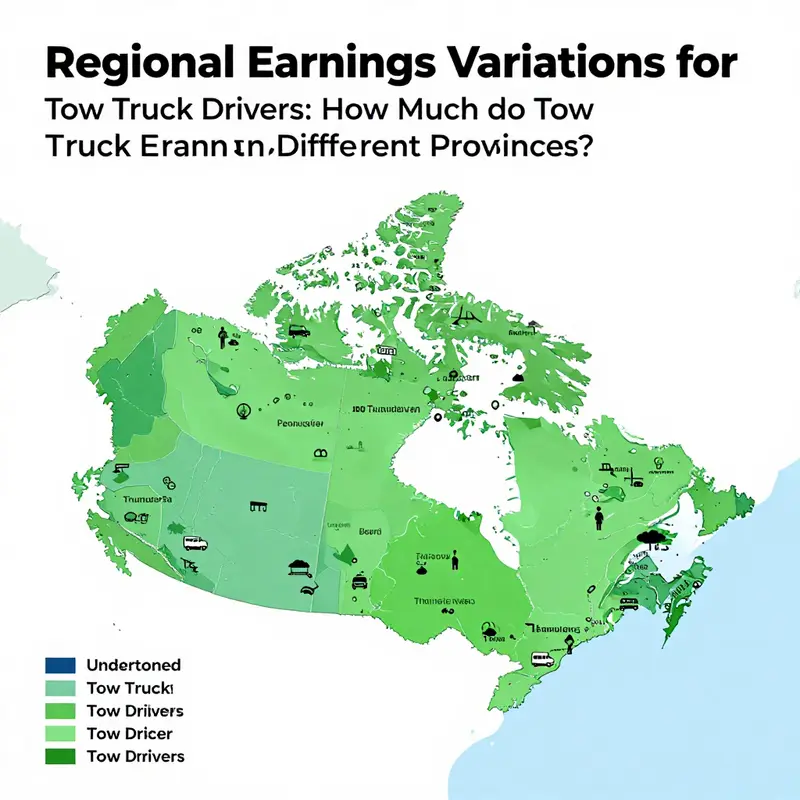
Regional pay patterns within a country can illuminate the broader trend toward wage differentiation in response to demand and labor competition. In Canada, for example, the average hourly wage for tow truck drivers rests near a common baseline across much of the country, yet pockets of higher pay mark the map as demand concentrates. In one coastal or metropolitan node, the hourly rate may approach mid‑to‑high twenties, while other communities hover near the national average. Richmond’s wage premium is a striking illustration of this dynamic. A city that functions as a hub for transport and logistics can offer wages that push toward the upper end of the scale, as dispatch networks compete to recruit drivers with the right mix of reliability, speed, and safety awareness. In the same geographic region, other municipalities may offer more modest compensation, reflecting different degrees of market saturation, industry specialization, and the capture of value from ancillary services in addition to towing itself.
The economics of pay are also shaped by who the employer is and what kind of work the job entails. Pay ranges seen in recent postings illustrate how employer strategy and job structure translate into earnings. A full-time, higher-premium posting in a busy urban corridor could offer hourly rates well above the baseline, reflecting the premium placed on prompt service, extended hours, and the need for dependable coverage. In contrast, ads for entry-level or part-time roles may offer more modest hourly wages but come with the upside of flexible schedules or the opportunity to build experience that translates into future earnings. The spectrum—from near the lower end to splendidly higher, premium-scale wages—exists in the same market context because each employer operates under a different calculation of cost, risk, and revenue.
The regional map thus becomes a guide to expectations. Thunder Bay in Ontario, for example, shows a significantly higher hourly rate than the national baseline, a signal that some out-of-the-way markets still sustain strong demand along with limited competition. Ottawa registers a similar premium, underscoring how political and administrative hubs, with dense traffic and high vehicle usage, drive demand for towing and roadside services. In Western Canada, major metropolitan centers, and Alberta’s largest cities, wages track the needs of a growing economy that consumes more vehicles and requires highly responsive dispatch operations. Yet, even within a country, the distribution of pay can appear uneven when you add the factor of specialized work. Towing heavy-duty vehicles, delivering jump-start services in remote locations, or providing accident response in challenging weather can command higher rates, even as routine calls in calmer lapses of time yield more standard compensation. The interplay of routine and specialty services shapes an earning profile that is layered rather than flat.
This layering is echoed in how the industry perceives opportunity and risk. For drivers who value predictability and stability, a position with a reputable fleet that offers full-time hours and reasonable on-call expectations can deliver a dependable income and clearer access to benefits. For those drawn to the excitement of high-demand periods, the same market offers the potential for surge earnings during peak times, with compensation that can leap above the typical hourly rate but at the cost of longer or more irregular hours. The challenge for a driver weighing the options is not only how much they can earn per hour, but how much work is required to secure those hours, how consistent the schedule is across the year, and how benefits and long-term security balance with the variability of on-call demands.
Another dimension to earnings rests in the experiential and logistical expertise a driver develops over time. As a driver collects more experience, they become better at estimating job duration, navigating complex dispatch rules, and managing the chain of custody for towed vehicles. This expertise translates into more efficient service delivery, shorter on-site times, and a higher perceived value by employers who must meet customer expectations quickly. In markets with robust insurance partnerships and well-structured dispatch networks, experienced drivers can leverage their reputation to command premium rates, or to secure preferred scheduling that aligns with personal goals, whether that means shorter workweeks, more weekend flexibility, or the ability to take longer breaks during off-peak times. Over the long term, these factors contribute to earnings stability and upward pressure on wage scales as employers compete to retain the most capable operators.
Within this economic frame, the industry’s broader growth story matters as well. The market expansion speaks to the sustainability of jobs and the potential for wage growth over time. A growing market creates room for more fleets to enter the space, for existing fleets to diversify their offerings, and for new service lines to emerge—everything from fleet maintenance support and emergency response planning to the integration of more advanced equipment and training programs for drivers. When a market matures, pay structures can evolve to reflect not only the cost of living and the value of 24/7 availability, but also the enhanced capabilities that come with better training, stronger safety records, and more sophisticated service level agreements with customers.
As we consider the path forward, a key takeaway emerges: earnings are a function of where you work, how you work, and how well you align with the market’s evolving needs. The highest earning potential sits where demand is consistently strong, competition among employers is keen, and the service ecosystem rewards reliability, speed, and safety. Yet even in markets with strong pay signals, drivers must weigh personal factors—tolerance for irregular hours, willingness to travel, preference for on-call flexibility, and appetite for the responsibilities that come with specialized towing. In some places, the most lucrative opportunities arise not from raw hourly rates alone, but from the capacity to package a broader value proposition: rapid response times, dependable availability, and a track record of safe, compliant operations that build customer trust and loyalty. For drivers who want to understand how to navigate this landscape, a practical path involves building a reputation for dependable service, seeking positions within fleets that demonstrate longevity and stability, and cultivating a readiness to adapt to the market’s shifting rhythms—the weather, the traffic, and the ever-changing rhythms of a road network that never stops asking for help.
To connect these market realities with actionable insights, consider how a driver can read the map of earnings in their own region. Start with the local baseline: what is the typical hourly rate, and how does it differ during on-call shifts or after-hours coverage? Then examine demand indicators: is the region a transportation hub with dense commercial activity, or a more dispersed area where calls come irregularly but with longer response times? Look at the structure of local employers: do most jobs come from large fleets that offer stable hours, or from smaller outfits that compete more aggressively on pay to attract drivers most responsive to dispatch? This analysis helps explain why a driver might see a windfall in one quarter and a flatter pay scale in another, and why the same year can feel very different depending on the driver’s calendar and location.
An additional dimension concerns the role of safety and regulatory expectations. As the industry invests in higher pay to attract skilled operators, the accompanying emphasis on safety practices and regulatory compliance can influence earnings indirectly. A safer workforce reduces the risk of incidents that cause downtime and insurance costs, enabling firms to maintain or increase wage levels without sacrificing profitability. Conversely, a market that tolerates lower pay but higher turnover may experience more variability in service quality and longer-term costs that erode earnings. The bottom line is that compensation is increasingly tied to value creation—how well drivers contribute to safety, reliability, and efficiency—just as much as to simple call volume or hours worked. For drivers, this means that investing in professional development, staying current with best practices, and building a recognizable track record can pay dividends in both immediate earnings and the trajectory of wages over the life of a career in towing.
The chapter’s broader arc therefore centers on a simple, enduring truth: market trends can lift earnings, but they also redefine what “earning well” means in this line of work. It is not enough to chase high hourly rates in a handful of peak periods; long-term earnings health comes from a balanced approach that includes consistent work, the willingness to take advantage of volume during times of abundance, and the capacity to deliver high-quality service that earns repeat business and durable partnerships with fleet operators and insurance partners. This is the kind of market intelligence that separates opportunistic earnings from sustainable income. And because the market continues to evolve—with new technologies, more sophisticated dispatch systems, and an expanding network of service providers—the earnings landscape will keep shifting. Drivers who stay attuned to these shifts, who cultivate reliability and safety as core competencies, and who leverage the structural advantages of their region will be well positioned to grow their earnings alongside the market itself.
The practical implications for individuals considering entry into the field are clear. First, do not assume that a single rate defines your earning potential. Evaluate the total compensation you can secure through a combination of hourly wages, on-call premiums, overtime opportunities, and the potential to work with multiple employers to optimize your schedule. Second, study your local market: where are the high-demand corridors, what are the typical call volumes, and which employers offer the most stable hours? Third, recognize the value of specialized service. Heavy-duty towing, accident response in challenging conditions, and fleet maintenance support can command higher rates and lead to more predictable demand. Fourth, invest in safety and training. The correlation between higher driver pay and better safety outcomes is not merely academic; it translates into real-world advantages that reduce downtime and improve customer satisfaction, which, in turn, sustains earning potential over time. Finally, remember the broader economic cycles. While growth in the towing market and higher demand tend to support earnings, downturns can compress pay or shift opportunities toward more flexible, on-demand work. A well-informed driver can navigate these cycles by diversifying services, maintaining a broad network of dispatch partners, and planning for lean periods with a buffer of savings or alternative revenue streams within the broader roadside services ecosystem.
For readers seeking practical, actionable guidance that aligns with the realities of modern fleet operations, there is value in understanding not only what to earn but how to earn it in a changing economy. The combination of macro-market growth, regional demand patterns, and employer strategies creates a dynamic compensation landscape that reward those who are adaptable, safety-conscious, and service-oriented. Keeping pace with market changes requires attention to data, a willingness to adjust schedules, and a commitment to continuous improvement in service quality. In the end, earnings reflect both the road traveled and the reliability behind the wheel—the dual forces of demand and dependability that sustain tow truck drivers as essential, capable professionals on roads across the country and beyond.
For readers who want a quick reference to how regional dynamics shape pay, a snapshot is instructive. In Canada, the base pay tends to center near a national average with notable upticks in markets that function as transportation and logistics hubs. Richmond, for instance, stands out with a wage premium that reflects its strategic role in regional freight corridors, a premium often echoed in other high-demand urban centers. In the United States, the story is similar but with its own regional contours: some markets offer higher compensation due to concentrated demand, while others emphasize volume and reliability over peak-rate pay. Across both nations, the trend toward higher earnings in select markets aligns with a broader narrative of a growing, increasingly complex towing sector that rewards specialists who bring efficiency, safety, and manifest value to every call.
Ultimately, the driving question for industry participants—drivers, fleet operators, policymakers, and researchers alike—is how to sustain wages that reflect the essential nature of the work while ensuring safety and career longevity. The data suggest a future in which earnings are not simply a matter of a price tag attached to a tow but a component of a broader, more integrated value proposition: dependable service, fast response, and responsible care for customers’ property. That is the market’s current trajectory, and the road ahead will likely continue to bend toward higher recognition of towing professionals as skilled, indispensable members of the transportation ecosystem. For drivers who want to align themselves with that trajectory, the path is straightforward: seek opportunity where demand is strong, build a reputation for reliability and safety, and remain flexible enough to ride the cycles of the market while investing in the capabilities that set you apart.
To ground these ideas in concrete resources, readers can explore practical guidance on fleet emergency readiness and the strategic role of tow services in disaster response and everyday road safety. For a deeper dive into how fleets plan for emergencies and how drivers contribute to resilient operations, see this resource on essential fleet emergency response strategies. This context helps connect earning potential with the strategic value a driver can bring to an organization, reinforcing that earnings are best understood as the payoff for reliable, high-quality service in a market that continues to expand and evolve. essential fleet emergency response strategies
As you move from this chapter to the next, keep in mind that the economics of tow truck driving is a living map. It evolves with labor market shifts, regulatory developments, and the changing rhythms of road traffic. The strongest compass for navigating that map is a combination of market awareness, practical skill, and a clear sense of how to translate opportunity into sustainable income. In that sense, earnings are not a fixed destination but a trajectory—one that curves with demand, sustains itself through safety and efficiency, and rewards those who learn to read the signals of the market as deftly as they read the highway.
External data and sources underpinning this discussion provide a broader frame for the conclusions drawn here. For an official wage baseline and occupational context, consult the Bureau of Labor Statistics wage estimates, which offer standardized benchmarks for the profession and illustrate how regional differences and industry structure shape pay across the United States. This external reference helps anchor the discussion in a larger labor market framework and offers a complementary perspective to the regional nuances described above: https://www.bls.gov/oes/current/oes532021.htm
Final thoughts
As the earnings landscape for tow truck drivers in Canada continues to evolve, it’s evident that various factors like regional demand, local economies, and industry trends play crucial roles. Understanding the nuances behind these variations equips stakeholders in the automotive and property management sectors with the knowledge to make informed decisions. By being aware of local wage standards and market fluctuations, you can ensure that you’re partnering with dependable towing services that offer fair compensation to their operators, ultimately benefiting your own business operations.