Navigating the world of tow truck pricing can feel overwhelming, especially for local auto repair shops, car dealerships, property managers, resort operators, and commercial fleet operators. Each business has unique needs, and understanding the costs associated with different types of tow trucks is essential for making informed decisions. In this guide, we will delve into the specifics of light duty, medium duty, heavy duty, and specialized tow truck prices, offering clear insights tailored to your operational requirements. Each chapter will illuminate the unique aspects and valuation of tow trucks, empowering you to choose the right vehicle to enhance your services, improve efficiency, and ultimately support your business goals.
null
null
Medium-Duty Tow Trucks for Growing Fleets: Decoding Costs, Capabilities, and Long-Term Value
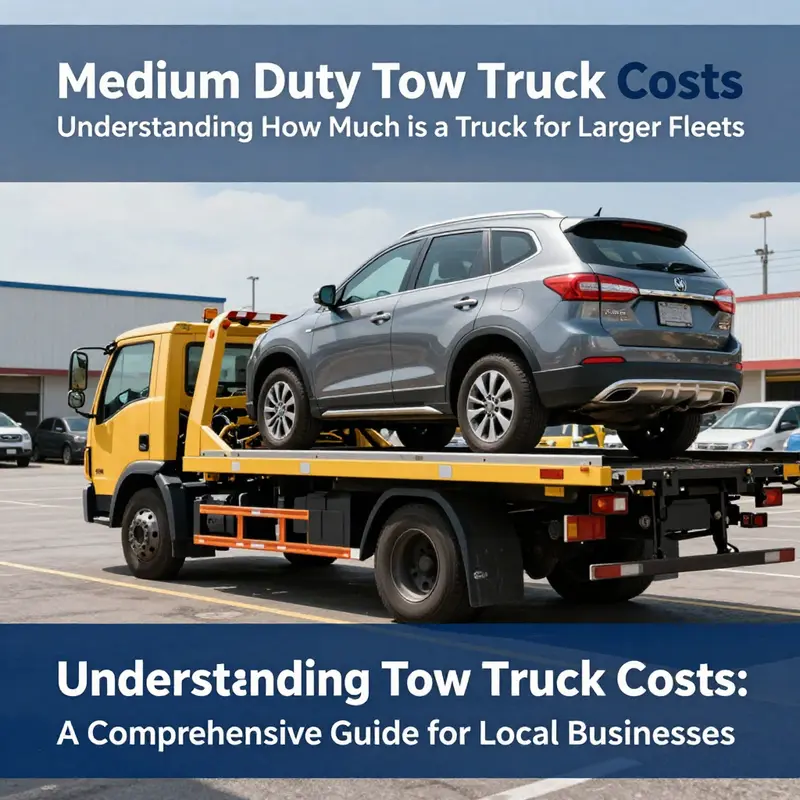
Medium-duty tow trucks occupy a pivotal niche in fleets that service a broad range of vehicles while maintaining agile response times. They are designed to haul or recover medium-weight vehicles such as 2.5- to 3.5-ton delivery vans, midsize SUVs, and light commercial trucks, offering a blend of capacity and maneuverability that larger wreckers lack. For growing fleets, understanding the cost structure of these units is essential because the choice directly affects uptime, maintenance schedules, and the ability to respond quickly to incidents that could disrupt operations. The right medium-duty unit can mean the difference between a stalled delivery route restored in minutes and a full day of operational delays that ripple through the supply chain. As fleets expand, the choreography of on-call recoveries, depot staging, and dispatch efficiency hinges on what these trucks can do and how reliably they can do it under pressure. This is where cost, capability, and lifecycle planning converge to shape a fleet’s resilience and service levels in real-world conditions.
Pricing in this segment reflects both the promise of consistent performance and the reality of market conditions. New configurations typically fall in the range of $24,000 to $35,000, influenced by the chassis, wheelbase, lift mechanism, hydraulic system, and safety features such as redundant controls or integrated lighting and alarms. Yet there is a spectrum: older, base-model machines or units with downgraded emissions equipment can be found for as little as $3,500, particularly when the configuration lacks modern OEM-compliant components, advanced controls, or a robust warranty. Those figures illustrate the tradeoffs buyers face: lower upfront price may come with higher maintenance risk, compressed lifecycles, and more frequent downtime. Conversely, a higher-priced unit with newer components usually promises better reliability, longer service intervals, and stronger resale value, which in turn reduces the total cost of ownership over a fleet’s life. For managers plotting a multi-year procurement plan, the choice often translates into a blend of initial affordability and expected reliability. In many cases, fleets adopt a staged approach—acquiring a core set of mid-range machines with solid warranty coverage and keeping a small number of younger units as standby assets to minimize downtime during peak periods or unexpected surges in demand. The economics of this strategy hinge on the balance between capex and the predictability of maintenance spend over time, and it requires close coordination with financing teams, maintenance shops, and operators who understand how these machines perform in daily duty.
Beyond the sticker price, several cost factors shape overall investment. Brand reputation matters because it correlates with parts availability and technician familiarity. The presence of OEM-certified components, the option of right-hand drive for certain territories, and compliance with local or regional towing codes can push the initial price higher but can also reduce repair lead times and the risk of downtime at critical hours. Fleet managers should also consider the lift system’s technical details: hydraulic capacity, recovery winches, outriggers, and control interfaces that integrate with the vehicle’s diagnostics. These features influence not only purchase cost but ongoing maintenance, fuel use, and the ability to modernize the fleet with adapters or attachments for specialized tasks. As fleets evolve—adding more urban coverage, expanding after-hours service, or extending into nearby jurisdictions—the degree to which the vehicle can be configured to meet those evolving needs becomes a key driver of total value. Buyers should weigh the cost of optional safety enhancements, tachograph-ready systems for certain regions, and upgrades such as anti-corrosion coatings or enhanced lighting, all of which can extend the usable life of the asset and improve resale value at the end of its service window. While the upfront cost is a straightforward line item, the long arc of depreciation, interest, maintenance, and downtime all contribute to whether the investment remains compelling over five to seven years or longer, depending on the fleet’s growth trajectory and risk tolerance.
From an operational perspective, the medium-duty category is often defined by a balance between capacity and agility. A notable advantage over heavier wreckers is their compact footprint, which translates to easier access in crowded streets, parking lots, and loading bays. That agility reduces the time-to-deploy and minimizes the risk of collateral damage during recoveries. A key capability within this class is the Class III tow bar, which is designed for medium-duty applications and can provide towing capacities up to 15,000 pounds. This level of performance supports a broad swath of fleet recovery needs, from non-emergency repositioning to peak-period assist for overloaded loads. When used effectively, Class III hardware enhances turnaround times, cuts the need for multiple units on a single call, and improves overall fleet service levels. It is a reminder that the value of a medium-duty tow truck comes not only from raw lifting power but from how consistently and safely it can perform a broad set of tasks across varied environments. Still, the decision to lean on such equipment must be anchored in a careful assessment of typical incident types, vehicle mix, and geographic spread. A unit built for repetitive, predictable tasks may deliver a sharper return on investment than one bought for occasional, high-stakes recoveries that occur only during storms or extreme incidents. The ability to tailor a truck’s hydraulics, braking systems, and telemetry to match the fleet’s standard operating procedures can dramatically affect both reliability and speed—two factors customers value most when timing is everything.
Choosing between a flatbed (rollback) and a wheel-lift configuration further shapes the cost picture and operational outcomes. Flatbeds provide superior protection for vehicles during transport and are widely preferred for immobilized or high-value assets, because the vehicle does not need to be winched or driven onto a platform. However, the tradeoffs include higher upfront costs, greater space requirements on the street, and potentially higher maintenance costs due to the complexity of the platform and independent hydraulic systems. Wheel-lift units, by contrast, deliver faster deployment and tighter maneuverability, which makes them an attractive option for urban fleets. They can often move more quickly in traffic, reduce handling time, and lower fuel use over time. The choice between these configurations should align with the fleet’s typical recovery scenarios, the mix of vehicles serviced, and the available storage and staging space at operations hubs. In many cases, fleets operate a combination of both, preserving a lighter, fast-response wheel-lift for daily calls while reserving a flatbed for more delicate recoveries or higher-value vehicles. The engineering truth remains that each setup represents a different set of risks, costs, and operational rhythms. For instance, a wheel-lift might encounter less wear in a city network with constant short trips, while a flatbed may excel in a mixed fleet with a higher proportion of immobilized or transport-requiring incidents. The overarching principle is alignment: the configuration selected should mirror the fleet’s exposure to risk, service level commitments, and spatial constraints at the points of dispatch.
From a budgeting perspective, the total cost of ownership for a medium-duty tow truck includes not just the sticker price but ongoing costs such as routine maintenance, spare parts, tires, hydraulic fluid, and training for operators. Maintenance schedules are driven by duty cycles, climate, and call volume. High-use fleets will want extended warranties or service contracts that cover hydraulic components, winches, and electronic control modules, while smaller fleets may opt for standard warranties with pay-as-you-go service plans. Fuel efficiency matters when the unit is out on the road for long shifts; a model that can optimize idle times and reduce idle fuel consumption becomes a meaningful contributor to the overall financial performance of a recovery operation. The cost of specialized towing attachments—tow hitches, wheel straps, safety chains, and protective covers—adds another layer to the procurement calculus. Buyers should anticipate the possibility of periodic retrofits or upgrades to accommodate changing regulatory requirements or fleet objectives, which can affect both capex and opex in future years. The upshot is that a medium-duty tow truck is not a one-time buy but a component of a broader strategy to keep fleets moving, compliant, and safe. In planning, finance teams should model scenarios that capture the variability in parts prices, technician rates, and the frequency of on-call incidents, because those variables can dominate the total spend over the asset’s life.
Industry resources and careful due diligence are essential when navigating this market. Fleet managers should consult technical documentation, specifications, and procurement guidance to understand how a given unit will perform in the field and how it will integrate with the fleet’s workflows. For further reading on the key specifications, features, and common uses of tow bars used with semi-trucks, consult authoritative sources such as the official technical literature referenced in professional material. In practice, real-world planning benefits from case studies and expert perspectives, including practical checks on the fit between the truck’s lifting capacity and the average vehicle mix on the roster. For those seeking more direct field knowledge and scenarios drawn from operator experience, the Island Tow Truck blog offers practical insights and updates drawn from ongoing fleet operations. Readers can explore that resource here: the Island Tow Truck blog.
Ultimately, the decision about medium-duty tow trucks should be anchored in a clear assessment of needs, risk, and the long tail of ownership costs. A fleet that relies on timely recoveries, quick turnarounds, and protection of customer vehicles will often justify higher upfront costs for models featuring robust hydraulic systems, reliable OEM components, and well-supported spare parts networks. In contrast, a smaller or cash-constrained operation might prioritize lower initial expenditure and arrange a plan that emphasizes preventive maintenance, staged upgrades, and careful monitoring of maintenance contracts. The balance between upfront price and ongoing value hinges on the reliability of the service network, the ease of obtaining parts, and the ability to train and qualify operators who understand the nuances of medium-duty recovery work. When viewed through this lens, the medium-duty tow truck is less a single price point than a critical investment decision that shapes how effectively a fleet can respond when incidents occur, how quickly it can restore service, and how safely it can manage the risks that accompany road-side recoveries. For readers seeking deeper technical detail and market context, external resources provide granular explanations of towing components, load ratings, and integration considerations that influence every purchase decision.
For those who want to dive deeper into the technical and economic dimensions of towing equipment, a number of external resources provide detailed explanations of components like tow bars and their load ratings. A detailed reference that examines semi-truck tow bar specifications, features, and common uses can help align equipment choices with operational realities. External resource: https://www.towbar.com/semi-truck-tow-bar-explained
Tow-Worthy Investments: Valuing Heavy-Duty Tow Trucks for Commercial Fleets
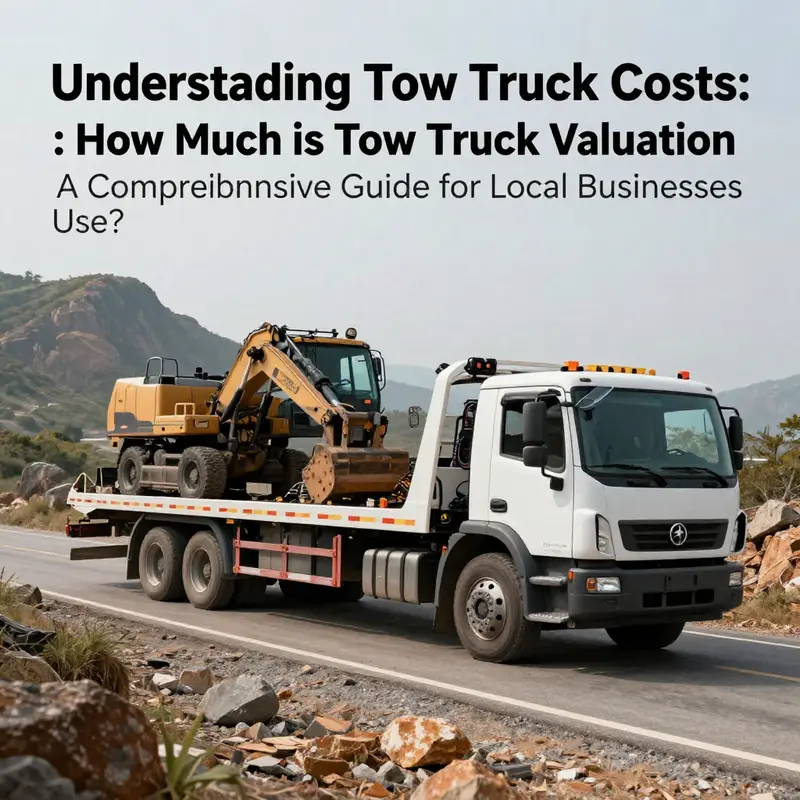
Valuation in the world of commercial towing starts with the obvious question of price, but it quickly expands into a broader reckoning of value. A heavy-duty tow truck is more than a machine with a winch and a hook; it is a rolling asset that must deliver uptime, reliability, and adaptability across a spectrum of emergencies, road conditions, and vehicle classes. When fleets plan for growth or upgrade, they weigh the sticker price against the longer arc of maintenance, fuel efficiency, spare parts availability, technician expertise, and the capacity to recover stalled or damaged vehicles with minimal disruption to the operating day. In this light, the price of a heavy-duty rotator or a specialized recovery unit becomes a proxy for the trade-off between capital expenditure and service resilience. While numbers vary, the market offers a clear ladder of options, with each rung corresponding to a defined level of capability and a distinct payment profile. The lower end is reachable for a single-unit purchase, while the upper end represents a fleet-scale investment built to handle the most demanding recoveries in adverse environments. At the core of these decisions lies a straightforward fact: capacity, versatility, and longevity are the levers that push total cost of ownership upward, but they are also the levers that pull revenue stability and customer trust upward as well.
To understand where a heavy-duty tow truck sits in a commercial portfolio, it helps to map the pricing landscape. A rotator with a 30- to 50-ton capability, and the ability to rotate fully through 360 degrees, sits in a premium segment of the market. The price for a unit in this class generally ranges from roughly forty thousand dollars to fifty thousand dollars. This spread reflects not just the raw lifting power but the integration of sophisticated hydraulics, rotation gear, control systems, and the structural integrity required to perform high-stakes recoveries. The most critical feature here—the 360-degree rotation—significantly enhances the vehicle’s operational envelope, allowing crews to approach, hook, and recover from angles that would be inaccessible to simpler configurations. This capability reduces scene time and mitigates risk during complex recoveries, translating into tangible savings over a project’s lifetime through faster turnarounds and reduced wear on the equipment folded into the operation.
But price is only the beginning. A heavy-duty tow truck’s value hinges on how well it aligns with the fleet’s mission profile. A unit designed for urban callouts in a dense metropolitan corridor will demand different attributes than a machine deployed in rural areas with rougher terrain and longer travel distances. In the first scenario, maneuverability, quick deployability, and a compact footprint may drive a lower price point within the heavy-duty category. In the second, the same 30–50-ton rotator might justify a higher outlay, because the operator is buying not just lifting power but endurance: a chassis engineered for long days, with robust hydraulic systems, reinforced outriggers, and a control suite resilient to vibration and heat. The result is a higher upfront investment, balanced by a longer service life and the ability to take on recovery assignments that would force smaller, less capable units into overtime or outsourcing.
Beyond rotation capability and capacity, other design decisions shape value. Engine power, transmission, suspension, and braking systems influence performance under load, fuel efficiency, and how the unit behaves when idling in a scene surrounded by traffic or cold weather. A heavy-duty wrecking unit is not a one-trick pony; it must integrate a crane or boom that can extend reach, counterbalance forces, and sustain operation in the presence of heavy loads. The hydraulic powerpack, the reliability of the winch, the stability afforded by outriggers, and even the cab’s ergonomics contribute to productivity on the ground. In practical terms, these features affect how many hours a technician can safely work in a given shift and how quickly a team can complete a recovery without compromising safety. Fleet operators frequently evaluate these factors through a lens of total cost of ownership, recognizing that a slightly higher initial price may yield substantially lower long-term expenses through reduced maintenance downtime, fewer spare parts misalignments, and better warranty terms.
The value proposition becomes even more nuanced when the discussion moves from generic rotators to specialized configurations used in high-demand contexts. Some heavy-duty units are designed to operate in mining or heavy construction environments, where payload handling and endurance take on added importance. These configurations may incorporate heavy-duty frames, high-horsepower engines, and advanced safety and control systems that ensure reliability in extreme conditions. The pricing for such specialized arrangements tends to be higher, driven by the need for tougher components, extended service life, and the ability to function as part of an integrated fleet in challenging work sites. In practical terms for a manager, this means weighing the higher up-front cost against the avoidance of frequent replacements or custom retrofits later on. A fleet that routinely encounters demanding scenes might offset the premium by achieving lower incident response times, higher job acceptance rates, and greater customer confidence when presenting a complete, capable toolkit for roadside and jobsite recovery.
A crucial and often underestimated factor in valuation is the unit’s availability and the speed at which it can be mobilized. For commercial operators, time equals money. A heavy-duty unit that can be deployed quickly and reach the scene with a minimal crew can finish a recovery faster, reducing diesel burn, fuel costs, and the payroll hours tied to a call. The price range for rotators in the 30–50-ton class reflects this premium carefully because manufacturers bundle high-grade components with design choices that minimize maintenance complexity. One piece may have a straightforward quote, while a more sophisticated option with enhanced control electronics, faster hydraulic cycles, or advanced cooling solutions will rise in price accordingly. The minimum order quantity, often stated as one unit, signals that even single operators can access these capabilities without overwhelming procurement constraints. This accessibility is essential for smaller fleets expanding into the heavy-duty segment, yet it also highlights that the real barrier to scale lies in the ongoing costs of operation, not merely the ticket price at purchase.
The decision process for a commercial buyer, however, does not end with selecting a specific unit. There is a broader calculus that includes maintenance, warranties, service networks, and the availability of spare parts. A heavy-duty tow truck is a high-usage asset that operates in environments where downtime translates directly into lost revenue. Warranties that cover critical systems—hydraulic pumps, winches, rotators, and the chassis—provide a financial hedge against early failure. A strong dealer and service network can dramatically shorten repair times, ensuring that units return to the field quickly after incidents. In regions with sparse service infrastructure, the value of a well-supported platform increases, even if the upfront price is marginally higher. Fleet managers often translate these considerations into a blended cost model, where the annualized cost of ownership includes depreciation, maintenance, insurance, and anticipated downtime, all of which feed back into the decision about whether to pursue a mid-range rotator or to invest in a premium, feature-rich configuration.
The composition of a fleet’s needs also intersects with the economics of financing and depreciation. Heavy equipment within the towing market is typically depreciable for tax and accounting purposes, which can alter the effective cost of ownership over the asset’s life. Financing terms, residual values, and maintenance contracts all reshape the annual outlay, sometimes making a higher-priced unit more affordable in the long run if it yields better uptime, lower repair costs, or longer intervals between major overhauls. The operator’s ability to forecast demand, plan maintenance windows, and align purchases with fiscal cycles becomes as important as the engineering specs themselves. In this context, a buyer may favor configurations that maximize versatility—units that can perform a wide array of recoveries and adapt to evolving regulatory and safety requirements—even if that means a higher initial price. Conversely, a fleet with a narrowly defined set of typical recoveries might optimize through more specialized equipment that does a smaller number of tasks exceptionally well.
The narrative around pricing and value in this space often leads back to the practical question of what the operation truly needs. For a fleet tasked with emergency response across an island chain, the logistics of deployment and support become as critical as raw lifting power. The integration of heavy-duty tow trucks into emergency response plans calls for careful alignment with training protocols, scene safety procedures, and interagency coordination. A model that can deliver rapid extraction while fitting within the island’s road geometry, weather patterns, and port restrictions becomes a strategic asset. In such contexts, decision makers may also consider cross-functional capabilities—whether a rotator can handle on-ramps, off-ramps, or steep grades, or whether a flatbed variant might serve as a more economical option for certain classes of vehicles. The choices are rarely binary; they form a portfolio that balances risk, coverage, and efficiency. When teams consult for guidance, they often reference a broader set of resources to shape a coherent emergency response capability. For readers seeking practical frameworks to integrate heavy-duty tow assets into fleet resilience planning, see Essential Fleet Emergency Response Strategies.
As the chapter navigates from price tags to performance envelopes, the underlying message remains consistent: a heavy-duty tow truck is a capital asset whose true value emerges from how well it sustains operations over time. The best-fit unit is not the one with the largest horsepower or the most gleaming controls alone; it is the unit that minimizes downtime, maximizes throughput at the recovery scene, and fits within the operator’s operational, geographic, and financial constraints. In a market where a 30–50-ton rotator might be priced in the neighborhood of forty to fifty thousand dollars, buyers must still perform a rigorous total-cost-of-ownership analysis that accounts for fuel, maintenance, parts availability, and the capacity to scale the fleet as demand grows. It is the accumulation of these elements—the reliability of the rotator, the efficiency of the control system, the robustness of the drivetrain, and the integrity of the service network—that turns a substantial purchase into a durable, revenue-supporting asset.
For those who want to anchor their understanding in real-world procurement dynamics, the landscape also includes configurations beyond rotators. Some operators consider specialized heavy-duty rigid options or mining-adapted variants where engine power and frame stiffness contribute to extended service life in punishing environments. These configurations are priced higher, and their value hinges on the operation’s exposure to heavy loads and long service intervals. The final cost remains a function of the specifics: the payload range, the mobility features required for fast deployment, and environmental conditions that affect both performance and maintenance cycles. In all cases, the numbers tell a story of careful trade-offs: what you gain in capability you also pay for in upfront investment and ongoing maintenance. The prudent buyer focuses not only on the unit’s sticker price but on the asset’s ability to perform when it matters most and to keep performing long after the initial novelty wears off.
Finally, the broader market context matters. While the figures above illustrate a plausible price band for heavy-duty rotators and related configurations, buyers should expect some variability based on regional supply, currency fluctuations, and the specifics of customization. Warranties, financing terms, and post-purchase service plans can shift the effective cost of ownership by a meaningful margin over the asset’s life. For teams building a robust emergency response program, the right choice is the one that blends capability with reliability, and price with value. That alignment often emerges from careful consultation with suppliers, a clear specification of operational needs, and a disciplined assessment of the asset’s lifecycle. The journey from sticker price to practical value is iterative, but it is also essential. It anchors the fleet’s ability to respond decisively to incidents, protect lives, and maintain the commercial resilience that keeps services flowing in the most demanding conditions.
External resource: https://www.alibaba.com/product-detail/Sinotruk-HOWO-8X4-Heavy-Duty-30tons-50tons_1600741154242.html?spm=a2700.189049.0.0.1a2e5d3cZsH3jY
Pricing the Uncommon: What Specialized Tow Trucks Cost and Why Those Prices Vary
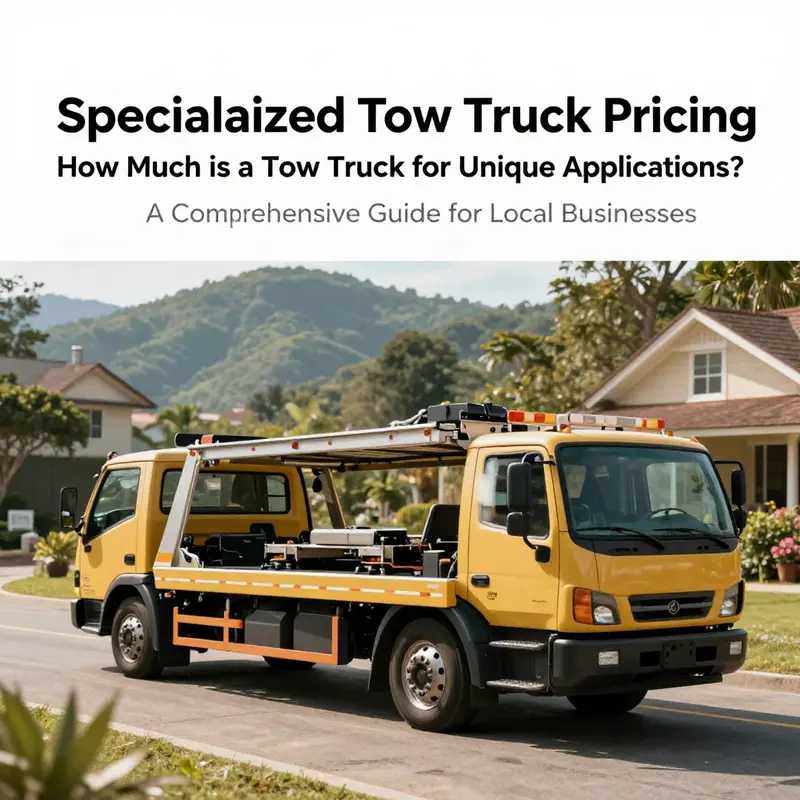
When your operation faces unusual recovery needs—heavy equipment, complex accident scenes, or remote island fleets—the price tag for a tow truck reflects far more than a simple chassis and winch. Specialized tow trucks exist because certain jobs demand capabilities that standard light- or medium-duty units cannot deliver. These capabilities drive cost in predictable ways: lift capacity, boom engineering, hydraulic complexity, chassis strength, axles and suspension, winches and cable rated loads, electronic controls, operator safety features, and the manufacturing ecosystem behind the build. Understanding how these factors translate into dollars helps procurement managers and fleet planners evaluate value rather than just sticker price.
Specialized units span a wide spectrum. On the lower end sit heavy but straightforward recovery chassis, often configured as 6×4 carriers or basic wreckers for regional towing. These models typically provide robust frame reinforcement, heavy-duty winches, and simple boom assemblies. They start at modest figures compared with the most advanced options. Mid-range specialized trucks add integrated underlift systems, larger winches, and stabilized outriggers for safe operations during complex recoveries. At the top are rotator-style wreckers with 360-degree booms, multi-stage telescoping arms, and hydraulic systems designed to lift and maneuver vehicles from precarious positions. Rotators represent a significant leap in both capability and cost. The difference between these tiers explains why a specialized tow truck can be priced from around thirty thousand dollars to well above three hundred thousand.
A practical way to view pricing is to match application to capability. If your work involves recovering passenger vehicles and occasional light commercial trucks, a reinforced 6×4 recovery truck is often sufficient. These models deliver a balance of durability and affordability. They include a rotating boom or fixed wrecker gear and provide reliable winch power for many accident scenarios. For operations that regularly handle heavy commercial trucks, buses, or construction equipment, heavier integrated wreckers with underlift systems and higher-rated winches become necessary. These units increase procurement cost but reduce operational risk, vehicle damage, and downtime. Finally, when incidents require lifting a disabled tractor-trailer from a ditch, rotating a bus, or righting an overturned heavy vehicle, rotators eliminate many constraints. Rotators reduce the need for multiple pieces of equipment and crews, but they come at a premium due to their complex hydraulics, reinforced booms, and specialized training requirements.
Cost drivers show up in discrete components and in the manufacturing process. Hydraulic systems with higher flow rates, greater pressure tolerances, and redundant safety valves are more expensive. Winches rated for heavier loads require stronger drums and high-capacity synthetic or steel cable. Booms built to rotate and extend demand precise machining, larger bearings, and robust seals to withstand frequent stress. The chassis itself must be chosen for load bearing and stability. Heavier axles, reinforced frames, and upgraded suspensions add weight, cost, and fuel consumption. Finally, auxiliary systems—electrical control consoles, remote controls, stabilization outriggers, and integrated lighting—contribute to the final quote. These items not only increase initial price but also influence maintenance schedules and lifecycle costs.
Manufacturing location and supply chain maturity also shape price ranges. Regions with clustered special-purpose vehicle production benefit from economies of scale, skilled labor pools, and deeper component supply networks. That leads to competitive pricing and quicker lead times for both standard and custom builds. Conversely, bespoke models or limited series runs often require more engineering time and specialized tooling, raising unit costs. For buyers, understanding where a vehicle is built and how established its supply chain is can help forecast total cost of ownership. A truck sourced from a mature manufacturing hub usually has clearer support channels, spare parts availability, and well-documented service procedures, all of which reduce downtime and long-term expense.
Customization is another major factor. Fleet owners commonly request adaptations for local regulations, environmental conditions, or operational preferences. Examples include corrosion-resistant coatings for coastal fleets, reinforced frames for rocky terrain, or upgraded cooling systems for high-temperature environments. Each requested change can add hundreds or thousands of dollars. Safety customizations—such as larger outriggers, enhanced operator cabins, and redundant hydraulic circuits—are advisable for high-risk operations but increase initial investment. Buyers must weigh immediate capital expenditure against long-term gains in operational safety and reduced accident risk.
Operational context matters too. Towing on islands or in remote regions imposes logistical constraints that influence procurement decisions. Fleets operating in such environments prioritize reliability, versatility, and ease of maintenance. A unit that minimizes downtime and is easy to service locally will often provide better value than a more powerful model with limited parts support. For managers planning emergency response for island fleets, integration of towing capability with broader preparedness strategies is essential. Resources that outline emergency response for island fleets can inform procurement choices, ensuring specialized trucks meet both daily needs and crisis demands. Useful guidance is available in the article “Emergency preparedness for island fleets” which provides relevant planning context and operational considerations: https://theislandtowtruck.com/emergency-preparedness-for-island-fleets/.
Training and certification must be included in a realistic budget. The most capable machines require skilled operators. Rotators and large integrated wreckers depend on precise hydraulic control and knowledge of load dynamics. Investment in proper operator training reduces the risk of accidents and equipment damage. It also maximizes the utility of the asset, enabling crews to handle complex recoveries quickly and safely. When tendering or negotiating with manufacturers, ask whether operator training is bundled with the purchase, and whether spare parts kits, maintenance manuals, and remote diagnostic tools are included or available.
Warranty and after-sales support represent ongoing value. Specialized components like multi-stage booms and high-capacity winches experience wear differently than basic towing components. A robust warranty reduces capital risk and signals manufacturer confidence. After-sales support that includes spare parts distribution, technical hotlines, and on-site service options will lower lifecycle costs. Before finalizing a purchase, compare service networks and warranty terms. Long warranties or prepaid service agreements can be worth the higher upfront cost for high-use fleets.
Pricing examples illustrate how the above factors combine. Entry-level specialized recovery units, capable and cost-effective for general rescue, are often priced in the lower five-figure range. Mid-tier heavy wreckers, with underlift systems and higher winch ratings, sit in the mid to high five-figure bracket. Rotator wreckers, featuring 360-degree booms and maximum lift versatility, fall into the six-figure range. The highest-end models, especially those with extreme lifting capacities or bespoke engineering, can exceed three hundred thousand dollars. These ranges reflect global market realities and the trade-offs between capability, customization, support, and manufacturing origin.
For procurement managers and fleet owners, the key questions are practical: What loads must the truck handle regularly? How often will it be used? Is specialized operator training feasible? What local service options exist? A model chosen for occasional heavy lifts but used primarily for routine towing will be an inefficient capital allocation. Conversely, underspecifying a truck for frequent heavy recoveries risks higher long-term costs through vehicle damage and operational delays.
Finally, plan for total cost of ownership. Factor in fuel consumption, maintenance cycles, parts availability, operator training, warranty coverage, and downtime risks. Seek supplier transparency about component specifications and maintenance intervals. Evaluate the potential resale value by considering how common the platform is within the market. A widely used chassis and standardized components typically yield higher resale values and easier parts sourcing.
For specific technical details and supplier listings, refer to manufacturer product pages and market listings which compile specifications and pricing information. For one example of a specialized recovery model, see: https://www.alibaba.com/product-detail/Sinotruk-Heavy-Duty-WHO-6X4-Special_1601782726837.html
Final thoughts
Understanding the diverse pricing structures for tow trucks is vital for local businesses that rely on these vehicles for daily operations. Each type of tow truck serves different functions and applications, from light duty models suitable for small vehicle recovery to heavy duty trucks designed for the most demanding commercial needs. By grasping these nuances, you can select the right tow truck that aligns with your specific requirements, contributing to your operational efficiency and overall success in the community. Evaluate your business needs and explore the truck options that will best enhance your service offerings.