In the dynamic realm of GTA 5, especially for players engaged with local auto repair shops, car dealerships, and commercial fleets, knowing where to source tow trucks is crucial. These invaluable vehicles offer more than just a means of transport; they serve myriad purposes from recovering stranded vehicles to aiding in missions. This article delves into the best locations for locating tow trucks, the different types available and their unique utilities, and tips from the community on maximizing their use. Along the way, we will explore story missions featuring tow trucks and best practices for their operational efficiency, ensuring you’re well-equipped to navigate Los Santos’ bustling streets. By the end of this journey, both new and seasoned players will feel empowered to seek out these robust vehicles effectively.
Tow Truck Trails: Finding GTA 5’s Tow Trucks Across Maps, Missions, and Timed Spawns
Tow trucks in GTA 5 are more than just heavy-duty helpers tucked into the corners of the map. They function as specialized tools tied to specific missions and mechanics, rather than freely spawning hordes you can borrow at will. This distinction colors how players approach the search for one and why certain locations recur in conversations and guides. The game treats the recovery of a vehicle as a process with purpose, often linked to repairing a route, towing a broken car to a destination, or moving a damaged vehicle to a staging area for a mission. As a result, the experience of finding and using a tow truck is less about luck and more about understanding the design of the world’s scripted sequences. When you walk into this facet of GTA 5, you step into a tightly choreographed system where a tow truck isn’t just another car on the street; it’s a tool with a mission, a role, and a limited set of places where it reliably appears, depending on whether you’re playing the story mode or venturing into GTA Online.
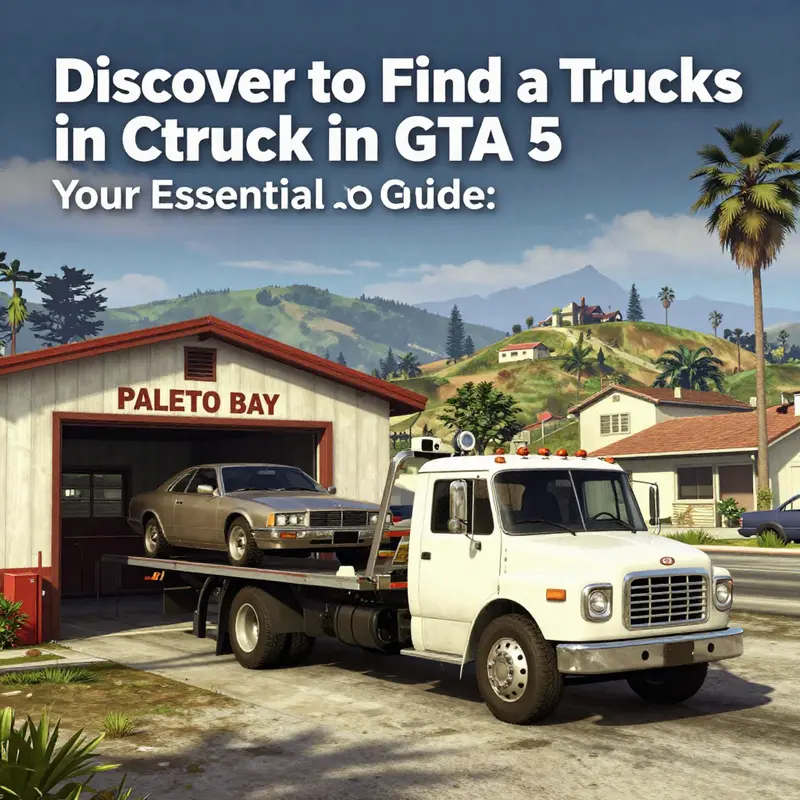
If you want to chart a reliable course for locating a tow truck in the classic GTA 5 layout, the strongest anchor is in Paleto Bay. Specifically, the fixed, well-documented spot outside the Customs garage—also known as The Shop or Rampage’s Garage—stands out as the most dependable point if you’re pursuing a standard tow truck for story-driven tasks. The town of Paleto Bay sits at the map’s northwestern edge, a compact, somewhat isolated location that magnifies the sense of a dedicated, mission-ready vehicle waiting for you just outside a small, functional workshop. For many players, this is where the classic Tow Truck is most predictably found. The sight of the large crane, the heavy chassis, and the distinctive towing rig greets you as a reminder that in GTA 5, at least one tow truck exists not as an incidental curbside prop but as a defined asset waiting to be engaged for a specific purpose.
Beyond Paleto Bay’s fixed cue, another anchor lies in Los Santos itself, albeit in a more workaday sense. The Vehicle Recovery Yard—often called the Scrapyard or Wrecking Yard by players—is the primary locus associated with the Tow Truck side mission embedded in the broader GTA 5 landscape. This yard sits in the southeastern portion of Los Santos, relatively close to the ocean and Santa Maria Beach, just south of the Los Santos International Airport. The route to it is straightforward: open the in-game map, locate the red marker marked Vehicle Recovery or Scrapyard, or use the in-game phone’s GPS search for Vehicle Recovery. The place is a hub of activity, with tow trucks parked near the entrance and a crowd of wrecked vehicles stacked in the aisles behind the fence. The environment is purposeful and utilitarian, a working facility rather than a showroom, and this atmosphere reinforces the idea that the vehicle inside is rarely a casual choice. Access often comes with caution, since security personnel tend to be present in the area, signaling that this is not a free-for-all zone but a controlled space designed to test your timing and navigation as you prepare for the mission.
The significance of the Vehicle Recovery Yard goes beyond a fixed spawn. It is where you access the mechanics and logistics of the Tow Truck side mission—the one that winds its way through the larger progress of the game by linking vehicle transport tasks to journeying across Los Santos. The yard serves as a gateway: it is not only where the tow truck sits ready for pickup, but also where you confront the reality that this particular tool is mission-centric. Once you complete the mission, the specific tow truck you used may disappear or revert to its original state, underscoring a central truth of GTA 5’s vehicle system: there is no simple, permanent ownership of a tow truck as you might own other vehicles or customize a car for long-term use. The game’s architecture leans into the idea that some assets are temporary, tied to tasks that unfold across the city and its districts, rather than to a generic open-world stockpile.
In addition to these two anchor points, the world of GTA 5 does offer occasional appearances of tow trucks along major thoroughfares in Los Santos or even in San Fierro, but these sightings are sporadic and inconsistent. They do not come with reliable spawn locations or guaranteed access, which means you cannot plan a dependable play session around a random street corner tow truck. This variability is precisely why players looking to complete the Tow Truck mission or to practice vehicle recovery often prioritize the fixed points first, then widen their expectations to street-level glimpses if timing and luck permit. Within the online ecosystem, there are additional contexts in which tow trucks appear, notably in FIB operations during certain tasks. An FIB lot near the airport is known to host a tow truck for specific assignments in the Ballas War or FIB Contracts series. These moments are by design limited and task-specific, reinforcing the sense that the tow truck is a specialized instrument rather than a freely available vehicle.
To ground this landscape in practical terms, it helps to think about the mechanics at play. The tow truck in GTA 5 is not simply a vehicle with a hook and chain; it is a mobility-enabled tool whose utility is bound to mission design and the pacing of a storyline. The vehicles you will tow, the destinations you must reach, and the timing of each pickup are choreographed to ensure a balance of challenge and progression. Because the game’s world does not promise a panoply of tow trucks roaming the map at all times, players learn to move with a sense of purpose. The Paleto Bay spot offers a reliable, recognizable drop-in for many players, while the Scrapyard location provides a deeper, more mission-driven engagement with the vehicle recovery theme. The dual reality of fixed cues and mission-bound opportunities gives players a layered approach: know the fixed anchor, then explore the mission-oriented yard to experience how GTA 5 integrates towing into its broader narrative and gameplay rhythm.
From a player’s learning perspective, this structure also invites a broader curiosity about how GTA 5 handles assets and replication across modes. The official guidance from the Rockstar support channels is clear about the underpinnings of vehicle recovery and mission structures, even if it stops short of enumerating every spawn. The essence is that tow trucks are designed for specific tasks and moments, not as general-purpose rentals for daily play. Within this framework, your strategy becomes less about chasing a moving target and more about mastering the timing and locations that lead to success. For those who want to deepen their understanding and stay current with community findings, trusted GTA Online information hubs, including forums and social channels, provide real-time confirmation of spawns and experiences reported by other players. The value of cross-checking is not mere superstition; it’s how a player builds a practical map of where and when a tow truck is likely to appear, and how it will behave in a given mission.
To connect practical guidance with ongoing resources, consider how an ecosystem of knowledge grows around something as specific as a tow truck. A well-curated thread on community forums often consolidates sightings, timing, and mission-based appearances, helping new players cut through the noise and focus on reliable cues. In this sense, the tow truck becomes a case study in how a game designs limited-use assets within a sprawling open world. The fixed Paleto Bay location is a touchstone, the Scrapyard a touchstone for mission depth, and the sporadic street sightings a reminder of the world’s unpredictability. The interplay between these elements is what makes the tow truck both a practical tool and a small doorway into GTA 5’s larger logic about resource management, mission pacing, and the architecture of the city itself.
For readers seeking a deeper dive beyond the narrative of locations, there are avenues to explore that extend the discussion into broader vehicle recovery themes. The Island Tow Truck Blog, for example, offers extended perspectives on tow truck operations and fleet management in related contexts, which can sharpen your understanding of how specialized vehicles function within a larger system. You can explore that discussion here: The Island Tow Truck Blog. While this chapter stays grounded in GTA 5’s specific locations and mission structures, the underlying ideas about how tow trucks operate in closed loops and mission-driven environments translate to other virtual and real-world contexts as well. The cross-pertilization of ideas—from a fixed shop in a small town to a yard dedicated to vehicle recovery—helps illuminate why certain locations matter and how players can leverage them to optimize their experience.
In sum, the GTA 5 tow truck is not a free-floating, endlessly available asset. It is a calculated instrument embedded in a constellation of locations that speak to the game’s design logic: a fixed, iconic spot in Paleto Bay for a classic tow truck encountered in everyday play, a functional and mission-centric yard in Los Santos where the Tow Truck side mission unfolds, occasional urban appearances that are not guaranteed, and a specialized context in GTA Online that can bring a tow truck into a specific, mission-focused role. The result is a layered, instructive environment in which players learn to recognize the value of these assets, anticipate their appearances, and approach each encounter with an eye toward the mission’s demands rather than toward mere temptation. For the practical gamer, this means planning around the Paleto Bay cue when you want a reliable tow, using the Scrapyard as your gateway to the Tow Truck tasks, and keeping an open eye for the occasional street sighting that may pop up when your timing aligns with the city’s shifting rhythms. And when you need to confirm, refine, or expand your understanding of vehicle recovery mechanics, the official Rockstar guidance and community reports provide a steady compass to guide you through the maze of spawns and mission logic.
External resources and community perspectives offer a practical counterpart to the in-game cues. The official Rockstar support page provides a baseline understanding of vehicle recovery mechanics and mission structures, while community platforms help you surface real-time reports of spawns and experiences that may differ from one patch or session to the next. This combined approach—grounded in fixed locations and augmented by player-driven data—gives you a robust framework for mastering the tow truck in GTA 5. As you continue your exploration, you’ll likely find that the journey to locating a tow truck is as much about understanding the city’s design language as it is about locating a single vehicle. The more you internalize the patterns, the more effortless the process becomes, and the more you can focus on the tasks that truly matter in the world of GTA 5’s vehicle recovery and mission-centric play.
External resource: https://support.rockstargames.com/hc/en-us/articles/201397683-GTA-Online-FAQs
Tow Lines in Los Santos: Locating GTA 5 Tow Trucks and Understanding Their Roles
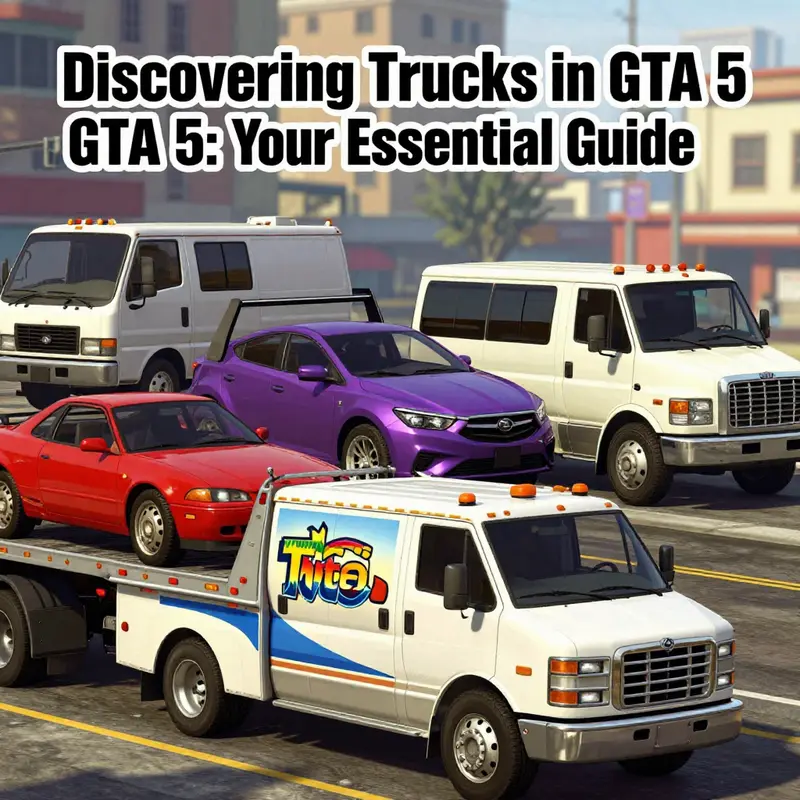
Tow trucks in Grand Theft Auto V are more than just a means to move a vehicle from one corner of the map to another. They are tools that unlock a different tempo of play, a way to recover a wrecked car after a chaotic chase, or to stage a sequence where timing and positioning matter as much as speed and firepower. In the sprawling world of Los Santos and its surrounding towns, a tow truck can be a mission asset, a casual ride during a longer grind, or a rare, fixed spawn that players learn to hunt with patient persistence. The vehicles themselves come in variations that mirror their real-world counterparts, and understanding these types helps players decide when to engage a tow truck and how to use it most effectively. The most common variant in the game is the flatbed tow truck, a vehicle designed to haul disabled automobiles on a broad platform at the rear. The flatbed is ideal when you need to ferry a car intact, whether to deliver it for a side job, to remove a stubborn getaway vehicle, or to complete a mission where precise placement of another car matters more than sheer horsepower. The platform’s reach and the truck’s lifting mechanism give players a sense of control, almost like a moving stage on which the next scene of their criminal exploits can be choreographed. This, in turn, becomes a narrative tool. The flatbed’s broad surface invites a calm, deliberate approach rather than a rush to a conclusion; you can cradle a target vehicle, slide it onto the bed with careful backing, and then drive off with your prize in plain sight. Yet there is another variant—the wheel-lift tow truck—that adds a different texture to the pursuit of a vehicle. The wheel-lift uses a yoke to lift a single axle, hoisting one end of a car off the ground. In the game’s physics, this tool feels lighter in weight and more agile, perfect for smaller tasks or for scenarios where you need to reposition a vehicle with a quick, surgical lift rather than a full-on hoist. In the real world, such a design supports rapid recovery in dense urban environments, where streets are tight and time is money. In GTA V, the wheel-lift reads as a nimble option for quick recoveries or for missions that hinge on the ability to move a car without drawing a lot of attention or causing collateral delays. The two variants, flatbed and wheel-lift, give players a sense of choosing the right instrument for the right job, just as real operators weigh capacity, reach, and ease of use when selecting a tow truck for a given operation. The game’s design encourages players to think not only about where to go, but how to approach the task, and the tow trucks become a microcosm of that decision-making process. The question of where to find these vehicles, however, remains as important as understanding their mechanics. In Los Santos, toward the heart of the map, the distribution of tow trucks is not uniform; it follows a pattern that rewards patience and experimentation. The most reliable fixed location to observe a tow truck in a predictable way sits in the northern part of the map, in Paleto Bay. There, near the Customs garage—an establishment known in the community as The Shop by players who frequent its surrounding alleys—you can often spot a Classic Tow Truck parked outside. The term Classic Tow Truck represents a vehicle with a nostalgia-inflected design that aligns with a more traditional aesthetic of the tow industry. This location serves as a stable anchor for players who need to rely on a tow truck for a mission, a heist scenario, or simply to practice the mechanics of hooking and towing in a controlled environment. It is a small, isolated town that rewards observation; you learn its rhythm by visiting at different times of day and seeing how the NPCs and ambient traffic interact with the parked vehicle. Over time, Paleto Bay’s fixed spawn becomes a reliable rung on the ladder for players who want a predictable tow option beyond the chaos of Los Santos’ central districts. Yet even with a reliable fixed spawn, the GTA V world keeps a sense of uncertainty. Tow trucks may occasionally appear on the streets in the larger cities, especially in and around Los Santos or in other sprawling pockets of the map, but these appearances are not guaranteed, and the vehicles do not necessarily spawn at fixed points with the same regularity you find in Paleto Bay. This is part of the game’s charm and its risk. You may drive through a busy avenue and spot a tow truck parked near a warehouse, or you may see one lumbering out of a back alley tow yard, its bed empty, awaiting a new assignment. The variability means players who rely on tow trucks for mission-critical work must cultivate a willingness to explore, to loiter near industrial zones, and to watch the world’s timing. The narrative of the tow truck in GTA V is not only about mechanical capability; it is about learning the city’s heartbeat, discerning its pockets of opportunity, and understanding when to pounce on a lead and when to wait for a more favorable moment. The doomsday and heist narrative threads in GTA V also weave tow trucks into the broader arc of the game. In certain high-stakes missions and story beats, the ability to move a vehicle quickly from point A to point B becomes essential. The Doomsday Heist and its associated missions require the player to reposition heavy machinery or move tow-requiring assets, and as such the tow truck’s role is cast in a pragmatic light: it is a tool that can save time, reduce risk, and keep the operation smooth under pressure. In addition, there are moments in the online sphere where tow trucks play a specialized, task-specific role. For instance, in the FIB-lane of activity near the airport, a tow truck can be used for particular tasks that arise in Ballas War or FIB Contracts series, where the vehicle’s presence becomes part of the operation’s choreography. These moments remind players that a tow truck is not merely a transport object; it is a component of the game’s mission design, its economy, and its emergent gameplay. As a player, you will likely discover that the tow truck’s usefulness extends beyond the obvious hauling of a downed car. It can be repurposed for strategic positioning, for diagnostic-lens exploration of a chase’s flow, and for a lesson in patience. You learn to time your approach, to identify when a street corner or a back lot provides optimal space to maneuver, and to anticipate the moment when a vehicle you need to recover will present itself in a way that minimizes risk and maximizes payoff. Real-time confirmation and community input remain valuable. For players who want to verify current spawns, or to understand how spawns shift with weekly updates or patch changes, trusted GTA Online community platforms and official Rockstar forums become indispensable. They provide a living map of variability, a forum where players share sightings, and a sense of the city’s evolving rhythm. If you’re looking to deepen your knowledge beyond the fixed Paleto Bay anchor, consider tapping into the wider GTA Online ecosystem and keeping an ear to the ground for posts describing location clusters, spawn times, and player-tested tips. The largest advantage of this approach is that you gain a dynamic sense of the game’s ecology—from the fixed and predictable to the ecological and fluid. This insight helps you plan your sessions around the tow truck’s availability, rather than waiting passively for a vehicle that may never appear. When you can combine the fixed-location reliability of Paleto Bay with the city’s street-level spontaneity, you unlock a flexible workflow that fits the pacing of your preferred playstyle. You begin to see that tow trucks, in GTA V, are more than just a vehicle type; they are a lens through which the map’s geography, the mission design, and the player’s decision-making converge. The narrative of where to find a tow truck becomes, in practice, a practice in patience and situational awareness. It is a reminder that gaming worlds reward a measured approach — observation, timing, and a willingness to adapt to what the region offers at any given moment. For the curious reader who wants a tangible starting point and a broader sense of how the vehicle fits into the game’s many landscapes, Paleto Bay remains the anchor of the tow-truck universe within GTA V. From this foundation, you can weave your own routines, whether you prefer to chase fixed spawns in the north, scan the streets of Los Santos for opportunistic appearances, or plan around mission-specific appearances that briefly place a tow truck at the center of the action. The tow truck’s value, then, is not only in its mechanical capacity to haul cars; it is in the way it helps you tell a story in the city. In the end, your approach to finding and using a tow truck in GTA V will reflect your play style—a mixture of disciplined search, opportunistic steals, and responsive adaptation to mission design and online dynamics. The city rewards those who learn its edges, wait for the right moment, and treat the tow truck as a partner in crime rather than a simple tool. As you navigate Paleto Bay and drift toward the more chaotic avenues of Los Santos, keep in mind that the tow truck is a flexible asset, ready to move when you need it and to wait when you don’t. It is a small, patient thread in the fabric of GTA V’s sprawling map, a quiet engine under the hood of every great misadventure. For readers seeking further context on tow-truck concepts that resonate with real-world history and industry practice, a broader resource on tow-truck types and their applications can be explored here: https://www.rc-tow-truck.com/overview-of-r-c-tow-trucks. And to keep the community conversation alive and current, you can browse The Island Tow Truck Blog for ongoing updates, strategies, and player reports on spawns and tactics: The Island Tow Truck Blog.
Tow Trucks in GTA V Story Missions: A Vehicle as Narrative Asset
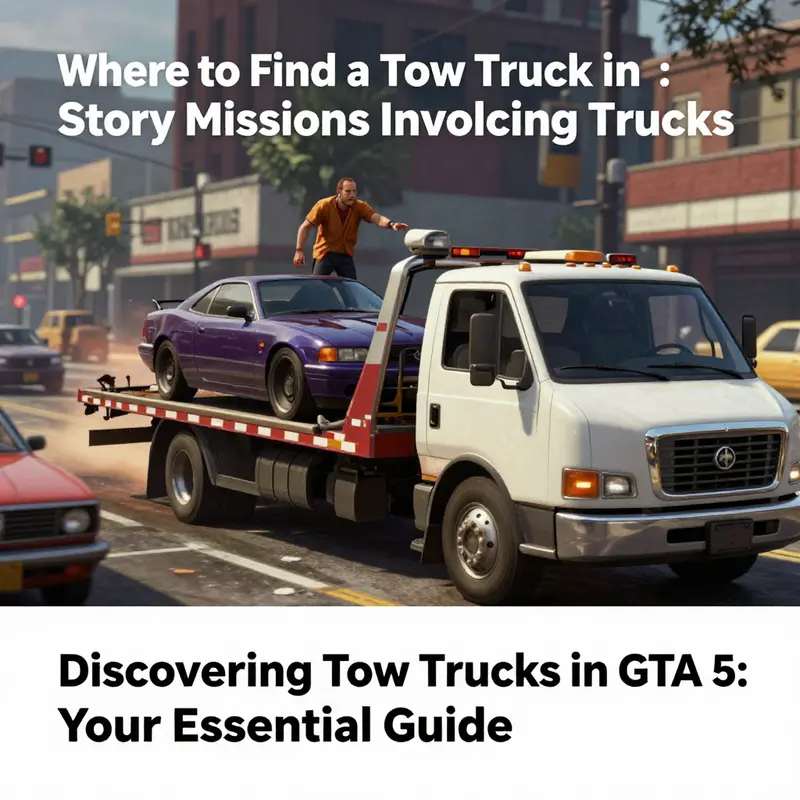
In GTA V story mode, the Tow Truck is not a freely available tool but a mission asset that appears at a designated moment to advance the plan. The Tow Truck mission frames towing as a means to move a target vehicle to a new waypoint, matching the pacing and logic of a heist. Its spawn is fixed relative to the mission area, ensuring players do not hunt for the vehicle in open world play. Beyond this mission, tow trucks may appear in specific narrative cues but not as general purpose roamable vehicles. Online play introduces additional contexts, yet towing tasks in that mode still hinge on episodic objectives rather than casual use. For players seeking guidance, community guides and official resources provide the most reliable spawn and objective details.
Tow Truck Trails in GTA 5: Fixed Spots, Spontaneous Spawns, and the Community’s Collective Wisdom
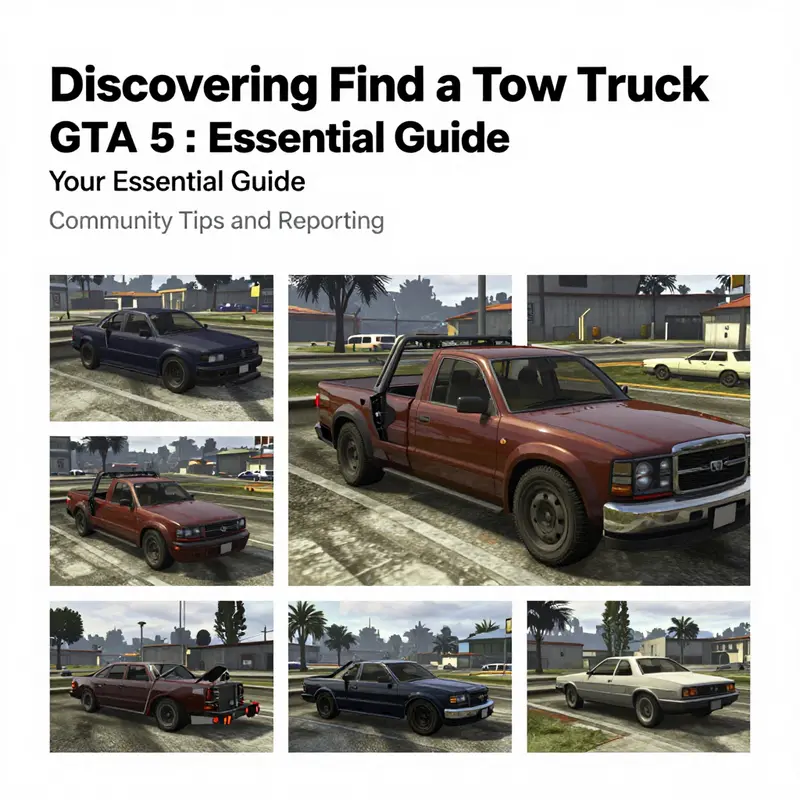
In the sprawling world of GTA 5, a tow truck isn’t just a utility vehicle; it’s a practical tool for missions, a rare roaming asset, and a reliable mechanic for players who want to reposition cars without resorting to impromptu, makeshift methods. The chase to find one unfolds like a map-reading exercise, where fixed locations anchor expectations and dynamic spawns keep exploration alive. The chapter that follows threads these ideas together, drawing on the most dependable spots, the occasional street appearances, and the rich, community-driven chatter that keeps players in the loop when spawns shift with updates, patches, or the whims of story missions. At its core lies a simple premise: whether you are racing toward a mission objective, planning a heist with a tow-enabled vehicle, or just testing out the physics of lifting and towing in a living city, knowing where a tow truck can appear—and how to coax it into service—is a powerful advantage that grows sharper the more you learn from others who have walked the road before you.
Among the locations that seasoned players return to again and again, the Abandoned Car Yard, often called the Scrapyard, stands out as one of the most reliable sources of a tow truck in the single-player landscape of Los Santos and Blaine County. Located near the intersection of East Vinewood and North Rockford Avenue, this area is unmistakable on the map, marked by a red arrow that hints at a yard full of vehicles, some wrecked and others awaiting salvage. The yard’s midtown vibe belies its hidden utility for players who need a tow rig in a pinch. Parks, alleys, and open lots may host passing tow trucks at times, but this particular spot has earned a reputation for delivering a tow truck with enough regularity to justify a return visit, especially when a mission demands a towing hand or a quick repositioning of a damaged car.
Beyond fixed spawn points, GTA 5’s world jokes with players by offering occasional appearances in major hubs. In the grand scheme of Los Santos and Blaine County, tow trucks can surface on the streets of the city’s most populated neighborhoods, and they can also drift into the outskirts during chaotic moments when the city feels closer to a test bed for mayhem than a mapped metropolis. Those appearances are not as predictable as the Scrapyard’s reliability, and so players who rely on a tow truck for a specific objective often prepare for a little variability in timing and location. This is where the game’s design leans into a dynamic rhythm: fixed anchors give you a dependable option, while street spawns encourage exploration, encouraging players to roam, observe, and respond with patience and quick reflexes when a vehicle suddenly pulls into view.
There is a deeper layer to the tow-truck narrative, especially in the online realm. In GTA Online, a dedicated FIB lot near the airport sits as a notable waypoint not for casual cruising, but for tasks tied to specific jobs and missions. The ability to access a tow truck in that area isn’t about mere routine driving; it’s about timing, mission design, and the logistics of moving cars in a way that supports the broader objective at hand—whether that objective is a Ballas War side mission or one of the FIB Contracts challenges. The online environment thus broadens the map’s utility, reminding players that the tool’s value isn’t limited to one mode of play. In fact, the online ecosystem thrives on players sharing exact coordinates, recent spawns, or unexpected appearances, and that shared field knowledge is where the community becomes as crucial as the map itself.
To understand why these locations feel reliable—and how to maximize your chances of securing a tow truck when you need one—it’s helpful to consider the interaction between game mechanics and community reporting. Most players who chase tow-truck spawns do so with an eye for efficiency: approach a fixed point during a lull in traffic, listen for the telltale sound of a loader arm, and position yourself so you can line up a tow without complicating the mission at hand. When a fix is in, it’s a straightforward sequence: walk up to the vehicle, press the designated entry key to climb into the driver’s seat, align the tow arm with your target, and use the gear controls to hook the vehicle. Then you drive, with the tow mechanism, to the destination you’ve planned, whether that’s a garage, a storage lot, or a mission-specific drop-off. Releasing the vehicle is a simple matter of a designated key press once you’ve arrived, and the cycle completes with the satisfaction of a job well done. The procedural clarity is what makes towing both approachable for new players and deeply satisfying for veterans who have to move multiple vehicles under time pressure.
The practical steps—entering the truck, hitching, raising or lowering the tow arm, driving to the destination, and releasing the loaded vehicle—are more than a sequence of actions. They are a small, repeatable workflow that, over time, becomes a reliable muscle memory. This is why even players who rarely rely on towing in other areas will gravitate toward known spots, studying the rhythm of city life until a tow truck becomes almost second nature to their route planning. The community has contributed to this knowledge through countless threads and posts where players share tips that zoom in on best angles for hooking, how to adjust height for different vehicles, and practical workarounds when a tow truck seems to fail to engage properly. The result is a living guide, one that grows with every update, patch, or new mission. For hands-on field notes and ongoing community discussions, many players turn to the island tow truck blog, a resource that collates practical, on-the-ground observations from players who are actively testing the same mechanics in the wild. theislandtowtruck.com/blog
The story of finding a tow truck is also a story about timing and the city’s ebb and flow. On busy nights, the roadways teem with traffic, and the probability of seeing a tow truck rise and fall with the tempo of the city’s pulse. In quieter hours, it may feel like you are searching through a pinboard of long odds, moving from one potential location to another with a patient, almost ritual patience. The beauty of this process lies in its balance: you don’t rely on one fixed moment to appear a vehicle; you map a strategy around a set of possibilities, and you stay adaptable as you monitor the city’s moods. In this way, towing becomes less about chasing a single, guaranteed encounter and more about building a repertoire of routes, times, and cues that maximize your odds across multiple play sessions. The community’s role in this learning is mostly about shared experience—reports of a truck appearing near a certain street corner after a particular update, or a mission that temporarily alters spawn logic and makes a certain parking lot more productive for a day or two.
In the academic sense of game studies, this pattern reflects a broader principle: players become co-creators of the map through observation, documentation, and shared memory. The fixed spawn at the Abandoned Car Yard gives a baseline, a dependable anchor in a sea of variability. Yet the broader map rewards curiosity, encouraging players to test, compare, and adjust. The result is a dynamic knowledge ecosystem in which the tow truck is not just a tool but a shared object of experience. And because GTA 5 is a living world that can shift with patches, community chatter remains essential. Trusted platforms—like major gaming forums and dedicated subreddits—serve as real-time barometers for what players are currently experiencing. They translate anecdote into actionable guidance, helping new players understand not only where to look but when to look, and why certain decisions will deliver the best results under given circumstances. The chain of knowledge—from fixed locations to spontaneous spawns, to user-generated reports—becomes a useful lens through which to approach any time-sensitive objective, whether it’s a time-limited mission or a casual night of exploration.
For readers who want to keep their toolbox ready, the practical takeaway is simple. If you’re starting fresh, head to the Abandoned Car Yard near East Vinewood and North Rockford Avenue for a dependable tow-truck option. If you’re playing in GTA Online and need a vehicle quickly for a specific task, don’t overlook the FIB lot near the airport as a strategic waypoint, especially when missions call for a quick tow or departure sequence. And remember that the city’s streets can surprise you: a tow truck may roll by during routine traffic, or it could appear in connection with a mission’s progression. The key is to stay alert, stay adaptable, and stay connected with the community that keeps the map honest and up-to-date. In practice, that means checking trusted forums and discussion hubs, comparing your experiences with others, and using that shared intelligence to sharpen your own approach to towing in GTA 5.
For readers who want to explore more hands-on guidance and field notes from players actively testing these mechanics, theislandtowtruck.com/blog offers a corridor into a wider conversation about how tow operations are performed in the game, including setup, positioning, and troubleshooting. And for those who want to dive into the specific tactics and reports that drive the ongoing conversation, the broader GTA community’s discussions—such as those found on GTA Forums and Reddit’s r/GTAV—provide a continuous stream of observations and refinements. In this sense, the tow truck isn’t just a vehicle; it’s a living artifact of the game’s social fabric, a point where individual play styles intersect with collective knowledge to shape how everyone experiences the map.
External resource: https://www.gtaforums.com/topic/123456-towing-vehicles-in-gta-v-guide-and-tips/
Tow Tracing GTA 5: Finding Tow Trucks and Mastering the Tow
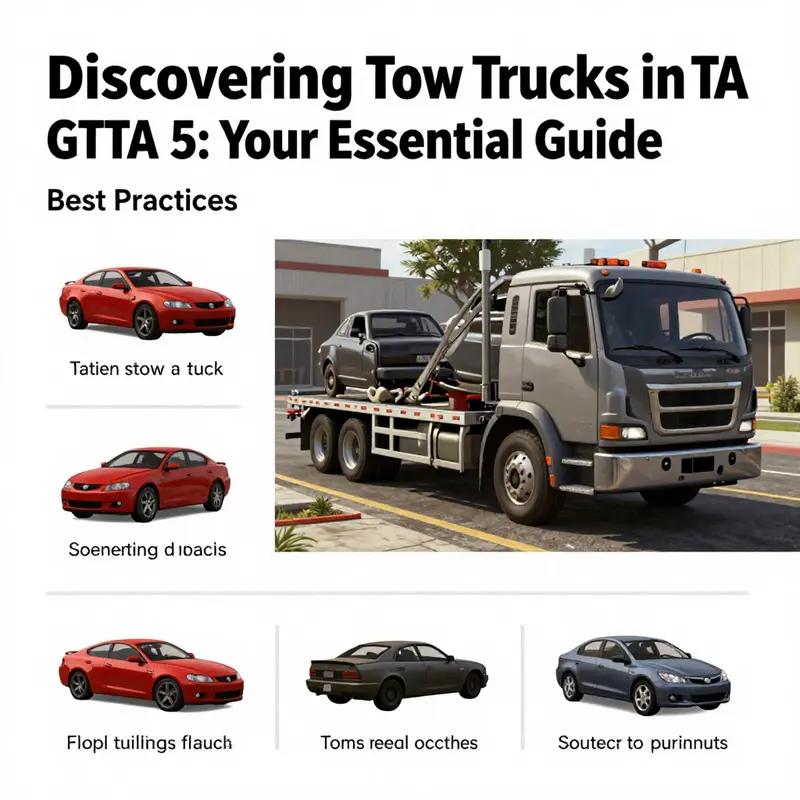
Finding a tow truck in GTA 5 is less about chasing a fixed quest and more about knowing where the vehicles tend to appear and how to wield them with precision. The city’s chaos can obscure a simple task, but with a careful understanding of spawn points, mission contexts, and control nuances, towing becomes less a random errand and more a practiced routine. The landscape of tow trucks spans both offline and online experiences, with fixed anchors you can rely on and occasional spawns that keep things interesting. For players who want a reliable starting point, the most trusted fixed location is not far from the shores of the coast. In Paleto Bay, outside the Customs garage, players often encounter a Classic Tow Truck parked right by the side of the shop. This small North Western town, tucked away from the bustle of Los Santos, offers a stable, recognizable scene that you can return to when you need a tow for missions, races, or simply to test your skills on a stubborn vehicle. The sight of that tow truck, its hook swaying in a light breeze, becomes a signal that you are in the right frame of mind to approach the job with the calm, measured attention it deserves. The Paleto Bay fix is especially valuable because it reduces the time you’d otherwise spend wandering the map in search of a tow candidate. It gives you a reliable starting point, a place to practice hooking, aligning, and releasing without the pressure of improvisation. Still, the GTA universe rewards flexibility, and the fixed anchor in Paleto Bay sits alongside other credible options that can prove instrumental depending on your current goal. While a Classic Tow Truck outside of Paleto Bay is the standard-bearer of fixed spawns, the broader map houses occasional tow trucks on the streets of major hubs like Los Santos or San Fierro. These appearances are less predictable; they offer a sense of real-world randomness, mirroring how tow services operate in real-life traffic. The upside is clear: when a tow truck does pop up in these urban centers, you can find yourself equipped in moments rather than hours, especially if you’re mid-mission and need to move a vehicle quickly from one district to another. Yet to rely on these spawns is to accept a degree of variability—an invitation to plan around probable patterns while remaining ready for the unexpected. In some narrative threads within the game’s broader universe, tow trucks appear as part of specific story missions. For instance, during Franklin’s mission Hate the Game, a tow truck appears at designated points, offering a practical glimpse into how these vehicles are integrated into the mission design. This is a reminder that, beyond the wandering spawns, the game uses tow trucks to serve narrative and mechanical purposes, letting you experience towing as part of a larger objective rather than as a mere pastime. In the online sphere, the scene shifts again. In GTA Online, there exists a notable FIB lot near the airport where a tow truck can be employed for particular tasks. Side jobs in Ballas War or FIB Contracts often feature towing elements, and the presence of a tow truck in this environment signals how players can leverage law-enforcement-adjacent assets for more complex operations. The Online ecosystem also feeds a sense of dynamism by providing transient opportunities to retrieve or tow vehicles that aren’t bound to a single fixed location. To navigate this effectively, many players lean on community resources for real-time confirmation and spawn reports. Trusted forums and official Rockstar channels are common touchpoints where players share sightings and timing windows, helping others align their play sessions with the best tow-truck opportunities. The practical upshot is that you can treat tow trucks as both a reliable anchor and a flexible tool, depending on whether your goal is to complete a mission, stage a stunt, or simply experiment with the mechanics in a controlled environment. In terms of real-world technique, there are essential steps that apply across variants of the game. Whether you’re in offline mode enjoying a sandbox experiment or online mode pursuing objectives with friends, the core mechanics remain intuitive but exacting. First, locate a tow truck—whether the fixed Paleto Bay Classic Tow Truck or a vehicle recovered from a Los Santos location. Approach with deliberate speed. The driver’s seat is entered with the standard interaction button, but what follows is where the real skill shows. Switching to First-Person View (FPV) using F7 or F8 on many keyboards gives you the precision needed to align the tow hook with the target vehicle. This perspective reduces guesswork and makes the stacking of vehicles more predictable, which matters when you’re dealing with uneven ground or uneven bumpers. Once you’re in position, engage the hook with the same interaction button you used to enter the cab. The action closes the loop on the tow, but it’s not the end of the learning process. Fine-tuning the height of the tow bar becomes important when you’re dealing with cars that have different front-end clearances or when you’re trying to avoid damaging either vehicle. The keyboard shortcut Shift + Ctrl lets you nudge the tow bar higher or lower, a small adjustment that can make the difference between a secure tow and a loose one. With the car secured behind you, the rule of safe driving applies with special care. The throttle and braking must be governed not by the adrenaline of speed but by a steady, cautious pace. High speeds can wrench the towed vehicle loose or lead to unplanned misalignments. A recommended speed ceiling—often cited by experienced players as around 40 mph—keeps the setup stable and reduces the risk of letdowns at the destination. When you reach your destination, use the release command, commonly mapped to H, to disconnect the towed car. This clean release is crucial for ensuring the vehicle slots into position in the new location and that you don’t leave a stray wheel or a damaged bumper behind. Of course, these steps assume you’re controlling a standard tow scenario, but the real versatility of the tow truck comes from adapting to different vehicle profiles. The height adjustment helps accommodate SUVs, sports cars, and compact cars alike, though some vehicles require careful alignment to avoid striking body panels. The process, while precise, rewards patience. The more you practice, the more naturally you’ll anticipate how to approach each towed candidate, how to stabilize the tow, and how to position the pair for a clean transfer. In the broader playbook, the tow truck also serves as a tool for mission framing, letting you stage captures, reposition wrecks for police chases, or simply create a more dramatic sequence for a video or photo run. It is this blend of practical utility and storytelling potential that makes towing not a mundane chore but a core element of the GTA 5 experience. As with any tool you use in a sandbox, the more you know about its context, the better your outcomes will be. The fixed Paleto Bay location is a dependable starting point, but it is only part of a larger tapestry. You’ll often come across Los Santos’ Vehicle Recovery Yard, a hub that the game uses to place a tow truck near the intersection of El Burro Heights and Bennys Motor Works, just south of the highway. Arriving there, you’ll see the tow truck parked right at the front, waiting for a hand to guide it. The moment you press F to enter the driver’s seat, you’re stepping into a flow that rewards calm, methodical approach over brute force. If you want to deepen your practice, consider the creative paths available in FPV, hook alignment, and height adjustments, paired with controlled travel. The combination translates into consistent results when you tow cars from one lane to another, or when you move a damaged vehicle into a repair yard or storage location. For more seasoned players, there’s a further layer of learning that comes from understanding mission integration and online tasks. The Hate the Game mission and the FIB-Associated tasks in Ballas War and FIB Contracts aren’t just narrative add-ons; they’re opportunities to experience towing within a structured objective. You’ll observe how mission designers weave the tow tool into the storyline, how timing and sequencing can influence objectives, and how the tow truck is used to maintain pacing and tension. In real terms, this means you should be prepared to switch between fixed sites and mission-driven spawns, knowing when a towing opportunity is likely to arise and when you should pivot to another part of the map to keep the flow steady. If you want a broader understanding of towing technique, there’s value in keeping an eye on community reports. Forums and official Rockstar communications provide a window into the real-time dynamics of spawns, which can be especially helpful when you’re trying to plan a long session. While fixed locations like Paleto Bay give you certainty, the game’s world thrives on variability. Embracing both patterns—stable anchors and occasional spawns—will keep your towing toolkit robust and adaptable. For readers who want to explore beyond the game’s immediate mechanics, there are practical resources about fleet management and emergency response planning that echo the discipline of towing in GTA 5. A reading path that connects game strategy to real-world organization can be found at relevant resources such as the Island Tow Truck blog, which offers insights into coordinating vehicle recovery operations and maintaining a fleet under pressure. You can explore further at the Island Tow Truck blog. And for those who want a more structured approach to vehicle recovery and emergency-response planning, there are additional resources available at the Island Tow Truck site: the Island Tow Truck essential fleet emergency-response strategies. If you’d like to branch into broader fleet-readiness concepts, the site also offers guidance on emergency preparedness for island fleets: emergency preparedness for island fleets. While these links sit outside Los Santos’ concrete and chrome, they offer a framework for thinking about reliability, discipline, and timing—principles that make towing in GTA 5 more than a casual pursuit. Finally, for those seeking official guidance that anchors in-game mechanics, the Rockstar Support site provides detailed, authoritative information on a wide range of gameplay aspects. When you’re ready to verify mechanics, check the official guidance at Rockstargames.com support and its related articles. This external resource helps ensure your approach is aligned with the game’s intended behavior and updates. In sum, locating and using a tow truck in GTA 5 is a layered exercise in place, practice, and timing. Start with the dependable fixed anchor in Paleto Bay, enjoy the practical certainty of the Vehicle Recovery Yard in Los Santos, and remain open to the mission-driven and online spawns that keep towing dynamic. Mastery comes from a steady hand, a patient eye for alignment, and a willingness to adapt to the world’s shifting currents. As you build confidence, you’ll find towing to be a surprisingly smooth, almost meditative activity that sits at the intersection of skill, strategy, and a dash of showmanship. For readers seeking a concise synthesis, the key is to approach towing as a repeatable routine: locate, enter, align, hook, tow at a controlled pace, and release. Do not rush the hook; ensure it catches properly before you move. Do not speed with a towed vehicle behind you; the risk of damage or loss increases as velocity climbs. And when you arrive at the destination, release carefully. With repeated practice, you’ll find that tow trucks become a reliable part of your GTA 5 repertoire, a practical tool that also supports the game’s storytelling and your own creative ambitions. The landscape of tow trucks offers rhythm, reliability, and a touch of strategy that makes every tow feel earned, not merely performed.
Final thoughts
Mastering the art of finding and utilizing tow trucks in GTA 5 significantly enhances gameplay for auto repair shops, car dealerships, and fleet operators alike. By focusing on optimal locations such as the Customs garage in Paleto Bay and understanding the various types of tow trucks available, you can vastly improve your in-game efficiency. Remember to leverage community insights and best practices to make the most of these versatile vehicles. With this knowledge, players can enhance their strategic approach, making every towing mission a breeze while contributing to their overall success in the game. Dive back into the vibrant world of Los Santos, and let the vehicles do the heavy lifting!