Whether you’re managing properties on the shores of a picturesque isle or running a commercial fleet, knowing whether you can tow with a rental truck is essential. Rental agreements possess distinct nuances that can either streamline or complicate your towing efforts. Understanding the importance of tow capacity is paramount, as exceeding this limit can lead to damage and unforeseen liabilities. Additionally, ensuring that you have appropriate insurance coverage is vital for protecting yourself in case of accidents. This guide will help clarify towing rules, regulations, and responsibilities, ensuring that you make informed decisions when renting a truck for towing needs.
Tow or Not: Reading the Rental Agreement Before Hooking Up a Trailer to a Moving Truck
Tow questions often come with two impulses: practicality and caution. You can tow with a rental truck only when the contract explicitly permits it and the vehicle is equipped for towing. Read the agreement carefully to confirm permission, tow capacity, hitch requirements, and insurance implications. The contract may limit the trailer type, require a specified hitch, and outline liability and coverage when towing. Many rental agreements require you to use an approved hitch kit installed by professionals and may prohibit DIY hitching. Insurance for towing can differ from standard coverage, sometimes needing a supplemental endorsement. If towing is allowed, verify the maximum weight, tongue weight, and the setup to avoid voiding coverage or incurring penalties. Local laws may also require trailers to have functioning lights, brakes on larger trailers, safety chains, and proper signaling; plan routes accordingly. Before you leave the lot, obtain written confirmation of permission, weight limits, hitch requirements, and endorsements. If anything is unclear, delay the tow until you have written assurances. For a practical overview, consult general towing guidelines from established rental operations to understand common patterns (explicit permission, defined capacity, hitch configurations, trailer compatibility, and insurance). External resource: https://www.uhaul.com/faq/towing-and-hauling-policies/.
Tow Capacity as the Gatekeeper: Safely Navigating Heavy Hauls with a Rental Truck
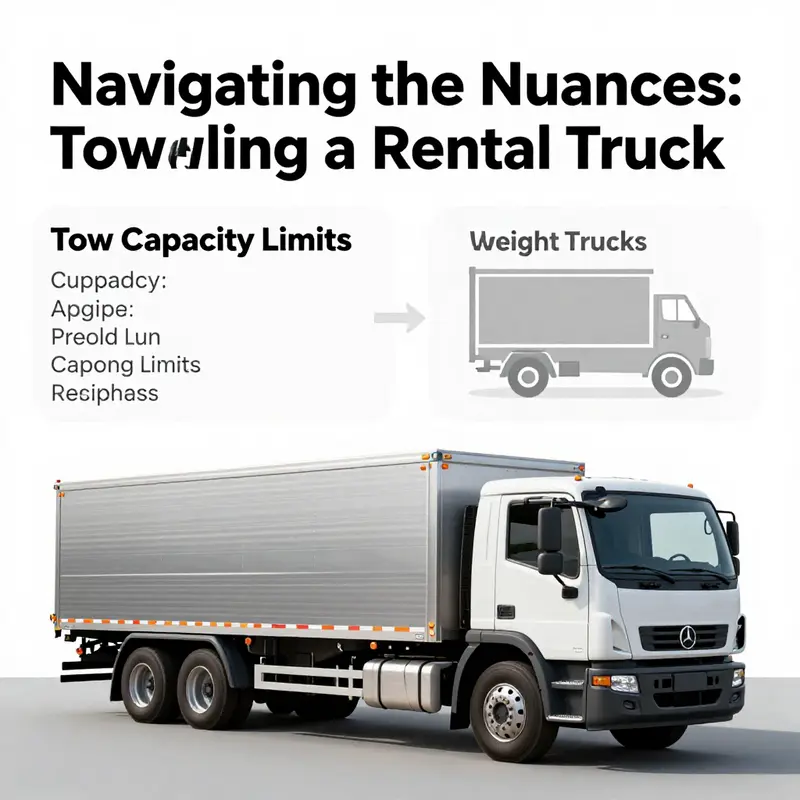
When you rent a truck for a move or a heavy haul, the question of tow capability quickly rises from a casual thought to a crucial decision point. The idea that a rental truck can tow is not inherently wrong, but it rests on a firm boundary: the vehicle must be explicitly equipped and authorized for towing, and the load must stay within the manufacturer’s stated limits. This boundary is not a suggestion; it is the difference between a controlled, predictable haul and a perilous miscalculation that can affect the safety of everyone on the road, the integrity of the rental agreement, and the protection your insurance provides. To navigate this space with confidence, you begin by recognizing tow capacity not as a rough guideline but as a gatekeeper that determines whether your plan is feasible in the first place. Tow capacity is the maximum weight the truck can safely pull, taking into account the engine, transmission, braking system, suspension, and cooling, all working in concert under real driving conditions. In practice, this means recognizing two critical realities: first, not every rental truck is built for towing, even if it seems sturdy enough for a trailer or a boat; and second, even when towing is allowed, you must stay within the specified limits at all times. The consequences of ignoring either reality extend beyond property damage or vehicle wear. They touch legal compliance, insurance coverage, and the risk of an accident that could have long-term repercussions for your finances and your peace of mind. The numbers you encounter in the rental world reflect a landscape of limits, and understanding them becomes a form of responsible preparation. For many pickup-style rentals, the practical towing ceiling sits around 6,000 pounds. This figure is not universal, however. Some larger, 20-foot moving trucks can manage up to about 7,500 pounds, though actual capacity varies by model, by condition, and by the precise configuration of the truck you choose. Those numbers are more than trivia; they are a framework for decision making. If you plan to pull a trailer, a motorcycle, a small boat, or other heavy equipment, you must confirm the exact tow rating for your specific truck model before you sign the rental agreement, not after you’ve loaded your trailer and hit the road. The safest route is to treat tow capacity as a fixed ceiling that you measure everything against, from the weight of the trailer and its cargo to the weight distributed across the truck’s axles, hitch, and wheels. This approach keeps your plan anchored in reality rather than cascading into a sequence of risky compromises once you’re already on the highway. The structural logic behind this boundary is straightforward. The engine and transmission are designed to deliver power while maintaining control, cooling systems prevent overheating during long pulls, brakes handle the additional momentum, and the suspension supports the extra load without allowing excessive sway or tire failure. When any of these elements is stressed beyond its limit, the risk of an engine overheat, a failed brake, or a blowout increases dramatically. That is not hyperbole. It is a mechanical truth tied to the way towing changes the dynamics of a vehicle that was not designed for heavy pulling as its primary function. A rental truck is a mobile toolbox for moving boxes and furniture, not a dedicated hauler for heavy trailers or full-size vehicles. The moment you consider towing, you need to embed a careful, methodical process into your planning. Start with the rental agreement itself. The contract will spell out whether towing is permitted and, crucially, the maximum tow capacity for the particular model you will drive. If the agreement is silent on towing, assume that towing is prohibited unless the rental company explicitly provides a different arrangement. This is not an overcautious stance; it is the minimum due diligence that protects you from misinterpretation and from inadvertently assuming coverage that does not exist. If towing is allowed, the next layer of due diligence is the hitching system. A trailer hitch must be properly installed to meet safety and legal standards. The typical path is that the rental company can supply a hitch kit for an additional fee when you plan to tow. In this context, DIY hitch installation is generally not permitted and may violate the terms of the rental contract. This is not just a legal shield for the rental company; it is a safety shield for you. Improper hitch installation can lead to hitch failure, improper alignment, or a loss of trailer control, any of which can quickly spiral into a dangerous situation on the road. The installation process, while it may feel like a minor step, is in fact a specialized task that requires the correct hardware and precise fastening. If the hitch kit is provided, follow the company’s instructions to the letter and, if you have any doubt, request on-site support or a professional installation service. The actual towing task becomes a test of proper equipment in motion, and it hinges on adherence to two parallel streams: the vehicle’s capabilities and the trailer’s requirements. The trailer itself must be sized to match the truck’s tow capacity. A mismatch can manifest in several ways. You may notice that the trailer pulls more weight than the truck can handle, requiring longer stopping distances and increasing the risk of wheel fade or brake overheating. Or you may notice that the trailer’s weight distribution is off, producing unstable handling that makes lane changes feel unpredictable, especially at highway speeds or in gusty crosswinds. The principle here is simple: you must never exceed the truck’s tow rating, and you must ensure the trailer’s weight, tongue weight, and overall load do not overwhelm the vehicle’s design. Another essential piece of the puzzle is insurance and liability. Towing a trailer typically requires an endorsement or additional coverage because the basic rental insurance may not cover damage to the trailer, towing-related liability, or the broader consequences of an accident while towing. It is entirely reasonable to ask for a towing endorsement or to arrange separate coverage, ensuring that the act of towing is not a blind spot in your risk management. The conversations you have with the rental agency about insurance should be clear and documented. The aim is not to complicate the process but to close gaps that could leave you exposed if an incident occurs. The legal framework around towing also varies by place, and this is where local laws come into play. Trailer lights, brakes, safety chains, and sometimes brake controllers are not mere formalities. They are legal requirements that demand compliance. In some regions, trailers of certain weights require the tow vehicle to be equipped with a trailer brake controller or a separate braking system that interacts with the trailer’s braking mechanism. Lights and safety chains are more than accessories; they are essential signals to other drivers and a critical layer of protection in the event of a disconnection. A responsible plan accounts for these expectations up front, not as a last-minute afterthought. Beyond the safety and legal dimensions, there is the practical day-to-day science of how to manage weight and balance on the road. Tow capacity is not just about the gross weight of the trailer and its cargo. It is also about how that weight is distributed relative to the towing vehicle. The concept of tongue weight—roughly 10 to 15 percent of the trailer’s loaded weight—helps determine how much of the load presses downward on the hitch. Too little tongue weight can cause trailer sway; too much can overload the hitch and affect steering. Many drivers who attempt to tow with a rental truck discover that even when the total weight appears within the limit, the distribution of that weight matters as much as the total. This is where a weight-distribution hitch or a sway-control mechanism can play a crucial role, especially for longer or higher-profile trailers. The burden of improper distribution is not merely theoretical. It translates into unpredictable handling, longer braking distances, and a higher probability that the trailer will behave like a stubborn pendulum in gusty winds or when passing large vehicles. If a truck is not equipped to manage the added forces of a trailer, the result can be a dangerous loss of control. A practical approach to preempt these issues begins with transparent measurements. Before you book, verify the exact tow rating for your chosen model, and ask for a current manual or placard that confirms the towing limit. If possible, compare this against the trailer’s weight and the expected cargo. Weigh the trailer if you can, either on a commercial scale or using a certified method, to ensure that you are within the combined weight limits when loaded. When in doubt, choose a lighter trailer or a smaller load rather than increase risk by pushing the limits. The discussion of capacity and safety is not just about the mechanical reliability of the truck or the legal box you must check. It is about the experience of moving itself—the difference between a calm, controlled drive and a stressful, high-stakes journey. If you are hauling something particularly valuable, fragile, or expensive, the margin for error shrinks further. In these cases, the prudent course often leads you toward a model with a higher built-in capacity or toward a different transportation solution entirely, such as renting a specialized hauler or using professional towing services. The distinction between a cautious plan and a reckless one often comes down to diligence. Diligence means reading the rental contract carefully, confirming the tow rating for the specific truck model you will drive, and documenting any permissions or endorsements in writing. It means coordinating with the rental company about hitch installation, maintenance, and insurance modifications. It means mapping the route with awareness of weight restrictions, bridge clearances, and rest areas that accommodate heavier trailers. And it means performing simple checks before departure: ensuring the hitch is secure, the lights work, the safety chains are connected, and the load is evenly distributed with a proper hitch setup. The payoff for this discipline is not merely avoiding trouble; it is the confidence to move forward with a plan that is grounded in the realities of the equipment you have at hand. If you want to deepen your understanding of practical towing considerations, you can explore additional perspectives that discuss tow capacity and related logistics in broader contexts. For readers seeking practical, procedural guidance on renting a pickup truck for towing, an external resource offers detailed steps and considerations that complement what you’ve learned here. This guidance aligns with the emphasis on verifying capacity, securing appropriate coverage, and ensuring proper hitch installation before you begin your journey. In short, the gatekeeper in your towing plan is capacity, but the path through that gate depends on clarity, preparation, and respect for the limits imposed by the truck’s design and the law. With capacity defined and responsibilities acknowledged, you can approach the rigging, the insurance conversations, and the road ahead with a steadier hand and a clearer plan. For ongoing exploration of how these ideas unfold in real-world contexts, the broader body of driving and towing knowledge—such as the evergreen resource that covers practical tips for renting and preparing a pickup truck for towing—can be a valuable companion, and you can find thoughtful discussion in the related blog space that often serves as a practical companion to hands-on planning. Additionally, the literature around fleet readiness and emergency response strategies offers a useful frame for thinking about how towing fits into larger operations and preparedness planning, which can be important for island fleets or any operation that relies on careful, disciplined transport practices. As you proceed, remember that capacity is your anchor. It informs every other decision—what you are allowed to tow, how you secure the load, how you insure the operation, and how you navigate the road with a heavier-than-usual profile. If you keep capacity at the center of your planning, you will avoid common traps and keep your move moving smoothly. For a concise, ongoing reference, you can turn to the island towing community’s practical insights hosted in dedicated spaces that merge field experience with safety-focused guidance. By weaving together contract clarity, equipment integrity, insurance coverage, legal compliance, and mindful load management, you create a towing plan that respects the limits while still achieving your objective. When the planning is thorough and the equipment is properly configured, towing with a rental truck becomes not a gamble but a deliberate, manageable part of your move. And as you shift from the planning stage to execution, you’ll find that the most important steps are the ones you take before you ever turn the key: verifying capacity, securing the right hitch, arranging appropriate coverage, and preparing for the road with a clear, well-understood plan. For further context and ongoing discussion, the broader body of towing-focused resources and community insights is worth a look, including practical perspectives from industry-focused hubs and related knowledge bases. To read more from an accessible resource hub, you can visit the Island Tow Truck blog for related topics and real-world considerations that extend the principles discussed here. The Island Tow Truck Blog. And for a grounded, safety-first approach to renting a pickup truck for towing, a practical external guide offers step-by-step guidance on insurance, capacity checks, and hitch installation that aligns with what you’ve learned in this chapter. You can consult the guide at https://www.acehardware.com/rental/truck-rental-tips.
Tow with Confidence: Navigating Insurance and Coverage When Renting a Truck for a Tow
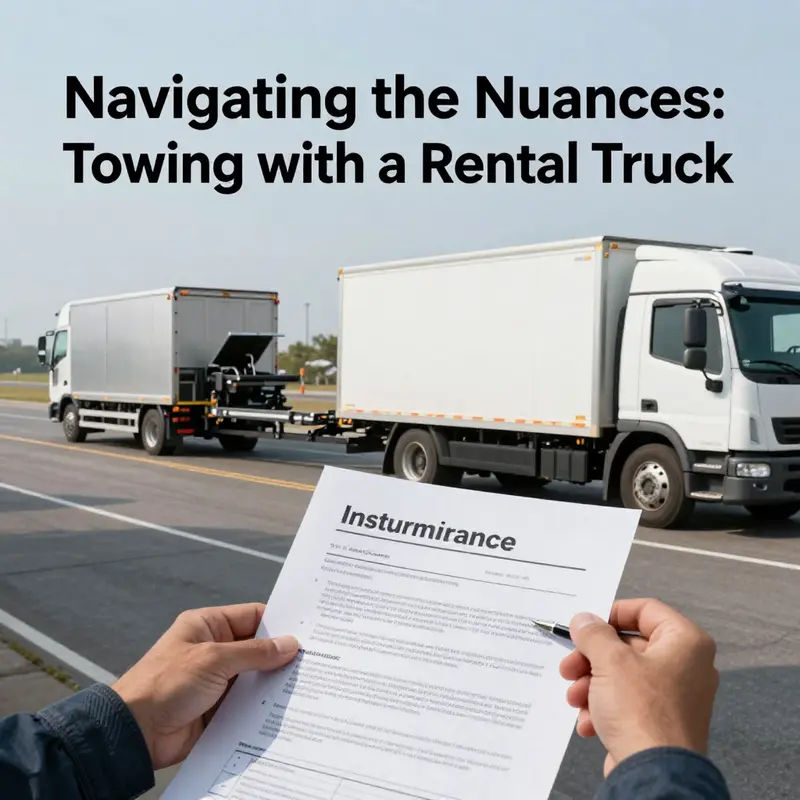
When you consider moving something and towing a trailer or another vehicle, the insurance question quickly rises to the top of the to-do list. The decision to tow with a rental truck is not simply about feasibility or legality; it hinges on coverage, limits, and the fine print that can turn a routine move into a costly ordeal. In a scenario where a rental truck is already booked to haul household goods, adding a trailer or an additional towed load introduces layers of risk that are not automatically covered by standard auto policies. The key is clarity: what does the rental contract permit, what does the insurance actually cover, and what kind of endorsements or third-party protections are necessary to keep you financially whole if something goes wrong?
The starting point is straightforward but often overlooked. You must confirm with the rental company that towing is allowed with the specific truck you have chosen. Beyond permission, you need to verify the vehicle’s tow rating, hitch compatibility, and the condition and compatibility of any trailer you plan to haul. These checks are not just about safety; they are about ensuring that insurance coverage remains valid when you are on the road. The landscape of coverage is nuanced. Standard auto insurance policies almost never extend to the rental vehicle itself when it is being used to tow a trailer or another vehicle. This gap means you cannot assume your personal policy will shoulder the risk of a tow-related incident. In practical terms, that often translates to a surprising out-of-pocket burden if an accident occurs or if a trailer is damaged in transit.
Rental companies frequently offer their own insurance options to bridge this gap. A Collision Damage Waiver (CDW) or a Loss Damage Waiver (LDW) is designed to cover damage to the rental truck and, depending on the policy, may extend to attached trailers as well. But the presence of a CDW or LDW does not automatically resolve every risk. These waivers come with limitations, exclusions, and often deductibles that can be substantial. For instance, some waivers exclude coverage for certain high-risk activities, or they may not apply if the tow setup is not strictly within the manufacturer’s stated guidelines. Others may cap the coverage at the value of the vehicle and not the trailer, or they may specify that damage caused by improper hitch installation or improper loading is not covered. The bottom line is simple: read the fine print carefully and ask explicit questions about what is covered, what is excluded, and what the deductible will be in a tow scenario.
Another layer to consider is the role of personal credit cards and their associated insurance programs. Many credit card policies provide rental vehicle coverage as a perk, but those benefits are rarely designed with towing in mind. They may cover the rental car itself for collision and theft, but they often exclude trailers, towed loads, or commercial-use scenarios. If you rely on a card-issued policy, you must understand exactly which situations are eligible and which are not. It is not unusual for card-based coverage to refuse claims if the rental is used for business purposes, if a tow hitch is installed improperly, or if the vehicle is being driven in a way that falls outside the policy’s definitions of normal usage. For a prudent move, treat the card coverage as a secondary or backup layer at best, and do not depend on it as your primary protection for towing with a rental truck.
In many cases, renters turn to third-party insurance providers to craft a more complete safety net. These options can be tailored to cover the rental truck, the trailer, and the towed load, with terms that address the unique risks of towing heavy or valuable items. Third-party policies can be especially valuable if you are transporting equipment, vehicles, or other high-value cargo where the potential replacement costs would be significant. As with any insurance purchase, the key is to scrutinize exclusions, policy limits, and the exact scope of coverage. Some third-party plans may offer more generous coverage for trailers, but they may also impose stricter conditions on hitch installation, towing routes, or maintenance requirements. In short, you can customize protection in ways that the standard rental liability products may not allow, but you must do so with careful due diligence.
To appreciate the insurance dynamics of towing with a rental truck, it helps to separate two core concerns: protection for the rental vehicle and protection for the towed property. The rental vehicle itself is typically covered by CDW/LDW if you opt in, subject to terms and limitations. Damage to the hitch, the bed of the truck, or other components involved in towing can complicate claims if the damage is tied to improper setup or load distribution. The towed property, whether it is a trailer, another vehicle, or a large load, often has its own set of risk exposures. If the trailer is damaged in a collision, or if the load shifts and causes a roadway hazard, the responsibility for that damage will be shaped by the combination of the rental coverage, any third-party policy, and applicable state or local laws.
An element that cannot be ignored is liability coverage. Tow-related incidents can involve complex liability scenarios. A collision with another vehicle that involves the trailer can leave you facing claims for property damage, bodily injury, and potential legal costs if there is any perceived fault on your part. If the rental company’s coverage is the primary defense, you must be sure it actually covers the liability aspects of towing. In some cases, liability coverage linked to a rental agreement is limited to the vehicle itself and does not extend to the trailer or to any third-party property. This reality reinforces a hard lesson: even if you think you are protected by a CDW or LDW, you may still face uncovered costs if the policy does not clearly extend to the trailer and its load.
This is precisely where the discipline of due diligence becomes a practical habit. Before you sign any agreement or hit the road, you should calmly walk through a checklist with the rental company representative. Confirm that the truck model you plan to rent is approved for towing and ask for the official tow rating, including tongue weight and gross trailer weight limits. Confirm that the hitch is compatible with the trailer and that the company provides a hitch kit that meets the required specifications. Inquire about whether the hitch installation is performed by the rental company or if it is allowed only by a licensed technician. A hitch installed outside the company’s safety standards can invalidate insurance coverage and expose you to liability for any resulting damage. You should also verify whether the trailer itself needs to be inspected for brakes, lights, and safety chains, and whether the rental agreement covers the trailer’s insurance or only the rental vehicle’s.
The practical consequence of these confirmations is straightforward: you leave less to chance and reduce the likelihood of a coverage denial after an incident. The goal is not merely to comply with a policy; it is to align your tow setup with the spirit of the policy so that coverage applies when you need it most. The renter’s responsibilities also extend to the loading practices and the transport route. Overloading the trailer, misloading the cargo, or failing to secure the load properly can all complicate a claim, even if the insurance policy would otherwise apply. Insurance professionals often emphasize the importance of safe loading and proper load distribution because these factors directly influence the risk of accident or damage. A lightly loaded trailer may be easier to manage, but when the load shifts unexpectedly during a turn or a braking maneuver, the consequences can cascade into a high-cost claim that tests the limits of any policy.
If you are contemplating a tow with a rental truck, consider the broader context in which your move occurs. Local laws can require working lights on the trailer, functioning brakes if the trailer is heavy, and safety chains that meet the required standard. Noncompliance can void coverage or complicate a claim, leaving you to bear the cost of fines, repairs, and any injuries that might occur as a result of the noncompliance. Your planning should include a quick review of relevant regulations in the states or municipalities you will pass through. The practical insight here is simple: coverage is not a substitute for compliance. Insurance only works when you have a legally and technically sound towing setup.
In this light, the chapter on insurance considerations becomes a practical companion to the earlier chapters that outlined the steps to secure permission, confirm tow capacity, and prepare the vehicle and trailer for the move. The decision to tow with a rental truck should be accompanied by an explicit understanding of who pays for what in the event of damage, who is responsible for the trailer, and how the claims process will unfold if an accident occurs. The most reliable path is to secure an explicit endorsement from the rental company that covers towing-related incidents, confirm the policy limits, and document the hitch installation, load securement, and all safety checks. It is also wise to consider adding a third-party protection plan if the value of the towed load is substantial or if you anticipate a route that includes complex terrain or high traffic conditions. In short, insurance is not an afterthought; it is a design feature of a responsible tow operation.
As you weigh the options, you may find value in resources that emphasize risk planning and emergency readiness, especially if your move involves fleets or multiple assets. For more on planning around emergencies and risk in fleet deployments, you can explore the resource on essential-fleet-emergency-response-strategies. This internal reference can help you consider how insurance choices fit into a broader risk management framework, ensuring that your towing plan remains aligned with your overall safety and contingency strategies. essential-fleet-emergency-response-strategies
Finally, while the mechanics of insurance can seem abstract, it is worth anchoring your decision in a practical approach: treat insurance as part of the safety equipment you add to a tow. Do not attempt to drive into the unknown with a rental truck and a trailer without a clear understanding of coverage, permitted operations, and the conditions that will actually trigger a claim. Take the time to read the rental contract, ask precise questions, and request written confirmations of what is covered and what is excluded. If there is any ambiguity, insist on clarification in writing before you sign. This diligence protects not only your financial interests but also the safety of everyone on the road. The goal is to move with a sense of confidence that your coverage matches the risk, and that your plan for towing with a rental truck is robust enough to withstand the uncertainties of the journey. The chapter on insurance considerations is the hinge—without it, the practical act of towing becomes a gamble. With it, you gain a structured approach that makes the operation safer, more predictable, and more aligned with responsible moving and transport practices.
For those seeking authoritative guidance that frames insurance in the broader landscape of consumer protections and regulatory standards, consult the National Association of Insurance Commissioners site. It offers comprehensive explanations of how coverage typically applies to rental vehicles and the protections buyers should expect when purchasing additional coverage for tow-related incidents. https://www.naic.org/
Final thoughts
Towing with a rental truck can be a seamless experience if you navigate the rental agreement, understand tow capacity, and secure adequate insurance. For local managers and operators, this knowledge not only ensures compliance but also enhances safety. Always remember to read the fine print of your agreement, adhere to tow capacity limits, and confirm your insurance covers all bases. This proactive approach helps you avoid unnecessary stress and ensures smooth operations, whether you’re transporting supplies or moving equipment.