Understanding whether you can drive a tow truck with a regular driver’s license is essential for various professionals, from auto repair shop owners to commercial fleet operators. The regulations vary significantly by state, particularly regarding vehicle weight categories, which can make a hefty difference in who can operate these vehicles legally. Navigating this maze starts with understanding vehicle weight regulations, which leads us to specific state requirements, the role of a Commercial Driver’s License, and the implications for insurance and liability. Each chapter will shed light on these crucial aspects, ensuring you’re well-prepared to make informed decisions in your towing operations.
Tow Truck Licensing Demystified: GVWR, Endorsements, and the CDL Path
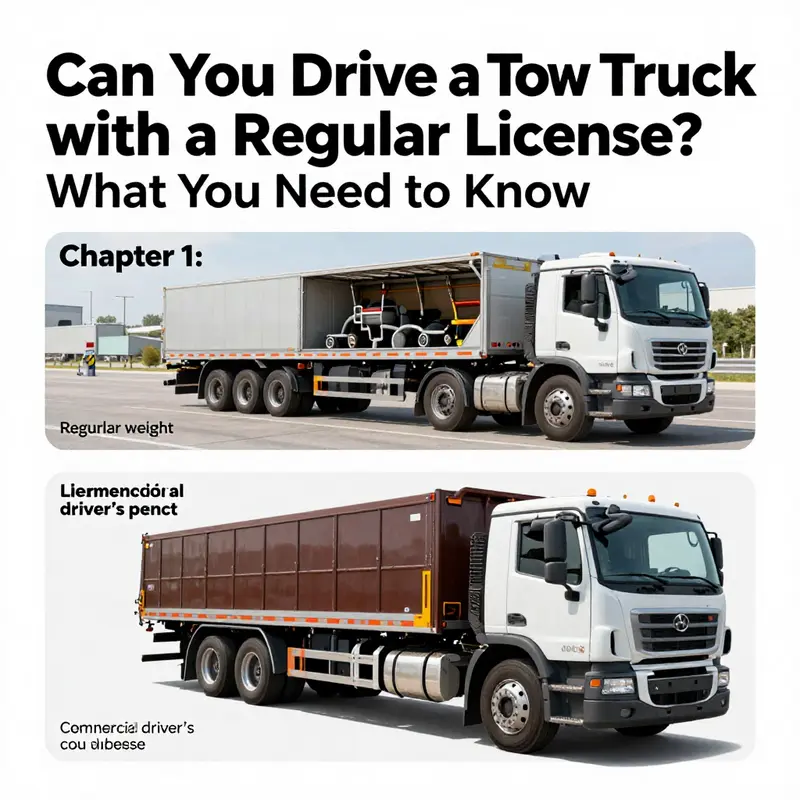
Determining whether you can drive a tow truck with a regular license hinges on GVWR and state rules. The GVWR is the maximum operating weight declared by the manufacturer, including the tow truck itself, fuel, fluids, and standard equipment. Licensing follows GVWR thresholds rather than the typical load you carry on a job, so the same truck could require different licenses in different situations. Practically, GVWR acts as the gatekeeper for how you are legally permitted to operate the vehicle on public roads. Safety, insurance, and training considerations also align with these thresholds.
In New York, the approach is concrete but state specific. A tow truck with GVWR over 26,000 pounds typically requires at least a Class B CDL, while lighter trucks may be operated under a regular license depending on local rules. Beyond the base license, many operators pursue a tow truck endorsement or other specialized credentials that reflect the added training and heightened responsibility involved in towing and recovery work.
Endorsements and training matter because heavier vehicles have different braking, steering, and weight distribution dynamics. Endorsements may require knowledge tests, road tests, and sometimes additional safety courses.
For fleet planning, decide based on the heaviest vehicle you operate and the services you provide. A mixed fleet often benefits from clear guidelines that map licenses to vehicle weight classes and job requirements, reducing risk and improving consistency.
For state-specific guidance, consult official resources such as the state DMV or motor vehicle agency. In New York, the Tow Truck Driver Endorsement details the steps required to obtain the endorsement and the thresholds involved. If your operations cross state lines, create a plan to obtain the appropriate licenses for each jurisdiction you serve. Additional industry resources can provide practical tips on safety, loading, and equipment management.
Remember that although some lighter tow trucks may be covered under a regular license in certain regions, pursuing formal training and a professional endorsement often offers broader career opportunities and stronger safety practices.
Official references: https://dmv.ny.gov/permits-and-licenses/driver-s-manual/tow-truck-driver-s-endorsement
Tow Trucks, Regular Licenses, and the State-by-State Puzzle: Reading Weight Limits and Endorsements
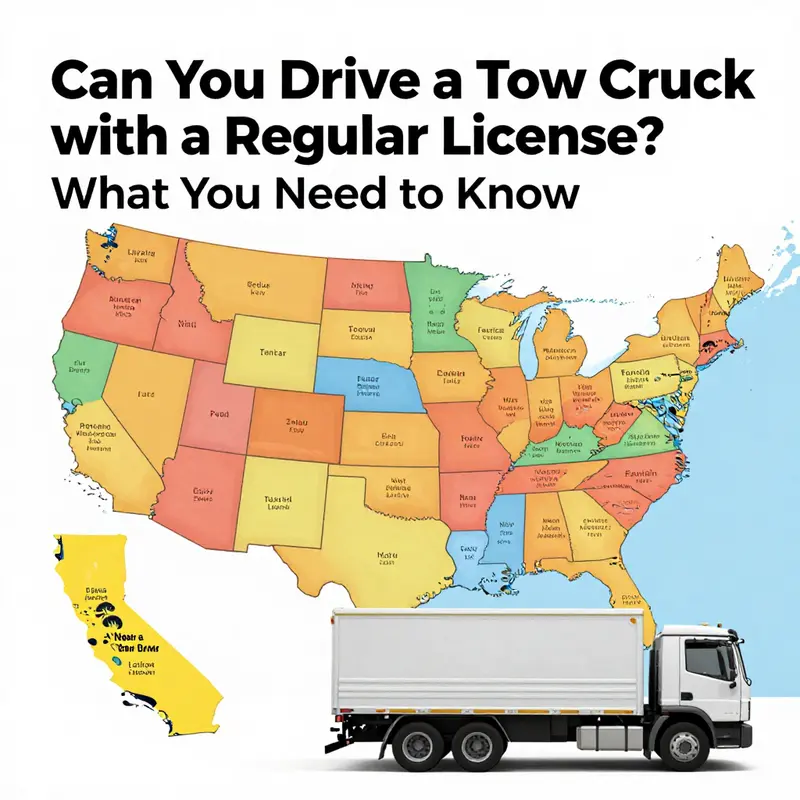
The question of whether you can drive a tow truck with a regular license is a good example of how licensing rules in the United States are less about a single label and more about a moving target of weight, configuration, and jurisdiction. In practice, the ability to operate a tow truck without a Commercial Driver’s License (CDL) depends on the vehicle’s weight, how it is configured, and the specific rules your state applies to towing. A driver may hold a standard Class C or Class D license in some places and still be permitted to tow certain vehicles under certain conditions, while other states place a hard cutoff that makes CDL mandatory for nearly all towing operations. This patchwork is why a straightforward yes-or-no answer rarely suffices. It requires understanding the weight thresholds and the way each state defines a tow operation, because those definitions determine when a CDL, an endorsement, or simply a standard license is sufficient to move a car carrier, tow dolly, or wheel-lift rig down the road.
Take New York as a concrete example, because it is often cited in discussions about towing endorsements and licensing. In New York, the landscape is defined not only by the class of driver’s license you hold, but also by a specific endorsement that signals your permitted towing activities. If you hold a Class A, Class B, or Class C license—this includes the Non-CDL Class C—and you intend to operate a tow truck, you must pass a written test to obtain the towing endorsement, commonly designated as a “W.” This endorsement is not merely a formality; it changes the regulatory category under which you operate and defines what you can tow without holding a full CDL. In short, the W endorsement can remove the need for a CDL, but only if you stay within the weight thresholds that New York considers to define non-commercial operation. Push past those thresholds, and the CDL becomes the gatekeeper once again.
Even within New York’s framework, the practical takeaway is nuanced. The W endorsement is a key piece for those who want to use a tow truck without a CDL, but it is not a universal allowance for any towing scenario. It preserves a carve-out for vehicles that fall under the state’s non-commercial weight and configuration definitions. When the weight rating of the truck—or the combined weight of truck plus towed unit—exceeds those limits, the regular license ceases to be adequate, and a CDL becomes necessary. The same basic principle holds in many other states, though the exact weight thresholds, endorsement names, and testing requirements vary. Some jurisdictions impose stricter rules that effectively require a CDL for any form of towing, while others provide more flexibility and rely on endorsements or specific vehicle classifications to differentiate what is permissible with a standard license.
With these realities in mind, the central fact is that licensing for tow truck operation is less about a single license type and more about how the vehicle’s weight and configuration intersect with state law. The GVWR, or gross vehicle weight rating, of the tow truck—along with any towed load it is designed to carry—opens the door to or closes the door on non-CDL operation. In many states, the pertinent threshold revolves around whether the vehicle’s weight, by itself or in combination with a towed load, falls under a limit that the state deems non-commercial. When that line is crossed, a CDL becomes the legal requirement, and the pathways to compliance widen into CDL classes and possibly additional endorsements, testing, or training.
For anyone considering a career or a practical line of work in towing, this is where a careful, hands-on approach becomes essential. The regulations can change from year to year, and even within a given state, the DMV may publish different interpretations for city, county, or highway operations. Before you begin any towing work, you should determine the exact GVWR and GCWR values for the equipment you intend to operate. The GVWR tells you the maximum weight of the tow truck itself when fully fueled and loaded, while the GCWR accounts for the total weight of the vehicle and the load it can safely carry when towing. Together, these numbers anchor the licensing decision. If you are keeping a light-duty operation, perhaps with a small wheel-lift or a roll-back that stays under the relevant threshold, a regular license with the appropriate endorsement (if required by your state) may be enough. If your configuration is heavier or more complex, plan for a CDL from the outset to avoid regulatory risk and operational roadblocks.
That regulatory complexity is precisely why many operators turn to formal guidance and official sources when they map out a path into towing work. The state DMV is the most authoritative resource, and it is worth noting that the requirements are not universally identical across the country. A driver in one state might qualify to operate a tow truck under a standard license with a single endorsement, while a driver in a neighboring state might be required to hold a full CDL regardless of the weight, especially in the case of heavier car carriers or every configuration that involves public road towing. The variation is not a matter of opinion but of statute, administrative rules, and the precise definitions each state attaches to terms like “tow truck,” “car carrier,” “endurance,” “end tow,” or “non-commercial” operation. In practice, this means a careful, state-by-state verification process before any actual towing begins.
In the process of choosing a path, many operators find it helpful to consult broader fleet-management resources that address the practicalities of maintaining lawful operation while planning for emergencies and rapid-response scenarios. For instance, broader fleet guidance can illuminate how licensing intersects with safety practices, maintenance demands, and compliance workflows in real-world settings. A useful point of reference and a good complement to licensing considerations is the guidance offered in resources that discuss emergency response strategies for fleets. Framing licensing within the larger context of fleet readiness helps operators align legal compliance with operational readiness, training, and risk management. You can explore concepts like this in the context of fleet planning through materials such as Essential Fleet Emergency Response Strategies. The goal is not to substitute for a DMV ruling but to ground licensing decisions in a comprehensive approach to running a tow operation responsibly and safely.
To avoid missteps, you should engage directly with your state’s DMV and request a precise determination based on the specific vehicle you intend to operate. This means providing the exact GVWR of the tow truck, the GCWR if applicable, the make and model, and any planned configurations for towing. Some states require a written knowledge test for endorsements, while others may conduct a more formal evaluation of your understanding of state towing laws and safety practices. The process can also involve equipment inspections, documentation of insurance coverage, and a review of operator qualifications. In New York, for example, the central steps revolve around obtaining the towing endorsement by passing a written exam, but the specifics can shift with regulatory updates. The important takeaway is to treat the license as a precise match to the machine you intend to drive and tow, not as a general permission to operate any heavy vehicle on public roads.
Beyond licensing, there is a practical, everyday dimension to this issue. Consider the responsibilities you assume when you choose to operate a tow truck under a regular license. The responsibilities extend to knowledge of how to handle load distribution safely, how to ensure the towed vehicle is secured properly, how to manage traffic exposure, and how to conduct routine inspections of braking, lighting, and signaling systems. The work often happens in imperfect conditions—on busy streets, at night, or in inclement weather—and the risk calculus changes depending on whether you are towing a single vehicle, a line of vehicles, or a heavy carrier. The guidance you receive from the DMV, the endorsements you secure, and the training you complete should reinforce a safety-first mindset that prioritizes predictable, lawful operations over speed or convenience.
In practical terms, if you are contemplating a tow-truck operation under a regular license, you should map your plan around three core questions: What is the GVWR of my tow vehicle, and what is the GCWR when I am towing? Is my planned configuration covered under a state endorsement or does it require a CDL? What is the exact process I must follow to obtain any necessary endorsements or licenses, including testing, paperwork, and proof of training? Answering these questions will anchor your decision-making and help you avoid the common pitfall of assuming one license fits all tow scenarios. It also helps you better prepare for the realities of the job, including the need for ongoing training, adherence to safety standards, and readiness to adapt to changing regulations.
If you are reading this while in the initial stages of planning your towing activities, keep this principle in mind: licensing is a function of weight, configuration, and jurisdiction. The weight thresholds that allow a regular license to suffice can be surprisingly specific, and a small mismatch between your anticipated load and the official limits can trigger a requirement for a CDL. The safest course is to contact the DMV or its official online resources, confirm the exact classifications, and secure any necessary endorsements before you purchase equipment or begin operating on public roads. This precaution protects you, your business, and the people you serve, and it reduces the chance of costly penalties, insurance complications, or license suspensions that can disrupt your operation. In the meantime, stay connected with the broader practices that help fleets stay compliant and prepared for emergencies, such as the reference linked above, which offers a broader perspective on fleet readiness and response planning. For more direct, legal guidance, consult your state DMV and the official New York DMV page if you operate in that state: https://www.dmv.ny.gov. Keeping a steady channel to authoritative sources ensures your path remains clear as you navigate the regulatory landscape across state lines.
External resource for ongoing guidance:
- https://www.dmv.ny.gov
Note: For readers seeking deeper practical context and a broader view on how licensing intersects with fleet readiness, consider exploring related materials in the same domain. Aligning licensing decisions with overall fleet safety and emergency-readiness strategies can help ensure that a tow operation remains compliant, efficient, and capable of delivering reliable service in ever-changing conditions.
Weight on the Road: When Tow Trucks Require a CDL and How to Navigate the Rules
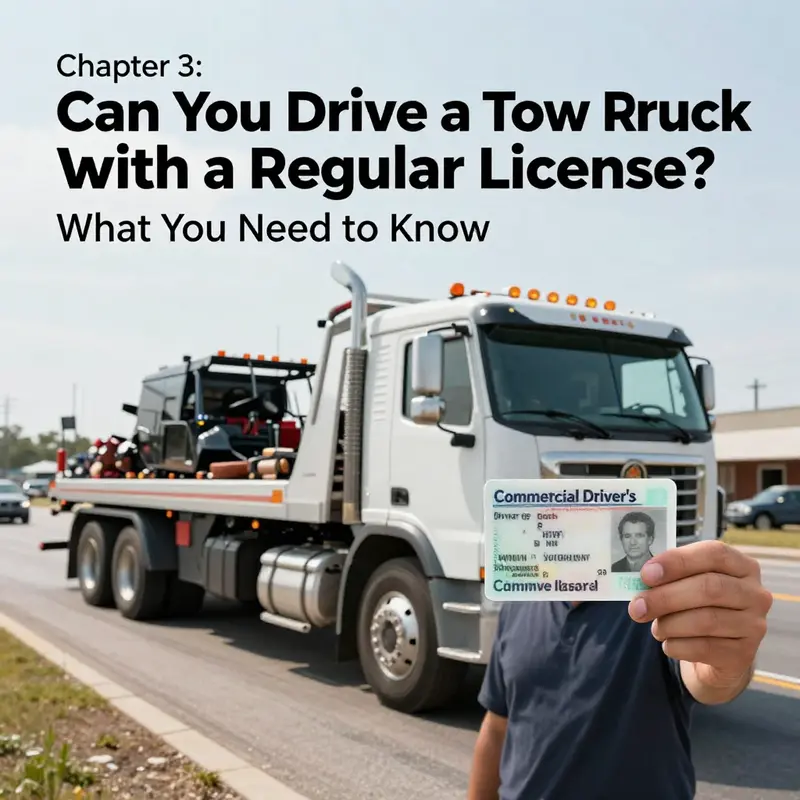
Weight on the Road is not just a matter of performance when a tow truck leaves a shop. It is the hinge on which licensing, safety, and professional accountability turn. The question can I drive a tow truck with a regular license is deceptively simple, yet the answer hinges on a mix of vehicle weight, regulatory frame, and the realities of the roads you will travel. Tow trucks span a broad spectrum—from compact wheel-lift units designed for local pullovers to heavy recovery rigs that operate with a mass closer to small commercial trucks. The crux of licensing, then, is the Gross Vehicle Weight Rating, the GVWR, which represents the vehicle’s maximum loaded weight. Depending on that weight and where the vehicle will be operated, different licenses come into play. In practice, many light-duty towing tasks can be handled with a standard driver’s license, but the moment you move into heavier machinery or highway operations, a commercial license becomes the responsible, and often legally required, choice. The distinction is not a mere bureaucratic preference; it is a road safety principle built to ensure that drivers have the training, the medical fitness, and the practical competence to manage large, complex machines in real-world driving conditions.
In the United States the Federal Motor Carrier Safety Administration sets the baseline for commercial driver licensing and the kinds of vehicles that trigger those standards. However, state authorities implement those standards and add their own requirements. That means your eligibility is not only a function of the machine you plan to operate but also of the state in which you drive and the nature of your business. If your tow operation remains within light weight limits and the vehicle design does not classify as a commercial vehicle under state rules, a regular license can suffice for many routine towing tasks. The outlook changes when GVWR climbs into the heavy range, or when the vehicle is intended to operate on highways, across county lines, or as part of a commercial fleet serving customers who expect a regulated, professional service.
A practical illustration helps anchor the discussion. In New York, the threshold is a clear demarcation line. If you are operating a car carrier or equivalent tow configuration with a GVWR over 26,000 pounds, the path to legally driving that vehicle requires a Class B commercial driver’s license. A standard noncommercial license does not meet the regulatory standard for that weight category. If the GVWR remains below that threshold, a standard license may be acceptable, provided the operation does not add other regulatory burdens, such as specialized equipment handling or interstate movement that would change the vehicle’s classification. This NY-specific guidance underscores a broader principle: the licensing decision tracks the vehicle’s weight and the regulatory classification assigned to its use. Other states echo this logic, but with their own nuances. Some jurisdictions may require CDL for any commercial towing activity on a public road, while others may permit lighter operations under a regular license but still impose inspections, insurance, or operator training requirements. The safest course for a prospective operator is to confirm the exact GVWR of the vehicle you intend to drive and then consult the state DMV or the equivalent licensing authority about the precise licensing category needed for that vehicle and its planned use.
The picture becomes more complex when you consider the compliance and risk landscape. For fleets that rely on heavy tow trucks—whether for roadside assistance, accident recovery, or disaster response—keeping a properly licensed workforce is not only a legal obligation but a practical safeguard. Driving a heavy tow truck without a CDL can bring substantial penalties: fines that can escalate quickly, possible vehicle impoundment, and, in the wake of an accident, potential criminal exposure if unlicensed operation contributed to harm. Insurance is another critical factor. Many insurers will require proof of CDL certification as a condition for ongoing coverage, and fleets without validated licensing can face higher premiums or even denial of coverage when a claim arises. In other words, the license serves both regulatory compliance and financial risk management, a dual purpose that reinforces professional discipline and predictable service delivery.
Beyond the legal and financial dimensions lies the fundamental goal of public safety. A CDL signals that a driver has undergone rigorous testing and medical evaluation, ensuring the driver can handle the complex demands of a heavy tow operation. The knowledge base for CDL holders is broad: vehicle dynamics under load, brake performance with a heavy towed mass, route planning that considers weight distribution, and the capacity to manage emergencies with steady, deliberate action. The medical certification component verifies that a driver maintains the physical health needed to react promptly to fatigue, medical episodes, or sudden hazards. In the event of a road incident or a difficult recovery, this combination of training, health clearance, and ongoing oversight can prevent minor mistakes from escalating into major harms.
Endorsements offer targeted enhancement for specialized tasks. For heavy towing scenarios, the T endorsement for doubles and triples can be requisite where the configuration involves multiple trailers. The S endorsement, interpreted in the research results as covering specialized equipment, broadens a driver’s ability to manage unique towing challenges that arise with specialized vehicles or recovery setups. These endorsements are not a universal passport to every heavy vehicle, but they expand the driver’s scope within the CDL framework and align the driver’s qualifications with the complexity of the job. For operators who anticipate evolving duties—adding more complex towing configurations or expanding into broader recovery services—pursuing these endorsements can prove a strategic move, improving flexibility and marketability while maintaining higher safety standards.
From the perspective of a reader planning a career or a business expansion, the practical takeaway is not to assume a license adequacy based on a single vehicle. Start by verifying the GVWR of the unit you intend to operate, then map out the licensing requirements for the jurisdiction where you will drive. This approach should be paired with a candid appraisal of the work you expect to perform: will your routes include highways and long-distance transport, or will you remain within a local service footprint? Will your operation stay within one state, or will it cross multiple state lines with varied regulatory expectations? Answering these questions helps reveal whether you should pursue a CDL now, upgrade later, or perhaps adopt a mixed licensing plan for different segments of your fleet.
For those who wonder about the everyday feasibility of a regular license in tow operations, the honest answer remains conditional. If your vehicle is light enough and your service area is contained, a standard license can cover the day-to-day tasks that keep a local fleet moving and a roadside in view. If your plan entails heavier equipment, frequent highway work, or operations across jurisdictions, a CDL is not just a token of compliance; it is a practical guarantee of safer, more reliable performance under pressure. The licensing decision, in such cases, is a forward-looking investment in safety, customer trust, and the ability to meet the evolving demands of a busy tow operation.
For readers seeking practical context and ongoing guidance on fleet readiness and emergency response, a wealth of industry insight is available through dedicated resources. You can read more on the Island Tow Truck blog for broader context and practical guidance about fleet readiness and emergency response strategies. the Island Tow Truck blog.
Finally, the regulatory framework that governs CDL eligibility sits atop a layered system. The federal standards set by FMCSA create a baseline that states can expand or tailor to fit regional needs. This layered approach explains why a driver certified in one state may face a different threshold in another, particularly when crossing state lines or aligning with cross-border recovery work. For anyone pursuing a career or building a business in heavy tow operations, the practical implication is to stay informed and proactive: confirm the weight classification of each vehicle, identify the exact licensing pathway for each operation, and anticipate how future growth could change those requirements. The strength of a well-planned licensing strategy lies not in a single moment of compliance, but in ongoing readiness to adapt as equipment, routes, and regulations evolve.
External resource: https://www.fmcsa.dot.gov
When a Regular License Meets a Tow Truck: Navigating Insurance, Liability, and Legal Risk
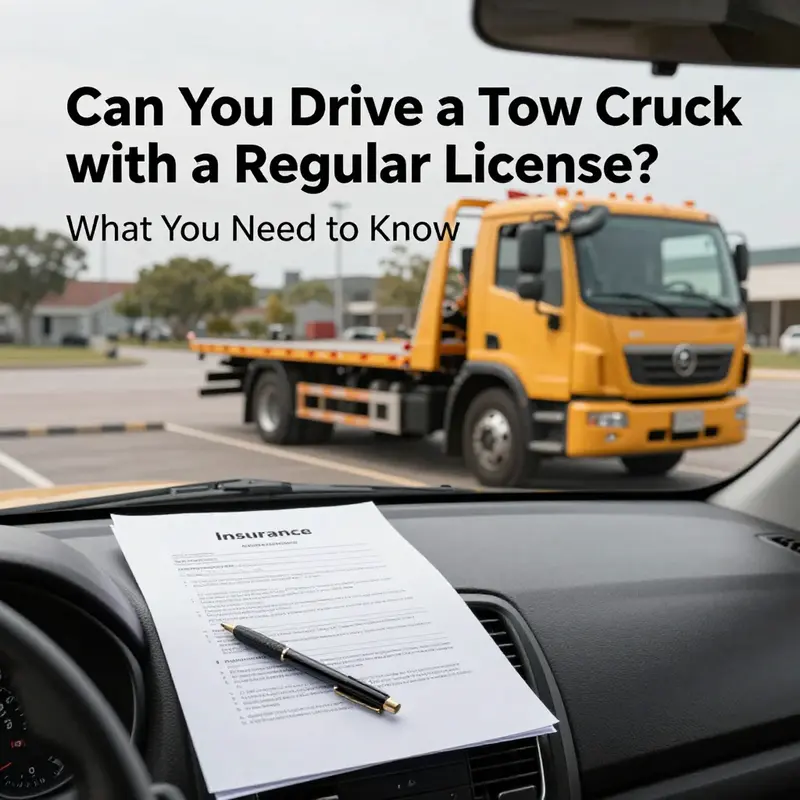
The question that lingers for many aspiring tow operators and curious readers alike is deceptively simple: can I drive a tow truck with a regular license? The reality sits at the crossroads of weight classifications, state-by-state rules, and, perhaps most critically, how insurance and liability are shaped when commercial use enters the mix. In many jurisdictions, a tow truck is treated as a special tool of commerce, even if you only pull a car for a neighbor on a Saturday or assist a stranded motorist in your spare time. The surface answer may hinge on the Gross Vehicle Weight Rating, or GVWR, and on whether the vehicle is used for compensation or business activities. The literature and regulatory guidance make this clear: weight matters, but the story does not end there. In New York, for instance, the line is drawn not merely by whether the vehicle is a tow, but by how heavy it is. If you operate a car carrier—a particular kind of tow vehicle—that carries vehicles and has a GVWR over 26,000 pounds, a Class B commercial driver’s license is required. A standard, non-commercial license simply does not cover such use. Yet when the GVWR falls below that threshold, a regular license can sometimes suffice, but only within a framework of careful compliance with the state’s specific rules. The bigger point, however, is that rules vary widely from one state to the next. What seems straightforward on a chart can unravel in another jurisdiction when licensing, insurance, and enforcement priorities collide. The overarching lesson is practical: do not assume a single, universal answer exists for all tow trucks across all states. The legal and practical realities are uneven and layered, demanding diligence, not guesswork, before you strap into the seat and let a tow truck roll out onto the pavement.
Even as weight-based rules provide a rough map, the insurance terrain adds a further layer of complexity. Tow trucks are almost universally treated as commercial vehicles for insurance purposes. This means that an auto policy designed for personal use may not extend to towing operations, especially when those operations involve transporting other vehicles, using a tow hitch, or regularly participating in roadside recovery. The risk is not theoretical. If you operate a tow truck under a standard license in a context that the insurer classifies as commercial use, you may encounter exclusions or coverage gaps. In some cases, an accident or incident could trigger a denial of coverage entirely. When that happens, the driver and the owner can be left facing substantial financial exposure—damages to other parties, medical costs, legal defense fees, and potentially a civil judgment that exceeds personal assets. Insurance coverage, in short, is not a passive backdrop; it is an active gatekeeper that defines whether you can responsibly and sustainably tow under a non-commercial license.
The legal implications extend beyond insurance denial. Law enforcement and state regulatory authorities may view the operation of a tow vehicle without the proper license class or endorsements as noncompliant. A citation for operating a commercial vehicle without the appropriate license can carry fines, points on a record, and heightened scrutiny. In some circumstances, repeated violations can lead to even more serious penalties, including the potential for license suspension or revocation, depending on the jurisdiction and the context of use. These consequences are not merely bureaucratic inconveniences; they directly influence the viability of a towing operation. If you rely on a tow truck to run a small business, a single enforcement action can disrupt service, erode customer trust, and jeopardize livelihoods. This is why many operators treat licensing as a critical element of risk management rather than a procedural hurdle to be cleared once and forgotten.
From a risk-management perspective, the safest path is to align licensing with the vehicle’s intended use, then shore up the business with robust insurance coverage that explicitly recognizes towing activity. The most direct step is to obtain the appropriate commercial driver’s license for the vehicle you plan to operate—whether that is a Class B or another class as determined by your state’s rules and the vehicle’s GVWR. If you ever intend to operate or supervise operations that involve tow trucks in a commercial or compensated capacity, the CDL is not merely a credential; it is a shield against regulatory missteps and coverage gaps. If obtaining a CDL is not immediately feasible, you must at least confirm, in writing, with your insurer how tow-related operations will be covered. This involves reviewing policy language for endorsements that address towing, vehicle recovery, and the transportation of other vehicles. It also means understanding the limits of liability and ensuring the policy maximums align with the worst-case scenarios you are willing to absorb. The discomfort of negotiating with insurers should not be underestimated; in many cases, it is the difference between a smooth operation and a sudden, financially devastating exposure after an accident.
To further reduce exposure, operators should consider additional layers of protection that acknowledge the realities of tow work. Non-owned liability coverage can be a critical safeguard when you sometimes drive a tow truck that you do not own, or when you operate under a fleet that employs multiple drivers. Similarly, a dedicated commercial auto policy with towing endorsements, explicit exclusions, and generous liability limits is far preferable to adapting a personal auto policy to cover business use. In practical terms, this means documenting how the vehicle will be used, who will drive it, and under what conditions the towing services will be offered. Training becomes not just a safety measure but a regulatory and financial safeguard. Comprehensive training — covering vehicle operation, hookup techniques, brake exploitation, wheel lift usage, and recovery best practices — helps reduce the likelihood of incidents that trigger insurance claims and regulatory action. Training can also influence underwriting decisions, with insurers more likely to extend favorable terms to operators who demonstrate competence, a track record of safe operations, and routine equipment maintenance.
The weight-driven question from state to state gains context when you consider the business model behind the tow operation. A person who owns a light-duty tow truck for occasional assistance in a residential area is in a different risk category than a small fleet that responds to stranded motorists across a metropolitan region. The first scenario can sometimes be served by a regular license with minimal extra risk if the state permits it and if the insurer provides a suitable rider. The second scenario, however, almost always demands formal commercial licensing, robust insurance endorsements, and a well-documented safety program. In some states, even if the vehicle’s GVWR would not automatically require a CDL, the fact that the vehicle is used for compensation or as part of a business lease may push the operation into commercial territory. The practical upshot is that the line between permissible personal use and regulated commercial operation is not fixed by a single number. It is a composite of vehicle weight, usage pattern, compensation structure, and the regulatory posture of the jurisdiction in which you operate.
For those who want to navigate this terrain with greater confidence, a prudent course is to view licensing as part of a broader risk-management framework rather than a standalone checkbox. Start by identifying the vehicle’s GVWR and mapping it to your state’s licensing requirements. Then speak with an insurance professional who understands towing operations and ask for a policy that explicitly covers towing activities, including vehicle recovery, transport of other vehicles, and the potential for heavy loads. Confirm whether your coverage includes endorsements for roadside assistance and emergency response to reflect the realities of operating in the field. Ensure that your policy has adequate liability limits that reflect not only property damage but also bodily injury, and consider caps on medical payments and uninsured/underinsured motorist protections as part of a comprehensive risk posture. In addition to insurance, establish a formal safety program, maintain up-to-date records of vehicle maintenance, and require ongoing driver training and credential checks for every person who operates the tow truck. The cumulative effect of these steps is a more predictable financial footprint in the face of incidents and a stronger defense against regulatory or contractual challenges that could otherwise derail operations.
In the spirit of guidance rather than rhetoric, it is worth noting a well-recognized resource from the broader safety community that speaks directly to licensing considerations for commercial driving. The National Highway Traffic Safety Administration offers authoritative information on Commercial Driver Licenses, clarifying how licensing, vehicle weight, and use interact with safety requirements and regulatory expectations. This resource provides a reliable baseline for interpreting local rules and for understanding the protections that come with proper licensing. For readers who want to verify the legal framework behind the licensing decisions discussed here, a direct consultation of that guidance is advisable, as regulations can shift with time and circumstances. Read more about licensing and requirements through the official resource: https://www.nhtsa.gov/vehicle-owners-and-drivers/driver-licensing-and-requirements/commercial-driver-licenses.
As you plan the next steps, consider the potential for meaningful internal alignment within your own operation. If you belong to or oversee a fleet, you can integrate the licensing criteria with your fleet management policies in a way that reduces gaps between regulatory compliance and day-to-day practice. One practical integration is to use a centralized credentialing process for all drivers, pairing licenses with ongoing safety training, periodic renewals, and documented compliance checks. When a new driver joins the team, a clear, auditable path from license class to permitted vehicle GVWR, to insurance endorsements, to the specific towing activities they will perform, should be established and reviewed on a regular basis. This does not merely satisfy regulators; it builds trust with customers who rely on the fleet for timely, safe, and legally compliant service. It also provides a measure of protection for the business if a claims incident arises—insisting on a well-documented, legally grounded chain of responsibility can significantly improve the odds of a favorable outcomes for all parties involved.
Finally, the chapter would be remiss if it did not acknowledge the practical realities faced by island and rural fleets, whose operations often blend irregular hours and urgent needs with limited resources. In such contexts, the temptation to stretch the license boundaries to cover occasional towing can be strong, but the consequences of doing so without proper licensing, training, and insurance are disproportionately severe. The prudent response is to align licensing with the actual activities, build a robust insurance framework with appropriate endorsements, and create a culture of safety that makes compliant operation the default, not the exception. When these elements are in place, a regular license does not become a liability; it becomes part of a disciplined, financially sustainable approach to roadside assistance and vehicle recovery. In other words, the path from a simple license question to a well-managed towing operation is ultimately a journey through risk awareness, regulatory clarity, and strategic coverage that protects both people and property on every call.
For those who want to explore practicalities beyond licensing, consider consulting resources that address emergency response and fleet readiness. A relevant internal resource for readers looking to strengthen fleet policies and recovery protocols can be found at the Essential fleet emergency response strategies page. This framework helps ensure that when a tow operation is warranted, the response is swift, coordinated, and calibrated to safety and regulatory compliance. Access the resource here: https://theislandtowtruck.com/essential-fleet-emergency-response-strategies/. While licensing information provides the legal backbone, safety planning, maintenance discipline, and coordinated response capabilities complete the picture of a responsible tow operation. Taken together, these elements form a resilient standard that supports confident service delivery, reduces exposure to legal and financial risk, and aligns with the expectations of regulators, insurers, customers, and communities that rely on tow services during critical moments.
Final thoughts
Deciding whether to drive a tow truck with a regular driver’s license isn’t just about knowing the law—it’s a matter of safety, professionalism, and accountability. Understanding vehicle weight regulations, state-specific requirements, and the necessity of a Commercial Driver’s License provides crucial insights for auto repair shops, car dealerships, and fleet operators. Moreover, being aware of insurance implications ensures that you’re protected against potential liabilities. Equip yourself with this understanding, and you’ll not only comply with legal standards but also stand as a responsible operator in the industry.