
Understanding the costs associated with towing is pivotal for local businesses, from car dealerships to property managers. Each chapter of this article delves into key aspects, starting with the fundamental rates of towing per mile and evolving into a comprehensive analysis of pricing dynamics affected by location, urgency, and service type. For the automotive community on our islands, this knowledge not only aids in managing budgets but also fosters transparency in service, ensuring your vehicle-related needs are met with clarity and confidence.
Miles on the Meter: Demystifying Tow Charges Per Mile and What It Means for Your Wallet
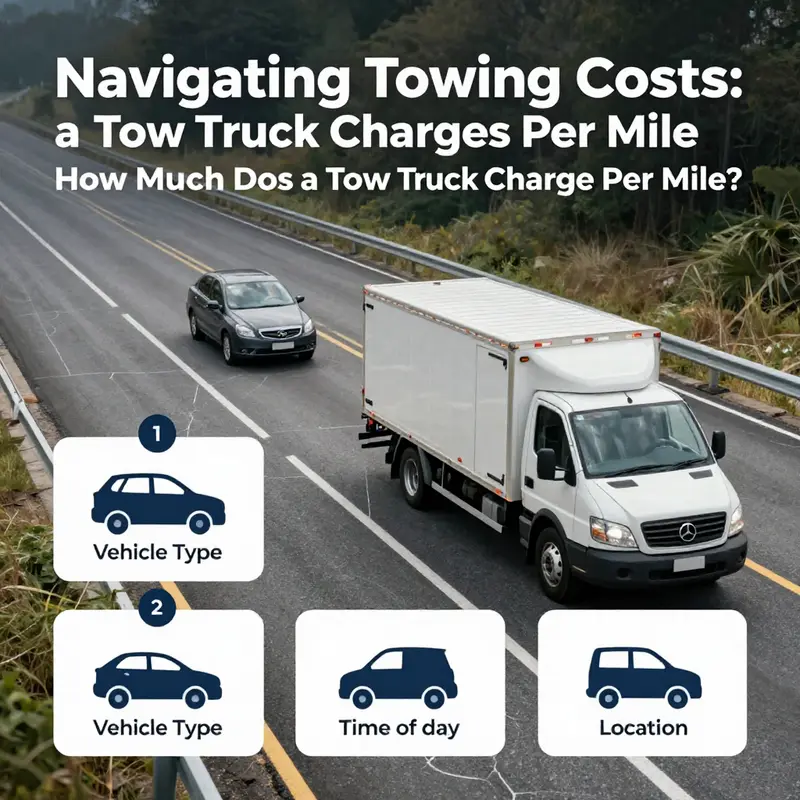
When a tow arrives, the numbers on the dial aren’t always as straightforward as they seem. Consumers often expect a single, clean per-mile figure, but the reality is a tapestry of pricing structures, local conditions, and vehicle-specific realities that can make a short tow suddenly feel long in the wallet. The mile, in tow-pricing terms, often carries the weight of many other variables, and understanding how those variables come together helps you read a bill before it lands on your dashboard. In practice, most tow operators operate with one of two core pricing models. The first is a flat rate per mile, where every mile you’re towed adds a fixed amount to the bill. The second combines a base service charge with an incremental per-mile fee. A typical pairing might look like a base fee of around fifty dollars, plus a per-mile charge somewhere in the neighborhood of one and three-quarters dollars. This structure is familiar enough that a short, 12-mile tow using the base-plus-mile approach would land near seventy-one dollars once the miles are tallied. The calculation is simple in theory, yet it sits atop a landscape of exceptions and caveats that can bend the final total in surprising ways. The hook and roll model—where the vehicle is attached and towed almost immediately—often operates with a fixed hook fee and a separate per-mile charge. In other cases, a flatbed tow may be priced differently because the equipment and handling are distinct enough to justify separate costs. These pricing models aren’t merely academic distinctions. They shape what you pay for the miles you lose on the way to a repair shop, a lot, or your preferred service destination, and they become especially relevant when the journey is longer or more technical than a simple pull across town.\n\nThe distance you’re traveling is, by far, the most influential factor. The miles add up quickly, and the more miles involved, the more opportunity there is for incremental charges to accumulate. But distance isn’t the sole dial turning the price. The type and weight of the vehicle being towed can push the total higher, sometimes significantly. A full-size pickup, a heavy SUV, or a commercial van requires larger tow equipment, more fuel, and possibly more crew effort or specialized handling. Heavier or awkward-to-tow vehicles can require premium equipment, and those requirements translate into higher per-mile rates or higher base fees. This is especially true when a vehicle’s weight or configuration necessitates a larger tow truck, a flatbed instead of a sling-and-hook arrangement, or additional securing hardware. The weight category isn’t merely a footnote; it redefines the operational footprint of the tow and, with that footprint, the pricing. \n\nTime of day compounds the effect. After-hours towing—overnight, weekends, holidays, or during emergencies—often carries a premium. The demand curve for towing services spikes during those periods, and operators respond with higher rates to cover the irregular hours, staff availability, and the increased urgency that accompanies nonstandard service times. In urban settings, the premium can be more pronounced due to congestion, higher living costs, and the need to secure scarce, specialized equipment during peak periods. In rural or less densely populated areas, the higher mileages involved in reaching a stranded vehicle can push the total cost upward, even if the hourly rate and per-mile fees stay within a moderate range. The convergence of location, time, and distance thus crafts a pricing ridge that can feel unpredictable if you don’t anticipate the way those factors interplay. \n\nThen there is the service type to consider. The choice between a “hook and roll” service and a flatbed tow is not just a matter of how the vehicle is moved. It’s also a predictor of potential charges and the risk that a price quote may evolve once the tow begins. A simple hook-and-roll operation might look economical at first glance, but if the vehicle’s condition requires careful handling, specialty attachments, or multiple securing points, those initial savings can erode quickly as the miles accumulate. Conversely, a flatbed may incur a higher base price due to the equipment’s readiness, transportation safety requirements, and the handling time. The math behind these choices is straightforward, but the effects on your final bill can be substantial, especially when a longer trip is unavoidable or when the vehicle requires careful loading to protect its transmission, frame, or body panels. \n\nAlongside the mileage and weight considerations, the geographic landscape shapes the total you’ll confront. Urban centers tend to run higher hourly rates and may impose congestion fees or rapid-response surcharges. Rural routes often stretch the distance, turning a longer haul into a larger overall bill, even if the per-mile rate remains modest. In many communities, the lack of nearby tow providers can widen the gap between a reasonable estimate and the final charge, since the provider must cover travel from a farther location to reach you. In short, the same mile costs can feel very different depending on where you are and when you need help. \n\nThis is why the prudent move is to seek a detailed estimate before a tow begins. The quote should outline the base fee, the per-mile rate, any mobilization charges, and all potential add-ons such as fuel surcharges, long-distance fees, or after-hours premiums. A careful quote sets expectations and reduces the chance of surprise costs once the tow is underway. It also creates a framework for comparing different providers, allowing you to balance proximity, reliability, and price with greater confidence. In practical terms, this means asking pointed questions: What is the base service fee, and what’s the per-mile rate? Are there separate charges for hook and roll versus flatbed? Will there be fuel surcharges, and is there a maximum bracket for mileage beyond which the rate changes? If the distance is expected to skew into a long-haul range, at what waypoint does the rate step up? Are there additional charges for after-hours service or for vehicles with special handling requirements? Having a written estimate that addresses these issues is the best shield against a late surprise.\n\nThe world of tow pricing also carries the everyday realities of demand, logistics, and the practicalities of moving a vehicle from one place to another. Urban centers, with their dense networks and rapid-response expectations, often translate to higher hourly rates and increased per-mile charges. Rural routes can tamper with the price through longer miles and more fuel burn, even if the base price appears modest. The vehicle’s type—whether a compact sedan or a heavy-duty work truck—adds another layer. The operator must deploy the right equipment, allocate appropriate fuel, and sometimes arrange for a second driver or specialized attachments. Each adjustment, though small in isolation, aggregates into the final tally that ends up on your bill.\n\nTo navigate this terrain with clarity, it helps to frame a tow in terms of three questions: How far are we going? What is being towed, and what equipment will be used? When is the tow happening, and are there special time-based charges? With those questions answered, you can translate a line item into meaningful context. A short, urban tow might look like a modest sum on paper, but if it triggers an after-hours surcharge or a heavier-than-expected vehicle, the total will reflect those realities. A longer haul, meanwhile, can outpace a simple per-mile expectation if the distance brackets apply or if the carrier imposes a long-distance rate beyond a known threshold. In the end, price transparency is about moving from what the miles cost to what those miles cost you given the particular vehicle, place, and moment.\n\nFor readers who want a practical anchor, consider the common model described in many industry discussions: a base service fee around fifty dollars, plus roughly one dollar seventy-five cents per mile. In this scenario, a 12-mile tow would total about seventy-one dollars, ignoring taxes and any surcharges. It’s important to recognize that real-world quotes rarely stay locked to that tidy equation. Some providers apply a per-mile tiered pricing structure, where the first ten miles might be priced differently from the next ten, and so on. Others lean on a fixed hooked-in amount for the initial setup, followed by a linear mile rate. The effect of these variations is most noticeable as distance grows. A 50-mile tow could easily drift well past the three-hundred-dollar mark if the base fee, per-mile rate, and any distance-based surcharges stack up.\n\nIn all of this, one constant remains the same: the need for clarity before any work begins. When you ask for a detailed estimate, you’re not just seeking a price; you’re seeking a map of how the price will unfold as you drive the miles. And because every tow scenario has its own mixture of variables—vehicle weight, equipment needs, location, time of day, and the distance to the destination—the only reliable way to avoid a dissatisfied moment is to demand that written estimate up front, with a breakdown of each fee and how it may change as conditions evolve. For readers who want a broader, practical guide to these dynamics beyond the immediate scope of price messaging, consider exploring the Island Tow Truck blog, which offers fleet-focused resources and emergency-response strategies relevant to real-world towing scenarios. the Island Tow Truck blog.\n\nFor a more formal, industry-wide perspective on how tow costs are calculated and what factors influence them, a detailed resource is available online. This external guide lays out the standard pricing models, the mile-based calculations, and the common surcharges that shape final bills. While the numbers you see will vary by region and provider, the structure remains a helpful compass as you compare quotes and plan for potential emergencies. You’ll find clear explanations of base fees, per-mile charges, distance brackets, and the role of vehicle type in determining the overall price. The takeaway is simple: ask for a breakdown, compare apples to apples, and anticipate that the per-mile figure is only part of the picture.\n\nLinks to further reading:\n- Internal: the Island Tow Truck blog for practical guidance and fleet-focused considerations.\n- External: a comprehensive tow-truck cost guide that explains the core pricing mechanics and the typical surcharges you might encounter as distance increases or as service complexity grows. \n\nIn the end, knowing how much a tow truck charges per mile is less about memorizing a fixed price and more about understanding the structure behind that price. It’s about recognizing that the mile is a factor within a system—one that includes base charges, vehicle weight, equipment needs, time of day, location, and the realities of the service scenario. If you walk away with one skill, let it be this: demand a detailed estimate before the tow starts, and use that estimate as a benchmark for comparing options and planning for the unexpected. The miles you count aren’t only the miles to your destination; they’re also the miles you’re paying for in service, readiness, and care. A well-constructed quote turns a potentially anxiety-inducing moment into a transparent, predictable transaction, giving you confidence that the price you’re agreeing to is tied to the actual work that will be done and the circumstances that surround it. And when the miles are finally behind you, what matters most is not just the number on the meter, but the clarity and fairness with which that number was determined from the outset.
null
null
Riding the Meter: How Tow Truck Mile Rates Shift from City Streets to Country Roads
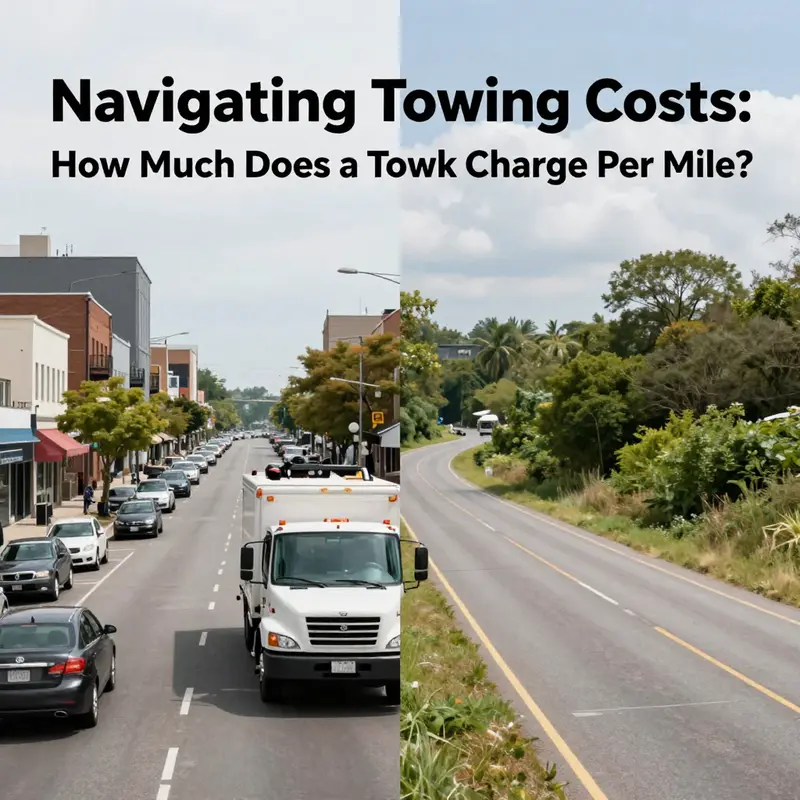
When a vehicle breaks down or is in an accident, the immediate questions often revolve around safety and timeline. But behind those concerns lies a number that can catch people off guard: the price per mile of a tow. Pricing for towing is not a single, simple line item. It is a spectrum shaped by geography, time, vehicle type, service method, and the distance involved. The patterns that emerge when you compare urban and rural pricing reveal a practical map for anyone who might need a tow in the future, and they underscore why obtaining a detailed estimate before service begins is not merely prudent but essential. In essence, the meter you see when a tow starts is not a fixed rate that applies everywhere; it is an adaptive charge anchored by a base fee and a per-mile component that shifts with place, circumstance, and the kind of tow required.
In cities, the per-mile price tends to run higher, even if the actual miles driven may be shorter. Several factors knit together to push the per-mile figure upward: higher labor costs across dense workforces, frequent traffic delays that stretch service times, elevated insurance premiums in metropolitan areas, and the sheer demand for fast, on-demand service that tends to keep the wheels turning on a tight schedule. In practical terms, many urban tow services levy a base fee plus a mileage rate that begins in the mid-to-upper range once a short initial segment has passed. A common framework you will encounter is a base fee—often somewhere in the neighborhood of $75 to $125—followed by a per-mile charge that can range from about $2.50 up to $7 per mile after an initial inclusion of roughly 5 to 10 miles. This structure means that the first few miles may be absorbed into the base, while longer journeys accrue a higher variable cost. The math becomes clearer with an example: a tow that covers about 40 miles in a dense urban corridor might land somewhere between $120 and $250, depending on the exact miles charged after the initial window and the prevailing per-mile rate in that city’s milieu. It is not unusual for urban tow trucks to encounter delays caused by traffic, accidents, or lane closures, which can translate into higher hourly charges or longer service times that feed into the overall bill.
Rural settings tell a different pricing story, one that reflects distance itself as the dominant factor. In sparsely populated areas, the miles can stretch out long before a repair shop or impound location comes into view, and that distance becomes the primary driver of cost. The per-mile rate in rural regions may be somewhat lower on the surface—often in the vicinity of $2.50 to $5 per mile—but the total charge can balloon as the travel distance grows. A long-distance tow that runs well beyond 200 miles can push the total into the several-hundred-dollar range, sometimes reaching $400 to $800 or more, especially when specialized equipment is required or the job demands a heavier vehicle like a small flatbed capable of handling large or heavier loads. The increased cost of fuel, longer driver time, and the logistical challenges of dispatching a tow across a wide geographic area all contribute to this higher long-haul price tag. In rural landscapes, the scarcity of available tow equipment and the need to draw resources from distant hubs can also drive prices up, even when the per-mile rate is modest in comparison to the city. The result is a pricing dynamic where the journey matters more than the miles alone, and the total bill reflects not just every mile traversed but the overall burden of coordinating transport over long distances.
To understand the contrast more concretely, consider how a single tow unfolds in practice across these environments. For rural tows, the distance requirement becomes the limiting factor: a 200-mile haul may begin with a modest base fee, but each mile contributes to the tally in a way that compounds quickly when the vehicle must be moved across multi-state or multi-county terrains, and when the equipment involved needs to accommodate a lower weight class with a specialized chassis. A long rural tow may involve a 6×4 small flatbed or other heavy-duty configurations to ensure safe handling of the vehicle, and those equipment choices come with their own cost implications. The practical implication is that country road tows, though sometimes advertised with a lower starting price, still deliver a total that climbs rapidly as distance expands. For those who travel through remote areas, the takeaway is simple: plan for a price ceiling that accounts for both mileage and the possibility of an extended response or travel time.
In urban markets, the juxtaposition of higher base charges and broader per-mile ranges creates a distinctive profile. The base fee itself—when set around $75 to $125—acts as a kind of service initiation cost that secures the dispatcher’s time, the mobilization, and the readiness to deploy in a congested setting. Once that base is paid, the mileage rate can swing widely depending on the provider’s policy, the time of day, and the vehicle’s weight class. A heavier vehicle, such as a large SUV, a cargo van, or a vehicle that requires a flatbed for careful handling, may incur additional surcharges or a higher per-mile rate due to the specialized equipment and extra care needed during haul. The time of day and day of the week can also tilt pricing upward; emergency or after-hours towing carries a premium because the service is demanded when options are scarce and the service window is compressed. The city’s high insurance and labor costs further feed into the price, and the result is a price tag on the shorter urban journey that looks steeper per mile than its rural counterpart. Yet the total for 40 miles in the city remains within a wide band, reflecting not just the miles driven but the intensity of the city’s service environment—the traffic, the potential for delays, and the premium placed on prompt return to the road.
An important thread running through both urban and rural pricing is the role of base fees and the need to ask for a clear estimate before service begins. A base charge is more than a mere curiosity; it covers dispatch, readiness, and the initial mobilization to bring the tow into play. The per-mile component then charges for the actual distance traveled, which is where the geography and service type begin to shape the final amount. The type of tow matters as well. A “hook and roll” service, which involves quickly hooking the vehicle and towing it away, can feature a different pricing contour compared with a flatbed tow that is chosen to minimize damage to a vehicle or to handle heavier or more delicate loads. In many cases, the decision between hook and roll and flatbed is driven by the condition of the vehicle and the destination, such as whether it needs to be towed to an impound, a repair facility, or a dealership. That choice, in turn, can tilt the total cost in subtle or substantial ways, especially when the vehicle’s weight or the distance involved requires specialized handling.
Within this pricing mosaic, the practical advice for the consumer is straightforward but crucial. Before a tow can begin, ask for a written estimate that enumerates the base fee, the per-mile rate, and any additional charges that might apply. This is your shield against surprise bills and a tool to compare two or more providers on a like-for-like basis. Common add-ons to watch for include fuel surcharges, after-hours premiums, and long-distance fees that kick in after the initial miles are accounted for. It is equally wise to inquire about the possibility of a price cap or a maximum total so you are not blindsided if the journey extends into unfamiliar territory due to detours, traffic, or other delays beyond your control.
To bring it into a practical, real-world frame, imagine you need a tow in a city and the route spans roughly 40 miles. If the base is about $100 and the policy is to charge $4 per mile after the first 10 miles, you would expect roughly 30 miles charged at that rate, totaling about $120. Add the base, and the rough figure would land near $220, subject to the exact per-mile tier and any time-of-day surcharges or handling fees. In a rural setting, a 200-mile tow with a base of around $75 and a mid-range rate of $3.50 per mile could push the total toward $75 plus 200 miles times $3.50, yielding around $775 before any additional equipment charges or labor time. These snapshots illuminate the way distance, geography, and service type converge to shape the final bill.
For anyone who wants to empower themselves against unclear pricing, the questions are simple but essential. How many miles are included in the base fee? Is there a different per-mile rate after a certain distance or time threshold? Are there after-hours or weekend premiums, fuel surcharges, or vehicle-weight surcharges? Will the price change if a flatbed is required instead of a standard tow? Can a written estimate be provided before dispatch begins, with a guaranteed maximum total? And if there is a discrepancy between the quoted price and the final invoice, is there a process to resolve it quickly? By anchoring the conversation to a written estimate and a transparent breakdown, you turn the tow experience from a guessing game into a controllable expense. The value of this approach is especially evident in rural areas, where long hauls are common and every mile matters as distance compounds with time, fuel, and labor.
In the broader picture, these regional dynamics underscore a central reality: the cost of getting a vehicle from point A to point B by tow is not simply a function of miles. It is a function of miles, yes, but also of risk, timing, demand, equipment, and the logistical complexity of moving a car through real-world environments. A 40-mile urban tow and a 200-mile rural tow share the same core structure—base fee plus mileage—but the levers that push the total higher or lower are pulled by the context in which the service is delivered. The Drive’s 2026 analysis summarizes this well: urban services often carry higher base fees but can offer competitive per-mile pricing, while rural services lean on lower entry costs but push long-haul costs higher due to distance and the practical challenges of serving scattered communities. For readers aiming to plan ahead, these patterns translate into a practical strategy: obtain a detailed, written quote before you commit, and be prepared for the possibility of additional charges tied to distance, timing, and the specific tow method required.
If you want to explore more about the mechanics of these costs and how they piece together across different scenarios, you can read broader analyses that compile multiple real-world quotes and averages. For a comprehensive external reference, see the following resource, which provides a broader cost perspective and helps translate miles into dollars when plans go awry: https://www.thedrive.com/cars/29843-how-much-does-towing-your-car-cost-average-rates. And for ongoing industry discussion about towing and emergency readiness, you can follow the Island Tow Truck blog for context and practical guidance on fleet management and responsive service strategies: theislandtowtruck.com/blog/.
Tow by Night: Navigating Emergency Scenarios and Per-Mile Costs After Hours
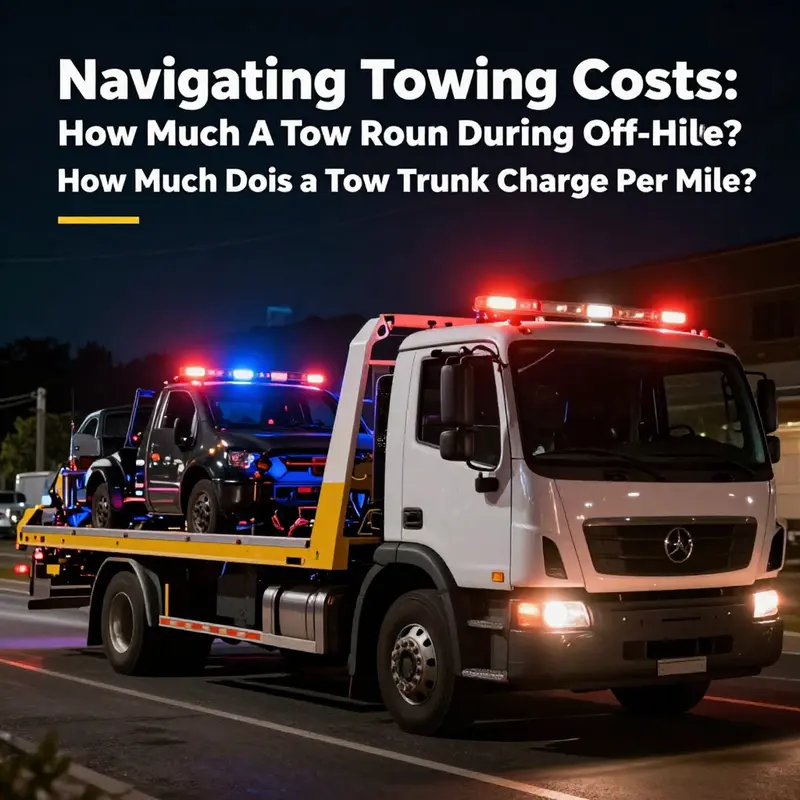
When a vehicle must be moved at night or during a crisis, the tow desk acts as a critical link between safety and cost. Emergency tow pricing follows a simple structure: a base fee to mobilize, a distance-based charge per mile, and a time-based surcharge for after hours. The base fee covers dispatch, crew readiness, and the equipment brought to the scene. In many markets the base fee sits around fifty dollars, but exact amounts vary by company and region. After the base, the per-mile rate adds movement costs as the tow progresses. Daytime rates commonly fall in the range of roughly one and three quarters to two dollars per mile. The total can change with the vehicle weight, terrain, and required recovery gear.
After hours, weekends, or holidays, operators apply an after-hours premium to reflect 24/7 availability. Surcharges are typically expressed as a percentage over the standard rate, often from about fifty percent to one hundred percent or more depending on location and demand. For example if the daytime mile rate is 2.50, the night rate may range from about 3.75 to 5.00 per mile. The math can feel steep, but it reflects higher labor costs and the need to keep crews ready round the clock.
To avoid surprises, customers should request a written estimate before work begins. The estimate should itemize the base fee, the per-mile charge, and the after-hours surcharge, plus any fuel surcharges or other potential fees. Open communication about rates helps prevent disputes when the job ends. In many regions regulators require rate schedules to be disclosed before service, and reputable providers will share these details up front.
The choice of tow method, such as hook and roll or flatbed, also influences price. Flatbed work can be slower and more expensive but may be necessary to protect a damaged car. In emergencies the fastest, safest option is chosen, and the price reflects this trade-off between speed and protection.
For fleet managers and individuals planning for emergencies, the key takeaways are clear. Know the base fee, know the per-mile rate, and know the after-hours surcharge. If the provider cannot offer a transparent estimate before service, seek a second quote. The industry guidance published by trade associations provides a benchmark, but local practice will still govern the final bill. You can review guidelines on emergency towing rates to understand the framework that many operators follow.
Reading the Tow Bill: How to Understand and Negotiate Per‑Mile Charges
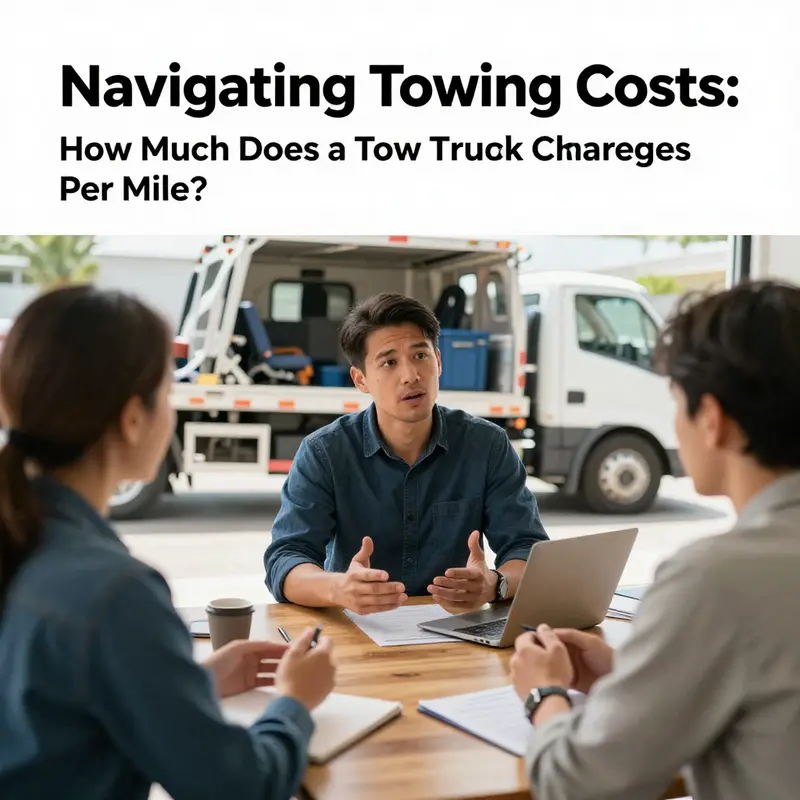
Reading the Tow Bill: How to Understand and Negotiate Per‑Mile Charges
When your car needs a tow, the first shock often comes not from the inconvenience but from the price on the receipt. Tow charges per mile vary widely, and the best way to avoid sticker shock is to understand what drives the number, how companies calculate it, and what leverage you have to negotiate. This chapter walks you through the typical pricing components, the real reasons rates differ, and practical tactics to keep the final bill fair and transparent.
Start by visualizing a typical invoice. Most towing jobs include an initial hook fee — a base rate that covers dispatch, arrival and the equipment used to lift or secure the vehicle. That fee commonly falls in the range of roughly $75 to $125 for the first several miles. After the hook fee, a per‑mile charge begins. Per‑mile rates can be modest in some areas and steep in others, often spanning roughly $2.50 to $7 per mile depending on your market, the truck required, and the exact service. For very long or specialized moves, such as flatbed transfers or interstate hauls over 100 miles, the total can quickly rise into the hundreds.
Knowing those two pieces lets you estimate costs with a simple multiplication: add the hook fee to the per‑mile cost multiplied by distance. That arithmetic is straightforward, but the variables behind the numbers are what make a tow bill seem arbitrary. Vehicle size matters. A compact sedan is easier and cheaper to lift than a heavy SUV or a commercial van. The towing method matters. Wheel‑lift or hook and roll methods are generally less expensive than flatbed towing, which is preferred for vehicles with drivetrain issues, lowered suspensions, or extensive damage. Time of day matters: nights, weekends, and holidays often carry premium rates because staffing and emergency response add to operational costs. Location is another big influence: urban operators face higher operating expenses and may charge more; rural operators may charge more per mile because they cover longer deadhead distances to reach you.
Before you agree to a tow, you have options even in stressful situations. If the vehicle isn’t blocking traffic or creating a safety hazard, use the time to call two or three local companies for an estimate. Many tow operators will give a verbal quote over the phone that includes an estimated hook fee and per‑mile charge. Ask for a clear breakdown: base fee, per‑mile rate, mileage threshold for the base fee, and any add‑ons such as storage, winching, or fuel surcharges. If the driver arrives without providing that information, request an itemized estimate before the vehicle is moved. In some states, towing companies are required to provide a written estimate; in others they are not. Ask whether the quoted price covers delivery to your chosen repair shop or just to the nearest lot.
If you have roadside assistance through an auto club, membership, or your insurance policy, call them first. Roadside programs often have prearranged rates or cover a limited towing distance, which can remove the need to negotiate on the spot. If you decide to use an independent company, compare the independent quote to your roadside benefit so you understand the financial difference.
Negotiation starts with information. When you know the typical hook fee in your area and the standard per‑mile range, you can quickly recognize an outlier. For short tows, the base fee dominates the total; for longer tows, per‑mile charges matter more. If a company quotes a high per‑mile rate, ask if they can reduce the per‑mile component in exchange for a guaranteed destination or if they will apply a lower rate after a certain distance. Some companies offer a discounted rate for round trips or when they know they’ll be able to take another load on the return. If you can wait a short time and your situation is non‑urgent, you might get a lower rate by calling another company and using competition to your advantage.
Politeness and clarity help. Explain where the vehicle needs to go, the vehicle type, and whether the keys are available. Ask if special equipment is required and why. If a driver claims your vehicle requires a flatbed, and you suspect it does not, ask for a brief explanation; sometimes drivers choose a flatbed out of convenience, but it is reasonable to confirm why a more expensive method is necessary. If you feel pressured to accept a higher‑cost method without justification, request a second opinion or call your roadside provider.
Watch for common extra fees and how to avoid them. Winching or recovery fees apply when your vehicle is off the road or stuck. Storage fees begin when your vehicle is left in a tow yard; these accrue daily, so retrieving your vehicle promptly limits those costs. Fuel surcharges and after‑hours fees are frequently added; ask whether they are included in the initial estimate. Some companies add a hook fee for vehicles that must be moved within a property or across an impound lot. Being aware of these charges gives you the chance to question or decline unnecessary services.
When a driver arrives, ask for an on‑scene written estimate that lists the base fee, per‑mile rate, and any anticipated extras. If the situation is urgent, and you must accept a tow without a prior quote, ask for an itemized receipt when the job is complete. If the final charge substantially exceeds the expected amount, request a written explanation. If the company cannot justify the charges, you have options: dispute the charge with your payment method, file a complaint with local consumer protection offices, or, in jurisdictions with towing regulations, report the incident to the agency that oversees towing practices.
A few tactics give you negotiating leverage in the moment. Offer to meet the tow truck at a specific location closer to the drop‑off point to reduce miles billed. If the vehicle is drivable but simply needs a short move to a safe spot, consider having it driven instead of towed. If you have cash on hand, some operators will offer a small discount for immediate payment, though you should weigh the convenience against the need for an itemized receipt that documents the transaction for insurance or warranty purposes.
Understand your rights. Many states require towing companies to display their rates publicly and to provide written estimates upon request. Some states limit the maximum rate a company can charge for certain services. If you’re unsure about local rules, consult consumer protection resources or your state motor vehicle agency to learn whether the company’s practices comply with law.
Finally, keep records. Take photos of your vehicle before it’s moved if it’s damaged. Save any text, email, or written quotes you obtain. An itemized receipt is your best defense against disputes; it shows exactly what you were charged and why. If you suspect overcharging after the fact, use the documentation to file a complaint with the company, a consumer protection office, or the Better Business Bureau and your state motor vehicle agency.
Knowing how tow bills are built and what levers you can pull transforms an uncomfortable situation into a manageable one. You cannot always control the need for a tow, but you can control how you respond: ask questions, gather multiple estimates if possible, request written details, and use membership or insurance benefits when they exist. For ongoing fleet operators or anyone who travels frequently, developing a relationship with a reputable local tow provider and keeping a list of vetted companies will remove the improvisation that often leads to higher costs. For more practical guidance and local context, see the Island Tow Truck blog for resources tailored to island fleets and roadside response.
External resource: For region‑specific rules and regulations about towing practices and consumer protections, consult your state’s motor vehicle agency: https://www.dmv.org/
Final thoughts
Navigating the costs of towing services is essential, particularly for those operating businesses reliant on automotive support. Understanding the basic rates, factors that influence pricing, and the differences between urban and rural towing scenarios empowers you to make informed decisions. Whether faced with an unexpected breakdown or a planned vehicle transfer, being well-versed in how towing services operate fosters better communication with providers and ultimately enhances your business operations.