
Understanding the cost of tow truck services is essential for local auto repair shops, car dealerships, property managers, resort operators, and commercial fleet operators. The price for towing can vary significantly based on several factors, primarily revolving around location, vehicle type, and time of day. This guide will explore these intricacies in detail, emphasizing how each chapter builds a clearer picture of tow truck costs per mile. From a thorough cost analysis, and regional price variations, to the specific factors affecting prices, this article aims to equip businesses with the knowledge they need for intelligent decision-making and budget management.
Understanding Tow Truck Costs Per Mile: A Comprehensive Analysis of Pricing Factors and What Drives Your Bill
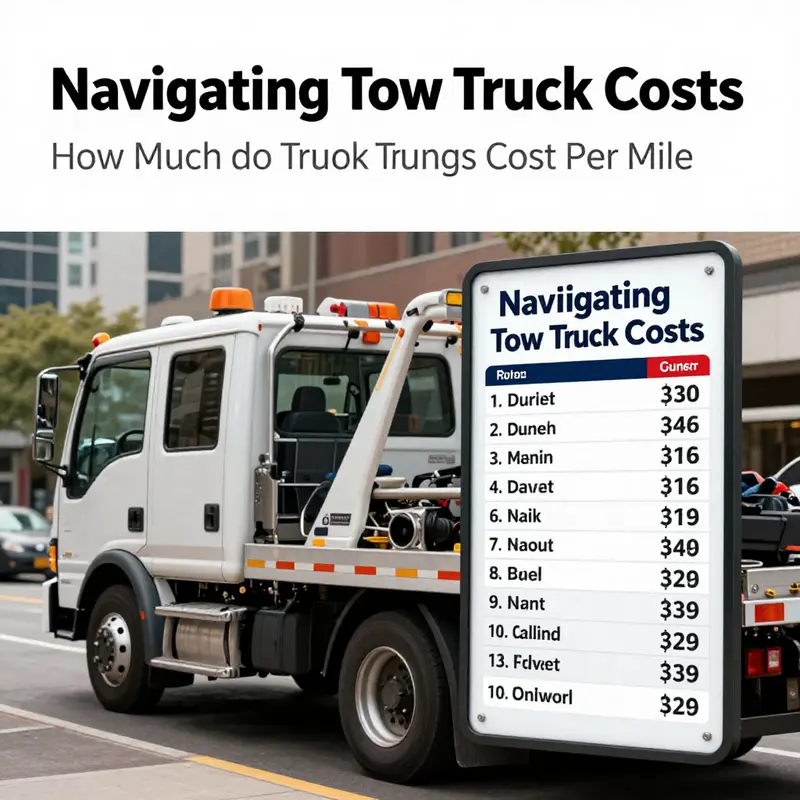
Tow truck services are indispensable when your vehicle breaks down, needs relocation, or is involved in an accident. However, understanding how tow trucks charge per mile can often feel confusing due to varying pricing structures and influencing factors. Tow truck costs per mile generally range between $2.50 and $7.00, but this broad range depends on a combination of elements including distance, vehicle type, geographic location, time of day, and the specific towing company’s pricing model.
At the heart of towing charges is the distance to be covered, which is the primary contributor to the total cost. Many towing providers adopt a blend of pricing methods. A common approach is a base hook-up fee—a fixed initial charge for attaching the vehicle to the tow truck—followed by a variable per-mile fee that accumulates with distance. For instance, a 5-mile tow could typically cost around $75, factoring in both the base hook and mileage. But when tows extend to much longer distances, such as 50 miles or more, the cost can quickly escalate to well over $300.
Some companies follow a “hook and roll” pricing model. This means you pay a fixed amount to hook up the vehicle and then a defined cost for each mile that the vehicle is transported. This model is transparent and straightforward but can become expensive when towing over long distances. In contrast, others offer tiered pricing systems, where mileage is grouped into brackets, with different per-mile rates applied depending on which range the tow falls into. For example, the first 10 miles might have one rate, then the price per mile could decrease or increase for distances between 10 and 25 miles, and so on. This tiered system can help balance costs by offering discounts or premiums based on the overall distance.
Beyond distance and pricing models, the type and weight of the vehicle being towed significantly impact the per-mile cost. Tow trucks vary in size and equipment capability, and heavier or larger vehicles often require specialized apparatus and larger tow trucks. For example, towing a compact car is simpler and cheaper than servicing SUVs, full-size pickup trucks, or commercial vans. The latter demands more horsepower, stronger winches, additional safety features, and more fuel, all contributing to higher fees. In some cases, oversized vehicles may require flatbed tow trucks or heavy-duty wreckers, which naturally charge more per mile due to the specialized resources involved.
Geography plays a crucial role as well. Tow truck companies operating in rural areas often face longer travel distances to reach repair shops, impound lots, or customer locations, driving up the total charge. Additionally, lower towing frequency in less populated regions can increase per-service costs because of limited competition and longer downtime between jobs. Urban areas, while typically featuring shorter distances, may still incur higher costs due to traffic congestion and the difficulty of navigating tight or busy streets. Peak hours and late-night calls sometimes include premium fees because of increased demand or operator risks.
Another factor to consider is whether the towing occurs during standard business hours or off-peak times such as nights, weekends, and holidays. Many towing companies apply surcharge fees for after-hours service or emergency call-outs. These fees help offset the cost of staffing, operating during unusual hours, and potential hazards associated with nighttime or adverse conditions.
To avoid unpleasant surprises on your bill, it’s vital to request a detailed estimate before the tow begins. Ask the towing company for a clear breakdown including base hookup charges, per-mile rates, any additional fees, and potential surcharges. Transparency in pricing ensures that you understand the full scope of the charges upfront and can make informed decisions. In situations involving insurance claims or roadside assistance plans, having this detailed estimate can also streamline the reimbursement or coverage process, helping mitigate your out-of-pocket expenses.
For example, if a company charges a $50 base fee plus $1.75 per mile, and your vehicle needs towing over 10 miles, your expected cost would be around $67.50 ($50 + 10 x $1.75). If the vehicle is an overweight SUV requiring a heavier tow truck, the per-mile rate might rise to $3.50, which would double the mileage portion of the quote. Adding any after-hours service surcharges would increase it further. This example illustrates the critical importance of understanding each component of the pricing structure.
Local towing companies usually provide the most accurate cost estimates because they factor in area-specific considerations like distance to nearest repair facilities, typical traffic conditions, and operational expenses unique to the region. Therefore, reaching out to providers near you offers the best chance of obtaining precise quotes customized to your exact towing needs.
In summary, while the average cost per mile for towing ranges from $2.50 to $7.00, the exact amount depends on several intersecting variables. The combination of distance, pricing model, vehicle specifications, timing, and location all influence the ultimate charge. By proactively seeking a detailed estimate and understanding these nuances, drivers can approach towing services with greater confidence and financial clarity.
For a deeper dive into what primarily affects car towing costs and to better prepare for towing expenses, resources like AAA’s guide on Understanding Car Towing Costs offer valuable insights.
Miles and Markets: Untangling Regional Variations in Tow Truck Pricing Across the Country
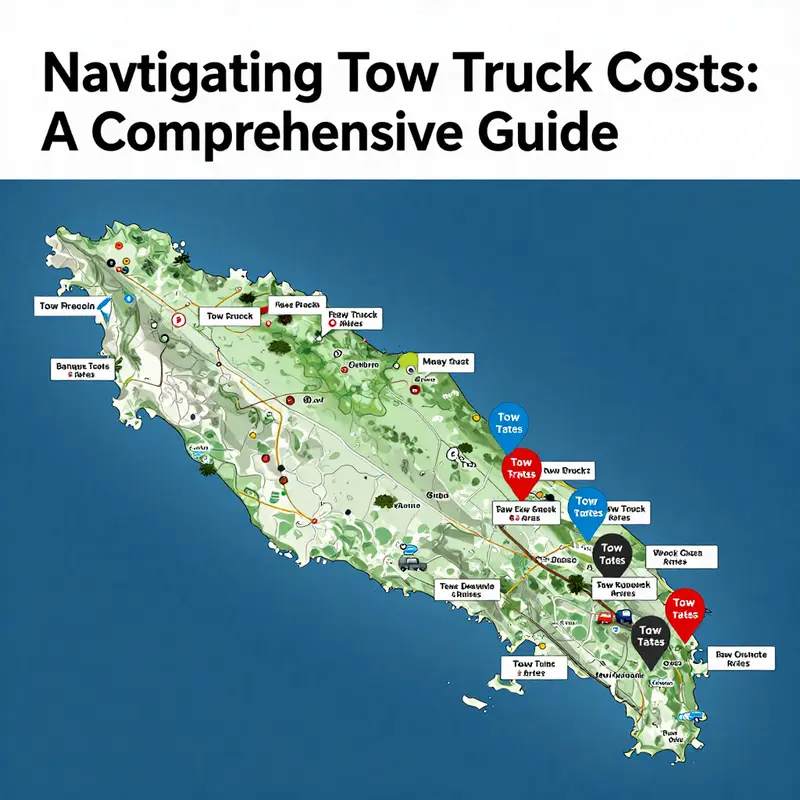
Tow truck pricing is rarely a single number you can lock in from the phone. Rates per mile shift with the landscape, the demands of the moment, and the cost structure a given operator must cover. Across regions, the same basic service—moving a car from one place to another—can become a different financial experience depending on geography, population density, and the rules that govern how towing is priced. Reading the regional tapestries of cost per mile reveals why a driver in a crowded city might see a higher tally than a motorist in a sparsely populated rural area, even when the distance traveled is similar. The core idea is straightforward: the per-mile metric is not a stand-alone constant. It is a reflection of the economics of location, risk, and timing, all stitched together by the realities of labor, insurance, equipment, and regulatory frameworks that vary from coast to coast and even within states themselves.
In practice, the national picture shows a broad canvas. The typical local tow within a city or metropolitan area often lands in a range roughly between two and five dollars per mile. That spread captures the diversity of markets within a country that includes dense urban cores, busy highways, and corridors of industry. Yet this generalization folds quickly when you zoom in on where the service is needed and when: urban centers with high living costs, post-accident scenes at night, or rural routes far from repair shops all push the per-mile figure in different directions. When the distance lengthens beyond the typical local tow, the rates tend to rise more noticeably, especially if the trip requires heavier equipment or specialized handling. Some operators apply a base fee plus a per-mile charge, a structure that makes the total cost more predictable for shorter jobs and more responsive to longer distances. For consumers, this means a 5- to 10-mile tow can be a good proxy for what a customer might expect to pay, often falling somewhere in the neighborhood of seventy-five to a hundred and twenty-five dollars depending on the local market and the precise service needs.
Urban pricing trends reveal how the cost calculus grows more complex in dense spaces. In large cities, where wages, insurance, and overhead are higher, the per-mile rate can climb above the typical range. It is not unusual to see rates that exceed six dollars per mile in emergency or after-hours scenarios, particularly in places with intense demand following accidents or storms. The higher price tags in these settings reflect several intertwined factors. First, labor costs in urban markets are higher, and so are the costs of compliance, licensing, and insurance coverage that towing businesses must shoulder to operate in busy, high-risk environments. Second, the demand surge during emergencies creates a pressure valve that tilts pricing upward, as crews converge on scenes with the equipment and expertise needed to handle complex recoveries. In these conditions, the same truck that would cost less per mile during a calm daytime window can become a premium service when traffic conditions are hazardous or when the vehicle is inoperable on a critical corridor.
Rural pricing trends tell a very different tale, one shaped by competition, distance, and the relative simplicity of operations. In less densely populated areas, the per-mile rate often trends lower, closer to the range of about one and a half to three dollars per mile. Several forces contribute to these more affordable prices. There tends to be less traffic, which reduces travel time and wear on trucks, and the overhead of running a fleet in a small market is often lower. Fewer providers in rural regions can push competition downward in some cases, while in others, the limited number of operators means drivers must cover longer distances with fewer jobs in a day, which can reduce or stabilize prices depending on demand cycles. The result is a pricing environment where longer trips might be more common, but the per-mile figure still stays within a more modest band compared with the most expensive urban markets. This is where the argument for price transparency becomes especially important. When miles stretch into longer corridors, customers should expect to see the cost structure laid out clearly, including how much of the total price is tied to the distance and how much reflects the time and risk involved in the certain route.
The contrasts between urban and rural markets also intersect with the half-life of regulation, which can either smooth or destabilize pricing expectations. In recent years, several states have introduced measures intended to standardize elements of tow pricing to protect consumers from unpredictable charges. A notable example is a set of caps that emerged in some high-cost states around January 2025. In California, for instance, new policies established explicit caps that shaped a predictable framework for what a light vehicle tow could cost and how distance accrues after a certain threshold. A flat fee for a light vehicle tow, a per-mile charge that activates after a specific distance, and an after-hours surcharge compose a pricing mix designed to curb price gouging while preserving a reasonable incentive for operators to respond quickly to incidents. The caps specify a flat fee, a calculated distance fee per kilometer or mile after crossing a defined distance, and an additional one-time surcharge for after-hours work. The intent is clarity and fairness, but the practical effect on the ground is a mixed one. Compliance and enforcement vary by jurisdiction and by market conditions, so while some operators in regulated zones may render more stable quotes, others still exhibit variation driven by the local market’s character, the availability of drivers and trucks, and the complexity of a given job.
Beyond the bald figures, a broader view of regional pricing acknowledges how the day’s conditions shape what a tow costs per mile. Time of day matters because after-hours work can command a premium, reflecting not only the higher risk of incidents at night but also the difficulty of staffing around the clock. Weather conditions—fog, ice, rain, or snow—produce a practical premium as well, since storms can strain fleets and boost the likelihood of more complicated recoveries. The vehicle type towed matters too. Heavier vehicles such as SUVs, pickups, or commercial vans require larger, heavier tow trucks with special equipment. The fuel spent, the tires worn, and the maintenance costs are all higher, and those costs tend to creep into the per-mile figure. In markets where heavier equipment is more common because of local transportation patterns or commercial activity, the cost per mile can reflect this equipment premium in a straightforward way.
Another layer of regional variation comes from the structure of the quote itself. Some providers quote a base fee, then apply a per-mile rate for distance. Others present a blended number that combines all elements into a single per-mile figure, which can be easier to compare at a glance but can obscure how much a customer pays for the move’s distance versus the overhead of the service. When customers do receive a detailed estimate, it is helpful to see a line item that identifies the base charge, the per-mile rate, any minimums, and the additional charges that may apply for after-hours service or for longer or more complex tows. The best practice for customers is to ask for a detailed estimate before service begins and to confirm any potential fees not included in the initial quotation. This is especially important in regions where regulatory caps provide a more standardized framework but where the enforcement of those caps still leaves room for local interpretation and the occasional exception due to unusual circumstances.
The pricing conversation also intersects with supply dynamics and fleet procurement, offering a reminder that the per-mile cost in the field is connected to broader operational realities. In a global context, equipment and vehicle costs can influence what a provider must charge per mile to maintain a sustainable operation. While the core of a tow is a service, the underlying fleet costs—maintenance, depreciation, parts, and labor—creep into every mile traveled. In discussions of regional disparities, it is useful to recognize that some operators manage tight margins in competitive markets by optimizing routes, improving dispatch efficiency, and investing in training to minimize the time required per tow. Others may face higher fixed costs that they offset through the per-mile rate, particularly on longer or more complex jobs. The regional mosaic of pricing thus reflects not just differences in local wages or insurance, but a wider calculus of how a market allocates its resources to keep a fleet prepared and capable to respond when a vehicle needs a move.
For fleets and individuals trying to navigate these regional price differences, the practical takeaway is straightforward yet often overlooked: understand the total cost of gravity and distance together, not in isolation. The per-mile price is a powerful signal, but it carries with it nested indicators—the base fee that covers dispatch and readiness, the regional risk premium reflected in after-hours charges, and the distance-based component that scales with the job’s length and difficulty. When these elements are visible in a clear quote, customers can compare apples to apples across providers in the same market and even across adjacent regions where the cost of insurance or labor differs. This clarity is essential for better budgeting, especially for local businesses or fleets that rely on regular towing for breakdowns, deliveries, or changes in operation. It also matters for emergency planning, where knowing how much a tow will cost per mile helps determine which strategies a fleet will deploy to minimize downtime, protect assets, and ensure continued service in adverse conditions. A practical approach for those evaluating regional costs is to consider the full spectrum of what influences the mile: where you are, when you need service, what you are moving, and how far the tow will travel. It is a multi-factor decision, not a single rate card.
In this context, the role of planning becomes central. Fleets that map out typical service areas, identify the common lengths of journeys, and anticipate peak demand periods can use this information to negotiate smarter contracts with dependable providers. They can seek pricing that aligns with their operating patterns and ensure that quotes specify the costs associated with distance, time, and special equipment. The insights from the regional narrative also underline the value of having a reliable contingency plan for emergency responses. A well-thought-out strategy can minimize the cost impact during spikes in demand or during severe weather events. For example, an emergency response strategy that prioritizes rapid mobilization, efficient dispatch, and streamlined incident management can reduce the time a vehicle stays off the road, which in turn can moderates the overall cost of a tow in high-demand situations. This is why the concept of readiness—timely response, proper equipment, and trained personnel—intersects meaningfully with the economics of per-mile pricing. In practice, preparedness lowers the hours of operation required and reduces the distance traveled under time pressure because the right unit and the right crew are available to the scene at the moment it is needed.
To ground these observations in concrete terms, consider the broader pricing framework that shapes regional distinctions. If a city market can be characterized by elevated overhead and a high risk environment, the per-mile figures will tilt upward, even for shorter trips. If a rural market still maintains a solid base of competition and lower fixed costs, the per-mile rate can remain modest for typical short moves. Yet when a long-distance tow pulls a vehicle from a rural setting toward a city for repair or storage, the price can reflect a blend of rural affordability and urban demand. In a practical sense, the middle ground often lies in the area where many regional markets converge: a local towing operation with fair dispatch charges and a distance-based rate that acknowledges the journey, but with a cap that helps consumers plan for the total cost—especially when time-of-day surcharges may attach after hours.
As users compare quotes, one subtle but important factor is the impact of regulatory changes on pricing transparency. Caps and rules can make quotes more predictable, yet the enforcement terrain may still leave room for local interpretation. A regulator may define the maximum allowable base fee, set per-mile charges for after a specified distance, and require clear disclosure of any additional fees such as after-hours surcharges. The practical effect for customers is clarity, and the effect for operators is the challenge of staying compliant while maintaining profitability in markets with tight margins. The dynamic between regulation and market forces means prices are not static; they adapt with time, demand, and the evolving cost structure of operating a tow business in a given region. Those navigating these waters—whether individuals seeking a tow or fleet managers negotiating national contracts—should expect variation but also seek out operators who provide transparent, itemized estimates and a clear explanation of what drives any regional differences.
The final layer of context connects regional pricing to the broader ecosystem of towing and vehicle recovery. In a global sense, even though the core service is local by definition, the equipment, maintenance, and supply chain that support a fleet affect price in the long term. The choice of equipment, the durability of trucks, and the availability of skilled drivers all feed into the marginal cost per mile. In practice, this means that when a fleet maker or operator evaluates a region, they are not just considering the present price per mile but also how the region’s supply chain supports reliable, timely service over time. The economics of distance are inherently tied to the reliability of the workforce and the durability of the fleet, which can differ from one region to another. This is why a smart consumer or planner looks beyond the immediate quote and considers the longer arc of cost, reliability, and readiness in any given market. It also underscores the importance of using third-party knowledge and local experience to calibrate expectations: what seems like a simple price per mile can, in practice, carry a larger context that includes time constraints, vehicle type, and the regulatory climate.
This broader perspective helps to illuminate why the numbers vary so widely across the country. It also suggests a practical approach to shopping for towing services: ask for a breakdown, consider the regional context, and factor in potential surcharges and minimums. For fleets, building a regional pricing model that recognizes urban and rural differences, seasonal demand, and the likelihood of after-hours work can create a more accurate budget and a more resilient response plan for emergencies. The takeaway is not to chase the lowest mile rate but to understand the value proposition: the right balance of speed, reliability, and cost that makes a tow both affordable and dependable when time matters most. If readers want a concise articulation of how to navigate this landscape while planning for emergencies, they can explore strategies aligned with practical fleet readiness and cost awareness in the linked resource on essential fleet emergency response strategies.
For readers who want to see how these regional dynamics play out in the field, remember that the best practices include obtaining written estimates that itemize base fees, per-mile charges, and any time-based surcharges, as well as asking about any minimum fees and distance thresholds. In many markets, a direct conversation with a local provider can reveal how specific routes and times of day influence pricing. This kind of dialogue helps illuminate why a given mile might cost more in one place than in another and demonstrates how intelligent planning can help consumers make informed choices that align with their budgets and their safety needs. Ultimately, the cost per mile is a lens into the regional structure of the towing market—one that mirrors the broader geography of labor, regulation, and demand that makes each area unique. It is a reminder that cost considerations in towing are a microcosm of how regional economics shape everyday services across industries, and that awareness of these patterns can lead to better decisions when a vehicle breaks down, a road becomes blocked, or a fleet must move equipment through diverse landscapes. The map of tow pricing is not a straight line; it is a mosaic. Understanding its pieces helps drivers, fleets, and service providers anticipate what a mile might cost, no matter where the next tow is needed.
In the spirit of practical guidance, readers can also use internal planning resources to align pricing awareness with operational readiness. For instance, the concept of emergency readiness and cost-driven decision-making can be explored through the internal guide on essential-fleet-emergency-response-strategies, which offers a framework for coordinating response plans, budgeting, and communications in the context of regional pricing realities. This link provides a structured approach to balancing the urgency of a tow with the obligation to manage costs effectively, so that fleets can maintain service levels without compromising financial discipline. The relevance of that resource becomes especially clear when planning for events that stress the system—unexpected breakdowns, severe weather, or large-scale disruptions—where the interplay between regional price dynamics and strategic response becomes a critical determinant of resilience. In sum, regional variations in tow pricing per mile illuminate a broader truth: location, timing, and regulatory context converge to shape the actual cost of getting a vehicle moved, and understanding these factors is essential for anyone who may need a tow, now or in the future.
For readers seeking further context on how governance shapes price ceilings and consumer protection in the tow industry, a detailed exploration is available in external regulatory analyses. The SBDC Blog article New Regulations for the Tow Truck Industry lays out how new rules can influence pricing frameworks, including caps, fee structures, and enforcement considerations. This external resource helps connect the practical experience of paying per mile with the policy environment that aims to promote transparency and fairness in a market that serves a broad spectrum of customers. https://www.sbdcblog.com/new-regulations-for-the-tow-truck-industry/
In short, the miles you pay for in tow fees are not just about distance. They reflect a regional economy, the timing of the service, the complexity of the vehicle being moved, and the regulatory climate that governs how these services are priced and delivered. By recognizing these layers, readers can navigate regional pricing with greater clarity, compare quotes more effectively, and prepare for emergencies with strategies that balance speed, reliability, and cost. The map of tow pricing is nuanced, and understanding its contours helps customers and fleets alike make smarter, more informed choices when the road ahead is uncertain.
Miles in the Balance: How Distance, Weight, and Timing Shape Tow Truck Costs Per Mile
When people think about tow costs per mile, they often picture a single price tag attached to every mile. In reality, the math behind a tow is a careful mix of fixed charges and distance-based surcharges, with a handful of variables that can swing the final bill in unexpected directions. The central idea is simple: there is a base fee that unlocks the service, and then the miles accumulate at a rate that reflects the job’s complexity. Yet no two tows are identical. The same 10-mile haul might cost one figure in a city with heavy traffic and high labor costs, and a different figure in a rural area where fewer operators vie for work. Grasping how these factors interact helps drivers anticipate costs and avoid sticker shock after a breakdown or an accident. The distance traveled remains the dominant driver, but it is layered with factors that intensify or soften the price per mile as the journey unfolds. A clear mental model is to imagine the base fee as the necessary ticket to begin the ride, after which every mile adds value to the provider’s risk, time, and equipment utilization. In many cases, the per-mile rate itself is not a fixed number across all distances. Some companies employ tiered pricing, charging a different per-mile amount in different distance brackets, which means the average price per mile can shift in predictable ways as the distance grows. A short tow can feel more expensive per mile because the base fee carries a larger portion of the total bill, whereas a longer tow may benefit from a more favorable average when the tiered structure balances the miles with the base. The impact of distance is thus twofold: it sets the scale of the total bill and, depending on the pricing model, can alter the effective cost per mile as the trip length crosses thresholds. It is worth noting that distance is rarely the only cost driver. The vehicle’s weight and type, the condition of the vehicle, and the required equipment all weave into the final figure, sometimes in ways that surprise drivers who assume only the miles matter.
Distance is more than just mileage; it is a signal about risk, time, and resource allocation. A two-car tow across town typically involves a smaller crew and lighter equipment than a tow for a large van or a heavy-duty truck, which might require a heavier lift, longer winch cable, and more fuel to keep the tow vehicle operational throughout the trip. The distance multiplier interacts with vehicle scale, creating a spectrum of possible outcomes. In a practical sense, distance sets the scale for the opportunity cost of pulling a vehicle from one location to another. It also implies increased exposure for the tow operator: longer drives mean more time on the road, greater potential for complications, and higher insurance exposure. Those realities feed into the per-mile rate and occasionally into a separate surcharge when the job requires unusual attention to safety or logistics. The most straightforward way to frame it is this: base charge plus miles equals the core price, while the surrounding conditions modulate that core price in meaningful ways. The per-mile figure you see on a quote can thus be a blend of several factors rather than a single, universal rate.
To illustrate how distance interacts with the other variables, consider a scenario that mirrors common pricing structures. A standard, relatively short tow—say five miles—often carries a base fee in the neighborhood of seventy-five dollars, with a per-mile rate that can range significantly depending on the operator and region. If the per-mile rate is ten dollars in this example, the total would land around one hundred twenty-five dollars. Extend the trip to fifty miles, and the same base fee plus the same per-mile rate could push the total well beyond five hundred dollars, contingent on whether the provider uses a flat per-mile figure or a tiered structure that adjusts the rate as miles accumulate. Some fleets impose a more nuanced approach: 0–10 miles at a higher per-mile rate to compensate for shorter travel time, then a lower rate for the next bracket, and so on. Such tiering can be logical from a business standpoint, as it aligns compensation with the varying costs of quick hops versus longer hauls. Rural areas, where the distances between shops, impound lots, and accident scenes tend to be greater, often see higher total charges in practice, not simply because the miles accumulate but because the logistics become more complex. In urban landscapes, the distances might be shorter, yet the bills can still rise due to heavier labor costs, denser traffic, and the premium placed on rapid response during peak hours.
The weight and type of the vehicle being towed present another dimension in the cost equation. A compact sedan is usually easier and quicker to secure, transport, and unload than a heavy pickup, SUV, or commercial van. Heavier or larger vehicles require specialized lifting gear, sturdier tow rigs, and sometimes more than one operator to manage the rigging safely. These realities translate into higher costs per mile for the heavier loads. In numeric terms, carriers commonly report a range where a light car might fall into a price band of roughly eight to twelve dollars per mile, while a heavier duty vehicle could push the per-mile figure into the mid-teens or higher. In some cases, especially with very large vehicles or those that require flatbed transport or trailer tow setups, the per-mile rate can escalate further, sometimes approaching or surpassing twenty dollars per mile. The risk calculations also shift with weight: heavier tows have greater risk of damage to the vehicle being towed and to the tow equipment itself, so providers may price for the added vigilance and potential for mechanical strain. This is a core reason drivers should never assume a single, universal per-mile price. Each job carries its own blend of physical effort, hazard, and expertise that gets reflected in the final tally.
Time of day and the status of the tow—whether it is a routine recovery, an overnight call, or an urgent response—meaningfully alter the price. Emergency tows, after-hours dispatches, or weekend requests frequently carry a premium that accompanies the urgency. A typical scenario might see a 25 percent to 50 percent surcharge applied to the standard per-mile rate when a tow is requested at two in the morning or on a holiday. The logic behind these premiums is straightforward: fewer available crews, higher fatigue levels among responders, and a pressure to arrive quickly at a scene that may involve traffic hazards, weather risks, or safety concerns. For lower-mileage emergency calls that demand rapid response, the fixed base fee can also be elevated due to the same urgency and resource allocation realities. The time-based component of pricing interacts with distance in ways that can surprise drivers who expect a simple linear calculation: a short, urgent call might still fall into a higher effective rate per mile than a longer nonurgent tow because the premium targets the conditions that surround the service, not just the travel distance.
Location and local market dynamics add another layer of variability. Urban centers present a higher operating cost stack—more expensive insurance, higher labor rates, stricter licensing requirements, and greater overhead to secure, dispatch, and keep a fleet on the road. Those costs inevitably filter into the customer’s bill, even when the distance is modest. In contrast, rural markets can suffer from less competition and fewer tow providers, which may lead to higher quotes as a function of supply constraints. Some states regulate certain aspects of towing to protect consumers from excessive charges, bringing a degree of price predictability but also sometimes constraining how aggressively a company can price long-haul services. Market dynamics thus shape the average price per mile not just by geography, but by the density of providers, the regulatory climate, and the willingness of customers to negotiate fees in advance.
In addition to these primary drivers, a payload of ancillary charges can accumulate quickly and quietly. Storage fees are perhaps the most well-known hidden cost: if the vehicle ends up impounded or held at a shop or lot, daily storage charges can accrue. Winch or lift charges—needed for cars with low ground clearance, or for specialty recoveries such as rollover incidents—can add a noticeable line item. Fuel surcharges, particularly on longer hauls, are another factor that some companies apply in addition to the per-mile rate. If the tow requires multiple trips or re-tows because the initial attempt failed, the fees compound again. Unexpected charges can also arise if the vehicle is in a difficult location to access, or if there is a need for additional personnel to manage complex rigging scenarios. The breadth of potential add-ons means that a quoted price rarely remains static throughout a job; a precise estimate hinges on the provider’s ability to anticipate these contingencies and to present a breakdown that illuminates what is contributing to each cost bucket. For drivers, this underscores the importance of requesting a written estimate that clearly itemizes the base charge, the per-mile rate, and any potential add-ons before service begins.
From a practical planning standpoint, an informed driver can navigate this pricing landscape by knowing what questions to ask and what commitments to seek from the towing provider. A straightforward, essential query is whether the quote represents a single, flat per-mile rate or whether it mirrors a tiered structure that changes with distance. It is also prudent to ask for a breakdown that includes the base fee, the per-mile charge, and any anticipated surcharges for after-hours service or weekends. In addition, drivers should request an explicit statement about possible storage or impound charges, as well as any potential fuel surcharges. Some operators publish pricing tiers or ranges online, providing a baseline for initial budgeting, yet the final quote can still differ based on the specifics of the trip. Transparent pricing practices are more common among reputable firms, and a phone-based estimate can be refined into a written estimate that helps the customer understand exactly what they are paying for and why. The practice of obtaining a formal, written estimate can save both parties from disputes after the tow is completed. It is also wise to ask whether the provider uses a base fee that is nonrefundable if the tow is canceled after dispatch, and whether there is a required minimum charge if the vehicle ends up being transported only a short distance.
For readers who want an actionable reference while weighing plans, the practical wisdom is to treat the price quote as a three-part equation rather than a single figure. First comes the base fee, the entry price that guarantees a response and mobilization. Then the distance-driven portion—the per-mile rate multiplied by the actual miles to be traveled. Finally, the variable add-ons that can change the final amount at the end of the journey. In this light, a quote that seems high on the surface may become more reasonable when you see it broken down into these three components. Conversely, a seemingly low per-mile rate can balloon once storage, after-hours fees, and re-tow charges are unveiled. The core takeaway is prudence: seek transparency, ask for the precise numbers, and insist on a written estimate before any service begins.
To deepen this practical understanding, consider a simple vista of planning that you can adapt for real-world use. Imagine a scenario in which your car breaks down a short distance from home, and you need a tow to a nearby repair shop. If the operation uses a base fee of approximately seventy-five dollars and a per-mile rate of about ten dollars, a five-mile tow lands near the one-hundred-twenty-five-dollar mark. If the same company uses a tiered scheme that charges eight dollars per mile for the first ten miles and six dollars per mile after that, the five-mile distance could still fall within the higher tier, depending on the bracket definitions, producing a different total than the flat-rate example. The same scenario extended to fifty miles, with a base fee remaining the same, would reveal how the mix shifts the final price—note that the per-mile rate may be lower in the longer bracket yet the higher mile count still leads to a large total and sometimes a greater average price per mile. As this thought exercise demonstrates, the difference between a clever pricing structure and a surprise bill lies in understanding how distance interacts with the other pricing dimensions. Context matters as much as the numbers, and that context is shaped by location, vehicle type, time, and the logistical realities of the incident.
For readers who want to explore pricing patterns more deeply or compare regional norms, practical resources and industry discussions can provide a baseline of expectations. The approach—the combination of base fee, per-mile rate, and adding surcharges—remains constant across operators, but the degree to which each element weighs into the final figure varies by location, vehicle, and time. If you are preparing for a potential tow, a wise step is to have a short list ready for the dispatcher: the vehicle’s make and model, the exact pickup and drop-off locations, whether you anticipate impound storage, and any constraints about timing that could trigger after-hours pricing. A thoughtful, proactive conversation with a towing provider can prevent misunderstandings and help ensure clarity on how the total is assembled, improving transparency at a moment when the focus should be on safety and getting you back on the road.
For readers seeking further practical guidance and planning resources, those who regularly manage fleets or island-resident drivers may find value in the kinds of planning and emergency-response checklists available in the following resource. The Island Tow Truck blog offers practical insights, planning tips, and scenario-based guidance that can help you frame a tow cost conversation with confidence. You can explore helpful material at The Island Tow Truck blog.
As with any service that sits at the intersection of risk, logistics, and speed, the most reliable way to manage tow costs per mile is to go in with a clear plan, a realistic expectation of distance and weight, and a written estimate that spells out every component of the charge. Recognize that distance is the backbone of the pricing structure, but it rides on top of a broad base of variables that expand or contract the total. In the end, the goal is not to chase the cheapest quote but to secure a fair, transparent price that accounts for the actual work required, respects safety standards, and provides the support you need when you are stranded. For those who want to anchor their expectations to an industry benchmark, consult the National Association of Automobile Clubs’ documentation on towing costs per mile, which offers a comprehensive view of the factors that influence pricing in the broader market. This external benchmark helps place a local quote in context and can guide readers as they navigate the questions to ask during a call for service.
External resource: For authoritative industry benchmarks, see the National Association of Automobile Clubs’ Towing Costs Per Mile resource at https://www.naac.org/towing-costs-per-mile-factors-influencing-prices.
Final thoughts
In the world of automotive services, understanding tow truck costs per mile is vital for effective budget management and decision-making. A clear grasp of the average costs, regional price variations, and factors influencing these expenses allows businesses to plan and respond adeptly to their towing needs. By emphasizing transparency and proactive communication with towing service providers, businesses can ensure they receive optimal service while minimizing surprise expenses. As you navigate this essential aspect of operations, keep these insights in mind for a smoother journey ahead.