Understanding the costs associated with tow trucks is crucial for any local auto repair shop, car dealership, property manager, resort operator, or commercial fleet operator. The investment in a tow truck not only involves the initial price tag but also additional costs that can accumulate over time. In this guide, we will explore the various types of tow trucks available, the factors affecting their costs, and the ongoing expenses you must consider. This comprehensive overview will empower you to make informed and strategic decisions that best suit your business requirements and budgets.
Sizing Up the Price Tag: What New Tow Trucks Really Cost Across Types
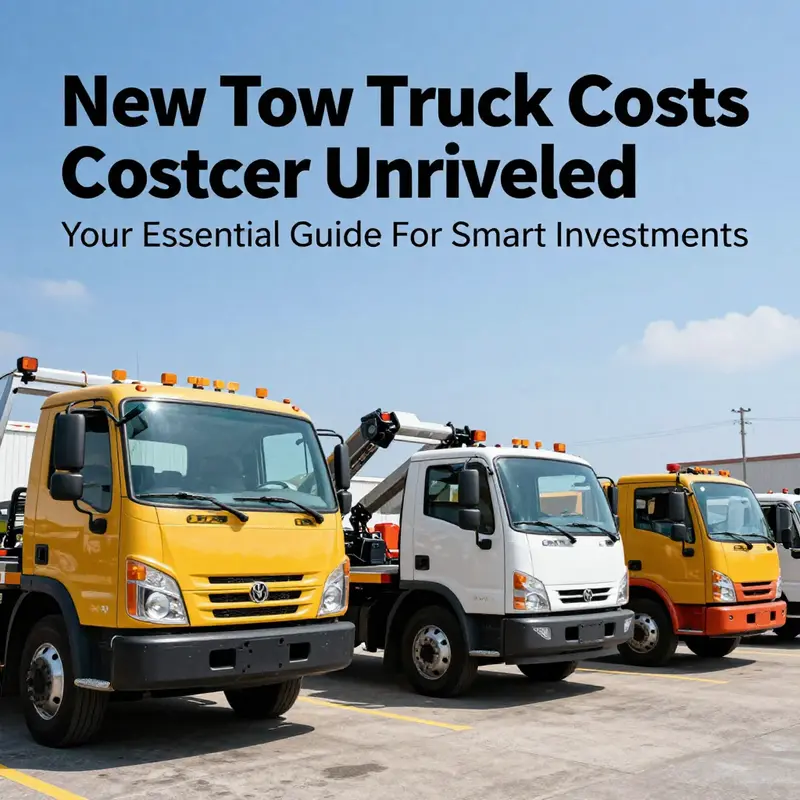
The price tag on a tow truck is rarely a single number. It reflects not just the chassis and the bed, but the work the truck is built to perform, the terrain it must handle, and the level of safety and automation that operators expect. For fleets that run on tight margins or operators who are expanding into new service areas, understanding how much to budget for a new tow truck means looking beyond sticker price and into the practical realities of daily use. From compact, city-focused rigs to heavy-duty rotators designed for the most challenging recoveries, prices diverge in telling ways that align with capacity, complexity, and the specialized equipment tucked into the platform. It is this combination of capability and consequence that shapes the real cost of ownership over the life of the truck. When you begin to chart a purchasing plan, the differences among conventional or rigid tow trucks, flatbeds, rotators, and heavy wreckers matter as surely as fuel economy or maintenance schedules do for a standard fleet vehicle. For operators who must respond quickly to accidents, weather events, or stranded motorists, the upfront investment often translates into reliability, faster response times, and safer recovery operations. Those are not intangible benefits but measurable improvements in service levels, downtime, and ultimately customer trust. With that in mind, a closer look at the price ranges and the defining features of each major type helps separate the essential from the aspirational parts of a budget.
Conventional or rigid tow trucks form the backbone of many fleets. They are built around a robust towing mechanism integrated into the chassis, delivering strong lifting capacity and a compact footprint that makes them adaptable to congested urban streets as well as busy service yards. The current field data places these workhorses in a broad price corridor that often starts higher than many first-time buyers expect. A typical new conventional rig can run roughly in the range of about $75,000 to $150,000. That spread reflects choices around the hydraulic lifting system, the size of the winch, the reach of the boom, the level of safety equipment, and the overall durability engineers design into the package. Buyers should expect a holistic package: hydraulic systems built for repeated heavy lifts, a stable chassis capable of handling long shifts, and a design that accommodates comparable attachments for wheel lift, dollies, or slide mechanisms. The advantages are clear. A rigid tow truck offers high lifting capacity, quick deployment, and the reliability that comes with a proven, integrated towing solution. It can be a practical choice for towing large or awkward loads, for routine heavy-duty recoveries, and for operations that require a universal platform capable of handling a wide range of vehicles. The limitations, however, come with the same emphasis on capability. Higher initial cost is the most obvious factor, and ongoing maintenance becomes a more involved affair as systems grow more complex. The operator’s training curve is steeper because a conventional rig demands coordinated control of multiple hydraulic functions, stabilizers, and sometimes more sophisticated safety interlocks. For fleets that prioritize versatility and strong payloads in a single unit, the conventional tow truck remains a dependable anchor in the budget.
Flatbed tow trucks, often referred to as rollback or slide trucks, present another familiar path. Their design prioritizes vehicle safety during transport. The bed tilts and slides to load the towed vehicle, keeping all wheels off the ground, which makes them especially suitable for luxury, classic, or low-clearance cars where ground contact could risk damage. The price picture for flatbeds is nuanced. In broad market surveys, flatbeds are sometimes described in the same band as other mid-range tow trucks, with a typical new-flatbed price around $75,000 to $150,000. That range reflects a balance of the bed’s hydraulic motion, the winch system, and the overall chassis strength necessary to handle a wide array of vehicle weights. Yet a separate thread of price chatter in the same sources reveals a wider spectrum: some reports point to entry-level or compact flatbed configurations that can be significantly cheaper, as low as roughly $12,800 to $39,800. Those figures are more likely to reflect foundational packages, smaller platforms, or markets where lower-cost production or simplified options are the norm. For a fleet, the distinction is important. If the goal is maximum protection against damage to the escorted vehicle or if the fleet frequently handles high-value or specialized cars, the higher end of the flatbed spectrum is the safer bet. If the need is to cover routine urban towing with occasional high-value vehicles, a more modest flatbed might suffice—but it must still meet standards for safety, emissions, and reliability. The essential point is that flatbeds can be excellent all-rounders, offering safer transport for a wide range of cars, while still demanding a careful read on the options that push price up or down.
Rotator tow trucks occupy a different end of the spectrum altogether. A 360-degree rotating boom, capable of extending, tilting, and lifting vehicles from nearly any angle, makes rotators the preferred solution for complex recoveries, overturns, and environments where space is tight or access is obstructed. The price tag for a new rotator is the most conspicuous indicator of the premium on capability. The typical price range for a rotator sits around $150,000 to $300,000 or more. That figure is not merely a reflection of the mechanical boom. It embodies the cumulative value of a specialized hydraulic network, a robust rotating mechanism, a longer outreach, and the increased safety buffers that operators rely on for high-risk recoveries. The advantages of rotators are equally pronounced. They reduce the need for multiple staged operations, extend the reach of a single unit, and can change the trajectory of a difficult recovery by enabling lifts and placements that would otherwise require additional equipment or more than one truck. The trade-offs, naturally, include the upfront cost, higher fuel consumption, and a steeper training requirement. Operating a rotator demands highly skilled technicians who understand the precise balancing of weight, the dynamics of a rotating boom, and the safety protocols that guard against equipment failure or injury in high-stress scenarios. For fleets facing frequent, extreme recoveries in varied terrain—on highways, at overturned incidents, or in environments where traditional trucks struggle—the rotator’s price becomes an investment in capability and response speed rather than simply a purchase.
The price psychology around specialized heavy-duty wreckers or high-tonnage configurations adds another layer. In the broader market, the 25-ton or 50-ton wrecker category often attracts interest from commercial fleets and municipal services that manage heavy vehicle fleets. The numbers reported across various sources place the 25-ton class in the low to mid-$30,000s, while larger 50-ton models can sit in a broader band, from roughly $40,000 up to $70,000. These figures reflect not only the raw pulling power but also the weight distribution, structural reinforcements, and the type of wheel-lift or under-lift systems integrated into the platform. They also hint at the regional pricing dynamics and the fact that many manufacturers adjust offerings based on regulatory environments, warranties, and the availability of parts and service networks. It is not unusual for a fleet to decide between a high-capacity, lower-frequency usage approach and a mid-range platform with a broader service ecosystem. The choice will hinge on forecasted job mix, typical axle weights, and how often the truck will be required to perform extreme, multi-vehicle recoveries in challenging conditions.
Together, these price ranges reveal a landscape where a single fleet may legitimately consider several paths, each aligned with business goals, service commitments, and risk management priorities. A conventional rigid truck offers strong versatility and robust lift capabilities, a flatbed provides an added layer of vehicle protections and delicate handling, a rotator delivers unmatched reach and recoverability in complex scenes, and the larger wreckers ensure the capacity to tackle heavy, multi-axle scenarios. In practice, many operators build a balanced fleet by combining two or more of these configurations, calibrating one to handle the bulk of everyday tows and another to service specialized tasks or extreme recoveries. It is here that the total cost of ownership begins to reveal its true shape. Beyond the base price, maintenance intensifies as trucks accumulate miles and hours of operation, and the demand for qualified operators grows more acute as the equipment becomes more capable and more complex. A rotator, in particular, carries a premium not only in purchase price but in the training, certification, and ongoing safety investments required to keep it performing reliably under the most demanding conditions.
When a fleet plans for a purchase, the cost truth lies in the total package. That includes not just the initial outlay, but the lifetime expenses that follow. Shipping and freight can add a meaningful margin to the sticker price, especially for international orders or configurations built in distant markets. Ongoing maintenance—routine servicing, replacement parts, tire wear, hydraulic fluid, and the periodic refresh of safety equipment such as lights and warning devices—will accumulate over the truck’s life. Fuel consumption grows in proportion to the engine size and the duty cycle, especially for rotators that operate the heavier hydraulic systems and longer booms. Operator training is another critical line item. Rotators and advanced flatbeds often require formal courses, hands-on certification, and periodic recertification to keep operators current with safety standards and best practices. In short, the number you see on the price tag is only the first layer of a multi-layered financial picture. For a fleet focused on reliability, safety, and rapid response—especially in demanding environments—this broader cost calculus matters just as much as the initial investment.
For operators and fleet managers aiming to translate these numbers into a practical procurement plan, several guiding ideas emerge. First, assess the anticipated job mix. If the daily workload involves towing a wide range of vehicles, a conventional rigid truck can offer the most flexible and cost-effective baseline. If there is a consistent need to transport high-value or delicate cars, a flatbed’s protective design may justify the added upfront cost. If the focus is on high-risk recoveries, frequent overturns, or difficult terrain, the rotator becomes not a luxury but a safety and efficiency tool—despite its higher price. And for fleets that regularly encounter very heavy loads, a high-tonnage wrecker can pay for itself in reduced call times and fewer staged operations. Second, factor in the regulatory and emissions environment. Trucks that meet modern ISO, CE, EPA, or equivalent standards can command higher prices but typically deliver lower total ownership costs through efficiency gains and easier maintenance regimes. Third, consider financing and depreciation. In many regions, financing options, tax incentives, or depreciation schedules can soften the annualized cost of ownership, spreading the financial impact across the life of the asset. Finally, remember the intangible but vital aspects: reliability, predictable maintenance, and the operator’s safety. A well-chosen truck is not only about immediate capital expenditure but about uptime, service levels, and the capacity to protect both customers and personnel on every job.
For fleets that want to connect pricing with practical implementation, practical planning documents often pair price ranges with expected service patterns. A fleet that anticipates frequent urban recoveries might lean toward a robust flatbed or conventional rig as the backbone, while one serving highway incidents on busy corridors might prioritize the rotator for its reach and speed. Heavy-duty operations with multi-vehicle scenarios could justify the higher upfront cost of a 50-ton plus wrecker. Across all these paths, the governing principle remains: the true value of a new tow truck is measured by the degree to which it improves response time, reduces vehicle damage, and enhances crew safety during recoveries. The difference in upfront cost is therefore not simply a matter of dollars—it is a reflection of how much reliability, efficiency, and professional capability the fleet is committed to delivering to customers and to the wider community.
As you navigate these choices, it can be helpful to anchor your thinking to concrete planning milestones. First, define the typical vehicle weight and dimensions you expect to handle most days. Second, identify the recovery scenarios that occur with the highest frequency and the most risk. Third, map out your maintenance and training needs over a typical five-year horizon, including parts replacement cycles, insurance implications, and potential upgrades as technology evolves. Finally, align your procurement with your broader fleet strategy—whether that means maintaining a lean but capable core fleet or investing in a broader portfolio that can scale under peak demand. In this way, the price tag is transformed from a single line item into a strategic investment that supports service quality, safety, and business resilience.
For readers who want to explore related considerations that echo these themes, think about emergency response planning for island fleets or essential fleet safety practices. These topics are closely tied to the kind of equipment you choose and the way you deploy it. For more on how emergency preparedness and fleet strategies intersect with tow operations, see the resource on essential fleet emergency response strategies. essential fleet emergency response strategies.
External resource for reference: a representative listing of heavy-duty wrecker configurations and pricing illustrates how markets price the more capable end of the spectrum, including 50-ton class platforms and rotators. While models vary globally, the trend holds: higher capability commands higher upfront investment, backed by a longer horizon of potential savings in turnaround time and safety outcomes. External resource: https://www.alibaba.com/product-detail/Sinotruk-Cnhtc-Wrecker-Tow-Truck-Price_1600552222679.html?spm=a2700.160351.0.0
Tow Truck Economics: Understanding Price, Capacity, and Long-Term Value
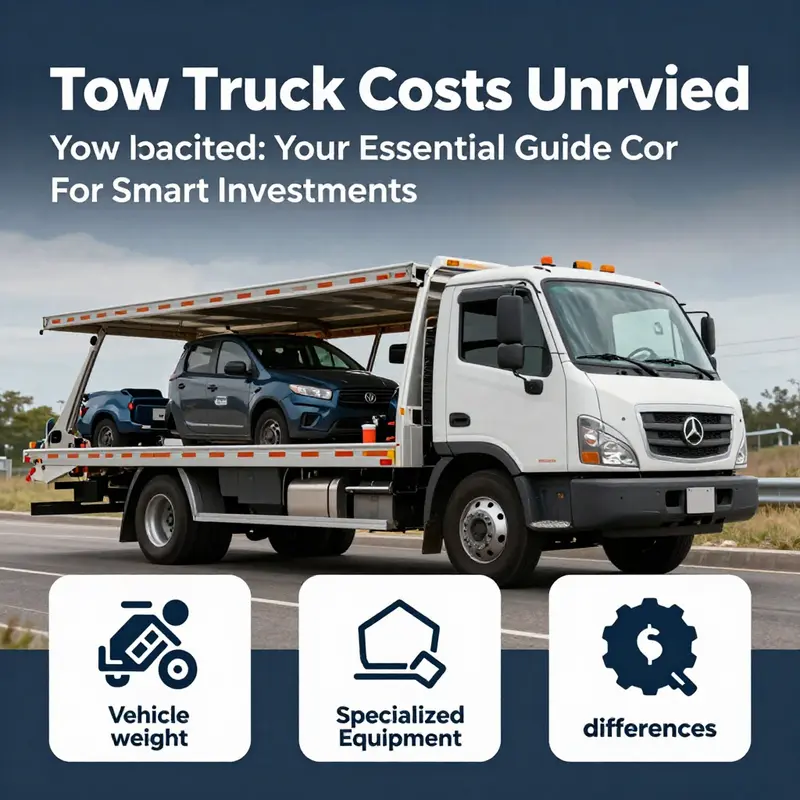
Tow trucks are not bought on price alone. The sticker price is just the first line item in a broader cost story that includes maintenance, fuel, insurance, and downtime. Understanding what drives price helps fleets choose equipment that matches work patterns and yields true value over time.
Size matters, and it is the most immediate driver of cost. A tow truck’s physical dimensions and towing capacity set the ceiling for what it can handle and its price band. On the lower end, basic flatbed configurations with some lifting capability often sit in a range that reflects the essentials: a platform to slide vehicles onto and off of, a modest winch, and a drivetrain suited to a moderate duty cycle. As the size and capacity increase, so does the complexity of hydraulic systems, the strength of the frame, and the sophistication of the control electronics. Heavy-duty applications that can lift, stabilize, and maneuver larger loads in challenging environments demand more robust components, stronger winches, larger fuel tanks for long hauls, and enhanced safety features. Each of these increments will nudge the price upward. The practical upshot is straightforward: if your towing contract involves consistently moving heavy vehicles, or performing recoveries in difficult terrain or under demanding conditions, you’ll likely gravitate toward larger configurations that carry a corresponding premium. In this framework, a smaller, entry-level flatbed represents a different business calculus than a 50-ton heavy-duty wrecker or a rotator designed for complex recoveries. The price paths reflect the different value propositions and risk profiles associated with each capability band.
Powertrain choice stands as the next major determinant. Diesel powertrains have historically dominated heavy-duty work in towing, due to their torque characteristics, fuel economy over long hauls, and broader engine life under sustained loads. The upfront cost of diesel variants tends to be higher than gasoline equivalents, reflecting both the propulsion technology and the durability profile demanded by commercial fleets. Diesel engines often incur higher maintenance costs over time, but their reliability in high-mileage service — especially on long, repetitive routes — can translate into lower total ownership costs for operators who run extensive duty cycles. Gasoline-powered tow trucks typically carry a lower initial price tag and simpler maintenance, which makes them appealing for lighter-duty applications, training fleets, or startups with limited capital and a shorter horizon for ROI. Yet the trade-off is clear: when heavy loads, frequent long hauls, or rugged service conditions become a routine part of the job, gasoline powertrains tend to prove less economical in the long run due to lower endurance under heavy stress and higher fuel use over time.
Electric propulsion adds a new dimension to the cost equation. Electric tow trucks are still emerging in many markets and carry higher upfront costs due to battery technology, charging infrastructure needs, and the specialized electronics required to manage rapid charging, thermal management, and torque curves. However, the operating costs can be substantially lower in terms of fuel (electricity vs. diesel or gas) and maintenance, with fewer moving parts in the drive system and potentially longer maintenance intervals in some configurations. The decision to pursue electric power will thus hinge on a fleet’s ability to justify the capital expenditure with projected savings, the availability of charging facilities near typical routes and yards, and the overall pattern of usage. For fleets with predictable routes, ample electrical infrastructure, and a strategic commitment to reducing emissions, electrification can offer compelling long-term value; for others, the payback period may be longer and more contingent on local incentives and energy costs.
Beyond the engine, lift capacity is the heartbeat of a tow truck’s function — and, by extension, a central driver of cost. A higher lifting capacity permits heavier inputs, a wider range of vehicles that can be serviced, and a greater margin for error when dealing with unpredictable roadside conditions. The higher the capacity, the more sophisticated the hydraulic systems must be, the more robust the chassis and mounting points must be, and the more extensive the control and safety mechanisms must be to protect operators and bystanders. Rotators, with their rotating booms and ability to recover overturned or otherwise compromised vehicles, epitomize this escalation. They are designed for complex recoveries, requiring specialized training, higher insurance premiums, and a level of maintenance that simply does not apply to basic flatbeds or mid-range wreckers. These capabilities justifying themselves only in contexts where the operational demands demand them. In that framework, the lift capacity that matters most is not merely the number on a spec sheet but the extent to which it matches the typical job mix the fleet expects to encounter.
Specialized equipment is the other side of the capacity coin. Hydraulic tilting beds, high-capacity winches, stabilization systems, advanced lighting, and safety interlocks all add to upfront costs. Each enhancement promises a tangible contribution to efficiency, safety, and reliability. Tilt beds simplify loading and unloading, reducing the risk of vehicle damage and operator strain. High-torque winches improve recovery success rates and speed, enabling more jobs to be completed within a shift. Stabilizers provide the crucial balance that protects against jerk and tip during loading, a factor that matters not only for safety but for the practical reality of protecting client vehicles from damage. The more sophisticated the equipment, the more the maintenance demands and the higher the initial purchase price. Yet for operators who depend on rapid turnarounds, minimal vehicle downtime, and a reputation for careful, professional service, these features can pay for themselves through increased job acceptance, fewer damage-intensive claims, and improved worker safety.
Market dynamics and regional availability shape the price landscape in direct and sometimes surprising ways. New equipment benefits from global supply chains, but those chains can tighten depending on regional demand, regulatory standards, and currency fluctuations. In some regions, the cost of importing heavy-duty equipment is muted by local manufacturing capabilities or supportive trade policies; in others, import tariffs and shipping costs may elevate the landed price significantly. The geographic availability of models with certain specifications can also tilt pricing. If a model or configuration is in high demand and short supply in a given market, dealers may apply premium pricing or require longer wait times. Conversely, competitive regional markets can drive prices downward through heightened dealer competition and more aggressive financing options. These market effects can be amplified for rotators and other high-end units that involve specialized equipment and limited supplier pools; even a modest shift in demand can push the total cost of ownership in one direction or another as maintenance contracts, spare parts availability, and service networks respond to varying volumes.
Regulatory compliance and emissions standards also leave their imprint on price. Machinery that aligns with ISO, CE, EPA, or RoHS standards often carries higher production costs, reflecting stricter quality controls, material specifications, and environmental considerations. For fleets that operate across state or national lines, the need to meet diverse regulatory requirements can drive up both upfront costs and ongoing stewardship tasks, including inspections, certifications, and documentation. The price premium attached to compliance should be weighed against the risk of regulatory non-compliance, potential fines, or the cost of retrofits if standards change during a vehicle’s service life. In practical terms, a higher upfront investment in compliant equipment can translate into smoother insurance interactions, easier maintenance planning, and less downtime caused by regulatory questions. The value here is not only in legal conformity but in the reduced friction of day-to-day operations that rely on predictable performance and audit-ready records.
From a business perspective, it is important to recognize that the sticker price is merely the first line item in a broader budget. The total ownership cost includes ongoing maintenance, spare parts, fuel or energy expenses, tires, inspections, operator training, and insurance. Larger, more capable machines inherently demand more expensive maintenance and consumables, but they also unlock the ability to win more work, complete jobs more quickly, and reduce the risk of vehicle damage and worker injury during complex recoveries. The balance between upfront investment and ongoing costs often hinges on the expected daily workload, the geographic and weather-related challenges of the service area, and the business model that connects equipment capability to revenue. A fleet that handles a high volume of mid-range to heavy-duty recoveries in diverse conditions will likely find a rotator or a high-capacity wrecker to be a justifiable expenditure, provided there is a clear plan for utilization, skilled operators, and a robust maintenance program.
One practical takeaway for fleet managers is the importance of aligning the equipment choice with the typical job mix rather than with the most advanced or the largest option available. A careful assessment begins with a clear inventory of the most common job types, vehicle weights, and the average distance of service calls. If the majority of cases involve mid-range cars, light trucks, and routine roadside assistance, a well-equipped flatbed or a mid-range wrecker may deliver better return on investment than a top-tier rotator that sits idle for a substantial portion of the year. If, on the other hand, the service area includes frequent multi-vehicle recoveries, overturned vehicle handling, or heavy-duty impounds, the economics shift toward higher-capacity units with rotator capabilities, supported by contracts that guarantee a certain level of utilization and a plan for training and safety.
This is not just a technical decision but a strategic one. It intersects with fleet age, maintenance capacity, insurance cost structures, and even the recruitment and retention of skilled operators who can safely manage the demand for complex recoveries. The most durable progress comes when the equipment plan is integrated with broader fleet strategies — emergency response readiness, island-wide coverage considerations, and long-range capital planning. In that sense, the factors that influence tow truck costs are not isolated pricing levers; they are governance instruments that shape a fleet’s ability to serve customers reliably, adapt to changing demand, and sustain profitability across cycles of market volatility and regulatory change. The conversation around cost, then, becomes a conversation about value: how the upfront investment translates into reliable service, faster response times, safer operations, and a durable competitive advantage.
For readers seeking to connect this deeper cost analysis to real-world fleet planning, practical insights and case studies can be found within industry-focused literature and community resources. The Island Tow Truck blog offers reflections on fleet management, maintenance strategies, and emergency response planning that help translate the numbers into actionable decisions for operators and managers alike. You can explore perspectives there to complement the market data and regulatory context discussed here.
As a closing note on the economics of tow trucks, it helps to keep a broad frame in mind: the price you pay today is just one piece of a longer story about uptime, safety, and service quality. The most effective purchasing decision balances the physics of lifting and pulling with the realities of workforce capability, maintenance backlogs, and the rhythms of demand in your service area. The price bands laid out in market data provide guardrails for budgeting, but within those guardrails, the cost calculus is shaped by how a fleet intends to use the vehicle, the geographic and regulatory landscape in which it operates, and the ability to leverage training and maintenance programs that keep the equipment performing at peak reliability. For operators who plan ahead and invest in training, preventive maintenance, and a flexible procurement strategy, the journey from sticker price to total cost of ownership can be navigated with confidence, yielding predictable service quality and sustainable business growth.
External resource: For a broader industry overview and data-driven trends related to commercial towing vehicles, see the U.S. Department of Energy’s Commercial Vehicle Data. https://www.energy.gov/eere/vehicles/commercial-vehicle-data
Beyond the Sticker Price: The Hidden, Ongoing Costs of Owning a Tow Truck
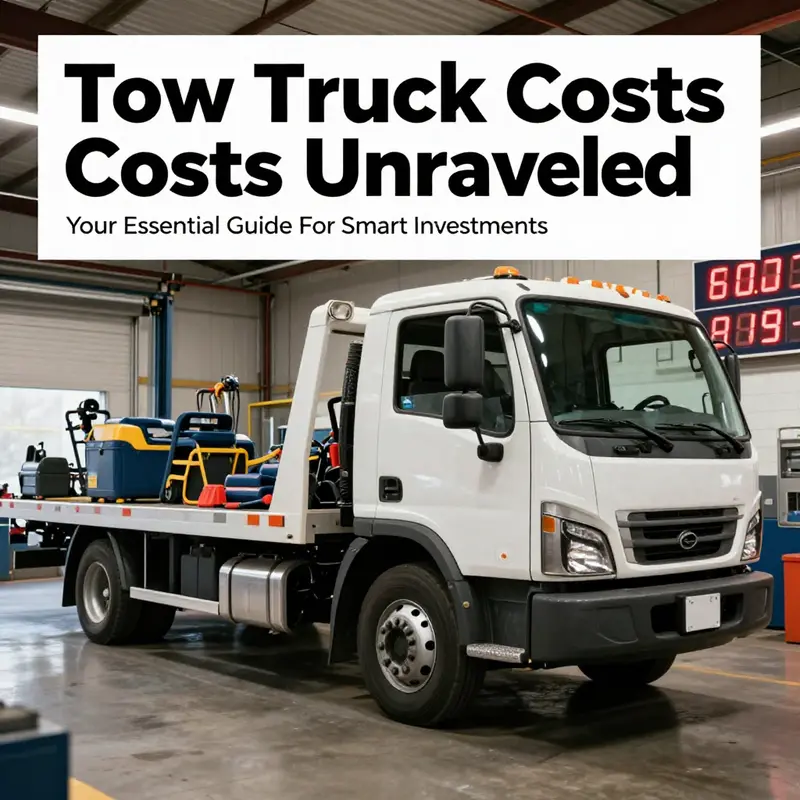
When you first start sizing up a tow truck, the sticker price tends to dominate the conversation. The numbers can be strikingly different depending on whether you’re eyeing a compact flatbed, a mid-range 25-ton wrecker, or a heavyweight rotator built for complex recoveries. But the price tag on day one only tells a fraction of the story. In the full calculus of ownership, the ongoing costs—maintenance, fuel, insurance, permits, and the day-to-day gear that keeps a fleet on the road—shape the bottom line as surely as the purchase price does. The most practical operators I’ve spoken with approach the market not as a one-off purchase but as a long-term investment, where the true cost emerges only through steady, informed budgeting and a clear understanding of what keeps a tow business profitable over years of operating cycles.
From the outset, the market offers a broad spectrum. A basic flatbed tow truck with a crane can vary widely in price, reflecting differences in winch capacity, bed length, and vehicle compatibility. For many operators, a new flatbed with mid-range specifications lands somewhere in the lower-to-mid six-figure range when you account for configuration, emissions standards, and post-sale support. Rotator tow trucks—the heavy-duty workhorses used to stabilize, upright, and recover overturned vehicles—start at a significantly higher ceiling. These are purpose-built machines with sophisticated rotating booms, advanced hydraulics, and specialized safety systems. The initial price for a new rotator often pushes well into six figures, and it can exceed three hundred thousand dollars depending on capacity and features. Even within the “wrecker” family, there are meaningful price distinctions: a mid-size 25-ton road wrecker sits in the tens of thousands, while larger 50-ton configurations can stretch toward the upper end of the six- to seven-figure range when fully kitted for commercial use. These headline numbers matter, but they are only the opening chapter of what owning a tow truck will cost over time.
To understand the ongoing economics, it helps to separate costs into recurring operating expenses, recurring maintenance and repairs, and compliance-driven or safety-driven expenditures. Each category compounds with usage, and the interplay among them often defines whether a fleet remains financially viable or drifts toward shrinkage in margins. Maintenance, for example, is not simply a routine box to check. Tow trucks are subjected to extreme workloads, and their core systems endure far more stress than the average passenger vehicle. The winch, hydraulic systems, and suspension endure repeated strains during every tow operation. They are the parts most likely to wear down, fail, or degrade efficiency over time. Regular servicing is essential, but so is having a plan for parts replacement and predictive upkeep. The exact costs here hinge on the truck type and its age, but the pattern is consistent: more complex equipment and higher duty cycles translate into higher maintenance budgets and, potentially, more downtime if a component fails unexpectedly.
The second major category—operating expenses—covers fuel, insurance, licensing, and registration. The sheer size and power of a tow truck mean fuel consumption is naturally higher than ordinary vehicles. In urban tow operations with frequent starts, stops, and detours, fuel bills accumulate quickly. Longer hauls or recovery work in highways or remote locations can drive mileage up in a hurry, translating into meaningful cost differences month to month. Insurance premiums, already higher for tow trucks because of the risks inherent in towing, add another layer of regular expense. These premiums reflect the costs of liability protection for vehicle damage, property damage, and any injuries that could occur during roadside operations. The exact numbers vary by jurisdiction, driver experience, and the fleet’s overall risk profile, but the point remains: insurance is a steady, non-negotiable line item that grows with vehicle exposure and claim history.
Licensing and permits are another recurring burden. Most jurisdictions require specific licenses for operating a towing service, and many enforce ongoing certification or renewal processes. Fees, inspections, and compliance reporting can be predictable but unremitting, especially for fleets that operate across municipal and regional boundaries. These costs are not optional; they are a legal prerequisite to doing business and can significantly affect annual cash flow if left unmanaged.
Beyond the core vehicle and regulatory costs lie the specialized tools that actually enable safe and effective work. Basic items like winches, high-tension straps, wheel lifts, and towing dollies are foundational, but the reality of towing is that more complex jobs demand more robust equipment. Axle pads, light bars, sirens, and communication systems improve safety and efficiency, and each piece carries a price tag––not just for purchase, but for maintenance and replacement over time. Then there are the modern enhancements that many fleets rely on for productivity: GPS tracking, route optimization software, and other fleet-management solutions. These technologies improve dispatch accuracy, reduce fuel waste, and shorten response times, which can translate into more jobs completed per day or per week. They are, in effect, a form of operating leverage: a higher upfront tech investment can yield outsized gains in revenue and reliability, but it also increases monthly and annual costs that must be recouped through better utilization.
Safety gear and PPE constitute another essential, ongoing cost category. High-visibility vests, cones, flares, reflective gear, and other roadside safety devices aren’t merely advisable; in many areas they are mandated. Compliance here protects workers and minimizes liability, but it also creates a recurring expense stream that grows with the size of the fleet and with regulatory updates. The practical reality is that every tow job, every roadside operation, further embeds the idea that safety equipment is not optional—it is a core operating cost that affects total cost of ownership as surely as tires or transmissions.
From a budgeting perspective, this constellation of recurring costs means a robust maintenance and operations plan is not a luxury but a necessity. A well-run shop that keeps a rotator in service, for example, will allocate significant resources to preventive maintenance, spare parts, and skilled technicians who understand hydraulics and electrical systems at a high level. A smaller flatbed with moderate usage will have a different risk profile and cost tendency, but it still requires a disciplined approach to parts inventories, labor hours, and downtime planning. Even within the same fleet, the cost trajectory can diverge widely depending on whether the business prioritizes speed of response, reliability, or the lowest possible per-mile operating cost.
To bring this into a practical frame, consider the behavioral differences across truck types. Flatbeds, known for their versatility, accumulate maintenance costs that cluster around chassis wear, bed mechanics, and winch health. The more a flatbed is used to transport a variety of loads, the more often the lifting and tilting mechanisms are cycled, increasing wear and potential hydraulic leakage. Wreckers, especially the mid-range and larger models, involve heavier-duty hydraulics, stronger winches, and more complex control systems. They tend to incur higher servicing costs, but their higher utilization rates can justify the expense if the business can keep them running on tight dispatch schedules. Rotators—the category at the very top of the scale—pose a different financial calculus. Their rotating booms, Tombstone-style stabilizers, and recovery configurations demand meticulous maintenance, with more frequent inspections and calibrations. Parts costs are typically higher, and downtime can lead to significant revenue losses when the truck cannot be deployed for critical recoveries.
The literature and field data stress that the total cost of ownership cannot be divorced from how the fleet is managed. A proactive maintenance program, backed by data and a clear parts strategy, helps control the most unpredictable expenses. Fleet managers who track miles, hours of operation, cycle counts on the winch, and the frequency of hydraulic hot ups tend to identify potential failures before they become expensive breakdowns. This predictive approach doesn’t eliminate risk entirely, but it does shift the cost curve toward greater predictability and steadier profitability. For operators who want to optimize cash flow, the right balance of preventive maintenance, timely part replacements, and efficient dispatch can reduce downtime, improve uptime, and extend the useful life of expensive equipment.
The value of thoughtful budgeting extends beyond the obvious wear items. Consider the ancillary equipment that enables efficient, safe operations. Replacement lighting, signal equipment, and the electronic components that connect the truck to dispatch networks all accrue depreciation. In addition, the integration of modern fleet management software may require ongoing subscription costs, updates, and cybersecurity considerations. Even the seemingly small items—a reliable set of wheel-lift pads, spare straps, spare batteries, extra glow plugs, or backup glass for windows—live in the background of daily operations but are essential for preventing slowdowns and ensuring safety during busy periods. Each item represents a cyclical cost that must be forecasted and financed as part of a holistic ownership plan.
The economics of ownership are further complicated by external factors that shape costs but are outside the operator’s immediate control. Fuel prices fluctuate, sometimes rapidly, and the tax and regulatory environment can shift the incentives around emissions compliance and equipment modernization. Shipping and freight costs for bringing new equipment or spare parts from overseas suppliers can also affect the bottom line, particularly for fleets that source components from international manufacturers. All of these variables add a dimension of uncertainty to the budgeting process, underscoring the value of conservative, scenario-based financial planning and a willingness to adapt procurement strategies as conditions change.
The practical takeaway for someone evaluating the cost of owning a tow truck is not simply to compare sticker prices. It is to build a comprehensive model of ownership that reflects maintenance commitments, operating expenses, safety obligations, and strategic choices about technology and equipment. A chapter of the cost narrative is the decision about whether to own outright or finance, how much spare capacity to build into the fleet for peak demand, and how aggressively to invest in safety and training. Investment in operator training, for instance, reduces the likelihood of accidents and equipment misuse, which in turn lowers claims and downtime. It’s not glamorous work, but the disciplined layering of maintenance, safety, and technology investments yields a more reliable, legally compliant, and financially stable operation over time.
This broader view—recognizing that the initial price is only the gateway to a much larger ongoing commitment—helps explain why many operators treat the thought of owning a tow truck as a multi-year, performance-driven project. It’s a lifecycle approach, where early decisions about maintenance schedules, parts stocking, and safety investments set the pace for profitability in the years that follow. For anyone entering this space, the message is clear: it pays to model the total cost of ownership with as much rigor as you apply to forecasting revenue. The numbers will be different across regions, truck types, and usage patterns, but the principle holds universally: the real cost of tow truck ownership is defined by what you spend on upkeep, safety, and efficiency, just as much as by the purchase price you negotiate on day one.
For readers who want to explore practical perspectives on ongoing ownership costs and how to manage them, the industry conversation continually returns to the idea that knowledge, planning, and disciplined budgeting are the true levers of long-term profitability. A reliable source of ongoing insight is the industry blog where frontline operators share lessons learned, cost pitfalls, and strategies for keeping fleets productive in challenging markets. The Island Tow Truck Blog offers a useful repository of real-world experiences and practical considerations that can ground a new operator’s financial planning in tested approaches rather than theoretical estimates. It’s one thing to know what a truck costs; it’s another to understand how those costs unfold in daily operations, and how a business can weather the inevitable shocks that come with heavy equipment work.
The bottom line is this: while the initial purchase price matters, the ongoing costs determine whether a tow business can sustain itself, expand, or weather a downturn. Maintenance needs, fuel consumption, insurance and licensing, safety and PPE, and the tech that ties a fleet together all contribute to a recurring expense profile that can tilt the economics of ownership in one direction or another. A disciplined approach to budgeting for these items—and a willingness to invest in preventive care, training, and safety—turns heavy upfront investments into durable, productive machinery that serves a business well for many years. The numbers are not a single line item but a layered, interconnected set of commitments that shape profitability in the long run.
External resource for deeper context and broader cost analysis can be found here: Understanding tow-truck ownership costs—a complete guide for prospective owners. https://www.towtruckowners.com/understanding-tow-truck-ownership-costs-a-complete-guide-for-prospective-owners
Final thoughts
Investing in a tow truck is a substantial commitment that goes beyond the sticker price. As we’ve explored, understanding the various types of tow trucks, the factors influencing their costs, and the hidden expenses of ownership is essential for making informed decisions. Ensuring that your business is equipped with the right tow truck not only improves operational efficiency but also offers peace of mind. When considering your purchase, remember to take into account the ongoing costs and specialized features that will best serve your unique needs. Your investment can lead to increased customer satisfaction and enhanced service capability, setting you apart in your competitive market.