For local auto repair shops, car dealerships, and property managers, mastering the art of towing vehicles in Grand Theft Auto V (GTA 5) can elevate your gaming experience while simulating real-world scenarios. Whether you’re managing a fleet or assisting stranded motorists, understanding how to use the tow truck effectively can streamline your gameplay. This guide will explore driving techniques, vehicle selection, securing and towing methods, and troubleshooting common issues. Each chapter aims to provide comprehensive insights to enhance your skills with the tow truck.
By familiarizing yourself with these elements, you’ll be better equipped to handle diverse situations in the game while also reflecting real-world insights that are valuable for auto-related businesses on the islands. Let’s dive into the intricacies of optimizing tow truck usage in GTA 5, ensuring you’re prepared for any challenge.
Towline of Precision: Mastering the GTA 5 Tow Truck for Safe Hauls, Smooth Moves, and Strategic Setups
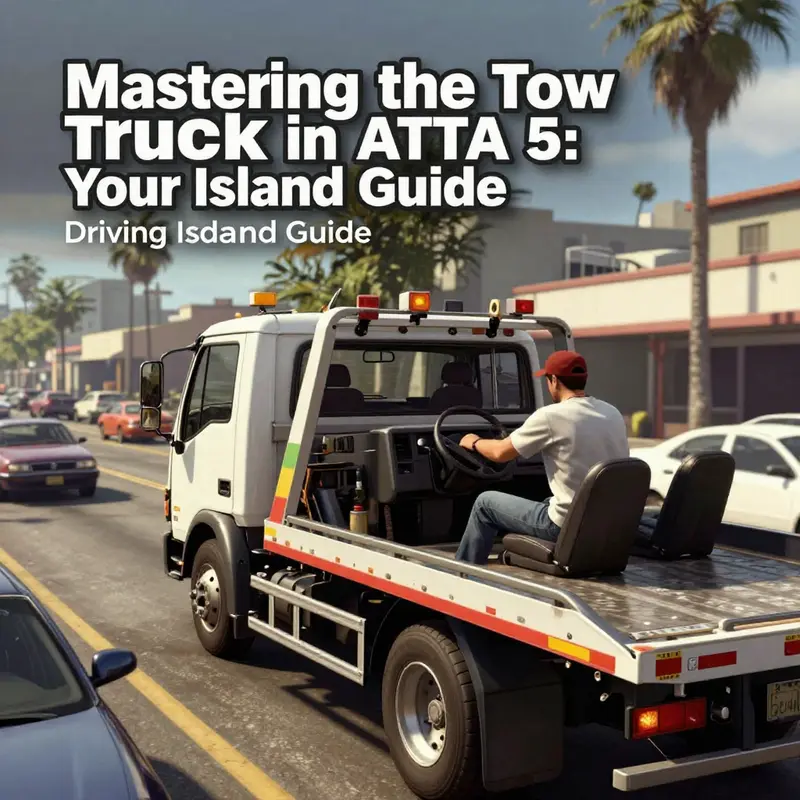
In GTA 5, the tow truck isn’t merely a utility vehicle. It is a conduit for control, timing, and spatial awareness that expands what a player can do beyond simply moving cars from one street to another. The act of towing a vehicle is a choreography—an orchestration of weight, leverage, and physics that demands patience, planning, and a steady hand. When you sit behind the wheel of a Mule or a Pounder, you are stepping into a space where a truck’s bulk becomes an advantage, granting you a high vantage point and a tether that can rearrange the map’s mobility in subtle, consequential ways. The tow truck’s design is not incidental; its higher body and wider chassis demand a different kind of care than a standard pickup, a nuance that translates into every turn, every reverse, and every careful pull. To master this tool, you do not just execute a sequence of button presses. You cultivate a rhythm that respects the weight you carry, the road you navigate, and your own timing as a driver in a city that never truly rests. This is the core of driving techniques specific to the tow truck—an art of connecting with another vehicle’s frame while keeping your own rig’s stability intact as you chart a path through traffic, alleyways, and open avenues alike. The journey begins with selecting the right chassis, but it continues through precise alignment and a stepwise connection that feels almost ritualistic in its accuracy. The Mule and the Pounder are the reliable choices in most freeform play, each offering a slightly different profile. The Mule’s bulk gives you robust traction and a forgiving weight distribution that helps you negotiate longer pulls, while the Pounder’s heft, slightly more agile in a straight line, can be advantageous when you must maneuver through a cluster of parked cars or a tight corridor. The first decision, then, is not about speed but about readiness: which vehicle best suits the mission you envision, and which one aligns with the route you intend to traverse. Once you have your tow truck chosen, the biggest part of the work lies ahead—approach, alignment, and securement. The target vehicle’s hitching point can be finicky if your angles aren’t right. You want your tow hook to encounter the vehicle’s designated towing point with a smooth, almost seamless contact. This begins with a careful approach: position your truck directly behind the target and maintain a parallel alignment as you close the gap. The goal is not to slam into the car but to invite a natural engagement between hooks and bumper, a tactile moment that signals the system to initiate the tow. As you draw closer, you’ll begin to sense the difference in the truck’s geometry. The tow arm is designed to extend with a clean motion, and here the control scheme comes into its own. On PC, the action is typically triggered by pressing the designated button to extend the tow arm; on consoles, that same intent is mapped to the corresponding action control. The arm extends automatically once you are in position, and you will often hear a crisp, satisfying sound when the mechanism locks onto the target. The moment of attachment is both audible and almost tactile in imagination—a small but meaningful cue that your efforts have paid off and the tow has begun. It is tempting to rush forward at this point, to test the limits of the tow by accelerating quickly or turning sharply. Resist that impulse. A towed vehicle is an extension of your own weight and momentum, and abrupt motion can trigger detachment or negative consequences such as the towed car flipping if the connection experiences a sudden torque. The proper approach is a slow, deliberate roll forward, watching for any sign that the hook remains engaged, and maintaining a steady throttle that keeps the towed vehicle aligned with your path. The towed car’s presence changes the feel of the drive. Acceleration feels less forgiving, steering requires more anticipation, and every turn demands a wider arc. This is not a shortcoming; it is the physics of a linked system where two bodies share momentum. You must compensate for the extra length in your wagon’s line of travel, and you need to adjust your speed to preserve stability around corners or during lane changes. The tow truck’s own handling characteristics remain important, of course. The Mule and Pounder sit higher and broader than ordinary trucks, which improves lifting capacity but narrows your margin for error in tight spaces. This means you become more vigilant about obstacles, parked vehicles, and street furniture that might threaten the rig or the towed car. When you approach a narrow alley, for instance, a moment of extra caution becomes essential. You must assess whether the path provides enough clearance for the truck’s extended length and the towed vehicle’s swung trailer. If not, you may need to reposition, widen your approach, or choose a more open route that minimizes risk. Beyond the physical act of towing lies the practical knowledge of how to manage the tow arm and the crane in follow-on operations. After you secure a vehicle and begin the tow, there are moments when you might decide to lower the crane or reset the anchor for a different configuration. In GTA 5’s control schema, that action is accessible through a pause in the action, where you can navigate to the Brief tab and select Help. This is more than a reminder of key bindings; it is a built-in reference to how the crane functions, including the control that lowers the arm. Not every tow ends with a neat, straight pull to a destination. Realistically, you may need to maneuver around obstacles, move around other vehicles, or negotiate a curve that requires you to slow down further and adjust your line. The goal remains the same: keep the towed vehicle from detaching and preserve the tow as a single, stable unit from start to finish. There is a certain discipline involved in staying within the limits of the tow’s capabilities. You learn how much weight you can respectfully pull at a given speed, how keenly you must observe road composition, and when it is wiser to abandon a planned move and re-route rather than risk an accident or the loss of your payload. The discipline also translates into better judgment for mission-oriented play. You often need to recover a vehicle that has broken down, blocked a roadway, or simply been left in an inconvenient position. The tow truck’s ability to reposition a car without additional equipment makes it an invaluable tool for clearing routes, enabling other players to pass, or completing time-sensitive objectives with minimal disruption. When these moments arise, you are not only performing a mechanical task; you are crafting an outcome with consequences for flow and tempo across the map. In practice, that means building a mental map of your route before you engage in a tow. You visualize the line your vehicle will follow, the turns you will take, and how the towed car will respond to changes in speed, acceleration, and direction. You keep your gaze forward, but you also monitor the towed vehicle’s relative motion in your peripheral awareness, ensuring there is no sudden swing or jerk that would jeopardize the connection. You also consider the environment: the road texture, the presence of pedestrians, the risk of tailgating other motorists, and the potential for traffic to alter your course at any moment. Each factor informs your timing and your throttle control. If you intend to set up a longer haul, you might plan to drive at a measured pace that respects the towed vehicle’s stability while navigating through a sequence of intersections. A successful tow hinges on consistent speed management and careful steering. The tow arm’s extension requires a gentle touch; the moment of attachment is followed by a smooth progression toward your destination, not a rushed sprint. It is in these moments that the intuition of a trained GTA 5 driver reveals itself: the sense that you are guiding not just a vehicle, but a system of forces that must remain in harmony. For those who want to deepen their practice, there is value in revisiting the basics slowly, then coupling them with more complex routes that test your timing and your spatial perception. The practice, in short, becomes a repeated refinement of motion—an accumulation of small, deliberate actions that yield a larger flow and a more reliable tow. If you are curious to explore further context or community perspectives on towing strategies, you can visit the official blog for ongoing discussions and tips about island fleet operations and emergency readiness in related, real-world settings. The internal resource theislandtowtruck.com/blog/ serves as a repository of notes and narratives from players who have tested these mechanics through many sessions. While the content is grounded in a game, the approach to handling a tow rig—planning ahead, aligning carefully, and respecting the vehicle’s limits—translates to any scenario where precision and care matter. As you become more fluent in towing, you’ll notice a quiet confidence developing. You’ll anticipate how a towed car will behave on various grades, how much you can push your route through before the risk of detachment increases, and how to coordinate your movements to minimize disruption to traffic and to safeguard your own asset. The experience is not simply about winning a chase or completing a mission; it is about mastering a tool that makes the map feel more manageable and more navigable. In that sense, the tow truck becomes a metaphor for thoughtful play: a vehicle whose power lies not in raw speed but in the disciplined control of weight, momentum, and space. For players who see GTA 5 as a sandbox of possibilities, towing is a doorway to creative problem-solving, a way to turn a tense moment into a controlled operation and, occasionally, a clever setup for an inventive stunt. As with any complex mechanic, mastery comes with time. You learn from missteps, you adjust your approach, and you gradually reduce the number of variables that can derail a tow. The next layer of understanding lies in applying these fundamentals to more irregular scenarios, such as towing through congested environments, or performing multi-car recoveries with minimal risk. The chapter that follows will move from the basics of connection and stability into more nuanced operation—how to handle nonstandard towing points, how to reinterpret the environment to your advantage, and how to balance speed and caution across diverse terrains. For now, the essential lesson endures: a tow is a careful accord between vehicle, operator, and road, a moment when patience becomes your strongest engine and precision your most reliable gear. External reference for enhanced visualization and further technical steps can be found at How to Tow a Car in GTA 5: Complete Guide: https://www.gta5-mods.com/tips-and-tricks/how-to-tow-a-car-in-gta-5-complete-guide
Tow Lines and City Streets: Mastering Vehicle Selection and Location for GTA 5 Tow Runs
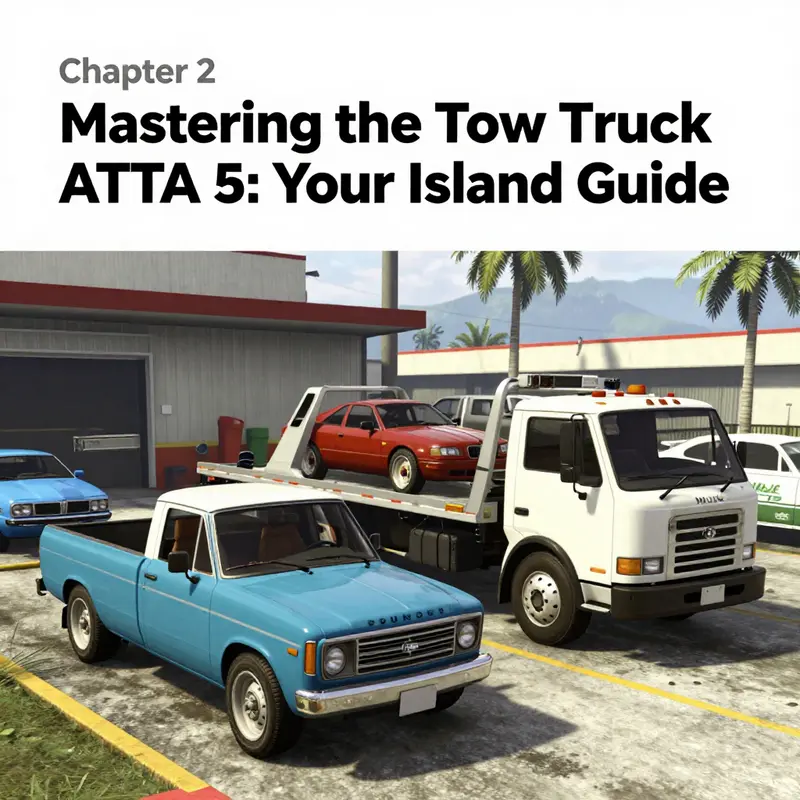
On Los Santos’ endless avenues, tow runs demand more than speed; they require a deliberate pairing of vehicle and position. The tow truck is a tool, not a prop, and choosing the right hauler shapes what comes next: where you can reach the car, how you lift it, and how you navigate around other drivers. This chapter guides you through a practical framework: pick the right truck for the job, then scout the location with a strategic eye. When you combine careful vehicle choice with mindful location scouting, a tow becomes a reliable operation rather than a reactive scramble.
At the heart of GTA 5 tow operations are two vehicles that stand out for their towing capacity and maneuverability. The Mule is compact and agile, a utility workhorse built for tight urban corridors. Its lift can reach a range of configurations, allowing you to attach to the front or rear wheels depending on how the disabled car sits in the street or parking lot. In cramped spaces it shines—narrow alleys, garages, or a corner near a diner where a captured ride must be removed without drawing attention. The Mule’s smaller footprint makes it easy to thread between stalled taxis and pedestrians, and its lift is forgiving, offering options for securing the front or rear end before you begin the tow. This agility makes the Mule ideal for quick, short-distance relocations, or a rapid cleanup after a heist.
Then there is the Pounder, a heavier-duty counterpart that brings power and endurance to the task. The Pounder is built for larger or more stubborn loads. If you need to move a sedan that has survived a collision or a bigger vehicle that resists a lighter rig, the Pounder’s robust lift and greater draw capacity come into play. Its size may reduce nimbleness, but it translates into stability on longer pulls where momentum matters and a fragile grip could cost you the job. The Pounder’s weight distribution helps maintain control when towing cars that might otherwise roll or shift during sharp turns or abrupt lane changes. The trade-off is clear: you gain leverage and capacity but sacrifice some ease of access in tight spaces. In practice you choose based on the target vehicle and the environment: urban canyons call for the Mule’s finesse, while open streets with larger targets reward the Pounder’s strength.
Locating these trucks across Los Santos is less about a single point and more about reading the city’s rhythm. The Mule and Pounder cluster around zones that match their purposes: private garages, police yards, and towing depots. You might find a Mule parked near a garage used by a private crew, or a Pounder near a yard with heavier crates. When you pull up near a station, you might encounter a vehicle in the yard, or you might discover a truck waiting in a construction zone. Towing yards are often reliable sources of steady supply; there, near rows of rigs, you can decide between the nimble Mule or the heavier Pounder. You may also stumble on trucks in improvised spaces—construction sites, quiet lots, or back alleys where a tow crew left a truck temporarily unattended. Patience and a careful eye reward you with the right tool at the right moment.
An additional layer of opportunity comes from the game’s ecosystem of exchanges and markets. At times a tow truck appears through broader vehicle exchanges or dealer-like networks, depending on your progression and faction alignment. When you spot a Mule or Pounder parked at a distant yard, take a moment to measure the weight of the job ahead rather than the speed to completion. It pays to tow with restraint, respecting the towed car’s limits and the rhythm of traffic. A smooth hook, a controlled pull, and a stable ride are what separate a successful tow from a costly detour.
Practically, pulling a tow into action follows a steady rhythm. Approach the target from behind, align the tow arm with the frame or bumper, then engage the arm with the control button. The arm extends, the grip clamps, and you begin a slow, steady tow. Avoid abrupt maneuvers—sharp turns, sudden accelerations, or hard braking can loosen the grip, especially when moving larger targets. If you need to lower the crane mid-task, pause the game and follow the in-game controls. The exact steps can vary by platform and patch, but the principle remains: maintain control over both vehicles, respect the road’s geometry, and anticipate other drivers.
Beyond the mechanics, vehicle choice and location become part of your overall plan. The Mule serves as your urban scout, the Pounder as your reliable mass mover. For quick on-the-fly tasks, the Mule is ideal; for longer hauls, the Pounder provides stability. Practice routes you expect to encounter and learn how each truck behaves in those spaces. The right truck at the right time, found in the right place, makes towing a disciplined craft that complements your missions and your storytelling in Los Santos. As you continue to explore, keep in mind the simple maxim: the right truck at the right time, found in the right place, is half the battle won on the road to victory.
Tow Lines and Precision: Mastering the Tow Truck in GTA 5
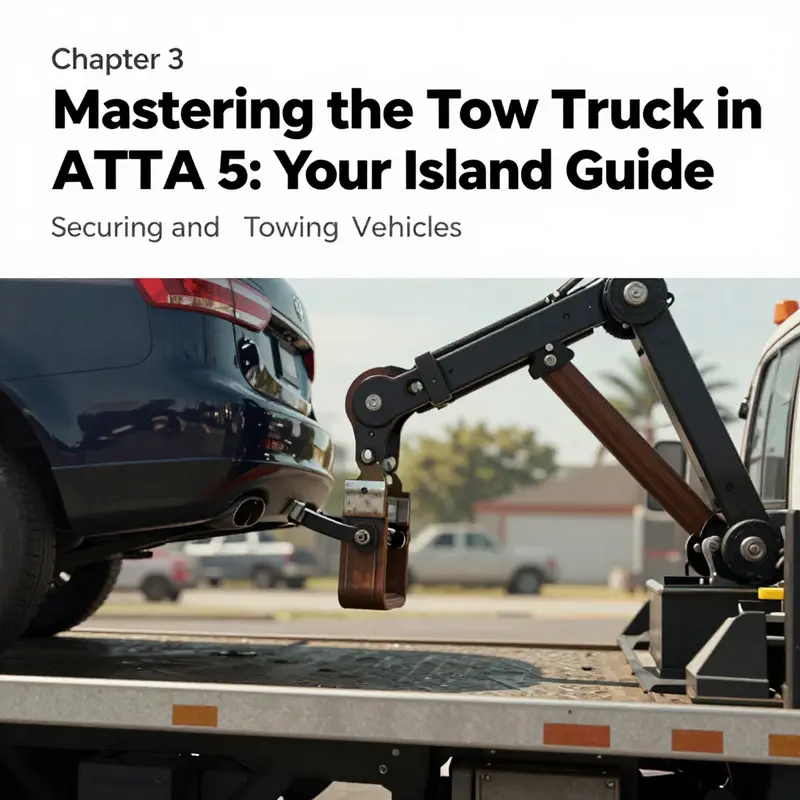
In the sprawling chaos of Los Santos, the tow truck might seem like a quiet, utilitarian tool tucked away between the more flamboyant supercars and armored vans. Yet beneath its steady hood and heavy crane lies a discipline that rewards patience, planning, and a feel for the rhythm of the city streets. This chapter is not merely a how-to; it is a walkthrough of a practical skill that turns a mundane service vehicle into a versatile asset. Whether you are chasing a mission objective, clearing a stray car from a tight alley, or simply experimenting with the physics playground that GTA 5 allows, mastering the tow truck—especially the Mule or Pounder models that dominate the role—opens up a quiet spectrum of possibilities. The path to proficiency is straightforward, but it rewards attention to detail: the alignment behind the target, the precise moment to extend the tow arm, and the subtle art of driving with an towed vehicle in tow. The technique is simple in theory and demanding in practice, and its value grows as you learn to read the city’s moods and traffic patterns while you carry a second vehicle like a compact, awkward payload.
First, you need to locate a tow truck. In most players’ workflows, the Mule and Pounder serve as the workhorses of towed operations. They are built with the towing mechanism in mind, with a crane or hook that emerges to grip a target vehicle and hoist it off the ground. Finding one is usually a straightforward part of the GTA 5 sandbox: they appear in industrial zones, near warehouses, and along certain street grids where heavy service vehicles congregate. Once you locate a suitable tow truck, you take possession of it the same way you would acquire any other service-focused vehicle: approach with care, check your surroundings, and get a clear line to the vehicle you intend to move. The moment you sit behind the wheel, you’re not just driving a car—you’re stepping into a role that blends logistics with a pinch of tact, almost like orchestrating a small, controlled convoy within the wider cityscape.
Approach matters just as much as the target. The typical towing operation begins by positioning the tow truck directly behind the car you want to tow. The goal is to be aligned in a straight line with the vehicle’s bumper or preferred tie point, because a crooked approach can complicate the lift and stabilize the towed car. The alignment process invites a calm, methodical approach: you slow to a careful pace, watching the distance to the back of the target, and you continuously adjust your vehicle’s angle as you close in. It is a moment where the player’s spatial awareness matters as much as reflexes. In these minutes, you are practicing precision in motion, the same skill that makes a competent driver in real life, or a patient worker on a crowded worksite, feel in control rather than at the mercy of the environment. The city is loud, the traffic is unpredictable, and a good tow operator learns to treat each approach as a micro challenge, an opportunity to refine line, speed, and intention.
Once you’re snug behind the target, the next step is deploying the tow arm. On PC, the action key is the interaction button, and on consoles there is a corresponding button designed for interacting with objects. The arm unlocks its own mechanical language as it extends, an audible cue and a small mechanical sigh that signals the crane has begun its pursuit of the vehicle’s anchor. The moment the tow arm reaches out, you sense a moment of quiet partnership: you and the car being towed are about to become a unit, a single load that moves with a shared purpose. It’s crucial to remain patient here. Do not rush the connection—the crane will latch onto the target’s frame or bumper when you are perfectly aligned and the vehicle is in an appropriate position for lift. In practice, the jerk of a rushed connection can unsettle the process, causing the hook to slip or the vehicle to jostle free mid-loaf. You will hear a clear signal when the connection is secure, a small, confident sound that confirms the tow is ready to begin. Until that moment, treat the operation as a careful, almost ceremonial, step rather than a quick grab and go.
With the target vehicle secured, the real work begins: driving the tow truck with a second car in tow. This is where technique matters as much as timing. The towed vehicle is a deliberate weight on the back of your rig, altering the way your tow truck handles. You will notice the physics shift just enough to remind you to moderate your speed and steer with amplified consideration. Sharp turns become potential hazards; sudden accelerations can yank the towed car forward or sideways, risking detachment or collision with the truck’s own chassis. The most reliable way to navigate is to adopt a smooth, steady pace, keeping the towed car out of the lane lines and away from heavy traffic that might force sudden swerves. In practice, this means planning your route in advance: choosing streets with light traffic, avoiding steep gradients, and staying within a controlled corridor where your vehicle can move predictably. The towed car behaves much like a fragile payload; treat it as if you were hauling something delicate, even though you know the in-game physics sometimes flirt with the edge of reality.
There are a few non-negotiable cautions that emerge from experience. First, some vehicles simply cannot be effectively towed with standard tow trucks. In GTA 5, certain small or uniquely designed vehicles challenge the hook’s grip or the crane’s lift capacity. The routine of selecting the correct target becomes part of your workflow: you scan for a vehicle that visibly bears the clear hooks and anchor points that a tow truck’s apparatus can latch onto. The second precaution is related to stability. Even when your connection is secure, the tow operation is not a perfect balancing act. The towed car adds weight and resistance that can cause the truck to pitch or yaw under sudden maneuvers. The safest strategy is to drive conservatively, keep your speed moderate, and avoid aggressive cornering. If you need to change direction, slow down well before the turn, and make the turn as gently as possible so the towed frame does not wrench loose or slip along the hitch. Third, keep in mind that the environment can complicate the process. A narrow alley, a parked car you didn’t see in the blind spot, or a sudden pedestrian movement can alter your path in a way that undermines your alignment. The skill here lies in anticipation: reading the space, forecasting how the towed vehicle will respond to each steering input, and adjusting your plan on the fly.
When the tow is underway, you might encounter moments when you need to relocate the load to a safer or more useful position. The crane itself offers options for adjustment, including the possibility of lowering the crane if your goal is to reposition the load or simply to move it into a different lane of traffic. The documentation notes a pause menu path that reveals control descriptions and key bindings for lowering the crane, a reminder that the game’s interface does not require you to memorize everything from memory. In practice, you would pause, navigate to the Brief tab, and select Help to see the precise control mapping, including how to lower the crane if needed. This is the kind of detail that matters during a long play session, where you might be juggling multiple tasks at once: towing a car, securing additional cargo, or preparing a vehicle for transport to a specific location.
The operational discipline extends beyond the moment of attachment and travel. There is a fundamental rhythm to towing that can be learned and refined with practice. For example, the choice of tow point is not arbitrary. You typically want to secure the target at a robust frame or bumper point rather than a thin, delicate component. The reason is straightforward: frame rails distribute the load more reliably and reduce the risk of damage to either vehicle. The process of hooking—driving forward slowly until you detect the mechanical lock—becomes almost ceremonial in its precision. In that moment, you feel the intangible alignment between tool and task, a sense of competence that grows with each successful tow. As you gain confidence, you begin to anticipate potential complications, such as how a car’s suspension or a nearby curb might influence the friction and the grip of the tow tack. With time, you’ll find that towing is less about brute force and more about harmonizing with the geometry of space and motion, letting the tow truck’s metal arm and the stranded vehicle form a small, temporary partnership in a city that never stops moving.
A crucial dimension of mastering towing lies in its practical applications, especially when you think about the broader workflows of this game world. The ability to move a car without damage translates into a range of strategic possibilities, from clearing obstructions in a mission corridor to rerouting a vehicle that is blocking a critical path during a high-stakes chase. The careful operator can use the tow truck to create space, control a scene, or orchestrate a sequence that would be much harder to achieve by normal driving alone. The practical payoffs extend beyond a single moment: towing refines your situational awareness, enhances your ability to manage space in dense urban environments, and provides a tangible sense of agency when you need to reorganize the city’s scattered traffic and vehicles for a mission or a roleplay scenario.
If you want to broaden your understanding beyond hands-on practice, there are community tutorials and guides that offer additional strategies for towing under different circumstances. For readers seeking more context and technique, a broader discussion stands out as a helpful companion to your in-game experiments. The idea is not to replace your own experimentation but to enrich it with perspectives from players who have faced similar roadblocks and found practical solutions. For readers who crave further reading and real-world analogies, the chapter also points toward a resource that treats towing with a blend of realism and game-informed pragmatism. This is not a substitute for in-game practice, but it provides a broader lens through which to view the mechanic, highlighting how the basic principle of secure engagement, controlled movement, and careful removal translates into a reliable, repeatable skill.
Beyond the mechanics themselves, the act of towing in GTA 5 invites a certain empathy for other drivers and pedestrians within the game’s urban ecosystem. You learn to respect space, to anticipate the consequences of your actions, and to recognize that the map’s roads can be a shared resource that requires careful management. The tow truck operator, in this sense, becomes a quiet steward of the city’s flow, a role that echoes in the way real-world fleet operators manage loads, plan routes, and navigate complex environments with caution and precision. The satisfaction comes not from the spectacle of lifting a car off the ground but from the confidence that, with the right approach, you can move a vehicle safely from point A to point B, even when the odds of disruption seem high. This is the core of the technique: the convergence of mechanical certainty, spatial awareness, and disciplined driving to transform a straightforward task into a reliable, repeatable skill that strengthens your overall capability within GTA 5’s expansive sandbox.
For readers who want to deepen their practice, a practical tip is to treat towing as a module within your broader GTA 5 toolkit. Just as you would approach a mission with planning and situational analysis, approach towing with a short preflight: survey the target, verify the alignment, prepare the route, confirm you have a clear path, and then execute with calm efficiency. The moment you feel the tow arm engage and the connected sound signals a successful securement, you realize you have moved beyond mere window dressing for a scene and into a function that serves as a reliable means of managing the city’s clutter and obstacles. The next steps, which you may already know and may soon perform with greater ease, involve maintaining a steady speed, avoiding abrupt maneuvers, and being ready to release or reposition the load as the scenario demands. In time, towing becomes less about following a checklist and more about developing a practiced intuition that helps you anticipate and adapt to whatever Los Santos throws your way.
To connect this practice with broader resources that enhance your understanding, consider exploring a few curated references that provide broader context and practical guidance. For players who appreciate a community-driven perspective, the Island Tow Truck blog offers a repository of insights and experiences that can complement your in-game exploration. You can explore it here: the Island Tow Truck blog. This connective thread helps you place your GTA 5 towing experiences in a wider spectrum of towing operations, reinforcing the idea that the basic mechanics you perform in frustration-free environments can scale to more complex, real-world-inspired tasks.
As you continue to practice, you will notice how each tow becomes a micro-lesson in control and patience. You learn to treat the target vehicle with respect, to respect the tow line’s limits, and to respect the city’s tempo. The process remains straightforward: locate a tow truck, align behind the target car, extend and secure the hitch, slow and steady drive away, and, if needed, use the pause menu to adjust principles for any crane operations. The reward is a practical, usable skill that translates beyond the game’s pixels. It is the quiet confidence that comes from knowing you can solve a problem on the fly, clear a roadway, or complete a staged sequence with minimal friction. This becomes the foundation upon which you can build more ambitious towing plans, whether you are staging a heist with a careful flow of assets or organizing an impromptu roadside recovery that keeps traffic moving and the city functioning.
For those who want to explore a more formal guide, the GTA 5 community maintains a spectrum of tutorials that walk through the towing process with diagrams, step-by-step notes, and alternative approaches for edge-case scenarios. While the core discipline remains consistent, these resources can offer variations that reflect different platform controls, vehicle types, or mission-specific constraints. The essential takeaway remains the same: secure alignment, cautious movement, and deliberate operation yield the most reliable results. You will find that, after a night of practice, towing becomes less about thinking and more about executing with calm, methodical efficiency—the hallmark of a pro tow operator in GTA 5’s dynamic, ever-changing street grid.
External resource for deeper exploration: https://www.gta5-mods.com/tutorials/how-to-tow-a-car-in-gta-5-complete-guide
In sum, the tow truck is more than a tool for moving cars. It is a device that demands and rewards composure, spatial sense, and a willingness to treat each hook as a small contract with the city: a promise to move a vehicle without damage, to do so cleanly, and to respect the flow of traffic and the other players who inhabit the same virtual space. The chapter’s objective—to secure and tow vehicles effectively in GTA 5—takes you from the initial, practical steps of locating a Mule or Pounder to the later stages of navigating city streets with a weighty, tethered load. The result is a skill that quietly expands your repertoire, making you more capable in mission play, more reliable in emergent scenarios, and more attuned to the subtle mechanics that govern this highly responsive digital playground. And as you reach a point where each tow feels almost automatic, remember that your effectiveness lies not just in applying force but in applying the right amount of patience, the right alignment, and the right pace to keep both vehicles secure and the city’s traffic flowing smoothly.
Tow-Lines in a High-Stakes City: Mastering the GTA 5 Tow Truck with Precision and Purpose
In the sprawling streets of Los Santos, a tow truck is more than a utility vehicle; it is a calculated instrument in a city that lives on speed, risk, and the occasional act of restraint. The moment you take the wheel of a Mule or a Pounder and back it up to a target vehicle, you step into a space where timing matters as much as power. This chapter explores tow operations not as a one-off mission mechanic but as a deliberate practice of control, space, and problem solving. It begins with how to choose the right tool for the job and ends with a sense of mastery that lets you move a car from a chaotic road to a safe, usable position without drama. The aim is not to perform feats of showmanship but to cultivate a reliable workflow that can adapt to the city’s shifting demands, whether you are clearing a runway of parked cars for a heist, repositioning a desired ride for a photo-op in a social hub, or simply keeping traffic moving in a densely packed district.
First, decide on your tow platform. In GTA 5, the standard workhorses for towing are the Mule and the Pounder. Each has its own rhythm. The Mule feels sturdy and a touch more agile for close, careful work. The Pounder, heavier and more imposing, carries a different cadence, slower perhaps, but with a forceful presence that can stabilize a stubborn vehicle long enough to secure it. Your choice should reflect the context of the job: a tight alleyway will reward a nimble approach and a well-timed dock, while a wide boulevard may allow you to line up with surgical precision. The vehicle you select becomes a partner in the task, not merely a tool, so get comfortable with how it responds to direction, with its tail swinging a touch as you back toward a curve, and with how its arm reaches out to meet the target. In this sense, choosing the right tow platform is the first step in building a reliable routine, a rhythm you can carry into every job, whether you are performing a routine salvage or a more elaborate maneuver that demands patience and restraint.
With the platform chosen, the choreography of alignment begins. Positioning the tow truck directly behind the car you intend to tow is more than a matter of aesthetics; it is about establishing a predictable path for the arm and the chain to engage. A few careful inches can make the difference between a clean catch and a missed hook. A stable, straight line minimizes unexpected sway when you extend the tow arm, and it reduces the risk of bumping the target vehicle or the surrounding traffic. As you reverse, keep your gaze on the hitch area and the alignment guide on your screen or HUD, if available. A common misstep is to approach at an angle that seems near enough in the moment but translates to a skewed anchor once the arm reaches out. The moment you feel the trolley of the tow crane begin to extend, your focus shifts from the overall road to the precise geometry of the contact point—frame or bumper, depending on the vehicle, and how the tow arm attaches to it. The aim is a confident, patient approach, a moment of stillness before the action begins, a small pause that recalibrates your stance and sets up the lock with a clean, audible signal affirming the secure engagement.
Once the line is set, the deployment of the tow arm becomes the turning point of the operation. Activating the tow arm is straightforward, but its success hinges on the preceding alignment. In most configurations, triggering the arm is a simple control action that you perform once you are properly positioned. As the arm extends, listen for the telltale mechanical cadence—an audible cue that confirms the arm has reached its limit and is ready to latch onto the target. The nuance here is in the tempo of your approach. If you deploy too early, you risk misalignment and a weak grip; if you deploy too late, you can nudge the car or cause it to shift, complicating the hook-in. Patience pays off. The moment the tow hook engages, there is a distinct sense of feedback in the vehicle’s response—slight resistance, a subtle tug, and then a quiet confirmation that the target is secured. You will know, not just by the sound, but by the feel of the tow line tightening and the car settling into place behind the truck.
With the target locked in, you move into the core of the operation: towing. This stage requires a blend of steady hands and deliberate pace. Drive forward slowly, maintaining a respectful, measured speed that allows the towed vehicle to settle and follow the truck’s trajectory without fighting the pull. Aggressive acceleration or rapid steering can compromise the connection, especially if the car’s frame or bumper has a loose hold or if the alignment has slipped ever so slightly during the intake. In practical terms, this means keeping your wheel inputs smooth, avoiding sharp turns, and using the truck’s momentum to guide the towed car through intersections and lanes the way a careful convoy would move through a busy city. The goal is a cohesive unit where the towed vehicle mirrors your path with a minimal lag, allowing you to reposition it exactly where you need it—on a curb, in a lot, or beside a vehicle you’re relocating as part of a larger operation. This is where the tow truck becomes a patient instrument, not a blunt force tool. The process rewards methodical practice: the more you tow, the more predictable the behavior, and the less you have to second-guess outcomes in the heat of the moment.
As you navigate, the mechanics of the crane deserve a brief note. If, for any reason, you need to lower the crane after completing the lift-and-tow sequence, the game’s control system provides a pause-and-check moment. In the standard workflow, you pause the game, open the Brief menu, and select Help. There you will find the control descriptions that include the command to lower the crane. This step is not an everyday requirement, but it offers a sense of closure for your operation and can be essential when you need to return the equipment to a stowed state without leaving the vehicle in a suspended or awkward position. The capacity to descend the crane is not just about convenience; it also informs the etiquette of parking and staging your operation in a way that minimizes disruption to other drivers and pedestrians in the virtual world. The ability to manage the crane from a pause state underscores the broader philosophy of towing in GTA 5: it is a disciplined activity that rewards clear planning, calibration, and a calm pace. In practice, this means letting the arm settle, verifying the secure attachment one final time, and then proceeding with a controlled drive. You avoid dramatic movements that could destabilize your load or spark a chain reaction of detours that would delay your objective.
Even with a well-practiced routine, conditions in the virtual city can introduce subtle complications. The game’s physics respond to road texture, slope, and gravity in ways that sometimes surprise you. A slight incline or a tailwind from the street’s geometry can tilt the balance and test the security of the hook. In these moments, the first line of defense is your preparation: precise alignment, patient arm deployment, and a deliberate, steady pace. If you feel the grip loosening or the towed car wavering, ease off the throttle, reset your line, and re-establish a secure connection before continuing. A good rule of thumb is to treat the tow as a two-part operation: secure the vehicle and then move with intention, maintaining a path that does not require abrupt corrections. The more you commit to this flow, the more the towing experience becomes a second nature, a refined balance between your truck’s mass and the towed vehicle’s inertia.
This approach to towing, while rooted in practical steps, also echoes a broader philosophy about using specialized tools in a living city. The tow truck is not merely a device for moving cars from point A to point B; it is an instrument for shaping space, reducing chaos, and enabling your broader plans to unfold with greater control. Integrating towing into your routines can unlock new opportunities to stage missions, clear blocked streets, or reposition vehicles for desired camera angles in a role-playing moment. It can also serve as a quiet, dependable signal to other players that you are engaged in a careful, purposeful operation rather than a reckless sprint through traffic. To make the most of this, you should continuously refine your approach, practice the core motion of alignment and lock, and remember that speed is the enemy of a clean tow. The city’s temperament rewards those who move with intention rather than bravado.
For readers who want practical, step-by-step visuals and deeper context on the mechanics of towing a car in GTA 5, you can consult a detailed how-to guide that distills these practices into a visual workflow. This external resource complements the in-game experience by offering diagrams and demonstrations that can accelerate your learning curve. As you explore, consider connecting with communities that share towing experiences in the sandbox of GTA 5. A steady exchange of tips, watchful eyes on different terrains, and careful observations of vehicle behavior can shorten the time it takes to internalize the correct tempo for any given situation. The game rewards a measured, reflective approach to tool use, and the tow truck, when understood as a precise instrument, becomes a reliable ally rather than a mere obstacle in your path.
If you’re looking for ongoing ideas on how towing interacts with broader fleet management or emergency response planning in island environments, a companion site offers accessible reflections on how discipline and readiness shape effective operations. The resource is framed to help readers translate the mechanics of a tow into real-world, systematic thinking about vehicle recovery and staging. You can explore that approach here: the Island Tow Truck blog. This internal reference is particularly valuable for readers who want to connect the game’s mechanics to a wider conversation about field practice and preparedness, reinforcing the idea that towing, even in a virtual setting, benefits from clear workflows and a calm, practiced touch.
In closing, the tow truck in GTA 5 asks you to cultivate a disciplined approach to a task that appears simple but unfolds with complexity in motion. From the moment you select the Mule or Pounder and prepare the approach to the moment you lower the crane and release your hold on the vehicle, towing is about more than force. It is about sequence, alignment, timing, and the kind of patience that makes a plan feel like a natural extension of your own intentions. When you learn to treat each car as a partner rather than a point of obstruction, the city’s endless grid becomes a stage for efficient, purposeful action. The result is not merely a relocated car, but a demonstration of how precise control—applied with respect for the vehicle, for other drivers, and for the flow of traffic—transforms a routine task into a carefully composed operation that respects the world you inhabit, both within the game and in the larger framework of simulation-based play.
External resources and further reading can help you refine this approach and extend its relevance beyond a single mission. For a deeper, visually guided exploration of towing techniques in GTA 5, refer to a complete guide that outlines the process with diagrams and practical tips. This resource complements the steps discussed here by offering an additional layer of clarity for players who prefer to see the mechanics in action rather than read about them alone: https://www.gta5-mods.com/articles/how-to-tow-a-car-in-gta-5-complete-guide
Final thoughts
Mastering the use of the tow truck in GTA 5 is not just about the mechanics but also understanding how it mirrors real-life scenarios for businesses within the automotive sector. From honing your driving techniques and selecting the right vehicle to securely towing and addressing common issues, these skills can enhance your gameplay experience. By integrating these strategies, local auto repair shops, car dealerships, property managers, and commercial fleet operators can elevate their operations within the game while translating these skills to real-world practices. Equip yourself with the knowledge to navigate and thrive in both realms.