In the realm of auto-related businesses such as repair shops, car dealerships, property management, and commercial fleets, the significance of tow truck insurance cannot be overstated. Whether you’re managing vehicles for roadside assistance, car recovery, or transportation, having the right insurance not only protects your assets but also ensures you can operate smoothly in an unpredictable environment. However, understanding how much tow truck insurance will cost you is paramount. In this journey, we will explore the key factors that influence insurance costs, look at average premiums based on different types of towing services, and dive into the various coverage options available—all aimed at helping your business navigate the waters of towing insurance with confidence.
Cost by Design: How Tow Truck Insurance Is Shaped by Vehicle Specs, Risk, and Operations
When fleets talk about the price of tow truck insurance, they are really talking about a carefully layered equation. The cost is rarely a single fixed figure. It unfolds from how the truck is built, how it is used, where it operates, and who is behind the wheel. In global markets, a single tow vehicle often carries an annual premium in the broad range of roughly $1,500 to $3,000, with larger fleets or specialized operations sometimes pushing past the $5,000 mark. Yet when you step into a market with its own regulatory structure and risk assessment methods, like China, the numbers shift in meaningful ways. The core idea remains the same: the sticker price on insurance reflects the risk the vehicle represents and the liability the operator is willing to shoulder. In China, for example, there is a fixed baseline that every tow truck must carry, layered on top by coverage choices that are highly sensitive to the vehicle’s specifications and the operator’s risk profile. Understanding this layering helps explain why two trucks that look similar on the street can cost dramatically different amounts to insure, and why the right coverage is as much about the operation as it is about the truck itself. For readers who want a practical sense of how industry thinking translates into real numbers and decisions, the narrative here weaves together the general framework with concrete figures from a Chinese CTPL regime and common commercial-insurance practices. It also nudges readers toward sources that capture on-the-ground realities and forward-looking guidance, such as industry-focused blogs and regulatory references that help translate risk into rate.
Vehicle design and the nature of the vehicle itself sit at the top of the cost ladder. Tow trucks are specialized tools, designed to recover, lift, haul, and stabilize a wide range of vehicles and loads in challenging environments. In many jurisdictions, they are treated as special-purpose vehicles for insurance and regulatory purposes, and the cost implications are distinct from ordinary passenger vehicles. In the Chinese context described in the detailed material, tow trucks fall under a classification known as Special Vehicle Type II for compulsory third-party liability insurance (CTPL). This classification fixes an annual CTPL premium at 2,430 yuan, a baseline that does not scale with the vehicle’s weight or raw horsepower. This fixed component establishes a predictable floor for the insurer and the operator, ensuring a minimum level of third-party protection that reflects the societal risk associated with towing activities. Yet the bigger portion of the premium—commercial insurance—depends heavily on the vehicle’s specifications. Heavier trucks with higher towing capacities, or those outfitted with specialized equipment such as hydraulic cranes and heavy-duty winches, carry higher premiums. The logic is straightforward: more capable equipment can cause greater repair costs, and the potential liabilities expand when a machine of substantial weight or reach is involved in recovery work. In practice, this means a fleet operating a mix of light, medium, and heavy-tow capabilities may see a steep gradient in premiums across its lineup, even if all other factors stay constant. The take-away is simple: vehicle type and spec are not just engineering concerns but insurance determinants. The more robust the equipment, the more the insurance policy has to account for possible damage, both to targets of recovery and to the tow vehicle itself, as well as the broader risk exposure created when heavy loads are moved through traffic or tough environments.
Operational use and risk profile shape premiums in ways that are often less visible but equally consequential. The intended use of the vehicle—commercial versus non-commercial—plays a pivotal role. Tow trucks deployed for regular roadside assistance, accident recovery, or fleet-maintained services are classified as higher-risk operations by many insurers. They typically require comprehensive coverage that includes full vehicle damage protection and elevated liability limits—often 2 million RMB or more—to reflect the higher likelihood and scale of loss. This contrasts with non-commercial use, where the risk is perceived as lower and the premiums tend to be more modest. The difference is not simply about whether the truck goes out on calls; it also hinges on the predictability and volume of those calls, the severity of possible incidents, and the value of the equipment involved in each job. The risk profile expands further when we examine routes and operating conditions. Tow trucks working in dense urban corridors confront traffic patterns, blind spots, and complex road configurations, all elevating the collision and incident potential. In the cited research, urban operations can push premiums up by as much as 20 percent relative to similar operations in lower-risk zones. Conversely, fleets with access to highway-only routes or restricted zones may qualify for discounts up to 5 percent, recognizing the reduced exposure to intersection-heavy urban risks and the associated accident likelihood. These adjustments illustrate how location, in practice, translates into policy terms and price, even when the vehicle and its equipment are otherwise constant.
The profile of usage—how often a tow truck is called, what loads it handles, and how strenuous those loads are—also leaves a fingerprint on the price tag. A high frequency of towing jobs multiplies exposure to wear and tear, potential equipment failure, and the chance of a claim. The nature of the loads matters as well. A truck that routinely handles heavy machinery or oversized vehicles carries not only higher mechanical risk but also greater liability if a recovery scenario could lead to collateral damage or injuries. This dimension of risk—workload intensity—can push premiums higher, as insurers must account for the cumulative effect of regular, demanding use. On the other hand, fleets that strategically manage workloads, rotate equipment usage, or employ extra maintenance and safety protocols can demonstrate lower risk over time. In insurance terms, this translates into more favorable pricing or more generous claim histories, especially if the operator can show consistent preventive maintenance, documented driver training, and effective incident response protocols.
Driver experience and record sit at the human edge of the equation. Insurance risk is a projection of future behavior; so, the operator’s age, driving history, and experience with towing operations are treated as signals of risk. Younger drivers, or those with less time behind the wheel of recovery equipment, tend to face higher premiums, driven by statistical associations between age, experience, and accident frequency. A clean driving record, with no claims or violations for a sustained period, can unlock meaningful discounts, sometimes in the range of 10 to 15 percent annually. This is not merely a carrot—it is a reflection of demonstrated risk management and reliability. It also reinforces the value of structured training programs and ongoing competency verification for drivers who operate specialized equipment. Insurance around tow work is as much about who is behind the wheel as it is about the hardware on the truck.
Price determination is rarely the result of a single factor. Insurance providers employ different risk models and pricing strategies. Some emphasize the vehicle’s mechanical risk and historical repair costs; others place more weight on driver profiles, route patterns, or health of the fleet’s safety programs. The variety means that a single fleet might receive several different quotes depending on the insurer’s weighting of these factors and the way they interpret risk from a given set of data. This is why quotes should be collected from multiple providers and why fleets benefit from presenting comprehensive risk-management evidence: driver certifications, maintenance logs, incident reports, and clear service-area definitions can all influence the final premium. In practice, the best approach is to treat insurance procurement as a collaborative process with the insurer, one that acknowledges both the stability of fixed charges like the standard CTPL and the dynamic nature of the variable premium based on risk.
To illustrate how these factors converge in a realistic budget, consider a typical commercial tow truck operating in a market like the one described. The Compulsory CTPL cost stands at 2,430 yuan per year. The commercial insurance layer—covering core protections such as a multi-million RMB third-party liability along with vehicle damage insurance—tends to be the heavier portion of the premium. In many cases, that commercial layer lands in the neighborhood of 6,000 to 8,000 yuan per year for a standard heavy- to mid-range tow setup. Taken together, the total estimated annual premium lands roughly in the 8,430 to 10,430 yuan range, depending on the exact vehicle specifications, the operator’s risk profile, and the routes and workload described above. Those figures reflect the cumulative impact of a fixed government-mandated baseline plus the variable, risk-sensitive layer that insurers attach to commercial towing operations. They offer a concrete sense of how much insurance costs in a real-world, regulated environment where vehicle capability, route risk, and driver behavior are all watched closely by underwriters.
A practical takeaway for operators is to prioritize the elements that most influence cost without compromising essential protection. First, ensure the absolute minimum third-party liability coverage is set to the level that meets both regulatory expectations and practical risk exposure on the road. In the described framework, that minimum often centers around a two-million-RMB cap, a figure that provides a cushion for the most common high-risk scenarios faced by roadside recovery and accident response operations. Second, secure comprehensive vehicle-damage coverage that reflects the actual replacement or repair costs of the equipment and the truck’s long-term durability. This is especially true for heavier rigs or those outfitted with specialized devices. Third, maintain a transparent and well-documented driver record. A clean history is one of the most reliable levers for reducing ongoing premium costs. Fourth, invest in preventive maintenance and safety programs. Insurers reward demonstrated risk reduction, and fleets that can show formal safety training, regular maintenance records, and robust incident response plans often unlock more favorable terms or discounts. Finally, engage in a disciplined procurement process, obtaining multiple quotes and comparing how different insurers interpret your risk profile. The end result is not merely a lower price, but a policy that aligns with the fleet’s operational realities while still providing robust protection for drivers, the public, and the equipment on the road.
Those who want to connect the theory to industry practice can explore broader industry resources that synthesize field experience with risk assessment frameworks. For instance, a landing page from an industry-focused blog offers practical perspectives on fleet safety, maintenance, and emergency-response readiness that can inform how a fleet structures its insurance approach. This resource provides a useful, ground-level view of how operators balance coverage with day-to-day operations, and it can be a helpful companion to the more formal policy considerations described here. The Island Tow Truck blog can be a good starting point for readers seeking that practical balance between policy and practice. You can explore it here: The Island Tow Truck blog.
In parallel with these considerations, readers should consult regulatory authorities and industry associations for the latest standards that shape how insurance costs are calculated. The China Insurance Association (CIA) maintains authoritative information on national insurance standards and policy details, including the CTPL framework and the prevailing liability requirements that influence commercial premiums. For those operating in or considering expansion into this market, the CIA’s official portal provides essential context and updates on policy directions. Access is available at https://www.iachina.cn. This external reference serves as a reminder that insurance pricing, while deeply personal to a fleet’s makeup, is also tethered to regulatory structures that evolve over time and across regions. It is prudent to stay attuned to these developments as part of a proactive risk-management stance.
The broader takeaway is that tow truck insurance costs are not merely a monthly expense to be minimized. They are a reflection of the operationalDNA of a fleet—the equipment it uses, the routes it runs, the people who drive it, and the way it manages risk day by day. A well-designed policy, informed by a clear view of how each factor contributes to risk, can strike a balance between robust protection and sustainable cost. For a fleet that operates in a complex mix of urban congestion and high-stakes recovery work, the structure described here—an embedded CTPL baseline, a carefully matched commercial layer, conservative but realistic liability limits, and a driver-risk-management program—offers a blueprint for pricing that is logical, defensible, and aligned with on-the-ground realities.
As a closing reflection, the chapter returns to the central question: how much is tow truck insurance? The answer is as nuanced as the work itself. A single vehicle inhabits a different risk landscape than a large, highly specialized fleet. The same truck may command a modest insurance bill in a low-risk, highway-focused scenario and a far more substantial premium when deployed in dense urban corridors with heavy accident rates and demanding recovery tasks. The numbers interlock—2,430 yuan for the CTPL, plus a substantial commercial layer that adapts to the truck’s weight, equipment, and duty cycle, all culminating in an annual premium that mirrors the precise mix of risk and coverage selected. The practical implication for operators is straightforward: invest in the parts of the policy that deliver real risk mitigation—high third-party liability limits as a default baseline, comprehensive physical-damage coverage for the equipment, and a driver-management program that demonstrates ongoing risk reduction. When these elements are in place, the premium reflects a reasoned assessment of risk rather than an arbitrary price tag, and the fleet gains a steadier platform for delivering reliable roadside service and recovery when the clock and the road demand it most.
External resource: For authoritative standards, see the China Insurance Association (CIA) at https://www.iachina.cn.
Tow Truck Insurance Costs Unveiled: Navigating Rates Across Light, Medium, and Heavy Towing Realities
Tow truck insurance costs sit at the intersection of risk, operation scale, and the practical realities of the roadside. For operators, the number on the renewal notice is more than a price tag; it is a barometer of the risk profile of the business, a projection of how many incidents could unfold under a given set of circumstances, and a reflection of how the fleet is managed day to day. The numbers can be perplexing because they shift with the size of the vehicle, the nature of the towing work, the routes traveled, and the safety practices that keep crews out of harm’s way. Yet amid the variability, a pattern emerges: premiums are driven by exposure, and exposure is shaped by how, where, and with whom the tow is performed, as well as how well risk is managed on the shop floor and in the field. Understanding this pattern helps an operator forecast costs with greater accuracy and, more importantly, identify the steps that will actually reduce them over time without compromising essential coverage.
To start with the big picture, the average cost picture for tow truck insurance tends to cluster in a broad band. For a single vehicle operating in standard conditions, annual premiums commonly fall in the range of roughly $1,500 to $3,000. That band reflects basic coverage—liability plus physical damage—along with standard add-ons that most tow operators consider essential. When fleets grow, or when operations push into more specialized service—heavy-duty towing, wrecking, or recovery work that involves substantial risk and loading capacity—premiums can climb beyond the $5,000 mark per vehicle for more complex risk profiles. This escalating scale underscores a core truth: insurance is proportional to exposure, and exposure rises with heavier equipment, longer tow distances, higher-speed traffic environments, and more demanding recovery tasks.
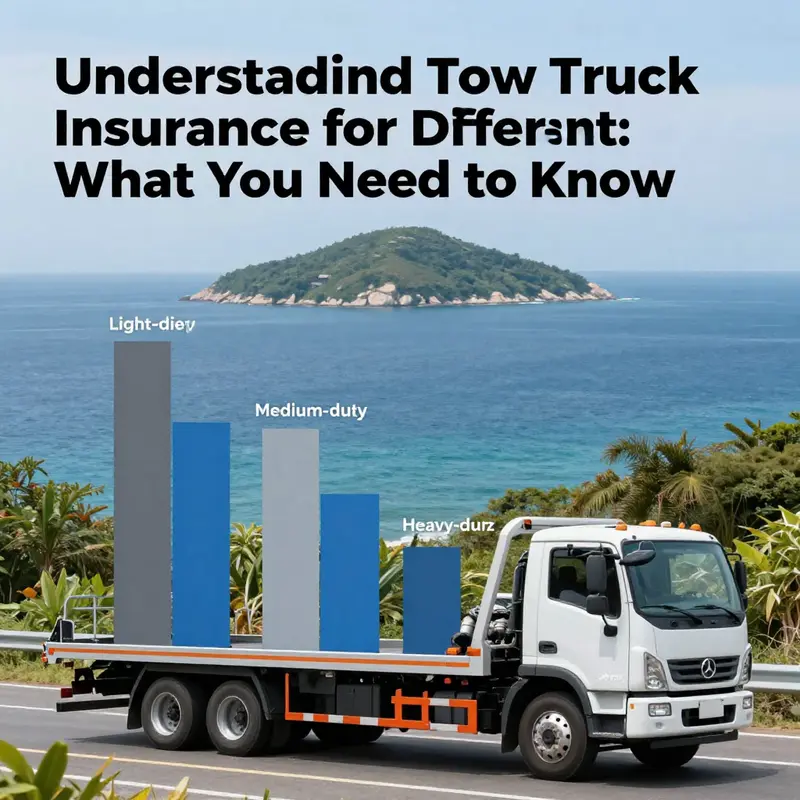
Within that framework, several levers consistently tilt the price upward or downward. The type of towing underway is a primary driver. Light-duty towing—think everyday roadside assistance for passenger cars and small commercial vehicles—carries a different risk footprint than heavy-duty towing, which involves large wreckers and stubborn recoveries, often in high-stress environments. Light-duty work tends to produce fewer catastrophic incidents but still carries substantial liability, especially when close to dense traffic or on high-demand urban corridors. Heavy-duty operations, by contrast, introduce not only higher potential for physical damage to the vehicle being towed but also greater exposure to load shifts, equipment failures, and complex recovery scenarios that tax both driver skill and equipment reliability. Medium-duty towing sits in between, commonly handling delivery vans, box trucks, and mid-size commercial fleets. Each tier carries its own mix of hazards—from breakdowns in restricted spaces to long highway runs—that insurers weigh when pricing.
Another enduring determinant is the driver roster. Experience matters, especially when the work includes mounting heavy loads, securing slippery vehicles, or performing risky maneuvers near traffic. Newer drivers often carry higher premiums because their risk profile is less proven, even if their skill level is strong. Conversely, seasoned operators with documented safe driving records and robust training tend to generate better rates, because insurers see them as lower risk and more likely to control loss potential. The effect of experience is not just about one individual; it’s about the culture of safety across the entire team. A fleet that can demonstrate comprehensive onboarding, ongoing in-service training, and a track record of near-miss reporting and proactive risk mitigation will enjoy more favorable terms than an operation that treats safety as an optional add-on.
Geography also plays a pivotal role. Urban settings with heavy traffic, dense tolling, and a higher incidence of collisions push insurance costs upward, while rural routes and regions with lower accident rates can yield modestly lower premiums. But geography is not merely a matter of city versus country. Local regulations, weather patterns that influence roadside demand, and even the frequency of tow calls during peak seasons all shape the insurer’s view of risk weeks, months, and years into the future. A business model that concentrates activity in urban cores or near high-crime corridors might see steeper increases in premiums than one that operates in more temperate, lower-traffic zones, all else equal.
The coverage itself is a significant price lever. At a foundational level, liability coverage is the core quantity policyholders expect to meet the legal and financial responsibility that comes with operating a tow service. Higher liability limits translate directly into higher premiums, as the potential payout in a worst-case scenario grows. Then there is physical damage coverage, which protects the tow truck against collision, theft, fire, and other perils. In a towing operation, physical damage coverage can be particularly important given the demanding nature of the work and the susceptibility of heavy equipment to impact during loading and unloading, jackings, or winching operations. Beyond these basics, many operators opt for additional layers of protection such as on-hook coverage, which addresses the risk associated with customers’ vehicles being on the truck or in the care of the operator, and garage-keepers coverage, which guards against damage to customers’ vehicles while they are in the operator’s custody at a shop or lot. Each of these coverages adds cost but also closes gaps in risk exposure that could otherwise trigger a costly claim.
The risk profile is further refined by the level of coverage limits and the choice of deductibles. Higher deductibles reduce premiums by sharing more risk with the policyholder, but they also require more cash on hand when a claim arises. Lower deductibles ease the hit at claim time but raise the annual cost. The optimal balance depends on the operator’s cash flow, the reliability of the fleet, and the expected frequency of incidents. It is not merely a mathematical calculation; it is a strategic decision about how to allocate resources for risk management. Operators who invest in proactive safety programs—regular vehicle maintenance, pre-approved towing procedures, and standardized load-securement practices—often unlock premium reductions by demonstrating to underwriters that they are actively compressing the risk envelope.
Another layer of consideration lies in the fleet’s safety and claims history. A spotless record with few or no claims sends a strong signal to insurers that the operation is predictable and well controlled. A history punctuated by frequent incidents, or by unusually large claims, signals elevated risk and typically yields higher premiums. The impact of past claims can persist for years, influencing not only current pricing but also the availability of preferred terms. For fleets that have weathered a string of high-cost events, it may be tempting to pursue aggressive coverages; for others, strategic consolidation of risks and a relentless focus on loss prevention can yield long-term savings.
In the practical realm of cost management, many operators find substantial value in bundling insurance with other risk management services. When a business can present a cohesive risk profile—combining commercial auto coverage with liability, property, and even business interruption protections—it stands a better chance of securing favorable terms through multi-policy discounts and a more attractive overall risk picture. The bundling approach signals to insurers that the operator is thinking holistically about exposure, not just the risk of one vehicle or one call. This holistic approach also dovetails with broader fleet management strategies. Insurance decisions align with maintenance schedules, driver training programs, incident reporting systems, and emergency response protocols, each element reinforcing the other to curtail the frequency and severity of losses.
The road to an accurate quote is not a mystery, but it is a process that benefits from preparation. Most commercial auto insurers and specialized brokers will ask for a detailed view of the operation: the number and type of tow trucks, wheel-to-wheel specs including lift capabilities, typical and maximum towing weights, the nature of the assignments (emergency roadside, planned repossession, accident recovery, fleet maintenance), average annual miles per vehicle, and the density of service areas. They will request information on drivers, including the proportion of seasoned to newer operators, training certifications, and any safety programs in place. They will want a clear ledger of the coverage that reflects the business’s risk appetite—how much liability to carry, how much physical damage to insure, whether on-hook or garage-keepers coverage is needed, and what deductible the operator is prepared to shoulder. They will also look for a history of claims and a timeline of safety initiatives. With this data, a broker or insurer can tailor a plan that aligns with the operator’s risk tolerance and budget, producing a precise premium rather than a rough estimate.
Beyond the mechanics of pricing, there is a discipline of risk reduction that quietly drives long-term savings. Regular maintenance reduces the likelihood of mechanical failure on the road, which in turn lowers the risk of claims tied to vehicle breakdowns or on-scene incidents. Pre-job risk assessments before every call, standardized load securement protocols, and clear procedures for winching and recovery operations help ensure that the team behaves predictably under pressure. Telematics-enabled monitoring of driver behavior and vehicle health can provide actionable data that both improves safety and informs premium decisions. Insurers often view telematics as a direct line to loss prevention, and fleets that demonstrate strong data-driven risk management may enjoy reduced premiums or more favorable terms as part of a broader strategy to reduce the total cost of risk.
The picture, then, is not a single line on a worksheet but a mosaic of interlocking decisions: vehicle class, operating geography, driver experience, coverage mix, deductible choice, and a culture of safety. A responsible operator who wants to control costs will approach insurance as a risk management project rather than a distant expense. They will document the safety programs that keep workers out of harm’s way, they will maintain vehicles meticulously to prevent breakdowns that could spawn costly claims, and they will assemble a credible claims history that signals to underwriters that the business is well managed. The result is not just a lower premium; it is a tighter, more resilient operation that can respond to the unpredictable realities of roadside work with greater confidence.
For readers seeking deeper, field-tested perspectives on managing a tow business and understanding the practical dynamics of risk, the Island Tow Truck community provides a valuable resource. The blog offers hands-on insights drawn from the day-to-day challenges of towing and recovery, including how operators balance service expectations with risk considerations. Visiting the blog can help ground the financial side of insurance in real-world practice and illustrate how risk management decisions translate into lower, more predictable costs over time. theislandtowtruck.com/blog.
As you converge on an insurance decision, remember that the numbers you see on a renewal quote are a function of a broader story—the story of how your fleet operates, how you train and supervise your drivers, how you maintain your equipment, and how seriously you take risk management. The goal is to translate that story into a premium that reflects your actual exposure and, over time, to reduce that exposure through steady improvements. The value of insurance, after all, is not merely financial protection when something goes wrong; it is a disciplined framework that encourages safer practices, steadier cash flow, and a more reliable service offering for customers who depend on you to be there when they need help most. External factors, like local weather patterns, traffic density, and regulatory environments, will continue to shape costs, but the core levers—vehicle type, driving experience, coverage choices, and proactive risk control—remain firmly in your hands.
To close this exploration with a practical sense of scale, a single light-duty tow vehicle operating in a moderate market with standard liability limits and typical deductibles will generally fall within the lower end of the premium range, yet even there, the exact figure is a function of the operator’s discipline and planning. A heavy-duty fleet with multiple wreckers, high-use hours, and a broad service footprint will see premiums that reflect the greater exposure, and those numbers can be daunting unless counterbalanced by robust risk reduction measures and smart coverage selections. The key is to build a transparent picture of risk for underwriters, articulate your safety ecosystem, and demonstrate that you are actively managing the levers that influence loss potential. In return, you will not only secure insurance that fits your budget but also establish a foundation for a safer, more sustainable towing operation.
External resource: https://www.iii.org
Tow Truck Insurance Demystified: How Coverage, Fleet Size, and Risk Shape Your Premiums
Tow truck insurance sits at the intersection of commercial auto risk and the specialized demands of roadside recovery. It is not simply a larger version of standard auto coverage, but a tailored product that rewards prudent risk management and aligned coverage decisions. For operators who depend on tow vehicles to keep roads moving, understanding what drives cost, what protections are available, and how to balance price with real protection is essential. The true value of coverage emerges not in a single premium figure but in the way a policy aligns with a fleet’s operations, the loads it carries, the environments in which it works, and the standards it maintains for driver training and equipment upkeep. In this sense, tow truck insurance is less about chasing a number on a quote and more about constructing a resilient shield around a business that routinely faces high exposure to property damage, bodily injury, and complex liability claims.
Cost is influenced by a mix of objective facts and business realities. The type of towing service a company offers matters. A light duty operation that handles small recoveries and simple transport tasks will see different risk profiles than a heavy duty outfit that routinely moves large vehicles, performs winching in challenging weather, or operates near busy highways at all hours. The fleet size also plays a role. A single truck versus a small or large fleet changes the calculus because insurers weigh aggregate exposure and loss history. Geographic location is another critical variable. Urban centers with higher traffic density and more frequent incidents tend to push up premiums, while rural areas with lower claim frequency can reduce them. The specific coverage selections and policy limits chosen by the business will tilt the price in the same direction as the level of protection. Finally, the company’s claims history matters. A clean record suggests disciplined operation and tends to yield more favorable pricing, while a history of frequent or severe losses signals higher risk and can raise premiums.
A practical way to frame expectations is to consider typical ranges while recognizing the wide dispersion that can occur. For a single tow truck, premiums commonly fall within a broad band, often cited as roughly between one thousand and three thousand dollars per year. This baseline reflects general commercial auto coverage, liability, and basic physical damage protection. When a fleet is involved, or when operations carry higher risk, the per vehicle cost can rise. In fleets with several trucks where drivers have varying levels of experience, costs might cluster around two thousand five hundred to four thousand dollars per vehicle per year. For newer businesses, or for operations with more stringent loss histories, premiums can exceed five thousand dollars per vehicle. These ranges are not guarantees; they are directional markers that help operators plan budgets and negotiate with insurers. The nuance, of course, is in the details: what type of towing is being performed, how much time the trucks spend on the road, and how much risk the operator is willing to transfer to an insurer through higher deductibles or broader coverage.
To understand why these numbers exist, it helps to unpack the main components of tow truck coverage. At the core is general liability, which covers injuries and property damage to third parties arising from the operation or use of the tow vehicle. This is the safety net that protects a business from lawsuits stemming from an accident that involves the tow truck while it is working or traveling to a scene. Then there is physical damage coverage, which includes both comprehensive and collision. Comprehensive covers non collision hazards such as fire, theft, vandalism, and weather-related damage, while collision pays for damage to the tow truck when it collides with another vehicle or object. For a business that frequently rents or borrows vehicles, hired auto liability coverage becomes important, guarding against damage caused by those borrowed or rented machinery used in the course of operations.
Cargo coverage is another essential piece. It protects the vehicles or goods being towed, which is particularly relevant for operators who handle battered or precious cargo, or who transport vehicles under repair. Optional coverages add additional layers of protection and risk management. Roadside assistance coverage can extend support in the field during a breakdown or recovery, while uninsured/underinsured motorist protection can bridge gaps if the other driver lacks adequate insurance. Employers liability coverage protects the business in the case of injuries to employees while performing their duties, a consideration that grows more important as crews expand and job sites become more dynamic.
Within this framework, specialized endorsements can tailor protection to the realities of towing and recovery work. Towing and recovery coverage, for instance, addresses risks unique to the act of towing, such as equipment failure or improper loading that can lead to further incidents after a scene is secured. These endorsements acknowledge that the task of moving a vehicle or recovering a wreck is not purely routine driving; it includes the judgment calls, the gear used, and the potential for secondary damage if procedures are not followed or equipment is misused. For operators who depend on winches, straps, dollies, and other recovery gear, such endorsements can be the difference between a covered loss and a costly out-of-pocket expense.
Given this mosaic of coverages, the role of the broker becomes clear. A seasoned broker who understands the nuances of tow operations can translate a business’s daily realities into a policy that offers adequate protection without paying for coverage features that do not align with actual risk. A driver who has extensive on road experience and a clean record will typically influence the price in a favorable direction, but the broader picture matters more. The broker will look at the fleet’s scale, the type of tows performed, the regions in which the work takes place, and the claims history. They will also assess the company’s risk management practices, such as driver training programs, maintenance standards, and loading procedures. A good broker will also help a business strike the right balance between premium cost and the value of risk transfer by reviewing deductibles, policy limits, and endorsements that address the specific exposures faced on every recovery operation.
Risk management goes hand in hand with pricing. Operators should see insurance as part of the cost of doing business, but not as a passive expense. A proactive approach to risk reduction can yield meaningful premium relief over time. Training programs that emphasize safe driving, situational awareness, and proper vehicle handling are fundamental. Regular maintenance of tow trucks, winches, and other recovery gear reduces the likelihood of mechanical failures that can precipitate losses. Proper loading techniques, securing towed vehicles to prevent shifting or damage during transit, and compliance with industry best practices can all influence risk profiles. Insurance providers will look closely at these practices when underwriting a policy, and the presence of a structured risk management program can translate into more favorable terms or lower deductibles.
Location and operation dynamics further shape pricing. An operator working in a market with dense traffic, frequent urban tow operations, and rapid response demands faces different risk characteristics than a shop serving a rural area with slower call volumes. Time of day, weather patterns, road conditions, and the typical distance traveled to a scene all contribute to the insurer’s sense of exposure. The coverage mix chosen by the business will reflect these dynamics. For example, a company engaged in heavy rescue or heavy duty towing may place greater emphasis on physical damage protection for the heavy equipment involved and specialized endorsements for recovery operations. This can raise the premium but also ensure that the most valuable assets and high risk scenarios are adequately protected. Conversely, operators who bundle core protections and commit to robust loss control can often secure attractive premiums relative to their risk level.
For operators who want to move beyond anecdotal expectations, getting quotes requires presenting a clear and complete view of operations. Insurers and brokers will want a snapshot of the fleet, including the number of tow trucks, their types (light duty, heavy duty, flatbed, wrecker), and the typical hours of operation. They will seek details about drivers, including experience levels, license status, and any incidents or claims in the last few years. The geographic spread of assignments matters, as does the nature of the tows performed, whether it is vehicle recovery, accident scene management, or roadside assistance. A straightforward compilation of these elements helps ensure that quotes are apples to apples, enabling a meaningful comparison of total cost of risk rather than a glossy price tag that omits important exposures.
In the realm of quoting, deductibles play a pivotal role. A higher deductible usually reduces the premium, but operators must weigh the cost savings against the potential out of pocket when incidents occur. The choice of policy limits also matters. A higher general liability limit, for instance, may be prudent for operators who work near critical infrastructure or on property with high replacement costs, but it comes at a premium. The same logic applies to physical damage, where the chosen limits determine how much of a loss the business would bear before insurance coverage kicks in. The decisions around these parameters should be made in light of risk tolerance, cash flow, and the scale of potential losses.
Beyond the mechanical act of selecting coverages and limits, the value of a policy lies in its capacity to deliver timely, predictable protection after a loss event. A robust coverage set should cover the direct costs of a recovery incident, the cost of repairs to the tow truck, and the liability it may carry for third party injuries or property damage. It should also address scenario specific risks, such as the potential for cargo damage, the need to handle a vehicle that is not currently operable, or the consequences of an improper load that worsens a scene. When these elements cohere, the policy does more than soften the financial blow; it preserves the business’s ability to respond quickly to calls, maintain a fleet, and retain the trust of customers who rely on the operator during vulnerable moments on the road.
The process of balancing cost and protection is rarely a one time exercise. Premiums shift with changes in operations, claims histories, or coverage needs. A growing fleet may need to revisit its endorsements and limits; a business that expands into a new service area may encounter different risk patterns; a driver development program may mature and improve a driver’s record, which could eventually translate into lower premiums. In other words, tow truck insurance is dynamic, not static. It rewards ongoing attention to risk and a willingness to adjust strategies as the business evolves. The chapter on coverage options and cost dynamics emphasizes that a well protected business is not simply priced to reflect past losses; it is priced to enable smarter risk taking and sustainable growth.
For operators who want a practical path to better pricing, consider building a holistic risk profile that links operations, training, and maintenance to the selections in the policy. Start by documenting the types of tows performed and the terrain where they occur. Track the average miles driven per shift and the typical weather conditions encountered. Record the experience and training levels of each driver, along with any certification programs completed. Maintain a well organized maintenance log for all tow trucks and recovery equipment, including winches, chains, hooks, and lighting. This documentary backbone becomes a powerful companion during underwriting, because it translates subjective risk perceptions into objective data. It also provides a foundation for ongoing review, allowing a business to identify where improvements reduce exposure and potentially lower premiums over time.
To reinforce the link between insurance planning and broader fleet resilience, consider the value of integrating risk management resources into your standard operating procedures. The recovery and emergency response practices that keep roads clear also intersect with insurance outcomes. A fleet that can respond quickly, safely, and professionally to incidents can mitigate the severity of losses and reduce downtime. For operators looking to deepen this integration, a resource such as essential fleet emergency response strategies offers guidance on building coordinated, proactive plans that align with insurance objectives. You can read more about these strategies at the linked page. essential fleet emergency response strategies. This is not a commitment to a particular vendor or program, but a pointer to practical approaches that help align operational discipline with financial protections.
In addition to internal risk discipline, it is wise to engage with sources that provide a wider view of how premiums are evolving and what coverage gaps commonly appear in tow operations. National or industry level discussions about commercial auto insurance trends can shed light on rate movements, regulatory considerations, and emerging risk patterns. When evaluating a policy, operators should compare not only line items in a quote but also the insurer’s capacity to respond to a loss in a practical, timely way. A credible insurer will offer access to loss control resources, guidance on incident response, and a straightforward process for filing and adjusting claims. The interplay between service quality after a loss and the policy’s economic protections often determines the real value of insurance to a tow business.
In closing, the cost of tow truck insurance reflects a sophisticated balance of exposure, coverage choices, and risk management maturity. The pricing knobs—driver experience, fleet size, geography, coverage levels, and endorsements—are not simply levers to be pulled. They are evidence of a business’s approach to risk and its readiness to operate in challenging environments. A thoughtful strategy combines solid general liability and property protection with tailored endorsements that address the unique risks of towing and recovery. It also acknowledges that the premium is a price for safer operations, better recovery outcomes, and less downtime after a loss. For operators who want to move from a price-centric view to a protection-centric view, the goal is to build a policy that mirrors a well-run, resilient business rather than a policy that merely minimizes the out of pocket spend on a bad year.
Further reading and additional context can help you refine your approach. If you want a deeper look at current rate trends and coverage nuances in tow truck insurance, you can consult the Insurance Information Institute’s overview. This external resource provides a broad landscape view that complements the practical, operator-level considerations outlined here. https://www.iii.org/article/tow-truck-insurance
Final thoughts
Tow truck insurance is not merely a bureaucratic requirement; it is a foundational element that enables local auto repair shops, car dealerships, property managers, and fleet operators to conduct their business effectively and securely. By recognizing the factors influencing insurance costs—like vehicle type, geographic location, and driver experience—you can make informed choices for your operations. Additionally, being aware of the average costs associated with different types of towing scenarios allows you to budget appropriately. Finally, understanding the specific coverage options available ensures that you are neither underinsured nor overpaying for services you don’t need. Equip your business for success by understanding and investing wisely in your tow truck insurance.