Navigating vehicle trouble can be stressful, especially in island settings where resources may feel limited. One common question that arises is whether to tip a tow truck driver. As we break down various scenarios and cultural attitudes, you’ll discover that the decision often hinges on context. This article will guide you through situations when tipping may or may not be expected, whether through roadside assistance or exceptional service during challenging conditions. We will delve into how the norms vary across our scenic islands, informing local auto repair shops, car dealerships, property managers, resort operators, and commercial fleet managers about best practices that show gratitude while maintaining professionalism.
Reading the Moment: Navigating When to Tip a Tow Truck Driver and What It Signals
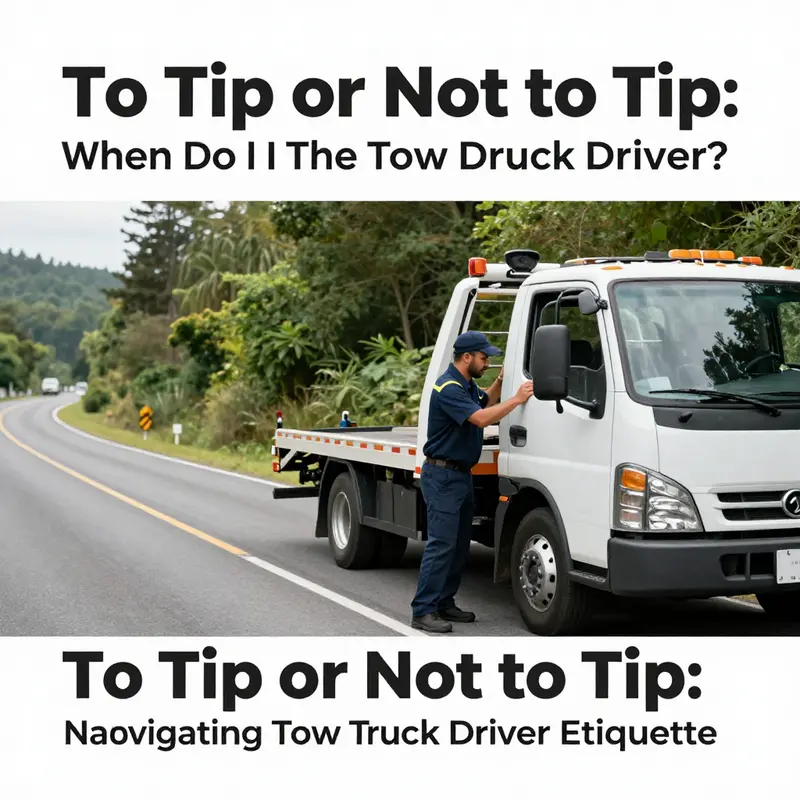
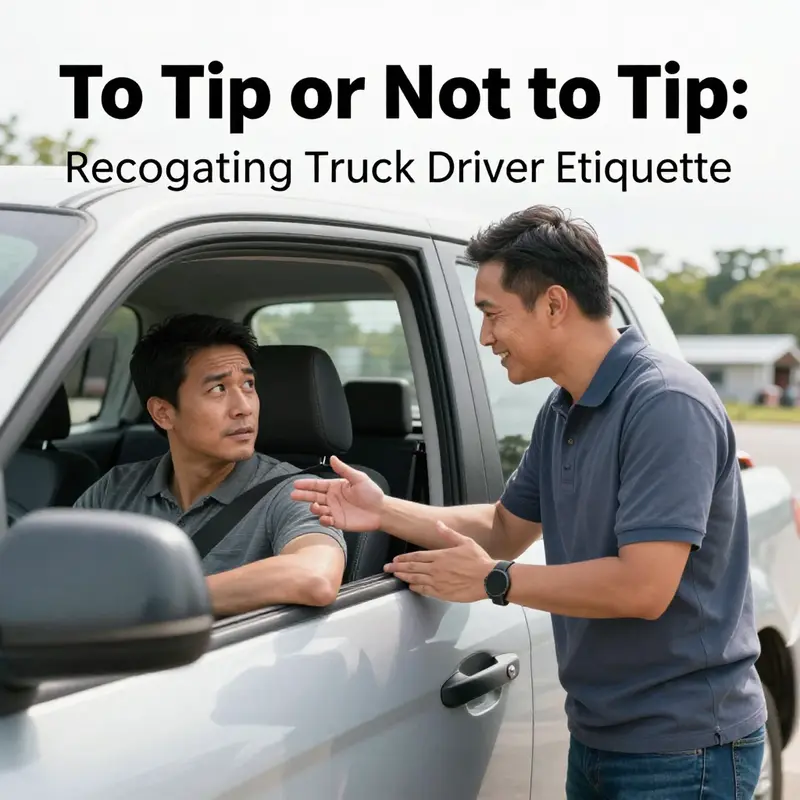
When you call for a tow, your mind tends to fixate on the immediate problem: getting your car off the road and back to safety. The question of tipping often drifts in as an afterthought, or it may not make it onto the table at all. The reality is simpler and more nuanced than a fixed rulebook. Tipping a tow truck driver is not typically required or expected in the standard course of service. The fee you pay is designed to cover the driver’s labor, fuel, and equipment use. Yet human service lives in the gray area between policy and personality, and in that gray area there are moments when a small tip can feel like the right thing to do. The decision rests on context, not a universal standard, and it’s worth understanding the language of those moments so you can respond with calm, courtesy, and fairness, rather than reflex or resentment.
In the majority of routine roadside towings—the kind where a driver arrives, secures a vehicle, and transports it to a shop—the absence of tipping is standard. Insurance-towed vehicles or memberships in roadside-assistance programs often come with explicit or implicit expectations that tipping isn’t necessary. The provider has set rates, and the transaction terms are framed within a policy or plan. In such cases, a tip could be awkward, and more importantly, it could complicate the driver’s relationship with the company. The industry has learned to price the service with the assumption that coverage, not gratuity, covers the labor. This is not to say there is no room for generosity, merely that generosity is situational rather than obligatory.
And yet people do tip, and for good reason. The moments that warrant extra appreciation tend to cluster around service that exceeds the ordinary. Exceptional responsiveness—like a driver arriving in an emergency or minimizing the time you spend waiting in a stressful moment—creates a kind of emotional debt you may want to acknowledge. The same is true when conditions complicate the towing job. If a vehicle is trapped in a ditch, perched on an embankment, or otherwise in a location that demands extra logistics, specialized equipment, or additional man-hours, a tip can reflect gratitude for the extra effort. In such scenarios the gesture isn’t about buying better service next time, but about recognizing a job well done under challenging circumstances.
Regional differences also shape tipping norms. In some areas, tipping a tow driver is more common and accepted, often reflecting a long-standing local custom. In others, it’s comparatively rare or discouraged by company policy. If you’re instructed to avoid tipping by the provider, that instruction should be followed for practical and ethical reasons. If, on the other hand, you find yourself in a place where tipping is customary, a modest amount can be a meaningful sign of appreciation without being an obligation. The advice is simple: let local norms and the driver’s conduct guide you, not a one-size-fits-all rule.
Distance and difficulty tint the decision as well. A long-distance tow or one involving difficult terrain—pushing through heavy traffic, navigating steep grades, or operating under tight timelines—often warrants a greater degree of appreciation. The effort involved in manhandling a vehicle into a trailer, securing it safely, and coordinating with traffic or bystanders requires skill, patience, and clear communication. If the job demands repeated discussions about safety, delicate maneuvering, or the use of specialized equipment, a tip becomes a genuine acknowledgment of the driver’s skill and perseverance. In such circumstances, a figure in the modest range—often cited as $10 to $20—tends to be viewed as thoughtful rather than extravagant. But even here, the driver’s demeanor matters more than the amount. A respectful, no-pressure approach is always appropriate, and any tip should be offered with a brief note of thanks that emphasizes safety and care.
What about the intention behind the gesture? Tipping can also function as a bridge between a tense moment and a sense of human connection. When words fail to capture your appreciation for a driver who remains calm, explains the process clearly, and keeps everyone safe, a tip becomes a practical token that reinforces those positive traits. It’s not a contract or a promise of future favors; it’s a momentary acknowledgment that the service went beyond what was required. The driver is more than a line item on a receipt. They respond to your presence with a blend of professionalism and empathy, and in those moments a tip mirrors the courtesy you would extend to any professional who helps you see through a difficult and precarious morning.
An important layer to consider is the company’s policy itself. Some tow operations encourage tipping as part of the independent contractor model, while others may discourage or prohibit it to maintain consistency across shifts and avoid disparities between drivers. When you’re unsure, a quick glance at the policy, or a direct question to the dispatcher or company representative, can save you from an awkward exchange. If tipping feels right in your body, and if the driver has urged discretion about it, the simplest path is to offer the tip in cash directly to the driver or to place it in a saved envelope if you’re in a public space. Handing a tip with a sincere expression of thanks often carries more weight than the amount itself. If you’re in a conversation where tipping would disrupt the flow—perhaps in a crowded scene or when another passenger is anxious—offer a quiet tip later via a card or a brief personal note left with the driver’s service acknowledgment.
Of course, there are practicalities to keep in mind. Cash remains the most immediate and universally accepted form of tipping, but many drivers will accept cards or mobile payments if that’s all you have. The key is to avoid pressuring the driver or making the moment uncomfortable. It’s perfectly acceptable to say something like, “I appreciate how you handled this today. Here’s a small thank-you for your effort.” Then present the tip with a calm, even tone. If you choose not to tip, you can still convey your appreciation through direct compliments about the driver’s professionalism, a quick positive review with the company, or a note to the dispatcher about the driver’s helpfulness. These gestures can carry as much weight as a monetary tip over time, contributing to the driver’s sense of being valued in a demanding role.
There are additional layers of consideration that can help you navigate this decision more confidently. First, assess the quality of service from a safety and professionalism standpoint. Was the driver courteous, clear in their explanations, and meticulous about safety checks? Did they comply with local regulations, wear appropriate PPE, and demonstrate careful driving under pressure? If the answer is yes, the incentive to recognize those qualities grows stronger. Second, reflect on the timing and duration of the service. If you were rescued in a moment of danger or endured a long wait due to traffic, weather, or mechanical complexity, a tip can acknowledge the extra energy expended by the driver. Third, respect local norms. If you’re in a region where tipping is normal, a higher gesture might be fitting, while in places with a stricter no-tipping culture, a smaller amount or a straightforward expression of gratitude may be more appropriate.
Even connections beyond the immediate moment matter. A tip, while small, can reinforce positive behavior for other motorists who observe it. It can shape the social script around tow services by signaling that people value the driver’s skill and dedication. This matters because tow workers face the same pressures and uncertainties as many service professionals: unpredictable hours, hazardous environments, and the constant need to balance speed with caution. Acknowledgment in the form of a tip, or even a verbal thank-you, can contribute to a culture of respect that helps drivers feel recognized and motivated to maintain high standards.
In the end, the core message is surprisingly straightforward: tipping is not mandatory, but it can be a meaningful gesture in the right moment. The most reliable compass is your own judgment, tempered by local customs, company policies, and the driver’s conduct. If you choose to tip, do so in a way that preserves dignity and safety for everyone involved. If not, follow up with sincere words and a constructive note to the company, and consider sharing a positive evaluation that highlights what the driver did well. The outcome you want—getting your vehicle to safety without further incident—depends more on clear communication, safe practices, and timely service than on any tip amount.
For readers who want to see how fleets manage emergencies and the broader ethics of rapid-response service, you can explore related discussion on essential fleet emergency response strategies. This resource offers a bigger-picture perspective on how organizations coordinate urgent services and how individual acts of appreciation fit into a culture of safety and reliability. essential fleet emergency response strategies
Beyond tipping, there are practical ways to ensure your tow experience is smooth and respectful. Confirm the GVWR (gross vehicle weight rating) of the vehicle being towed and ensure that the driver’s license class aligns with the vehicle’s classification. This alignment is more than paperwork; it upholds safety standards and helps prevent potential legal issues. By proactively verifying these details, you reduce the risk of complications that can complicate both the service and your personal safety. A thorough check demonstrates that you are thinking ahead and valuing the driver’s emphasis on secure, compliant maneuvering. It also signals that you respect the professional boundaries and responsibilities that define a tow operation. In the end, the best outcome is a safe tow, a clear sense of gratitude when due, and a process that respects everyone involved. The car is moved, the road is kept safe, and the human element—trust, courtesy, and mutual respect—remains at the center.
External resource for broader context on equipment and industry considerations can be consulted for readers who want to understand the mechanics and logistics behind towing at scale. This resource discusses the types of equipment and the development of best practices in the field, providing a broader view that complements the tipping decision by grounding it in professional standards. https://www.towtruckpros.com/best-rollback-tow-trucks/
Tipping in the Towed World: Navigating Insurance Tows and Roadside Assistance with Etiquette
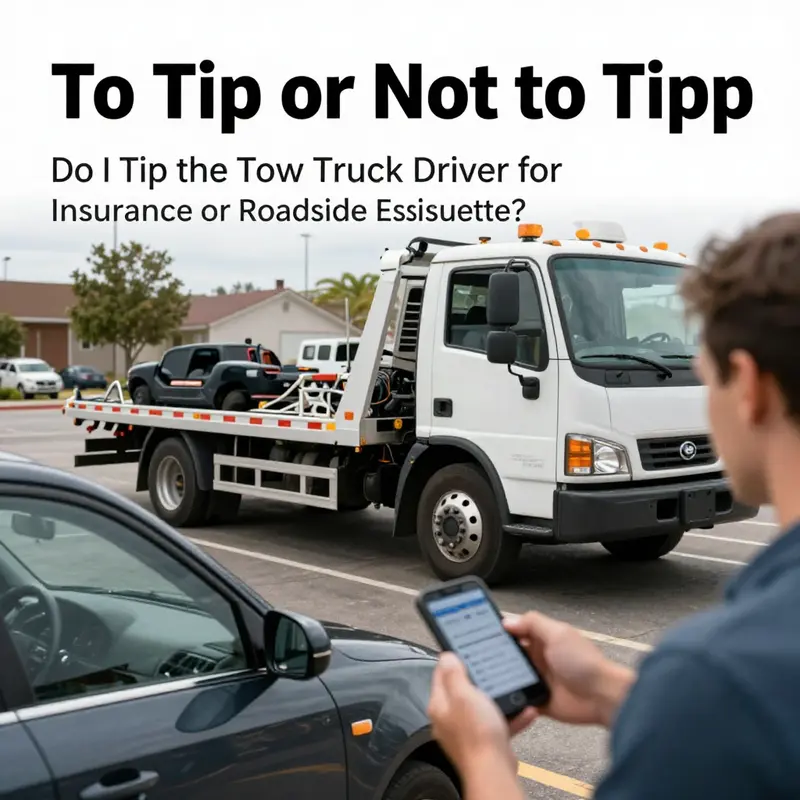
Towing is one of those moments when a plan suddenly stops and the road becomes a stage for decision making under stress. The question of whether to tip the tow truck driver lands squarely in that moment. People want to do the right thing, to show appreciation for a job done under pressure, while others worry that tipping could imply an expectation that isn’t universal. The truth is simpler than it sounds: tipping is typically not required for standard towing, especially when the service is arranged through insurance or roadside assistance programs. Yet the door isn’t closed to a small gesture of gratitude when the service goes beyond the ordinary. Understanding the context, the service model, and the driver’s situation helps you decide not only if you tip, but how to tip in a way that feels appropriate, respectful, and practical for everyone involved.
When a car breaks down and a tow arrives to haul the vehicle to a repair shop or a garage, the charge you see on the bill already reflects the driver’s labor, the fuel used, and the equipment consumed. In these standard tow scenarios, tipping isn’t customary. The company’s rate structure is designed around a fixed price for labor and the use of specialized equipment, so the driver’s compensation is built into that transaction. This is especially true when the tow is coordinated through a roadside assistance program or through an insurance claim. In those channels, the policy or the membership fee is intended to cover the service, and workers are commonly paid by the company rather than relying on tips from customers. In such cases, tipping isn’t expected and isn’t required. A calm, matter-of-fact approach to payment and appreciation is usually the clearest path forward. If you want to be considerate, you can still express gratitude in words or through a brief note to the dispatcher, which is often valued without affecting the transactional dynamics of the tow.
Nonetheless, the road has room for exceptions. Exceptional service is the most common justification for tipping. If the driver goes beyond the call of duty, tipping becomes a meaningful, tangible sign of appreciation. Consider situations in which the driver helped you maneuver the vehicle out of a tricky spot, or offered practical guidance that could prevent further damage or delay. Maybe the recovery required unusual care in a difficult location, or the driver stayed calm and composed in a highly stressful moment, guiding you through decisions with patience and clarity. In these moments, a tip communicates recognition. It’s not a mandate, but it is a sincere gesture that a driver will likely remember. If the service was efficient yet the circumstances were unusually challenging—say a recovery operation in a ditch, on a steep embankment, or in a tight, hard-to-reach area—a tip becomes a small thank-you for the extra effort and risk the driver took on your behalf.
There’s also a difference to consider between long-distance or difficult towing and the more routine, short-haul service. A long tow, a recovery from a remote location, or a scenario that required the driver to deploy specialized equipment can place substantial additional labor on a single trip. In these cases, a tip is a thoughtful acknowledgment of the extra work and responsibility the driver shouldered. The amount is typically modest, but meaningful—often in the range of a modest contribution that feels appropriate given the complexity of the job. Some drivers and small, locally owned outfits value these gestures more because personal service and relationship-building are central to their business model. In such settings, a tip within a reasonable range—commonly around ten dollars or more, depending on the scope of the work—can be both welcomed and appreciated.
The cultural and logistical landscape also matters. Independent operators or smaller companies, which are common in many communities, often view tipping as a natural part of customer gratitude for superior service. In those contexts, a tip can be a practical incentive for maintaining high standards and personal attention. A tip in the range of ten to twenty dollars is not unusual when service has exceeded expectations, and in some cases even a smaller token is meaningful when the driver has offered additional, personalized assistance. It’s important to calibrate your tip to the service you received, not to the price of the tow. A driver who spends extra time explaining options, answering questions, or helping you arrange the next steps can sometimes justify a slightly larger gesture, while still staying within a reasonable limit.
If you decide to tip, there are practical considerations that can keep the process simple and respectful. Cash remains the most immediate and straightforward method, but many drivers also accept contactless payments or tips through the company’s payment interface when available. The crucial point is to tip directly to the driver who performed the service, rather than to the company or dispatcher, to ensure the person who delivered the help receives it. If cash isn’t convenient or you’re unsure about how to proceed in a pinch, a heartfelt note of thanks can be meaningful, especially if you’re unable to offer a monetary tip. In any case, a tip should be proportional to the impact of the service: small, thoughtful, and appropriate to the complexity and stress of the moment. You might reflect on how you felt during the interaction—the driver’s courtesy, the clarity of their explanations, and the degree to which they helped you navigate your next steps.
The decision to tip also hinges on your local norms and the specific company’s practices. Some operators are part of larger chains with standardized pay structures that discourage tipping, while others operate as lean, independent shops where tips are more customary. In those environments, a tip can be a routine sign of appreciation, akin to a tip for good service in many other service industries. If you’re unsure, a quick and courteous question to the driver or to the dispatcher can help you interpret the situation. A simple, “I appreciated your help. Is it okay if I tip you directly?” goes a long way toward clarity and respect. This approach avoids any ambiguity and aligns with professional etiquette as well as personal comfort.
For readers who want broader context beyond personal experience, reputable outlets and guides discuss tipping etiquette in towing as part of a larger discourse on service appreciation. While the specifics can vary by region and company, the core message remains consistent: tipping is not obligatory, but a well-timed, modest tip can acknowledge service that goes beyond the ordinary. If you’d like to explore this topic further from a broader perspective, consider consulting established coverage on towing etiquette and tipping practices in reputable media sources. The discussion often emphasizes that the most important elements are respect, fairness, and the driver’s safety and well-being. For a broader discussion, see The New York Times’ guide on towing etiquette.https://www.nytimes.com/2023/10/15/your-money/tow-truck-tipping-etiquette.html
In practice, you can think of tipping as a bridge between policy and personality. The policy is clear enough: tipping isn’t expected for standard insurance or roadside-assisted tows. The personality, however—the tone you set with your tip—can influence how the driver feels about the encounter and possibly how future customers are treated in the same circumstances. If you choose to tip, do so with the same care you would show in any respectful confrontation with a service professional: face-to-face, brief, and sincere, with the tip delivered directly and the driver’s time respected. If you’re in a position where you’re receiving help in a particularly hazardous or uncomfortable environment—on a dark highway shoulder in poor weather, or with uncertainty about what to do next—the kindness of a tip is often a welcome reminder that someone understands the pressure you’re under and has contributed to your safety and peace of mind. The gesture costs you little and supports the people who keep our roads functioning when things go wrong.
For further reading and continuing perspectives on towing practices and customer expectations, you can explore additional resources and community discussions at The Island Tow Truck blog. This resource offers broader reflections on towing etiquette and the everyday realities of those in the field, helping readers develop a more nuanced sense of when a tip is appropriate and how service quality shapes that decision. The more you understand the dynamics of towing—from the economics of the service to the personal commitment of the driver—the more confident you’ll feel navigating these moments with courtesy and practicality.
In sum, tipping a tow truck driver is not a mandatory component of the transaction. Insurance-backed or roadside-assisted tows usually do not require tips, and drivers are compensated through the company’s pay structure. When service rises above the call of duty, or when the job demands unusual effort or risk, a small tip—usually in the range of five to twenty dollars—can be a meaningful expression of gratitude. The exact amount should reflect the quality of service, the difficulty of the task, and your own financial ability, not a rigid rule. If tipping feels inappropriate in a given moment, a sincere thank-you note or a quick call to the company to acknowledge the driver’s professionalism can be just as impactful. The key is to respond with fairness, clarity, and respect for the person who made a stressful situation safer and more manageable. By approaching tipping with thoughtful consideration rather than habit or obligation, you honor the service you received and support a workforce that often operates under demanding conditions.
null
null
Long-Distance Towing and Tough Terrain: A Thoughtful Guide to Tipping Tow Truck Drivers in Challenging Situations
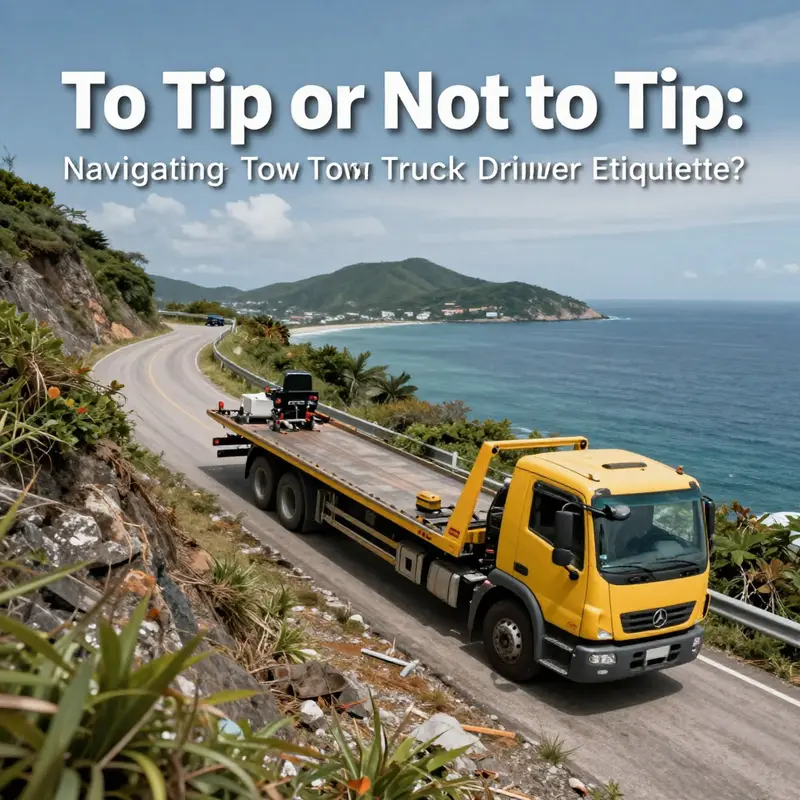
When a vehicle breaks down far from home, the encounter with a tow truck driver tends to echo long nights, crowded highways, and a swirl of practical concerns. You weigh safety, the reliability of the service, and the mystery of what is customary in tow etiquette. In many standard towings, the fee you pay is understood to cover the driver’s labor, the fuel used, and the equipment deployed. This basic expectation has hardened into a norm: tipping is not required, and in some cases it is discouraged in the interest of professionalism and consistency. Yet long-distance recoveries can tilt the balance. When a vehicle must be moved from a remote location, or when the driver navigates complex access points, the line between routine service and exceptional effort can blur. The guidance that follows helps you read the situation with clarity, anchored in practical realities rather than social pressure, so you can decide what, if anything, is appropriate in a way that respects the driver, the company, and your own circumstances.
Long-distance towing opens a window onto the realities of roadside work that aren’t visible from the windshield. A tow isn’t merely driving from point A to point B; it is a sequence of decisions under time pressure, weather, and sometimes contentious terrain. A driver may be coordinating with dispatch, securing the vehicle with straps and winches, and calculating safe routes through unfamiliar terrain. The job can involve long hours, late nights, and the physical strain of loading, securing, and protecting a vehicle that may be damaged or valuable. Because the standard fee is designed to cover these elements, tipping isn’t a formal expectation in most cases. Still, the very nature of long-distance work invites a humane, discretionary gesture when the driver’s performance stands out—the kind of service that goes beyond the call of duty and earns a moment of recognition.
Where tipping becomes a consideration is in the presence of exceptional effort or unusual difficulty. If the driver retrieves a vehicle from a hazardous or hard-to-reach location, or if the operation requires specialized handling in adverse weather, some customers feel that a small token of appreciation is a way to acknowledge risk and skill. Likewise, when the driver offers more than the minimum required assistance—providing roadside troubleshooting tips, guiding you through paperwork at a stressful moment, or arranging a smooth handoff to a repair facility—an extra gesture can feel fitting. The question is less about a fixed amount and more about the sincerity of the appreciation and the context of the service. In these moments, a tip is not a universal requirement but a personal expression of gratitude for a job well done in trying conditions.
Yet there is a practical counterpoint to tipping that deserves equal weight. Many towing companies, especially those with formalized policies or standardized fleets, discourage accepting tips in order to preserve professionalism and avoid potential conflicts of interest. A driver who adheres to a policy discouraging tips may still be grateful for the acknowledgment, but the policy itself is designed to maintain equal treatment of all customers and to prevent any perception that service quality could be bought or guaranteed through gratuities. The distinction matters in the decision-making process. If you’re dealing with a company that has a clear policy, it is prudent to respect that stance and focus your appreciation in ways that align with policy. The driver will still hear your thanks, and the next customer will benefit from the same level of service without any sense of obligation.
If tipping isn’t the default, how can you show appreciation in a meaningful, responsible way? Verbal appreciation is often the simplest and most immediate form of acknowledgment. A clear, sincere thank-you communicates recognition of the driver’s effort and can carry as much weight as a monetary gesture, especially when expressed at the end of a tense exchange or after a long, demanding operation. Beyond words, notes of gratitude—whether a short message to the company, a positive post on review platforms, or a brief testimonial—can create positive momentum that benefits the driver’s professional reputation. Positive feedback travels farther than a momentary reminder of a tip, and it helps drivers build trust with future customers who are looking for reliable, safety-conscious recovery. If you wish to direct your appreciation toward the company as a whole, a well-phrased review can highlight the driver’s professionalism, safety practices, and calm demeanor under pressure. Those kinds of observations carry substantial value for the operator and for others who rely on their services in difficult moments.
In places where tipping is more common—local operations or smaller outfits that emphasize personal rapport—the expectations can differ. The norms in a neighborhood with tight-knit service networks may include modest tipping, reflecting a cultural habit rather than a policy-driven requirement. If you are unsure about the local practice, it can be reasonable to ask the dispatcher or the driver directly, framing the question with respect for policy and the job’s demands. This not only clarifies expectations but also protects you from inadvertently violating a company guideline. When a driver accepts a tip, it is often in a context where the tip feels like a ceremonial closing gesture, a small thank-you after managing a tricky recovery. In those moments, many drivers appreciate the gesture because it signals recognition, not obligation, and it acknowledges risk, time, and effort.
An important nuance in long-distance contexts is the potential difference between tipping the driver and tipping the company or the dispatcher. Some customers distinguish between tipping the individual who performed the service and giving a broader gratuity to a company for its level of care, dispatch efficiency, and communication throughout the tow. In practice, when a policy discourages tips to the driver, a positive review that details the driver’s skill and safety practices can be more effective than a cash gratuity. Conversely, if a driver has acted with exceptional care and there is no policy against tipping, a modest amount—often cited in informal guidelines as a range of ten to twenty dollars when the service stands out—can be a thoughtful gesture. This range is flexible and should be calibrated to the level of service received, the jurisdiction’s norms, and the driver’s comfort with accepting gratuities. It is not a universal mandate, but a guideline that helps you gauge proportion in a moment where emotions and stress can complicate judgment.
The overall takeaway is pragmatic: tipping is not a required component of long-distance towing, but it is not categorically forbidden either. Your best approach is to assess the situation in real time, respect company policies, and honor the driver’s professionalism with acts of appreciation that align with the context. For drivers who operate under policies that discourage tipping, the most constructive praise may come in the form of precise, constructive feedback to the company or a public endorsement that recognizes their skill without creating any conflict of interest. In contrast, for independent operators or smaller outfits where gratuities are more common, a measured tip can be both a personal expression of gratitude and a tangible acknowledgment of service that went beyond the norm. In all cases, the aim is a respectful, considered response that upholds safety, fairness, and professional integrity.
If you’re seeking a concise, experience-based reference that aligns with practical road-time decision-making, you might explore the broader roadside support conversation through the Island Tow Truck blog, which compiles relatable scenarios and practical etiquette for everyday travelers. the Island Tow Truck blog
Finally, it helps to anchor your decisions in a sense of informed optimism. Long-distance towing remains a challenging, skill-intensive service where the driver’s safety and the vehicle’s protection take precedence. The industry’s norms have settled into a framework that recognizes this reality: tipping is not obligatory, but thoughtful appreciation—whether verbal, through a review, or, in appropriate circumstances, a modest gratuity—can reinforce positive relationships, encourage high standards, and support the people who keep roads, and lives, moving through tough times. If you want to delve deeper into official guidelines that shape professional towing practices, you can consult a broad set of resources on towing tips and guidelines, such as the external reference linked here: https://www.aaa.com/driving-tips/towing-vehicles/.
Gratuities on the Road: Global Views on Tipping Tow Truck Drivers
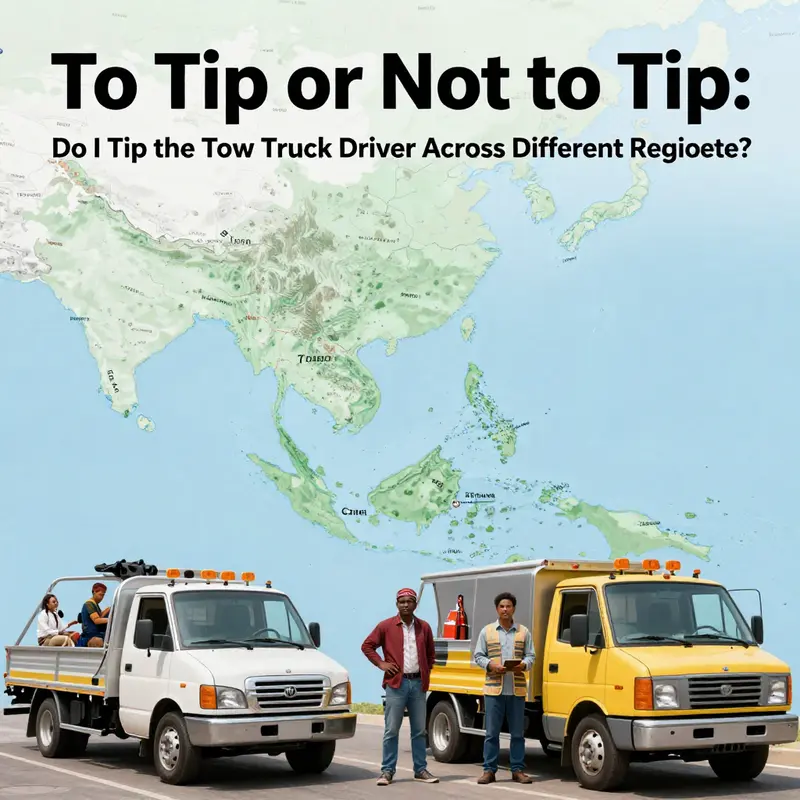
Towing a car in distress places you in a tense, uncertain space. The immediate danger is not only the breakdown itself but the way help lands in your lap—an array of gauges, company logos, and the steady hum of metal being secured. In that moment, tipping becomes less a rigid rule and more a cultural signal, something that travels with you across borders or, sometimes, slips into a local custom you hadn’t anticipated. The question ‘do I tip the tow truck driver?’ therefore expands beyond a simple yes or no. It invites you to read the room: the country you’re in, the company you’re dealing with, the driver’s behavior, and the nature of the service provided. When you understand how region and circumstance shape gratuity, you move from uncertainty to concise, respectful action, even in a situation that already feels out of your control.
In the United States, tipping tow truck drivers has become part of the social script in many places, especially when the driver arrives quickly, handles a difficult recovery, or offers practical help beyond simply pulling the vehicle onto a flatbed. A common rule of thumb is 15% to 20% of the total charge, though this is not universal. Some drivers insist tipping is not required, while others read a gratuity as a straightforward acknowledgment of the extra effort during a high-stress moment. The value of a tip, in this frame, lies not in a mandated percentage but in the driver’s competence, kindness, and willingness to explain what’s happening. If the driver stays with you through paperwork, helps you locate a repair shop, or explains insurance coverage in plain terms, those actions can tilt the tipping decision toward a small gesture. In emergencies, even a modest tip can feel like a shared recognition that the situation demanded more than basic labor.
In much of Europe, tipping practices are more variable. Service charges are frequently included by law or policy, and the cultural expectation for tipping is less pronounced. A tip might be reserved for truly standout service, and it’s often appropriate to show appreciation with a modest amount or simply by rounding up the bill. The exact expectations shift from country to country and even from town to town, so when you’re stranded, it pays to observe locals, ask discreet questions, or lean on the tow company’s published guidance. If a driver goes above and beyond—a careful recovery in a tight space, clear communication, or help coordinating a repair—placing a small gratuity in local currency can be appropriate, but it should remain discreet and in line with local norms, not a reflexive add-on to the bill.
Japan presents a different lens. Service in Japanese culture is frequently characterized by humility, efficiency, and reliability, delivered as a matter of course rather than as something paid extra for. Tipping can be misread as suggesting that the service was inadequate or that the price didn’t reflect the value of the work. For travelers, the safest approach is to express gratitude through calm manners and clear thanks. If you feel compelled to show appreciation, consider a simple gesture outside of the tipping ritual, or defer to a local business support tradition, which often favors sincere words or a small token given at an appropriate moment rather than at the point of service. In short, in Japan, gratuity may complicate a straightforward service dynamic rather than enrich it.
Canada shares some parallels with the United States, yet tipping culture there can feel more conditional and regionally varied. Many Canadian drivers and towing companies do rely on tips, particularly with smaller operators who must balance fluctuating workloads. A tip in Canada often mirrors the American expectation in busier cities, but attitudes toward tipping can shift toward discretion in less populous areas. When the service includes travel to a nearby shop, the driver’s extra help—like guiding you through the agreed route, explaining price quotes, or offering safety tips—can prompt a gesture that aligns with the quality of care you received. Independent operators, in particular, may rely on gratuities as a meaningful supplement to earnings. The bottom line remains: tipping remains discretionary, and you should calibrate your response to the driver’s conduct, the complexity of the job, and the region you’re in, rather than a universal formula.
Across Europe, Asia, and North America, another layer emerges: the economic and regulatory framework that shapes wages and pricing. In Scandinavian countries, tipping is not a social norm, and service workers are paid a living wage accompanied by robust social support systems. The expectation that a tip will appear is practically absent, and if given, a tip is seen more as a personal favor than a standard practice. In many such contexts, a tip may feel odd or unnecessary, though a very small gesture does not offend if done with sensitivity to the local mood. The contrast with countries where tipping is embedded in service economies highlights a broader point: tipping struggles to be universal because it is tied to the precise social contract between workers and customers in a given setting. When a driver earns a clear wage floor and operates within transparent pricing, gratuities become optional expressions of gratitude rather than expected compensation.
For travelers, the practical question becomes less about a fixed percentage and more about intention and fit. If the tow is routine and the driver simply performs the job without extra help, a tip is often not expected. If the driver employs specialized equipment to retrieve a vehicle from a ditch, or if the scene involves helping you stay safe in dangerous traffic, a small tip can be a meaningful acknowledgment of the extra risk and skill involved. If you’re dealing with an independent operator who dedicates long hours to a local community, a $10–$20 gesture may feel appropriate for excellent service. But the key is to gauge the situation, not to apply a blanket rule. If you’re uncertain, a candid, respectful question about local tipping customs—perhaps in the form of a quick exchange with a phone call or a discreet note—can clarify expectations without creating pressure.
Those who travel, road-trip, or work in transit-dependent roles might find it helpful to consult practical resources that discuss tipping norms and roadside etiquette in different regions. For industry readers seeking broader context on how gratuities intersect with professional service, the island tow truck blog offers industry perspectives that may resonate with your experience the island tow truck blog. In all cases, the overarching principle is straightforward: pay for the service, show appreciation when warranted, and respect local customs. If the service was arranged through an insurance policy or roadside assistance program, tipping is often discouraged or unnecessary, because the upfront price covers labor, fuel, and equipment. When a tip seems appropriate, keep it modest, discreet, and in local currency, honoring both the worker’s effort and the local social code. That mindful approach turns a stressful moment into a shared demonstration of respect, rather than a transactional obligation. For travelers seeking official guidance on regional norms, external resources such as travel advisories from the U.S. Department of State provide a broader framework to understand how gratuities are viewed in different jurisdictions: https://travel.state.gov/content/travel/en/traveladvisories/traveladvisories.html
Final thoughts
In summary, deciding whether to tip a tow truck driver often depends on the specific context and the quality of service received. While standard towing practices do not typically require a tip, recognizing exceptional effort, engaging local services, and considering regional norms can enhance the experience for all involved. By being mindful of these scenarios and insights, you contribute to a culture of appreciation that can uplift our island communities.