
When dealing with vehicle breakdowns or emergencies, tow truck drivers often play a crucial role in getting you back on the road. While tipping tow truck drivers may not be standard in many places, there are times when showing appreciation for outstanding service is appropriate. This article aims to guide you through the intricacies of tipping tow truck drivers, exploring guidelines, influencing factors, local customs, and company policies. Each chapter will build your understanding of when and how to tip, making you a more informed vehicle owner in our island communities.
Tipping Tow Truck Drivers: A Practical, No-Nonsense Guide

Tipping tow truck drivers sits at the crossroads of etiquette, practicality, and local policy. In a roadside emergency, tipping signals appreciation for competence and safety. The right amount is discretionary and depends on conditions such as weather, traffic, distance, and the complexity of the tow. Many guides suggest a range such as $20-$50 or 10%-15% of the service cost, with higher tips for challenging recoveries and longer distances. Always check company policy, since some firms discourage tips. If unsure, you can pay a fair base price upfront and offer a brief note of thanks. Cash remains the simplest method; if paying by card, ask whether a tip can be added to the invoice. The key is fairness and sincerity, not pressure. For straightforward tows, a $20 tip may be appropriate; for heavy traffic, bad weather, or more complex recoveries, closer to $40-$50 (or more) can be reasonable. Consider the driver’s safety efforts, clear communication, and attentiveness to risk. Respect local norms and policies, and when in doubt, opt for a non-monetary expression of gratitude if required by policy. This chapter provides a practical framework rather than rigid rules, acknowledging that tipping is optional and context-dependent.
Gauging the Gratuity: How Different Factors Shape Your Tow Truck Tip
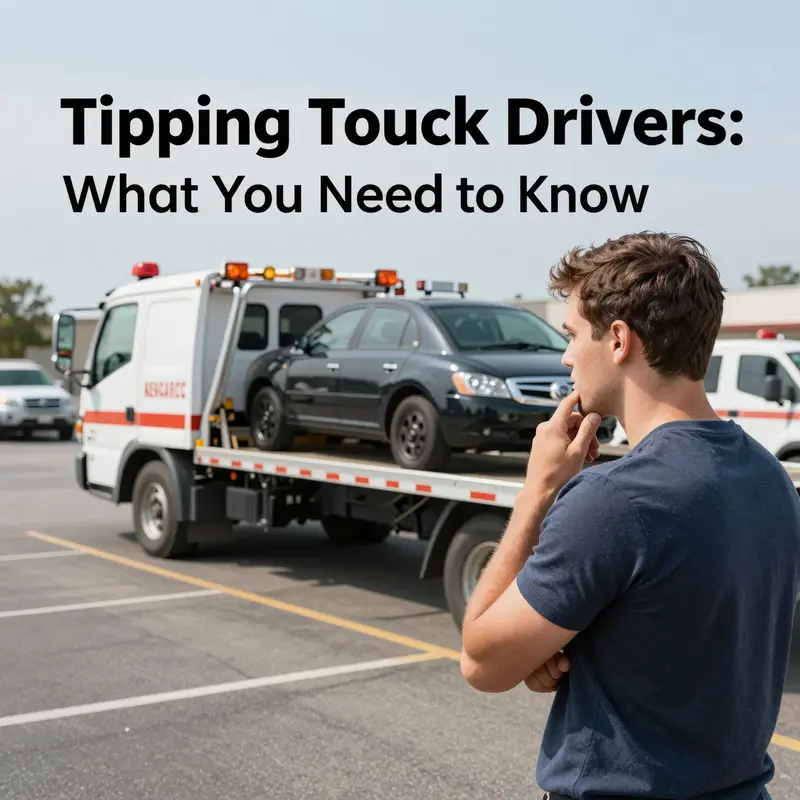
Gauging the Gratuity: How Different Factors Shape Your Tow Truck Tip
Tow trucks arrive in moments of crisis, when vehicles stall on a highway shoulder or end up in a precarious spot. The driver is more than a driver; they become a moving combination of technical skill, problem-solving, and calm communication under pressure. In many places tipping is not an expectation, but when a service goes beyond the routine—the driver navigates a tight space, rescues a vehicle from damage, or explains next steps with patience—a gratuity can feel like a fair, human acknowledgment. The decision to tip, and how much, is rarely a one-size-fits-all choice. It blends price, context, and personal judgment into a moment that can influence not only one encounter but a driver’s willingness to extend help in the future.
At the heart of the matter is the complexity and difficulty of the job. Think of the scenarios that test a tow operator’s skill: a vehicle jammed in a tight alley, a car trapped in a ditch with skid marks and debris around it, or a truck that must be loaded in a way that prevents further harm. In these cases the driver may have to choreograph a sequence of moves—rigging a winch, selecting rigging points, adjusting the angle of approach, and coordinating with passengers, if present—to ensure the car is secured safely for transport. The extra effort in such settings isn’t simply about getting the car onto a flatbed; it is about technical judgment under risk, meticulous handling of the vehicle’s sensitive components, and the ability to translate a complex situation into clear, calm instructions for you. When the job demands ingenuity or extra risk management, a tip acknowledges that the value received isn’t merely the time spent but the quality of the execution and the care for the vehicle.
Distance traveled becomes the next real-world variable in calculating gratuity. Short hops across town contrast with long hauls that take hours and consume more fuel and roadside time. A longer tow often means the driver logs more miles, spends more time at the scene coordinating with you and the dispatch, and contends with changing traffic conditions or weather setbacks. The proportionality of a tip should account for these added costs, especially if the driver has allotted their own resources—fuel, wear on equipment, and fatigue—to carry you to a safer or closer location. It is not simply an arithmetic exercise, but a recognition that more miles and more minutes on the clock translate into more work and greater responsibility.
Timing and urgency add another layer. A roadside rescue in the dark, on a busy highway, or during a heavy rainstorm creates a high-pressure environment. The driver’s attentiveness to safety protocols—the speed with which they evaluate risks, how they protect you from flaring traffic, and how they communicate expected timelines—helps determine whether the service deserves a larger gratuity. When the driver goes the extra mile to keep you informed, to facilitate a smooth handoff with a repair service, or to accommodate special constraints—like a stubborn lock, a stubborn spare key, or a vehicle with unusual load requirements—the gratuity should reflect that extra care. In such moments the amount you consider appropriate often climbs toward the higher end of the scale or beyond. This is not about rewarding inconvenience; it is about acknowledging responsible service under pressure.
Regional norms remind us that tipping is as much a social custom as a financial gesture. In some places tipping a tow driver is almost assumed, almost part of a shared understanding of fair play between a rescuer and a customer. In other places tips may be less common, or even discouraged, particularly if the company you hire has explicit policies against tipping or emphasizes standard pricing for services rendered. The best approach is to read the room as much as the receipt. If the driver clearly sets expectations about costs or if a dispatcher indicates a policy at the outset, align your actions with that guidance. A quick check with the company or driver can prevent awkward moments when the service is complete. And in communities where tipping is customary, the small gesture can carry social value that goes beyond the dollars exchanged—that sense of appreciation that supports a service-based economy in which workers shoulder irregular hours, unpredictable routes, and the challenges of heavy equipment.
Yet the most tangible dimension remains the service quality itself. A prompt arrival, a courteous explanation of what will be done, careful handling of the vehicle, and a clear update about when the vehicle will be delivered or parked can turn an otherwise stressful moment into something more manageable. The tip then becomes a direct expression of that value: the driver’s attention to safety, their ability to de-escalate a tense situation, and the care they show for your property. Even small acts matter—checking in about any pre-existing damage, offering suggestions for immediate next steps, or simply checking in to ensure you feel safe while the vehicle is loaded. When such elements are present, a higher level of generosity may be warranted, but the key point remains that the gratuity should line up with the actual service quality, not with the status of the weather or the luck of timing.
In practical terms, many people anchor their tipping decisions to familiar guidelines. A common rule of thumb is to consider tipping as a percentage of the total service fee, often around 10% to 15% when the service meets or exceeds expectations. Some people prefer a flat amount, such as $10 to $20, particularly when the price is low, the service is straightforward, or the driver has already provided a high level of professionalism. When the tow cost reaches around $100, tipping in the neighborhood of $10 to $15 commonly lands within the generous range without becoming burdensome. Of course, these numbers are not hard and fast rules. If the job is more demanding or if the driver’s actions clearly reduce risk or spare you further expenses, a tip toward the upper end of the range or even beyond may be appropriate. On the other hand, if the service is routine, quick, and the driver is efficient without offering extra value, a modest tip or no tip at all might be the prudent choice, particularly if you know the company discourages gratuities.
An additional practical reality to acknowledge is the policy stance of the service provider. The landscape in the towing industry includes both independent operators and larger corporate chains, and their policies regarding tipping can vary widely. In some corporate structures, tipping may be discouraged or disallowed entirely, with managers emphasizing that an upfront, transparent price is the fair exchange for service. In a case like this, you may decide to honor the policy and proceed with the payment, perhaps supplemented by polite thanks and a positive review instead of a cash gratuity. For those who face such expectations, a proactive approach—asking the driver or dispatcher about the policy before the work begins—can prevent discomfort at the scene and help you make a decision that you feel comfortable with. The most important person in this exchange is the driver’s welfare, in a sense: if tipping is not permitted, a fair price, a respectful demeanor, and a timely payment become powerful, career-supporting gestures in other forms.
All of this underscores a guiding principle: tipping should be a voluntary, informed choice rather than a ritual imposed by others. It is a personal decision that recognizes value, effort, and risk, in a moment when the person behind the wheel is performing under pressure while trying to get you back on the road. To be sure, there are moments when you might decide to refrain from tipping altogether. If the company policy is explicit, or if the service is simply a routine maneuver that does not involve complexity or risk, then your best response may be a straightforward payment and perhaps a note of appreciation. If you do choose to tip, your gesture should feel appropriate to the circumstances, and it should avoid pressuring others to provide gratuities beyond the fair compensation the market already dictates. In this sense, tipping becomes a flexible, context-driven practice—less a universal rule and more a signal of recognition for service that clearly added value in a challenging moment.
To deepen your understanding of the social and practical aspects of tipping in roadside assistance, you can follow industry discussions and experience-based guidance that illuminate how these practices play out in different communities. For readers who want a consolidated perspective that blends practical scenarios with regional variation, you can turn to a trusted industry resource that aggregates real-world experiences and recommended practices.
For readers seeking additional commentary and real-world perspectives that complement the practical discussion in this chapter, the storytelling and field experience found on The Island Tow Truck blog can be a helpful compass as you navigate tipping conversations in your community. For a practical take, you can explore the blog here: The Island Tow Truck blog. This resource exemplifies how a community of practitioners reflects on service quality, policy constraints, and the human side of roadside assistance, tying broader principles to everyday encounters on the road.
As you move forward, consider how your tipping preferences align with your broader approach to supporting professionals who perform high-stakes work on behalf of strangers. Towing is not only about moving a vehicle from point A to point B; it is about ensuring safety, safeguarding property, and providing reassurance in moments of uncertainty. The tipping decision, then, becomes part of a larger practice of mindful consumption and respect for labor. By staying informed about policy variations, local customs, and the realities of long, difficult jobs, you can approach each encounter with a clear sense of what is fair and how to express it. The result is a more humane, balanced relationship with the people who, quite literally, help get you back on the road.
To help you make sense of tipping in varied contexts and to connect these decisions to broader practices of roadside readiness, many readers turn to practical guidelines that consolidate experiences across regions and situations. For a concise external reference, see AAA tipping guidelines: https://www.aaa.com/automotive/tips/towing-tips/tip-guidelines.
Local Currents, Global Roads: Reading Customs on How Much to Tip Tow Truck Drivers

When you’re stranded by a roadside stalling or a sudden breakdown, the tow truck arrives as more than a vehicle-moving service. It feels like a lifeline: someone who can translate a crisis into a plan, who can calm the moment with practical steps, and who can help you regain a sense of control. In that charged state, the question of tipping can feel almost as volatile as the situation itself. Tipping tow truck drivers is not a universal or formalized practice in most regions, and it rarely comes with a prescribed amount. Yet there are moments when a driver’s conduct—clear communication, rapid response, careful handling of your property, and a willingness to go beyond the bare requirements of the job—deserves a gesture of appreciation. The challenge, and the opportunity, lies in reading local customs and the specific service you received, then deciding whether a tip is both appropriate and considerate.
Across North America, and indeed in many parts of the world, tow services are usually priced according to a company’s fee schedule, which may hinge on factors such as mileage, vehicle type, time spent, and the nature of the service (emergency tow, roadside assist, winching, or long-haul recovery). In those contexts, tipping is not built into the transaction the way it often is in some hospitality or rideshare experiences. The driver’s base pay is typically determined by the company, and the driver may be compensated through a combination of base wages and a commission. Because of that structure, a tip—when given—often comes as an afterthought, a voluntary expression rather than a demanded or expected add-on. Still, when the service shines, a tip can reinforce positive behavior and acknowledge the extra mile the driver may have walked, literally and figuratively, to stabilize your situation.
Local customs, however, are highly place-specific. In densely populated urban centers with high costs of living and a culture that prizes visible courtesy, tipping can be encountered as a more common courtesy, especially when a driver demonstrates professionalism under pressure. Conversely, in regions where towing is viewed as a strictly transactional service, tipping may feel unnecessary or even unusual. Rural areas, where personal relationships with service providers are more common, can also color tipping norms differently than metropolitan zones. The bottom line is that there is no one-size-fits-all rule; instead, there is a practical, situational guideline: observe, ask, and consider how the driver’s performance aligns with your expectations for that moment.
In any discussion of tipping, drivers themselves are not the only point of reference. There are policies within larger chains that may discourage or restrict tipping, citing consistency, fairness, or wage structure across a broad network. If you’re dealing with a national franchise or a corporate fleet, checking policy before you act is prudent. A driver may explain that tips aren’t accepted or that the company discourages gratuities, which should be respected. In many cases, a straightforward, transparent payment upfront—reflecting a fair market rate for the service you received—will be more appreciated by the driver and the company than any tip, particularly when policy forbids it. Yet, if a driver truly exceeds expectations—arriving promptly in bad weather, clearly communicating what’s happening, helping you with paperwork, offering practical advice about insurance, or guiding you toward a safe and convenient next step—your discretionary tip remains a meaningful way to acknowledge that extra effort.
A practical way to think about this is to tie the tip to the service quality rather than to the act of towing itself. If the cost of the tow is straightforward and the driver handles the job with professional calm—pulling into a safe location, confirming your location, coordinating with dispatch, and taking care to avoid damage to your vehicle—the tipping decision becomes a short calculation of value added. A common range suggested by many service etiquette discussions is roughly 10% to 15% of the total service fee, or a flat amount like $10 to $20 for particularly good service. If the tow cost comes to $100, a $10 to $15 tip is often cited as generous. Those figures are not universal prescriptions, but they do offer a practical starting point when you want to reward notable effort.
There are important caveats to keep in mind. First, tipping is not appropriate in every situation. Some tow operators work for corporate fleets or franchises that have explicit policies about tipping, and many drivers prefer to avoid any appearance of impropriety or inconsistent pay scales. If you’re unsure, a quick, courteous question can save awkwardness: “Is tipping encouraged for this service, or should I just pay the posted rate?” If the driver says tipping is discouraged, the best course may be to respect that policy and consider alternative ways to show appreciation—perhaps a positive online review, a commendation to the dispatcher, or a simple thank-you that acknowledges the driver’s professionalism.
Second, the timing and method of tipping matter. Cash is traditionally the most straightforward approach, given the often unpredictable nature of towing work and the variable hours it may require. If the driver obtains payment electronically or you’re in a place where cash handling is less convenient, a digital tip may be acceptable if the driver offers a mobile payment option. Regardless of the method, tipping discreetly and at the end of the service tends to feel most natural and respectful. Provide the tip directly to the driver with a brief acknowledgment of what they did well, rather than letting it become a generic gratuity left on a counter or handed to a dispatcher. Small acts of courtesy—such as offering water, stepping aside to let the driver work without crowding, or providing direction to a safe pickup point—also count as part of the overall service experience and can influence whether a tip feels warranted.
Where local norms become more nuanced is when you travel or find yourself in unfamiliar regions. In some urban centers with intense traffic and frequent emergencies, customers may perceive tipping as a normal, almost expected gesture, particularly when a driver delivers rapid response times or goes beyond the bare minimum to ensure you and your vehicle are secure. In other locales, especially those with a strong emphasis on consumer rights and transparent pricing, tipping can seem optional at best. The way people respond to a driver’s communication style—whether the driver takes the time to explain the process, calls ahead to update you on ETA, or patiently helps you with the insurance questions you’re facing—can tilt the balance toward a tip even when the price is straightforward. The human element—reassurance, clarity, and calm under pressure—often matters more than the precise dollar amount.
One practical approach to navigating this terrain is to prepare in advance based on your local environment. If you live in a city with a bustling towing market, it’s reasonable to assume tipping may be more accepted, particularly for high-stakes scenes such as nighttime recoveries or complex maneuvers in traffic. If you’re in a rural setting where a towing call may be resolved with a straightforward lift and move, tipping may be less expected. In any case, the driver’s conduct should guide your decision. A driver who communicates clearly, arrives with the right equipment, respects your property, and explains the next steps deserves recognition. A driver who is distracted, rushed, or careless may prompt you to skip a tip, or at least to keep it modest or reserved for a later, calmer moment when you can share your appreciation in a more appropriate setting.
To support readers who want a quick, usable rule without overcomplicating the moment, consider this synthesis: if the service feels routine and the driver completes the job without incident, a modest tip is appropriate only if the driver’s performance stands out in some way—extra attentiveness, thorough explanations, or help that goes beyond the call of duty. If the service is urgent, complex, or the driver navigates a particularly challenging environment with exceptional professionalism, a more generous tip within the 10%–15% range or a flat $15–$25 figure can convey gratitude without feeling extravagant. If the total cost is low—under $40—a tip of $5 to $10 or a slightly higher amount in that range can still be meaningful while remaining proportionate.
Beyond the sticker price and the moment of service, there is also a layer of regional etiquette to consider. In some regions, tipping is widely practiced across many service industries, and customers expect a small gratuity as a sign of good service. In other regions, tipping departments of service providers is less common, and the social norm leans toward appreciating professional conduct and fair pricing rather than gratuities. A practical way to calibrate your response is to observe your surroundings: are other motorists tipping or applauding a driver’s performance with a verbal compliment? Do locals share stories about tipping drivers or avoiding tips due to corporate policies? Community conversations, local forums, and even informal chats with dispatchers can provide valuable, real-time cues about what’s deemed appropriate in your area.
The chapter’s focus on local customs would be incomplete without acknowledging how broader cultural understanding intersects with tipping behavior. Gratuity norms in transportation services have been influenced by how societies view service labor, wage structures, and the balance between customer autonomy and company policy. A cross-cultural lens reveals that tipping is often less about the amount and more about the symmetry between the service experience and the social contract surrounding it. When a driver is dispatched in response to an emergency, the stakes are personal and immediate, so the tipping decision sits at a moral edge: it’s a way to honor time, safety, and the effort it took to stabilize a crisis. The driver’s willingness to stay with you, to explain insurance ramifications, and to coordinate with your next steps is, in many ways, what tipping seeks to acknowledge.
For readers seeking further context on how tipping etiquette shapes behavior across transportation and other service sectors, a broader discussion can be found in cross-cultural analyses of tipping norms. See a comprehensive overview here: https://www.thedailymeal.com/transportation/should-you-tip-ride-share-drivers-etiquette-in-different-countries. While this resource does not address tow trucks in particular, it highlights how cultural expectations, regional cost of living, and personal interactions influence tipping practices in transportation-related services. It reminds readers that tipping is not just about the money; it’s about signaling appreciation for service delivered under stress, with attention and care.
As an anchored reference for practical navigation in your own region, you might also turn to dedicated resources that address fleet readiness and emergency response practices. The Island Tow Truck blog, for example, offers a range of perspectives on service norms, professional conduct, and what customers can expect from towing teams in diverse circumstances. For readers who want to explore those perspectives and ground their decisions in a broader understanding of service quality, a quick visit to The Island Tow Truck blog provides a useful touchstone and a way to connect with a community that deals with similar decisions in real-time. The practical takeaway is simple: tipping should be considered a flexible, context-driven gesture rather than a rigid rule tied to the job title alone.
In sum, the local currents around tipping tow truck drivers reflect a broader truth about how communities experience and value emergency assistance. There is no universal percent, no universal dollar, and no universal declaration that tipping is required. What endures is a plain, human choice: did the driver make a difficult moment easier, safer, and clearer? If yes, a thoughtful gesture—whether a modest tip, a specific compliment to the dispatcher, or a positive review—serves both as gratitude and as encouragement for the kind of service that keeps you moving when trouble arises. The most effective tip, after all, rests on the assessment of service quality in the moment, tempered by an awareness of local norms and the policies of the company you’ve engaged. It is not about tipping as a reflex, but tipping as a reflective, location-aware act of appreciation that respects both the worker and the broader service ecosystem in which they operate.
Tipping Tow Truck Drivers: Reading Policies, Reflecting Gratitude, and Making a Practical Gesture
Towing emergencies arrive with a jolt of stress, the roadside hum of traffic, and a sudden scramble for safety. In those moments, the arrival of a tow truck feels almost like a lifeline, a calm, professional hand that takes over when your own nerves are taut and your plan is uncertain. In the past, tipping tow truck drivers was not a universal expectation, and for good reason: in many places, tipping is not part of the traditional pricing model, and some companies discourage it to keep rates uniform and avoid conflicts. Yet the reality on the ground varies widely. In some regions and within certain fleets, a tip is welcomed as a small but meaningful expression of gratitude for service that is fast, careful, and done with a steadiness that reduces risk when conditions are less than ideal. The question, then, becomes not a moral imperative but a practical one: how much should you tip, if at all, and under what circumstances should you proceed? The answer rests on understanding company policies, recognizing the specific circumstances of the service, and choosing a gesture that respects boundaries while acknowledging effort and professionalism.
The first layer to understand is policy, because it can quietly determine whether a tip is even appropriate in a given situation. Some towing companies have explicit guidelines that discourage or prohibit drivers from accepting tips. The reasoning is straightforward and administrative: tips can complicate pricing, create perceptions of favoritism, or blur the lines of a straightforward, contract-based service. In thousands of roadside moments, a company policy that discourages gratuities can save a driver from awkward exchanges and keep pricing transparent for all customers. On the other hand, there are fleets that encourage tipping and offer guidance on amounts, sometimes even suggesting a range for both standard towing and more complex recoveries. Those policies exist because the company recognizes the value of a tip as a signal of appreciation and because drivers, especially in demanding scenarios, go beyond the basics of pulling a vehicle onto a flatbed, stabilizing it on slick pavement, or lifting a stubborn car from a ditch with careful restraint. The contrast between these approaches matters because it frames the question in practical terms: if tipping is allowed, how should you tip, and if it isn’t, what other forms of acknowledgment can be appropriate and appreciated?
Guidance on amounts tends to fall into a few common patterns, though the exact numbers can shift by region and by the individual employer. A frequent rule of thumb in friendly, service-oriented environments is to consider a tip in the 10% to 15% range of the total service cost, or to use a flat amount like $10 to $20 for standard jobs. The logic behind these figures is straightforward: the tip should reflect the scale of the effort, the time involved, and the risk taken by the driver under imperfect conditions, such as icy roads, heavy traffic, or the awkward geometry of a vehicle on a tow truck bed. For a service that runs around $100, a tip of $10 to $15 is often viewed as generous without being gratuitous. Yet the same numbers can feel inadequate when the job involves unusual complexity—think of accident recovery, heavy-duty towing, or work performed in extreme weather—or when the driver spends significantly more time at the scene, coordinating with you, your insurance, or a dispatcher to ensure your safety and the integrity of the vehicle.
The policy-versus-practice tension becomes most visible in those demanding moments. In adverse weather or when the job demands extra personnel, a driver may be performing more work than a standard tow—managing a vehicle that’s entangled in snow or mud, stabilizing a vehicle on a slope, or coordinating with a crane for a multi-vehicle recovery. In such circumstances, some customers lean toward higher gratuities, perhaps in the 20% range or a flat $20 to $50, recognizing the extra hours and heightened risk. It is not unusual for a driver to bring tools, straps, or additional safety measures to bear on a difficult job, and that extra effort deserves acknowledgment. However, because policies vary, that acknowledgment should be tempered by the company’s stance. A driver may be able to accept a larger tip in a private, cash-based exchange, while a corporate chain with a rigid policy might require that you refrain from tipping or redirect any gratuity to a company fund or customer service feedback channel. Understanding this dynamic helps you decide how to act with confidence rather than speculation.
As a practical matter, it is always wise to check with the towing company before tipping. A quick call or a glance at the service agreement can clarify whether tips are permitted and whether there is a preferred method of tipping. Some fleets accept gratuities in cash only, maintaining a clear boundary between service fees and tips. Others have embraced modern payment methods, allowing tips through apps or card readers. If tipping is allowed, cash remains the most universally accepted form because it immediately translates into a direct gesture of gratitude. Yet cash tipping also raises considerations about safety and convenience, especially if you are stranded on a busy highway or in a location with limited privacy. Digital options can offer an attractive alternative, but you should ensure the driver has access to a setup that can process the tip securely and discreetly. The overarching principle is straightforward: communicate, confirm, and execute in a manner that respects the driver’s professionalism and the company’s policy.
In addition to the company’s stance, consider the specific circumstances of the service. Towing is rarely a simple, one-step transaction. A driver may arrive at night, in freezing rain or blowing snow, with traffic whizzing by and the clock ticking. The vehicle might be in a precarious position, or the road conditions could complicate tow operations. The driver may need to maneuver around other vehicles, manage damaged glass or fluids, and coordinate with you to ensure your safety and the safety of others. In these moments, a gesture of gratitude can feel like a natural extension of a job well done—the driver’s professionalism, clear communication, and ability to deliver a solution under pressure. Acknowledge that the service involves more than a mechanical action; it requires judgment, restraint, and careful attention to safety. A tip, when offered, signals to the driver that you recognize those qualities, even if tipping is not a universal practice in the region.
Another layer is the relationship between the customer and the driver within the broader ecosystem of roadside assistance. If you’re part of a fleet or you are repeatedly relying on a particular service, you might observe a pattern in how tips are handled and how drivers respond to different expectations. In a company-driven system, feedback may matter even more than money. A driver who feels respected and valued will likely be more motivated to deliver safe, professional, and timely service, which, in turn, enhances the overall reliability of the emergency response. In contrast, tipping beyond what the policy allows can place the driver in a delicate position with their employer, leading to awkward interactions or concerns about eligibility for future assignments. The tension between personal gratitude and policy is real, which is why the most prudent approach is to prioritize clarity and courtesy over impulse. If you decide to tip, keep it proportionate to the service’s complexity and duration, and ensure the gesture aligns with the company’s rules.
The broader conversation about tipping also intersecting with what customers expect from roadside assistance in the twenty-first century. There is value in viewing tipping not as a purchase of service or a guarantee of better treatment, but as a voluntary, discretionary signal of appreciation for excellence. When a driver goes above and beyond—perhaps staying with you through a difficult wait, explaining every step of the process in plain language, ensuring your vehicle is positioned safely for later transport, or offering practical notes about next steps after the tow—these are moments where a tip becomes a logical, humane form of acknowledgment. It is not the only way to express gratitude. A thoughtful compliment to the dispatcher, a positive review online, or a simple note to the company praising the driver’s conduct can carry as much value as a tip, especially in environments where gratuities are discouraged. Yet for customers who do choose to tip, the recommended guidelines remain a useful compass: measure the effort, consider the context, and always respect the company’s policy.
For readers seeking a cohesive approach to this aspect of emergency planning, consider how gratuities fit into broader strategies for fleet safety and customer service. If your organization relies on roadside assistance as part of its emergency response protocol, you may benefit from establishing a simple, consistent stance on tipping that can be communicated clearly to drivers and customers alike. A short policy statement can help prevent confusion at the moment of service, ensuring that drivers receive gratitude when appropriate while avoiding any misalignment with corporate rules. In practice, this means defining a preferred tipping range for standard towing and for more complex recoveries, outlining acceptable payment methods, and providing guidance about when tipping should be offered or discouraged. This clarity helps both customers and drivers navigate the moment of service with trust and mutual respect, a small but meaningful contribution to the overall effectiveness of emergency response.
As you read these reflections, you may notice that the conversation around tipping is not only about money. It is about recognition, fairness, and the delicate balance between individual gratitude and organizational policy. If you are part of a fleet, you might also consider incorporating a feedback loop that captures drivers’ perspectives on gratuities, which can illuminate how policies interact with real-world service. The goal is to support the people who keep roads safer and help you regain mobility when everything feels uncertain. A well-structured approach to tipping—one that respects company guidelines, acknowledges exceptional service, and remains sensitive to the context—can become part of a broader culture of professionalism in roadside assistance.
To connect this discussion with broader operational insights, you can reference practical frameworks such as those outlined in essential fleet emergency response strategies. These resources, accessible via the linked overview, offer guidance on coordinating the human and logistical aspects of roadside incidents, including how gratuities fit into the broader picture of service quality and accountability. For a broader view of how industry norms influence tipping practices, you can explore reputable industry guidance and professional associations that publish general recommendations for tipping tow truck professionals. While tipping is not a universal obligation, when done thoughtfully and in alignment with policy, it can reinforce a culture of appreciation that motivates skilled drivers to deliver safety-focused, careful service when every minute counts.
In closing, the decision to tip a tow truck driver rests on a few clear pillars: policy, circumstance, and courtesy. By understanding company rules, evaluating the job’s difficulty, and choosing a gesture that reflects genuine gratitude, you can ensure that your generosity is both appropriate and meaningful. If tipping is allowed, many customers find that the right tip—typically 10% to 15% of the service cost, or a $10 to $20 amount for standard jobs—strikes a practical balance between recognition and discretion. For more demanding recoveries, larger towns, or adverse conditions, a higher tip may be warranted. If tipping is discouraged, there are still powerful ways to show appreciation—writing a thoughtful online review, sharing positive feedback with the company, or simply offering a sincere thank-you underlining the driver’s professionalism. Ultimately, the most constructive approach is transparent dialogue: ask about the policy, assess the service, and act in a way that honors the driver’s expertise while respecting the rules that govern the interaction. And as you plan for future incidents, keep in mind that the gesture you choose should reflect not only the moment’s demands but also your broader commitment to safe, respectful, and reliable roadside assistance.
For readers who want to explore related strategies beyond tipping, consider the broader context of emergency response as it relates to island environments and fleets. A helpful resource in this area is available through one of the island-focused service guides, which discusses how fleets can organize their emergency response to maximize safety and efficiency during crises. This material can complement your understanding of tipping by highlighting how service interactions fit into longer-term planning and preparedness. And if you want to confirm external guidance, reputable organizations offer tipping frameworks that underscore the importance of fairness, transparency, and respect in every roadside encounter. As you navigate each incident, you can keep this guidance in mind and decide, in real time, what best supports the people who help you get back on the road.
External reference: For a concise industry framework on tipping tow professionals, see AAA tipping guidelines: https://www.aaa.com/autorepair/tips-for-towing-services.
Final thoughts
Navigating the decision to tip a tow truck driver involves understanding various factors such as service quality, local customs, and company policies. While it may not be customary to tip in every situation, expressing gratitude is always appreciated in the service industry. By becoming familiar with these particulars, you can ensure that your appreciation aligns with local practices and makes a positive impact on those assisting you during roadside emergencies.