
Navigating the complexities of towing capacities is crucial for local auto repair shops, car dealerships, property managers, and other commercial fleet operators within island communities. Understanding how much a U-Haul truck can tow isn’t just about numbers; it’s about aligning your vehicle needs with the unique demands of your operations. In this article, we will break down the towing capacities of various U-Haul truck models, discuss the factors influencing these limits, help you choose the right truck for your specific needs, and outline essential safety considerations. By the end, you will have a holistic view of towing capacities that empowers you to make informed decisions.
Tow Limits Demystified: Understanding How Much a U-Haul Truck Can Tow
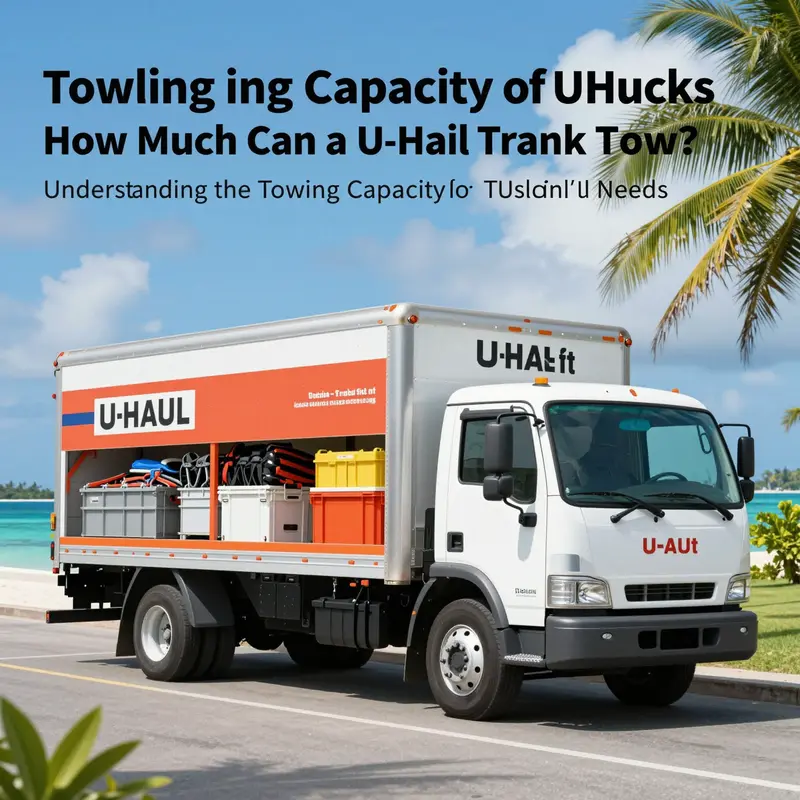
Planning a move or a hauling task starts with a simple question: how much can this truck pull? The answer is not a single number but a range that depends on the exact model you rent, how the hitch is configured, and how weight is distributed across the truck and its trailer. The common U-Haul fleet presents a clear pattern in towing capacities, but those figures are approximate and meant as a guide rather than a guarantee. In practice, the right choice hinges on matching a truck to the load you intend to tow, then ensuring that hitching and weight distribution are done with care so safety and compliance stay front and center. The numbers that typically appear in rental listings are easier to grasp when they are tied to real-world devices and scenarios. For instance, the pickup truck model, the smaller 10 foot moving truck, and the larger 15 and 26 foot moving trucks all show distinct towing ceilings. The pickup and the 10 foot box share a maximum towing capacity of about 6,000 pounds, while the 15 and the 26 foot moving trucks can reach up to 10,000 pounds. These figures serve as practical guidelines for planning whether you are moving a single trailer, a boat on a trailer, a large utility trailer, or even a secondary vehicle. Yet it is essential to stress that exact towing capacity can shift slightly with the precise vehicle configuration and any aftermarket hitch or braking components installed for a given rental.
Understanding why these capacities differ begins with the basics of how a towing limit is defined. The truck’s engine and drivetrain knowledge set the foundation for how much pulling power is available. The axle ratio matters because it governs the relationship between engine speed and the wheels’ rotation, which in turn influences how much force the system can apply at low speeds, such as when backing up a trailer or starting from a full stop. The braking system also has a role in towing, since a trailer’s momentum adds to the load the truck must control on hills or during a stop. The hitch itself is not merely a connector; it is a critical safety interface. With the right hitch type and properly tightened connections, the vehicle can safely transmit towing forces to the trailer without undue wobble, sway, or connection failure. It is also important to remember that weight distribution devices, when used correctly, help keep the trailer pressing down on the tow vehicle’s rear axle and maintain stable steering and braking. As practical as these concepts sound, the reality is that a renter must verify the precise capacity of the unit they are renting on the day of pickup. The exact model and its current configuration determine what you can reasonably and safely tow. If your plan is to move a sizeable boat, a sizable trailer, or even another vehicle, it pays to double-check the exact towing capacity for the specific rental vehicle at the location. The U-Haul site provides guidance on choosing the right truck for your load and there is a staff member at each rental location who can confirm the capacity for your chosen unit. For a broader perspective that connects towing decisions to wider fleet readiness, see the the island tow truck blog.
When you translate these capacities into real practice, the first step is to map your load. A 6,000-pound limit is large enough for many practical tasks: a small boat on its trailer, a motorcycle with a lightweight trailer, or even, in some cases, another personal vehicle depending on the trailer’s construction and tongue weight. The 10-foot box and the pickup share this ceiling, which makes them versatile for compact jobs where the payload of your trailer remains modest and the overall weight stays within a safe band. For larger and heavier carries, the 15-foot and the 26-foot moving trucks present the higher ceiling of roughly 10,000 pounds. This distinction matters because it informs the choice between a more compact rental when urban flexibility and maneuverability are paramount, versus a larger unit when the job demands a heavier haul and greater trailer scale. The difference between the 15-foot and the 26-foot models, however, is not simply about the payload limit. It also reflects how the payload capacity interacts with the vehicle’s overall gross vehicle weight rating and the towing-specific limits set by the manufacturer and the rental company. In either case, the capacity figures are best treated as upper bounds rather than guarantees, and the exact numbers for your rental can vary by configuration. To avoid surprises, verify the vehicle details at pickup. A quick check of the vehicle’s plate and the trailer’s weight can prevent overloading and the resulting safety risk.
From a safety standpoint, the practical takeaway is to respect the hitch and weight distribution as a core component of your towing plan. A weight distribution hitch, for instance, helps distribute the tongue weight more evenly across the tow vehicle and trailer axles. It reduces sway, improves steering response, and enhances braking efficiency. An electric brake controller on the trailer is another prudent addition when you’re dealing with heavier tows within the 10,000-pound range. The controller ensures the trailer brakes respond proportionally to the vehicle’s braking input, providing smoother and safer stops. These features, when paired with the truck’s own braking system, are essential for maintaining control, especially on grades or during sudden maneuvers. In practice, the essential rule is simple: do not exceed the rental truck’s stated towing limit, and always ensure the weight distribution is set up to minimize load on the hitch and preserve steering stability. A well-balanced setup contributes to predictable handling and reduces the risk of trailer sway, tire blowouts, and brake overheating. The alignment of the trailer with the tow vehicle is another critical factor. The trailer must be hitched straight, with the hitch level and the load evenly distributed along the axle. If you plan to tow an unfamiliar trailer, such as a boat trailer or a car trailer, you should confirm that the trailer itself is properly registered, that its own braking system is compatible with the vehicle, and that its GVWR and axle ratings align with the towing capacity you intend to use. In short, the figures matter, but the setup matters even more. The safest approach is to treat the stated capacity as a ceiling, and then plan your load within margins that leave room for contingencies, including wind gusts, road grade, and the potential need for a longer stopping distance.
To translate capacity into a concrete plan, you need to perform a few simple calculations that many drivers do instinctively, but which deserve explicit attention. First, determine the total weight of the load you intend to tow, including the trailer itself and any cargo on board. Then, compare that figure to the truck’s maximum towing capacity for the unit you’ve rented. It is crucial to consider the tongue weight as well. Tongue weight is the portion of the trailer weight that presses on the hitch; it is typically recommended to be around 10 to 15 percent of the total trailer weight. If the tongue weight ends up too light or too heavy, handling can become unstable. This means using a weight distribution hitch when appropriate and ensuring the trailer is loaded so that the heavier items sit over or near the trailer’s axles. The next step is to account for the towing vehicle’s own gross vehicle weight rating, or GVWR, which includes the weight of the truck itself plus any passengers, fuel, and cargo inside. The combined weight of the loaded tow vehicle plus the trailer must stay under the GCWR—the gross combination weight rating. Many rental trucks have a GCWR that accommodates the standard 10,000-pound trailing load, but if the trailer is heavy or if the vehicle is loaded with passengers and cargo, you could exceed that limit even if the trailer’s weight alone seems within range. The practical implication is straightforward: plan your load by keeping the trailer’s gross weight within the listed limit and ensuring the overall combination remains under the GCWR. If in doubt, talk through your plan with a rental agent who can confirm the exact figures for the unit you’re about to use. This approach ensures you aren’t unintentionally pushing the truck beyond its safe operating envelope and that you comply with the rental agreement’s guidance on weight and towing.
The numbers and the concepts combine into a simple but powerful framework. If your task is a light-to-medium haul such as a small boat, a motorcycle in a trailer, or a single car on a proper trailer, a 6,000-pound ceiling on the pickup or the 10-foot box is often sufficient. For larger, heavier towing tasks, the 15-foot or 26-foot moving trucks provide a higher ceiling of up to 10,000 pounds, but only if the rest of the system, including the trailer, is configured to stay within the safe margins. It is important to reiterate that these are approximate values and that exact capacities can vary slightly with the precise vehicle configuration. Always verify the specific capacity by inspecting the vehicle details at the rental location before you attach a trailer or load the truck. The on-site team can confirm the exact towing limits for your unit and help you select the most appropriate hitch and braking arrangements if your plan involves heavier towing. The goal is consistent: a safe, efficient, and legally compliant towing operation that respects the limits of the vehicle and the trailer alike. In this way, the act of moving becomes a measured undertaking rather than a gamble with the road. For those seeking further context on towing decision-making and fleet readiness, you can explore the island tow truck blog.
Finally, when you’re ready to verify the precise capacities and hitch configurations, consult the official resources that accompany your rental. These resources provide the exact numbers tied to your vehicle’s VIN and axle setup and will guide you through any required equipment or procedures. The numbers presented here are intended as a practical framework rather than a substitute for that official, vehicle-specific information. For the most accurate, up-to-date towing charts and specifications, refer to the official resource at the end of the chapter. External resource: https://www.uhaul.com/trucks-and-trailers/moving-truck-rentals/
Tow capacity as a Moving Equation: Decoding How Much a U-Haul Truck Can Tow
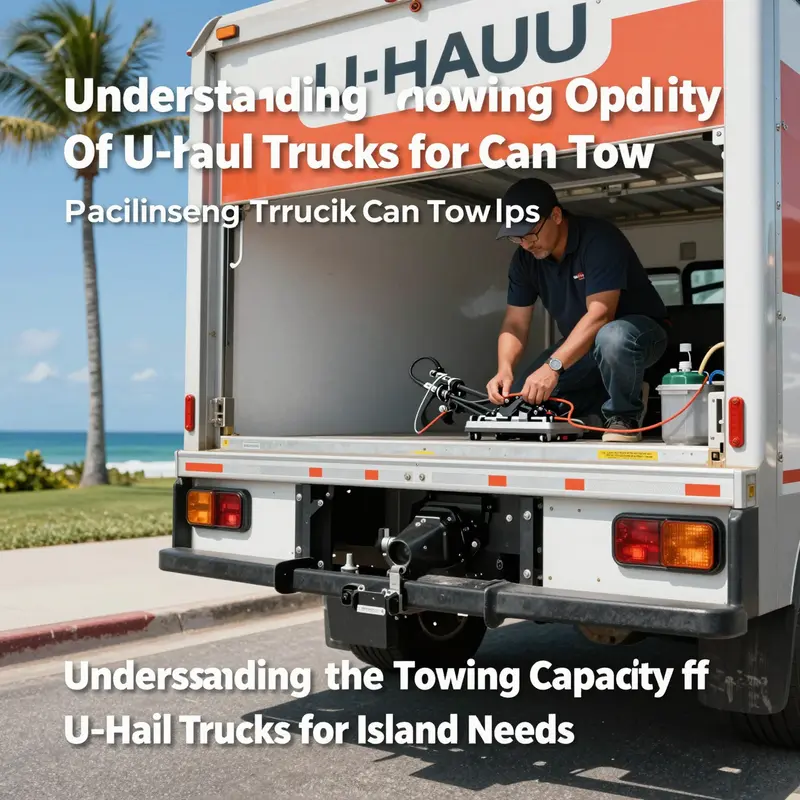
When you plan a move or coordinate a fleet operation that involves a U-Haul rental, the central question is not a single number but a careful calculation rooted in the vehicle you select. The amount you can tow with a U-Haul truck is determined by the model’s design, its curb weight when empty, and the manufacturer’s stated maximum towing capacity. These elements work like a balance sheet for weight: the truck’s own mass, plus the weight it pulls, must stay within safe limits. If you reduce the weight you carry in the cab or in the cargo area, you can shift how much the truck can pull behind it. But even with a lighter load, you cannot exceed the vehicle’s official ceiling. This is not just about getting from point A to point B; it is about maintaining control, ensuring braking effectiveness, preserving steering response, and preserving the long-term integrity of the rental agreement and any insurance coverage that depends on the vehicle operating within its designed parameters.
For many people, the practical takeaway is to remember the two core determinants that U-Haul itself emphasizes. First is the curb weight—the weight of the truck when it is empty. This is not a number you should approximate or ignore. It forms the baseline, the weight against which everything else is measured. The second determinant is the manufacturer’s specified maximum towing capacity for that exact model. In other words, if you know your truck’s empty mass and you know the maximum trailer weight the manufacturer allows, you can deduce how heavy a load you are legally and safely allowed to pull. These two factors set the boundaries, and they must be respected in full. While it might be tempting to think that any combination of an equal or lesser weight could be pushed a bit further, the reality is that the limits are set to account for engine power, braking capacity, transmission cooling, steering dynamics, and the geometry of the chassis. Pushing beyond those limits can compromise handling, increase stopping distances, and wear components unevenly, which is especially risky on unfamiliar roads or in adverse weather.
Within the U-Haul lineup, you’ll encounter a spectrum of capacities that reflect the range of tasks people undertake when moving. The typical 10-foot truck, which is a compact and nimble option for small moves or for moving heavy items from one location to another, has a towing ceiling around 6,000 pounds. The 15-foot truck, designed to carry more furniture and boxes, can tow up to about 10,000 pounds. The 26-foot truck, often the workhorse for larger moves that include multiple rooms of furniture plus appliances, shares a similar upper limit with the 15-foot model at roughly 10,000 pounds. Then there is the 8-foot pickup-sized class of U-Haul, which, while smaller, can tow up to around 6,000 pounds. These figures are approximate and can vary with the exact configuration of the vehicle you rent. Even within the same nominal model, factors such as the engine variant, drivetrain setup, axles, and how the hitch is installed can nudge the towing capacity slightly in one direction or another. The key is that these numbers are not promises to exceed; they are limits to guide your planning.
What this means for real-world planning is simple on the surface and a little more nuanced in practice. Before you hook a trailer behind a U-Haul, you should know two numbers with confidence: the truck’s curb weight (the mass of the truck when it is empty) and the manufacturer’s maximum towing capacity for that specific vehicle. Only then can you assess whether your planned trailer, loaded with cargo and possibly bikes, kayaks, or household goods, will fit within those boundaries without pushing the vehicle into unsafe territory. This is why U-Haul emphasizes checking the exact vehicle details at the time of rental, either on the rental agreement or the placard located on the driver’s side door jamb, which is the fastest, most reliable source of truth for the vehicle you’ve rented. It’s also why the advice from U-Haul representatives at the rental location is invaluable; they can confirm the precise limits for the day’s vehicle and help you select an appropriate hitch, confirm weight distribution plans, and discuss whether a particular load requires a lighter trailer or even a smaller truck.
Yet even when you stay within the official limits, other factors can influence how effectively a truck tows. The curb weight and the rated towing capacity do not exist in isolation. They are deeply affected by road conditions, climate, and how you pair the load with the trailer. Weight distribution matters as much as the total weight, which means that tongue weight—the portion of the trailer’s load that presses on the hitch—needs to be balanced correctly. A trailer that pushes too much weight toward the hitch can cause excessive sway, while too little tongue weight can reduce steering stability and braking effectiveness. A skilled setup uses a weight-distributing hitch when appropriate, especially for heavier loads, ensuring that the vehicle’s rear axle isn’t overloaded and the front wheels maintain adequate contact with the road. The brakes on the trailer, the presence or absence of trailer brakes on the truck, and the overall braking capacity of the combination all influence how safely you can stop after the hitch is engaged. All these considerations are part of the safety calculus that accompanies the simple question, “How much can I tow?”
The interplay of these factors becomes especially important when you translate a moving task into fleet planning or emergency response scenarios. In these contexts, the capacity you see on the door jamb or in the rental agreement is the baseline. The actual safe maneuvering of a loaded unit—especially in urban alleys, on winding roads, or under heavy wind gusts—depends on your ability to control momentum, maintain traction, and distribute weight so that neither axle is overtaxed. This is why experienced operators pair a clear understanding of tow limits with a thorough pre-tow checklist: verify the towing equipment is appropriate for the mass on the trailer, confirm the hitch and connections are secure, ensure lights and brakes are functional, and double-check that the load is secured and evenly distributed. It is a discipline that blends arithmetic with practical hands-on checks, a blend that protects everyone on the road and preserves the rental agreement’s terms.
From a practical moving perspective, the numbers also matter in a more strategic sense. If you’re coordinating a multi-stop move or managing a fleet tasked with rapid response scenarios, you will likely encounter situations where you must optimize the bin-packing of items or decide between borrowing a larger truck with a higher towing limit versus renting a smaller truck and making more trips. This is not merely a cost calculation; it is a safety calculation. A heavier-than-necessary trailer increases braking distance and reduces acceleration, impacting how quickly you can respond to hazards on the road. Conversely, choosing a trailer that exceeds the truck’s capacity invites risk that can be traced back to the manufacturer’s safety margins. The balance lies in careful load estimation, conservative planning, and adherence to the stated capacities for the day’s specific rental vehicle.
To support readers who are planning moves or organizing fleet operations, consider leveraging reliable, vehicle-specific guidance that can be tailored to your scenario. For instance, many people find it helpful to sketch out a simple weight budget before leaving the house. Start with the truck’s curb weight, add the trailer’s ballast, and then add cargo, minus the reserve you know you must reserve for fuel and miscellaneous items. If the result is less than or equal to the manufacturer’s maximum towing capacity, you are in the safe zone. If not, you should either offload some cargo, switch to a smaller trailer, or select a truck with a higher rated capacity. In some instances, a move might even benefit from coordinating with a fleet manager who can advise on whether a two-trip approach, a different truck size, or a staged loading plan could reduce risk and improve efficiency. And as you plan, a helpful resource for broader operational considerations and emergency readiness can be found on the Island Tow Truck blog, which offers practical insights into fleet readiness and towing strategies: theislandtowtruck.com/blog/.
For readers who want to deepen their understanding beyond the core numbers and the basic two-factor rule, there is value in recognizing that the U-Haul equipment exists within a broader ecosystem of towing and moving options. The company provides guidance on selecting the right truck based on load and towing needs, including advice on proper hitch use and weight distribution. They emphasize the importance of accuracy in vehicle details at the time of rental and encourage customers to verify the exact capabilities for the specific vehicle they will operate. This is a reminder that even though numbers like 6,000 or 10,000 pounds may appear straightforward, the actionable decision rests on a precise match between the vehicle’s empty weight, its rated capacity, and the actual weight of the load and trailer you intend to tow.
In many ways, the issue of towing capacity becomes a window into responsible moving and dependable fleet operations. It requires a disciplined approach that respects limits, prioritizes safety, and acknowledges that the towing task is an integrated system: the vehicle, the hitch, the trailer, the load, the driver, and the environment all interact. The ability to manage this system effectively can dramatically reduce the risk of accidents, protect equipment, and ensure that a move or a mission proceeds with predictability and control. It is a reminder that when you rent a truck, you are leasing not only a carriage for cargo but a path for safe movement that must be navigated with precise information, careful planning, and prudent judgment. The rental agreement and the placard provide the first and most important data points, but the real work happens when you translate those numbers into a precise, conservative plan that keeps you on course from start to finish.
For readers seeking additional practical context and broader planning guidance, a relevant external resource is available to help inform safer and more effective towing practices: https://www.uhaul.com/moving-trucks/ . The page offers official guidance on which truck to choose for particular loads, along with notes on hitch use and weight distribution relevant to the task at hand.
Choosing the Right Rental Truck: Understanding Tow Capacity for Your Move
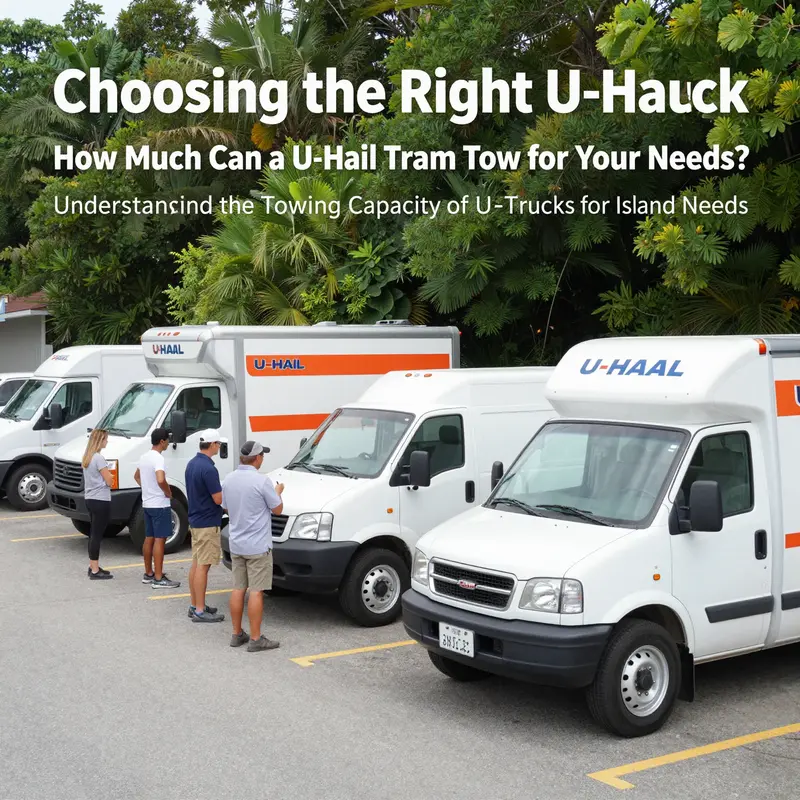
When you plan a move or a hauling task, the central question extends beyond simply getting from point A to point B. It hinges on the balance between what you load and what the vehicle can safely pull. The capacity you see advertised for a rental moving truck is not a single universal figure. Instead, it represents the upper limit that depends on the model, size, and configuration of the unit you pick. Even within the same model family, small differences in engine type, drivetrain, and axle ratio can nudge the towing limit up or down. For this reason, it is essential to anchor your plans to the specific truck you will rent and verify the precise numbers at the rental location on the day you pick up the vehicle. This chapter unpacks the practical meaning of those numbers and shows how to translate them into a safe, efficient moving solution that fits your load, space, and timeline.
The typical lineup in this category includes several common options, each with its own towing ceiling. A standard pickup-style rental that is often chosen for lighter tasks can tow up to about 6,000 pounds. This capacity suits a boat, a personal vehicle, or a motorcycle, and it serves as a versatile choice for smaller to mid-sized towing tasks. When the load is larger or the distance longer, the next tier usually comes in with a longer body and a higher payload. The 15-foot class offers a towing limit around 10,000 pounds. This is a meaningful step up and is well-suited for longer relocations or heavier equipment that still remains manageable within a mid-sized moving fleet. The largest commonly rented box truck in this category, the 26-foot model, also lists a towing capacity near 10,000 pounds. Here the emphasis shifts from sheer space to a practical balance: substantial interior volume to move bulky items, with a towing limit that remains in the same general range as the mid-sized unit. Each figure is an approximation and may shift slightly depending on the exact configuration at the time of rental. The key is to confirm the exact rating for the specific vehicle you’ll drive away with and to plan around that rating, not a generic number.
Alongside towing capacity, it’s important to keep in view the separate but related notion of cargo capacity—the total weight the truck can carry in its own right. For the smaller 10-foot truck, the cargo capacity can be as high as roughly 2,850 pounds. That payload figure includes the weight of the truck itself and everything loaded into it, so you’ll want to subtract the truck’s own weight from your total load when you’re planning. The 26-foot truck, which provides dramatically more interior space, can handle up to about 12,859 pounds of cargo. The distinction between cargo capacity and towing capacity matters because it frames two different limits you must not exceed: the weight you put inside and the weight you attach behind, if you are towing a trailer or another vehicle. In practical terms, this means you could have a 26-foot truck with a high payload capacity yet still be constrained by a 10,000-pound towing cap if you intend to pull a trailer or another heavy item behind it. The numbers are not interchangeable; they govern different parts of the hauling equation. The volume and height specs—such as a clear height around 12 feet and the cubic-foot capacity—help you visualize whether a particular move is feasible in a single truck, or if you’ll need to stage items or reduce the load.
All these figures are the backbone of planning, but they do not tell the full story. Weight distribution, hitch type, and how the load is arrived at through the hitch play pivotal roles in whether you can safely achieve the theoretical maximum. A key rule of thumb is to plan your load so that the weight is as evenly distributed as possible and kept low and centered over the axle or axles specified in the vehicle’s loading chart. Improper distribution can sharply reduce handling and braking effectiveness, even if you stay under the stated limits. This is where the practical craft of loading comes into play: lighter, denser items should ride low in the cargo area; heavy items should be centered to maintain a stable center of gravity; and all loads should be secured with ample tie-downs and straps. A weight-distribution hitch, when appropriate, can improve stability and steering response by evenly sharing the tongue weight across the hitch and the vehicle’s rear axle. The takeaway is simple: you may know the ceiling of your towing capacity, but safety and control hinge on how you place the weight and how well you secure it.
Beyond the numbers and the math, the moving experience is about assessing real-world constraints. The towing capacity you see is a ceiling, not a target. When you are hauling with a rental truck, you must consider the nature of the items, their dimensions, and the geometry of the trailer if you are using one. If you’re towing a trailer, the trailer’s own weight adds to the total load behind the hitch, and the combined weight must stay within the vehicle’s towing limit. If you’re towing a vehicle, a boat, or large furniture, the approach to securing, balancing, and braking becomes a shared responsibility between the truck and the driver. The route matters, too. Hills, curves, and road grades can amplify stress on the drivetrain and braking system. A longer trip with heavy cargo benefits from additional planning steps: pre-load the route to minimize abrupt stops, check tire pressures, ensure the hitch and safety chains are properly secured, and confirm that the load does not obscure lights or license plates.
To translate these principles into a concrete plan, begin by listing every item you intend to move and estimating their weight. If you can, weigh the heavier items and sum them up. Compare that total to the payload capacity of the configured truck you intend to rent, then factor in the weight of the fuel and the hitch equipment. Next, consider whether you will be towing anything behind the truck. If so, you will need to add the trailer’s weight to the equation, along with tongue weight that actually sits on the hitch. It is a common mistake to focus only on the gross weight of the items and overlook how weight distribution can shift as you drive. Once the numbers are in hand, talk with the rental professional about the exact configuration you’ll drive away with. They can confirm whether the payload and towing limits for that unit will accommodate your planned load and, if necessary, suggest a different size or a different equipment setup.
In practice, many movers find success by viewing the junior class pickup-style rental as a versatile tool for lighter tasks, while reserving the 15-foot or 26-foot options for heavier or longer moves. The 10,000-pound towing limit that often accompanies the larger unit is a meaningful margin for many loads, especially when combined with a robust payload capacity. Still, the most important step is to verify the precise vehicle’s specifications at the rental location and to use them as the starting point for every loading decision. The safety and efficiency of your move hinge on aligning the actual equipment with the weight and geometry of what you transport.
For readers who want to explore broader perspectives on towing and emergency planning in a fleet or mobile context, a deeper dive into practical towing workflows and preparedness strategies can be insightful. The Island Tow Truck Blog offers relevant perspectives on how operators balance capacity, safety, and rapid response in real-world settings. The Island Tow Truck Blog
To close the loop, remember that the numbers you see on the rack are a guide, not a guarantee. Always check the official, up-to-date specifications for your exact rental date and location. The safest path is to confirm the model and its numbers in writing at pickup, then plan your load, route, and hitch setup accordingly. If you need direct, authoritative specifications, consult the provider’s site for current details and guidance on proper hitch usage and weight distribution. External resources can provide the latest guidance and reflect recent changes in equipment design and safety recommendations. Official specifications and current guidance are available at the provider’s site: https://www.uhaul.com
Tow with Confidence: Unpacking Real-World Capacity and Safety for U-Haul Rentals
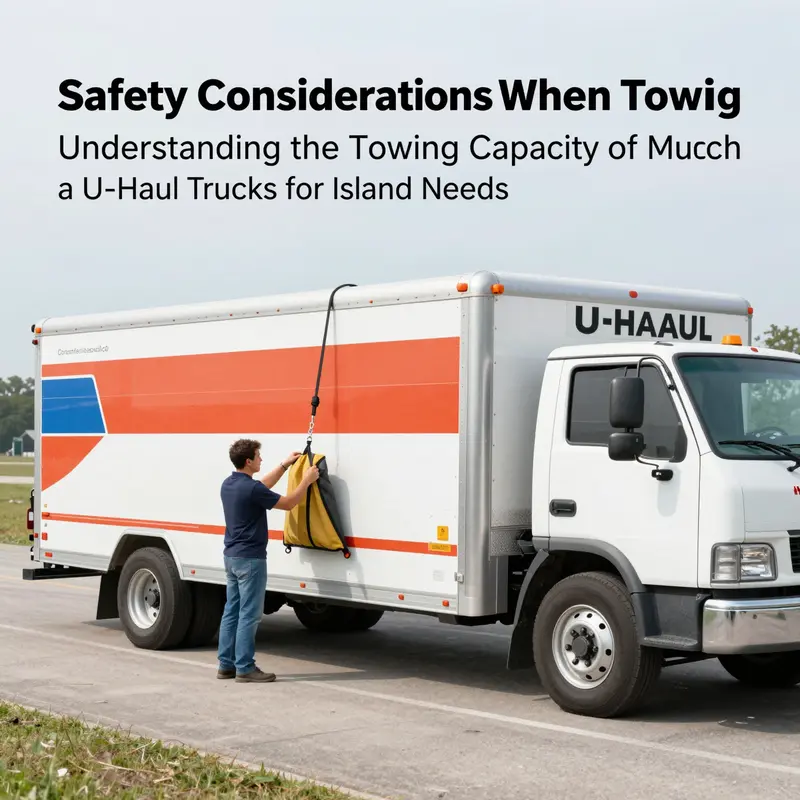
Choosing the right truck for a move or a temporary haul means more than picking a size. It requires a careful understanding of what the truck can actually tow, how weight distribution affects stability, and what steps you can take to keep the journey safe from start to finish. The topic often comes up in the same breath as rental logistics, yet it sits at the core of safe driving and predictable stopping. When a U-Haul truck is tasked with pulling a trailer, the numbers on the spec sheet are more than mere figures—they are the boundary between smooth handling and a roadside emergency. In the broader landscape of move planning, towing capacity represents one of the most critical, and sometimes confusing, constraints. The capacity of a given truck is not a single universal ceiling that applies to every load, every trailer, and every road condition. Instead, it is a value that shifts with the model, the year, the drivetrain, the hitch, and even the specific configuration of the truck you rent. This nuance matters because the difference between staying within capacity and exceeding it can translate into shorter stopping distances, less braking performance, and the unsettling experience of sway or loss of control in gusty winds or on grade changes. To move with confidence, you must translate the numbers on the page into real-world decisions on the road.
The research landscape presents a range of values that illustrate this nuance. Some general references list towing capacities by truck size in broad terms: the 10-foot U-Haul truck up to roughly six thousand pounds, the 15-foot around ten thousand, the 26-foot around ten thousand as well, and even the pickup truck at about six thousand. These figures give a useful starting point for high-level planning, but they are approximate and may not reflect the precise limits of the exact vehicle you will drive away with from a rental location. In practice, the precise towing capacity for a given rental depends on the specific vehicle configuration at that moment, including the engine and transmission setup, the axle ratio, the presence of a weight-distribution hitch, and the trailer’s own characteristics. For anyone who plans to tow, the most reliable course is to verify the exact capacity of the specific truck you intend to rent. U-Haul itself emphasizes checking the vehicle details at the time of rental and consulting the official guides for the most accurate figures. This early step—confirming the truck’s precise specification and the trailer’s weight—prevents miscalculations that could compromise safety.
When we drill into the numbers themselves, a more nuanced picture emerges. In the detailed results for the chapter, the capacities vary by truck size in a way that reflects real-world differences among individual fleet configurations. A 10-foot U-Haul truck is shown with a towing capacity of 2,850 pounds. A 26-foot U-Haul truck, by contrast, is listed with a towing capacity of 12,859 pounds. These numbers underscore two important truths. First, there is a meaningful difference between the capacities of different truck sizes within the U-Haul fleet. Second, even within a given size, the capacity is contingent on the exact vehicle’s specifications—engine type, drivetrain, axle ratio, and whether a particular hitch and weight-distribution system are installed. Such variation means that blanket statements about “the 10-foot can tow this, the 26-foot can tow that” are not reliable when you are preparing for a move. The safer approach is to tie the decision to the actual truck’s published rating for that rental day.
Beyond the raw numbers, the notion of towing capacity is more usefully understood when framed as a constraint tied to safe operation. Towing a trailer imposes a heavier demand on the vehicle’s braking system, steering responsiveness, and overall stability. Exceeding the rated limit can lead to brake fade, longer stopping distances, and increased risk of trailer sway—conditions that multiply the chance of an accident in crosswinds, on hills, or during emergency maneuvers. The margin between the loaded reality and the published limit should be treated as a safety buffer. For many moves, this means choosing a truck that is not just capable of meeting the total weight of your cargo plus trailer, but one that provides a comfortable buffer given the road conditions you expect to encounter. The buffer is not a luxury; it is a safety standard that can keep braking efficiency and handling intact when you need to maneuver through traffic or react to changing weather.
To translate capacity into a practical approach to loading, it is essential to distinguish between trailer weight and load weight. The trailer’s gross weight includes all contents, while the tow vehicle’s rating is a ceiling on the combined weight it can safely move. A common trap is to focus only on the trailer’s weight while forgetting to account for the tow vehicle’s own weight and the trailer tongue weight—the portion of the trailer’s load that sits on the hitch. Properly balancing these components is critical because the tongue weight influences steering and stability. The reality is that a well-loaded trailer can still push a vehicle to its limits if the distribution is off. That is why weight distribution inside the trailer matters as much as the total weight. In practice, loaders and drivers should aim to position the cargo so that the majority of weight is toward the front of the trailer—roughly 60 percent toward the trailer’s forward end. This arrangement helps keep the tow vehicle stable and reduces the tendency for the trailer to sway at highway speeds.
Where this discussion becomes even more practical is in the day-to-day planning of a move. If you are using a 10-foot truck, you may be inclined to assume you can pull a fairly heavy trailer. The reality is that the official capacity for that specific truck may be lower than the blanket figures suggest. If you have a 2,850-pound tow capacity, for example, you should calculate the trailer’s weight in combination with the cargo you plan to haul and the tongue weight to ensure you stay within the limit. While a 10-foot truck might be thought of as a compact option for lighter loads, the precise capacity for your rental needs careful verification. On the other end of the spectrum, a 26-foot truck, built for larger residential moves, will typically handle more weight, but still within a precise limit. The detailed results show a capacity of 12,859 pounds for the 26-foot variant, illustrating how a larger truck can move a substantial load when properly matched to the trailer and its contents. Of course, these numbers are not interchangeable with the generalized “up to 10,000 pounds” maximum some guides quote for the 26-foot. The discrepancy underscores the importance of matching the specific truck to the load rather than relying on a broad category.
In practical terms, the safety-centric approach centers on three actions: verify, distribute, and inspect. Verify means checking the exact towing capacity listed for the specific truck you rent. This information is typically provided in the rental agreement, and it can be reinforced by the vehicle details on U-Haul’s website or at the location. Distribution means loading with an eye toward the trailer’s weight distribution, ensuring heavier items are toward the front and that about 60 percent of the cargo weight sits ahead of the axle line of the trailer to promote stability. Inspect means performing a thorough pre-trip check that includes hitch connections, trailer lights, and the trailer brakes, as well as ensuring the tires on both the tow vehicle and the trailer are inflated to the correct pressure. On the topic of tire inflation, it is common to adjust the rear tire pressure of the tow vehicle slightly higher—by about 6 psi above the normal level—provided you do not exceed the maximum pressure stamped on the tire sidewall. This small adjustment can help the vehicle handle the extra load more responsively, though it should never replace proper weight distribution or a load within the specified limit.
A broader safety framework also invites a consideration of how to prepare for the journey beyond the truck itself. The use of a weight-distribution hitch can improve stability by more evenly distributing tongue weight across the hitch assembly. Anti-sway devices may be appropriate in gusty conditions or on longer hauls where highway crosswinds could otherwise amplify trailer sway. A pre-trip inspection should be more than a formality; it is a critical, time-sensitive checklist that confirms lights, brakes, hitch pins, and safety chains are secure and functioning. If you are moving with a rented U-Haul, these steps become less about compliance and more about the practical peace of mind that comes from knowing you have minimized potential failure points on the road. The overall takeaway remains clear: never exceed the calibrated towing capacity of your exact truck, and treat the capacity as a ceiling that you respect in every loading scenario.
For readers seeking further context on safety and fleet readiness, a broader perspective on emergency preparedness and fleet safety planning can be valuable. emergency-preparedness-for-island-fleets offers insights into how fleets plan for reliability and safety in challenging environments, a mindset that translates well into everyday towing decisions. By aligning loading practices with a disciplined safety framework, you shore up your ability to respond to unexpected events on the road and maintain control of your load even in adverse conditions.
When it comes to explicit, model-specific data, the takeaway is simple: read the exact numbers for the truck you will drive, not the numbers printed in broad guides. The variation we see in the detailed results—2,850 pounds for the 10-foot model versus 12,859 pounds for the 26-foot model—shows that even within the U-Haul fleet, there is a meaningful spread. The figures remind us that the towing capacity is not a one-size-fits-all attribute; it is a marker of a specific vehicle’s hardware and configuration on a given day. The prudent path is to treat the listed capacity as a maximum for that exact truck, and to build your loading plan around a comfortable margin below that number. In practice, this means selecting a truck whose published capacity comfortably exceeds the anticipated load, then loading with that buffer in mind. It also means staying vigilant about road conditions, ensuring the trailer’s tongue weight remains within acceptable bounds, and avoiding any attempt to compensate for a heavy load with risky driving behavior, such as speeding or abrupt steering.
The chapter’s core message remains consistent with the broader aim of safety: use the most accurate, truck-specific data, prioritize proper weight distribution, and conduct thorough pre-trip checks. This approach minimizes risk and makes the towing experience more predictable. The numbers can be interpreted as guidance rather than as a casual target; they are indicators of what the vehicle can manage safely under normal conditions. When in doubt, err on the side of caution, re-evaluate your load, and consider adjusting to a higher-capacity option if your planning indicates that your trailer’s weight, combined with cargo and tongue weight, approaches the published limit.
External resource for further verification and up-to-date specifications is available through the official towing capacity guide from the rental provider. This resource consolidates the most current figures for each truck model and configuration, ensuring you have the latest information when you arrive at the rental desk. By combining precise vehicle data with sound loading practices and a safety-first mindset, you can navigate the process with confidence and keep the focus on a smooth, controlled journey rather than last-minute surprises on the highway.
External resource: https://www.uhaul.com/Trucks/Truck-Info/
Final thoughts
In conclusion, knowing how much a U-Haul truck can tow is essential, especially for island businesses that rely on effective transportation solutions. From choosing the right model based on specific requirements to understanding the critical factors that influence towing capacity, we’ve provided a comprehensive look at how to optimize your towing practices. Safety should always be at the forefront when handling heavy loads – understanding these dynamics can not only ensure compliance and efficiency but also protect both your vehicle and the loads you carry. Empower yourself with this knowledge to better serve your community.