Understanding your 3-4 ton truck’s towing capacity is essential for local auto repair shops, car dealerships, property managers, resort operators, and commercial fleet operators. These vehicles offer versatility and strength, yet their towing capacities can vary greatly depending on configuration, make, and model. In this guide, we will explore the various configurations of 3-4 ton trucks, the factors influencing their towing capacities, real-world applications across industries, and the specifications and recommendations from manufacturers. Each chapter will provide you with the insights necessary to make informed decisions that will enhance your transportation tasks on the islands.
Tow Limits in Real Life: Unpacking How Much a 3–4 Ton Truck Can Tow Across Configurations
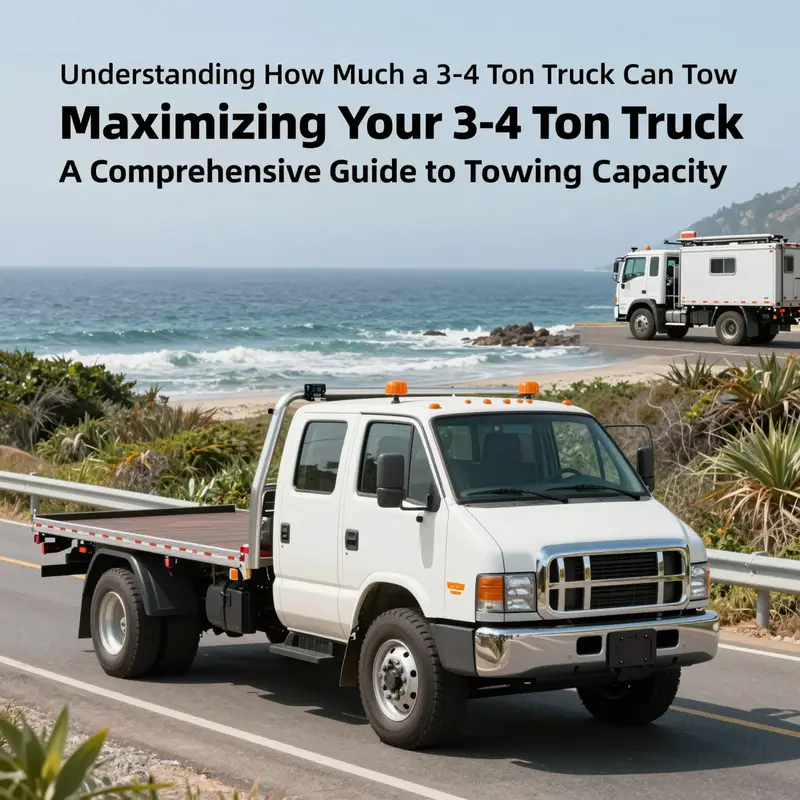
When people hear that a truck is categorized as a 3–4 ton workhorse, the first instinct is to assume a single, reliable towing number should apply to every vehicle in that band. Yet the truth is more nuanced. The label often conflates payload capacity with towing potential, and in the real world those two figures diverge because they arise from different design goals. A three-ton chassis might be optimized for carrying heavy loads in its cargo bed, while another three- or four-ton configuration prioritizes stability, braking, and chassis strength for towing trailers. The result is that there is no universal towing capacity attached to the 3–4 ton class; the actual number depends on the truck’s exact configuration, the towing setup, and how the truck’s driveline and suspension are engineered to manage weight, leverage, and control on the road. To navigate this landscape, we need to trace how the capacity is defined, where the limits lie, and why a careful appraisal of the specific vehicle—and the trailer it intends to move—is essential for safety and legality as well as performance.
At the core of towing capacity is the difference between gross vehicle weight rating (GVWR) and the vehicle’s overall towing capability under controlled conditions. The GVWR is the maximum weight the vehicle is designed to carry, including passengers, cargo, and any attached equipment. This number, which sits in a different space from towing ratings, helps determine how heavy a trailer you can confidently manage without pushing the truck past its safest operating limits. In the 3-ton class, you’ll often hear references to a GVWR somewhere in the neighborhood of 14,000 pounds for lighter examples, rising into heavier ranges as the chassis grows in capability and sophistication. But even when a truck wears a GVWR near the 14,000-pound mark, its actual tow rating can be narrower, broader, or simply different depending on the axle setup, braking system, transmission, and the drive configuration. A vehicle’s ability to haul weight on a trailer is only partly a measure of power; it is also a measure of the system’s capacity to pair traction with braking and steering force under dynamic conditions.
To illuminate the landscape, think of heightening levels within the 3–4 ton class. On the lighter end, a three-ton class truck can function as a compact workhorse for medium-duty duties and city hauling. In this tier, the towing capacity typically sits in a practical range of roughly 7,500 to 10,000 pounds. It is a sweet spot for many contractors, landscapers, and service fleets that routinely move fairly heavy trailers, but without stepping into the higher-end demands that push toward longer trailers or heavier loads. These numbers reflect the balance between engine torque, axle ratings, and the braking system, along with the hitch and frame strength. They also assume reasonable trailer configurations—standard two-axle drums or discs, with a compatible braking system and normal wind, road grade, and traffic conditions. The real-world takeaway is that even within a single class, you’ll see a spread that is wide enough to require model-specific confirmation before tying a trailer to the hitch.
The heavier end of the spectrum within the 3–4 ton designation shifts the focus from simple payload hauling to more intensive towing tasks. These are the medium-duty trucks with GVWR that can run from roughly 14,001 up to 26,000 pounds. In this range, towing capacity can reach 20,000 pounds or more, depending on the exact setup. That capability makes these trucks attractive for commercial applications like road-service operations, fleet towing, and heavy-duty flatbed work where large trailers or multiple-to-one payloads must be moved with reasonable cadence and safety. It is important to emphasize that these figures reflect the vehicle’s capacity when configured and loaded for towing, not the total payload the truck can carry in its bed. A flatbed or wrecker setup, for example, will bring a different set of performance characteristics compared with a box or standard flatbed configuration.
A crucial distinction in this landscape is how a truck’s specialized configurations affect its towing ability. A recovery-focused or wrecking-oriented configuration, which might emphasize a crane or winch for lifting and loading, does not automatically translate to a higher towing rating. In fact, the lifting capacity of a recovery crane is a separate capability; it speaks to the truck’s recovery function rather than to long-distance, trailer-towed moves. Lifting capacities in the vicinity of 1,510 kilograms (about 3,330 pounds) reflect the maximum weight that a vehicle-mounted crane can raise for vehicle recovery operations. This metric is important for on-scene operations but does not indicate the truck’s capacity to pull a towed trailer behind it for highway miles. This distinction matters, because a heavy crane can complicate weight distribution and impact the trailer’s handling, especially if the crane lever pulls weight from tense towing connections and shifts the truck’s center of gravity while in motion.
When we shift the lens from the general class to the specifics of configurations, the picture becomes clearer but more nuanced. A two-wheel-drive platform shares weight and traction differently from a four-wheel-drive chassis. The extra axle count and the distribution of weight across the axles influence both the braking response and the maximum safe trailer weight. A truck designed for towing with a single drive axle may have more limited traction in poor conditions but could show stable handling on level, dry pavement with a lighter trailer. A four-wheel-drive setup, by contrast, brings added traction that improves launch and hill climbing with heavier trailers, but it can also introduce more mechanical complexity, weight, and potential drag that alters performance under load. The suspension system and coupling hardware further shape how a given truck behaves when pulling a trailer. A stiffer suspension with robust spring rates supports heavier trailers but can degrade ride quality when the truck carries light loads. Conversely, a softer suspension improves ride but may compromise stability when towing at highway speeds. In short, the chassis design—how many axles, what driveline, and what suspension—matters as much as the engine horsepower in dictating the practical towing ceiling.
Another piece of the puzzle is the trailer itself. The trailer’s coupling, brake system, electrical connections, and tongue weight all feed into the towing equation. Tongue weight, typically about 10 to 15 percent of the trailer’s gross weight, plays a crucial role in stabilizing the rig. If tongue weight is too light, the trailer can fishtail; if it’s too heavy, steering and braking become oversensitive, sometimes dangerously so. The trailer’s own braking system adds another layer of complexity; a braked trailer shares the load with the truck’s braking system, reducing stopping distance and reducing strain on the truck’s brakes. When you combine these elements with the truck’s own braking system, transmission, and cooling capacity, you begin to see why two trucks that share the same payload rating can behave quite differently when pulling the same trailer across the same route.
For fleet managers and operators, the practical approach is to translate these qualitative factors into a concrete, model-specific specification. The exact towing capacity for a given 3–4 ton workhorse is found in the manufacturer’s data sheets, which detail the vehicle’s gross combination weight rating (GCWR), the maximum allowable trailer weight, and any notes about braking and suspension limits. The GCWR is particularly important because it caps the total weight of the tow vehicle plus the trailer and cargo. Pushing against the GCWR can invite drivetrain overheating, brake fade, and impaired handling. In urban settings where routine tasks involve frequent stop-and-go driving, the temptation to push beyond these numbers can be high, but doing so risks not only fines and insurance issues but, more importantly, safety concerns for the crew and bystanders.
To estimate towing ability in a realistic way, start with the GCWR and the GVWR, then verify the hitch rating and the trailer’s gross vehicle weight. Subtract the vehicle’s base weight from the GCWR to approximate the maximum permissible trailer weight, and compare that with the trailer’s actual weight. If the mathematics reveal a comfortable margin, the configuration may be suitable for the intended job. If the margin is tight, or if the route features long grades or frequent stopping, it is prudent to opt for a lighter trailer or a more capable chassis. This conservative approach protects drivetrain longevity, prevents overloading on steep grades, and reduces the risk of overheated brakes on long downhill descents. It also aligns with safety and regulatory expectations, which mandate that drivers stay within manufacturer-prescribed limits for both the vehicle and the trailer.
What does this mean for a business or contractor choosing a 3–4 ton platform? It means recognizing the difference between the vehicle’s general category and its actual towing capability. It means asking the right questions about the intended use: Will the work involve frequent, short-distance moves within a city, or heavy, long-haul towing across hilly terrain? Will the operation involve braked or unbraked trailers, and what are the typical road conditions? Will the fleet rely on 2WD or 4WD, and how will weather affect traction and braking? The answers guide selection toward a configuration that harmonizes payload capacity, towing capacity, and reliability. In practice, a three-ton flatbed recovery truck might suffice for regular short moves and light-to-midweight trailers, while a heavier, multi-axle configuration could be the preferred choice for long hauls and heavier loads. Yet regardless of the scenario, the path to safe and effective towing hinges on honoring the precise specifications and staying vigilant about changes in weight and load distribution.
The broader takeaway is that a 3–4 ton designation is a useful shorthand for a family of vehicles with a wide spectrum of towing performance. It is not a guarantee of a single towing limit. For those who plan to tow regularly, it is worth consulting the manufacturer’s specifications for the exact model and trim, reviewing the GCWR, the towing capacity, and the hitch ratings. It is also prudent to understand the recovery-specific capabilities if the truck will operate in a mixed role that includes both towing and on-scene lifting. This nuance matters in day-to-day operations and in long-term maintenance planning, where choosing the right configuration can reduce wear, improve reliability, and enhance safety for crews. For practical guidance that integrates fleet considerations with on-the-ground realities, industry discussions frequently address the realities of 3–4 ton work trucks in a broad sense, while acknowledging the specificity required for every model. As you explore resources and forums, you may come across examples and anecdotes that reinforce the importance of matching the vehicle’s design intent with the job’s demands, rather than assuming a one-size-fits-all number.
If you want more practical perspectives on fleet choices and real-world towing considerations, you can explore further insights in resources like The Island Tow Truck Blog, which offers hands-on discussions about operations, maintenance, and load management in the context of island logistics and road service. The Island Tow Truck Blog.
For a deeper dive into official specifications and the framework that governs these capacities, consult manufacturer data and regulatory references to confirm the exact numbers for a given truck and trailer combination. In particular, you will find that the range of towing capacity for the heavier end of the 3–4 ton class can approach around 20,000 pounds or more, depending on configuration and the trailer design. Remember that every vehicle acts within a system of weights, forces, and limits that must be respected to maintain control, braking effectiveness, and roadworthiness across all operating conditions. The precise figures will, in most cases, come from the maker’s documentation that accompanies the exact chassis and drivetrain combination, and they should be treated as the authoritative standard for any incumbent use. As with any heavy-duty operation, safety, compliance, and prudent judgment should guide every towing decision. External resource: Isuzu Official Site. https://www.isuzu.com/
Unpacking the Pull: How Factors Shape the Towing Capacity of 3-4 Ton Trucks
When people ask how much a 3-4 ton truck can tow, they often expect a single number. The truth is more nuanced. A three- to four-ton designation usually refers to payload and gross vehicle weight limits, not a universal towing figure. The actual ability to move a trailer or to haul a heavy load behind a vehicle depends on a carefully balanced set of factors that span engineering, regulatory rules, and the realities of road use. In the end, the towing capacity of a 3-4 ton truck is not simply a fixed, one size fits all metric. It is the product of how the vehicle is engineered, how it is configured, and how it is operated. To understand this, it helps to start with the core idea that every truck model comes with a certified maximum weight it can carry and a separate, certified maximum weight it can pull when towing. These two numbers live in the language of the vehicle’s ratings: the Gross Vehicle Weight Rating, GVWR, which defines what the truck can weigh on its own with occupants and cargo, and the Gross Combined Weight Rating, GCWR, which defines the total weight of the truck plus a trailer when the combination is in motion. The difference between GCWR and GVWR is the maximum trailer weight that the vehicle is permitted to tow safely. In practical terms this means that a 3-ton truck with a GCWR of, say, ten thousand kilograms and a GVWR of seven thousand kilograms could, in theory, tow up to three thousand kilograms of trailer weight. But that is a simplified snapshot, not the full picture. The exact figures for any specific model must come from the manufacturer; more often than not, the numbers are conservative, reflecting safety margins, testing, and the idiosyncrasies of a particular drivetrain and chassis. The distinction between lifting capacity on a wrecker or recovery unit and towing capacity on a standard heavy-duty truck further underscores the important point: a vehicle rated to lift a certain amount with a crane or winch is performing a different function from towing a trailer down the highway. The lifting capacity of a wrecker, for instance, is a separate spec and does not translate directly into the trailer-pulling capability of the same chassis. One might encounter a wrecker that can lift around 1510 kilograms, yet the towing capacity for that same truck in highway conditions could be significantly different, driven by the installation of a crane, the weight distribution, and the hitch system. This distinction matters, because fleets that plan recovery work alongside highway towing must navigate both kinds of limits with care. For readers seeking a concise point of reference that translates field experience into actionable guidance, consider the practical insights found in The Island Tow Truck blog, which discusses towing and recovery realities in real-world fleet operations. The Island Tow Truck blog.
Beyond the numbers, the heart of towing capacity lies in the mechanical and structural integrity of the vehicle. The chassis and suspension must be capable of handling the additional stress that comes with a dragged or towed load. A robust frame, reinforced axles, and a suspension designed to withstand the cyclic forces of braking, acceleration, and steering under load all contribute to how well a truck can tow. The engine and transmission then play a crucial role. A 3-4 ton truck’s engine must deliver sufficient torque at the wheel to get a heavy trailer moving and to maintain control on grades, wind, or uneven pavement. Torque, more than peak horsepower, is the quiet workhorse behind reliable towing performance. Engines with a broad torque curve provide usable pulling power at lower RPMs, which helps during hill climbs and in slow, loaded maneuvers. The transmission and drivetrain—whether rear-wheel drive, four-wheel drive, or a more specialized configuration—shape how this power is conveyed to the road. An efficient drivetrain preserves momentum when starting a heavy load from a standstill and keeps the wheels from slipping on wet or loose surfaces. The ramified interaction between power delivery and tire traction is a constant companion to safe towing. The wheelbase and axle load limits are more than geometric curiosities. A longer wheelbase tends to enhance straight-line stability under load, reducing the tendency of a heavy trailer to fishtail or sway. Yet, a longer wheelbase can reduce maneuverability in tight spaces, complicating tasks such as aligning a trailer with a hitch in a crowded industrial yard or at a loading dock. The weight distribution across the axles must stay within the limits set by the manufacturer and by road safety standards. If too much weight rides on a single axle, tires wear unevenly, braking performance deteriorates, and steering feel becomes muted or unpredictable. The inherent constraints of axle ratings translate into practical limits on how much you can tow, not only in static tests but in dynamic road conditions where a trailer’s motion can magnify small imbalances. The hitch and trailer coupling—often a simple, sturdy connection in the eyes of the layperson—are, in truth, a sophisticated interface engineered to bear a maximum load. The rating of the hitch, the quality and compatibility of the ball mount, and the way the trailer’s coupler engages with the hitch all contribute to how much weight can be safely pulled. An undersized or poorly maintained hitch can become the weak link that undermines an otherwise capable vehicle. The trailer itself is not a passive recipient of the truck’s capacity. Its own weight, braking system, tongue weight, and even its aerodynamic profile influence the total load the truck experiences. Tongue weight, the downward force the trailer tongue applies to the hitch, is a critical factor in steering and braking stability. If tongue weight is too light, trailer sway increases; if it is too heavy, steering and brake response can be adversely affected. In many jurisdictions, trailers also come with their own rated Gross Vehicle Weight, which must be subtracted from the truck’s GCWR to determine the safe tow. Given these interdependencies, the process of selecting a 3-4 ton truck for a given towing task is rarely about chasing a single maximum value. It is about aligning the vehicle’s certified limits with the characteristics of the trailer and the expected operating environment, then respecting an operating margin that keeps the system within its comfort zone. The regulatory landscape further shapes the practical reality. Weight limits on highways, road taxes, and permit requirements vary by country and region, sometimes by class of vehicle or by the number of axles. These rules enforce safe operation and protect infrastructure, even as they constrain how much can be moved in a single trip. For fleets that operate across multiple jurisdictions or that service island or coastal routes, the implications of these rules become part of daily decision-making. The practical task, then, is to translate a model’s published ratings into actionable, on-the-ground practices. This begins with a careful read of the owner’s manual and the official specification plate on the vehicle itself. Those documents contain the exact GVWR, GCWR, axle limits, gross axle weight ratings, and hitch capacities. They also detail restrictions for different configurations and warning signs that indicate when a weight load might be approaching a limit. The numbers themselves are valuable, but the context around them is where true safety lives. It is wise to remember that the advertised towing capacity is rarely a badge of courage for all scenarios. It represents the maximum trailer weight under controlled conditions with a properly matched combination. It presumes ideal tire conditions, well-maintained brakes, correct trailer braking where required, and a driver who understands how to distribute weight and manage sway. When a road grade or wind gust becomes a real factor, that maximum figure becomes a ceiling rather than a goal. In the field, many operators find it prudent to apply a practical buffer, choosing to tow a trailer well under the calculated maximum to preserve tire life, braking performance, and steering responsiveness. The human factor matters as much as the mechanical one. A trained operator who recognizes when to slow down, how to manage corners, and how to anticipate lane changes can keep a tow within safe limits even when business pressures seem urgent. It is in this context that the broader chapter about 3-4 ton trucks becomes most valuable: towing capacity is a relationship, not a number, and the relationship depends on a coordinated system of components, conditions, and judgment. Those who work with these vehicles know that the most important question is not how much you can tow in theory, but how much you can tow safely in practice on the roads you frequent, with the trailers you regularly haul, and under the weather patterns you cannot control. For ongoing, practical insights that reflect field experience rather than theory alone, readers can explore more about fleet and towing practices on The Island Tow Truck blog. The Island Tow Truck blog. The larger point remains: determine the exact certified capacities for the specific model you have, assess the trailer’s weight and braking requirements, and plan for a margin that keeps you firmly in the safe zone. In doing so, the distinctions between payload, towing, and lifting capabilities become clearer, and the path to safer, more reliable towing becomes more straightforward. As a starting point, remember that three to four tons is not a universal cap for all towing in this class. It is a spectrum shaped by the vehicle’s design, the trailer’s characteristics, the road, and the operator’s discipline. The responsible practice is to verify the exact numbers with the manufacturer and to respect every limit published in the official documentation. By anchoring decisions in those documented limits, fleets can reduce risk, extend machine life, and maintain safer operations across their towing tasks. For readers seeking a grounded reference, consult the official documentation provided with the vehicle and the trailer, and, when needed, engage a dealer or service professional to interpret the ratings for specific use cases. External resources that discuss weight and safety standards offer additional context: https://www.nhtsa.gov/vehicle-safety.
null
null
Tow Limits Decoded: Reading Specs, Ratings, and Real-World Constraints for 3-4 Ton Trucks
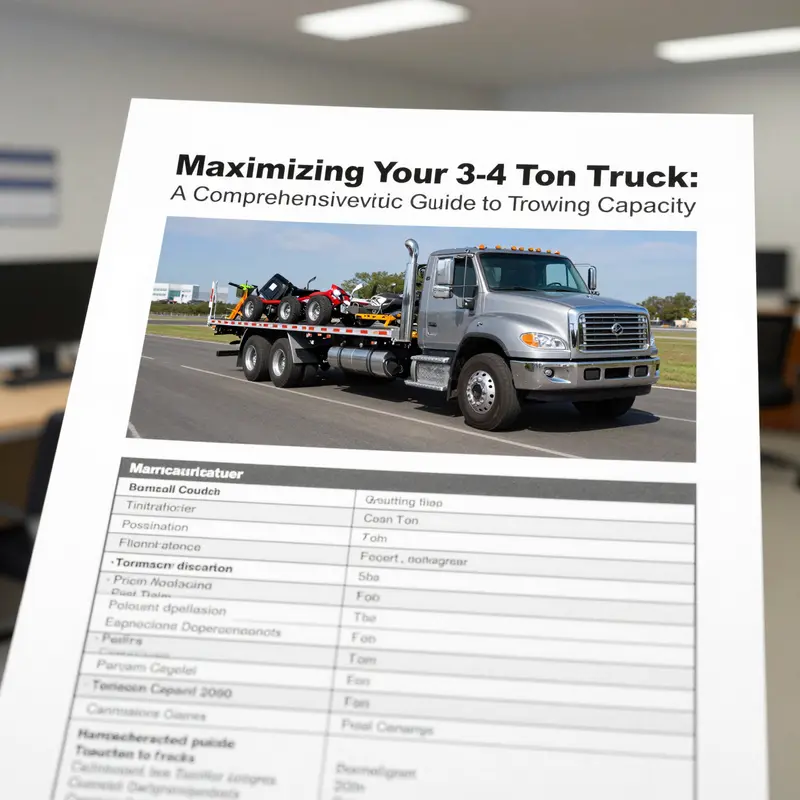
When people ask how much a 3-4 ton truck can tow, they’re often hunting for a single, clean number. The truth is more nuanced. Towing capacity in this class doesn’t hinge on a universal standard; it emerges from a matrix of specifications that vary by make, model, drivetrain, and the specific configuration of the truck and trailer. The most reliable way to understand what any given vehicle can tow is to read its official weight ratings in concert: the Gross Vehicle Weight Rating (GVWR), the Gross Vehicle Mass or Weight Rating (GVM or GAWR for axle limits), and, crucially, the Gross Combined Weight Rating (GCWR). These ratings sit on the vehicle’s data plate and in the manufacturer’s spec sheets, and they are the practical boundary conditions that govern how much can be towed, how heavy the payload can be, and how far the rig can travel with a trailer attached before components are pushed beyond their designed limits.
To begin with the basics, payload capacity—the weight the truck can carry in its cab and bed in addition to its own weight—typically occupies a wide range in this segment. Modern 3/4-ton trucks generally offer payload capacities from about 1,500 to 3,000 pounds (roughly 680 to 1,360 kilograms). Some configurations in the 3-ton or heavier end push toward the upper end of that payload spectrum, with certain variants capable of carrying close to, or up to, 3 metric tons in payload. This is not a contradiction; it simply reflects the diversity of chassis designs, suspension setups, and axle configurations that manufacturers use to tailor a single platform for different commercial needs. In parallel, the same class can boast a widely varying towing profile because towing is not determined by payload alone.
In the context of towing, the GCWR is the decisive figure you must respect. The GCWR combines the weight of the vehicle (curb weight), the payload you’re carrying, and the trailer’s weight. If the trailer pushes the combined total beyond the GCWR, you have exceeded the vehicle’s safe operating boundary. This is why a truck with a high payload capacity might still be limited in its trailer-towing ability if the GCWR is not sufficiently high. Conversely, a truck with a modest payload figure can sometimes tow more than you expect if its GCWR is generous and the trailer weight remains within that cap after accounting for all other loads.
The distinction between payload and towing capacity becomes even more important when you consider specialized tow equipment. A wrecker or crane-equipped recovery vehicle is designed to lift and maneuver heavy loads irrespective of its basic road-towing capability. For such specialized equipment, the lifting capacity of the crane or winch is a separate specification entirely from the vehicle’s towing capacity. For instance, a recovery truck might have a lifting capacity around 1,510 kilograms (approximately 3,328 pounds). That lifting capacity refers to what can be raised or recovered using the crane and is not the same as the trailer-towing limit. In practice, that means a wrecker can perform recovery tasks that involve lifting and stabilizing heavy loads, while its ability to tow a trailer behind the truck is governed by GCWR, curb weight, and the towing-specific hitch ratings. This distinction matters in the field because recovery operations often require precise weight placement and stability during winching, separate from highway towing performance.
In everyday fleet use, most 3- to 4-ton configurations are evaluated for their practical towing capability in light-to-medium duty scenarios rather than for heavy, long-haul trailer pulls. The spectrum runs from urban deliveries to regional service runs, and the towing limits are largely a function of how the manufacturer has engineered the drivetrain, gearing, torque curve, and braking system, combined with the trailer’s own weight and braking dynamics. In this sense, the same weight class can yield very different towing outcomes depending on the truck’s gearing, power output, chassis stiffness, and even the stability characteristics of the hitch and trailer. A machine designed with a beefier frame, stronger axles, and higher-torque output may tolerate heavier trailers than a lighter-duty configuration, but only within the constrained envelope defined by GCWR. The lesson here is clear: always start from the spec sheet rather than from a general impression of the truck’s class.
When the arithmetic of weight comes into play, the practical method to estimate towing capacity becomes a straightforward subtraction exercise. If you know the GCWR and the truck’s curb weight (plus any payload you’re carrying), you can estimate the maximum trailer weight you could legally pull by subtracting the vehicle’s weight from the GCWR. If, for example, a given 3-4 ton platform has a GCWR of around 12,000 pounds (about 5,443 kilograms) and a curb weight plus typical payload of about 3,000 pounds (1,361 kilograms), the estimated trailer limit would be roughly 9,000 pounds (4,082 kilograms). Of course, this is a simplified illustration. Real-world conditions change the numbers: passenger loads, extra fuel, toolboxes, or heavy equipment in the bed all reduce the margin. And the trailer itself adds tongue weight, which is the portion of the trailer’s weight that sits on the hitch. Tongue weight is typically recommended to be about 10 to 15 percent of the trailer’s total weight. A heavier tongue load can drastically affect steering, braking, and overall stability, so that percentage must be included in any accurate calculation.
The engineering reality behind these figures is also influenced by how many axles the vehicle carries and how those axles are driven. A two-axle 3-4 ton truck will handle towing differently from a three- or four-axle configuration, especially when the trailer’s weight is substantial or when road conditions are variable. Drivetrain layout—rear-wheel drive versus four-wheel drive—also plays a role, not only in performance but in how traction and braking feel during towing on grade or off-proad surfaces. In urban contexts, where speeds are modest and routes are predictable, the practical towing limit may be governed most by braking performance and suspension control rather than sheer GCWR. In rough-terrain work or when hauling large, heavy trailers over uneven surfaces, the dynamic stability of the rig can become the limiting factor well before the numbers on the spec sheet are reached.
Across the spectrum, a consistent thread runs through manufacturer guidance: do not exceed the GCWR, the GVWR, or the axle-weight ratings. Exceeding these limits can exacerbate mechanical wear, reduce braking efficiency, and increase the risk of a loss of control, especially in emergency or stop-and-go operations that a fleet might encounter in dense urban environments or on unpredictable rural routes. The guideline becomes even more critical when the operation involves frequent starts, stops, and heavy loads—situations that magnify strain on the transmission, cooling system, and driveline. Fleet operators often complement these numbers with real-world testing, load management practices, and route planning that preserves margin for contingencies such as wind gusts, hills, and sudden traffic patterns. In other words, the numbers are not merely bureaucratic; they represent calculated safety buffers built from years of field experience.
To connect these principles to practical, everyday decision-making, it helps to anchor the discussion in the reality that some 3-ton or heavier trucks are explicitly tasked with heavier towing. In those cases, the model range and configuration can push the GCWR well beyond the threshold that would be considered light towing, enabling trailers that require more substantial braking systems and a robust hitch setup. But even here, the rule remains: consult the owner’s manual and the official spec sheet for GCWR, GVWR, tongue weight, hitch ratings, and any manufacturer-recommended towing accessories. The reason is simple: a given vehicle might be configured with a higher-capacity engine and a stiffer frame, yet still be limited by a lower GCWR if the axle structure or braking system isn’t designed to sustain longer, heavier pulls. The reverse can also be true—two trucks that appear similar on the surface might diverge dramatically in their towing capability due to subtle differences in gearing, cooling, and chassis tuning.
For fleet managers and professionals who face tow-heavy tasks, there is also a regulatory dimension to consider. In many jurisdictions, the combined weight of the vehicle, passengers, cargo, and the trailer crosses into CDL-required territory at a familiar threshold—often around 26,000 pounds (approximately 11,793 kilograms). Crossing that line triggers licensing and operator requirements, which are designed to ensure drivers have appropriate training and that equipment is operated under controlled, safe conditions. This is not a trivial matter: the CDL requirement reflects the practical realities of stopping distances, braking performance, and transmission endurance under heavy-duty conditions. Enforcement can vary by region, so it is essential to verify local regulations wherever the operation takes place.
In sum, the question “how much can a 3-4 ton truck tow?” is best answered by reading the spec sheet in its totality and applying it to the actual vehicle configuration you use. The payload rating tells you how much you can carry inside the cab and bed, but the towing rating is governed by GCWR, the weight of the truck itself, and the weight of the trailer with tongue load. For a given 3-4 ton platform, the towing capacity can range from modest, light-duty pulls to well over 10,000 pounds, depending on how the truck is built and how you intend to deploy it. And while it is tempting to rely on a gut fit, the safest, most reliable course remains to verify every figure against the manufacturer’s official documentation and to perform careful weight management, braking checks, and hitch setup before every towing operation.
For readers who want a practical, field-ready perspective on managing heavier fleet tasks and planning safe, effective responses to emergencies or disruptions, consider exploring resources that tie weight management to operational resilience. You can read about essential fleet emergency response strategies here: essential fleet emergency response strategies. This kind of integrated planning helps ensure that your weight limits, route choices, and safety protocols align with real-world demands rather than simply with theoretical capacities. In the meantime, when you’re choosing a 3-4 ton truck for towing, commit to looking up GCWR, curb weight, and tongue weight, and be prepared to cross-check every figure with the official documentation rather than relying on general impressions or a single-number estimate. That disciplined approach will pay dividends in reliability, safety, and overall operational effectiveness.
As you move forward in this chapter, you’ll see how these principles connect to the broader topic of the article: understanding not just how much a 3-4 ton truck can tow, but how to align vehicle choice, configuration, and operating practices with real-world towing needs. The next sections will further illuminate how to translate these concepts into fleet decisions, maintenance plans, and regulatory compliance, ensuring that your towing capabilities match your operational ambitions without compromising safety or efficiency. For more technical context on chassis and canter-class configurations, consult the official specifications linked in this chapter’s references. External technical resources provide deeper dives into engine and chassis capabilities, including detailed specifications and testing data: https://www.mitsubishifuso.com/en/products/canter/4ton/
Final thoughts
Grasping the towing capacity of your 3-4 ton truck is vital for optimizing its use across various applications. From understanding the configurations to recognizing key influencing factors, such as drivetrain and engine specifications, you can maximize your truck’s performance effectively. Real-world applications reveal the practical benefits these trucks bring to local businesses on the islands, ensuring that they meet your operational needs efficiently. Always consult the manufacturer’s recommendations to stay compliant and maintain safety standards while towing to safeguard both your investment and the road users. With this knowledge, you are better equipped to navigate the demands of your industry.