
For auto repair shops, car dealerships, property managers, resort operators, and commercial fleet operators, knowing the dimensions of flatbed tow trucks is essential. These trucks vary greatly in length, and understanding these differences can make a significant impact on efficiency and logistics in your daily operations. This article delves into five key aspects surrounding the length of flatbed tow trucks. Through our exploration, we will examine the technical specifications, design variations, their towing capacity, models, and real-world applications to ensure you have the knowledge to make informed decisions for your business needs.
The Span that Moves the Load: Decoding Bed Length and Overall Footprint in Flatbed Tow Trucks
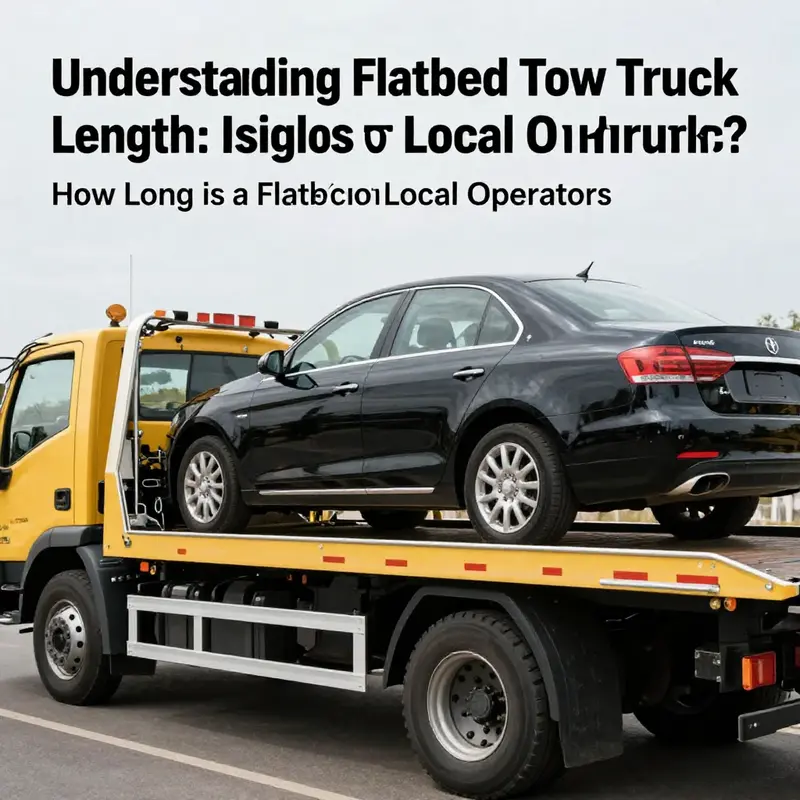
Flatbed tow trucks typically present a bed length that lives in a relatively narrow but crucial band. The bed itself usually measures 16 to 22 feet (about 4.9 to 6.7 meters), and this is the dimension that most directly shapes the kinds of vehicles and loads the truck can manage with confidence. The total vehicle length, which includes the cab and the chassis, tends to run longer—roughly 25 to 30 feet (about 7.6 to 9.1 meters) or more, depending on the model and configuration. The distinction matters because a longer overall length increases the turning radius, affects street clearance, and changes how a tow operator negotiates tight spaces. But the bed length remains the anchor for capacity. It is the bed that determines the maximum wheelbase you can accommodate behind the cab, how many anchor points you can deploy, and how much space remains for ramps and winch access without crowding the vehicle being towed. In practical terms, bed length is the most reliable lens through which to assess what the truck can carry on a given call, independent of the cab’s style or the chassis’s reputation for durability.
The bed length range also mirrors the common duties these trucks are asked to perform. In urban and suburban settings, where streets are narrow and parking options are scarce, operators gravitate toward the shorter end of the bed spectrum—roughly 16 to 18 feet. In these contexts, maneuverability and rapid response time trump the ability to haul larger payloads in one shot. A shorter bed reduces the overall footprint and helps prevent brush marks along parked cars, curb damage, and rear end collisions when entering a tight scene. On the other hand, fleets that routinely handle larger vehicles, multiple vehicle recoveries, or laden heavy-duty tasks may opt for a longer bed—up to the full 22 feet—to extend the reach, improve load distribution, and create room for extra equipment that sits along the bed’s sides. The choice of bed length is a careful equation balancing payload needs, the typical vehicle mix, and the routes that the fleet serves.
Beyond the bed itself, the type of bed mechanism contributes to overall length in meaningful ways. Traditional flatbeds use a fixed platform, and they tend to keep a consistent length from bumper to tail. Rollback or sliding beds introduce a tilting and sliding mechanism that can add a little length to accommodate the hardware that enables tilt and slide. This additional mechanism alters the total vehicle length slightly, but it does not change the core bed length that determines towing capability. The rollback design, in particular, offers a practical advantage: it makes loading easier when clearance is tight while preserving the bed’s core length in elevation and reach. Even with this added machinery, the central bed length remains the critical measure for capacity and fit. The bed length, therefore, remains the most meaningful data point when evaluating a flatbed for a specific set of tasks. In addition to the bed length, the operator will also consider wheelbase, axle configuration, and the truck’s weight ratings to ensure a safe and legal load profile for each job.
The rationale behind these distinctions becomes clearer when we consider load distribution and structural limits. The longer the bed, the more careful the operator must be about how weight sits across the axles. A 22-foot bed can support longer and heavier vehicles, but it also demands a more deliberate approach to securing the load so that the center of gravity remains within the permissible range for braking and steering. Conversely, a shorter bed places tighter constraints on payload size but can make the vehicle more stable on uneven surfaces and during quick maneuvers. Weight distribution is not a cosmetic concern; it governs everything from tire wear and suspension performance to brake fade and steer response under load. By providing a clear bed length specification alongside payload, wheelbase, and GVWR, manufacturers help fleets map out safe, reliable operations and predictable service life for the equipment. In real terms, the bed length informs how you plan loading positions, anchor points, and the overall choreography of a move—from approach to lift, to securement, and finally to transport.
When a dispatcher looks at a flatbed for a particular job, the bed length becomes the primary criterion for whether the truck can complete a task in a single trip or whether a staged approach is required. In a city environment, a bed near the 16 to 18-foot range often aligns with the need to navigate tight corridors, make quick turns, and position the vehicle alongside damaged autos parked along narrow streets. The shorter bed enables safer alignment along a vehicle and reduces the risk of making contact with neighboring vehicles. For operators dealing with larger sedans, SUVs, or light commercial vans, a longer bed toward 20 or 22 feet can provide the extra space needed to accommodate lengthier wheelbases and ensure there is enough room for tie-down points and recovery gear without crowding the vehicle’s sides.
The interdependence of bed length and overall length also shapes maintenance planning and spare parts inventories. A longer bed can demand more substantial side rails, stronger tie-down anchors, and larger mounting brackets. It can also influence the geometry of the ramps and the position of the winch. All these components must be compatible with the bed’s length to avoid misfits that could compromise safety during loading. This is why manufacturers and reputable dealers present bed length as a standalone metric, paired with a complete specification that includes the bed width, the bed height, and the bed angle range when in use. The bed length remains the most consistent barometer of what the truck can physically load and how efficiently it can perform the loading sequence.
For readers who want practical context beyond the numbers, a broader look at fleet operations can illuminate the role bed length plays in emergency response and daily readiness. A fleet that understands bed length as a core capability can allocate resources with fewer trips, reduce scene times, and improve reliability during critical recoveries. The bed length informs the layout of the emergency response plan, from staging areas and access routes to how responders secure vehicles at the scene. It also influences how a fleet plans maintenance windows around service intervals for the winches, hydraulics, and alignment systems that work in tandem with the bed to perform a successful tow. For those seeking perspectives that bridge operating realities with fleet readiness, The Island Tow Truck blog presents additional insights into how fleets manage emergency response strategies and vehicle recovery across varied environments. The Island Tow Truck blog
In sum, the bed length of a flatbed tow truck is more than a specification; it is the compass by which operators judge suitability for a job. The bed length determines what kinds of vehicles can be loaded, how quickly a scene can be cleared, and how safely the load can be secured from pick-up to transport. While the cab and chassis contribute to the vehicle’s overall footprint, it is the bed’s 16 to 22-foot range that sets the practical limits of capability. Longer beds expand the envelope for larger vehicles and multi-vehicle recoveries, while shorter beds sharpen agility in crowded urban spaces. Rollback and other tilting mechanisms can nudge the total length upward slightly, but the bed remains the central factor in assessing how a flatbed tow truck will perform on a given call. For anyone choosing a flatbed for a particular operation, the bed length should be the starting point of the evaluation, followed by a careful review of wheelbase, axle configuration, and weight ratings to ensure the truck can perform reliably, safely, and within regulatory constraints. For precise bed-length options, see this listing: https://www.alibaba.com/product-detail/Flatbed-Tow-Truck-Dimensions-16-to-22-feet_1600332535417.html
Length by Design: How Hoist, Roll-Back, and Wheel-Lift Variations Determine Flatbed Tow Truck Length
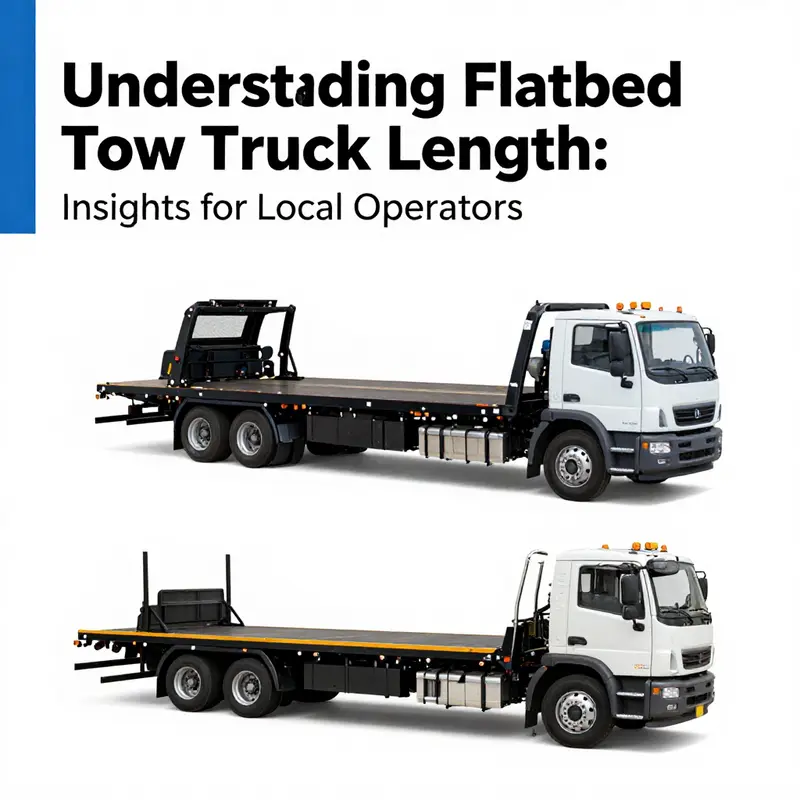
The question of how long a flatbed tow truck is cannot be answered with a single figure. It depends on design, purpose, and the environment in which the vehicle operates. Across the industry, overall length typically falls in a broad band from the mid-twenties to the upper thirties of feet, but a more precise answer requires looking at the design choices embedded in the chassis and the bed. In practice, most flatbed tow trucks sit roughly between 24 and 30 feet in overall length. That measurement includes the cab, where the driver sits, and the flatbed platform that carries the disabled vehicle. The bed itself usually stretches 16 to 22 feet. Those numbers aren’t random; they reflect the balance between weight distribution, loading angle, and maneuverability. A longer bed can improve loading safety and reduce stress on a towed vehicle, but it also makes parking and cornering more challenging. A shorter bed makes the truck nimbler, yet it narrows the range of vehicles that can be loaded without additional equipment or repositioning. The spectrum is wide because the industry designs trucks for distinct roles: urban tow work with tight spaces, rural and highway service with heavier loads, and specialized operations that demand unique configurations. For precise measurements, one must consult the manufacturer’s specifications for the exact model and configuration, because even within a given class, a few inches here or there can shift how a fleet operates in real-world traffic and on narrow island streets alike. For those managing fleets where space is a premium, the length question becomes a planning tool as much as a specification sheet.
The primary design variations—hoist-assisted flatbeds, roll-back flatbeds, and integrated wheel-lift systems—each push the overall length in different directions. The bed length itself may be the same across models, but the carriage, the mechanism, and the control hardware take up space that must be accounted for in total length. Hoist-assisted flatbeds, also known as partial-tilt configurations, place lifting capacity toward the rear or the front of the bed but keep the platform relatively direct and compact. The advantage is a lower overall footprint, ideal for urban operations where maneuverability is at a premium. The trade-off is that the hydraulic lines, winches, and related components add complexity. While these systems can introduce additional hardware that increases the length slightly relative to a flatbed with a simpler design, the reduction in bed extension often keeps the total length within the middle range of the typical spectrum. In practice, you’ll see these setups cluster around the lower to mid-twenties, with the long axis remaining manageable for city streets and tight driveways. The result is a vehicle that feels less like a highway workhorse and more like a nimble tool for on-street recovery.
Roll-back, or slide-bed, flatbeds tell a different story. The bed tilts and slides backward on rails to form a ramp that allows the towed vehicle to back onto the bed at a low approach angle. The mechanical complexity of that system is the reason roll-back models tend to run longer overall. The rails, counterbalance mechanisms, and the hydraulic system that swaps the bed from a loading to a transport configuration require extra space along the length of the chassis. Even though the actual platform may be similar in length to a hoist-assisted bed, the full assembly behind it extends the vehicle’s footprint. The extra length isn’t just a matter of aesthetics; it translates into loading safety, reduced torque transmitted through the towed vehicle’s drivetrain during winching, and a lower risk of damage when securing a load. For operators who routinely haul stubborn or heavily damaged vehicles, the roll-back design offers a clear advantage, but it comes with a longer wheelbase and overall length that can complicate street access and parking in crowded lots or narrow lanes.
Integrated wheel-lift configurations add another layer of variation. These systems fuse the flatbed with a front-end wheel-lift or a hybrid approach that can tow without relying exclusively on the bed. The result is a modular, adaptable platform that can lengthen or shorten depending on the lift arms, control systems, and the way the operators mate the bed to the lifting apparatus. The wheel-lift element can extend past the traditional bed length, especially when the mechanism is deployed or when the truck is configured for certain load profiles. In practice, integrated wheel-lift designs often sit at lengths comparable to or slightly longer than traditional roll-back models, particularly when the lift apparatus is stowed for transport. The added functionality can justify the extra length, since the combination of bed and lift expands the range of vehicles that can be recovered in a single pass, reducing the need for multiple trips or secondary equipment.
If you are planning around a fleet that must respond quickly in constrained spaces—such as on an island where roads twist and parking is limited—the choice among these designs can feel less like a matter of preference and more like a matter of strategic fit. The bed length itself, typically 16 to 22 feet, often remains the same within a design family, but the overall length can shift by several feet depending on the design approach. Light-duty models may sit toward the shorter end of the spread, with beds closer to 16 or 18 feet and total lengths around 24 to 26 feet. Heavy-duty setups, capable of higher towing capacities or with cranes added, push toward the upper end of the range. In some configurations, overall length can approach or exceed the 30-foot mark, especially when the system uses a longer counterbalance or extended rails to support the load more securely. The practical effect of these differences is tangible. A truck with a shorter length may be perfect for a city block response, but it may require more time to load certain vehicles or to set up hydraulic components. A longer truck may perform consistently under heavy load and offer greater protection for the towed vehicle, but it consumes more space in a narrow lane or tight parking structure.
The storytelling of length, however, does not stop at physical measurements alone. It extends into how these vehicles are used and how their length influences safety and efficiency. The loading angle, the alignment of the ramps, and the approach path are all connected to the bed geometry and the mechanism’s travel. Roll-back beds, with their longer footprint, can provide a gentler loading angle at a given height, reducing stress on the drivetrain of the vehicle being recovered. They also offer a smoother progression for drivers guiding a car onto the bed. Hoist-assisted models rely on a controlled tilt to lift the vehicle onto the platform, which can be advantageous in urban environments where space is scarce and traffic may require quick, precise maneuvers. Integrated wheel-lift systems change the calculus by adding a front-end lift that can sometimes reduce the need to back onto a long bed, though the overall length can still be extended by the arms and the control hardware. In each scenario, the length is a practical variable, not merely a spec, shaping turning radius, lane occupancy, and the chance of snagging a curb or another vehicle during a complex recovery.
For those who must make decisions with real-world implications, the takeaway is clear: the length of a flatbed tow truck is a design signature. The design choice—hoist-assisted, roll-back, or integrated wheel-lift—acts as a constraint and an enabler. It constrains how the vehicle can maneuver through crowded streets, how many vehicles it can haul at once, and how quickly it can clear a scene. It enables the operator to handle specific loads safely, efficiently, and with less risk of collateral damage. The longer bed and rolling mechanism are not just about space; they are about control, cadence, and the quality of service that a fleet can provide in demanding situations. As fleets size up their equipment, they weigh the benefits of a longer or shorter overall length against the realities of the roads they traverse, the average load they encounter, and the time windows in which they must operate.
In this calculus, the bed length remains a constant element—16 to 22 feet across most models—while the overall length shifts with design. The exact figures will vary by model and configuration, and the safest approach to planning is to consult the official specifications for the exact configuration in use. This is especially true for urban planners and fleet managers who must integrate tow trucks into routes where space is at a premium. When the task stretches beyond simple recovery and into the realm of heavy-duty operations, a longer roll-back or integrated system can offer the necessary leverage and loading stability, even as it narrows the options for tight parking or narrow streets. Conversely, in cities and towns with dense traffic and limited curb space, a compact hoist-assisted design can deliver the same essential service with less encroachment on precious real estate.
For readers seeking broader guidance on fleet considerations and operational strategies, the journey into design and length can be enriched by consulting focused industry discussions and commentary found in the broader resource network. The Island Tow Truck blog offers perspectives on how fleets adapt to different response scenarios and spatial constraints, which can help contextualize how length matters in practice. The Island Tow Truck blog.
When closing this chapter’s look at the length question, it is important to remember that you cannot rely on a single number to define every scenario. The variation in design—hoist-assisted, roll-back, and integrated wheel-lift—drives the overall length, but it does so in ways that are intimately connected to the tasks a tow truck is expected to perform. Urban reliability, highway endurance, and the capacity to recover a diverse set of vehicles are all influenced by how long the vehicle is and how that length is organized around the bed and the lifting mechanism. In practical terms, this means that if you operate a fleet where every inch of street space matters, you will benefit from a careful alignment of design with use-case. Measure the longest width of doors and narrowest lanes you typically encounter, map the loading angles you can guarantee, and then compare those findings against the bed and overall lengths of the candidate designs. The outcome should align with service aims: faster response in tight spaces, smoother loads on more challenging recoveries, and predictable handling in traffic. The most effective fleets translate length into performance, ensuring that the vehicle can reach, load, and transport with confidence in the environments most likely to test those capabilities.
For deeper, model-specific specifications, operators are advised to consult official manufacturer documentation and engineering sheets, which provide the precise measurements for each configuration. This chapter has outlined the core reasoning behind why a flatbed tow truck’s length varies with design, and the practical implications that follow from that variation. In the end, the best choice is the one that optimizes both the space you must share with other vehicles and the safety and efficiency of every recovery operation.
External resource for further technical context: https://www.spartanmotors.com
Power and Proportion: How Towing Capacity Shapes the Length of Flatbed Tow Trucks
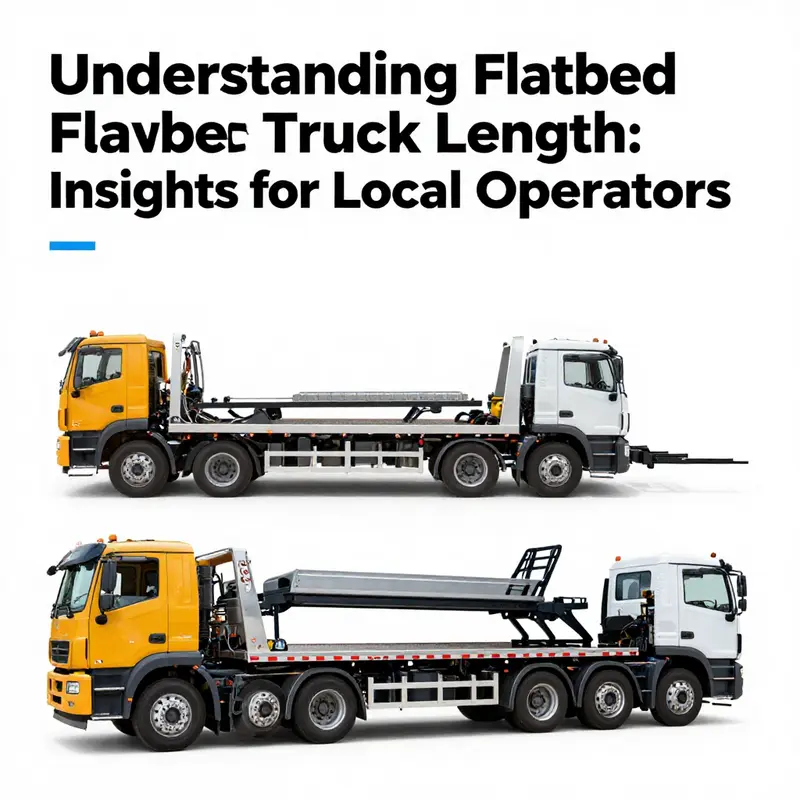
The length of a flatbed tow truck is not a random figure. It is a carefully engineered footprint that must accommodate lifting power, structural rigidity, and the safety systems that keep recoveries predictable.
In practical terms, a typical flatbed rig spans roughly 24 to 30 feet from bumper to bumper, with the bed itself usually measuring between 16 and 22 feet. This means two interconnected questions drive the final length: how much weight the truck is built to tow, and what the operator needs to reach that weight safely and efficiently. The simplest way to think about it is that power demands proportionate space. If the vehicle is designed to pull lighter loads in a city environment, the bed can be on the shorter side and the overall length remains compact enough to navigate tight streets. If the job calls for heavy-duty recoveries, long distances, or challenging terrain, the platform grows longer. The bed, the cab, and the mechanical systems behind the scenes all contribute to the overall footprint. While a 16- to 18-foot bed is typical for light-duty models, heavier applications push the bed closer to 20 feet or more, and the overall length follows suit toward 28 to 30 feet in some configurations. The bed length matters because it directly affects how much load the platform can carry, how the weight is distributed, and how the vehicle behaves when it is lifting or transporting a disabled car over long distances.
The relationship between capacity and length is not merely about adding more metal. Higher towing capacities require stronger frames, reinforced chassis rails, and more robust winches and hydraulic systems. These components add mass and require additional space for mounting and service clearances. A heavy-duty, 5-ton-class flatbed, built for robust recovery tasks, must house a reinforced structure that distributes weight across the frame. It also needs larger hydraulic components and safer, more secure anchoring points for tiedowns and recovery gear. All of these elements contribute to a longer and sturdier footprint. In practical terms, the increase in length serves a critical safety role. A longer bed and stronger frame improve load balance during lifting, reduce the risk of the vehicle tipping, and provide better control when the unit is moving with a disabled vehicle in tow. In other words, the extra inches are not cosmetic; they are a design response to the demands of heavier work.
A concrete illustration helps translate this idea without naming brands. Consider a heavy-duty flatbed wrecker designed for a 5-ton towing capacity. The platform that supports such a load is typically part of a wider, more rigid chassis. To maintain stable weight distribution, engineers extend frame rails and provide a longer bed that can accommodate the mass and the securement hardware needed for safe recovery. The curb weight of this class of machine is substantial—roughly around five thousand two hundred fifty kilograms—because the chassis, bed, and mechanical systems must be capable of absorbing the energy and dynamics of heavy lifts. This combination of extra mass and longer geometry translates into an overall length that reliably positions the center of gravity in a way that keeps the truck stable, whether it is stationary during a winch operation or traveling with a vehicle secured on the bed.
Design choices do not happen in a vacuum, and they are shaped by standards that govern safety and performance. International technical standards such as ISO, CE, ASME, and ASTM prescribe minimum safety margins, structural integrity criteria, and requirements for hydraulic systems and emergency equipment. While these standards do not specify exact overall lengths for every model, they indirectly influence dimensions by dictating the space needed for robust frames, hydraulic components, and the devices that personnel rely on during a recovery. In practice, meeting or exceeding these standards becomes more demanding as towing capacity rises. A 2- to 3-ton machine can be compact and nimble, with a shorter bed and a lighter overall footprint. When the target capacity increases to 5 tons, the design must accommodate larger winches, stronger hydraulic circuits, and more substantial protection around critical systems. The safety margins demanded by ISO and ASTM, for instance, require additional space for maintenance access, emergency features, and redundancy that simply cannot be crammed into a smaller package.
Another dimension of length comes from the mechanism that makes rollback or tilting beds possible. Traditional flatbeds tend to be a straightforward platform with a fixed length. Rollback or sliding-bed designs introduce mechanical components for tilting and expanding the bed, which can contribute to a bigger overall length. While these mechanisms expand the truck’s versatility, they also push the envelope on how much space the vehicle occupies. The extra machinery adds weight and sometimes modestly increases length, but it also unlocks the ability to load a vehicle without wrapping it around the sides of a fixed bed. In practice, fleets weigh the benefit of a longer platform against the maneuverability demands of the areas they serve. Urban operators often prioritize tighter turning radii and shorter lengths for easier street navigation, while rural or industrial operators lean toward longer beds and stronger frames to handle bigger loads and more demanding recoveries.
A useful way to frame the discussion is to compare the bed length to the overall mission profile. The bed length—ranging from 16 to 22 feet—determines how much of a vehicle can be secured at a given time and how easily the setup can be stabilized for lifting. The cab-to-bed combination, plus the added length from hydraulic components, suggests why a light-duty 2- to 3-ton model can be notably shorter, while a 5-ton class machine may push toward the upper end of the 28-to-30-foot territory. The balance is not just about weight; it is about balance in motion. A longer platform helps keep a heavy load level during road travel and long hauls, but it can complicate parking, lane positioning, and garage clearance in tight environments. Fleet managers therefore optimize length in service of a composite performance profile: payload capacity, safety margins, and practical operability in the geographic areas they serve.
This interplay between capacity, length, and application underscores a broader point: there is no one-size-fits-all answer to how long a flatbed tow truck should be. The right length depends on what the fleet expects to tow, where it will operate, and how it will conduct recoveries. For a city-based fleet, a shorter overall length paired with a 2–3 ton capacity may deliver the nimbleness needed to reach disabled vehicles quickly. In contrast, a highway or industrial setting that requires frequent heavy lifting will justify a longer bed and a higher-torque, higher-capacity design. In either case, the decision is a trade-off among lift, stability, and space—an equilibrium engineered through careful sizing of the bed, chassis, and auxiliary systems.
For readers exploring how these dimensional choices translate into real-world operations, consider how such design decisions influence overall fleet preparedness and response capabilities. A practical reference point is how fleets integrate equipment choice with emergency response planning and incident management. For a concise guide on emergency preparedness for island fleets, see essential fleet emergency response strategies. This resource helps connect the physical characteristics of recovery equipment to the strategic tasks of a cohesive, resilient fleet. You can explore it here: https://theislandtowtruck.com/essential-fleet-emergency-response-strategies/.
If you want a deeper technical baseline to cross-check dimensions against capacity, you can consult external technical documentation that outlines heavy-duty flatbed specifications. This material sheds light on how manufacturers design for strength without sacrificing safety or usability. For reference, you can review the external specification resources provided by industry manufacturers and standards bodies at https://www.sinotruk.com/en/products/wrecker-trucks/.
Reading the Span: How Flatbed Tow Truck Lengths Vary Across Models and What It Means for Towing
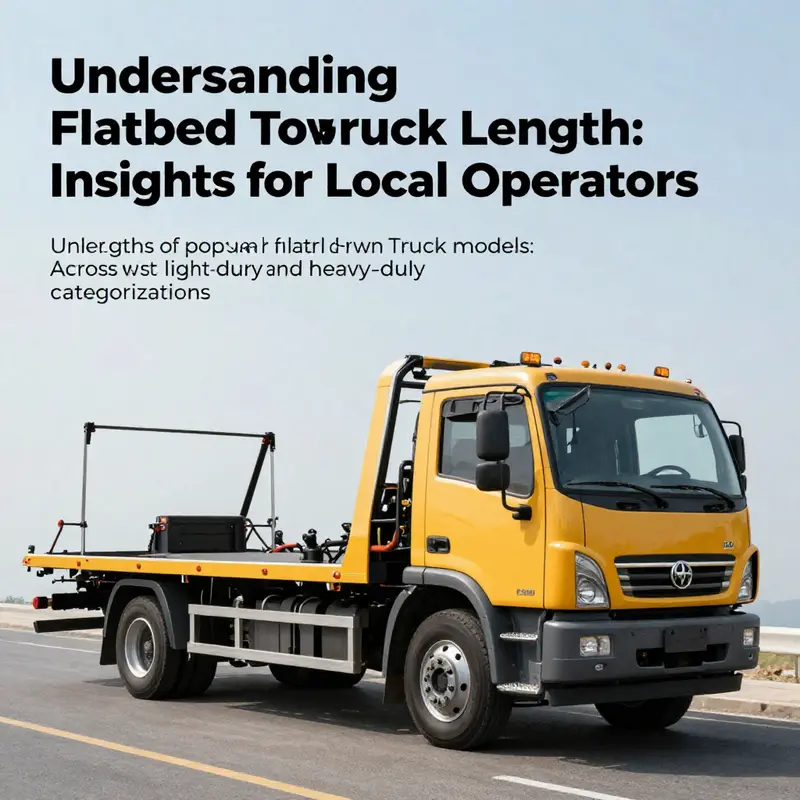
The question of how long a flatbed tow truck is rarely rests with a single number. Length is more than a dimension; it’s a performance criterion that shapes how a vehicle can be loaded, stabilized, and transported. In the spectrum of flatbed platforms, what you see varies because manufacturers tailor the balance between cab footprint, bed geometry, and the mechanical add-ons that enable lifting and sliding functions. Across the industry, a practical rule of thumb places most flatbed tow trucks in a broad range—from roughly the mid-20s to just over 30 feet in overall length. That includes both the cab and the flatbed. The bed itself tends to fall between roughly 16 and 22 feet, a span that directly influences loading angles, the types of vehicles that can be accommodated, and how multiple vehicles can be staged on a single platform. The precise dimensions, of course, hinge on the model, the intended service profile, and the configuration choices made by the fleet operator. In other words, there is a conversation between the geometry of the truck and the geometry of the jobs it is asked to perform, and that conversation is most clearly heard when you study the numbers in the light of their practical consequences.
If you look at the more granular end of the spectrum, shorter flatbeds—typically in the 20- to 24-foot range—are favored for urban recovery work and routine towing. These compact footprints are prized for maneuverability, which matters in crowded streets, tight alleys, and parking-constrained lots. In dense city environments, fuel efficiency and nimbleness become as important as raw lifting capacity, so a shorter chassis often makes sense as a day-to-day tool. Operators report that these units are especially well suited to quick hook-and-go cycles, where every foot saved in turning radius translates into faster service on a busy shift. When the job asks for a swifter response, a shorter bed can be the difference between arriving first and losing a lane to a competitor.
On the other end of the spectrum, longer flatbeds—typically in the 26-foot to 30-foot-and-longer range—are designed for heavier-duty tasks and more complex recoveries. The extra length translates into a more expansive loading deck, greater stability during transport, and a more forgiving platform when juggling larger or multiple vehicles. For fleets that frequently encounter long-distance haulings, wide-load recoveries, or the need to remediate difficult-to-load vehicles, the extended platform can be a meaningful safety and efficiency multiplier. The bed length, in these cases, often accommodates longer vehicles, higher platforms, and a more gradual incline during loading, which reduces the risk of undercarriage damage when the vehicle being recovered has either high ground clearance or a low approach angle. In practice, the longer bed can also improve the efficiency of operations that require securing a vehicle without multiple repositionings, thereby cutting the time that a scene remains unsafe or traffic-disruptive.
The broader range—from roughly 20 feet to 30 feet—reflects another subtle but important distinction: the type of flatbed itself. Traditional flatbeds, with a fixed platform, tend to be shorter and simpler to operate. They deliver a dependable, no-nonsense loading experience that appeals to fleets prioritizing reliability and straightforward maintenance. Rollback or sliding-bed flats, by contrast, carry additional mechanical components for tilting and sliding. Those extra mechanisms are essential for low-angle loading, particularly when dealing with high-clearance or low-ground-clearance vehicles. However, they can tilt the equation slightly on overall length because the bed must house not only the platform but also the tilting apparatus, slide rails, and the hydraulic or mechanical systems that drive them. The result is a marginally longer footprint for rollback configurations, even as the loading process becomes smoother and safer.
Beyond the hardware, the numbers tell a story about the kind of work a tow fleet is built to handle. Shorter models shine in environments where space is at a premium but speed is a virtue. They excel in urban corridors, hospital campuses, and dense industrial zones where quick turnarounds and precise maneuvers are essential. The shorter footprint enables tighter cornering, easier parking, and a more modest ignition-to-response cycle. In many operations, these units are paired with moderate lifting capacities, as the demand often centers on passenger cars, light trucks, and small SUVs. Yet the balance between bed length and deck strength remains critical: even within the 20- to 24-foot range, manufacturers carefully design reinforcement and chassis geometry to ensure the bed can carry its rated load without compromising the platform’s rigidity.
Longer flatbeds, by contrast, are the workhorses of heavy-duty towing, accident recovery, and multi-vehicle transports. They are built to offer longer mounting decks that accommodate larger vehicles and higher payloads. A longer bed improves load distribution and provides a more stable base when securing a heavy vehicle for transport. It also introduces advantages when loading long or asymmetrical vehicles, where the extra length helps maintain an even weight balance and reduces the angle of ascent. The longer platform can be paired with more robust lifting solutions, enabling operators to manage heavier payloads with greater confidence. For fleets tasked with moving commercial trucks, construction equipment, or vehicles born from a multi-vehicle incident, the longer bed translates into fewer repositionings, fewer trips, and less time spent on a scene, all of which translate into safer, more economical operations over the course of a shift.
Among the design decisions that influence length, rollback configurations deserve particular attention. Rollback tow trucks slide and tilt the bed to meet the ground, facilitating a gentler approach for loading. This mechanism becomes especially valuable on longer models, where the extended platform interacts more frequently with ground contours and curb heights. The tilting motion reduces the risk of scraping low-hanging undercarriages and makes it easier to coax a vehicle onto the deck at a lower, safer angle. In practice, the rollback concept offers a clear payoff in safety and efficiency for select job types, even if it introduces a few extra mechanical components that a traditional flatbed does not require. As technology has advanced, many newer rollbacks have incorporated hydraulics that make the tilting and sliding motions smoother and more reliable, a development that keeps longer rollback units competitive with fixed-bed designs while delivering the benefits of a more versatile loading sequence.
All of these considerations—the bed length, the overall footprint, the addition of sliding and tilting mechanisms, and the lifting capacity—coalesce into the pragmatic guidance operators use to choose the right tool for the job. When planning a fleet or assessing a quote for a specific recovery scenario, the operator weighs the kinds of vehicles most frequently towed, the typical loading angles encountered in their usual environment, and the space constraints of their primary service area. In cities with narrow streets and limited parking, a 20- to 24-foot flatbed might be the most sensible choice, preserving maneuverability while delivering adequate lift for common passenger and light commercial vehicles. In regional or rural settings, where heavier recoveries and longer transports are more common, a 26- to 30-foot-long platform can dramatically improve throughput and safety during the loading process. The bed length, together with the type of bed, becomes a practical proxy for how many vehicles can be secured at once, how easily they can be loaded, and how smoothly the entire operation unfolds from the moment the tow operator pulls onto the scene.
For readers seeking a broader context on how these length decisions play into day-to-day workflows and strategic planning, industry discussions often emphasize the alignment between fleet composition and service area. As a reference point for practical insights into how length correlates with broader performance metrics, consider exploring the insights shared on the Island Tow Truck blog, which offers a perspective on fleet optimization and field operations. The Island Tow Truck Blog.
In sum, the language of flatbed length is the language of capability. Shorter units deliver nimbleness, faster turnarounds, and fuel efficiency—traits well suited to urban markets and routine towing. Longer units deliver depth of capability, allowing operators to handle large or multiple vehicles, stabilize heavier loads, and navigate challenging recoveries with greater confidence. The bed length, typically 16 to 22 feet within a chassis that may measure from roughly 20 to 30 feet overall, is a central dial that operators tune to the realities of their work. The presence of a rollback or hydraulic tilting system adds another layer of nuance to the decision, reshaping loading geometry and influencing overall length in specific configurations. In the end, the right flatbed length is not a one-size-fits-all prescription but a deliberate choice grounded in the types of vehicles towed, the environments in which the fleet operates, and the safety margins that keep recoveries efficient and secure. Context matters, and the numbers—20 through 24, 26 through 30, bed lengths in the 16 to 22 range—are the practical anchors that guide these decisions as fleets pursue reliability, speed, and safety on every call. For readers who want to extend this discussion into a broader industry view, the external resource linked here offers a consolidated overview of specifications, features, and common uses in flatbed towing. Flatbed Tow Truck Sale Explained: Key Specifications, Features, and Common Uses.
null
null
Final thoughts
Understanding the length of flatbed tow trucks is crucial for those involved in automotive services, from repair shops to commercial operations. Each chapter has highlighted how length specifications, design variations, towing capacity, model comparisons, and real-world applications impact your operations. By applying this practical knowledge, you can make informed decisions that enhance efficiency, safety, and service quality in your transportation needs.