
Long-distance towing presents unique challenges, especially in island environments where accessibility can be a factor. Whether you’re a local auto repair shop, a car dealership, or a property manager responsible for maintaining a fleet, understanding the intricacies of towing is essential. This guide will explore the critical components of the towing process, providing you with practical strategies tailored to the unique demands of the islands. Each chapter will delve into necessary preparations, safe towing procedures, driving practices during long hauls, and the importance of regular monitoring while on the road.
Pre-Trip Readiness: A Thorough Vehicle and Equipment Check for Safe Long-Distance Towing with a Truck
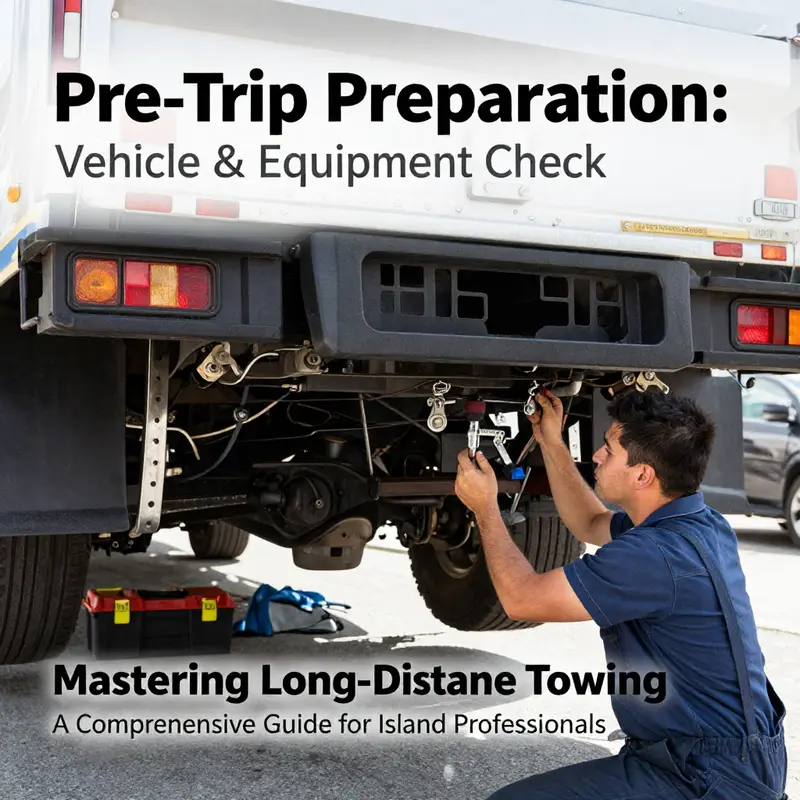
Safety on the road begins long before you pull away. When you’re planning to tow a car with a truck over a long distance, you’re really staging a coordinated operation. The goal is not only to arrive but to arrive without drama, with both vehicles operating in harmony and with every connection tested and trusted. Preparation in this phase sets the tone for the entire journey. It’s about method, not luck, and it asks you to think through your options, your limits, and the specifics of the two machines you’re bound to move together. The most effective way to approach this chapter is to imagine the road ahead as a sequence of linked events: the day of departure, the miles covered, the small checks that keep everything secure, and the calm, steady process of arrival. The first principle is straightforward: every system involved—engine, brakes, transmission, steering, lights, tires, and the towing connection itself—needs to be in good order. This means a disciplined, methodical inspection of both the tow vehicle and the vehicle being towed, followed by a careful verification of the equipment and the load path. It is here that safety and efficiency are born, because a small loosened bolt or an underinflated tire can become the source of a larger problem when tens of thousands of pounds of pulling force are involved over hundreds of miles. The truck you choose should be capable of delivering steady torque and robust braking. A drivetrain designed to manage a heavy load, combined with a suspension that can absorb road irregularities without transferring shock to the towed vehicle, becomes the backbone of a safe long-haul tow. The towed vehicle, meanwhile, needs to be prepared so that it does not become a drag or a hazard during movement. The handbrake must be released, and the gear in neutral is essential for manual transmissions, while neutral is also recommended for automatics to prevent unintended engagement that could stress the transmission during motion. The battery must be up to the task and secure, because even when the engine isn’t running, certain electrical loads—lights, steering assist, or diagnostic systems—can impose a demand on a battery that is already weakened. Beyond the obvious, there is a nuanced need to verify that the steering and brakes in the towed vehicle remain within acceptable operating tolerances. If the engine can be left on to provide power steering or power brakes, it can ease handling in certain scenarios, but this is only safe when you can control the situation and the tow is within your line of sight and comfort. The pre-trip phase is also a time to consider the nature of the towing connection itself. For long distances, the preferred method is a tow bar—a rigid connection that maintains a stable, predictable pull and minimizes the risk of swaying that can occur with a rope. Tow ropes, while useful for short distances or lighter combinations, must be rated for at least 1.5 times the weight of the towed vehicle and checked for wear, fraying, or damage. The connection points are not mere afterthoughts; they are critical interfaces that must be designed to handle the dynamic loads of a long, unsteady road. The bolts, pins, and fasteners across both vehicles should be tight, clean, and free of corrosion. A careful inspection of the tow hooks—factory-approved and correctly installed—avoids a misalignment that could otherwise complicate towing. The idea is not simply to be connected but to be securely connected. In this context, it can be helpful to remember that the safest long-distance towing setup uses equipment specifically rated for the combined weight of both vehicles and the undercarriage logistics of the tow. The strategy here is straightforward: invest in reliability, then verify it with repeated checks. The practical approach to verification often unfolds as a disciplined sequence. On a flat, level surface, you attach the tow bar or rope to approved tow points, then you perform a test pull with a gentle, controlled tug to confirm there is no slip. This is not a single moment of triumph but a confirmation that the integration is solid and that there are no hidden misalignments. Once the physical connection is secure, you examine the tow bar system or rope for any signs of movement, loosening, or fatigue. If anything seems off, you correct it before departing. The importance of this stage cannot be overstated. A secure connection is the linchpin of a long-distance tow and a key factor in everyone’s safety. As you prepare to embark, it is wise to gather a robust set of tools and supplies. A complete toolkit—wrenches, socket sets, a jack, lug wrenches—coupled with spare parts such as fuses, spark plugs, and a spare tire with a full toolkit for changing it, creates a safety net. A portable air compressor becomes especially valuable for maintaining proper tire pressures on both vehicles, which is indispensable when towing long distances where tire performance can shift with temperature or altitude. In addition, a reliable communication device—whether a two-way radio or a robust mobile phone with a charged power bank—fosters continuous contact between drivers. Clear, constant communication is the heartbeat of the operation. It allows the drivers to share information about upcoming turns, lane changes, or changes in road conditions and to coordinate lane positioning, brake application, and accelerating timing. It is also prudent to carry reflective warning devices, such as a triangle or flares, and a compact first-aid kit. A small fire extinguisher may be warranted if the vehicle has an open fuel system or if the weather and traffic density create a higher risk of fire. The toolbox and emergency supplies should be organized in a way that each item is easy to locate and use under stress. The road, especially in long-haul scenarios, is a dynamic environment. Planning for this reality means thinking through route planning and legal compliance at the pre-trip stage. You should map out your route using GPS or reliable navigation apps, identifying rest areas and service stations where you can perform safety checks and reposition if necessary. Some routes may include restrictions on towing or require special permits, license plates, or insurance coverage. Regulations vary by region, and a mindful preparation will help you avoid fines or delays. The speed limits for a towing combination tend to be lower than standard limits, and understanding these limits ahead of time reduces the temptation to overdrive a rig that is heavier and less maneuverable than a typical sedan. In the lead-up to departure, you should not only consider what you can do but also what you must avoid. The temptation to save time may push someone to attempt an overambitious route with tight, winding roads or steep grades that place extra strain on the towing system. The principle of conservative planning applies here; the safer approach is to choose a route that respects the limits of both the truck and the towed vehicle, including long grades and curves where the load can shift or the traction can become uneven. The intended pace of the journey should also inform how you prepare. A long-distance tow is not a sprint; it is a test of endurance for both the equipment and the people behind the wheel. Maintaining a steady, methodical routine reduces fatigue and improves attention. It is perfectly reasonable to set a plan that includes shorter driving segments with adequate rest, especially when you are navigating unfamiliar terrain, heavy traffic, or changing weather conditions. The process of preparation should also embrace a mindset of ongoing vigilance. During the trip, you should stop every one to two hours to inspect critical parameters. A quick check of the tow bar or rope ensures there is no unwanted slack or elongation, while tires on both vehicles must be checked for proper inflation and signs of wear or heat buildup. Anomalies such as unusual noises or overheating should trigger an immediate, cautious stop and a more detailed inspection. The more you normalize these checks, the less likely you are to overlook a problem that could escalate on a long stretch of highway. The guiding principle is repetition with purpose. Every stop is an opportunity to confirm what you already know and to catch what might be changing with miles and weather. In terms of the information resources available to drivers planning such tasks, practical, step-by-step guidance is widely shared. For readers seeking further procedural detail beyond the basics, resources like reputable towing guides offer structured checklists and safety tips that reinforce the habits described here. If you want to dive deeper into the kind of procedural clarity that makes a tow safer, consider checking the Island Tow Truck blog for practical, scenario-based tips that align with the approach described in this chapter. You can explore that resource here: the Island Tow Truck blog. For broader context and safety-oriented guidance on long-haul towing, you can consult the manufacturer’s towing guidelines, which provide essential cautions about drivetrain considerations and other model-specific constraints. External resources can help you verify the approach you take, especially when you are towing a vehicle with particular drivetrain configurations. For example, the official towing guidelines published by the manufacturer emphasize compatibility with long-distance operation and the importance of following model-specific recommendations. External reference: https://www.toyota.com.au/towing-guidelines
The Safe Connection: Building a Stable Link for Long-Distance Tows Behind a Truck
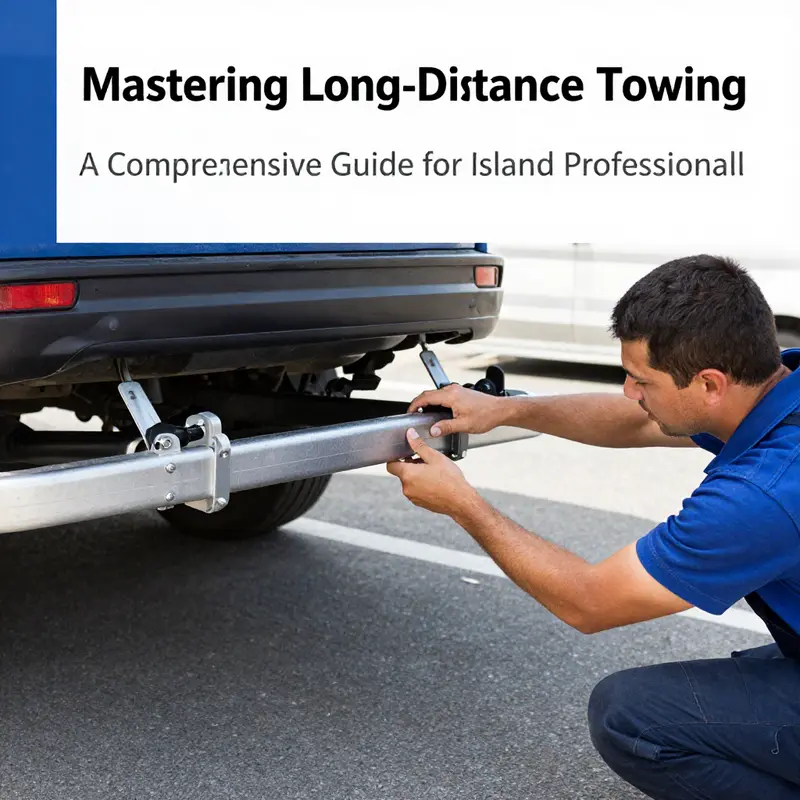
Long-distance towing with a truck hinges on the weakest link—often, that link is the connection between the two vehicles. A stable, well-executed connection is not merely a setup step; it is the foundation of every safe mile you will cover. The reality is simple: when you tow a car for hours or even days, the hardware must bear the weight of the towed vehicle, the load of any cargo, and the unpredictable variables of road, weather, and driver fatigue. The goal is not to improvise under pressure but to establish a robust system before you roll. That starts with choosing the right equipment and then executing a precise, repeatable connection procedure that prioritizes security, visibility, and control. In long-distance scenarios, a heavy-duty tow bar, often described as a frame-mounted or fixed tow bar, is strongly recommended over a tow rope. Tow bars provide superior stability, virtually eliminating the risk of rope failure or entanglement, and they allow for more predictable handling over extended drives. The weight rating of the tow bar should comfortably exceed the combined weight of the towed vehicle and any cargo. This is not a marginal safety margin; it is the difference between maintaining control and inviting a dangerous failure that could cascade into a roadside emergency.
Preparation for the connection is not a ritual to perform once; it is a mindset. Both vehicles must be parked on a level, stable surface away from traffic, ideally in a designated area for loading and unloading. The towed vehicle’s handbrake must be fully released, and the transmission should be set to neutral for manual transmissions or in neutral for automatics. Some tow bar systems call for locking the steering wheel to prevent unwanted wheel movement during alignment, while in others the steering remains unlockable until the connection is complete. The towing vehicle should have its engine off and the parking brake engaged until the moment you are ready to engage the link. This setup discipline reduces the risk that the towed vehicle will drift or shift during the critical initial alignment.
Inspection is the quiet guardian of safety. Before any physical connection, inspect every component of the tow bar system—the hitch, brackets, bolts, pins, and locking devices—for cracks, wear, or corrosion. A meticulous eye now saves a tense moment later. Confirm that all fasteners are tight and that safety pins are correctly inserted. Any sign of looseness or deformation should halt the process and prompt a replacement or repair. The alignment phase then begins in earnest. Attach the tow bar to the designated mounting points on the towed vehicle, following the manufacturer’s precise instructions. The goal is to have the bar sit squarely, with no angular twist that could place uneven stress on any joint. If the system uses bolts, a torque wrench becomes a quiet ally; overtight or undertight can both invite trouble. The operator must ensure the assembly is square, the pins are engaged, and all components sit flush against their mounting surfaces.
Connecting the tow bar to the towing vehicle’s receiver hitch is the moment where precision pays off in reliability. The process typically involves sliding the tow bar into the hitch, aligning the pin holes, and slipping in the safety pin with its locking mechanism secured. After the mechanical connection is established, a deliberate test is essential: gently pull on the assembly to verify there is no give, and that nothing can disengage under moderate tension. This is not a show of force but a controlled check to confirm the system’s mechanical integrity. The electrical connection follows, linking the towed vehicle’s lights to the towing vehicle so that brake lights, turn signals, and hazard lights are synchronized for other road users. The electrical harness should be connected, and a full test of all lights performed before any movement. A failed lighting system can create unsafe situations on busy highways or at night, and the connection test becomes a practical, time-saving precaution rather than a last-minute surprise.
Beyond the hardware, there is a human factor that becomes even more critical on long hauls: communication and vigilance. Two-way radios or mobile phones can maintain a continuous line of contact between drivers, enabling rapid exchange of information about upcoming turns, changes in lane, or any abnormal behavior of the hitch. The drivers should agree on a few simple conventions—signals for braking, gear changes, or a decision to increase or decrease speed. This is not an exercise in micromanagement; it is a shared safety protocol that reduces reaction times and keeps the tow line stable through varying traffic conditions. The driving phase itself demands a disciplined approach. Speed should be moderated to a level that maintains control without overburdening the towing equipment. On regular roads, a pace around 30 to 40 kilometers per hour (approximately 18 to 25 mph) is typical for long-distance tows, while highway segments may allow modest increases if the equipment and conditions permit. The key is consistency rather than speed. Sudden accelerations or abrupt braking generate shock loads in the connection and can loosen fasteners or widen gaps that should remain closed. A longer, smoother following distance reduces the risk of a chain reaction behind you and gives both drivers more time to react if a traffic mystery unfolds ahead.
Driving in hills or at night introduces additional considerations. Downhill sections demand careful engine braking to repress overheating of brakes and to keep control. In mountainous terrain, selecting lower gears helps manage descent without relying solely on brakes, which can overheat and lead to a loss of braking efficiency. Urban driving, by contrast, should avoid repetitive stopping and starting near congested intersections, as repeated cycles bring greater wear to the hookups and increase the likelihood of chassis movement. Night operations call for enhanced visibility: side marker lights, hazard lights, and headlights on, plus reflective markers or conspicuity tape on the tow bar or rope. These measures are not decorative; they are essential for safeguarding both your convoy and other road users after dusk.
As the miles accumulate, the habit of constant, proactive monitoring becomes your best friend. A practical cadence is to stop every one to two hours to inspect critical elements: the tightness of the tow bar or rope, the condition and pressure of tires on both vehicles, and any signs of overheating, unusual noises, or abnormal vibrations. This ongoing check acts as a bridge between the quiet moments of driving and the tense moments when a misalignment might manifest. Any looseness, rubbing, or vibration should be addressed immediately—do not press forward with symptoms that could worsen with time. The human factor remains central here: both drivers must stay alert, focused, and communicative, understanding that the safety margin narrows when fatigue grows or distractions creep in.
The arrival phase also deserves careful attention. When the destination is reached, the vehicle should be brought to a controlled stop, and the handbrake on the towed vehicle should be applied. A final confirmation from the towed-vehicle driver ensures that all parties are prepared to disconnect. Only then should the tow bar or rope be detached, followed by a post-use inspection of equipment for signs of wear, damage, or misalignment. Proper storage of the gear, free of moisture and dirt, helps preserve its integrity for future tows. In this context, the long-distance tow becomes less a single event and more a disciplined sequence of checks, communications, and confirmations designed to sustain safety over hundreds or thousands of miles.
The broader safety framework supporting these practical steps includes awareness of the equipment’s capabilities and limitations. For long-distance towing, a heavy-duty tow bar’s frame-mounted design provides a stable, rigid connection that minimizes sway and reduces the risk of detachment compared with flexible attachments. The weight rating is not merely a number; it is a lived confidence that the system can absorb the influences of wind, road irregularities, and the occasional gust in open stretches. A robust connection also eases handling in less-than-ideal conditions, where a rope might abruptly snap or suffer from fraying after hours of road exposure. This approach aligns with established best practices that emphasize predictable behavior, repeatable procedures, and thorough pre-trip checks.
For readers seeking a broader view of protective planning and response coordination, integrating the towing operation with fleet safety practices can be invaluable. A practical reference point is the notion of emergency readiness within a fleet, which complements the technical rigor of the connection procedure. When the road ahead includes weather surprises, night travel, or remote stretches without immediate assistance, the ability to coordinate with a team, share location updates, and access guidance becomes a force multiplier. You may wish to consult the broader guidance on essential fleet emergency response strategies as you build your own long-distance towing playbook.
To amplify the safety framework further, the quality of the electrical connection deserves continuous regard. The taillights, brake lights, and turn signals of the towed vehicle must mirror the towing vehicle’s actions so that following traffic interprets the behavior correctly. A tested electrical connection prevents situations where other drivers misjudge the towed vehicle’s movements, which could lead to sudden braking, erratic lane changes, or rear-end collisions. Regular testing of all lights prior to departure—especially after a long pause in the trip—can avert these risk scenarios and keep your convoy predictable for everyone on the road. In addition to the mechanical and electrical elements, the overarching principle remains: distance, time, and attention are the true tools that convert a risky operation into a controlled, repeatable process.
As you integrate these practices into a long-distance towing plan, you will find that the connection procedure is not a single moment but a sequence of deliberate actions that set the tempo for the entire journey. A quiet confidence grows when every bolt is checked, every pin secured, and every light tested. The result is a tow that stable, unhurried, and capable of withstanding the variations that distance, weather, and traffic will inevitably throw at it. For those who want to explore the wider discipline of fleet safety further, there is related guidance that discusses emergency preparedness for fleets and the ways in which coordinated safety practices can improve outcomes across a broad range of tasks, including towing. You can delve into that material through the linked resource that focuses on fleet safety strategies.
In the practice of long-distance towing, the road teaches humility and precision in roughly equal measure. The connection is the hinge on which the entire operation turns: when it is solid, the miles flow with confidence; when it wobbles, every mile becomes a test of nerve and skill. The chapter of safety here is simple and enduring. Invest time in choosing the right heavy-duty tow bar, verify every fastener and pin, attach with exacting care, connect the electrical system and verify it works, and maintain a disciplined, continuous line of communication between drivers. Then drive with a measured pace that respects the capabilities of the equipment and the patience of the route. This combination—rigor in setup, clarity in communication, and disciplined driving—transforms long-distance towing from a moment of risk into a predictable, manageable operation.
For readers seeking to connect this chapter to broader safety standards, see the practical guidance within the fleet safety framework. The resources emphasize how a robust connection procedure supports not only the current tow but future operations as well, helping to build muscle memory and confidence for the road ahead. And, as with all safety-critical activities, rely on official standards and up-to-date guidelines when a manufacturer or regulatory body issues new recommendations. The National Highway Traffic Safety Administration’s towing safety guidelines offer a comprehensive external reference to align with contemporary practice and are worth consulting as you expand your long-distance towing knowledge. External resource: NHTSA Vehicle Towing Safety.
Throughout the journey, you can further enrich your safety toolkit by reviewing broader fleet safety materials that address emergency response, vehicle recovery, and incident prevention. For readers who want to weave these ideas into a cohesive fleet-wide approach, a relevant internal resource on emergency readiness may provide practical templates and checklists that complement the technical focus of this chapter. A concise guide to such topics can be found at the following internal hub: essential fleet emergency response strategies. This link serves as a bridge to a wider conversation about planning and readiness that benefits every long-distance towing operation.
In sum, the safe connection for long-distance towing is more than a set of steps; it is a disciplined practice that blends mechanical reliability with clear communication and steady, intentional driving. By selecting a heavy-duty tow bar with an adequate weight rating, performing a thorough preparation and inspection, executing a precise attachment, establishing a reliable electrical connection, and maintaining vigilant, coordinated driving, you create the conditions for a tow that is safer, smoother, and more predictable across hundreds of miles. The connection is the anchor of the journey, and when it is robust, the miles ahead become manageable terrain rather than an unpredictable horizon. The road will test you, but with a strong link and a shared commitment to safety, you can meet that test with confidence.
On the Long Haul: Mastering Safe Driving While Towing a Car with a Truck
The road ahead on a long towing run is not just about distance; it is a test of restraint, attention, and disciplined technique. When you’re hauling another vehicle behind a sturdy truck, every decision you make behind the wheel carries extra weight. Patience becomes a practical habit, not a vague virtue. You learn to read the highway as a system of moving parts—the truck’s drivetrain, the tow connection, the towed car’s wheels and lights, and the flow of other drivers within a shared space. The goal is not speed but steady progress, predictable behavior, and constant awareness that a small mistake can cascade into a chain of problems far from help. This chapter threads together the practical realities of long-distance towing with the mindset that keeps both vehicles and people safe on a protracted haul. It is a continuation of the careful planning that begins before you leave home and extends through the miles you cover, through the curves and grades of rural stretches, through urban creep, and finally to the moment you roll to a stop at the destination.
Speed becomes the first measured discipline on the long tow. The guidance to move slowly—typically in the 30 to 40 km/h (18 to 25 mph) range—rests on solid physics. When you hesitate and accelerate evenly, the towed car experiences fewer abrupt shifts in momentum. There is less strain on the hitch, fewer jolts transmitted through the tow bar or rope, and less heat buildup in the truck’s drivetrain. Sudden accelerations or abrupt decelerations are not just uncomfortable; they magnify sway, tug at the connection, and raise the chance of a mismatch between the two vehicles’ motions. The measured pace gives you more time to sense small tells: a creeping resistance in the hitch, a faint whine that might indicate a tire rubbing, or a change in steering effort as you navigate a curve. If traffic demands a slower crawl, you adapt with calm, rather than forcing the pace to satisfy impatience. And when the road opens up, you resist the urge to surge forward. The aim is a controlled, predictable rhythm, a pace that keeps both sets of tires in their ideal contact with the road.
Maneuvering on a long tow is not about cleverness; it is about restraint and anticipation. Sharp turns, sudden lane changes, and tight gaps are hazards you want to avoid. A trailer or towed vehicle behind a truck changes the dynamics of every turn, every lane maneuver, and every mile of highway. Even modest steering inputs translate into amplified movement at the end of the tow system. You approach interchanges and merges with extra caution, allowing for larger radii and extended observations of traffic patterns before you commit to a maneuver. It helps to plan ahead—knowing where the next exit will be and whether there is space to decelerate gradually rather than braking hard in a crowd. The concept of a wide, smooth arc during turns reduces the risk of the towed vehicle pushing or pulling on the hitch at an awkward angle. In practice, this means you practice patience as you drive, watching mirrors more than you would under normal conditions, and keeping the towed vehicle in your peripheral awareness as well as in your direct line of sight.
The physical connections between the tow truck and the car deserve steady attention. A hitch and safety chains are not decorative elements; they are the primary fail-safes that keep the arrangement intact if the primary connection fails. Before any long trip you inspect these links meticulously: the hitch should be securely bolted, pins in place, and all safety chains crossed and attached according to the mounting points specified by the equipment’s manufacturer. A simple tug test—gently testing the restraint in the direction of travel—offers a practical confirmation that the system will behave as expected under normal conditions. Do not rely on memory for this; verify visually and physically. The length and tension of any tow rope or bar are also critical factors on a long haul. If you decide to use a rope, ensure it is rated well above the weight of the towed vehicle and that it remains free of wear, fraying, or damage along its entire length. The choice between a tow bar and a rope matters more on a long journey than on a quick, short tow. A properly matched tow bar provides a more stable platform and reduces the risk of sway. If you must use a rope for a shorter segment, keep it tight and inspected, and plan for a fast replacement if any sign of wear appears. To stay aligned with best practices, you should also confirm that both vehicles have compatible tow points and that the connection remains secure after any road condition change—like a rough patch or a strong crosswind.
The driver’s discipline extends to the act of stopping and starting along the route. Frequent, short checks become a practical routine rather than a chore. Every one to two hours you should pause to inspect the tow setup and the towed vehicle’s tires, lights, and hitch. Simply pulling over for a quick visual audit can prevent a dramatic breakdown later in the trip. At each stop, you should confirm that the towed car’s steering and brakes have not developed new resistance or binding if the engine is off. You should also check for rubbing or vibration that could signal a mounting shift or a tire issue. The towed vehicle benefits from occasional light checks on its tires, particularly the inner edges, which are most prone to heat buildup in a tow configuration. You want a routine that turns into habit: a quick, methodical survey that becomes almost second nature as the miles accumulate. These checks, while seemingly routine, are the difference between a smooth journey and a mid-trip dilemma.
Communication between drivers is an essential thread in the fabric of safe long-haul towing. The two-way channels you use do not merely convey navigational notices; they convey safety-critical information about the status of the hitch, the towed vehicle’s condition, and the evolving needs of the journey. Preplanned signals or a simple radio protocol can help coordinate lane changes, braking, and speed adjustments with minimal verbal chatter, which keeps attention focused on the road. If radios are not available, clear, concise hand signals and agreed-upon cues can still keep both drivers in sync. A practical tip is to communicate any upcoming changes well in advance. A turn, a toll, or a lane transition should trigger a shared plan, not a single impulsive action. This level of coordination reduces the chances of unintended pulling on the hitch or misaligned braking—both of which can destabilize the rig and threaten the journey.
Road conditions are a constant variable, and anticipation helps you manage them without reacting with panic. Highways demand steady control and awareness of other traffic. Mountainous terrain requires careful downshifting to maintain control on descents, avoiding excessive brake use that can overheat both the towing system and the towed vehicle’s components. Urban environments call for patience and careful traffic literacy; frequent stops and slower speeds in busy districts reduce risk and give you more time to monitor lights and signals. Night driving introduces another layer of complexity: reduced visibility, longer reaction times, and the heightened importance of conspicuity. In the dark, you use side marker lights, hazard lights, and headlights where appropriate, and consider reflective tape or flags on the tow rope or bar to improve visibility. The goal is prevention: reducing surprises by planning for the known and the unknown alike, from shifting weather to errant deer and unpredictable drivers.
The rhythm of the journey is also influenced by the practicalities of equipment readiness. A long tow can place unusual strain on tires, wheels, and suspension systems. You monitor for overheating or unusual noises that might indicate mounting shifts or balance problems. Tires require special attention because the towed vehicle may be running with altered weight distribution and dynamics. A tire in poor balance or mounting can heat up quickly under prolonged load, increasing the chance of a blowout in the middle of a long stretch. The tow vehicle’s brakes must also be capable of absorbing the added energy, especially on grades or downhill segments. If you notice a change in braking feel—sudden grab, sponginess, or excessive pedal travel—address it promptly. Safety demands that you remain vigilant about the system’s integrity for the entire trip, not just at the start.
The human factor remains central to safe long-distance towing. You must stay alert and focused for hours, managing fatigue with scheduled rest breaks and a cooperative mindset between drivers. A well-planned route saves time and reduces stress, and it should consider rest stops, fuel availability, and potential weather changes. When fatigue begins to creep in, the safe choice is a deliberate pause rather than pressing on. Hydration, light meals, and fresh air during stops help restore concentration and reaction time. The mental model of the journey should emphasize steadiness. It is not a sprint; it is a controlled, deliberate progression. The value of disciplined technique—proper hitching, cautious driving, planned stops, and clear communication—appears again and again in the practical outcomes of a long tow.
For readers seeking additional, more formal guidance on the nuances of long-haul towing, a broader road-tested resource underlines many of the principles described here. The guidance stresses the importance of maintaining stable speed, avoiding abrupt maneuvers, and performing routine inspections of hitch, chains, lights, and tires. If you want to explore the topic further, you can consult the broader advice compiled for long-distance moves and heavy-truck towing tactics, which echoes the emphasis on patience, planning, and procedure. As one part of a layered set of resources, this approach aligns with the practical steps outlined above and offers additional perspectives for different vehicle configurations and road scenarios. For more context, you can refer to the referenced guidance that emphasizes safe, methodical practice throughout the journey. The broader takeaway is that long-distance towing succeeds when preparation, restraint, and continual monitoring become second nature to the crew on the road. In practice, that means you build a rhythm that respects the physics of the tow and the realities of real-world traffic, a rhythm that keeps people and vehicles safer, mile after mile.
To connect these principles with community knowledge, many seasoned practitioners point to practical, experience-based insights found in community resources. For instance, discussions on the The Island Tow Truck blog illuminate how the everyday realities of towing intersect with safety protocols and routine maintenance. These perspectives reinforce the idea that long-haul towing benefits from shared wisdom and tested habits. The implicit message is simple: trust the process, stay observant, and lean into the slow, deliberate pace that keeps the system symmetric and predictable rather than letting haste push the tow into a risky zone. The path to consistent safety on the long haul is a blend of technical discipline and situational awareness, with each mile reinforcing the habit of careful, steady driving.
As the road unfolds before you, remember that the journey matters as much as the destination. The best practices described here—steady speed, careful maneuvering, secure connections, regular checks, disciplined communication, and adaptive planning—are not optional add-ons. They are the core mechanics of a successful long-distance tow. When you integrate these elements into a routine, the process becomes less unpredictable and more manageable. You reduce the odds of a fault line appearing in the middle of a highway stretch and increase the likelihood of arriving at your destination with both vehicles intact and ready for whatever comes next. The long haul remains a test of craft as much as a test of endurance, and the driver who treats it as a continuous, disciplined practice stands the best chance of turning a potentially stressful operation into a safe, reliable, and efficient journey.
External resource: https://www.uhaul.com/trucks-and-trailers/towing-tips/
Steady Vigilance: The Continuous Monitoring Rhythm of Long-Distance Car Towing Behind a Truck
Towing a car long distance behind a truck is not a single act but a sustained cycle of vigilance. The moment you commit to the plan, you enter a rhythm that blends preparation with ongoing checks, the kind of disciplined routine that keeps both vehicles intact and everyone on board safe. The oversight you commit to before you move becomes the baseline, and the discipline you maintain during the voyage becomes the safety net that catches any early signs of trouble. This chapter threads together the essential elements of that rhythm, weaving pre-tow preparation, the act of connection, and the ongoing monitoring into a cohesive narrative that readers can translate into real-world practice without breaking the flow or losing sight of the larger goal: to reach the destination with the towed car in the same condition you began with, or better, and to bring everyone home unharmed.
Before the highway lights come on and the first mile clicks off, the towed vehicle and the tow vehicle must meet a standard of readiness that is less glamorous than it sounds and more important than any single maneuver. A thorough inspection of both vehicles sets the tone for the journey. For the towed car, the handbrake must be fully released and the transmission left in neutral if it is an automatic; this prevents the unnecessary strain that occurs when the drivetrain is kept engaged while the car is being dragged along a road. If the vehicle is manual, the gear should be in neutral as well, ensuring freedom of movement and reducing transmission torque that could otherwise cause wear or binding. Reducing strain in the early stages of the tow is a kind of insurance against a creeping problem that might only become evident later in the day. Checking tire pressure and tread depth on the towed car is equally essential, because underinflated tires are the silent accelerants of blowouts and poor traction, especially when the car is being pulled rather than driven. Lights become the practical language of coordination, and both vehicles must have reliable brake lights, turn signals, and hazard indicators that communicate intent to other road users and to each other within the cab and cabin where the drivers sit.
The tow vehicle—usually a medium to heavy duty truck with robust torque and braking capacity—needs equal attention. Brakes that respond with precision, a steering system that remains responsive, a suspension that can absorb the added load, and fluids at the right levels all contribute to a stable platform for distance work. Engine oil and coolant levels are not just maintenance checks but statements about the truck’s ability to sustain the whole operation. If the engine is a candidate for extended use behind a trailer, consider whether you have adequate cooling and whether the radiator and related hoses are in good shape to prevent overheating in hilly terrain or in warmer climates. The equipment that binds the two vehicles—whether a trailer hitch or a tow bar, or, in some cases, a tow rope—demands equal attention. For long distances, a tow bar or proper tow hitch that is rated for the weight and dynamics of the load is far more stable than a tow rope, reducing the risk of slippage and sudden separation. If a rope must be used, it should be rated to at least the weight of the towed vehicle and checked for wear and fraying; its length should be selected to minimize rearward drag while allowing enough clearance for steering and braking. The precautionary approach here is simple: solid equipment, secure connections, and a plan that anticipates the worst while hoping for the best.
Connecting the two machines on a flat, level surface is more than a procedural requirement; it is a moment that sets the tone for how the voyage will unfold. Tightness checks on the hitch, pins, bolts, and fasteners should be performed with deliberate care, following the manufacturer’s installation instructions if you are using a tow bar. A gentle test pull helps confirm that the connection will stay put during the long drive. The aim is not to create a racecar feel but to create a stable link that behaves predictably if you encounter a surge of wind, a bumpy expansion joint, or a sudden braking event. The proper sequence—secure attachment, verification via a gentle tug, and a final, deliberate visualization of the ride ahead—transforms a potentially hazardous setup into a controlled, managed operation. There is value in the rule of simplicity here: fewer moving parts during the tow means fewer failure points, which translates into more miles with less worry. The literature on towing underscores this principle, and seasoned operators often echo the same sentiment in practice, a reminder that the smallest detail can make the difference between a smooth journey and a stressful one. For a broader sense of how a well-structured approach looks in a real-world context, many practitioners reference the ongoing discussions and practical insights found on reputable industry forums and blogs, such as the The Island Tow Truck blog, which emphasizes careful equipment selection and robust connection practices.
Once you are underway, the narrative of long-distance towing becomes a matter of pacing and measured discipline rather than brute force. The recommended speed limits—typically no more than thirty to forty kilometers per hour—are not arbitrary; they reflect the physics of towing, including the resistance of a heavier rear load and the potential for sway or instability if the vehicle behind suddenly accelerates or decelerates. Maintaining a gentle, steady tempo helps the tow bar or rope behave as a predictable link rather than a dynamic point of stress that can create wobble or kick. A conservative speed is complemented by a conservative following distance. The rule of thumb that takes hold in this context is a 5 to 10 meter gap, a buffer that provides time to react to any unforeseen event in the arrival corridor ahead or in traffic behind. This spacing, combined with a calm, predictable rate of turning and braking, keeps the dynamics of the entire setup aligned with the driver’s line of sight and the towed car’s expected movements. Communication becomes the third pillar of the long-distance routine. In the best cases, both drivers speak in a cadence that mirrors the road: a heads up about an approaching exit or a sharp bend, a confirmation when lane changes are needed, and a quick alert if a wobble is detected in the towed vehicle. The reliability of two-way radios or even a few prearranged hand signals can save precious seconds and prevent miscommunication that could escalate into a misalignment or a near miss.
The realities of road types demand even more attention. On highways, where speed might tempt harder handling, the focus should be on continuity and smooth transitions rather than aggressive momentum. The highway environment is a constant test of the connection’s resilience to wind gusts and lane discipline; the more uniform the speed and the more predictable the maneuvering, the less strain sits on the towing system. When the route climbs into mountainous areas, engine braking becomes a practical tool. Lower gears help you control speed on descents without abusing the service brakes, which could overheat and compromise stopping power and stability. In urban stretches, frequent stops and congested traffic can create a cycle of acceleration and deceleration that taxes the towing rig and the towed car. Here, patience pays off: fewer abrupt starts, smoother braking, and longer gaps between vehicles help contain heat buildup in drum brakes and wheel hubs, and they reduce the risk of a sudden disconnection from a poorly secured connector. Night driving adds its own set of challenges. Visibility is limited, so you must rely more on lighting strategies and reflective aids. Side marker lights, hazard lights, and brighter headlamps improve conspicuity, and reflective tape or flags on the tow rope or bar provide clear signals to others on the road. The literature urges drivers to adopt these precautions consistently, and in practice, veterans often bring this emphasis into their continuous monitoring rituals. An important reminder in this context is the rule about certain all-wheel drive models. Some AWD configurations cannot be safely towed with wheels on the ground, even when the transmission is in neutral, so always check the owner manual or manufacturer guidelines before a long haul. Contemporary guidance from reputable sources underscores that these drivetrain complexities demand careful adherence to manufacturer recommendations to prevent drivetrain damage.
The journey itself should be punctuated by deliberate, structured checks. At every two to three hours, or after roughly 200 to 300 kilometers, pull into a safe rest area or a service station to conduct a fresh round of inspections. This is not a mere tick box exercise; it is a practical maintenance pause that prevents problems from becoming failures. The hitch connection deserves a fresh look, especially if the tow uses a trailer hitch or a tow bar that might shift slightly with vibration. The towed car’s tires deserve particular attention for signs of overheating or unusual wear, and the wheels should be checked for rotation so you can confirm the wheels are turning freely rather than dragging. Temperature checks on the wheel hubs offer an early warning for brake drag or bearing issues that could escalate into overheating and premature wear. Any signs of misalignment or swaying require immediate adjustment; a slight wobble can be a harbinger of a mounting issue, a loose connection, or an incompatible load distribution. This is the point in the journey where a calm, methodical approach yields dividends in the form of safer miles ahead.
Above all, the human element remains central to the safety equation. The driver at the front bears responsibility not just for navigation, but for maintaining alertness, ensuring the internal and external communications remain reliable, and anticipating the consequences of any decision the pair might make on the road. Long-distance towing is not a test of nerve but a continuous practice of caution, restraint, and disciplined adaptation to changing conditions. The dual focus on the towed car and the tow vehicle translates into mutual accountability: each driver should feel confident in the other’s ability to observe, report, and act if a signal of trouble appears. In this spirit, the routine emphasizes not only the mechanics of towing but the ethics of responsibility toward the people and the road you share. The practice is made easier by adopting a culture of regular checks that become almost second nature. The more you perform them, the less likely a critical failure will surprise you, and the more you can preserve the integrity of both vehicles while you cover the miles.
In mapping out the route and the day, crews also consider the legal and practical landscape that surrounds long-distance towing. Local traffic laws govern lane usage and speed, and adapting to those rules during a lengthy haul is part of the craft. Route planning ahead of time helps identify bridges, tunnels, or road segments with constraints that could complicate towing. When the route includes steep grades, service areas, or limited turning radii, advanced preparation allows the team to schedule stops that minimize risk and maximize visibility. The practical reality is that a well-planned route with built-in checks reduces the chance of a problem arising merely from fatigue or oversight. The aim is not merely to arrive, but to arrive with the tow system intact and the occupants safe, a balance of logistics and care that makes long-distance towing feasible and reliable rather than precarious.
For readers seeking further guidance on best practices, the field offers a wealth of perspectives and structured advice. The approach presented here harmonizes with the broader consensus that regular monitoring, conservative operating parameters, and proactive maintenance are the core of safe long-distance towing. These principles align with the emphasis on secure connections, controlled speeds, and clear communication found in professional guidance and reputable sources. They also reflect the practical wisdom of experienced drivers who have learned that a disciplined routine is more protective than any single technical tweak. When you adopt that rhythm, you turn a potentially stressful trek into a sequence of measured steps that keep both vehicles aligned and the journey manageable, regardless of the miles ahead.
As a closing thread that ties this chapter to the larger article, consider how the rhythm of monitoring and safety checks integrates with the larger decision set you face on the road. You start with the pre-tow checklist that sets the baseline for safe operation. You then establish a solid connection, choosing equipment and a connection method that provide stability and reliability. You maintain a disciplined driving pace and quiet, predictable maneuvering amid diverse road conditions. Finally, you reinforce that discipline with regular, structured stops that check the critical components and catch issues before they mushroom into emergencies. This is the consistent pattern that underpins successful long-distance towing with a truck, a pattern that readers can translate into their own standard operating procedure. For readers who want to explore more about the practical, field-tested aspects of towing, the linked resource below offers broader guidance and context that complements the detailed steps outlined here. The emphasis on preparation, communication, and routine safety checks provides a cohesive framework that supports safe and efficient long-distance towing across varied environments.
Internal resource note: for readers seeking related practical insights and to extend the conversation beyond this chapter, see the The Island Tow Truck blog for practical discussions on equipment selection and secure connections. The Island Tow Truck blog
External reference: for broader official guidelines on towing safety from a national perspective, consult AAA towing resources: https://www.aaa.com/.
Final thoughts
Towing a car with a truck over long distances requires careful planning, constant vigilance, and safety-minded execution. By ensuring your vehicles and equipment are in peak condition, performing secure connections, driving cautiously, and monitoring the towing situation, you can mitigate risks effectively. This knowledge is not just crucial for local auto repair shops or dealerships; it also serves resorts and fleet operators who often require reliable towing solutions. Take the time to apply these practices, and you’ll ensure smoother operations and increased safety for all involved.