The weight of a tow truck is a significant factor that influences its performance and operational effectiveness. For local auto repair shops, car dealerships, property managers, resort operators, and commercial fleet operators, understanding the nuances between curb weight, gross vehicle weight (GVW), and payload capacity is crucial. This knowledge empowers you to choose the right tow truck model that meets your operational needs, ensuring efficiency and safety in your services. Each chapter delves into a critical facet of tow truck weight—beginning with individual weight specifications, moving through to gross capacities, payload implications, and a comparative analysis of various models. By the end of this article, you will have a comprehensive understanding that not only informs your purchasing decisions but also enhances your operational strategies.
Weighing the Load: How Curb Weight, GVWR, and Towing Capacity Define Tow Truck Performance
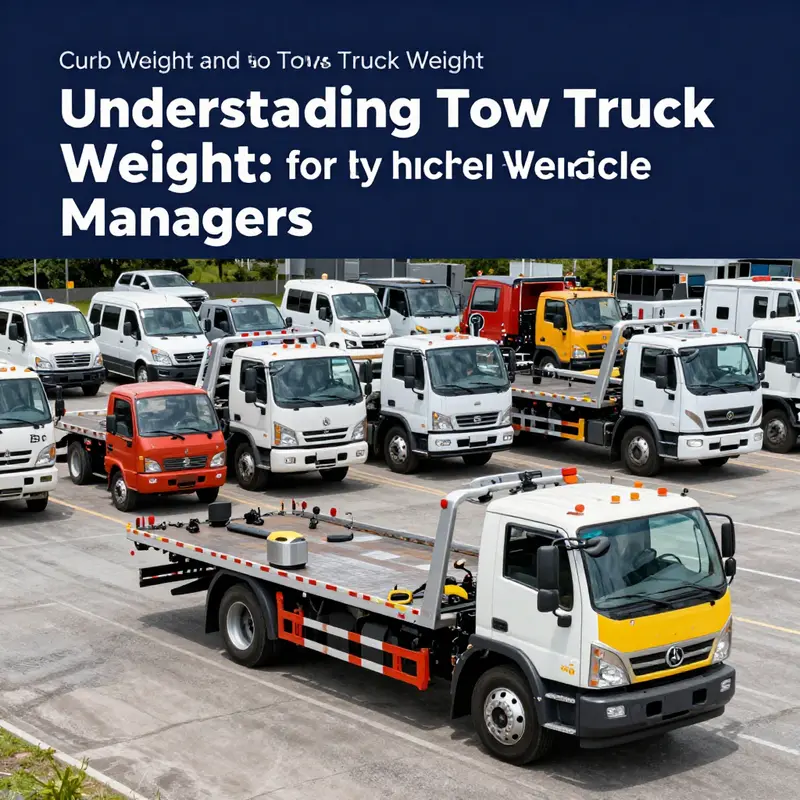
Weight is a fundamental constant that decides what a tow truck can do and how safely it can do it. Yet it is easy to lose sight of this fact in the bustle of recovery missions or the marketing chatter around powerful rigs. The essential truth is straightforward: every tow truck carries a baseline mass, known as curb weight, and that mass sets the ceiling on what else the vehicle can handle. To understand how much a tow truck weighs—and why that matters—it’s useful to trace the relationships between curb weight, gross vehicle weight rating (GVWR), gross combined weight rating (GCWR), and payload. These terms are more than just numbers on a spec sheet. They dictate how much fuel the truck can carry, how many tools and spare parts can be stowed, how many passengers are permissible, how quickly the brakes and suspension must perform under load, and ultimately how much weight the tow truck can responsibly pull or lift in a real-world recovery scenario.
Curb weight serves as the starting point for any weight-related calculation. It represents the mass of the truck in a standard, ready-to-operate state: full fluids including engine oil and coolant, a full fuel tank, and standard equipment, but without passengers, cargo, or optional add-ons. This baseline is crucial for safety and performance calculations because it anchors every other weight-related metric. For tow trucks, the curb weight is not just a static number; it directly impacts the available payload and the towing capacity that the vehicle can legally and safely deliver. In practical terms, a lighter curb weight leaves more room for payload and towing within the same overall weight limits, while a heavier curb weight compresses those margins unless the vehicle is designed with higher capacity ratings.
Consider a mid-sized, heavy-duty tow truck configured for road recovery. In this class, curb weight might sit around 4,800 kilograms, with a GVWR near 7,800 kilograms. The difference between GVWR and curb weight is the payload rating—the maximum weight that can be carried by the truck itself, including the towed vehicle, tools, and equipment. In this example, the payload would be 3,000 kilograms. That figure matters not only for how much towed vehicle can be attached in a single operation, but also for how many recovery tools and ancillary gear can be carried on board. A well-balanced payload ensures the operator can secure a difficult vehicle, deploy stabilizing gear, and maintain control under demanding conditions without exceeding structural or braking limits.
The equation grows more complex as the operation scales. In the world of heavy-duty recovery, there are rigs designed to haul substantially more weight. A larger, heavier-class wrecker might carry a curb weight in the neighborhood of 22,000 kilograms, illustrating a very different balance between vehicle weight and recovery capacity. Such a vehicle can offer immense raw pulling or lifting capability, but it also demands corresponding increases in GVWR and GCWR to preserve safe margins. The axle arrangement, powertrain strength, braking system, and hydraulic or winching components must all be harmonized with weight ratings to avoid overloading any single axle or compromising brake performance. For these behemoths, the per-axle load rating might be around 7,000 kilograms, underscoring how a single axle must shoulder significant responsibility during a recovery operation.
Max speed is another dimension where weight interacts with safety and endurance. Heavier tow trucks typically possess deliberate, conservative speed envelopes to safeguard frame integrity, drivetrain components, and the crew operating within the recovery scene. A typical heavy-duty recovery vehicle might be governed to a maximum of roughly 89 kilometers per hour, reflecting the balance between capability on the open road and the durability required during long shifts and arduous recoveries. ABS and other advanced braking assist technologies are standard on modern heavy-duty tow trucks, reflecting a design emphasis on maintaining control when weight and momentum could otherwise conspire against stable handling during emergency stops or on uneven surfaces.
To translate these weights into actionable planning, one uses the towing capacity formula. Towing capacity is not a fixed stat but a function of the GCWR minus the curb weight. In plain terms, GCWR represents the total allowable weight of the tow truck and its load when in motion. Subtract the curb weight, and you obtain the maximum weight of the vehicle or vehicles that can be towed in a single operation, assuming all other factors—such as tire condition, terrain, and wind—are within acceptable limits. Similarly, payload capacity often appears as GVWR minus curb weight, equating to the maximum load the truck can carry in addition to its own mass. In real-world terms, this means you must balance the towed vehicle’s weight, your tool load, and fuel to stay within the manufacturer’s defined safe operating envelope. If the towed vehicle plus gear pushes the payload toward the upper limit, it may become unsafe to attempt longer or more challenging recoveries without upgrading to a higher GVWR or GCWR vehicle.
The practical implications of these weight relationships become clear when planning a fleet’s capabilities and allocations. A fleet manager weighing options for routine on-island recoveries—where space, terrain, and personnel safety come first—might favor a mid-range heavy-duty wrecker with a curb weight around 4,800 kilograms and a GVWR near 7,800 kilograms. This configuration yields a payload close to 3,000 kilograms, ample for most cars and light trucks plus a robust set of recovery tools. The ability to fund a comfortable payload without pushing the GCWR for every call is a significant operational advantage. On the other hand, fleets that anticipate frequent heavy-mobility operations—such as lifting or towing near-heavy equipment or multi-vehicle incidents—may lean toward higher GVWR and GCWR ratings that permit larger payloads or heavier towed loads, with a clear emphasis on braking, steering control, and stability under substantial weight. In these scenarios, the capacity to distribute weight safely across multiple axles, and to maintain appropriate tire and brake life, becomes a central consideration.
The measurement of these capacities is not uniform across markets, and this is a critical caveat when comparing specifications. Different regions follow different standards, which can lead to apparent discrepancies if the measurement conventions are not aligned. For instance, certain Chinese and international standards exclude or include weight elements such as driver and luggage differently from European norms. In the context of tow trucks, these variances can influence how curb weight, GVWR, and GVW are interpreted, especially when comparing specifications from different manufacturers or markets. A careful reader will note that China’s GB/T 3730.2-1996 excludes the driver and luggage, while EU standards often include a standard 75-kilogram driver weight in some calculations. ISO 1176:1990 provides an international benchmark, but regional interpretations can still differ. When evaluating a model’s weight and capacity, these measurement conventions matter because they shape the meaning of a nameplate like “GVWR 7,800 kg” and the related “payload 3,000 kg.”
At the end of the day, the chapter on weight specifications for tow trucks is about translating numbers into safer, more effective operations. The figures help determine how much complex recoveries can be attempted in a single pass, how much gear can be deployed without overloading the frame, and how to plan for contingencies in the field. They drive decisions about hardware choices, such as the winch capacity, the arrangement of axles, and the weight distribution strategies that prevent wheel lift or loss of control during pull or lift operations. They also shape training considerations for crews, because a well-trained team understands the importance of staging, ballast distribution, and the careful sequencing of equipment deployment to avoid exceeding any rating or compromising line-of-sight and control around a recovery scene. This is precisely where the link between physics and practice becomes most evident. A lighter curb weight can translate into more reserve payload for the job at hand, but only if the truck’s GVWR and GCWR are high enough to accommodate the added mass without sacrificing stability, braking, or steering. Conversely, a heavier curb weight demands careful attention to the same limits to ensure that the vehicle remains within its safety envelope during recovery operations.
The broader lesson for fleets and operators is that numbers are not just specs; they are constraints and capabilities rolled into one. When you plan for on-road recovery, you are balancing the baseline mass of the machine against the maximum promise of what it can carry or pull. The curb weight anchors the math, while GVWR, GCWR, and payload reveal what that math means in practice. The goal is to select a configuration that provides the necessary lifting and towing capacity without crossing critical thresholds that would hamper control, braking, or stability. In this sense, weight is not merely a static characteristic. It is a dynamic determinant of safety, efficiency, and reliability in every recovery operation.
For readers who want to explore concrete examples and expand their understanding of heavy-duty recovery specifications, the discussion can be extended to formal design references and industry standards. In practice, comparing two or more models requires aligning the measurement basis. Be sure to confirm whether the figures include or exclude the driver, luggage, and essential fluids if you are using a different market or a different regulatory standard. A careful analyst will apply the payload and towing capacity formulas to each model under consideration:
- Payload capacity = GVWR − Curb Weight
- Towing capacity (maximum load towed) = GCWR − Curb Weight
These simple equations are the key to translating raw mass figures into actionable, field-ready capabilities. They also highlight why a heavier curb weight is not inherently a limitation; if paired with higher GVWR and GCWR, the heavier truck can still deliver substantial payload and towing performance. Conversely, a lighter curb weight without corresponding increases in GVWR or GCWR can unduly limit what the machine is able to do on a demanding call, especially when the crew needs to add accessories, stabilize loads, or manage a complex multi-vehicle recovery.
To ground these ideas in the broader context of vehicle-to-operator planning, it helps to consider the scale and scope of typical operations. For island fleets or regional services that handle frequent, varied recoveries, versatility is prized. A mid-range heavy wrecker with robust braking, ABS, and a practical payload is often the most dependable tool for daily use. For occasional surge events, such as large-scale incidents or multi-vehicle recoveries, the capacity to deploy a larger, higher-capacity recovery platform may become essential, even if it requires a longer setup time or more deliberate staging. In both cases, the baseline weight and the related capacity metrics govern how quickly crews can respond, how safely they can work, and how effectively they can re-open roads after an incident.
For readers seeking deeper, externally sourced technical context, a widely cited official specification page for a heavy-duty recovery vehicle provides concrete data points on curb weight, axle load, and performance limits. This external resource can help validate the relationships discussed here and offer a practical touchstone for engineers, fleet managers, and operators alike. External resource: https://www.sinotruk.com/en/products/tow-truck/howo-50t-road-recovery-vehicle/
Within the larger article, these weight considerations dovetail with operational planning and emergency response strategy. To support fleet resilience and preparedness, a coordinated approach to training, maintenance, and equipment selection is essential. It is worth noting that effective fleet readiness also rests on how information is shared and applied across teams. For managers who want to connect weight-aware planning with practical field-readiness strategies, a resource focused on fleet emergency response strategies offers valuable guidance on integrating weight considerations into crew training, incident command, and recovery best practices. See the resource here: Essential Fleet Emergency Response Strategies. The link provides a structured framework for aligning weight-aware capabilities with situational readiness, ensuring that recovery teams can respond swiftly and safely to a broad range of incidents. This emphasis on systematic preparedness complements the technical clarity of curb weight and payload calculations, reinforcing a holistic approach to tow-truck operations that balances mass, momentum, safety, and rapid response on every call.
Weighing the Workhorse: How Gross Vehicle Weight Defines Tow Truck Capacity and Safety
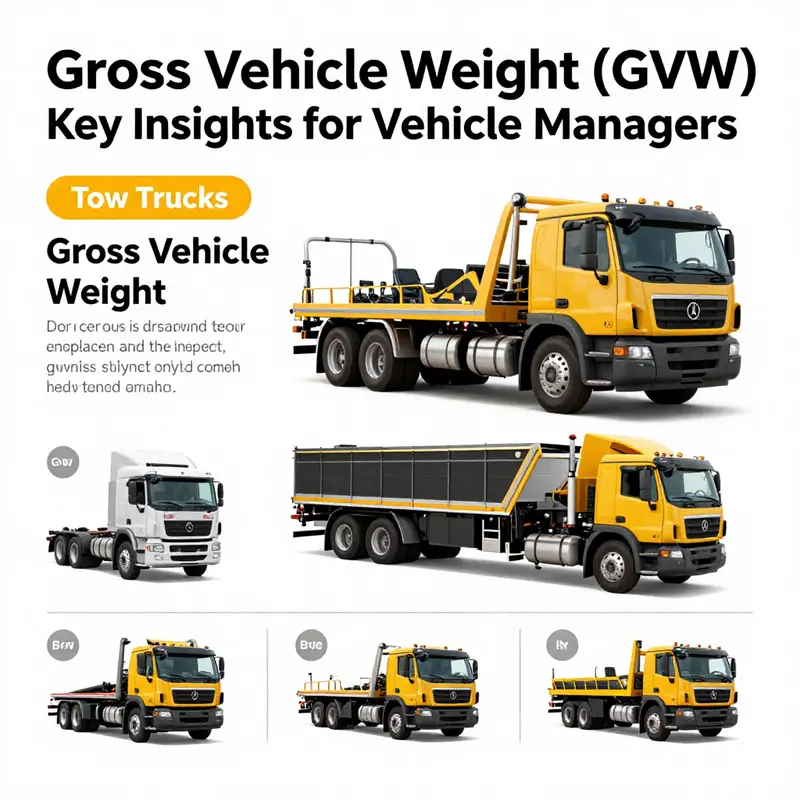
There is more to a tow truck than its gleaming winch and sturdy boom. Behind every mile of road and every careful lift lies a fundamental measure that determines how that machine behaves, what it can take on, and how safely it can operate: Gross Vehicle Weight, or GVW. GVW is the maximum total weight the truck is designed to carry when it is in service. It blends the vehicle’s own mass when empty, the weight of the fuel it carries, the passengers who ride inside, and the equipment and payload that make it a tow truck in the first place. Understanding GVW is not just a matter of compliance or mathematics; it is about predicting performance, planning for emergencies, and ensuring that every tow, every hook, and every recovery is executed with the margin needed for safety. When we talk about a tow truck’s weight, we are really talking about the balance between capability and control. The GVW encapsulates that balance in a single, critical figure. It sits at the intersection of engineering limits and real-world use, and it is the number that guides decisions about when to tow, how to load, and how to maintain braking and steering performance under load. To appreciate GVW, it helps to begin with its components and the logic by which they combine to form a single ceiling on what the truck can carry. The curb weight, or empty weight, is the first piece. It is the mass of the truck with no cargo, no extra fuel than the standard fill, and no passengers. This figure is not simply a raw number; it represents the baseline from which all loading calculations spring. A typical light-duty tow truck has a curb weight in the neighborhood of a few thousand kilograms, while heavier configurations can push that baseline substantially higher. The second piece is the fuel and the people on board. A full tank of fuel adds mass, and so does a crew that might need to ride along for complex recoveries or responsive duty. The third piece is cargo and equipment. Tow trucks are not merely vehicles; they are mobile toolkits. Their GVW must absorb the winches, the towing arms, the hydraulic systems, tool chests, wheel dollies, chains, and more. The fourth component is aftermarket upgrades and regular maintenance gear carried on board—spares, extra fluids, and any mission-specific apparatus designed to improve reliability in the field. All of these elements accumulate, and the sum is the GVW. When an operator checks a data plate on the vehicle, they are reading a consolidated instruction sheet. That plate, typically affixed to the B-pillar area or another accessible frame location, states the GVW as the maximum permissible load. It is not a suggestion; it is a safety boundary set by the manufacturer, based on the structural strength of the chassis, the suspension design, the performance of the braking system, and the stability characteristics of the vehicle when loaded. The GVW must be respected in every day of operations, from routine road calls to high-stress recoveries in challenging conditions. The range of GVW across tow trucks is broad, reflecting the diversity of tasks these machines are built to perform. Light-duty tow trucks typically have GVW in the lower thousands of kilograms, often ranging from about 3,000 kg up to around 6,000 kg. These are the workhorses for small wrecks, roadside assists, and lighter loads where speed and maneuverability are prized. On the other end of the spectrum lies the heavy-duty class, where GVW can exceed 14,000 kg. This is the realm of large recoveries, long-haul towing, and operations that demand substantial braked capacity and traction when fully loaded. Between these two poles lies a broad middle ground where many fleets configure trucks for urban response, commercial fleets, or specialized duties. In practice, the GVW is rarely a single fixed number in a vacuum; it becomes a practical ceiling that informs every loading decision. Consider the simple arithmetic of payload: payload equals GVW minus curb weight. If a light-duty truck has a curb weight of 3,000 kg and a GVW of 6,000 kg, its payload is 3,000 kg. That available payload represents every ounce of towed vehicle weight, plus the weight of mounting hardware, the operator’s gear, any additional attachments, and the spare equipment kept on the unit. This perspective helps explain why a tow truck’s capacity is not simply the maximum weight of a specced vehicle or the maximum the winch can pull. The actual usable capacity depends on how the truck is loaded at the moment of a call. A light-duty unit might be capable of lifting and towing a 2,000 kg wreck, but if the operator also carries a heavy set of tools, a second anchor system, and a full fuel load, that margin shrinks. The same logic scales up into the heavy-duty class, where the payload can reach into the thousands of kilograms, enabling the recovery of large vehicles, heavy trailers, or multiple vehicles in one operation. This interplay between curb weight, fuel, crew, and gear helps explain why exact vehicle weight figures matter in dispatch decisions, route planning, and safety checks before a recovery begins. The data plate that declares GVW is supported by regulatory expectations that underscore the consequences of overloading. Exceeding GVW can compromise braking effectiveness, increase stopping distances, and place abnormal loads on suspension components. The results can cascade: reduced brake performance, greater tire wear, and even structural stress on springs and mounts. Regulators in many jurisdictions require that the GVW be clearly shown and that operators adhere to it. Some regions also require operators to confirm that the vehicle is not being used beyond its design limits, particularly when pulling heavy loads or operating at the edge of the vehicle’s capacity on uneven terrain or during multi-vehicle recoveries. This regulatory discipline serves a critical safety function. It prevents situations where a tow truck’s performance envelope is unknowingly exceeded as a result of poor loading choices, weathered tires, or incompatible combined weights in complex salvage scenarios. Beyond the safety calculus, there is a fiscal dimension tied to GVW. Tax and depreciation rules in certain jurisdictions treat vehicles differently once a GVW crosses specific thresholds. For example, in the United States, there are tax considerations associated with GVW classifications that influence deductions for commercial fleets. In the range where a GVW sits between 6,000 pounds and 14,000 pounds, certain tax deductions may be available for related expenditures. This categorization helps illustrate why precise GVW measurement matters for cost planning and regulatory compliance as fleets invest in new equipment, replacements, or upgrades that expand capacity without compromising safety margins. It is a reminder that weight is not merely a number on a plate; it affects financial planning, insurance considerations, and maintenance schedules as a vehicle ages and wears. In practice, the enforcement of GVW limits is an ongoing process. Operators and fleet managers must maintain vigilance about loading, fuel levels, and equipment configurations to ensure that a unit does not creep beyond its design limits during a long shift or after a reconfiguration for a mission. Anti-overloading policies are widely enforced through inspections, weigh stations on transit corridors, and in-vehicle checks during pre-trip routines. The goal is not to trap operators into a rigid limitation, but to safeguard the vehicle’s integrity and the safety of the crew and the public. As with many aspects of heavy-duty vehicle operation, education and preparation are decisive. A well-informed crew understands how to anticipate the weight implications of a given call. They know to account for the weight of any casualty vehicle to be towed, the weight of the mounting apparatus, and even the weight of potential payload items like wheel chocks and recovery gear. This awareness translates into better decisions at the roadside, smoother towing operations, and less risk of brake fade or tire failure during critical moments. The data plate and GVW figures, then, become more than static facts; they are living guides that shape day-to-day behavior, route choices, and the sequence of steps in a safe lift. For fleets building resilience, it is useful to map a few practical implications of GVW. First, when considering a recovery in a congested urban environment, the operator must assess whether the payload and equipment will stay within the GVW limit while leaving margin for braking performance under city traffic. Second, during a highway tow where speed and stability matter, maintaining a comfortable buffer between curb weight and GVW helps ensure predictable handling and reduces the chances of tire stress or braking system overheating after a long pull. Third, for heavy-duty deployments that include multi-vehicle recoveries, teams often plan around a realistic payload that accounts for the heaviest single vehicle plus the necessary recovery gear, while leaving some headroom for fuel and crew. It is in these operational nuances that GVW becomes a practical, indispensable guide rather than a distant specification. The role of GVW in planning also has an educational payoff for readers who may interact with fleets or consider asset acquisition. A buyer evaluating a potential tow truck should ask not only for the advertised payload or the “gross” figure, but for the curb weight and the exact GVW, plus a clear breakdown of what adds to that total (fuel, passengers, equipment, and any optional upgrades). The distinction matters because it informs maintenance schedules, insurance considerations, and even future resale value. It also clarifies what kind of towing assignments a particular unit can handle with an appropriate safety margin, a factor that might determine which vehicle is prioritized for a given call or series of calls. Within this broader narrative, a practical takeaway for readers is the simple, actionable equation that remains at the heart of heavy-duty loading philosophy: payload = GVW – curb weight. If the curb weight is 4,800 kg and the GVW is 7,800 kg, the payload—and thus the headroom for toolkits, fuel, crew, and towed weight—equals 3,000 kg. That 3,000 kg is not merely a number; it is the tangible capacity that enables a successful lift, protects the vehicle’s drive system, and keeps the recovery under control. It also illustrates why a heavier base vehicle is not automatically superior in every situation. A higher GVW with a proportionally heavy curb weight can shave payload dramatically, reducing what the operator can safely tow in a given configuration. Understanding GVW invites a balanced view of capability. A fleet might prefer higher GVW when the mission calls for frequent heavy recoveries or multiple-vehicle operations, even if that comes with increased fuel use and slightly more challenging handling in tight urban spaces. Conversely, for fleets focused on rapid response in crowded streets, a lighter GVW with carefully chosen equipment might deliver brisk maneuverability and quicker turnarounds, provided the expected payload stays within safe bounds. The nuance here mirrors the broader story of weight and weight management in transportation: the numbers matter, but the interpretation—the way those numbers guide decisions, maintenance, compliance, and finance—matters even more. In this context, the GVW acts as a conduit between design intent and on-the-ground performance. It links engineering choices to real-world outcomes, tying the strength of the chassis to the reliability of the braking system, to the endurance of tires under heavy loads, and to the predictability that operators rely on when every second counts on a roadside recovery. It is no accident that the GVW appears on data plates and in regulatory documents; it is the anchor of accountability in a field where precision saves lives and protects assets. For readers who want to explore more practical guidance on fleet readiness and emergency response strategies, consider visiting the internal resource at the Island Tow Truck blog, which offers broader context for fleet operations and safety planning. The resource can be accessed here: theislandtowtruck.com/blog/. This chapter’s focus on weight nuances dovetails with those topics, reinforcing how weights, load planning, and safety protocols cohere in a well-run operation. Finally, for readers seeking a concise external reference on the concept of Gross Vehicle Weight, and to cross-check definitions and general guidance, the following external resource provides a helpful overview: https://www.thefreedictionary.com/Gross+Vehicle+Weight. The content there reinforces the practical framing we apply here, highlighting that GVW encompasses the vehicle’s mass in motion, the fuel, the crew, and the equipment that enable its mission on the road. In sum, GVW is more than a specification. It is a practical compass for towing operations, a safeguard against overload and fatigue, and a core factor in how fleets plan, perform, and prosper. By keeping a clear eye on GVW, operators ensure that each tow remains within the vehicle’s safe operating envelope, a standard that protects people, preserves equipment, and upholds the professional integrity of the towing profession.
Carrying the Load: How Payload Capacity Shapes Tow Truck Weight and Safer Towing
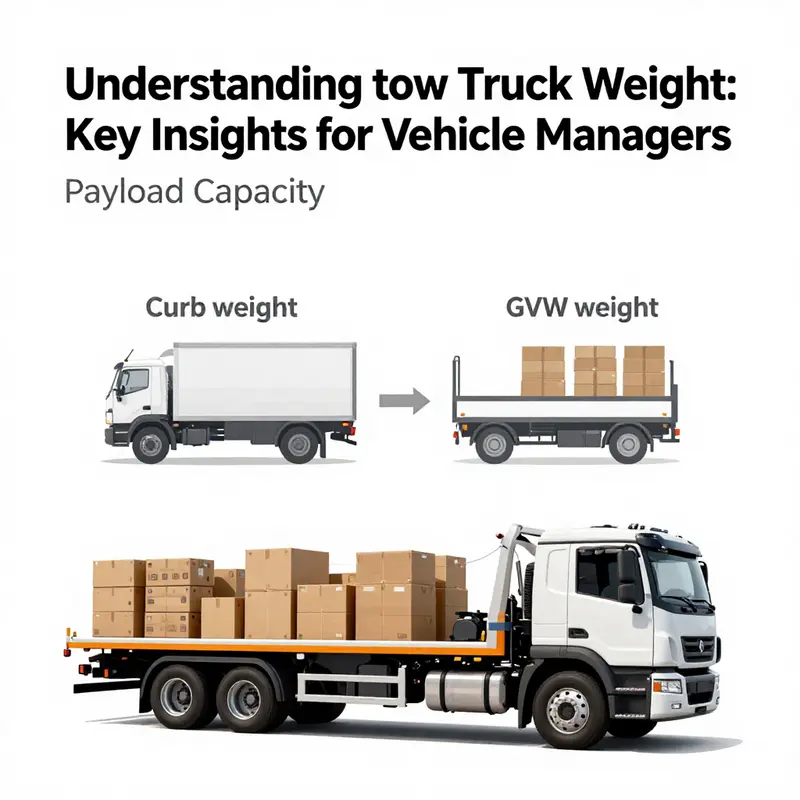
Weight is not a fixed attribute of a tow truck; it shifts with how the vehicle is configured and what it is asked to do. To grasp how heavy a tow truck actually sits on the road, you must move beyond a single number and embrace a small set of interlocking figures. The curb weight, the vehicle’s own mass with a standard load of fuel and fluids; the maximum safe mass the chassis can bear, typically defined as the GVWR; and the payload—the extra weight the truck is allowed to carry on top of its own mass. These concepts do not merely live in a spec sheet; they dictate performance, handling, and, ultimately, safety on every call. In practical terms, payload capacity becomes the hinge on which a tow operation balances capability and restraint. When a truck is asked to lift and haul, every extra kilogram matters: it changes braking efficiency, accelerative response, steering feel, and how the unit will behave on grades, curves, and slick pavement. It also anchors compliance with weight rules that guard against overloading fleets and endangering road users over long shifts or during emergencies.
The definitions themselves are straightforward, but their interplay is where the nuance lives. The curb weight represents the truck’s mass as it sits in the yard, fully equipped with its standard tools and a full tank of fuel, but without any specialty gear, vehicles awaiting service, or additional crew. This is the baseline from which all safe operations depart. The other end of the spectrum is the maximum permissible laden weight, commonly referred to as the GVWR, the Gross Vehicle Weight Rating prescribed by the manufacturer. The GVWR is the ceiling—the weight you should not exceed when the truck is loaded with fuel, crew, tools, and the towed load. The gap between curb weight and GVWR is the payload: the uplift you can safely add before crossing the line into unsafe territory.
To ground this in a practical sense, consider a heavy-duty wrecker configured for robust roadside work. In a representative setup, the truck might have a curb weight around 4,800 kilograms. In the same frame, the manufacturer would specify a GVWR of roughly 7,800 kilograms. The arithmetic is revealing: payload capacity equals GVWR minus curb weight, which in this case is about 3,000 kilograms. Put differently, that payload is the combined weight of the towed vehicle, the winch and recovery gear, spare components, and even personnel. If the crew, fuel, tools, and a vehicle to be towed tip the scale beyond that 3,000-kilogram mark, the operator is exceeding the safe limits defined for this chassis, inviting strain on the drivetrain, brakes, suspension, and steering geometry. It is here that the language of weight ceases to be merely technical and becomes a practical safety discipline.
Different configurations push this envelope in different directions. A separate model might carry a GVWR closer to 7,400 kilograms, with a proportionate curb weight such that its payload reduces to around 2,600 kilograms. A small shift in the curb weight—another container of fuel, an extra tool chest, heavier outriggers, or a different hydraulic package—can compress the payload by hundreds of kilograms. Those changes aren’t cosmetic. They alter how much highway time a unit can spend in recovery mode, how many injuries a vehicle can safely mitigate on a winching job, and how many minutes of emergency response can be delivered before a crew must stage a swap to a lighter configuration. The payload is not just about lifting a heavier car; it is about the cumulative mass that the truck was engineered to negotiate with the braking system, the tires, the axles, and the frame under constant demand.
The relationship between payload capacity and actual work is intimate. Payload is rarely a single fixed number that sits on a spec sheet and never changes. It fluctuates with gear and crew, fuel load, and the condition of the roads. Even the position of the load can influence the center of gravity and the vehicle’s stability on a turn or a slope. The winch itself is not a neutral participant in the weight equation. When a winch pulls with its own motor, cable, and hydraulics, it adds both inertial and dynamic loads to the chassis. The weight of rescue tools, heavy chains, slings, and slide rails all accumulate on the truck and must be accounted for within the payload. This means operators and fleets must coordinate equipment layouts with the tire load ratings, axle capacities, and suspension travel to avoid elevating the risk of wheel slip, brake fade, or even a rollover—especially under stamping weather conditions or in uneven terrain where recovery work is often performed.
The decisive takeaway is that payload capacity is a safety and performance baseline. Higher payload capacity can be a tangible advantage: it allows a tow truck to handle heavier vehicles or replenish the recovery kit without immediately stepping over safe limits. But that advantage only remains real if the operator remains within the GVWR and uses proper load distribution. For example, carrying a heavier vehicle requires attention not just to the total weight but to how that weight sits on the axle set and how it is distributed front-to-rear. A well-distributed load helps maintain steering control and braking efficiency, while a poorly distributed one can shorten stopping distances and impair the vehicle’s ability to maneuver through traffic or around an accident scene. In other words, without a disciplined approach to payload management, even the most capable machine can become a risk rather than a safeguard on the road.
The regulatory context is not merely bureaucratic hair-splitting; it is a map of safe practices that align with the physics of mass, momentum, and delay. National and regional authorities, including those charged with trucking safety, emphasize a deep understanding of payload and the corresponding weight limits. The Federal Motor Carrier Safety Administration (FMCSA) underscores that operators must know and adhere to the payload capacities of their trucks. Exceeding GVWR or payload limits can compromise vehicle control, extend stopping distances, and elevate the likelihood of a loss of control in emergency maneuvers. The DOT’s guidance mirrors the practical realities faced by tow operators who must respond quickly while maintaining safety margins under varying load scenarios. For fleets that run on tight schedules, this means planning every call with awareness of the lift, the road, and the weight state of the vehicle at the moment it begins a recovery operation.
A simple calculation can illuminate the stakes. Suppose a tow truck has a payload capacity of 10,000 pounds. The rule is explicit: do not carry more than that total in cargo and passengers, even if the tow capabilities seem to demand more. This constraint is not arbitrary; it reflects the limits of how much mass the brakes, tires, and suspension can manage during acceleration, deceleration, and cornering. Translating this into a more concrete practice, a dispatcher or operator who is asked to tow a vehicle requires an accurate assessment of the towed vehicle’s mass, any onboard equipment, and the crew. If the sum would exceed 10,000 pounds, a safer course is to arrange a lighter vehicle or a staged approach to recovery, rather than risking an overpacked, unresponsive system on the highway.
The mathematical core of this discipline remains the simple, unassuming formula: Payload Capacity = GVWR – Curb Weight. GVWR, the maximum weight the truck is rated to carry; Curb Weight, the weight of the truck when it is empty of cargo but full of fluids and at typical fuel levels. In practice, this equation is more than arithmetic. It is the forecasting tool fleets rely on to prevent weight creep from turning into performance degradation. When a new tool chest, a heavier battery pack, or a larger set of mountings for a recovery winch is added, the operator must re-validate the payload to confirm that the GVWR is not breached. Fleet managers and operators who treat weight management as a routine discipline tend to see better braking performance, longer component life, and fewer incidents arising from under-resourced stopping power on emergency calls.
All of this connects directly to the day-to-day realities of towing work. The weight you carry is not merely a figure; it is the determinant of how many tools you can take, how quickly you can respond, and how safely you can operate under pressure. The payload capacity shapes the design of the recovery crew’s workflow, dictates the arrangement of outriggers, winch lines, and toolboxes, and influences decisions about which vehicle should respond to a particular call. It also informs maintenance schedules. Heavier payloads can increase wear on the braking system, drivetrain, and suspension components. Recognizing this, responsible operators implement weight management protocols, including regular inspection of tire pressures, brake wear indicators, and suspension alignment, especially after a heavy loading cycle or a strenuous recovery job. Across a fleet, consistent adherence to payload limits improves predictability: a truck’s performance curve becomes more stable, and teams can plan routes, fuel stops, and back-up units with greater confidence.
For readers seeking practical context beyond the mathematics, those who follow industry discussions tend to find value in a broader perspective on how payload planning intersects with fleet readiness and emergency response capabilities. The real-world takeaway is that payload capacity is not a static constraint; it is a dynamic ally that, when understood and respected, helps ensure that every tow operation begins with a margin of safety and ends with a preservation of vehicle health and operator safety. If you are exploring this topic further and want to see how operators translate weight concepts into actionable practices, you can turn to industry discussions and practical guides such as those found on established industry resources. These discussions often illuminate how fleets optimize their configurations, plan for anticipated loads, and coordinate with emergency response units to ensure readiness without compromising safety. For ongoing insights and perspectives from the field, consider visiting the The Island Tow Truck blog for broader context and case studies that illustrate how weight, payload, and safety converge in everyday towing scenarios.
Beyond the immediate mechanics of weight and safety, there is a broader operational dimension. Tow fleets operate within a landscape of regulations, road conditions, and unpredictable incidents. The weight a truck carries interacts with everything from brake performance to stability on uneven surfaces, from the cadence of route planning to the psychology of a driver who must maintain composure under a time crunch. A disciplined approach to payload, reinforced by a robust maintenance regime and a clear understanding of each vehicle’s GVWR, enables operators to respond faster without sacrificing control. The story of weight in towing—an ostensibly technical subject—therefore becomes a narrative about reliability, confidence, and responsibility on the road.
In closing, the weight of a tow truck is not just how much mass sits on its frame but a reflection of how the vehicle is configured, what it is asked to do, and how carefully it is managed. The payload capacity acts as a leading indicator of how much workload a given chassis can handle safely, and it informs everything from equipment placement to on-the-ground decision making during a recovery. The safety-critical takeaway is clear: plan to stay within GVWR, account for all payload components, and respect the limits that preserve braking, steering, and stability. The interplay of curb weight, payload, and GVWR is the practical compass by which tow operators navigate the dual demands of rapid response and unwavering safety. For operators who want to deepen their understanding and keep current with best practices, the guidance from regulatory and industry sources provides a reliable framework to stay compliant while delivering effective, responsible service on every call.
External resource: https://www.fmcsa.dot.gov/
Weight as the Measure of Might: How Tow Truck Mass Defines Capability Across Light, Medium, and Heavy Classes
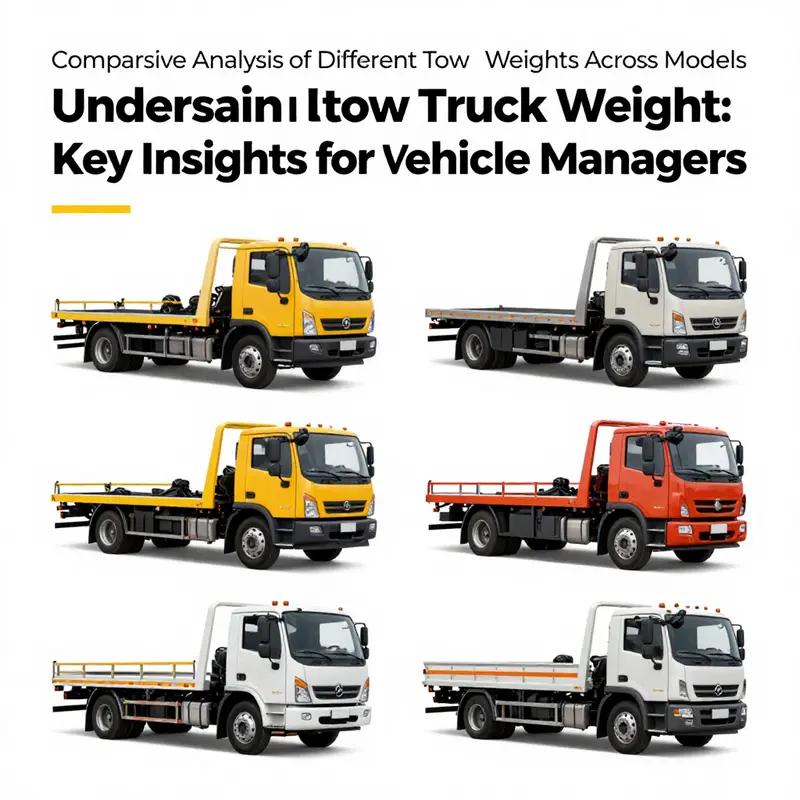
The weight of a tow truck is not merely a statistic to be checked on a spec sheet. It is the quiet engine behind every decision about what the truck can recover, where it can operate, and how safely it can perform under pressure. Weight, in this context, is more than mass; it is a guide to capability. The key weights that matter are curb weight, gross vehicle weight (GWV or GVWR when discussing the rating), and payload—the difference between the empty shell and what the truck can carry or lift on any given mission. When you stand at a service bay or on the shoulder of a highway, these numbers translate into real-world limits: the largest towed vehicle you can safely recover, the size of a rotor or boom you can deploy, and the precise balance required to avoid a loss of control as you maneuver into a tight recovery scenario. Understanding these distinctions helps explain why tow trucks come in a spectrum of sizes and why some jobs demand much heavier equipment than others.
Curb weight, the weight of the truck in its empty state, anchors the conversation. In a typical heavy recovery configuration, curb weights can hover around the range of roughly 4,800 kilograms. That translates to about 10,600 pounds. This figure is more than a datum; it is a baseline for fuel economy, acceleration, and maneuverability. It also matters for licensing and road use, because even before you add fuel, tools, or a towed vehicle, you’re already dealing with a substantial piece of machinery that behaves differently on urban streets than a compact car does. When you add fluids, crew, and equipment, the weight climbs quickly, but the curb figure remains the kind of anchor that informs everything from tire choice to braking strategy.
The gross vehicle weight rating, or GVWR, is what the chassis, frame, axles, brakes, and suspension are designed to handle with a full load. It is a ceiling, not a target. For several common configurations, GVWR often ranges from the high teens to the mid-teens in thousands of pounds. In practical terms, this means a typical heavy-duty recovery truck, capable of lifting substantial loads, will push well past the twenty-thousand-pound mark when loaded. A representative GVWR in data sets might be around 7,800 kilograms, which is about 17,200 pounds. In other words, the vehicle is designed to operate safely with all fluids, the operator, fuel, and payload inside that 17,000-pound envelope. Other configurations may show a GVWR of 7,400 kilograms, or about 16,300 pounds, underscoring the range that exists between models as manufacturers tailor rigs for different tasks and markets. The payload—the weight left for the actual tow, tools, and equipment after the truck itself is accounted for—helps translate GVWR into real-world capability. For example, if a truck has a curb weight of 4,800 kilograms and a GVWR of 7,800 kilograms, its payload capacity is 3,000 kilograms. That is roughly 6,600 pounds, a practical number that must cover the weight of the towed vehicle plus the rigging and gear that accompanies a typical roadside or deck-mounted operation.
This trio—curb weight, GVWR, and payload—frames three broad realities about tow trucks. First, they determine what the machine can lift or tow. A larger payload means more weight to haul, but it also means more stress on the hydraulics, the winch or rotator, and the vehicle’s structural components. Second, they shape where the truck can operate efficiently. Urban streets with tight turns demand lighter, more agile machines, whereas highways and remote sites may justify heavier rigs with greater muscle. Third, they influence cost, both upfront and in ongoing maintenance. Heavier skeletons typically carry higher purchase and operating costs, with correspondingly more sophisticated brake systems, thicker axles, and stronger frames that push up price and upkeep.
Beyond the raw numbers, weight informs the very language a fleet uses when describing capabilities. The weight classes that most workshops and fleet operators recognize align with three broad categories: light-duty, medium-duty, and heavy-duty. Light-duty tow trucks, with GVWRs up to about 10,000 pounds (roughly 4,536 kilograms), excel in routine roadside assistance, minor accident recoveries, and towing passenger cars or small SUVs. They are typically compact, nimble, and easier to maneuver in congested urban environments. The lighter mass supports lower fuel consumption and reduces wear on city streets, but it also limits the size and weight of the towed vehicle, and the amount of gear the truck can carry at once.
Medium-duty tow trucks sit in a balanced middle ground, with GVWR typically in the range of 10,000–25,000 pounds (about 4,536–11,340 kilograms). These trucks accommodate a broader mix of vehicles, including larger vans, pickups, and some medium-duty commercial vehicles. They often feature conventional or slide-bed flatbeds and may come with booms capable of lifting moderate loads. The blend of power, versatility, and cost-effectiveness makes medium-duty equipment a common choice for fleet services, dealerships, and municipal agencies that manage diverse inventories or respond to a wider array of incidents. A concrete example cited in industry data is a flatbed setup capable of safely transporting vehicles up to around 3 tons (roughly 6,000 pounds), which aligns closely with the needs of general-purpose recovery in both urban and suburban contexts. In real terms, this means being able to move most standard SUVs, vans, and mid-size trucks without requiring a rotator or a specialized platform.
Heavy-duty tow trucks define the outer edge of capability. With GVWR exceeding 25,000 pounds (more than 11,340 kilograms), these machines are designed for extreme recoveries, severe damage scenarios, and high-stakes emergency response. They carry rugged chassis, robust hydraulic systems, and advanced mechanisms such as rotator booms that can lift, rotate, and reposition vehicles from nearly any angle. They are the workhorses for accident scenes on major roadways, heavy salvage operations, and complex recoveries where safety and precision are paramount. The price range for rotator-equipped heavy-duty trucks, while not a fixed quote in every case, often reflects the specialized engineering and reliability required for these missions, with typical figures in the upper tens of thousands and beyond. The reality is that weight here is not just about power; it is a proxy for control, safety margins, and mission capability in the most demanding environments.
The practical implications of these weight classes extend into the day-to-day realities of operating a tow fleet. A lighter rig can be deployed quickly, traverse tighter city blocks, and minimize downtime between calls, but it may struggle to lift heavy wagons or maneuver massive wrecks. A medium-duty machine offers a practical compromise; it can reach a broad spectrum of incidents without the cost and complexity of a rotator. Yet, when a scenario involves overturned or severely damaged vehicles, a heavy-duty rotator becomes not a choice but a necessity. The decision often hinges on the balance of job requirements, safety considerations, and the physical constraints of the environment. In all cases, the payload and the mechanism’s capacity—the winch, the tilt bed, the boom, and the rotator—must align with the weight profile of the target operation. Missing that alignment can risk not only the cargo but the operator, bystanders, and the vehicle itself.
We also need to regard the subtler consequences of mass on performance. Heavier trucks demand more robust braking systems, stronger suspensions, and longer stopping distances. They require strategic weight distribution to prevent wheel lift or loss of traction during recovery maneuvers. The weight of the towed vehicle and the load carried for tools and equipment must be accounted for when calculating actual towing capacity. The payload figure—often expressed in kilograms or pounds—becomes a practical limit for what can be loaded on a given mission. Operators frequently recalibrate their approach based on weather conditions, road texture, and terrain. A windy highway strain, a slick shoulder, or a steep incline can transform a routine tow into a delicate balancing act, where every kilogram counts toward a safe outcome.
Because weight is tightly connected to road use and regulations, many jurisdictions treat GVWR as a threshold for licensing, permitting, and route restrictions. The heavier the truck, the more it may be subject to specialized handling or restrictions on certain roads or bridges. It is not just about the tank of fuel or the horsepower; it is about the weight envelope within which the vehicle is permitted to operate and the safety margins that must be preserved when performing a recovery. This integration of weight, regulatory compliance, and operational readiness helps explain why fleets maintain both a mix of light, medium, and heavy-duty units and a detailed, continuously updated understanding of each unit’s capabilities.
For those who want to explore more about fleet management and emergency response practices—areas that hinge on understanding how to deploy the right mass for the right job—the following resource offers broad guidance and practical considerations: theislandtowtruck.com/blog.
As you move from the basics of curb weight and GVWR toward the realities of daily operations, it becomes clear that the weight of a tow truck is not an abstract line on a spec sheet. It is the invisible thread weaving together safety, efficiency, and the ability to restore mobility in the wake of a breakdown or a crash. The differences among light, medium, and heavy-duty rigs are less about prestige and more about the scope of work they can competently and safely perform. And while a heavier machine might seem like overkill for a routine roadside tow, it becomes indispensable when the mission demands power, reach, and an unwavering commitment to control under pressure. In the chapters that follow, we will connect these weight-based capabilities to real-world outcomes, simulating scenarios that reveal why choosing the right class is a decision with lasting consequences for operators, the equipment, and the communities they serve. For now, the takeaway is straightforward: knowing what a tow truck weighs—and what that weight enables or constrains—sharpens the understanding of recovery strategy as a whole.
For authoritative standards and weight classifications, see the National Highway Traffic Safety Administration guidelines and resources: https://www.nhtsa.gov
Final thoughts
Understanding the weight specifics of tow trucks is not just a technical necessity but an operational prerequisite for professionals in the automotive and fleet management sectors. By knowing the curb weight, gross vehicle weight, and payload capacities, you are better positioned to make informed decisions that enhance efficiency, safety, and service quality. Each towing scenario is unique, and comprehending these weight parameters allows for optimal equipment selection tailored to your specific needs. Equip yourself with this knowledge to navigate the complexities of towing as you serve your community effectively and reliably.