Acquiring a tow truck license is essential for businesses such as auto repair shops, car dealerships, property managers, resort operators, and commercial fleet operators eager to offer reliable roadside assistance. This process requires understanding specific requirements, vehicle compliance, and navigating legal permits. Each chapter of this guide will establish vital elements, from the necessary business licenses to vehicle registrations and specialized emergency permits, ensuring that your operation is not only efficient but legally compliant within the framework of China’s transportation regulations.
Tow Truck Licenses Demystified: A Practical Path Through Business Licensing for a Legitimate Towing Service
Licensing a tow truck operation is less about a single form and more about building a reliable, compliant foundation that reassures customers, insurers, and authorities. In many places, regulators frame the process as a series of essential gates—each one designed to ensure that your fleet can move people and cargo safely, that the drivers are qualified and capable, and that the operation itself respects environmental and road-safety standards. While the details shift from one jurisdiction to another, the overarching architecture remains remarkably consistent: secure a business license, demonstrate that your vehicles meet technical and safety standards, credential your drivers, and, where necessary, obtain special permits that allow you to perform particular kinds of towing work. Understanding this architecture helps you plan the road ahead with clarity and avoids the missteps that can stall a budding towing business long before it earns its first call.
In the first layer of this architecture, the business license, the emphasis is on legitimacy. A tow service does not exist in a vacuum; it exists as a business entity that must be registered, taxed, insured, and ready to cooperate with local authorities. The core of this layer is the market-facing recognition that your operation is authorized to engage in road transport activities. In many systems, this culminates in a road transport operation permit or its local equivalent. The permit is not simply a stamp of approval; it is a certificate that your organization has put a governance framework in place. At minimum, this framework includes a safety management system with defined safety production procedures, operational protocols, and a supervision framework that makes the day-to-day work traceable and auditable. The emphasis here is on ongoing compliance, because the permit typically ties to a schedule of inspections, audits, and renewals.
As you navigate the requirements, it helps to keep two questions in mind: What standards apply to the vehicles, and what standards apply to the people who operate them? On the vehicle side, regulators look for compliance with technical rules that cover everything from braking systems to lighting and weight limits. The vehicle must be registered, and it must meet the standards that enable it to participate in road transport lawfully. In many places, the operator of the tow truck will also need to hold a valid professional qualification certificate for road transport drivers, unless the vehicle class falls under a lighter threshold. This distinction—between vehicles that require professional qualifications and those that don’t—often hinges on weight or permit category, but the spirit remains the same: responsible operation depends on capable, qualified personnel.
Beyond the paperwork, the substance of the license rests on a robust safety and environmental framework. A sound safety management system is not a one-off document; it is a living system that governs how you train drivers, how you conduct vehicle inspections, how you plan maintenance, and how you respond to incidents. It encompasses not only the mechanics of towing but the broader duties of a transport operator: route planning, incident response, customer communication, and the safeguarding of workers. Environmental compliance—emissions controls, waste handling, and adherence to local air quality standards—also sits squarely in this domain. In a properly run operation, these elements are interwoven into daily practice, not stored as theoretical requirements in a file cabinet.
The second layer centers on the vehicles themselves. The tow truck is the instrument through which the business delivers its service, and as such it must be legally registered and technically certified. A vehicle registration certificate confirms that the truck is authorized to operate on public roads, while a driver’s license confirms that the person behind the wheel is legally empowered to do so. In many jurisdictions, the vehicle must be accompanied by compulsory traffic insurance, sometimes known as CTP or a similar scheme, and proof of vehicle-related taxes. If the business plan includes specialized operations—such as container handling or load restraint work—additional equipment must be installed, certified, and maintained to the standards required for those tasks. And when the towing of larger or oversized cargo enters the picture, more permits follow, reflecting the added complexity and risk involved in cross-provincial or cross-region movement.
A specialized permit often emerges as a distinct license in its own right. If the service includes road accident rescue towing, for instance, authorities may require a dedicated permit that authorizes the company to provide emergency response services. The application for such a permit typically involves presenting a mosaic of documentation: the company’s business license, the legal representative’s identification, an application form, a vehicle technical inspection report, and proof of insurance and tax payments. When approval is granted, the operator receives a license that carries expiration dates and renewal obligations, reinforcing the ongoing nature of compliance rather than a one-time victory. This structure reflects a broader truth about tow services: the most valued operators are those who can prove, over time, that they can be trusted to respond quickly, move risk with care, and do so without compromising other road users’ safety.
The journey to licensing, of course, is not a mere sequence of form submissions. It unfolds as an integrated workflow that begins with establishing the business and ends with maintaining a defensible record of compliance. A practical way to frame this journey is to imagine it as a staircase: you place the first tread by registering your business, you secure the second tread by obtaining the road transport operation permit, you lay the third tread by ensuring the tow truck is registered and meets safety standards, and you place the fourth tread by obtaining any specialized permits your service requires. Each tread reinforces the next, building a chain of compliance that can withstand audits, insurer scrutiny, and the expectations of customers who rely on you in moments of disruption.
In some places—the scenario commonly described in regulatory guidance—the process can feel modular, with clear, discrete steps that policymakers intend to be tackled sequentially. In others, the path is more iterative: you may need to revisit certain elements as your business grows or as regulatory interpretations evolve. That is why one of the most valuable disciplines for any aspiring tow operator is proactive documentation. Keep a well-organized folder of licenses, insurance policies, vehicle records, inspection reports, driver qualifications, and any correspondence with authorities. When a regulator asks for proof or when a client asks, you can respond with confidence rather than hesitation. The habit of meticulous record-keeping also dovetails with best practices in safety management, ensuring that your safety procedures are not only written but embedded in daily operations and visible to auditors who may tour your facilities.
Across borders, the core logic holds: licensing is the institutional permission to operate, anchored in the health of your fleet and the competency of your people. Consider a case study drawn from a jurisdiction where vehicle inspection and driver qualification form a centerpiece of the licensing framework. Before your fleet can engage in routine towing, the vehicles must pass a roadworthiness and compliance inspection at a designated inspection center. For example, a prospective operator may schedule an appointment by contacting a central booking line, and the inspection centers will assess whether the vehicle adheres to the documented technical standards. If the vehicle passes, a Certificate of Inspection is issued, and the operator can move to the next phase of the licensing process, which might involve submitting a formal license application in person and providing identity documentation. If you are a first-time applicant and you do not hold a local driver’s license, additional identity forms may be required. Corporate entities introduce another layer, requiring company registration details and related documentation to demonstrate that the business identity aligns with the vehicle and operator credentials.
The driver component, while sometimes tightly regulated, is ultimately about safety and reliability. You want drivers who meet age requirements, hold valid licenses, maintain clean driving records, and whose backgrounds pass scrutiny. A comprehensive licensing picture even in markets where the vehicle and business registration are the primary hurdles includes a practical assessment of a driver’s ability to handle tow operations, manage roadside scenes, and communicate effectively with customers while maintaining situational awareness for the safety of all road users. In many jurisdictions, a drug screen and a background check form part of the driver qualification process, reflecting the seriousness with which regulators treat workforce safety in high-stakes roadside work. While these steps may not appear in every jurisdiction in the same order, the underlying expectation—consistent, observable competence—remains constant.
If your aim is to situate these principles within a broader, globally relevant narrative, you can think of the licensing journey as a fusion of administrative due diligence and practical readiness. The administrative side ensures that your business, your vehicles, and your people meet the marked standards. The practical side ensures that when a tow becomes necessary, you can respond promptly, perform responsibly, and return the roadway to normal with minimal disruption. This alignment of governance and practice is what turns a fleet of tow trucks into a trusted service that communities rely on in moments of breakdown, accident, or transport need. It also clarifies why the process can feel cumbersome at times: the road to compliance is long because the consequences of noncompliance—safety risks, insurance gaps, and reputational damage—are so significant.
For operators who plan to operate across different regions, there is another dimension to consider: harmonization versus localization. Some regions maintain shared frameworks for core elements—such as basic vehicle standards, insurance requirements, and driver qualifications—while allowing local authorities to tailor procedures to local traffic conditions and enforcement practices. This reality makes it helpful to engage early with local government service centers or the transportation bureau’s public-facing channels. In many places, you can obtain application guides and checklists online, schedule inspections, and get answers to practical questions through official channels or government portals. Where available, following official guidance published by the national transport authority provides a stable anchor for your plan. For instance, regulators often publish a centralized guide that outlines the recommended steps, documentation, and renewal timelines, making it easier to map out a realistic project plan for your tow business.
The practical takeaway is simple: begin with a strong, organized business case, then build outward with a clear, auditable trail of compliance. If you are assembling your plans in a multinational or cross-regional context, let your approach be modular but coherent. Start with the business license, then the road transport permit, then the vehicle and driver credentials, and finally any special permits for emergency services your operations intend to offer. Throughout, maintain an integrated safety and environmental program so that compliance and performance reinforce one another rather than compete for attention or resources. And remember that licensing is not a one-time achievement but a moving target that evolves with changes in regulation, technology, and road safety expectations.
To connect this framework to practical, on-the-ground guidance, consider how professionals in the field prioritize preparation and execution. The wealth of resources available—from official portals to practitioner-focused blogs—can provide the kind of practical lens that helps you prepare before you submit any application. For example, a resource-oriented community site offers broad insights into the everyday realities of fleet readiness, emergency response planning, and how a licensing journey translates into daily operations. For readers who want a hands-on sense of how to translate policy into practice, this kind of material can serve as a bridge between the theory of licensing and the realities of running a tow truck service. You can explore this broader conversation at the Island Tow Truck Blog, which collects practical perspectives from practitioners navigating the day-to-day challenges of fleet management and roadside service. the island tow truck blog.
As you progress through the licensing journey, remember that the rules you meet are the scaffolding that supports a broader commitment to public safety and reliability. The details may differ by country or region, but the core logic—legitimate business operation, vehicle and driver readiness, and a throughline of safety and environmental stewardship—remains universal. Building your readiness around that logic will help you navigate not only the current requirements but also the changes that regulations inevitably undergo as transport governance evolves. When you align your operations with these enduring principles, you lay a solid foundation for sustainable growth, better customer trust, and a professional reputation that endures through inspections, audits, and every roadside call.
For readers who want to dig deeper into the relationship between vehicle readiness, regulatory compliance, and practical fleet management, the structured guidance used in specific jurisdictions can illuminate the path. In Western Australia, for example, the licensing process begins with a rigorous vehicle inspection at a designated centre, followed by a formal application that requires proof of identity and, in some cases, additional owner-specific forms. The process underscores a simple truth: the license is earned by demonstrating that both the vehicle and the operator meet a defined standard of safety and reliability before the vehicle is allowed to touch the road in a regulated capacity. It is not enough to own a tow truck; you must prove that you can deploy it responsibly, consistently, and in a way that protects others on the road. The practical implications for an aspiring operator are clear: plan your timetable to accommodate inspections and potential re-inspections, prepare the necessary documentation in advance, and invest in a safety program that is ready to be demonstrated during audits or inspections. This approach reduces risk, improves efficiency, and positions your business to meet customer expectations with confidence.
As you integrate these ideas, think of the licensing journey as both a technical exercise and a narrative about your business’s reliability. The technical exercise ensures that every vehicle and driver meets the required standards, while the narrative demonstrates your capacity to keep the fleet safe, compliant, and service-ready in real-world conditions. If you want to broaden your knowledge beyond the regulatory framework, you can explore resources on fleet emergency readiness and practical response strategies, which complement the licensing journey by addressing how a licensed operator acts when called to scene. These perspectives help ensure your business is not just compliant on paper but genuinely prepared to deliver timely and professional service when it matters most. For more context on fleet readiness and emergency response strategies, see the Island Tow Truck Blog linked above.
External reference for readers seeking official standards and procedural detail can be found in the transport guidelines published by Western Australia. This external resource provides a concrete, document-based view of the standards and processes that underpin tow truck licensing in that jurisdiction: Requirements for Tow Trucks in WA (PDF).
Tow Truck Licensing in Practice: Navigating Vehicle Registration and Certification Compliance in Western Australia
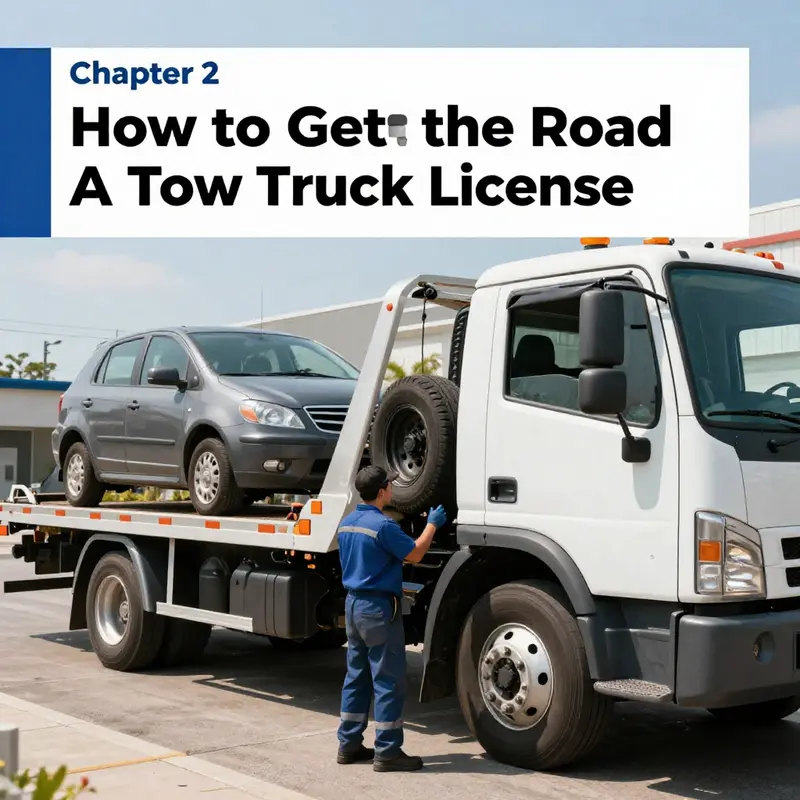
Securing a tow truck license is more than a single form or a single standard. In Western Australia, as in many jurisdictions, the path to lawful operation blends vehicle registration, certification, and a suite of driver qualifications. This chapter follows the practical rhythm of the WA process, showing how a fleet operator or independent contractor moves from having a vehicle in good mechanical shape to a legally registered tow truck ready to hit the road. The journey is not merely about paperwork; it’s about ensuring the vehicle you rely on for safety, reliability, and timely service meets a clear set of standards. This emphasis on registration and certification is the backbone of compliant towing work, and understanding it deeply helps prevent costly delays or surprises when authorities review your documents or inspect your equipment. For those who want to glimpse real-world perspectives alongside regulatory steps, practical examples and reflections are often shared in industry-focused discussions, such as those found on the Island Tow Truck blog.
In Western Australia, the registration and licensing landscape is designed to ensure that every tow truck meets baseline roadworthy criteria while the operator brings the requisite knowledge and commitment to safety. The starting point is a vehicle that can be demonstrated to be roadworthy through an official inspection. The next step builds on that foundation, converting the inspection result into a formal license to use the vehicle on public roads. While the process is structured, it is also pragmatic: the authorities want to see that you can legally and safely operate the vehicle, maintain its critical systems, and keep documentation current. The simplicity of a checklist should not mask the underlying importance of each element. Proper handling of inspections, documents, and driver qualifications reduces risk for your business, your customers, and the broader driving public.
A useful way to frame the journey is to think in two intertwined tracks: the vehicle’s technical eligibility and the operator’s capacity to comply with regulatory expectations. On the vehicle side, the focus is on inspection outcomes, compliance with technical standards, and the correctness of registration and insurance arrangements. On the operator side, the emphasis is on identity verification, licensing accuracy, and the alignment of the driver’s qualifications with the vehicle’s weight and use. Both threads must converge before a tow truck can be formally licensed to operate in the public space.
The inspection-first approach is central to WA practice. Before you can license a tow truck, the vehicle must pass a formal inspection at an authorized testing facility. The Kelmscott Vehicle Inspection Centre is a common venue for this process. Scheduling is practical and direct: you contact the center to arrange a time, and you should be prepared for a fee that applies specifically to the inspection service. The phone line, 1300 776 065, is the touchpoint for arranging inspections and clarifying any exemptions, such as regional operation allowances that may reduce or remove certain requirements for vehicles serving outside metropolitan areas. The existence of exemptions highlights an important theme: WA’s rules recognize diverse operational scales. If your operations are regional, you should verify which standards apply and whether any waivers or streamlined pathways exist for your circumstance.
The purpose of the inspection is to verify roadworthiness and to confirm that the tow truck complies with the state’s technical standards for tow vehicles. These standards cover chassis integrity, braking capability, the strength and reliability of the towing apparatus, lighting and signaling, load securing arrangements, and overall safety features that reduce risk during routine tows and during more demanding recovery work. It is not enough to have a tow hitch or a winch tucked away; the system must work cohesively, and all components must operate in concert under the expected loads. Once the inspector completes the process, and provided the vehicle meets all requirements, you receive a Certificate of Inspection. This document is a pivotal credential because it is the bridge between the vehicle’s mechanical status and its legal status as a licensed tow vehicle.
In practice, a Certificate of Inspection is not a final seal but a gateway. It enables you to proceed with the formal licensing step. The next phase is to submit the Application to License a Vehicle, known in WA as Form VL17. This form is not merely a bureaucratic formality; it is the vehicle license in practical terms. Along with Form VL17, you must present the valid Certificate of Inspection. The identity proof required is straightforward yet essential: a primary form and a secondary form of identification to verify who is requesting the license and who will be responsible for the vehicle’s operation. If you are applying for your first vehicle license in WA and you do not hold a WA driver’s license, you must also complete an additional identity process, using Form VL186, which documents your identity in the absence of a WA driving record.
For business entities registering a tow truck under a company name, the licensing step requires documentation that demonstrates corporate ownership and legal status. Acceptable corporate documents are specified by Transport WA, and having these ready helps ensure the in-person submission proceeds smoothly at the designated service points. The emphasis here is on clarity and traceability: the licensing system is designed to tie the vehicle to a legally recognized entity so that accountability for safety, maintenance, and timely compliance rests with a clearly identified operator or corporate owner. The process, while straightforward in its steps, requires careful preparation because missing documents or misaligned information can create delays that ripple into scheduling and market opportunities.
A crucial subset of the licensing conversation concerns the operator. In WA, the driver who operates the tow truck must meet personal qualifications that align with the vehicle’s specifications. Industry practice, reinforced by regulatory expectations, requires that a driver holds a valid driver’s license, has a clean driving record, and is willing to undergo background checks that screen for safety-related concerns. Drug screening is cited as part of the broader safety and compliance framework in many licensing contexts, reflecting an intent to minimize impairment-related risk. The driver’s license class must match the Gross Vehicle Weight Rating (GVWR) of the tow truck; this rule ensures that the driver has the appropriate training and experience to handle the vehicle’s physical demands. The GVWR-to-licence-class alignment is a fundamental safeguard: it prevents under-qualified drivers from handling heavy equipment and reduces the likelihood of accidents or unsafe loading conditions that could endanger people or property.
Choosing a tow truck for WA licensing is not only a question of meeting the letter of the law but also of practical reliability and long-term safety. The vehicle chosen should be designed and maintained as a legitimate workhorse for heavy recovery and daily towing tasks. A well-built rollback tow truck with strong hydraulics, robust load-handling capabilities, and reliable accessibility features helps ensure that drivers can complete tasks efficiently and with minimal risk. Features such as anti-skid decks, clear and durable LED lighting, and ergonomic cabs contribute to safer operations and better driver comfort, particularly during long shifts or when responding to urgent calls. The emphasis is on solid engineering paired with a disciplined maintenance regime, because a mechanically sound vehicle reduces downtime and the risk of on-road incidents that would complicate licensing and compliance.
The regulatory framework, while precise, is not static. There are nuances to consider, including exemptions for regional operators and the possibility of temporary movement permits if you need to move a vehicle before licensing is finalized. These provisions reflect a practical realism: operators often juggle multiple tasks—registration, insurance, and fleet management—while maintaining the ability to respond to service demand with minimal delay. It is wise to anticipate these contingencies by coordinating with Transport WA and keeping current copies of essential documents. Documentation should be organized and accessible, including proof of vehicle ownership, insurance coverage, and any tax obligations that support the vehicle’s legal status on the road. By building a clear, transparent documentation stack, a business reduces friction in the licensing workflow and fosters trust with customers and authorities alike.
The path from inspection to licensing is linear in its steps but layered in practical execution. As a prospective tow truck operator or fleet owner, you begin with the inspection at a validated center, obtain the Certificate of Inspection, and then prepare Form VL17 with the necessary identity and ownership documents. If this is your first WA vehicle license and you lack an in-state driver’s license, you will also complete Form VL186 to establish identity under WA rules. The corporate route adds another layer of documentation, but it is a well-trodden path for legitimate, registered businesses that want to operate tow services under a formal entity. In all cases, the importance of accuracy cannot be overstated. Transcribing the wrong information, mislabeling the GVWR, or failing to align the driver’s license class with the vehicle’s gross weight can derail an application before it even leaves the desk.
To bring these threads together, consideration of practical planning is essential. Schedule a vehicle inspection early to avoid bottlenecks as your company’s licensing timeline evolves. Gather the required documents in advance and verify the acceptance criteria for each item. If you are responsible for multiple vehicles, plan the inspections in a staggered manner so that you are not overwhelmed by the administrative load during a single licensing window. This pacing helps you maintain service levels while the paperwork catches up with your operational needs. And as you navigate these steps, the value of accessible guidance becomes apparent. Official guides and forms are available through Transport WA, and reading the latest version of the “Requirements for Tow Trucks in WA” document can prevent costly missteps. These resources are designed to reflect current enforcement practices and regulatory expectations, so consulting them as you prepare is a practical move rather than a theoretical exercise. The ongoing relationship between the vehicle and the licensing authority is built on clarity, responsiveness, and a demonstrable commitment to safety across every facet of your operation.
In terms of broader strategic planning, see the practical notes from industry peers who discuss the realities of tow truck operations and compliance in real-world settings. For example, insights shared on the Island Tow Truck blog provide ground-level perspectives on how operators manage inspections, licensing timelines, and daily compliance practices. Such sources can help translate the regulatory text into actionable steps for your business, showing how to organize teams, schedule maintenance, and document adherence to standards in a way that keeps service levels high and risk low. While the core compliance framework is regulatory, the most effective operators turn it into a sustainable routine—one that aligns with service promises, insurance requirements, and customer trust.
As you prepare for licensing, remember that vehicle registration and certification are not isolated hurdles but foundational elements of a responsible towing business. The Vehicle Registration and Certification pathway in WA is designed to protect road users and ensure that the people operating tow trucks can be relied upon to perform their duties safely and competently. This means maintaining the vehicle in a state of readiness, keeping insurance current, and updating documentation whenever ownership or operator details change. The process rewards those who plan ahead, maintain open lines of communication with the licensing authority, and invest in driver qualification and vehicle maintenance as non-negotiable components of daily operations. Those who approach licensing as a continuous process rather than a one-off checkpoint tend to experience fewer disruptions and more predictable service delivery to customers who depend on timely, safe, and professional tow services.
In closing, the WA vehicle licensing pathway provides a practical blueprint for any tow operator seeking to operate legally and safely. It emphasizes the centrality of the inspection as the gateway to licensing, the necessity of accurate identification and corporate documents, and the alignment of driver qualifications with vehicle weight and use. By focusing on these core elements, operators lay a solid foundation for subsequent regulatory steps—whether you proceed to the broader Road Transport Operation Permit or future expansions that require additional authorizations. If you want a concise reminder of where to start and what to expect, begin with the inspection, secure your Certificate of Inspection, complete VL17 with the right identity documents, and ensure your driver meets the license class and safety requirements. The rest falls into place when you maintain meticulous records, keep equipment in excellent condition, and stay engaged with the official guidance that governs tow truck licensing in Western Australia.
External resource: For a comprehensive overview, see Transport WA’s guidance on how to license a tow truck: https://www.transport.wa.gov.au/vehicles-and-drivers/vehicle-licensing/how-to-license-a-tow-truck
Chapter 3: From Regulation to Rescue on the Road — Securing Specialized Emergency Tow Truck Permits
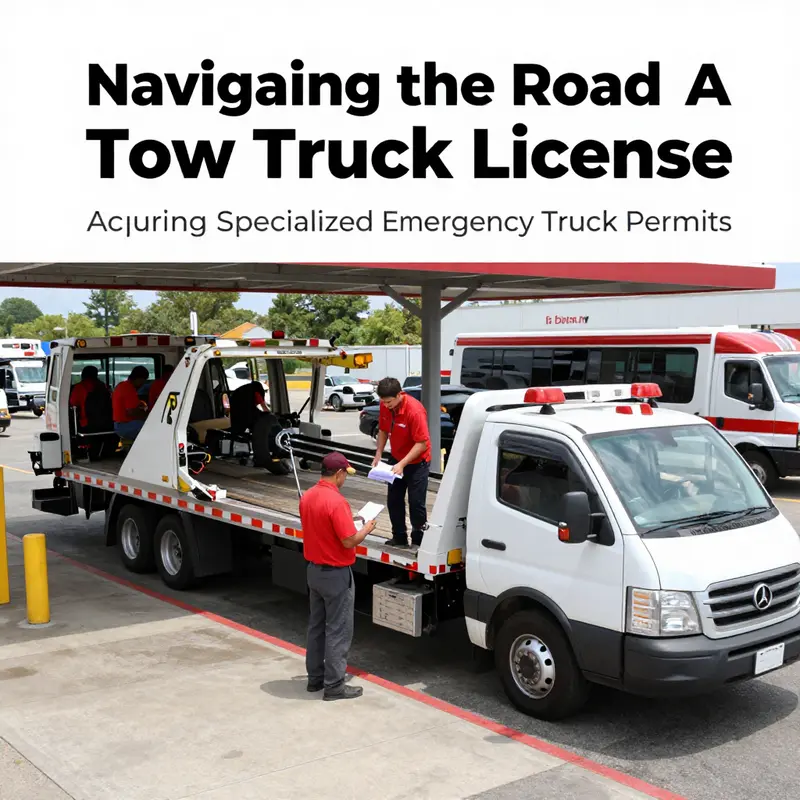
To operate an emergency tow truck legally, you must move beyond the basics of vehicle registration and ordinary licensing and enter a carefully mapped arc of regulations designed for road rescue work. This chapter follows the thread from establishing a legitimate business entity to securing the narrowly tailored permits that authorize emergency response towing. It is not enough to own a tow truck or to have a driver who can haul a vehicle; the state or provincial authorities require proof that your operation can respond rapidly, safely, and within a framework that prioritizes public safety, predictable maintenance, and transparent accountability. The journey begins with business recognition and continues through a sequence of focused approvals that, together, form a licensing ecosystem tailored to high-stakes towing. The aim is not merely compliance for compliance’s sake, but a durable readiness that aligns your fleet, your people, and your procedures with the expectations of regulators, insurers, and the communities you serve. This alignment matters because in emergency towing, timing, reliability, and safety play equally important roles. A license, in this sense, is not a badge of status but a commitment to a standard of practice that keeps roads safer even as incidents escalate into urgent, dynamic scenes on traffic corridors and highways.
Your first meaningful step, in the context of emergency towing, is to establish a business entity with legitimate standing. In many jurisdictions, this involves more than a simple sole proprietorship filing. A corporation, limited liability company, or other recognized business form creates a framework for liability protection, financial planning, and governance that regulators expect when responding to emergencies. This status is not cosmetic. It underpins the authority to hold licenses, to purchase insurance with appropriate coverage limits, and to enter into contracts with public safety agencies for coordinated response. Once your entity has formal standing, you can approach the specialized lane of licensing that governs emergency services. In this phase, the emphasis shifts from ordinary commercial licensing to a regulatory regime that foregrounds readiness, capacity, and reliability. The ability to demonstrate a credible plan for rapid deployment—how crews are dispatched, how vehicles are maintained, and how communications are managed—becomes as critical as the mechanical condition of the tow trucks themselves. Regulators want to see that you can deliver on a promise: to respond, assist, and stabilize a scene, often while other drivers are navigating the same hazard. It is this orientation toward service reliability under pressure that makes specialized emergency permits distinct from standard operator licenses.
With the entity in place, the next major milestone is the Road Transport Operator’s License, or its regional equivalent. This license marks your formal entry into regulated road transport activities and serves as the gateway to emergency-specific authorizations. The core criteria here fall into a few interlocking domains. Vehicle compliance is non-negotiable. Tow trucks intended for emergency work must meet the vehicle standards established in the Road Transport Vehicle Technical Management Regulations. These standards go beyond basic roadworthiness, addressing factors such as visibility, signaling, load stabilization, and recovery capability. Vehicles may require equipment like high-visibility markings, warning devices, and lifting gear that meets safety thresholds for heavy or unusual cargo scenarios. A vehicle inspection certificate that documents passing the required checks is essential. The second pillar is insurance. Emergency towing carries a higher risk profile than everyday transportation. Regulators expect comprehensive coverage, including mandatory third-party liability and additional protections that address towing-specific exposures—incident response, on-scene assistance, and potential damage to other vehicles or property during recovery operations. The third pillar is a documented safety management system. This is not a decorative manual but a living framework that describes how work is planned, how employees are trained, how vehicles are maintained, and how responses are coordinated during emergencies. It includes defined safety procedures, standard operating procedures for various rescue scenarios, and clear lines of authority and accountability. Finally, driver qualifications play a decisive role. All operators must hold valid professional qualification certificates reflecting the mastery of required competencies. These qualifications ensure that drivers understand safe traffic behavior, chain-of-command communication, incident scene safety, and the specific demands of emergency response work. The certificate process typically involves structured training, knowledge tests, and practical evaluations administered by the transportation authority or an accredited training provider. The result is a workforce that can be trusted to behave predictably under stress and to operate sophisticated recovery equipment with attention to public safety.
Even when the Road Transport Operator’s License is secured, emergency towing often requires an additional, specialized permit that recognizes the unique nature of rescue work. This permit is usually issued by local police departments or public safety authorities and is distinct from the broader RTOL. Applications for this permit demand evidence of readiness tailored to emergencies. You may be required to prove ownership of tow trucks that meet certain capacity criteria, demonstrate that your fleet is equipped with warning lights and sirens, and present a robust operational plan for service during emergencies. The documentation package can be extensive: proof of business ownership, a detailed crew and shift plan, an inspection history for each vehicle, proof of insurance and tax compliance, and in some jurisdictions, a demonstration of your company’s financial stability. The operational plan often includes specifics about response times, dispatch protocols, on-scene procedures for traffic control, scene safety measures, and coordination with local authorities. The emphasis on plan and performance means that regulators expect more than a one-off service call; they want to see a sustained, organized capability to deliver timely, safe assistance on uncertain, congested roads.
Vehicle registration and certification steps continue to intersect with the emergency permit process. Tow trucks used for emergency work must be registered with the appropriate motor vehicle authority and must hold a carnet of documents that demonstrates ownership, title status, and compliance with safety standards. In many places, this is where the intersection with environmental and emission regulations becomes visible. Emergency response operations cannot disregard environmental stewardship, even in urgent moments. Vehicle emission compliance, maintenance records, and the proper installation of any specialized equipment must be verifiable. For larger or more complex recoveries, additional permits may be required for cross-provincial or cross-jurisdictional operations. This is particularly true when a vehicle must operate outside its home locale to reach an incident, a scenario that regulators view with heightened attention to cross-border safety requirements, clearance procedures, and maintenance accountability.
A recurring theme in this licensing journey is ongoing compliance. Licenses and permits are not granted as a single stamp that disappears into a cabinet. They are living obligations that require periodic renewal and diligent recordkeeping. You must maintain current vehicle inspection reports, updated driver qualifications, and continuous proof of insurance. Safeguards should exist to ensure that the fleet’s maintenance regime prevents unexpected failures at the scene. Operational readiness goes hand in hand with administrative discipline: you will need a system to track expirations, schedule renewals, and keep all relevant records accessible for audits or inspections. In emergency towing, where every moment might count, the cost of noncompliance is measured not only in fines but in the potential loss of public trust and the ability to respond when it matters most.
The practical path to securing these permits is a convergence of strategy and discipline. Begin by aligning your legal entity with the regulatory expectations surrounding road transport. Build your Road Transport Operator’s License file by collecting the evidence regulators require: vehicle compliance certificates, insurance binders, and a safety management policy that includes driver training programs, maintenance plans, and incident response procedures. Invest in your drivers: their qualifications are not mere credentials but a living commitment to safe and effective performance on the road. A robust safety culture helps you meet regulator expectations and makes your operation a reliable partner for public safety agencies. The additional emergency permit, where required, will demand even more exacting demonstrations, including a credible operating plan and a proven ability to respond promptly under pressure. In some jurisdictions, the process may be iterative: regulators may request clarifications, additional documents, or even a field assessment of response capabilities before granting final authorization. Patience, meticulous documentation, and a readiness to adapt to local requirements are part of the price of reliability in emergency towing. This is the work of turning a tow truck fleet into a public-safety resource—an enterprise built not just to move vehicles, but to save time, reduce risk, and stabilize a crisis scene as it unfolds.
If you want a concise distillation of practical steps that keeps these ideas anchored in action, consider a holistic view of the licensing arc: first, ensure your business entity is properly established and recognized; second, obtain the Road Transport Operator’s License with its vehicle, insurance, safety, and driver qualifications components; third, secure the emergency service permit where it applies, presenting a strong operational plan and proof of readiness; fourth, complete vehicle registration and certification, ensuring your tow trucks are properly documented and prepped for the specialized work; and fifth, implement a durable compliance regime that covers ongoing inspections, renewals, and recordkeeping. Each step supports the next, and together they create a framework capable of withstanding regulatory scrutiny and rivaling the best emergency response practices. In that sense, your chapter as a licenced emergency tow operator is not simply about legal permission; it is about being a consistently trustworthy partner to road users in distress, a dependable extension of the public safety ecosystem, and a disciplined custodian of the roads you serve.
Along the way, you can tap into resources that discuss the broader discipline of emergency readiness for fleets and understand how these principles translate to towing. For a perspective that emphasizes the strategic side of readiness and how to coordinate a fleet during high-stress incidents, you can explore additional materials on essential fleet emergency response strategies. This resource can help you frame the internal policies, training priorities, and communication protocols that support the specialized permits you seek. essential fleet emergency response strategies.
Finally, always align with official guidance to confirm the current requirements and the exact documents you must prepare. The regulatory landscape can shift, and the authorities you deal with may tailor procedures to regional needs. For authoritative, up-to-date information, consult the official guidance published by the national or regional transport authority as your primary reference. This ensures you avoid outdated interpretations and build a license application that stands up to scrutiny when you finally present it for review. The official source often listed for this purpose is the national Ministry of Transport or its regional equivalents, which provide the latest forms, templates, and checklists to accompany your application (official guidance). You should use these resources as the backbone of your filing package, and use the emergency permit discussions here as a guide to the kinds of evidence regulators expect to see. In the end, the license is not merely a registration document; it is a formal declaration that your operation is prepared to deliver critical assistance safely and consistently when the public needs it most. For ongoing detail, reference the official ministry portal and related regulatory notices to remain aligned with current expectations and deadlines.
In sum, securing specialized emergency tow truck permits is a disciplined, multi-layered process that reflects the seriousness of the work. It requires a properly structured business, a compliant and inspected fleet, trained and qualified personnel, and a safety-focused management framework. When these elements come together, you gain not only the legal authorization to perform emergency towing but also the organizational backbone to execute it with confidence and integrity on busy, high-pressure roads. This is the foundation on which every successful emergency towing operation is built, and it is what differentiates a licensed service from a collection of independent drivers without the support structure regulators require. As you move through the steps and prepare your documentation, remember that the true payoff is the ability to respond quickly and safely when every minute counts, and to stand as a reliable, accountable partner in protecting travelers and communities during road emergencies.
External resource for reference: https://www.mot.gov.cn
Chapter 4 Rewriting the Road: From Paper Permits to a Safe, Licensed Tow Truck Operation in China
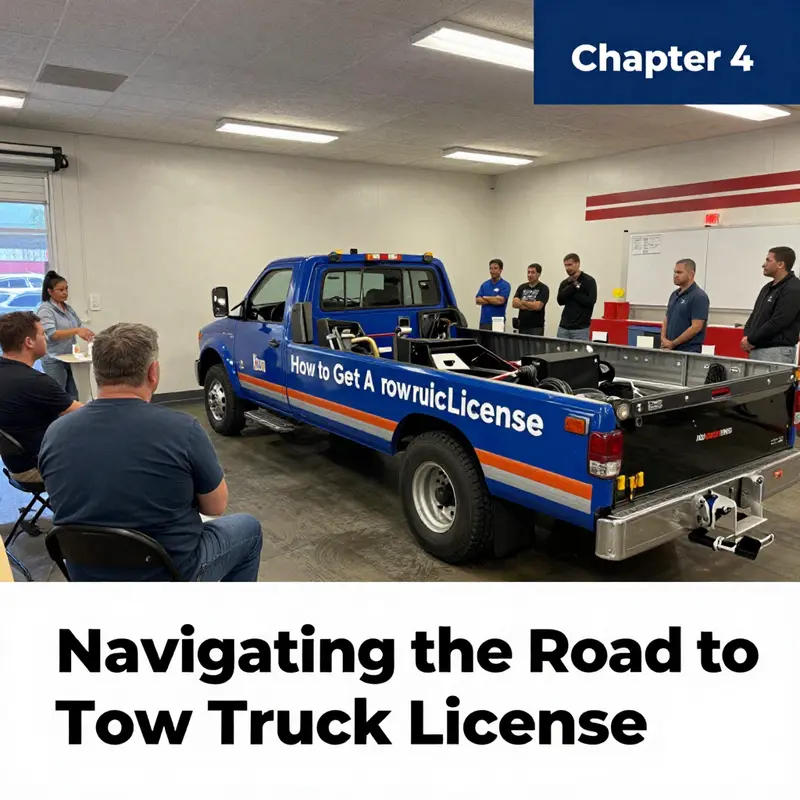
Starting a tow truck service is more than buying trucks and hiring drivers; it is a disciplined journey through a landscape of rules that shape every turn of your business. In the planning phase, many entrepreneurs imagine a fleet rolling through city streets, rescuing stranded motorists and keeping highways safer. Yet the reality hinges on how well you align with national and local regulations, how you document safety and reliability, and how you demonstrate that your operation will not only move vehicles but also protect people, property, and the environment. In China, the road to a licensed tow truck service begins with the Road Transport Operation Permit, a gatekeeping credential that ensures any enterprise engaged in road transport has the organizational backbone, technical readiness, and safety culture necessary for responsible operation. This permit is not merely a bureaucratic hurdle; it is a declaration that your business commits to standards, procedures, and accountability that the public can trust. If you hold to that conviction, the rest of the licensing journey becomes a sequence of well-defined moves rather than a maze of uncertain possibilities. The chapter that follows unpacks this journey as a single, flowing narrative—one built from practical steps, real-world requirements, and the ongoing discipline of compliance that underpins a reputable towing business.
The Road Transport Operation Permit sits at the heart of the licensing framework. It is the formal acknowledgment that your company is authorized to carry out road transport activities, which includes towing services. The core of obtaining this permit is straightforward in concept but demanding in detail: your business must be registered, vehicles must meet technical standards, drivers must carry professional qualifications, and there must be a robust safety management system in place. Put simply, the permit is the map, and the terrain it covers includes people who depend on your service, the vehicles you operate, and the environment your business touches. When you approach this permit, you do not merely fill out forms; you demonstrate that your organization has the governance, the processes, and the verifiable capabilities to perform towing work consistently and safely.
The journey begins with the business itself. Before any transport operation, you must secure a legal business presence through registration with the Market Supervision Administration. This step is the foundation: a legitimate business entity that can be identified in official records, taxed properly, and held accountable for its actions on the road. The Road Transport Operation Permit then builds on that foundation by requiring a set of concrete elements. Vehicles must be technically compliant, meaning they conform to the Regulations on Road Transport Vehicle Technical Management. Where this becomes real is in the details: you need to prove that your tow trucks meet safety and reliability standards, that you have a safety management system, and that you operate within environmental and emission guidelines. If your operation uses tow vehicles under a total mass of 4,500 kilograms for ordinary freight, a separate permit may not be required. This nuance matters because it clarifies when the pathway to licensing tightens and when it relaxes, and it shows how important it is to understand the scope of your fleet from the outset.
Documenting safety is not a marginal requirement; it is the backbone of the permit. The safety management system is not a single document but a living framework that defines how your company prevents accidents, manages risk, and ensures predictable service. A sound safety system includes a safety production plan, clear operating procedures, and supervision protocols that show who is responsible for what, how incidents are reported, and how corrective actions are tracked over time. This is where the permit becomes a culture, not a page in a file cabinet. The emphasis on a safety-first approach reflects a broader truth about towing work: it is inherently dependent on timely, careful, and controlled operations. The public relies on tow operators not just to move a vehicle from point A to point B, but to do so with predictable safety margins, transparent practices, and accountability for performance.
Drivers are the most visible face of any tow operation, and hence driver qualifications are central to licensing. The Road Transport Operation Permit requires that drivers hold valid professional qualification certificates. These qualifications certify that the driver understands road rules, vehicle maintenance basics, and cargo handling essentials, and they ensure a standardized level of competency across the fleet. The only common exception to this requirement arises when a vehicle’s total mass is 4,500 kilograms or less for ordinary freight; in those cases, the permit’s driver qualification requirement may be relaxed. This nuance is important for planning your initial fleet composition because it influences not just compliance, but also training timelines and capital planning. When you design your workforce, you are not merely selecting talent; you are shaping how your company manages risk on the road and communicates with customers about reliability and professionalism.
The vehicle itself must be legally registered and certified. The Tow Truck, as with any vehicle used for commercial operation, requires a Vehicle Registration Certificate and the operator’s driving license. The path to licensing also includes mandatory Compulsory Traffic Insurance and proof of payment of vehicle purchase tax. Where tow operations raise additional considerations is in the installation and certification of specialized equipment. If your service involves container transport, for instance, you may need container locks; if your rig includes specialized lifting gear, that equipment must be installed, tested, and certified. In some cases, especially when dealing with larger or oversized cargo towing, extra permits are required for cross-provincial work. These requirements safeguard reliability and safety by ensuring that the equipment meets the appropriate standards for the job and that authorities can verify compliance during inspections. The equipment question is not just about meeting a checklist; it is about ensuring that the mechanical reality of your operation aligns with the safety expectations embedded in the permit framework.
There is also a practical emphasis on environmental and emission compliance. The licensing authorities expect evidence that your operation minimizes environmental impact and adheres to emission standards. While this may seem like a broad policy issue, in practice it translates into documentation and ongoing monitoring: fuel efficiency reports for new vehicles, evidence of regular maintenance, and procedures that reduce idle time and fuel waste on the road. The environmental dimension complements safety and efficiency, reinforcing the public interest that sits at the center of road transport regulation. If a towing business can demonstrate responsible environmental practices alongside safety and reliability, it strengthens its case for permit issuance and renewals, and it signals to customers that you are a modern, professional service that takes its responsibilities seriously.
Beyond the permit itself, there are other essential layers in the licensing architecture—namely specialized permits and the ongoing duties of renewal and compliance. If you intend to provide road accident rescue towing, there is an additional permitting track. This permits you to carry out emergency rescue towing services and requires a separate application with the local public security traffic management department or the transportation authority. The documentation package typically includes the company business license, the legal representative’s ID, an application form, vehicle technical inspection reports, and proof of insurance and tax payments. The review process culminates in a license titled the Road Traffic Accident Emergency Rescue Tow Truck License, which, like the Road Transport Operation Permit, has an expiration date and must be renewed periodically. The very existence of this additional permit underscores a fundamental principle: specialized capabilities demand specialized oversight, and authorities reserve the right to verify that rescue operations meet precise safety, staffing, and equipment standards appropriate to emergency response work.
To navigate all these steps successfully, prospective operators should recognize that licensing is not a single event but a cascade of requirements that build on one another. A practical way to think about it is as a five-act arc. The first act is registering the business with the market supervision authority. The second act is applying for the Road Transport Operation Permit at the county or city transportation authority. The third act is ensuring your tow trucks meet technical and safety standards, and that they are properly registered with the right documentation. The fourth act is obtaining the special emergency rescue towing permit if you will be involved in accident-based towing. The fifth act is ensuring driver qualifications through the professional road transport certificates and maintaining ongoing compliance through training and monitoring. Each act strengthens the next, creating a coherent, auditable trail from the moment you decide to embark on the venture to the moment you are actively serving customers on the road.
All of this is aided by a network of local support and official guidance. Most municipalities maintain public service centers where you can receive guidance on the exact forms you need and where to file them. A practical approach is to talk with staff at the transportation bureau window and to gather the necessary documents before you begin the online or in-person submission. In some regions, a dedicated hotline exists to streamline questions and appointment scheduling; for example, one common point of contact in certain provinces is a local hotline such as 0773-8557877, which provides direct access to guidance, checklists, and process updates. While the exact contact details will vary by location, the principle remains the same: licensing is a local process that benefits from direct interaction with public officials who administer the rules and can help you avoid common missteps.
The official source of truth for these licensing requirements is the Ministry of Transport’s guidance, supplemented by provincial transportation departments. This is where you should go for up-to-date information, templates, and official forms. The Ministry’s portal consolidates regulations, inspection standards, and procedural notes for prospective operators. The page you would consult is their official government portal, and representatives at local offices can walk you through the current application flow, confirm whether your fleet size triggers any additional permits, and verify whether newly enacted regulations have altered the documentation you must provide. It is always wise to cross-check local variations because while the national framework provides a consistent baseline, provincial and city-level rules can introduce important nuances that affect timing, required documents, and the scope of operations permitted under your license.
As you progress, documentation becomes your most valuable asset. Keep your license, insurance certificates, vehicle records, and equipment certifications in a clearly organized, easily accessible repository. Not only does this streamline audits and renewals, but it also communicates professionalism to customers who may rely on your services during urgent moments. The licensing process also invites you to think about safety training as an ongoing commitment rather than a one-time event. Regular driver training, periodic vehicle inspections, and a culture of safety reporting should be built into the daily rhythm of your operation. You will find that these practices do more than satisfy regulatory requirements; they enhance trust with clients, reduce the likelihood of incidents, and improve response times when emergencies arise.
To keep your narrative cohesive with the broader arc of the article, remember that the licensing pathway is not merely about obtaining permission to tow vehicles; it is about creating a dependable, professional, and compliant business. The permit and its associated permits are milestones that symbolize your commitment to safety, reliability, and accountability. They shape how you recruit, how you train, how you maintain your fleet, and how you interact with customers in moments of need. They also set expectations for renewal and continuous improvement. The consequence of these commitments is a tow truck service that is not only legally authorized to operate but also practically prepared to deliver consistent, dependable help across a wide range of road situations.
If you would like a concise overview of related practices and ongoing guidance, consider checking a resource that curates industry insights and regulatory updates. For a broader, publicly accessible perspective on towing operations and safety protocols, many practitioners find value in reading a reputable industry blog that distills complex regulatory topics into actionable guidance. This can be especially helpful when you are coordinating the practical realities of running a fleet with the formal requirements of licensing. The aim is to stay informed and prepared as you work through each step, aligning your day-to-day operations with the standards that licensing authorities expect. The journey from paperwork to practice is not a single leap but a continuous, evolving process in which compliance, service quality, and public safety reinforce one another.
For a straightforward, ongoing reference as you navigate these steps, you can visit The Island Tow Truck Blog, which hosts a range of posts addressing towing operations and related regulatory considerations. This resource can help you think through operational details while you build your compliance framework, complementing the official guidance you receive from government sources. Keeping one eye on practical, field-tested insights and the other on regulatory requirements can help you maintain focus and momentum as you move from registration to licensed operation.
As your plan matures, you will also want to consider how licensing interacts with regional and cross-provincial needs. If you anticipate expanding beyond a single city or province, you will need to account for larger fleets, multiple permit streams, and the possibility of additional cross-provincial permissions for heavier or oversized towing. The regulatory environment is designed to be scalable in theory, but it demands careful attention to each jurisdiction’s procedures and timeframes. In short, licensing is a foundation on which your business can grow; it is the first concrete step toward operating with legitimacy, earning customer trust, and building a service that lasts.
In summary, the path to a tow truck license in China is a structured, multi-layer process that ties together business registration, vehicle and equipment compliance, driver qualification, safety management, and, if relevant, emergency rescue capabilities. It requires thoughtful preparation, precise documentation, and a steadfast commitment to safety and environmental responsibility. The steps may seem cumulative and exacting, but they are designed to protect road users and enforce a standard of quality across the industry. With careful planning, you can move methodically from the initial registration to a licensed, resilient towing operation that serves your community with reliability and care. The key is to approach each requirement as a live aspect of your business—an opportunity to demonstrate your organization’s competence, safety culture, and readiness to help others when they need it most. External guidance from the Ministry of Transport and local authorities should guide your pace and confirm your path at every stage, while practical resources and community knowledge can help you translate regulatory language into real-world procedures that keep your fleet compliant, capable, and trusted.
External resource: https://www.mot.gov.cn
Final thoughts
Understanding and following the structured process to obtain a tow truck license is crucial for compliance and operational success. Each key aspect—from business licensing, vehicle registration, to emergency permits—plays a vital role in establishing a trusted towing service. By taking informed steps and utilizing available resources, businesses can thrive while offering essential roadside assistance.