
Understanding tow truck fees is crucial for local auto repair shops, car dealerships, property managers, resort operators, and commercial fleet operators. With the variability of fees influenced by numerous factors, having a grasp on the key components will allow you to make informed decisions when it comes to towing services. This article will delve into the different aspects that affect these fees: the variability itself, the underlying factors influencing costs, and the regional distinctions that can impact pricing. As we explore these chapters, you’ll gain a deeper insight into how to manage towing needs effectively and economically.
Tow Fees Decoded: Reading the Hidden Costs Behind a Tow
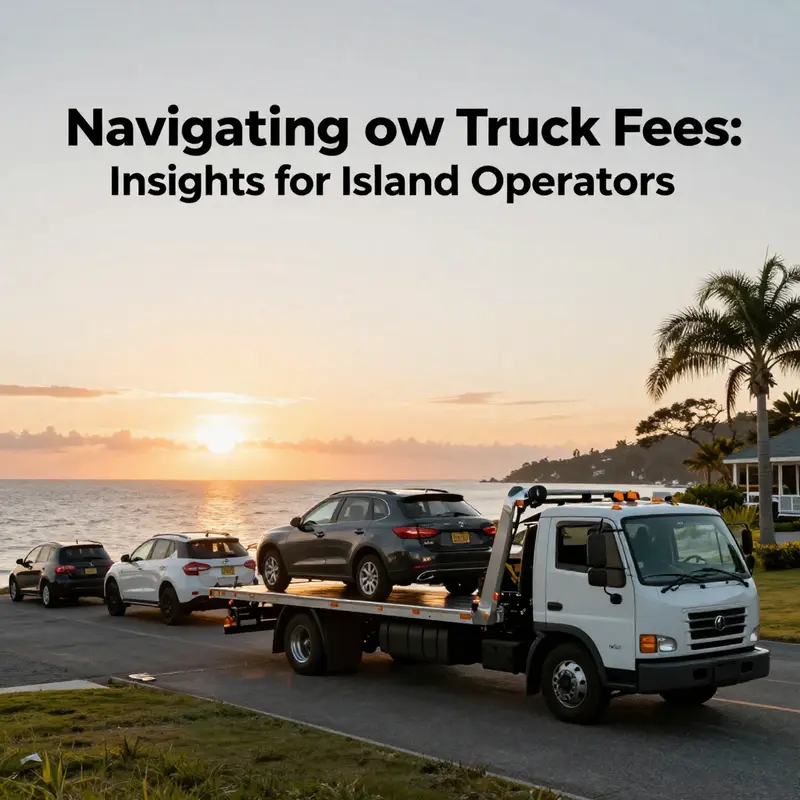
When a vehicle breaks down on a curb, or sits stalled on a highway shoulder, the first question that often bleeds into the carriageway of worry is not just “Will someone come?” but “What will this cost?” Tow truck fees are rarely a single number. They are a tapestry woven from distance, vehicle size, timing, and a handful of situational threads that can change in an instant. The simple question, how much are tow truck fees, gives way to a more intricate inquiry about what drives the price and how to read the lines before committing to a service. To understand the final bill, you first have to acknowledge the triad of distance, equipment, and urgency, then let the other factors enter the frame. The goal is not to trap you in a maze of fees but to illuminate the paths that lead from dispatch to delivery and, crucially, to empower you to anticipate costs rather than react to them in the moment of crisis.
Distance is the loudest determinant in most tow operating manuals, yet it is more than a simple miles-to-dollars calculation. When a tow company dispatches a truck, there is usually a base dispatch fee—a flat charge for sending help to your location. After that, the road price emerges, a per-mile rate that accrues as the tow travels toward its destination. The math is straightforward on the surface: more miles equal more money. But the practical reality is what makes distance so interesting. The base fee covers the cost of mobilization, crew readiness, insurance, and the overhead of keeping a mobile operation in a high-availability state. The per-mile rate accounts for fuel, wear and tear on the tow vehicle, possible tolls, and the time the driver spends en route and en route back, if a return trip is needed after the tow. In urban centers, where traffic is thick and response times compress, the dispatch fee can be elevated to reflect the density of service requests and the higher operating costs of city inches and city lanes. In rural or remote areas, the base may be lower but the mileage may accumulate quickly, especially if equipment has to travel longer stretches to reach a stranded motorist. In practice, a short local tow can stumble into a price range as accessible as a modest dinner, whereas long-distance tows stretch toward the upper end of the spectrum and can push several hundred dollars into view. A simple 5-mile tow inside a city might land in the $50 to $100 territory, a figure that feels almost comforting by comparison to the long cross-state or cross-region tows that can exceed $500 or even approach multiples of that amount under certain conditions.
Yet distance alone does not explain the cost architecture. Vehicle type and weight are the second major axis that bends the price curve. A small sedan requests far less lifting power and fewer labor hours than a heavy SUV, a pickup with a bed, a bulky minivan, or a commercial vehicle. Weight is not just about the mass of the car; it is about the operational complexity. Heavier vehicles often require flatbeds, additional tie-downs, and sometimes even a second operator for safety during loading and unloading. The gear used for the tow—the tilt-bed’s mechanics, wheel-lift vs. flatbed options, and the presence of specialized equipment—also shapes the final tally. A routine wheel-lift tow is usually cheaper than a flatbed tow, which in turn is generally less pricey than a specialized recovery setup designed to maneuver a vehicle from an awkward position after an accident or in a rugged locale. In practice, a compact car might ride at a lighter dispatch and lower per-mile rate, while a large SUV or a trucking-class vehicle can trigger a heavier base fee and greater per-mile costs. Add in the potential need for extra manpower or securement equipment, and the delta becomes more than a matter of pounds; it becomes a matter of labor intensity.
Specialized recovery operations punctuate the cost landscape in ways that few other lines do. When a vehicle is overturned, sunken, perched on rocks, or deeply mired in mud, the operation demands more than just transportation. It demands time, expertise, and sometimes hardware that resembles industrial art more than highway equipment. A rotator, a heavy-duty winching system, or a sophisticated stabilization rig adds both capability and cost. These situations can extend the duration of a tow well beyond the typical hour or two. They also escalate the risk, mandating skilled operators who can ensure the vehicle is retrieved without further damage and without putting onlookers at risk. It is not unusual for these scenarios to inflate the final bill in a way that feels disproportionate to the distance involved. In many instances the incremental charges come from the time spent and the specialists who must be on standby or actively engaged, rather than from the road miles alone.
Time of day and urgency sit as a third pillar of variability. The clock matters. After-hours, weekend, and holiday calls often carry what industry professionals refer to as “rush” or “after-hours” surcharges. The rationale is simple: demand spikes when most businesses are closed, and the operating window for a tow company shortens as the sun sets. Availability becomes a premium resource, and the price reflects that scarcity. In practical terms, a 2 a.m. tow for an all-wheel-drive car on a slick road could double—or even triple—the standard daytime rate, depending on distance and the particular company’s policy. The sense of urgency can also influence the timeline. If a driver insists on immediate extraction to avoid additional weather exposure, the tow may be prioritized at the expense of the per-mile math.
Location adds a texture of its own to the pricing tapestry. Urban density naturally drives up the cost because the city requires more careful traffic management, more extensive insurance coverage, and more expensive compliance with local regulations. The same wheels on the same vehicle might incur a different bill if the incident occurs in a metropolitan core compared to a sparsely populated rural corridor. Beyond the typical urban-rural divide, local licensing costs, device costs, and even market competition can nudge prices up or down. Some neighborhoods have higher minimums to cover the cost of rapid response in dense traffic, while others may offer leaner base rates but longer response times because the nearest tow truck simply isn’t close at hand. This is not about fairness or gouging; it is about aligning the supply of a specialized service with the demand that ebbs and flows like a shoreline in a storm.
The type of tow truck used—wheel-lift, flatbed, or rotator—robustly influences the bottom line. A basic wheel-lift unit, sufficient for most mid-sized cars on a flat surface, tends to be the most affordable option. Flatbeds, favored for cars with delicate drivetrains or all-wheel-drive systems, carry a higher cost because of the equipment costs and the precision loading required. A rotator or other heavy-duty recovery vehicle is the most expensive of the group, reserved for complex recoveries and extreme conditions. Each type has a role and a price point. The choice often hinges on the vehicle’s condition and the environment. If a car is in a ditch or perched on a slope, the dispatcher may recommend a flatbed or rotator to ensure safety during loading and transport, and that recommendation can noticeably raise the fee even when the distance remains modest.
Alongside these core factors lie a group of ancillary charges that sometimes sneak into the final invoice. Basic hookup fees, after-hours surcharges, and minimum towing fees exist to guard the service provider against short, inefficient calls that still require mobilization. Storage fees may apply if the vehicle cannot be retrieved immediately or if it is stored at a facility after the tow. Taxes and environmental fees may appear as line items, not as a secret add-on but as standard practice in most regions. Some providers also bill for immobilization periods, where the vehicle is secured and waiting for a service window, or for time spent on paperwork and processing the tow agreement. When these extras accumulate, the total can rise more quickly than the obvious miles would suggest, turning a seemingly simple scenario into a careful budget exercise.
To an observer outside the industry, the variability might feel arbitrary, but there is a logic that can be followed if one stays close to the process. The dispatch fee is the opening note; the per-mile price is the chorus; the vehicle’s weight and the towing method are the accompaniment; and the timing, location, and recovery complexity form the harmony that shapes the final melody. The result is a bill that can seem straightforward in one instance and almost labyrinthine in another. The key for consumers is to recognize that the numbers you see are not random digits; they reflect a chain of decisions about safety, efficiency, and feasibility. A driver who recommends a flatbed for a high-end vehicle is not padding the bill out of whim. They are choosing the method whose risk profile and potential impact on the vehicle’s mechanical integrity justify the cost. A late-night arrival in a congested city may be pricey not because the service provider is greedy but because the economics of urban roadside assistance create pressure on response time and resource allocation.
Understanding these variables has practical resonance for anyone facing a tow. It guides the way you communicate with the dispatcher, the questions you ask, and the steps you take to protect yourself from unexpected charges. Clear, upfront pricing is a hallmark of reputable operators, and many firms now offer online calculators or transparent pricing structures to help customers see how a quote is built. Even when you cannot anticipate every contingency, you can secure a reliable sense of the likely range by describing the situation in precise terms: the vehicle type and weight, the location, the road surface, the obstruction or incident that necessitated the tow, and whether the tow involves a standard wheel-lift or a more specialized recovery. You can also inquire about the minimum fee and whether the company charges for the initial dispatch and the return trip, if any. In this sense, you are not trying to cheat the system but to ensure that the math you are asked to approve reflects a fair balance of risk, effort, and distance.
To further illustrate how these factors translate into numbers, consider two hypothetical but plausible scenarios. In the first, a compact sedan becomes stranded in a city center five miles from the garage after a roadside breakdown. The call requires a standard wheel-lift tow with a quick hookup and a short distance to the destination. The dispatcher may quote a base dispatch charge, a modest per-mile rate, and perhaps a token charge for after-hours service if the call is at night or during a weekend. In this case, the total may sit in a relatively narrow band—perhaps around the mid-range of the generalized five-mile scenario, and the final figure would feel predictable and defensible, assuming no hidden fees. In the second scenario, imagine a larger SUV that must be towed twenty-five miles from a suburban edge into a repair facility located further into a metropolitan corridor. It could require a flatbed to ensure that the drivetrain remains unscathed, a longer service window, and a more involved route that passes through tolls or busy cross streets. Add an after-hours surcharge because the call comes in after midnight, and perhaps a minor storage fee at the destination if arrival times slip due to traffic. The price is likely to be significantly higher than the first case, reflecting both the weight of the vehicle and the increased complexity of the job, rather than a simple multiplication of miles by a single rate.
In the same breath, readers should understand that the price landscape also includes a strategic choice—whether to accept the quickest option or to opt for the safer, more conservative method. For example, choosing a flatbed for an all-wheel-drive car can protect the drivetrain and avoid collateral damage, thereby eliminating the risk of expensive mechanical repairs later. The higher immediate cost may be a prudent investment when the alternative could lead to a larger expense in the near future. Conversely, for a vehicle that carries minimal risk if transported on a wheel-lift, the same distance may justify the lower price of a standard tow. This is why the most reliable guidance is to seek a fair, upfront quote that itemizes the major components and clarifies what will be billed if an additional service is needed on-site or during transport. Consumers should not accept a one-line total without an explanation; they should ask for a breakdown that helps them understand what each component contributes to the bottom line. In many markets, reputable towing companies welcome such questions and provide price transparency that can ease the stress of the moment. The goal is not to trap the consumer but to maintain a level of clarity that allows for informed decision-making, especially when the decision could impact a family budget or a business fleet.
For those responsible for fleets or multiple vehicles, the calculus broadens further. In a corporate setting, you may be juggling emergency response priorities, service windows for a fleet that operates around the clock, and the need to minimize downtime that translates into lost productivity. This is where a reference to planning and preparedness becomes crucial. Many organizations adopt a policy of pre-arranged agreements with preferred providers, which can yield more predictable pricing, faster response times, and bundled services that include remote dispatch, on-site assessments, and standardized documentation for each incident. The interplay between human factors—the driver’s expertise, the dispatcher’s clarity, and the customer’s knowledge—and the financial factors—the base fees, mileage, equipment charges, and surcharges—shapes the overall experience. It is a reminder that tow costs are not merely a transactional line item but a reflection of a complex network of choices made under pressure.
The question of what to do with this knowledge is not merely technical. It is practical and even strategic. The prudent approach begins with awareness and ends in empowerment. Start by asking for the total cost up front, including all potential add-ons such as storage, after-hours fees, and any potential charges if the vehicle cannot be retrieved on the first attempt. When possible, request a written quote and a clear description of which tow truck type will be used and why. This is where a resource like a transparent pricing policy or an online estimator becomes more than a convenience; it becomes a tool for financial literacy in the realm of roadside assistance. If your locale allows, you can also compare multiple quotes with the same information—vehicle size, exact location, destination, and urgency—to see how different providers approach the same scenario. A well-informed consumer is better positioned to negotiate, to understand where costs are coming from, and to appreciate when a higher price is justified by the safety and security of the operation.
The discussion would be incomplete without acknowledging the broader ecosystem that informs tow pricing. Public and private entities, consumer advocacy groups, and trade associations often publish guidance on typical ranges and best practices for pricing transparency. For people who want to deepen their understanding, it can be valuable to consult regional resources that aggregate pricing data and provide context for the numbers you encounter on the roadside. In practice, those resources can give you a sense of whether a quote falls within a reasonable band for your city, your vehicle type, and the specific service you require. And while theory is informative, the lived reality remains the same: a tow bill is a negotiation between the consumer and the service provider, conducted under the pressure of the moment, with distance, weight, timing, and the complexity of the operation all playing their parts.
All of this points to a practical philosophy for approaching tow scenarios. Be proactive where you can—know your options, know the likely ranges, and learn the questions that elicit meaningful disclosures from a dispatcher. Be practical in the moment—prioritize safety and vehicle protection, especially when all-wheel-drive systems or high-value vehicles are involved. And be persistent in seeking transparency—insist on an itemized quote, and don’t hesitate to ask for clarity if a toll, storage charge, or after-hours premium seems ambiguous. In many communities, a bit of preparation translates into significant peace of mind when a tow becomes necessary. It is not about gaming the system; it is about understanding the architecture of the bill so you can navigate the roadside with less fear and more confidence.
To knit this together with a practical thread, consider the value of an informed approach when you’re able to plan ahead. If a vehicle’s location is known in advance or if a fleet can plan for foreseeable contingencies, you can negotiate a coverage framework with a preferred provider that prioritizes rapid response and predictable pricing. For individuals, keeping a few essentials—your vehicle’s make and model, your current location, a rough sense of the nearest highway or major thoroughfare, and a preferred tow type—can help you communicate effectively with a dispatcher and obtain a fair quote quickly. This practice does not replace the need for a professional assessment on the ground, but it does lay the groundwork for a smoother, more transparent process that respects both your time and your wallet.
If you would like to explore more about how fleets manage emergency response and pricing strategies, you can delve into resources such as essential fleet emergency response strategies, which offer insights into how organizations balance speed, safety, and cost in urgent roadside scenarios. This background can be especially valuable for businesses that rely on predictable service standards to maintain operations and customer satisfaction during disruptions. The emphasis on preparedness and disciplined response aligns with the broader principle that with tow services, as with any critical service, knowledge and planning reduce risk and cost over the long run.
As a closing reflection within this extended view of tow pricing, remember that the numbers you encounter are rarely arbitrary. They are the echo of a complex interplay among distance, vehicle characteristics, the specifics of the operation, timing, and the market environment. Armed with this understanding, you can approach a tow not with shock but with strategy, asking the right questions, obtaining a precise breakdown, and weighing the options with the awareness that the goal is safety, speed, and financial clarity. The next time you face a roadside incident, you will be better prepared to parse the quote, choose the right service, and manage the costs without compromising the essential protections that come with timely, professional vehicle recovery.
For further context and to broaden your understanding of towing costs in different settings, you can consult external resources that summarize typical ranges and regional variations. External resource: https://www.aaa.com/automotive/towing-costs/.
Internal link reference for related guidance on fleet readiness: essential fleet emergency response strategies. You can explore this in more detail at the following internal resource: essential fleet emergency response strategies.
Tow Fees Unpacked: The Hidden Weights Behind Every Charge
Tow fees are not a single line on a sign or receipt; they reflect a structured calculation that blends distance, vehicle type, timing, terrain, location, and company policy. Understanding the factors behind a tow bill helps you anticipate, compare, and negotiate fairly while still receiving safe service. In many markets, pricing follows a pattern: a base dispatch fee, a distance-based charge, a vehicle-size premium, and various add-ons that may apply in specific situations.
Distance traveled is the most fundamental driver. A base fee covers the initial segment of travel, followed by per-mile or per-kilometer rates for longer runs. The farther you are towed, the more fuel, time, and wear on equipment are involved, which drives up the price. Vehicle type and size occupy a second axis of cost because heavier jobs require heavier rigs, more labor, and greater safety precautions. From small cars to large trucks, the rates evolve to reflect the complexity of the operation.
Time of service matters. Emergency calls, after-hours work, and adverse conditions can trigger surcharges or premiums. The rationale is straightforward: crews must be available under tougher conditions and often with priority routing. Some operators publish fixed emergency fees, others apply percentage increases or hourly surcharges.
Geography and policy choices also shape the final bill. Local labor costs, fuel prices, insurance, and licensing requirements influence base rates and per-mile charges. Some providers offer transparent, itemized quotes; others may include hidden or contingent fees if the job runs longer than expected. Verification and written estimates help protect consumers from unexpected costs.
Finally, insurance coverage and roadside assistance programs can offset or fully cover towing costs in many cases. If you have coverage, confirm whether the provider can direct-bill the insurer and what portion you will owe out of pocket. In practice, knowledgeable customers ask for a written quote that breaks out base charges, distance, vehicle class, and potential surcharges before the tow begins.
The practical takeaway is that tow bills reflect a layered pricing framework rather than a single number. By understanding the main levers—base dispatch, distance, vehicle size, time-based surcharges, and regional policy differences—you can compare quotes more clearly and approach the towing process with greater confidence.
null
null
Final thoughts
Tow truck fees can be highly variable, shaped by distance, location, vehicle type, and time of service. By understanding the underlying factors influencing these costs and acknowledging the regional differences, auto repair shops, car dealerships, property managers, resort operators, and commercial fleet managers can better anticipate and manage towing fees. This knowledge is not just about saving money, but also about ensuring that companies can respond effectively to vehicle emergencies. With a proactive approach, operators can navigate the complex landscape of towing services more confidently and efficiently.