Every industry has its specific requirements, and for those operating tow trucks, understanding the need for a Commercial Driver’s License (CDL) is essential. As the towing industry often intersects with various local businesses like auto repair shops, car dealerships, and property management companies, the implications of CDL regulations can resonate deeply within these sectors. This article explores the nuances of CDL requirements for tow trucks across different states, the significance of vehicle weight ratings, and the broader impact on businesses that rely on towing services. Each chapter builds on the last, offering clarity around regulations to help you make informed decisions for your operations.
When a Tow Truck Becomes a Commercial Vehicle: Navigating CDL Requirements
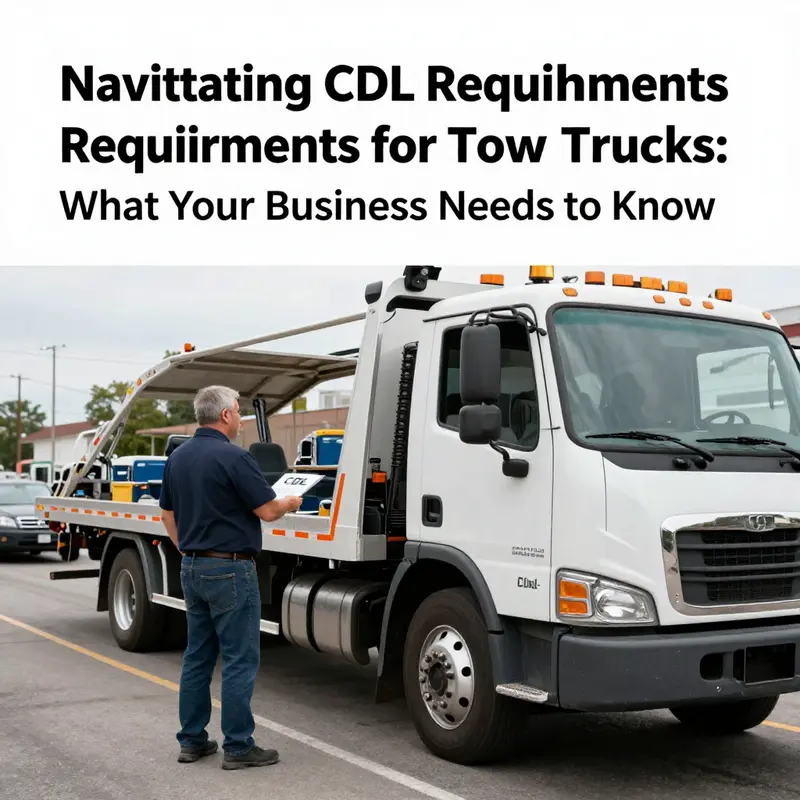
Understanding whether you need a Commercial Driver’s License (CDL) to operate a tow truck hinges on weight, configuration, use, and sometimes the state you operate in. The federal threshold is straightforward in principle: if the vehicle or combination of vehicles meets certain weight or passenger criteria, or if it carries hazardous materials requiring an endorsement, a CDL is required. In practice, however, applying those rules to tow trucks creates a series of common scenarios that every operator, fleet manager, and owner-operator should grasp to stay compliant and avoid costly enforcement actions.
At the heart of the federal rule is weight. The Federal Motor Carrier Safety Administration (FMCSA) sets the baseline: a CDL is required to operate any single vehicle with a Gross Vehicle Weight Rating (GVWR) of 26,001 pounds or more. The same threshold applies to a combination of vehicles where the towed vehicle’s Gross Combined Weight Rating (GCWR) or the combined GVWR of the towing vehicle and the towed vehicle exceeds 26,001 pounds. This combination rule is especially relevant to tow truck work. Many wreckers and recovery rigs are relatively heavy on their own, and the vehicles they haul—even passenger cars—can push a combined GVWR well over the threshold. Consider a medium-duty rollback tow truck with a GVWR of 15,000 pounds towing a vehicle rated at 14,000 pounds. Even though the tow truck on its own is below 26,001 pounds, the combined GVWR of 29,000 pounds triggers the CDL requirement for the operator.
Class distinctions matter. If a tow truck or combination crosses the 26,001-pound boundary, the driver generally needs at least a Class B CDL for a single vehicle over that weight, or a Class A CDL if the combination requires it. Class A covers combinations where the towing vehicle’s GVWR is less than the towed unit but the combined weight exceeds the federal limit. Class B covers single vehicles or a towing vehicle with a towed vehicle under the specific combination thresholds. Because tow truck configurations vary widely—light-duty flatbeds, medium-duty wreckers, and heavy-duty rotators—understanding which class applies to your rig depends on the vehicle specs stamped on the manufacturer’s certification label and the GCWR.
Endorsements are a second layer. Even with the correct CDL class, some tows require endorsements. The HAZMAT endorsement applies when a tow truck transports hazardous materials that require placarding. If a recovery involves a vehicle carrying hazardous cargo that must be transported with special handling, the driver must be properly endorsed. Passenger endorsements matter if a tow truck is configured to carry more than 15 passengers. While most tow trucks do not carry that many, some specialty transport vehicles or chassis used in certain recovery operations might, making the passenger endorsement relevant. Air brake restrictions must be considered too: if your tow truck has air brakes, a driver without the proper procedures in their CDL will face limitations.
State rules layer on top of federal standards and can tighten requirements. Many states follow federal thresholds exactly, but several impose CDL requirements at lower weight limits for commercial towing or have licensing classes specific to tow truck operators. Some states require special tow truck operator permits or registration and mandate background checks or periodic training for commercial recovery operators. This means that an operator who is legal under federal standards in one state might need a CDL or an extra permit in another. Operators who cross state lines or work in multiple jurisdictions must be mindful of these differences and should consult state motor vehicle agencies in addition to FMCSA guidance.
Exemptions exist but are narrow. Federal rules allow certain exemptions for non-commercial use, military equipment, and farmers operating within a limited distance of farm property. A private individual who tows a personal trailer for recreational purposes typically does not need a CDL. However, most towing done for hire—roadside assistance, impound services, and recovery operations—is commercial. For commercial tow truck operators, the exemptions rarely apply. Employers should not assume that occasional or incidental towing exempts an employee from CDL requirements; intent and frequency of commercial operations factor into enforcement decisions.
Practical examples clarify the rule. A small tow company operating light-duty flatbeds that are under 26,001 pounds and whose combined weights remain below the threshold can generally operate without a CDL in most states. But if that company adds a medium-duty wrecker rated at 30,000 pounds GVWR or routinely hauls large SUVs or vans that push the combined GCWR beyond 26,001 pounds, the company must ensure drivers hold the appropriate CDL. Similarly, an emergency response fleet on an island or in a remote area may rely on heavy rotators or specialized recovery rigs; those operators should expect CDL requirements and plan training accordingly. For fleet managers, a simple audit of each vehicle’s GVWR and likely towed loads will reveal where CDLs are needed.
Obtaining the right CDL is a predictable process. Prospective drivers must pass written knowledge tests for the class of CDL and any endorsements required, and must pass a practical skills test that includes pre-trip inspection, basic vehicle control, and a road test. Medical fitness is a prerequisite: drivers must hold a current medical examiner’s certificate showing they meet physical qualification standards. For HAZMAT endorsements, a federal background check and fingerprinting are required. Timelines and fees vary by state, but planning for the paperwork and training time avoids operational gaps when hiring new drivers or reassigning rigs.
Employers have regulatory responsibilities beyond hiring qualified drivers. Commercial carriers must keep driver qualification files, maintain records of hours of service where applicable, and ensure vehicles are properly registered and insured. The FMCSA’s safety regulations place responsibility on employers to ensure drivers are appropriately licensed and trained. For tow companies that contract freelancers or use temporary staffing, verifying license legitimacy and endorsements is especially important. A valid CDL may be revoked or suspended for violations, and employers must monitor driver status to remain compliant.
Enforcement happens at both the roadside and in audits. Law enforcement officers can check driver credentials during traffic stops or inspections and can place drivers and vehicles out of service for noncompliance. State motor vehicle agencies handle licensing, and the FMCSA conducts safety audits, especially for interstate operations. Violations can lead to fines, out-of-service orders, and insurance repercussions. For smaller operator-owners, a single citation for operating without a required CDL can disrupt business operations and damage reputation.
Practical strategies reduce risk. Maintain an up-to-date inventory of vehicle GVWR and GCWR values, and document typical towed loads. Use that inventory to map each vehicle to the CDL class and endorsements required for all foreseeable operations. Train dispatchers and schedulers to assign only appropriately licensed drivers to heavy rigs or combined loads that exceed thresholds. For fleets operating near state lines, consult each state’s motor vehicle department for any additional requirements and build those into hiring and training policies.
For operators seeking more tactical guidance tied to fleet readiness and emergency response, resources on fleet emergency planning can be useful. A relevant internal resource discusses essential strategies for fleet emergency response and preparedness and helps align licensing and training with operational continuity. You can read further about practical fleet emergency response strategies here: https://theislandtowtruck.com/essential-fleet-emergency-response-strategies/.
Finally, rely on authoritative external guidance for current regulatory language. The FMCSA provides the definitive federal rules on when a CDL is required and explains classes, endorsements, and exemptions in detail. For any uncertainty about a particular vehicle configuration or interstate operation, check FMCSA resources to confirm requirements and to keep up with regulatory changes: https://www.fmcsa.dot.gov
Understanding CDL requirements for tow trucks is not merely a matter of checking a single box. It requires a clear view of vehicle ratings, combinations, endorsements, state variations, and employer responsibilities. Integrated planning—matching rigs, loads, drivers, and paperwork—keeps tow operations legal, safe, and ready to respond when a call comes in.
Weights, Wording, and State Lines: Navigating CDL Requirements for Tow Trucks
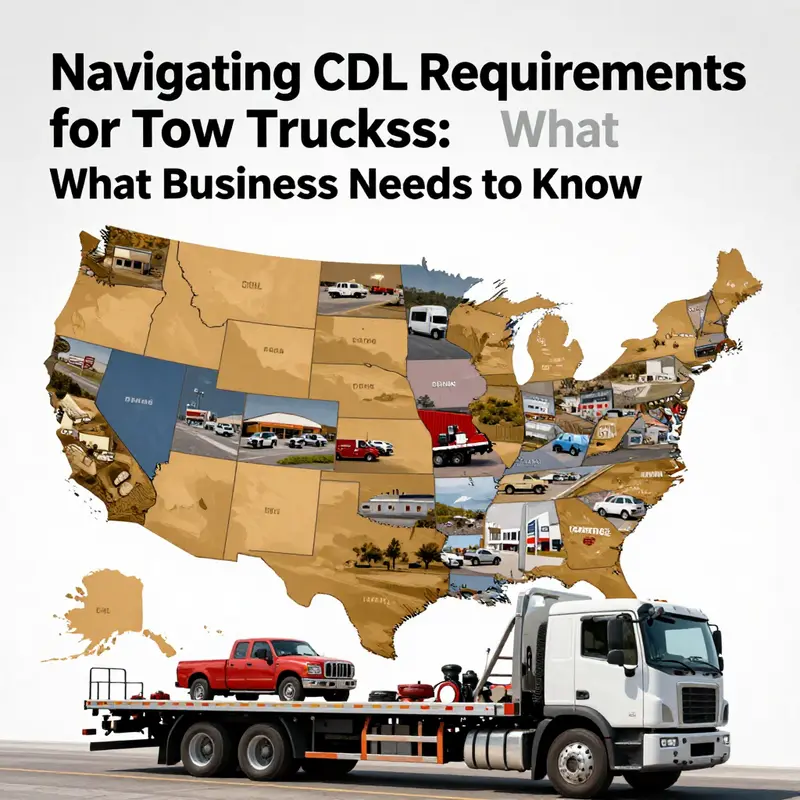
The question of whether a tow truck operator needs a CDL can seem simple at first, but weight and use rules create a more nuanced picture. Federal guidance establishes a baseline, but states decide how and when a CDL is required. A tow vehicle that weighs more than 26,001 pounds, or that tows a load that, when combined, pushes the gross vehicle weight over the threshold, may trigger CDL eligibility depending on the state. Different states interpret commercial use and weight classifications in different ways. For example, in California a CDL may be required if the tow vehicle’s GVWR is 26,001 pounds or more, or if the towed trailer exceeds 10,000 pounds GVWR. In Florida, the threshold and commercial-use considerations can be more permissive when the operation is non-commercial or paid service is not involved. In Texas, there are weight-based rules with carve-outs for certain emergency-recovery scenarios. Endorsements vary by state and may apply to tanker cargo or other hazardous materials even in some recovery duties.
To stay compliant, operators should adopt a two-step process: first, calculate the possible combined weight for typical recovery scenarios (tow vehicle GVWR plus trailer or towed load); second, map each operation mode to the licensing category and endorsements your state requires. The FMCSA framework provides the federal baseline, but the final requirement is set by state authorities. Practically, this means documenting weights, typical use cases, and the circumstances under which a vehicle performs recovery versus transport for compensation.
Beyond compliance, a CDL often brings training benefits that improve safety, hours-of-service discipline, and incident response. If your operation is largely non-commercial or limited to hobby or community-based recovery, some states may offer more flexibility, but even then careful planning helps avoid surprises if a call crosses state lines.
To verify your exact requirements, consult your state DMV or transportation department CDL pages and the FMCSA guidance. The safest path is to treat licensing as a two-part decision: weight assessment first, then use-case evaluation, confirmed with official resources.
How Weight Ratings Decide Whether You Need a CDL to Drive a Tow Truck
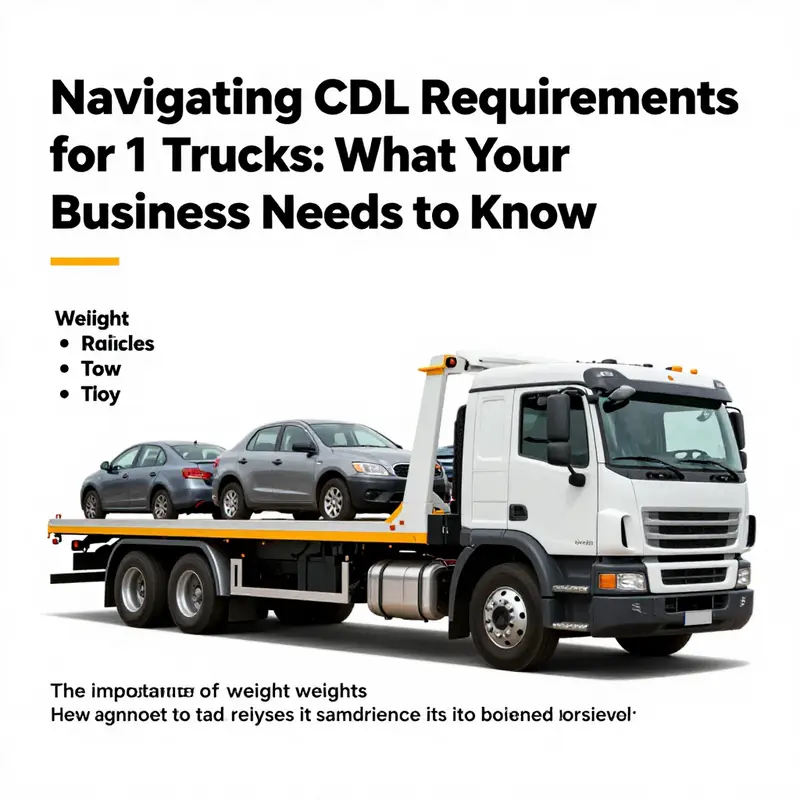
Understanding the critical role of weight ratings is essential when determining whether a tow truck operator needs a Commercial Driver’s License (CDL). Weight ratings are not abstract technicalities; they are legal thresholds that shape licensing requirements, insurance classification, and safe operating practices. Two ratings dominate the decision: the Gross Vehicle Weight Rating (GVWR) and the Gross Combined Weight Rating (GCWR). Together, they answer the key question: does the tow truck and its load qualify as a commercial motor vehicle (CMV) that requires a CDL?
The Gross Vehicle Weight Rating, or GVWR, is a manufacturer’s figure. It represents the maximum operating weight of the tow truck itself, including the vehicle, passengers, fuel, equipment, and cargo. If a tow truck’s GVWR is 26,001 pounds or more, federal regulations classify it as a commercial motor vehicle, and the driver must hold at least a Class B CDL to operate that vehicle. This is straightforward when the truck alone meets or exceeds the threshold. For example, heavy wreckers and larger rollback carriers commonly have GVWRs that trigger CDL requirements for the driver, regardless of what they tow.
But tow truck work rarely involves the truck alone. Operators routinely haul disabled vehicles of varying sizes, and that is where the Gross Combined Weight Rating, or GCWR, becomes critical. GCWR is the maximum permissible combined weight of the tow truck and any attached trailer or towed vehicle. Federal rules set 26,001 pounds as the key threshold for a combination that requires a CDL. If the GCWR exceeds this figure, the combination is a CMV and the driver must hold at least a Class A CDL. This combination rule means a seemingly light tow truck can legally require a CDL when coupled with a heavy load.
Consider a practical example that clarifies the stakes. A medium-duty tow truck might have a GVWR of 25,000 pounds. On its own, it does not trigger a federal CDL requirement. But add a towed vehicle that weighs 12,000 pounds, and the combined weight is 37,000 pounds—above the 26,001-pound threshold. Under federal rules, the operator must possess a Class A CDL for that combination. Misunderstanding this could expose a business or individual to regulatory penalties and safety risks.
Weight ratings are not negotiable numbers you can estimate by eye. They are tested and certified values. Vehicle manufacturers publish GVWR and GCWR in specification sheets and on labels typically affixed to the door jamb or in the glove compartment. Towing equipment manufacturers also publish ratings for hooks, winches, and booms. Operators must ensure that every component in the chain—truck, hitch, winch, and trailer—has ratings that meet or exceed the weights they plan to handle.
State rules can add layers of complexity. While the Federal Motor Carrier Safety Administration establishes the 26,001-pound threshold for CDL requirements, individual states may require CDLs for certain tow truck operations below that federal threshold. For example, some states mandate CDLs for drivers engaged in commercial towing irrespective of weight, or impose additional licensing for vehicles used to transport hazardous loads. Operators must check both federal and state requirements to remain compliant. This dual landscape means that being legally licensed in one state does not automatically guarantee legality when operating across state lines.
Commercial use adds another dimension. Federal rules apply broadly to interstate commerce, but intrastate operations can fall under state CDL rules. A tow truck company that responds to roadside assistance calls within a single state should verify whether local regulation classifies those duties as commercial motor vehicle operations. Many towing businesses structure their fleets and routes to align with licensing and insurance constraints, but that requires deliberate planning based on accurate weight assessments.
Why this matters beyond paperwork: safety and liability. A vehicle combination that exceeds the rated weights can become unstable and harder to control, especially during emergency maneuvers or braking. Overloading stresses braking systems, suspension, and tires, increasing the risk of mechanical failure. Insurers pay close attention to compliance with weight ratings and licensing. Operating without the required CDL or exceeding rating limits can void coverage and lead to significant liability exposure in case of a crash. In short, weight ratings are a safety and financial shield as well as a regulatory threshold.
Practical steps for operators to align with weight-rating rules start with accurate measurement. Regular use of certified scales is essential. Many towing operators use public weigh stations or truck scales to verify GVWR and combined weights before long-distance towing or when handling very heavy loads. Documenting weights provides a defensible record if regulators or insurers examine an incident. Operators should also keep maintenance records that demonstrate the truck and towing equipment remain within safe operating conditions.
Knowing the difference between GVWR and actual operating weight matters. A truck may have a high GVWR but if it is improperly loaded, its center of gravity can shift. Proper load distribution, securement of the towed vehicle, and adherence to the towing equipment’s rated capacity are all responsibilities that fall on the operator and the employer. If a vehicle strictly adheres to its GVWR but the hitch or towing apparatus is under-rated for the actual load, the risk of failure persists. Comprehensive compliance is not only about the numbers on the sticker but also about the weakest link in the towing chain.
Training and endorsements form the human part of the equation. A CDL by itself is a baseline; many towing operations require additional training in load securement, recovery techniques, and specialized equipment handling. Employers should verify that their drivers hold the correct class of CDL for the vehicles and combinations they operate. When hazardous materials are involved—fuel from a crashed vehicle, for instance—drivers may need specific endorsements or certifications. These endorsements are separate from basic weight thresholds and reflect risks associated with certain cargo types.
Fleet managers and solo operators can adopt simple policies to avoid legal and safety pitfalls. First, catalog every vehicle and trailer with their GVWR and GCWR. Second, implement checklists that include verifying the towed vehicle’s estimated weight against these ratings before committing to a tow. Third, use public scales when doubt exists, and maintain digital or paper records of each weight check. Fourth, consult state regulations where the vehicle will operate to confirm any additional license or permit requirements. These practices help prevent inadvertent CDL violations and create a culture of safety.
Enforcement is both preventive and punitive. Law enforcement officers and motor carrier safety inspectors can require drivers to present credentials and may weigh vehicles on the spot. Violations can result in fines, out-of-service orders, and citations that affect a company’s safety rating. Repeated or serious violations can lead to suspension or revocation of operating privileges. For drivers, operating without the required CDL can impact personal driving records and employment prospects.
Finally, integrating weight-rating awareness into broader fleet policies enhances resilience. Towing operators who prepare for heavy recoveries know how to route transports to avoid low bridges or weight-restricted roads. They also coordinate with dispatch, insurance, and emergency response planners to ensure compliance under pressure. For fleets serving islands or geographically constrained regions, specific emergency-response strategies and preparedness planning tie directly to what combinations are licensable and safe; operators should review resources like essential fleet emergency response strategies for guidance on aligning operations with safety and regulatory needs.
Accurate understanding and application of GVWR and GCWR are non-negotiable. They determine whether a tow truck operation triggers CDL requirements, influence required endorsements, and shape safe, legal practices. For individual drivers and fleet managers alike, the task is clear: know your vehicle weights, verify combined loads, consult state and federal rules, and document compliance. Doing so protects drivers, clients, and the bottom line while keeping tow trucks moving within the law.
For detailed federal regulations and the latest guidance on CDL weight thresholds and commercial vehicle standards, consult the Federal Motor Carrier Safety Administration: https://www.fmcsa.dot.gov/regulations
null
null
Final thoughts
Understanding the CDL requirements for tow truck operations is not just about compliance; it’s about embracing safety and professionalism in the towing industry. Every chapter of this article touches upon key aspects that local businesses must consider, from the weight regulations to state-specific laws. By staying informed and prepared, auto repair shops, car dealerships, and other businesses can navigate these regulations confidently, enhancing their operations while ensuring they’re safeguarding their customers and themselves in the process.