Understanding whether you need a Commercial Driver’s License (CDL) to operate a tow truck is crucial for local businesses in the automotive sector. This article aims to clarify the regulations and certificates that are essential for operating tow trucks legally across different states. By breaking down federal guidelines, variations in state regulations, endorsements, and their implications for towing business operations, we provide local auto repair shops, car dealerships, property managers, resort operators, and commercial fleet operators with the comprehensive knowledge needed to navigate this nuanced regulatory landscape effectively.
Tow Truck CDL Essentials: Weighing GVWR, Endorsements, and the Legal Path to Professional Hauling
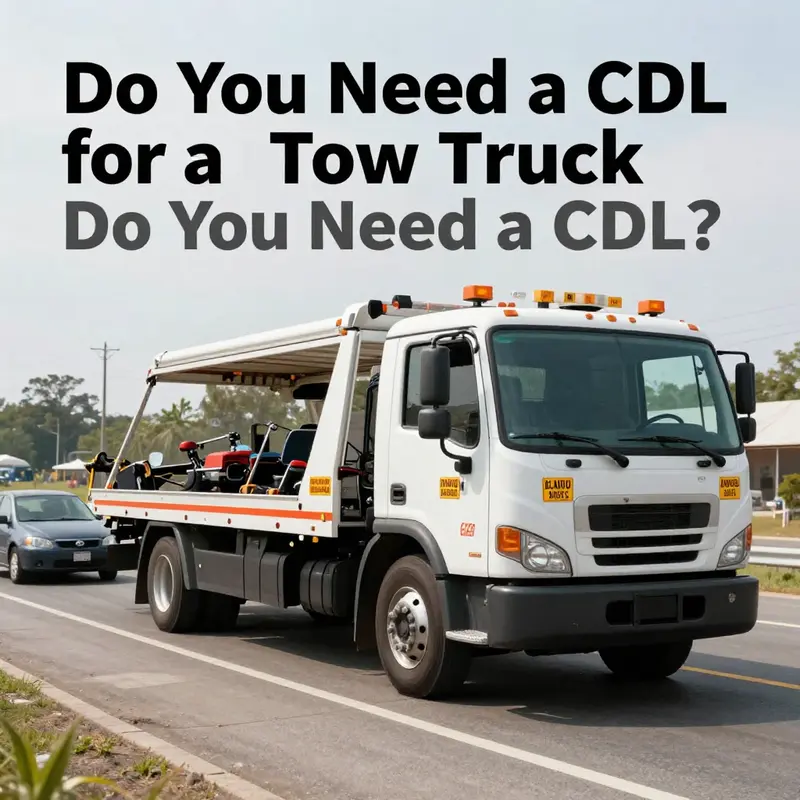
Tow trucks sit at the intersection of service and regulation. Do you need a CDL to operate one? The short answer is: it depends on weight, operation, and state rules. In the United States, a CDL is usually required when the vehicle has a GVWR of 26,001 pounds or more, or when the vehicle tows another unit in a way that pushes the combined weight into CDL territory. A Class B CDL covers most single-unit tow trucks, while heavier setups may require Class A. The T endorsement is the key credential for tow operations, and additional endorsements (HazMat, Passenger) may apply depending on the work. States set specifics for testing, medical requirements, and behind-the-wheel hours, so always check the state DMV. The general process includes a knowledge test, a learner’s permit, a skills test with a pre-trip inspection, and a road test, plus medical certification. Fleet operators should align license class and endorsements with the actual vehicles in use and review periodically as equipment or services change. For authoritative details, consult the U.S. Department of Transportation and your state DMV.
Tow Trucks and CDL Rules: Reading Weight Limits, Endorsements, and State Variations
When people ask whether a CDL is required to operate a tow truck, the simplest answer is often the most accurate one: yes, in most cases a Commercial Driver’s License is required. Yet the details matter a lot. Tow trucks come in a wide range of sizes and uses, and the licensing rules that govern them ride along with those differences. The key marker is weight: the federal baseline hinges on the vehicle’s gross vehicle weight rating, or GVWR, and the way a tow operation is structured. Most heavy-duty wreckers and recovery assets push past the 26,001-pound GVWR threshold. In those cases, a CDL is typically mandatory. That threshold is not just bureaucratic shorthand; it marks the line between light-duty towing that might fall under general vehicle operator rules and heavy-duty towing that falls under commercial transportation regulations. For fleets and independent operators alike, understanding where a given tow truck sits on that spectrum is the first, most critical step toward compliance.
The federal framework comes from the Federal Motor Carrier Safety Administration, or FMCSA, which sets the baseline for what qualifies as a commercial vehicle for licensing purposes. If a tow truck’s GVWR is 26,001 pounds or more, or if the operation involves transporting hazardous materials or more than 15 passengers (including the driver), the CDL requirements kick in. However, the federal rule is not a one-size-fits-all mandate. States implement and interpret the guidelines in often nuanced ways, and enforcement can vary from border to border. In practice, the vehicle’s use matters just as much as its weight. A tow truck used solely for roadside recovery in a small, non-commercial service, for example, might fall under more permissive state interpretations, while the same truck used in a commercial fleet would usually demand a CDL and related endorsements.
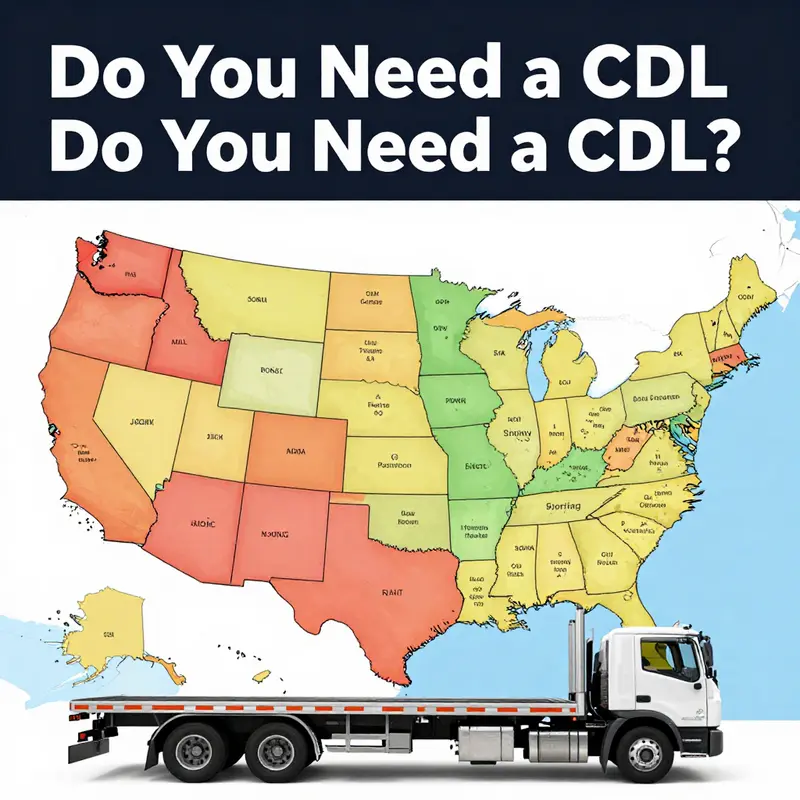
To appreciate how the rules behave on the ground, it helps to look at how major states approach the question. California and Texas, for instance, differentiate between non-commercial towing and commercial towing operations. In these states, a CDL is typically required mainly when the operation qualifies as a commercial service. A non-commercial tow, driven by a licensed operator who isn’t engaged in business activity, can fall outside the CDL requirement spectrum. This distinction matters not only for licensing but also for insurance, liability, and training. The practical effect is that a tow operator operating under a small, owner-operator model in a permissive state might keep a non-CDL license if the day-to-day tasks stay within a limited, non-commercial scope. Yet as soon as the operation scales into routine business activity or crosses the GVWR threshold, the licensing landscape shifts quickly toward CDL territory.
California’s approach, in particular, highlights a broader truth: the line between commercial and non-commercial towing is not simply a matter of weight. It’s about how the vehicle is used, who is sponsoring the operation, and what kind of business routine surrounds it. Texas, likewise, recognizes a division between commercial and non-commercial towing operations, and it imposes CDL requirements when the operation takes on the hallmarks of a commercial service. These distinctions can affect who must obtain a CDL, what endorsements are required, and what kind of training and medical certification a driver must maintain. In neighboring states like Florida and New York, the equation can flip again. Here, the weight threshold remains important, but the business use factor can pull small tow trucks into CDL requirements even if their GVWR sits below the hard weight line. In some cases, a tow operator who runs a back-alley roadside service or a shop-to-customer service as a business may need a CDL for compliance, regardless of the exact weight specification. This is not an abstract concern; it can affect how a fleet is staffed, how vehicles are assigned, and how drivers are trained.
The federal framework provides a sturdy backbone, but the enforcement and interpretation of those rules ride on state shoulders. States may add twists that reflect local road networks, policing priorities, and the makeup of local towing industries. The chorus of voices you hear in this space often includes fleet managers, small-service operators, and municipal towing coordinators who must balance safety, liability, and cost. A driver may legally hold a CDL in one state for a particular tow operation and, in a neighboring state, find that the same truck or similar operation triggers different requirements. The variability is not a sign that the federal rules are inconsistent; rather, it’s a reminder that licensing is a lived practice, shaped by geography, business model, and the day-to-day realities of the road.
For a reader focused on the practical side of this topic, the most important step is to verify the current regulations with the authoritative, up-to-date source: the state DMV or equivalent transportation authority. GVWR labels on the tow truck itself tell a large part of the story. If the vehicle’s GVWR is 26,001 pounds or more, CDL considerations become central to planning, training, and hiring. If the GVWR is below that threshold but the operation involves transporting hazardous materials or more than 15 people, or if the state imposes stricter rules for business use, those factors can push a driver toward CDL requirements with the appropriate endorsements. The cautious path is to adopt a posture of verification: consult the state’s DMV page for commercial driver licensing, read the precise language that applies to your vehicle class and intended use, and confirm any state-specific exceptions or temporary waivers. In practice, this often means cross-referencing the truck’s GVWR with the intended scope of operations and then mapping the results to the state’s licensing matrix.
Endorsements also shape the licensing picture in meaningful ways. A standard CDL covers operating large commercial vehicles, but additional endorsements can be necessary when the vehicle’s duties involve specific hazards or passenger transport. In towing contexts, HazMat endorsements can be required if the operation involves transporting hazardous materials, even in small quantities, or if the operation includes certain types of material handling that fall within hazardous materials regulations. Similarly, a Passenger endorsement becomes relevant if the tow operation involves moving passengers as part of the service—an arrangement that could occur in certain fleet configurations or in specialized towing contracts. These endorsements carry training, testing, and medical certification requirements that add layers of preparation for the driver and the fleet alike.
Beyond the technicalities, licensing must be viewed in the broader frame of safety, liability, and business viability. A CDL carries with it responsibilities that reach far beyond the license itself. Driver qualification files, annual medical certificates, compliance with hours-of-service regulations, and a robust safety program all become part of a properly run tow operation. The consequences of non-compliance are practical and potentially severe: fines, vehicle impoundment, suspension of driving privileges, and increased liability in the event of an accident. For a fleet that wants to maintain a reliable and legally compliant operation, the payoff is not merely avoiding penalties; it is building a workforce that can respond to incidents with the right training, the right licenses, and the right safety mindset. This is where ongoing education, regular reviews of state rules, and a culture that prioritizes safety over speed become part of the core business strategy.
For individuals navigating this landscape, the path is best described as iterative rather than binary. Start with the GVWR and the intended use. Then check the state’s licensing rules—remember that California, Texas, Florida, and New York illustrate the spectrum of approaches—before making hiring or procurement decisions. If you’re evaluating a fleet that operates across state lines, prepare for the possibility that a driver may need CDL-qualified status in one jurisdiction and a lighter credential in another, depending on the specific assignment and the vehicle’s role. This is why many operators lean into comprehensive licensing plans that anticipate these contingencies rather than reacting to them after an incident or a regulatory visit.
For those seeking a practical touchstone beyond the DMV, a helpful resource where fleet managers discuss licensing pathways and the realities of emergency response and towing operations can be a useful companion. The Island Tow Truck blog offers context on fleet management, licensing considerations, and safety best practices that relate directly to the questions raised by CDL requirements and to the broader field of heavy-rescue and recovery work. See the internal resource here for related discussions and evolving guidance: theislandtowtruck.com/blog.
In closing, the CDL question for tow trucks does not resolve to a single number or a one-size-fits-all rule. It resolves to a careful, case-by-case assessment that begins with GVWR, proceeds through the lens of the operation’s nature (commercial vs non-commercial), and then aligns with the state’s specific standards. The safest and most cost-effective path is a disciplined diligence process: verify the vehicle’s weight, scrutinize the intended use, consult the state DMV for the precise licensing requirements, and prepare for endorsements that match the operation’s realities. This approach reduces the risk of regulatory missteps, protects drivers, and supports the fleet’s ability to respond to incidents with confidence and professionalism. It also helps ensure that when a tow truck arrives on the scene, it does so with the license, the training, and the legal clarity necessary to do the job well and safely.
External resource: California DMV’s Commercial Driver’s License Information provides authoritative guidance on how CDL rules apply to commercial towing and related operations. See https://www.dmv.ca.gov/portal/driver-licenses/commercial-driver-licenses/ for the official details.
When a Tow Truck Becomes a Commercial Vehicle: Federal Rules, Weight Classes, and CDL Triggers
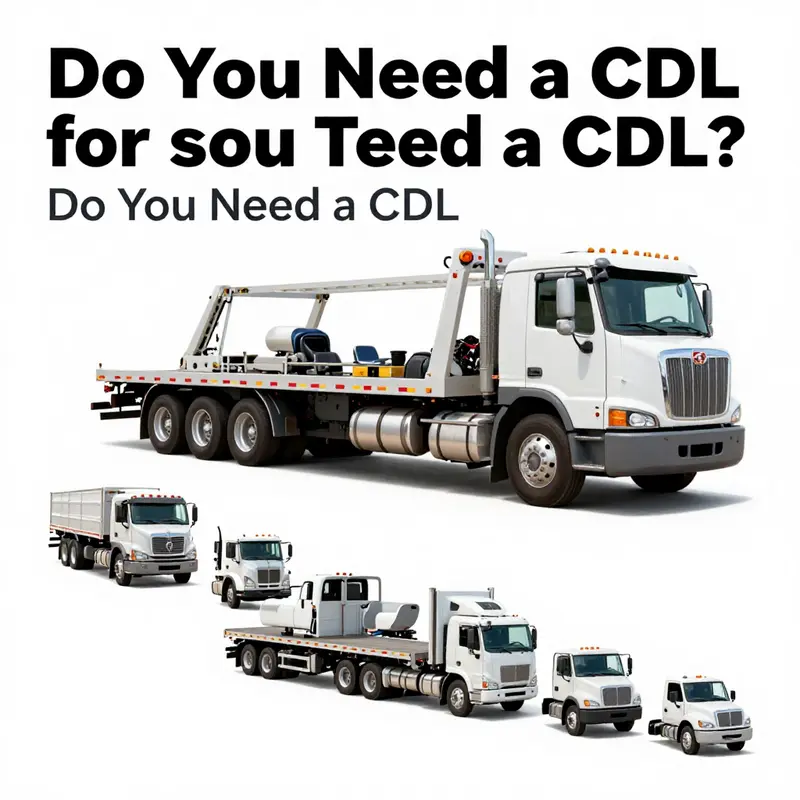
Understanding when a tow truck requires a CDL is about weight, purpose, and safety—not just the job title. Federal regulations draw a clear line based on the vehicle’s Gross Vehicle Weight Rating (GVWR). If a tow truck’s GVWR is 26,001 pounds or more, it is classified as a commercial motor vehicle and the driver must hold a Commercial Driver’s License (CDL). This single threshold shapes licensing decisions for heavy recovery operators, fleet managers, and anyone who plans to tow large vehicles or multiple vehicles at once.
A practical way to think about this is to separate light and medium tow operations from heavy-duty recovery work. Light-duty tow trucks—those that handle compact cars or small SUVs—typically have GVWRs below the federal threshold and can be operated with a standard driver’s license in most states. Medium-duty trucks may fall on either side of the line depending on their build and equipment. Heavy-duty wreckers and carriers built to haul buses, semi-trailers, or multiple disabled vehicles often exceed 26,000 pounds and thus require a CDL. The presence of attachments, reinforced frames, extended chassis, and on-board towing apparatus can push the GVWR into commercial territory even if the truck’s outward appearance looks similar to a large pickup.
Beyond the simple GVWR cutoff, context matters. You’re required to hold a CDL not only when you operate a vehicle rated above the threshold, but also when you’re driving a combination of vehicles where the towing vehicle and the towed unit together exceed 26,001 pounds. That means flatbed carriers and rollback trucks hauling other vehicles may trigger CDL requirements based on combined ratings, not just the truck alone. For operators who routinely move heavy equipment, transport disabled commercial vehicles, or provide recovery for intercity fleets, the CDL is rarely optional.
Endorsements add another layer. A base CDL authorizes you to drive larger vehicles, but endorsements are needed for specialized responsibilities. For example, if the tow truck is used to transport hazardous materials, the HazMat endorsement becomes mandatory. If the truck carries passengers as part of a roadside rescue or shuttle service, the Passenger endorsement will apply. Similarly, certain configurations—such as combination tows with multiple trailers—may need a specific endorsement. These requirements exist to ensure drivers receive focused training for the hazards that come with the cargo or the towing configuration.
State rules can modify or extend federal requirements. Federal law sets the baseline for interstate commerce, but states administer licensing and can impose additional conditions for vehicles operating solely within their borders. Some states adopt the federal GVWR threshold exactly, while others create intrastate exceptions or stricter regulations for certain classes of tow trucks. Licensing authorities may require additional local testing, training, or registration for recovery operators. For anyone planning to operate across state lines, the federal standard becomes the controlling factor; for local-only operations, consult the state DMV for definitive guidance.
The path to obtaining a CDL is straightforward but rigorous by design. Drivers must pass written knowledge exams that cover general commercial driving rules, vehicle-specific systems, and safety practices. A skills test evaluates control of the vehicle during maneuvers, coupling and uncoupling where relevant, and safe operation on public roads. Many employers and training centers provide hands-on instruction tailored to towing, focusing on load securement, boom and winch operation, vehicle stabilization, and scene safety. Completing structured training helps reduce risk and shortens the learning curve for complex recovery scenarios.
Insurance and employer policies also influence whether a CDL is effectively required. Insurers often stipulate that drivers hold appropriate licenses and endorsements as a condition of coverage. Fleet operators maintain internal policies that mandate CDLs for any vehicle above a specified weight or for certain recovery duties. Even where state law might allow a standard license, an employer or insurer can require a CDL to manage liability and ensure consistent training across drivers.
Operational safety is central to why regulators link the CDL to heavier tow trucks. Driving a vehicle with a high GVWR changes braking dynamics, steering response, and stability. Recovery operations involve lifting, winching, and manipulating disabled vehicles near traffic, often under stress and time pressure. The CDL process, along with endorsements and training, aims to give drivers knowledge and hands-on experience to manage those risks. Employers benefit from reduced liability and better service outcomes when drivers are properly licensed and trained.
For small business owners and independent operators deciding whether to invest in a larger tow truck, the CDL requirement should be a core consideration in the purchase decision. The total cost of stepping into heavy-duty towing includes the purchase price of the truck, licensing and training costs, potential endorsement fees, insurance rate increases, and compliance with state and federal regulations. Weighing these ongoing costs against the revenue potential of servicing commercial fleets, tractor-trailers, and bus companies helps determine whether scaling up is financially sensible.
Practical steps for operators: first, verify the truck’s GVWR on the manufacturer’s plate; second, check combined GVWR when towing other vehicles; third, consult your state DMV for any intrastate variations; fourth, confirm employer and insurance licensing requirements; and finally, pursue proper training and endorsements before accepting jobs that could require a CDL. This checklist prevents surprises and aligns operations with regulatory expectations.
One additional resource that addresses operational readiness and fleet-level planning, especially for island and remote operations, is Emergency preparedness for island fleets. It offers practical strategies for maintaining readiness and compliance when towing challenges are compounded by isolation or limited infrastructure. Embedding licensing and training decisions into a broader emergency response plan strengthens resilience and service reliability.
Knowing when a CDL is required boils down to a few clear rules, but their application can be nuanced. If your tow truck or the towing combination exceeds a GVWR of 26,000 pounds, plan on obtaining a CDL. If you’ll be handling hazardous materials, moving passengers, or towing complex combinations, expect endorsements. Even if federal law does not force a CDL for a specific vehicle, state rules, insurer conditions, or employer policies may effectively make one mandatory. Treat licensing as an investment in safety, legal compliance, and the longevity of your towing operation.
For the most current regulatory details and guidance on commercial licensing, consult the Federal Motor Carrier Safety Administration at https://www.fmcsa.dot.gov/.
Licensing the Heavy Lifter: Tow Truck CDL and Endorsements Across States
When a shop owner or fleet manager plans towing operations, licensing decisions determine who may drive a tow truck and under what conditions. In the United States, most heavy duty tow trucks fall into commercial vehicle rules, and the federal threshold uses GVWR. If the GVWR is over 26001 pounds, a commercial driver license is typically required. Weight is not the only factor, however; cargo type, number of passengers, and specific tasks can require endorsements. These requirements vary by state, so check with the state licensing agency for the latest rules.\n\nIn practical terms, start with the GVWR on the vehicle label and registration documents. Vehicles near the threshold may be eligible under a standard license or a non CDL class with restrictions, while heavier units usually require a CDL. Endorsements such as HazMat or Passenger can apply if the operation involves hazardous materials or transporting personnel in addition to cargo. Each state may implement its own rules, and most states provide official guidance through the DMV or transportation department.\n\nA representative example is the state that requires the W endorsement for tow truck operation. In some states, obtaining the W endorsement may require you to hold an appropriate base license and pass both knowledge and practical tests. The general rule remains that for GVWR above the threshold, a CDL is likely needed, and the minimum age varies by state. These are the elements that affect driver hiring, insurance, and day to day operations.\n\nFor fleet planning, create a map of each vehicle in the fleet, identify its GVWR, and translate that into the licensing path. Document which endorsements are needed for which tasks and ensure drivers complete the necessary training before handling a recovery assignment or a long haul tow. Maintain ongoing safety education and keep training records current. Finally, verify licensing details with the official state resources to avoid gaps in compliance. If you need the exact current requirements for a given state, consult the state DMV or transportation authority for the latest guidance.
Tow Truck CDL Realities: Compliance, Costs, and Confidence for a Modern Fleet
The question of whether a Commercial Driver’s License (CDL) is required to operate a tow truck sits at the crossroads of safety, law, and practical business judgment. For many operators, the answer hinges on one simple metric: the vehicle’s weight. If a tow truck bears a gross vehicle weight rating (GVWR) of 26,001 pounds or more, it becomes a commercial vehicle under federal rules, and the driver must hold a CDL. This threshold is not just a line on a regulatory chart; it is a decision that ripples through staffing, insurance, scheduling, and risk management. In practice, most heavy-duty tow trucks used to recover large vehicles or to move multiple cars in a single operation fall squarely into the CDL category. For business owners, that means recruiting and retaining qualified drivers, structuring training programs, and aligning operations with a regulatory framework that prioritizes safety and accountability over speed and cost savings.
The CDL landscape is not a one-size-fits-all picture. The classification a tow truck driver needs depends on the equipment installed and how the vehicle is used. In many cases, the vehicles that towing companies rely on are single-unit, firm-axle machines with a GVWR exceeding 26,000 pounds. Those are typically operated under a Class B CDL. A Class B license reflects the capacity to drive a heavier single-vehicle unit with basic air brakes and standard passenger safety requirements, and it covers the most common heavy-duty tow trucks that recover disabled cars at the side of a highway or transport a broken vehicle to a shop. However, there are nuances. If a tow operation relies on a combination of a tow truck plus a trailer to haul multiple vehicles, or if the equipment includes more complex systems, a Class A CDL may be required. The path to the appropriate license is therefore not merely a matter of the truck’s weight; it also hinges on the towing configuration and how the vehicle is deployed in daily work.
Even when a CDL is clearly required, there are exceptions and state-by-state variations that can influence compliance. Some states provide exemptions for smaller tow trucks that stay under the 26,001-pound threshold when used exclusively for non-commercial purposes or for emergency roadside assistance within a limited radius. In other jurisdictions, emergency responders or operators within a narrowly defined service area may experience temporary or partial relief from CDL mandates, though such exemptions are not universal and can be narrow in scope. For a business considering growth or diversification, the existence (or absence) of these exemptions becomes a strategic question. If the fleet plans to expand into heavier towing, or if it envisions cross-state operations, that decision should be revisited with the latest state guidance and, when needed, with the counsel of a transportation compliance expert. The federal framework provides the backbone, but states fill in the details, and the margin for error is small because the penalties for non-compliance can be severe: fines, license suspensions, and heightened liability in the event of an accident.
Beyond the basic CDL requirement, endorsements add another layer of complexity. The automotive recovery business sometimes encounters operations that touch hazardous materials or passenger transport, each of which triggers additional endorsements. A HazMat endorsement, for instance, is necessary if the tow operation carries or handles hazardous materials; the rules governing HazMat are deliberately stringent, reflecting the potential risk involved in transporting dangerous goods. Similarly, a Passenger (P) endorsement may be required if the operation involves carrying passengers in conjunction with the tow service—think about teams that assist stranded motorists with on-scene support or roadside recovery teams that include a safety escort function for a crew. When a business expands into these service lines, it must secure the corresponding endorsements for its drivers, update training programs, and adjust insurance coverage accordingly. The upshot is that endorsements are not cosmetic add-ons; they are integral to legal compliance, risk control, and operational integrity.
For towing businesses, this regulatory matrix translates into practical implications that go beyond the sticker on a license. Qualified drivers are the heartbeat of a compliant operation. The requirement to hold a CDL and any necessary endorsements creates a baseline for hiring criteria, training pipelines, and ongoing safety programs. Companies often invest in structured onboarding that covers federal and state regulations, motor vehicle inspection routines, vehicle inspection reports, and the particular hazards associated with towing operations, including load securement, vehicle recovery methods, and traffic management at accident scenes. A well-documented training program supports not only compliance but also insurance negotiations, incident response, and customer confidence. When a driver holds a CDL with the appropriate endorsements, the business is better positioned to meet insurance requirements, secure favorable terms, and demonstrate due diligence in the event of a dispute or claim. Conversely, gaps in licensing can raise red flags for insurers, complicate incident investigations, and widen exposure to liability in the aftermath of an accident.
The consequences of non-compliance extend beyond regulatory fines. A company that operates with unlicensed drivers or without the necessary endorsements often faces higher insurance premiums, more stringent oversight from regulators, and a stronger likelihood that accidents will result in litigation with greater financial exposure. In markets that emphasize safety culture and professional integrity, management teams recognize that the costs of non-compliance accumulate quickly: elevated liability, damaged reputations, disrupted service, and the potential for license or authority to operate to be suspended. These stakes shape every facet of a towing operation—from how shifts are scheduled to how vehicles are maintained, and from how drivers are recruited to how performance is measured and improved. It is not simply a matter of meeting minimum legal requirements; it is about building a reputation for reliability, safety, and accountability that allows a towing business to grow in a competitive landscape.
All of this makes it sensible for operators to adopt a disciplined approach to compliance. Start with a clear assessment of the fleet: identify which tow trucks will routinely operate at or above the GVWR threshold, and map those vehicles to the appropriate CDL class. Next, inventory the endorsements that could become necessary as the business grows—for instance, HazMat or Passenger endorsements—and lay out a staged training plan to prepare drivers for them. Training should not be a one-off event; it needs to be ongoing, with regular refreshers on loading standards, securement methods, braking performance, and roadside safety protocols. Record-keeping is another critical pillar. A robust driver qualification file, including medical certification, license status, trouble-free driving history, and ongoing compliance checks, helps a business demonstrate diligence to regulators and insurers alike. And given the dynamic nature of state rules, a company should designate a knowledgeable compliance lead or partner with a transportation attorney or consultant to keep the fleet aligned with the newest requirements.
The practical implications extend to fleet design and daily operations as well. If a business handles many large vehicles or performs multi-vehicle recoveries, it often makes sense to concentrate on hiring CDL-qualified drivers with the relevant endorsements. That alignment reduces the administrative burden of tracking varied licenses and simplifies scheduling, especially during peak demand or night shifts. It also tends to improve on-scene safety and operational efficiency. For example, when a driver is licensed for the work, the team can execute complex recoveries with a higher level of competence, minimize time on the roadside, and reduce the risk of improper load securing or equipment misuse that could lead to damage or injury. In contrast, a mixed fleet with a heavy reliance on non-CDL drivers can create gaps in compliance that regulators and insurers will scrutinize more intensely.
To the extent that a business is exploring growth or diversification, a careful cost–benefit analysis becomes essential. The up-front costs of CDL training, medical certification, and endorsements are real, but they must be weighed against longer-term benefits: reduced liability, smoother insurance negotiations, easier access to contract work, and the ability to deploy a larger, more capable fleet. The decision often hinges on the expected mix of tow operations. If the core service involves heavy vehicle recovery or cross-town fleet towing with complex load profiles, the case for standardized CDL-heavy staffing becomes stronger. If, conversely, the operation remains predominantly light-duty and local, there may be room to operate with a smaller subset of licenses while maintaining strict safety protocols and clear guidance on when a CDL would be required for certain tasks.
For operators seeking practical guidance on how to anchor these decisions within a broader fleet strategy, a broader view of industry practices can be helpful. The Island Tow Truck blog offers perspectives on fleet management, emergency response planning, and the practical realities of keeping a towing operation compliant and resilient in the face of regulatory changes. For readers pursuing those ideas, see The Island Tow Truck blog for actionable discussions on how fleets organize, train, and prepare for the unexpected on the road. The Island Tow Truck blog.
In sum, the CDL question for tow trucks is less a single verdict and more a framework for prudent business design. The weight of the vehicle, the configuration of the equipment, and the intended use all converge to determine whether a CDL, with its accompanying endorsements, is a necessity. The downstream effects—on hiring, training, insurance, and on-road safety—are what ultimately determine whether a towing operation can deliver services consistently, legally, and with the confidence customers expect. Operators who navigate this landscape thoughtfully are better positioned to build a fleet that not only meets regulatory requirements but earns trust in the communities they serve. The path is not simply about compliance; it is about constructing a durable foundation for growth, safety, and reliability in a business where every mile and every call matters.
External resource: https://www.dmv.org/vehicle-titles/tow-truck-requirements.php
Final thoughts
In conclusion, acquiring a CDL for operating a tow truck hinges on understanding the weight classifications and regional regulations that govern towing operations. Our exploration underscores the importance of staying informed about both federal and state laws, ensuring not only compliance but also the smooth running of your towing business. For local auto repair shops, car dealerships, and commercial fleets, being equipped with the right knowledge will enhance your operational efficiency and customer service. With this understanding, you can navigate the road ahead confidently.