In the whimsical world of Disney-Pixar’s Cars, one character stands out not just for his charm and humor but also for his unmistakable design: Tow Mater, a beloved 1952 Ford F-100 tow truck. More than just a tow truck in Radiator Springs, Mater represents loyalty, friendship, and the quirks of small-town life. This exploration reveals the uniqueness of Mater through a multi-faceted lens, examining his character, design attributes, significance in the franchise, and the extensive merchandise and cultural impact he has crafted around him. Each chapter captures the essence of what makes Tow Mater such an enduring and iconic figure, resonating with auto enthusiasts and fans alike.
Tow Mater Defined: Tracing the 1952 Ford F-100’s Signature Shape to the Heart of Radiator Springs
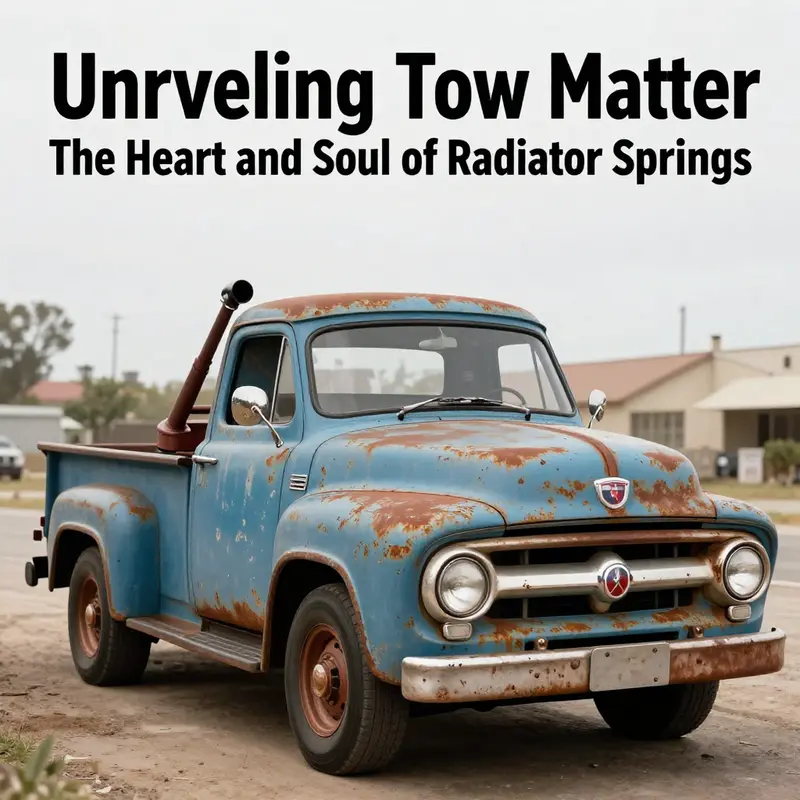
Tow Mater is more than a tow truck in a story built for laughs and road-ready adventures. He is a window into a particular kind of American era, where work trucks carried the weight of daily life and the promise of reliability. In the Cars universe, Mater’s charm stems not just from his quirks but from a design that signals a long lineage of dependable, hardworking machines. At the core of that lineage sits a real-world icon: the 1952 Ford F-100. This second-generation pickup represents a pivot point in postwar American trucking, a bridge between the boxy utilitarianism of earlier models and the more refined, road-tested silhouettes that followed. The name and shape that fans associate with Mater—his sturdy frame, the tow apparatus, and the large, friendly presence of a red-and-white body—are not arbitrary. They echo a design language that conveyed resilience, practicality, and a certain down-to-earth dignity. Mater embodies those qualities in a comic, affectionate form, but his visual roots run deep in the style and spirit of the 1952 F-100.
To understand Mater is to understand the machine he represents. The 1952 Ford F-100 belongs to Ford’s F-Series, a line that had started life as a rugged, economical option for farmers, small businesses, and working families. The 1952 model year marked meaningful continuity with a look that fans still recognize: a rounded front end that softened the harsher lines of earlier trucks, a prominent grille guarded by two large headlights, and a silhouette that managed to feel both capable and approachable. This was not merely a tool for hauling; it was a symbol of daily perseverance. It was the kind of vehicle that many families would have trusted to carry loads, transport goods, and get the job done, day after day. The F-Series had already become a staple in American road life, and the 1952 F-100 variant specifically helped define what a “full-size” pickup could be: a functional, durable workhorse with enough charisma to stand out in a lineup of stern, heavy-metal contemporaries.
The visual identity of Mater borrows heavily from that era’s aesthetic cues. His body lines—slightly rounded corners, a broad, friendly grille, and the two-tone color treatment that often lands him in a palette of bold red with white accents—echo the way real pickups of the period balanced toughness with charm. The F-100’s two-door cab and bed-equipped frame offered a practical blueprint for a vehicle that could handle tools, rope, and the occasional frantic roadside rescue. Mater’s own tow arm and hook are not mere stage props; they are a functional extension of the truck’s purpose, a physical reminder that this is a machine built to move other machines, to fix what is broken, and to do so with a kind of stubborn reliability that fans instinctively trust.
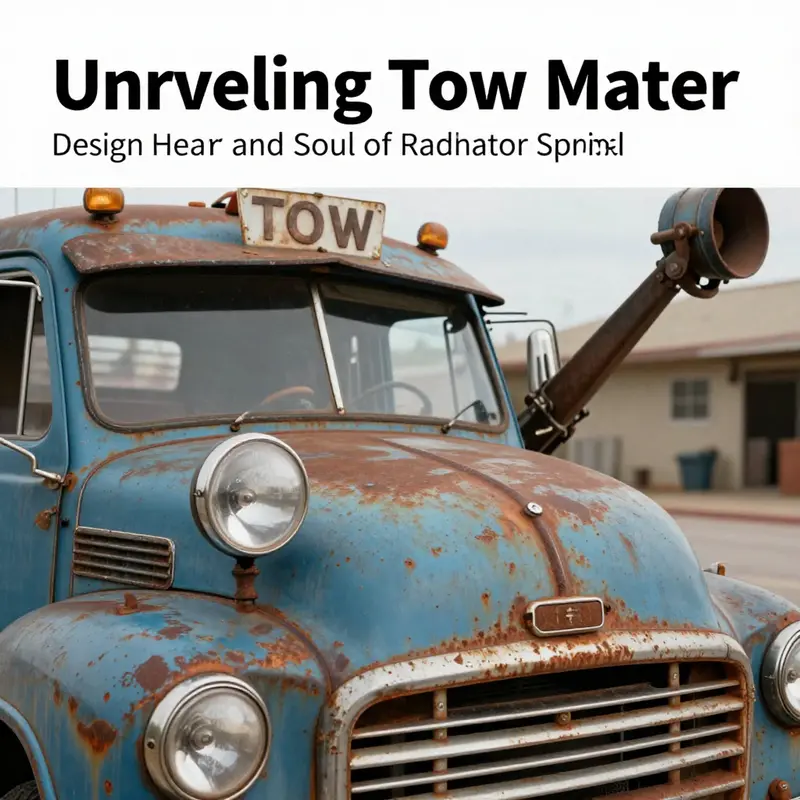
Chemistry between form and function is where Mater truly shines. His side sign that reads “TOW” and his oversized tow apparatus are not cosmetic additions but a deliberate amplification of the real-world role the F-Series played in rural and urban life alike. The silhouette he embodies—compact, sturdy, unmistakably American—conveys a sense of history that resonates beyond the movie’s colorful caricatures. The design language of the 1952 F-100 was never about flash; it was about the confidence that a driver could count on the truck to perform when the clock was ticking. In that sense, Mater is a living tribute to an era when a tow truck was a lifeline, a trusted partner on long stretches of highway and through the twist of a tight, tire-scented tow yard.
Behind Mater’s humor and his easy, Southern-flavored wit lies a more nuanced truth about the truck he represents. The 1952 F-100’s engineering choices were those of a practical era: adequate power from a 239 cubic inch V8 and a straightforward, three-speed manual transmission that rewarded steady, disciplined driving. This combination offered not only reliability but a degree of tactile engagement—the kind of driving experience that made hours behind the wheel feel purposeful rather than tedious. The engine’s honest, pragmatic character mirrored Mater’s own approach to problems: not flashy, but steady, capable, and willing to go the distance when needed. The wooden bed bedded in some late-era variants—an aesthetic nod to a time when cargo came in wood-framed crates rather than carbon-fiber packs—also carried a symbolic weight. It suggested a world where repairs, cargo, and even restoration relied on hands-on labor and an eye for durable, adaptable materials.
From a restoration perspective, the 1952 F-100 represents a careful balancing act between preserving original character and accommodating the realities of aging metal and worn interiors. The chassis, the body, and the interior all become canvases upon which an owner can tell a story about the truck’s earlier life. For collectors and enthusiasts, the goal often centers on achieving a faithful look while letting modern restoration practices keep the vehicle reliable and roadworthy. Specifications typically feature a V8 engine that, while modest by today’s standards, delivered dependable power for its era. The three-speed manual transmission, a hallmark of the time, invites a direct, almost tactile connection between driver and machine—an experience that’s hard to replicate in many modern vehicles. The balance between maintaining originality and introducing carefully chosen period-correct parts can prove delicate. Yet the right restoration preserves the truck’s aura: its gleaming red exterior, the white grille, the black interior, and, perhaps most importantly, the wooden bed that hearkens back to a time when the line between tool and companion was less blurred than it is today.
In Cars, this design language translates into a character that fans quickly adopt as a friend. Mater’s personality, with its blend of mischief and loyalty, is inseparable from the vehicle that houses him. He is not merely a caricature of a derelict or a clumsy sidekick; he is a survivor with a generous heart. He provides comic relief through misfires and blunders, yet his courage surfaces when the moment demands it. The rhythm of his life within Radiator Springs—one that sees him towing, talking in that distinctive drawl, and standing by his friends through thick and thin—echoes the era’s enduring idea that work is a form of honor, and that a machine’s true value emerges in how faithfully it serves the people around it. Mater’s bond with Lightning McQueen, forged in danger and strengthened by shared trials, mirrors the way real trucks once formed bonds with their owners and drivers, becoming reliable partners in daily errands, long hauls, and roadside crises.
Cultural resonance matters here, too. The 1952 F-100 sits within a broader cultural memory of postwar ingenuity, community, and mobility. It’s no accident that a character modeled after this truck would become so beloved. The truck’s legacy—built on robust engineering, practical design, and a willingness to be repaired and repurposed—parallels Mater’s own story arc. The character’s inadvertent wisdom often comes from the same places a real driver might find it: from listening to the vehicle’s reactions under load, from noticing how a tow line bites into a stubborn bump in the road, or from recognizing that some repairs require improvisation as much as precision. When you watch Mater in action, you’re watching a modern fairy tale of a product of American industry that became a trusted companion to the people who depend on it. The narrative of Mater and the 1952 F-100 thus becomes a study in the enduring power of design to carry character, memory, and meaning across decades.
The visual and philosophical kinship between Mater and the 1952 F-100 also spills into the broader world of automotive art and storytelling. Artists and designers often reference the F-Series’ rounded geometry and two-tone color schemes when paying homage to classic pickups. A notable example is a Rat Rod-inspired build based on a late variant of the same platform that cheekily nods to Mater’s silhouette, using a rear-view aesthetic to evoke that same blend of rugged humor and authentic work ethic. These artistic reinterpretations reveal how deeply the original truck’s character has permeated popular culture, offering fans a tangible point of entry into a shared memory of road travel, small-town resilience, and the magic of a vehicle that looks like it could fix your day just by pulling up and offering a friendly nod.
For fans who want to explore the lore beyond the Cars universe, the Island Tow Truck blog offers a broader lens on classic tow vehicles and the role they’ve played in infrastructure, emergency response, and everyday life. The site’s explorations illuminate how a tow truck transcends its function to become a trusted emblem of service and dependability in communities large and small. This perspective helps deepen the appreciation of Mater’s design as more than a cartoon character—it’s a reflection of a real-world tradition of dependable machines that carried people through good times and bad alike. You can read more on the Island Tow Truck blog at the following link: the Island Tow Truck blog.
Looking back at the real-world specifications and the cinematic portrayal, it’s clear that the 1952 Ford F-100 offers more than a surface-level aesthetic. Its story—the shift toward more powerful, proven V8 power, the practicality of a three-speed manual, the enduring appeal of a rounded, approachable silhouette—provides a backdrop against which Mater’s warmth and loyalty come into sharper focus. The combination of form and function, so eloquently captured in Mater’s frame and in the truck’s own design language, invites fans to see a simple work vehicle as something more: a companion with a voice, a history, and a future in which trust, repair, and friendship play starring roles. If you have ever looked at a tow truck in need of a once-over and felt a spark of recognition, you already understand a fragment of what Mater embodies: a sense that some machines, and the people who tend them, carry a shared, unspoken promise that the road will bend but not break when there is someone ready to lend a hand.
For those who wish to delve deeper into the era’s engineering and interior cues—beyond the cinematic imagination—an external resource offers a careful historical overview of the 1952 Ford F-100’s interior and cabin concept. This guide helps place Mater’s looks in a broader historical context and provides technical details that enrich the appreciation of his on-screen presence: https://www.carinterior.com/1952-ford-f1-pickup-guide/.
null
null
Tow Mater Unveiled: The Enduring Heart of Cars in the Shape of a 1950s Tow Truck
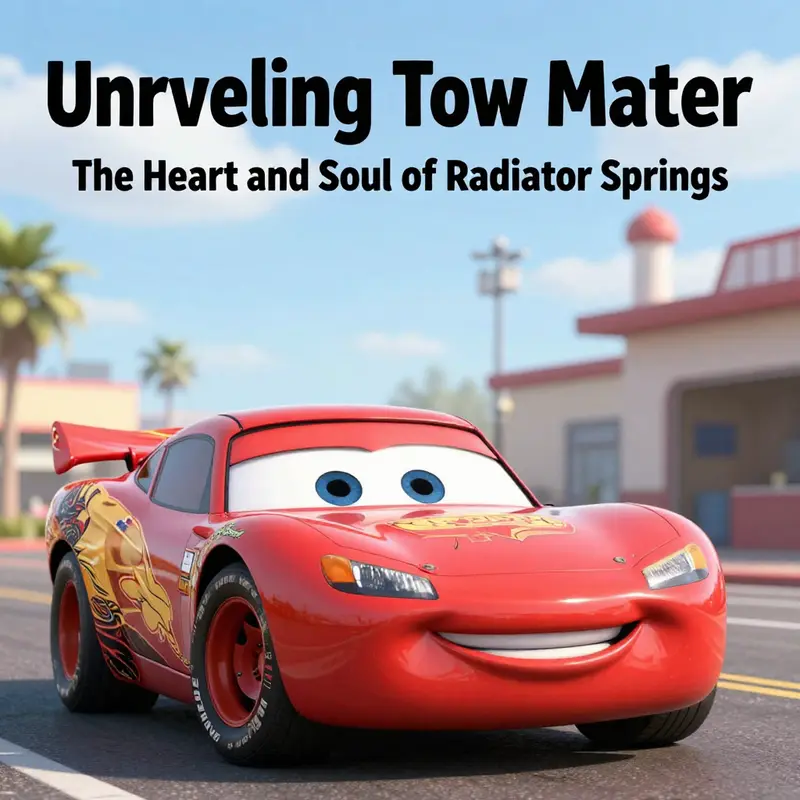
Tow Mater is not merely a character in a children’s film; he is the quiet hinge on which the entire Cars franchise turns. He wears his vintage look with a simplicity that feels almost antique and timeless at the same time. In the world of Radiator Springs, Mater embodies a blend of raw practicality and stubborn affection for the people around him. The car world around him—Lightning McQueen, Doc Hudson, Sally, and the rest—each carry their ambitions, but Mater carries something quieter and more durable: the sense of belonging that comes from a place where everyone’s work matters. In the Cars canon, Mater is presented as a 1951 Ford F-250 pickup whose sturdy frame and unmistakable tow rig equipment mark him as a proprietor of service more than a purveyor of speed. The model year and exact variant are part of a larger, affectionate blend of American auto history, a nod to an era when vehicles were built to last and to help their communities in practical, visible ways. The precise year sometimes gets noted as a 1952 Ford variant or, in some fan lore, a 1951-focused presentation. What remains constant across these slight ambiguities is Mater’s character: a tow truck with a big heart and a bigger sense of humor, a friend who can pick you up—literally and figuratively—when you’ve fallen behind or broken down on life’s road. This chapter follows that through-line, tracing how a single truck can anchor a franchise’s values while still delivering plenty of lighthearted mischief along the way.
From the moment Radiator Springs is reawakened by McQueen’s unexpected arrival, Mater steps into the scene not as a plot device but as a neighbor, a helper, and a mentor in the broadest, most human sense. He isn’t defined by speed or prestige but by what he does with the time and a little bit of elbow grease—the everyday actions that sew a community together. This is where Mater’s role grows beyond the mechanics of a tow truck into the mechanics of belonging. The town is a living organism, a character in its own right, and Mater is one of its most reliable organs. He pulls people toward one another, sometimes literally, sometimes through the gravity of his own moral orbit. In this way, Mater’s significance within the Cars franchise is not simply about one character’s antics or one memorable line delivered with a drawl that sounds like a late afternoon breeze. It’s about what his presence teaches audiences about loyalty, humility, and the quiet courage it takes to stay open to those around you when the world is rushing by.
To understand Mater’s contribution, it helps to consider the archetypes he embodies and the counterpoints he creates to Lightning McQueen’s more public, fame-driven journey. McQueen’s arc is all about self-discovery through competition, sponsorship, and the high-stakes theater of professional racing. Mater’s arc runs parallel but through a different lens: what it means to be useful, to belong, and to protect one’s home regardless of the spotlight. In Radiator Springs, Mater’s usefulness is not measured by his speed but by his willingness to stand by his friends in moments of danger or doubt. When McQueen first arrives in Radiator Springs, Mater becomes a mentor of a gentler, more experiential kind. He may not speak in technical jargon or win races, but he understands the morale of a team, the value of patient repair, and the importance of listening to the quiet voices around you—the voices that remind you why you began in the first place.
The narrative power of Mater’s character lies in his ability to blend humor with the heavy, sometimes bruising truths of friendship. His Southern drawl and his almost childlike sense of mischief illuminate the undeniable humanity that threads through the Cars films. He is the character who can both diffuse tension with a joke and deliver practical wisdom in the same breath. In moments of crisis—whether a threat to Radiator Springs or a setback in McQueen’s journey—Mater’s instinct is to protect the town and the people he loves, often by improvising a solution from a place of heartfelt loyalty rather than technical expertise. This contrast makes his moments of bravery feel earned, not manufactured. The films never shy away from showing Mater make mistakes; indeed, his clumsiness and stubbornness serve as a counterbalance to the more polished, career-focused characters. What emerges from this balance is a portrait of a creature who embodies the idea that every member of a community has a function that can be noble and transformative, even if it seems modest on the surface.
Mater’s symbolic weight in the Cars universe extends beyond his immediate story beats. He becomes a living reminder that community is not a backdrop to the action but a central mechanic that holds everything together. He symbolizes humility because his most memorable acts come without pomp or prestige. He anchors Radiator Springs to its own roots while allowing the town’s residents to dream about larger possibilities. In practical terms, that means the film invites audiences to reflect on how a real-world fleet or service crew contributes to a bigger mission. The tow yard in Radiator Springs could be seen as a microcosm of any small-town or island fleet where every role matters and where the success of a larger operation depends on the reliability of its everyday workers. Mater’s presence teaches that strength is not only about speed or power; it is also about the steadiness to show up, repair what is broken, and keep the network of relationships intact when stress tests hit.
Characteristically, Mater’s personality is a tapestry of charm and complexity. His quirks—his fondness for “southern hospitality,” his habit of speaking in a way that is as endearing as it is humorous, and his knack for getting out of scrapes with a grin—do more than provide comic relief. They humanize the world of machines. In a story about vehicles who race through their dreams and chase reputations, Mater centers the human experience of care. He moves through scenes with a fearless earnestness: the willingness to admit confusion, the readiness to lend a helping hook, and the stubborn determination to see the best in everyone. These traits do more than endear him to the audience; they create a moral center for the narrative. The films use Mater not just to nudge the plot forward but to soften the edges of ambition so that viewers recognize the value of community life, especially for those who work behind the scenes, in tow yards, repair bays, and small-town streets where the weight of the day rests on the shoulders of ordinary heroes.
From a storytelling perspective, Mater’s arc reinforces several thematic throughlines that run all the way through the Cars series. One is the importance of listening to your roots. Radiator Springs is a place built on memory, repair, and mutual aid, and Mater embodies those very ideals in a way that resonates with audiences of all ages. Another throughline is the redefinition of courage. The bravest acts in Mater’s world are not shown in dramatic stunts but in the quiet choices to stay when others leave, to help when it would be easier not to, and to protect a community that might not be aware of his own sacrifices until the moment they need him most. These are measurements that translate well to the real world, especially for readers who think about how teams function in service fleets, emergency response, or any operation where a crew relies on one another to keep people safe and moving forward.
For readers curious about the concrete role Mater plays in the narrative structure, the best lens is to see him as a deuteragonist—somewhat in the shadow of McQueen but never secondary in importance. He provides necessary counterbalance and, at times, a shift in the emotional weather that allows the main arc to breathe. Mater’s presence is a reminder that stories about speed and glory still depend on the softer, steadier forces: friendship, loyalty, and the steady hand of someone who knows how to lift others up after a fall. If Lightning McQueen travels the road to fame, Mater travels the road to belonging. Both journeys are essential, and together they form a complete map of what the Cars universe strives to celebrate: a world where every vehicle, big or small, has a purpose that matters.
The chapter’s closing thought, then, returns to the heart of the franchise: when a community is anchored by individuals who understand the value of service, every mile becomes meaningful. Mater embodies that truth by existing at the intersection of usefulness and heart. He may be seen as comic relief by those who overlook the quiet power of a tow hook and a friendly face, but the deeper truth is that his character models a kind of courage that doesn’t always seek the spotlight. He shows that being reliable, loyal, and true to one’s roots can be a heroic choice in itself. In this light, Mater is not just a truck. He is a living reminder that the most enduring legends in any universe are built not from speed records or shiny chrome but from the everyday acts of care that keep a community whole when the road gets rough.
For readers seeking additional perspectives on how fleet-centered stories illuminate real-world practices, you can explore broader discussions on fleet culture and community resilience through The Island Tow Truck blog. This resource offers insights into how teams that keep lanes clear, responses ready, and communities safe reflect the same values embedded in Mater’s journey. The Island Tow Truck blog.
External reference for further characters and lore: Mater on Disney Fandom provides a comprehensive look at the character’s development across the Cars films and related media, offering fans a deeper dive into his backstory and the creative decisions that shaped him. https://disney.fandom.com/wiki/Mater
Tow Mater Unpacked: From Radiator Springs Tow Truck to Merchandise Icon and Cultural Touchstone
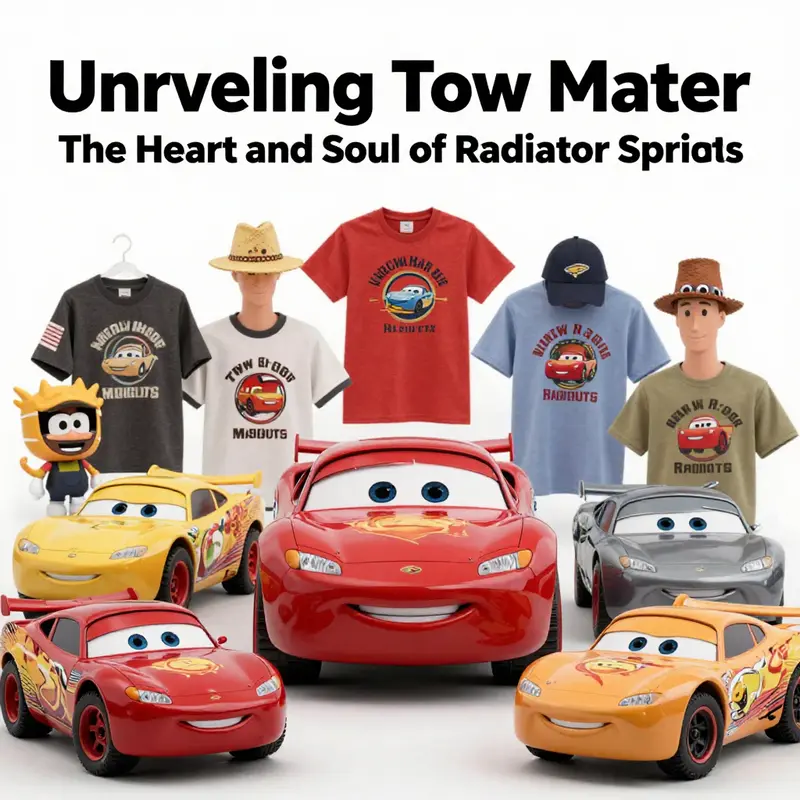
Tow Mater is more than a cartoon tow truck with a quirky accent. He sits at the crossroads of design, nostalgia, and shared memory, a character whose appeal stretches far beyond the screen. In the Cars universe, Mater embodies the warmth of small-town life and the stubborn loyalty that often underpins real friendships. He speaks in a Southern drawl that feels less like dialect and more like a lived-in heartbeat, a cadence that invites audiences to lean in and smile at his misadventures while still rooting for him when the moment requires courage. Physically, he is unmistakable: a 1952 Ford F-100 pickup reborn as Radiator Springs’s most beloved recovery vehicle, a vehicle whose red-and-white paint, oversized tow arm, and a license plate that simply reads “TOW” instantly signal both function and personality. This chapter traces how Mater’s distinctiveness translated into a sprawling ecosystem of merchandise and a cultural footprint that persists long after the credits roll. It is a story of design meeting sentiment, of a fictional workhorse becoming a real-world icon, and of how fans translate a character’s charm into tangible, collectible, and participatory experiences that extend the Cars universe into everyday life.
The material world around Tow Mater—plush toys, action figures, apparel, and immersive experiences—reads as a natural extension of his on-screen persona. Plush versions of Mater invite the youngest fans to hug a soft facsimile of the tow-truck-with-a-heart, offering a tactile connection to a character who often fumbles through sticky situations with good humor and good cheer. The plushes are engineered to emphasize his most endearing traits: the wide grin that hints at mischief, the slightly askew eyes that convey curiosity, and the bulky, friendly silhouette that makes him instantly recognizable from a distance. Action figures, in turn, reveal a different relationship to Mater. Their articulated joints invite kids and collectors to stage rescue scenes and quick-change adventures, giving Mater agency in ways that mirror his filmic journeys. These figures often include the distinctive tow gear and a small perch or platform that underscores his work identity, turning the practical into the playful.
Clothing and accessories carry Mater’s persona into daily life. T-shirts, caps, and hoodies feature his signature palette and catchphrases, turning a moment of cinematic humor into a wearable reminder of Radiator Springs. The language associated with Mater—his goofy bravado, his earnest loyalty, and his famous lines—filters into dialogue that fans reuse in everyday chat, social media captions, and even in playful office banter. The merch is more than surface image; it is a shorthand for belonging to a shared universe. When fans wear Mater-inspired gear, they signal a vote for warmth, humor, and the idea that even imperfect machines can be steadfast friends. Beyond clothing, accessories—phone cases, backpacks, keychains, and home decor—serve as daily reminders of the franchise’s core values: friendship, resilience, and the joy of a spontaneous road trip with good company.
The Cars world thrives on experiential merchandise as well. Themed ride experiences at Disney parks, including opportunities to interact with Mater in person, offer a multisensory bridge between film and real life. Guests can step into a realm where Radiator Springs feels tangible, where Mater’s tow truck presence becomes a living, breathing element of a larger narrative. The tangible encounter—touching the vehicle, hearing his voice, and sharing a moment or a silly exchange—binds memory more tightly than a screen alone can. For many fans, these experiences deepen their affection for Mater by translating on-screen dynamics into real-world social rituals: photo opportunities with a character who radiates hospitality, spontaneous laughter with friends who are just as enthusiastic about the franchise, and the sense that a beloved character has stepped out of the movie frame and into a shared, real-life moment.
Merchandise around Tow Mater is not merely a portfolio of products; it is an ongoing dialogue between a character’s identity and the audience’s evolving relationship with him. The red-and-white paint job, the iconic TOW plate, and the visible “I’m a little rusty” motto are replicated across countless products, turning a cinematic design into a cultural touchstone. This replication is not accidental but rather the result of a conscious design choice: Mater’s visual language is simple, bold, and highly legible from a distance. Designers can reproduce his silhouette and palette with high fidelity, and fans can instantly recognize him even when the figure or item is only partially visible. The efficacy of this design is part of why Mater translates so smoothly into merchandise that can withstand years of use and the attention of adult collectors who value nostalgia as much as collectibility. The items do not erase the character’s flaws or the misfit moments that fuel his humor; instead, they celebrate them, offering a tactile reminder that authentic charm endures because it is both imperfect and endearing.
As with any long-running franchise, the merchandising ecosystem around Mater has become a barometer for audience memory and market resonance. The nostalgia factor cannot be underestimated. For many fans, Mater embodies a particular era of American automotive culture, when work trucks carried a sense of pride, community, and a dash of maritime dirt under the tires. The character’s appeal rests in this duality: he is rugged enough to be a tow truck, yet goofy enough to be approachable, a blend that translates into a spectrum of products that appeal to different age groups. Adult collectors, in particular, often seek limited-edition figures or high-detail replicas that pay homage to specific moments from the films. In those purchases, collectors are not only acquiring something with a physical representation of Mater; they are acquiring memory, a slice of a shared childhood, and a reminder of the film’s enduring message about loyalty and friendship.
Cultural impact emerges most vividly in how Mater’s lines and persona seep into popular culture. Memes and social media references breathe new life into his quotes, turning phrases like “I’m a little rusty” or “I’m not a real truck, I’m a tow truck!” into quick, humorous shorthand that audiences use to respond to everyday situations. These phrases, initially linear in the film’s context, are reimagined in countless user-generated contexts, from playful captions on fan art to quick, witty exchanges during fan conventions. The humor is accessible yet expressive, enabling fans to participate in a shared cultural moment without needing a deep understanding of the entire Cars universe. The broad reach of Mater’s humor underscores how a character can become a cultural signal—an affectionate shorthand for resilience, self-deprecation, and the idea that everyone has a role to play, even when the odds are not perfectly aligned with the grand plan.
Fan communities around Mater extend beyond passive consumption. Dedicated forums, fan art, cosplay, and fan-made media celebrate the character in ways that expand his narrative beyond the official films. The relational thread between Mater and Lightning McQueen—two friends who are wildly different yet inseparable in purpose—serves as a universal reminder that true companionship often arises from complementary strengths. The friendship anchors the franchise’s emotional core, and fans repeatedly return to it as a lens for understanding loyalty, forgiveness, and the idea that help can come from the most unlikely sources. This is not merely sentimental sentiment; it is a powerful storytelling framework that keeps Mater relevant and compelling, enabling new generations to discover him through re-releases, remastered editions, or fresh merchandising that aligns with contemporary tastes while preserving the essence of his character.
Infrastructural and experiential aspects of Mater’s influence also matter. The “Radiator Springs Racers” ride, for instance, is more than a thrill ride; it is a curated cinematic experience that lets guests step into the world where Mater and his friends navigate challenges with humor and courage. Such attractions amplify the character’s reach, converting cinematic moments into lived experiences. When visitors meet Mater in person at the resort or at a parade, the moment becomes a memory anchor—one that connects the thrill of a ride with the warmth of a character who has long been a companion in the imagination. The result is a loop: design feeds fandom, fandom drives demand for new products and experiences, and experiences in turn enrich the stories fans tell about the character. This dynamic helps explain why Mater remains not just relevant but steadily expanding their footprint in a crowded entertainment marketplace.
The discussion of Mater’s cultural impact would be incomplete without acknowledging the way he has become a symbol of accessible joy. He embodies a certain democratized charisma: a vehicle that is at once functional and funny, ordinary in its roots and extraordinary in its ability to evoke affection. The simplicity of his form—the boxy silhouette, the bold red paint, the oversized tow gear—translates into clear, memorable branding. This clarity is essential in merchandising. In a world saturated with choices, Mater’s look is instantly recognizable and offers a straightforward path from recognition to purchase. Yet this simplicity also invites interpretation. Fans can project their own stories onto Mater’s image—stories of community, stubborn perseverance, and the humor that helps people navigate life’s rough patches. The result is a deeply personal engagement that can be expressed through purchases, art, and shared experiences, reinforcing a loop of attachment that transcends age and geography.
For readers seeking to explore more about the broader world of tow trucks and the communities that revolve around them, there is a convergence point between Mater’s fictional universe and real-world fleets and service cultures. The idea of a tow truck as a character, with personality and heart, resonates with professional drivers who see their own work mirrored in Mater’s resilience and resourcefulness. In some cases, fans have drawn connections between Mater’s friendly misadventures and the everyday stories of repair crews, emergency responders, and roadside assistance teams. The character’s outreach thus becomes a bridge between fantasy and the real-world appreciation for skilled labor and teamwork. Mater’s role in this bridge is not to replace authentic expertise but to honor it through storytelling that makes the work feel accessible and good-natured.
In shaping the public memory of Tow Mater, the merchandise ecosystem and the cultural conversations surrounding him interact in a way that magnifies the character’s impact. The merchandise functions as a durable repository of Mater’s identity, while online communities and offline experiences sustain a living conversation about who he is and what he represents. The end result is a character who remains not only a favorite on a screen but a recurring presence in fans’ daily lives. The enduring appeal lies in the balance between his comic frailty and his steadfast devotion to friends, a duality that invites both laughter and reflection. It is this balance—between humor and heart, between plastic toy and animated personality—that explains why Mater continues to be celebrated long after his first on-screen appearance.
For readers curious to explore these intersections further and to see how a fictional vehicle becomes a real-world cultural phenomenon, the journey often starts with a single piece of merchandise or a single encounter at a theme park. From there, the story expands into fan art, cosplay, themed playlists, and fan-fiction that keeps Mater’s world vibrant and participatory. In this way, merchandise is not merely a revenue stream but a cultural ledger of the character’s evolving meaning. Each new product, each new fan-made tribute, adds to the chorus that keeps Tow Mater alive in the public imagination. The character’s staying power thus rests on a design that is both approachable and iconic, a narrative that remains generous in its humor, and a community that keeps returning to Radiator Springs not as a distant memory but as a shared living space where friendship and humor triumph over the ordinary.
For readers who want to explore materials that echo this chapter’s themes, a glance at the broader fan and retail ecosystem can be rewarding. The Island Tow Truck blog offers a window into how tow-truck culture intersects with storytelling and community engagement in fleets and safety contexts, providing a helpful lens on how fictional characters like Mater can mirror real-world values of teamwork and service. The Island Tow Truck blog offers insights that complement the way Mater’s persona informs and inspires real-world appreciation for skilled work and camaraderie. This cross-pollination between fiction and reality helps explain how a beloved tow truck from a family-friendly film becomes a lasting symbol of trust, reliability, and charm.
External resources can deepen understanding of the broader landscape in which Mater operates as a cultural force. For a perspective on experiences that center around character-driven themes and family-friendly attractions, several official sources offer reflections on Mater-related attractions and merchandising strategies. One widely referenced external resource is Disney Parks, which provides official context for Mater-themed experiences, attractions, and product lines that fans encounter in parks and media. More information about these experiences and the ongoing evolution of Mater’s presence in park environments can be found at https://www.disneyparks.com.
Final thoughts
Tow Mater’s journey as a fictional tow truck transcends mere character design; it embodies the core values of friendship, loyalty, and humor embedded in the Cars franchise. This 1952 Ford F-100 serves not only as a beloved figure in animation but as a reflection of community spirit and charm that connects with audiences of all ages. Mater’s design, significance, and impact have made him a lasting icon, proving that even in a world of cars, it is the character and personality that truly resonates with the heart of the viewer. As Tow Mater continues to inspire new generations, he remains a timeless tribute to the love for classic American vehicles and the stories they tell.