
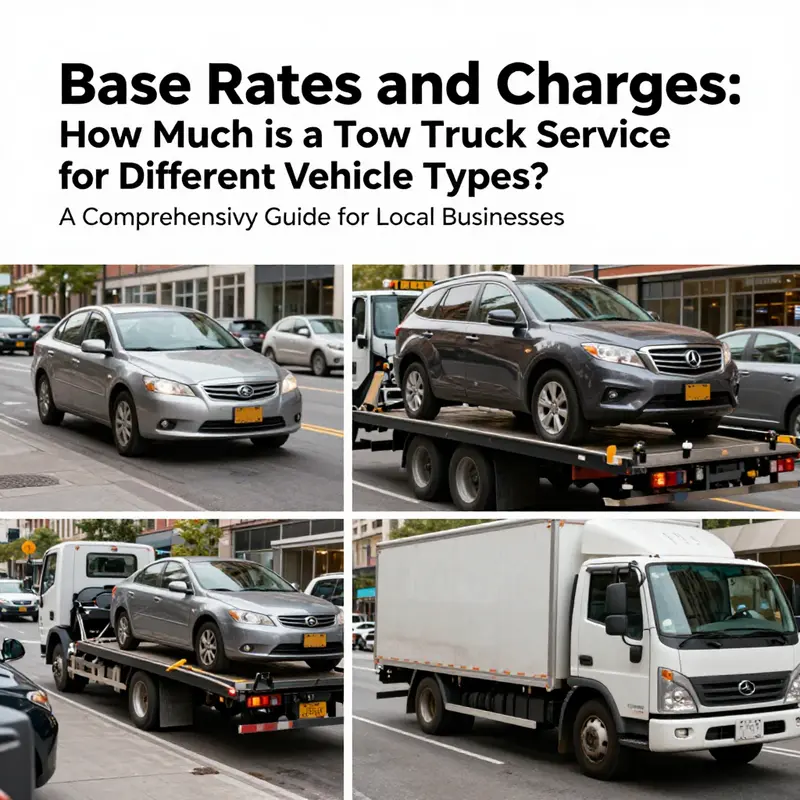
Tow truck services are essential in ensuring vehicles are safely transported after breakdowns, accidents, or during relocations. Understanding the costs associated with these services is crucial for local auto repair shops, car dealerships, property managers, resort operators, and commercial fleet operators. This insight not only helps in budgeting but also aids in better cooperation with service providers. In this article, we unravel the complexities of pricing, focusing on base rates, the impact of location, and the consequences of time-specific demand. As we delve deeper, each chapter will enhance your understanding of how to navigate and anticipate the costs related to tow truck services effectively.
null
null
Locational Price Gaps: How Tow Truck Costs Diverge Between City Streets and Country Roads
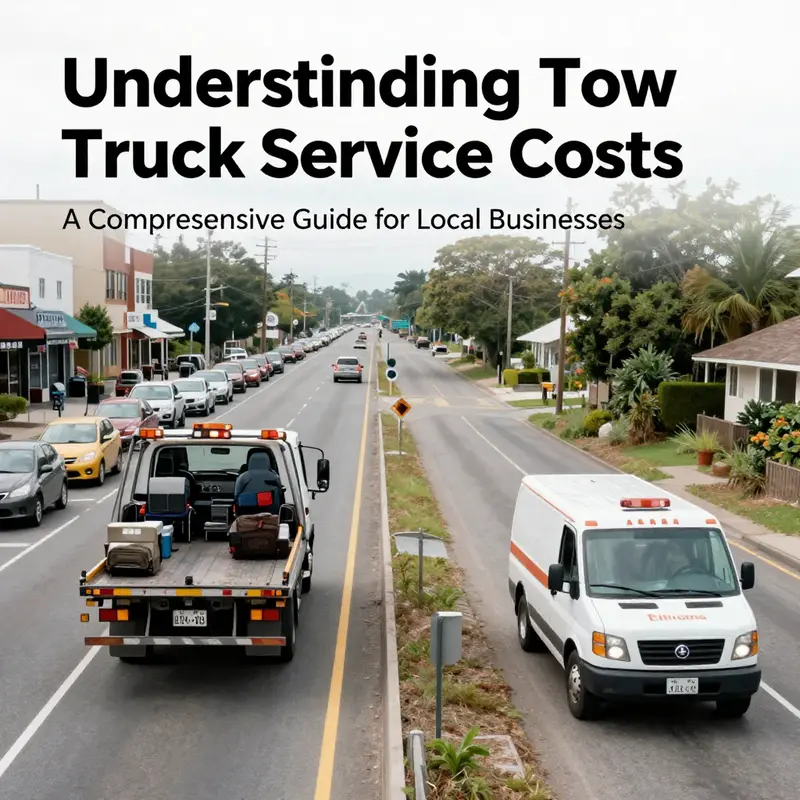
When you pull over with a car that won’t start or is suddenly out of commission, the first question that comes to mind is usually not the mechanics but the cost. How much will a tow truck service set you back, and does the location of the breakdown change the final bill? In practice, the answer is yes. Location matters, and it matters a lot. The same basic service—hauling a vehicle from a roadside incident to a repair facility—can swing by hundreds of dollars simply because you’re in an urban core during rush hour or because you are stranded in a remote rural stretch at first light. The difference between city streets and country lanes is not just a matter of scenery; it is a reflection of demand, infrastructure, labor costs, regulatory environments, and the available fleet of specialized trucks. Understanding these dynamics helps you set expectations, compare quotes, and avoid sticker shock when a tow is suddenly required. It also frames the broader picture of how much a tow truck service costs in a given moment, as opposed to a rough average that could mislead you when you need help most.
In urban settings, the price tag tends to be higher from the outset. The base fee for a tow often begins near the higher end of the spectrum, and that is not merely a consequence of city geography. It is a product of several intertwined factors. First, the operational costs for towing companies are steeper in cities. There is intense competition, yes, but that competition comes with higher wages, stricter insurance requirements, and the need to operate within tightly regulated zones that require expedited response times and precise dispatch. The roads themselves are a factor; urban blocks pack more constraints into shorter distances, which can complicate maneuvering for larger recovery vehicles. The high density of traffic increases the risk for crews and equipment, and this risk is priced into the service. In addition, urban centers tend to experience more incidents on a daily basis, which sustains higher base charges and quicker demand for roping in specialized units such as compact wreckers or rotators that can manage the most challenging recoveries. These rotators, designed to lift and rotate vehicles, carry a premium not just because of their capability but because of the fleet maintenance and operator expertise required to use them safely.
For small vehicles—a sedan or a compact hatchback—the starting point in city centers often sits around a base fee that reflects the local cost structure. In many metropolitan areas, you might see a base fee around RM200 for the first 5 to 10 kilometers. That initial charge covers the overhead of mobilizing the crew, putting the tow truck on the road, and the basic logistics of moving a car from a roadside position to a nearby tow yard or shop. After that, the pricing typically scales with distance, and the per-kilometer charges are higher than those in rural settings, reflecting the cost of urban road usage, congestion, and the higher likelihood of requiring a more complex recovery approach. The per-kilometer rates within city limits often fall into a range that factors in traffic conditions, potential detours, and the need for safeguards to prevent damage to the vehicle during retrieval. In many urban markets, those rates might be in the neighborhood of RM8 to RM15 per kilometer after the initial base, with higher charges for longer or more complicated routes. On major roadways or highways, the incremental cost can rise further, sometimes to RM15 to RM25 per kilometer after an initial base distance, as the operation demands more specialized equipment, additional toll considerations, and longer travel times with city congestion as part of the equation.
Larger vehicles, such as SUVs, vans, and light trucks, magnify the urban cost calculus. Their heavier weight, broader wheelbase, and heightened risk of damage create a need for more substantial rigging and, often, more capable tow trucks. That translates into a higher base fee—often RM400 to RM500 or more for the first 5 to 10 kilometers in a city environment—and correspondingly higher per-kilometer rates. The difference is not merely a matter of scale; the equipment, operator training, and insurance considerations all escalate with vehicle size. The irony is that urban demand for these services can be a double-edged sword: it sustains more competition and more options, but it also pushes up the ceiling on what customers can be charged for the same distance and the same service description.
Beyond the base and per-kilometer charges, time and circumstance add their own layers to the urban price. Nighttime and holiday surcharges are common, reflecting the premium that operators must bear for working when most people prefer to be at home. A typical nocturnal uplift can be in the 30% to 50% range, depending on local regulations and company policies. This means a job that would otherwise cost RM300 could rise to RM390 or RM450 as the clock ticks past late evening or falls on a holiday—a reality that catches drivers off guard when they are already dealing with vehicle trouble and stress. The climate of urban life—where events unfold at all hours and the traffic pattern shifts throughout the day—elects a pricing model that accepts this premium as part of the standard operating costs.
In contrast, rural areas present a different story. The price gap between urban and rural locations emerges primarily from lower overhead, lighter demand fluctuations, and a more forgiving cost structure for operators who must cover large service areas with fewer customers clustered in a single city block. In rural regions, the same 5 to 10 kilometer boundary can carry a base fee that sits lower than the urban equivalent, sometimes in a range like RM150 to RM200 for a small car, depending on the exact locale and the presence of any local regulations. With lower traffic density and shorter wait times in a given town, the immediate turnaround can be faster, but the real savings show up in the per-kilometer rate and the total trip cost when the distance expands into more sparsely populated counties or long country lanes. Rural pricing frequently reflects the absence of heavy highway tolls, tighter regulatory constraints, and a smaller fleet mix that does not require heavy rotator equipment for routine recoveries. Carriers serving rural areas can price more competitively on simpler jobs, as the logistical challenge is less about precise urban maneuvering and more about reaching isolated points in a reasonable time frame with the resources on hand.
That pressure balance—distance and type of road, vehicle size, and the scale of the operation—shapes the actual quotes that customers receive. In practical terms, a short tow of a small car within a rural 10-kilometer radius may come in closer to RM150 to RM250, a figure that reflects straightforward hooking and minimal staging. Extend that same rural journey to 50 or 100 kilometers, and the cost can rise as the operator accounts for longer drive time, fuel consumption, and the potential for a longer recovery window if detours or terrain complicate the operation. In urban settings, those same 50 or 100 kilometers are often overshadowed by higher starting prices and more aggressive per-kilometer calculations because the operator must contend with peak traffic, the need to navigate dense urban corridors, and the likelihood of encountering tolls or parking and storage costs if the incident requires the vehicle to be transported to a distant facility. The urban premium thus compounds quickly, especially if the vehicle needs to be moved to a repair center over a longer trail through city streets or across multi-lane highways.
The 20–30% difference in urban versus rural rates for comparable services mentioned in recent analyses captures this general trend across many markets. It is not a universal rule, but it is a reliable envelope for planning. A shopper with a sense of urgency is well advised to request a full, itemized quote that breaks out the base fee, distance charges, timer or after-hours surcharges, and any possible penalties or additional equipment costs. This disclosure helps prevent surprise fees that can emerge when the dispatcher only provides a single number. It is a reminder that every tow is a localized transaction shaped by an intricate local ecosystem. The differed costs are not merely about where you are but about the interplay of service density, worker availability, and the logistical complexity of moving a vehicle through a particular geography.
The practical implications for drivers are clear. If you find yourself in an urban setting, be prepared for higher initial fees and steeper per-kilometer costs, particularly once you’re beyond the base kilometer allotment. If you’re in a rural area, you can often expect a more favorable base and distance structure, but you might face longer wait times due to fewer providers stretching across larger swaths of road. In both cases, the experience emphasizes the value of proactive planning and price transparency. If you have access to roadside assistance through insurance or a manufacturer program, you may be able to mitigate some of these costs. The standard insurance offering or membership benefit can cover portions of the tow or even entire distance up to a cap, and some programs specify unlimited local towing within a set radius, reducing the sting of a single incident.
It is also important to consider hidden costs that can creep into the final bill, a reality that is equally present in urban and rural contexts though the forms may differ. Parking or storage fees are a common example when a vehicle ends up in a tow yard rather than directly at a repair shop. These daily storage charges can range from RM30 to RM100, depending on the city’s facilities and the length of stay. If the vehicle must be moved again from the tow yard to the repair shop, a secondary towing charge can apply, and for long-distance or cross-municipality transport, tolls and fuel surcharges may be tacked on. In rural areas, storage costs can accumulate during longer wait times to schedule a repair, especially in regions where the nearest repair facility is far away. In urban cores, the same storage costs might accompany a more expensive per-kilometer fee and may be offset by a quicker pickup in many cases when the incident occurs within a dense service network. The bottom line remains: regardless of locale, request a full, written quote that enumerates all potential charges, and ask about any discounts or carve-outs for ongoing maintenance or repeated service agreements.
There is a practical payoff to understanding these locational dynamics. If you’re a fleet manager, a commuter, or a casual driver who wants to minimize risk, you can tailor your approach to the environment you operate in. In urban zones, where incidents may cluster around business hours and commute times, it is prudent to have a standing plan for rapid dispatch to keep downtime and expense under control. This could include establishing preferred providers who can guarantee a timely pickup within a predictable window, or leveraging a digital platform that allows you to compare multiple quotes in real time. In rural zones, keeping a government-verified list of trusted service partners can reduce response times and help secure a favorable long-term rate, particularly when the provider can operate with a leaner truck setup that avoids specialized equipment used only for complex recoveries. The core idea is not to chase a single fixed price but to understand how that price is arrived at in your locale and to align your expectations with the realities of the terrain and traffic patterns.
To bring this perspective full circle, consider how location-based pricing interacts with broader strategies for vehicle protection and preparedness. Documentation and pre-incident planning can smooth the sting of an unexpected tow. Keeping a phone number handy for a vetted provider, noting your vehicle’s make and model, and having a rough sense of your typical emergency radius can expedite the dispatch and reduce the time spent negotiating terms on the road. It also helps when you are weighing whether to engage roadside assistance through an insurance policy or to rely on a manufacturer’s protection plan, if such options exist in your region. These choices often determine not only the final cost but the speed with which you regain mobility.
For readers seeking practical, ready-to-use guidance on improving fleet-based responses, a resource that focuses on essential strategies for emergency coverage can be a valuable companion. You can explore a concise framework for maintaining readiness and coordinating with service providers by visiting a set of insights that emphasize the safeguards and protocols necessary to manage these incidents efficiently. This resource offers a structured approach to aligning operations, drivers, and partners in ways that reduce downtime and optimize cost. It is a useful complement to the specifics of urban and rural pricing discussed here, because it addresses how a well-designed emergency response plan can flatten cost spikes and speed recovery times, especially during peak periods or in remote locations. For more on this topic, see the essential fleet emergency response strategies page. essential fleet emergency response strategies.
In closing, the most accurate picture of tow truck costs emerges when you combine a clear understanding of locational price differences with a disciplined approach to obtaining quotes. The urban-rural divide is real, shaped by demand, infrastructure, and the practical realities of operating heavy equipment in diverse environments. The next step for anyone facing a tow is simple: ask for a full quote that itemizes base fees, distance charges, surcharges, and potential storage and secondary towing costs. Compare the quotes, consider the time of day and anticipated road conditions, and factor in any insurance or program coverage that might defray part of the expense. By understanding the pricing landscape in your locale and planning accordingly, you can navigate the costs of a tow with greater clarity and less stress. As markets and regulatory frameworks evolve, and as fleets adapt to changing traffic patterns and incident frequencies, the fundamental principle remains the same: the cost is not a single line item but a reflection of where you are, what your vehicle needs, and how you engage with the service network that serves your area. For a broader regional snapshot of pricing structures and how they are implemented in varied markets, you can consult external resources provided by regional service platforms.
Time on the Clock: Navigating Tow Costs When Demand Spikes and Circumstances Change
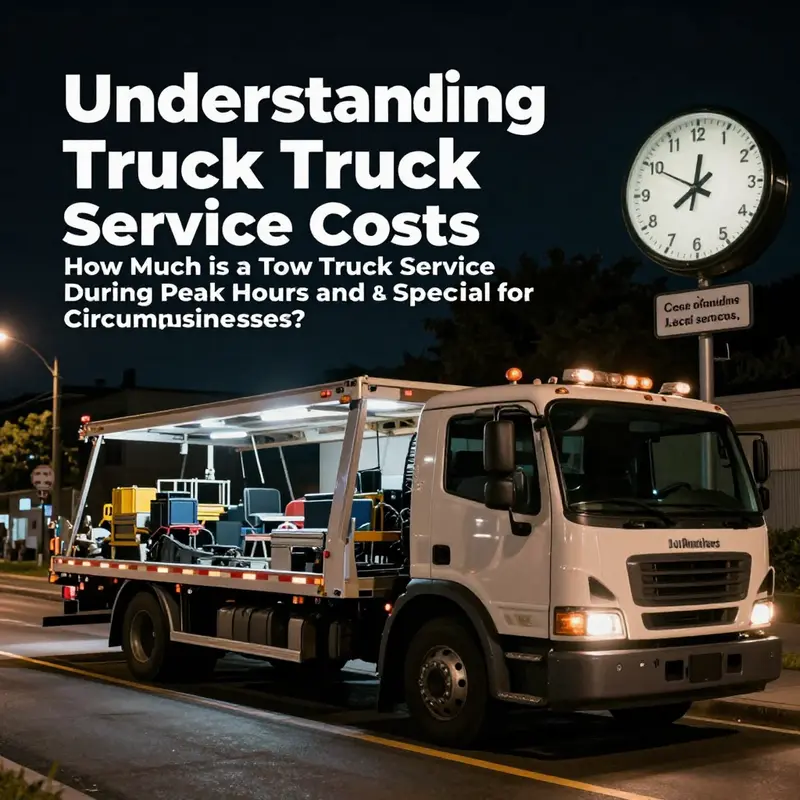
Prices for tow truck service do more than reflect distance; they bend with the clock, the weather, and the urgency of the moment. When a vehicle breaks down or is involved in an incident, the clock becomes a second cost factor that can push the final bill up quickly. This chapter explores how time—specifically peak hours and special circumstances—transforms what you pay for a tow, why those increases happen, and what strategies can help you temper the impact without compromising safety or reliability. In doing so, it weaves together the practical realities of dispatch, equipment, and labor with the realities drivers face on the road. The result is a clearer map of when costs are most volatile and how to anticipate them, so you can make informed decisions in moments of stress rather than react in blind panic to a quoted price.
First, consider the mechanics behind time-based price increases. Tow operators do not simply pull a car and drive away; they coordinate crews, deploy specialized equipment, and manage the unpredictability of traffic, road conditions, and the location of the breakdown. The base cost for a tow reflects the minimal resources needed to reach a vehicle and get it onto a carrier. For a small car, that base often covers the first several kilometers, but as soon as the movement continues beyond the base distance, per-kilometer charges accumulate. These per-kilometer rates are sensitive to location: they tick higher inside city limits, where traffic density and the likelihood of a disabled vehicle disrupting lanes is greater, and they rise even more on highways, where higher speeds and longer hauls push consumables and time commitments upward. In practical terms, a routine local tow can transform into a larger sum than the base fee alone if the vehicle is located far from a shop, requires lengthy stabilization, or must be transported to a destination outside the immediate vicinity.
Peak hours introduce a different layer of pressure. In many urban settings, the most congested windows fall between 7:00–9:00 in the morning and 5:00–7:00 in the evening. The demand for rapid dispatch surges as more drivers share the road, and the probability of backlogs at an impound lot or repair facility increases. Tow companies, like many other service providers, deploy surge pricing during these periods to balance supply and demand and to compensate for the added complexity of coordinating multiple calls under tight time constraints. The data across markets consistently show that peak-hour pricing can elevate the bill by a notable margin—typically in the neighborhood of 20% to 50% above standard rates, depending on the exact hour, the location, and the specific service required. That 20% to 50% uplift can feel like a long step up the price ladder, especially when combined with a longer initial distance or a need for ancillary services such as a larger recovery rig or a high-clearance carrier.
The timing of the call also matters for nighttime or holiday work. A breakdown at night introduces its own premium, reflecting both the reduced availability of staff and the added risk associated with roadside work in low visibility conditions and potentially colder or more hazardous weather. Surcharges in these cases are not uncommon, ranging from about 30% to 50% above daytime rates. The logic is straightforward: the crew is being asked to operate during hours when labor costs are higher and the environment can complicate the job. These factors are compounded when a repair needs a specialized operator or a heavy-duty vehicle that can manage difficult recoveries. When a vehicle ends up overturned, stuck in a ditch, or resting in a precarious position, the operation often requires rotators or other advanced recovery equipment. The use of such equipment is a signal that the job is no longer a routine tow but a technically demanding operation with elevated risk, further driving up the price.
Special circumstances extend beyond time-of-day pricing. Weather events—whether a snowstorm that blankets roads in ice or a flash flood that renders certain routes impassable—inject additional layers of risk, delay, and resource allocation. In the midst of a storm, a tow crew may need to deploy snow chains, additional stabilization gear, or a high-clearance chassis to navigate treacherous terrain or to protect the occupants and the vehicle during recovery. The presence of severe weather does not simply slow the crew; it often requires extra technicians, additional safety equipment, and slower, more deliberate operations, all of which contribute to higher costs. Remote locations pose a comparable challenge. If a vehicle sits in a cul-de-sac, off a narrow rural lane, or on an island with limited access, the towing company may incur extra travel time and the use of longer-distance transport equipment to reach the site, staging equipment, or even overnight accommodations for crews if the job cannot be completed quickly. Each of these factors—weather, terrain, and distance—becomes a time-to-cost multiplier that can push the final invoice higher than a straightforward distance-based estimate.
Alongside time-related price changes, there are additional, predictable fees that populate the final tally when conditions demand more from both the dispatcher and the driver. Emergency responses, by their very nature, carry higher rates because the provider must mobilize quickly, sometimes re-prioritize other commitments, and assume a higher level of risk. Extended wait times, such as a vehicle owner being unable to prepare the vehicle for towing or the repair shop being occupied, can incur extra charges based on the elapsed time the tow truck spends at the scene or at a facility. Hazardous road conditions—whether slick surfaces, high winds, or limited visibility—also contribute to elevated pricing, as crews must take extra precautions and may require additional equipment to protect themselves and the vehicle. The use of specialized equipment—heavy-duty tow trucks, rotators, or cranes—comes with a price tag that can dwarf routine towing, especially when the job involves lifting, rotating, or stabilizing a vehicle in a precarious configuration.
Hidden costs, sometimes overlooked in the rush of an emergency, include storage fees if the vehicle is impounded or stored at a tow yard, overnight or for a few days. A secondary towing leg, such as moving the vehicle from a tow yard to a shop, compounds the expense. Tolls and fuel are rarely incidental in longer-distance or cross-border moves, but they can become a meaningful portion of the bill when the route traverses several jurisdictions or busy toll roads. All of these factors interact with the time element, so the final price is rarely a single, clean number. It is more often a layered sum of base costs, distance charges, time-based surcharges, and a handful of line items tied to the specific conditions encountered at the scene.
From a practical perspective, shoppers who want to avoid unpleasant surprises benefit from understanding how peak hours and special circumstances alter the expected charge. In the simplest terms, the price you see in a non-urgent, daylight tow is generally lower than the price you will see in the middle of a winter storm with a car that needs recovery from a ditch and transport to a dealer a half hour away. The increase is rarely accidental; it is the consequence of a chain of decisions that a dispatcher makes to ensure the job is completed safely, efficiently, and within the constraints of what the local market can reasonably supply at that moment. The dispatcher may call for a specific type of tow truck, arrange for a second technician, or deploy a recovery system designed for a potential hazard on the scene. Each choice has a cost attached, and each cost compounds the price shown on the ticket you receive when the driver arrives.
To ground this discussion in a practical frame of reference, consider how these time-driven increases interact with the base pricing model outlined in many markets. A typical small-vehicle tow begins with a base call-out nearly always designed to cover the first leg of the journey and the initial handling of the vehicle—think of it as the mobilization fee that gets a crew en route. For a small car, the base often sits in the neighborhood of two hundred to three hundred dollars for the first several kilometers. Larger vehicles—SUVs, vans, or light trucks—start higher, often in the four-hundreds range or more, reflecting the greater complexity of handling, weight, and the logistics of moving bigger platforms. After that initial base, per-kilometer charges apply, commonly ranging from eight to fifteen dollars per kilometer inside city limits, and rising to the mid-teens or higher when the route involves highways with steeper rates for the longer hauls. When time factors such as peak demand or adverse weather come into play, these per-kilometer charges may be complemented by percentage-based surcharges that amplify the cost for the portion of the trip that falls within those heightened windows.
From a consumer’s standpoint, the most effective path to forecasting a tow bill during peak times or under special circumstances is to think in terms of layers rather than a single figure. Ask for an up-front estimate that accounts for the call-out, the likely distance to the site, and the anticipated destination. If a firm number cannot be provided before arrival, request a clear estimate of the likely range and the conditions that would push the price higher. It helps to have a rough sense of the day’s hour, the weather forecast, and how far the vehicle is from the nearest serviceable location. An informed caller can also prepare to discuss alternatives: whether a waiver of certain services could be tolerated, whether a tow to the vehicle’s location of convenience is worth waiting for a window when demand is lower, or whether a nearby repair facility offers an option to park the vehicle temporarily and move it later when rates have moderated.
In terms of real-world navigation, it is useful to tie all these considerations back to decision points and practical steps. If you anticipate a possibility of a delay or an extended recovery operation, I suggest a few strategic moves. First, when you call for assistance, share precise details about location, whether the vehicle is on a highway shoulder or a side street, and any potential hazards that might affect the crew’s access. This information helps the dispatcher assign the right equipment from the outset, reducing the need for a return trip or a mid-operation change that can add cost. Second, if you have an emergency plan through your insurer or an automotive club, reference it early. These programs can cover all or part of towing costs, particularly if your policy includes roadside assistance or a mileage-based benefit. Third, consider the value of comparing options when time allows. Apps and dispatch networks increasingly offer multiple provider quotes, enabling you to weigh the likelihood of a favorable rate against the risk of delay or insufficient availability. The aim is to balance the best price with the highest reliability, recognizing that the cost may rise in moments of high demand but that a price overrun is not an inevitability.
The broader context for understanding peak-hour and special-circumstance pricing includes recognizing that the industry, like many other service sectors, relies on a mix of standard rates, time-based surcharges, and variable fees tied to the job’s complexity. The headline numbers—base call-out, per-kilometer distance charges, and typical surcharges—are useful, but the actual bill is shaped by the specifics of the moment. A winter storm, for example, may trigger both a higher call-out fee and the use of winter-ready equipment, and the vehicle’s location in a rural area can trigger higher travel costs as the crew navigates longer routes to reach a stranded motorist. The intersection of time and circumstance therefore creates a price band rather than a single, fixed amount. If you approach a tow with this understanding, you are better prepared to ask the right questions, to anticipate potential line items, and to avoid sticker shock when the final invoice arrives.
For readers seeking additional context and a window into how the market determines real-time pricing, industry observers often point to established road-service resources that publish ongoing estimates and guidelines. These sources emphasize that pricing is not arbitrary but instead calibrated to demand, risk, and the practical realities of providing service in dynamic traffic environments. They also highlight the value of planning ahead when the threat of peak-hour disruptions is known in advance—such as during work commutes, holiday travel periods, or forecasted storms. In these situations, it may be prudent to arrange a planned return trip, coordinate with a shop that can accept a delayed delivery, or arrange alternate transportation if a repair is not immediately essential.
From the perspective of the consumer, knowledge of time-driven pricing reinforces a straightforward takeaway: anticipate the possibility of higher costs during peak times or under special circumstances, but do not assume a fixed premium with no upper bound. The best approach is to obtain a detailed, itemized estimate at the outset, ask about any surcharges tied to time or conditions, and, where feasible, discuss strategies to minimize the exposure to those surcharges without compromising safety. If a provider offers an explicit window for arrival and a visible, itemized quote that separates base fees from time-based increases, that transparency is a strong signal of reliability and fairness. Equally important is the reminder that some costs can be mitigated or offset by external programs. Insurance roadside assistance and some manufacturer programs can reduce or even eliminate portions of the tow bill, particularly for standard distances or routine recoveries. In practice, a careful combination of upfront communication, strategic use of available programs, and a judicious choice of the service window can help drivers navigate peak-hour and special-circumstance pricing with confidence.
To ground these insights in a concrete path forward, consider a representative scenario: a small car in a densely populated city experiences a breakdown near a major transit corridor just before the evening rush. The call-out fee may start around $300, with the first 5–10 kilometers covered by the base rate. If the distance to the designated repair facility adds another 6–8 kilometers, that distance will be charged at the standard per-kilometer rate, which might range from $8 to $15 within city limits. As the clock ticks into the peak window, the dispatcher applies a surge in the 20–50% range, potentially lifting the incremental distance cost by a noticeable margin. If the vehicle must be loaded onto a heavier-duty rotator because it sits in a precarious position or requires a specialized lift, the charge for the operation can balloon further, with the rig’s higher hourly rate and the crew’s additional time on scene driving the total ever upward. Should the tow stretch into a longer-than-anticipated delay, the operator may levy an extended-wait-time fee, and if the site is particularly hazardous or requires extra safety measures, the bill can grow more. If a neighbor or friend suggests using an insurance roadside program, the assumption shifts from paying out of pocket to leveraging coverage tied to the policy—where applicable—potentially saving hundreds of dollars or more depending on the policy terms.
The chapter’s objective is not to sensationalize the price but to clarify why a tow bill can look dramatically different from one scenario to the next. It is not a critique of the service industry; it is a reminder that the road is unpredictable, and the people who repair vehicles on the side of it carry an equally unpredictable set of constraints. The best path for a consumer is to enter the encounter with a practical understanding of the pricing framework, a willingness to ask precise questions, and a readiness to consider alternatives that preserve safety and minimize unnecessary costs. This approach aligns with a broader ethos of preparedness that extends beyond the immediate tow: knowing your options, keeping records, and engaging with reputable providers who can translate a potentially opaque fee structure into a clear, legible invoice.
For readers who want to explore the broader conversation about pricing structures and industry dynamics, the car-service community offers a range of perspectives that discuss how pricing responds to supply and demand, as well as the way providers balance speed, safety, and cost. The Island Tow Truck blog provides a thoughtful exploration of industry pricing, dispatch practices, and service expectations, and it can serve as a useful companion resource for anyone seeking to understand what drives a tow bill beyond the headline numbers. You can explore that resource here: The Island Tow Truck blog. While the specifics may vary by market, the underlying principles—clear communication, upfront estimates, and a careful appraisal of time-based factors—remain consistent across regions and service levels. In parallel, industry guidance and consumer-focused articles published by roadside-assistance organizations emphasize that real-time pricing, transparent quotes, and standardized fee structures help customers navigate the inevitable tension between urgent needs and price stability.
To round out the practical guidance, a final note on accountability and planning. If you know you will require assistance during a period of high demand, it is worthwhile to preemptively discuss with your insurer what your roadside assistance coverage includes, whether there are preferred providers in your area, and whether there are caps or mileage limits that will affect the cost charged at the roadside. If you own a vehicle with a higher risk profile—say, a high-performance or luxury model, or a car that needs specialized equipment to be loaded safely—recognize that the price will reflect the specialized handling required, not only the distance. In such cases, discussing the anticipated services with the operator ahead of time can help align expectations and reduce the likelihood of surprise charges when the job is complete.
In sum, peak hours and special circumstances amplify tow costs through a blend of surge pricing, labor premium, equipment needs, and situational risks. The final bill becomes a synthesis of these elements, not a simple distance-based calculation. By asking for upfront estimates, confirming what surcharges apply, leveraging available roadside programs, and considering alternatives when feasible, you can navigate these time-driven dynamics with a stronger sense of control. The next chapter will continue this journey by turning the lens toward how factors such as vehicle type, location, and the availability of different tow configurations influence the bottom-line price, helping readers to form a comprehensive view of what to expect when calling for help on the road.
External resource for further reading on real-time estimates and emergency dispatch support: https://www.aaa.com/roadside-assistance/towing-costs/.
Final thoughts
With a clearer understanding of tow truck service costs, local auto repair shops, car dealerships, and property managers can make informed decisions that benefit their operations. Factors like vehicle type, location, and time of service play crucial roles in pricing. By anticipating these elements, businesses can negotiate better service agreements and enhance customer satisfaction. It’s essential to consider all these aspects to ensure a smooth experience during unexpected vehicle issues.