
For local auto repair shops, car dealerships, property managers, resort operators, and commercial fleet operators, understanding how much tow truck drivers make is crucial. The financial aspect not only impacts the operational budget but also reflects the value of timely and effective towing services. This analysis explores various factors—including regional disparities, job roles, and market conditions—that influence tow truck drivers’ salaries in both the United States and Canada. From understanding what to expect in different provinces to uncovering factors that can bump earnings above average, this guide will provide essential insights to help business owners make informed decisions.
null
null
null
null
On the Road to Earnings: How Location, Experience, and Employer Shape Tow Truck Driver Pay
Tow truck work is a trade where every mile of road, every call at odd hours, and every repeat client can tilt the paycheck in a subtle, sometimes surprising way. Salaries are not a single number that fits all; they ripple with place, circumstance, and the kind of work a driver accepts. The latest data from across North America shows a landscape where a driver might earn around the national average in one city and above it in another, depending on the market. In the United States, the reported average hourly wage hovers around the mid‑twenties when you average across markets, with weekly incomes that reflect the intensity of the schedule, the hours worked, and the local demand for rapid roadside service. In Canada, those numbers diverge more sharply from coast to coast, and even within provinces, often tied to urban density, the level of traffic calls, and the type of towing operation that dominates a given region. These figures are not abstract; they map onto real lives where drivers balance long hours, safety demands, and the unpredictable rhythm of the road with the need to support a family or build a sustainable career.
Geography is the first and most influential driver of pay. The data reveal a mosaic of earning potential that can swing by a full ten or more dollars per hour between neighboring cities. In British Columbia, for example, the province shows a national average around the mid‑to‑low teens per hour, but with standout pockets where pay climbs substantially. Richmond, BC, sits at a notable jump—around $24.06 per hour—roughly 36 percent above the national average, while nearby Vancouver, Victoria, and North Vancouver often report more modest rates in the high teens. The contrast illustrates a simple truth: your location doesn’t just determine your commute; it sets the ceiling for what you can earn and the stability of that income. Across the water in Nova Scotia, Dartmouth presents a different picture—about $15.70 per hour, which sits below the national mark by a meaningful margin, even as Halifax itself can reach higher rates around the $27.39 per hour mark. Such dispersion is not an aberration but a reflection of shifting demand, local economies, and the cost of living that officials and employers weigh when they set pay scales. The stories behind these numbers are practical. In Alberta, average wages sit just under the national Canadian average at around $16.01 per hour, yet the market can surprise with well‑paid opportunities in certain niches or locations; Fort McMurray’s Class 3 tow truck position advertised at as high as $45 per hour illustrates how specialized skill and a demand for efficiency on challenging sites can produce outsized earnings. And in British Columbia again, the range is wide: experienced or specialized roles, such as an “Experienced Flatdeck Tow Truck Driver” in Richmond, list earnings in the $22–$24 per hour band, signaling that experience and capability are rewarded when the work requires larger vehicles and more complex recovery scenarios. The practical upshot is clear: if money matters, scouting the geography of tow work is as important as the service you provide on a given shift.
The second major thread shaping pay is the organizational fabric around the job. Union representation, or the absence of it, can sculpt how pay grows over time, how benefits accrue, and how predictable a driver’s income can feel. The broader transportation sector offers a helpful lens. In the United States, UPS drivers—while a different job family—illustrate how strong collective bargaining can lift base pay well above industry averages, accompanying overtime opportunities and robust benefits. The implication for tow truck drivers is not a direct one‑to‑one transfer of terms, but a framework: unions tend to secure wage growth, clearer career ladders, and long‑term protections that translate into more reliable, potentially higher earnings over a career. In Canada, explicit data on tow drivers’ union coverage isn’t as detailed in the material at hand, but the pattern holds in analogous trades: a unionized workforce often enjoys steadier, higher pay relative to non‑union peers, plus negotiated premiums for night work and weekend coverage. A driver who is part of a union or who joins a large, established company with a strong bargaining position is likely to see more consistent advancement, reduced income volatility, and a more transparent schedule of raises.
Experience and seniority play a parallel and undeniable role. The ledger of opportunities in Richmond, BC, demonstrates how skill and credibility translate into earnings. postings for experienced flatbed tow drivers show a willingness to pay in the $22–$24 per hour corridor, signaling that as a driver proves reliability, safety, and the ability to handle higher‑stakes scenes—like heavy wreck recoveries or complex vehicle rollovers—employers reward with higher rates. This pattern mirrors the broader truth in skilled trades: with time comes not just a higher hourly rate but also greater access to specialized work that can command premium pay. The practical takeaway for someone eyeing the field is straightforward: invest in experience, pursue the certifications and equipment handling that distinguish you in demanding situations, and the compensation will reflect that value.
The type of work and the employer’s pay architecture further shape earnings in meaningful ways. Towing is not a monolith. Some operators focus on roadside assistance, others handle commercial fleets, and a subset moves into long‑distance or hazardous materials handling, heavy equipment recovery, or accident scene management. The more specialized the job, the higher the potential hourly or monthly rate. Employers sometimes sweeten the deal with bonuses tied to performance metrics, shift differentials for night or weekend coverage, or even profit‑sharing arrangements in smaller shops trying to attract scarce talent. A Vancouver‑area posting that carried a monthly salary range of $4,000–$8,000 hints at how a pay structure can be dramatically shaped by whether the job offers steady hours, a base salary, or commission‑like incentives tied to call volume and efficiency. The contingency here is visible elsewhere: some postings in Surrey and Richmond show starkly different hourly rates—$39.50 per hour in one case, $37 per hour in another—underscoring how even similar roles can diverge based on company scale, customer base, vehicle fleet, and geographic service area. This variability is not a flaw but a signal: pay in tow work moves with the employer’s needs and the market’s appetite for rapid, reliable recoveries.
Even within the same region, the structure of a company can tilt the economics of a driver’s week. Some shops lean into high‑volume, fast‑paced response models; others emphasize careful, extended recoveries with meticulous follow‑ups and longer job cycles. In practice, this means a driver might see a rock‑solid hourly wage during a quiet stretch or hit a higher, more variable earning period when the shop lands heavier calls, more complex jobs, or contracts with municipal fleets. The reality is that compensation is not merely a function of hours worked but also of the types of jobs accepted, the speed and skill brought to each scene, and the value a shop places on reliability, safety, and reputation. In richer markets, the combination of robust demand and the willingness of employers to pay for top‑tier service creates a virtuous circle: higher pay attracts more capable drivers, who handle more challenging calls, which in turn sustains strong demand and reinforces compensation growth.
For drivers seeking to maximize income, several practical paths emerge. First, targeting high‑wage regions—where the geometry of the market and the cost of living support higher pay—can yield meaningful gains. In Canada, that means being open to opportunities in or near major urban centers where the density of calls and the presence of larger towing companies create scale advantages. In the United States, markets with intense commercial activity and a robust emergency response ecosystem can offer above‑average pay, particularly for drivers who can perform under pressure and manage complex recovery scenarios. Second, joining a unionized shop or aligning with a company that offers structured pay progression, predictable raises, and enhanced benefits can provide financial stability alongside earnings growth. Third, investing in experience—pursuing additional training, certifications, and hands‑on expertise with heavier vehicles or hazardous loads—can push a driver into higher‑paid niches, long after the initial onboarding period. Finally, being strategic about the type of work accepted—balancing roadside assistance with higher‑skill recoveries and specialized fleet work—can unlock premium rates and bonus opportunities that sustain earnings across fluctuating demand cycles.
Industry observers often point to the value of staying connected to the broader field. Industry blogs and practitioner voices discuss trends, share tips on handling the most demanding scenes, and illuminate how fleet management and emergency response planning shape the daily work of tow truck drivers. For readers who want to explore more perspectives on industry dynamics and career pathways, the industry conversation is accessible in practical forums and resources such as the Island Tow Truck community, which provides insights into the realities of tow operations and the people who deliver them on a daily basis. The Island Tow Truck blog offers context and narrative from practitioners who balance service, safety, and earnings in real markets. In addition to these internal conversations, broader data—such as job listings and wage reports—remain essential anchors for planning a career. A useful, widely cited data source for regional pay levels includes Indeed’s listings for tow truck drivers in specific locales, which illuminate how pay shifts with geography and market demand. For a concrete snapshot of regional variation, see the ongoing postings such as those for Richmond, BC, that anchor the Canadian figures described above. External perspectives, like these job listings, help translate the numbers into day‑to‑day expectations for new entrants and would‑be career changers.
In sum, the paycheck of a tow truck driver is a function of where you work, whom you work for, and how you build your own value in the field. Location sets the ceiling; union structures, if present, can raise the floor and smooth the climb; experience unlocks higher‑price, more complex jobs; and the employer’s pay architecture, including bonuses and shift differentials, can turn a steady week into a more ambitious one. If you want to understand the financial contours of this line of work, you must read the landscape as a composite picture rather than a single line. The road to better pay runs through smarter job choices, targeted training, and the willingness to navigate the market in a way that aligns your skills with the demands that high‑value regions and high‑quality employers generate. For those who approach tow work with focus, resilience, and a clear plan, earnings can reflect not just the hours logged on the road but the value brought to every call honored on a validator‑quality front line.
External resources provide broader context for these figures and help validate expectations as a driver contemplates different markets. See Indeed’s regional listings for a data‑driven view of current pay in specific locales. https://www.indeed.com/cn/jobs?q=tow+truck+driver&l=Richmond%2C+BC
Tow Truck Pay Unfolded: How Roles and Responsibilities Define Earnings Across the Field
In the roadside economy, pay for tow truck drivers unfolds like a map with many routes, not a single line drawn straight from job title to paycheck. The overall question—how much do tow truck drivers make?—deserves a layered answer because the actual earnings depend on the precise role inside the broader category, the hours worked, the equipment handled, and the market where the work happens. National averages give a snapshot, but the real picture is a tapestry woven from role specificity, regional demand, and the strategies employers use to attract and retain capable crews. In the United States, the most commonly cited figure across multiple datasets is an average hourly wage about $21.15. That number sits at the center of a wide spread, and its weekly implication—roughly $1,736 on average—suggests a comfortable baseline. Yet workers who perform different duties within the same title can see meaningful shifts in what they take home, especially when night calls, lengthy deployments, or hazardous scenarios come into play. The base rate is a start, not a ceiling, and the story of pay is really the story of role, timing, and the capacity to handle more demanding workloads with skill and efficiency.
The first layer to grasp is what we might call the standard job, the routine tow operator who handles everyday roadside recoveries, small tows, and straightforward immobilizations. For these drivers, the earnings generally align with the low-to-mid range of the spectrum, and the typical annual cadence tends to hover around a solid baseline. The national data often place standard tow truck work near $20 per hour when averaged across a broad set of duties. That figure translates to roughly $42,500 per year in many national frameworks, which is the benchmark cited for a traditional, non-specialized role as of 2025. It captures a plausible middle ground for drivers who keep a regular schedule, maintain safety and efficiency, and work across a mix of urban and suburban routes. It’s important to recognize that this baseline does not quash the upside that can come from additional responsibilities or from working in markets with higher demand. It simply marks a starting point from which the more dynamic elements of the pay structure diverge.
Enter the emergency response driver—the person who answers the call during off-hours, holidays, or severe weather. This is where the calculus changes, not just because the job might occur at odd hours, but because it carries a premium associated with time, risk, and complexity. Emergency shifts often come with time-of-day premiums or emergency surcharges that boost per-tow earnings. The distance to the scene, the type of vehicle involved, and the urgency of the recovery all contribute to higher per-job compensation. In practice, the emergency role can push weekly earnings beyond the standard baseline when coverage is consistent and the demand spikes during peak periods. The premium structure is a reflection of the extra planning and risk management that accompanies after-hours work, which the market rewards through higher rates, faster dispatch, and sometimes guaranteed overtime or shift pay.
A further tier is occupied by specialists who handle large commercial trucks, heavy equipment, or hazardous materials. These drivers are required to possess additional training, a broader toolbox of technical competencies, and the ability to operate complex gear in challenging environments. The pay for these roles rises in step with the added responsibilities. In many markets, specialized equipment operators command higher hourly rates and may access mileage-based incentives or per-tow bonuses tied to the complexity or weight of the payload. This is not merely a higher rate for a harder job; it’s a recognition that the operator must bring a refined skill set, a higher level of safety discipline, and the capacity to coordinate a more intricate recovery plan. The market responds to that combination with compensation that elevates the earning potential relative to standard tow operations, especially when the work occurs in environments with limited space, high traffic, or tight timelines.
Beyond the technical tasks, a third axis of variation arises from the organizational and managerial responsibilities that accompany certain roles. A tow driver who steps into dispatch coordination, fleet maintenance oversight, or training duties often experiences a meaningful lift in earnings. These postings reflect the added strategic impact they bring to the operation: they reduce downtime, improve safety, and accelerate throughput by optimizing how the fleet is allocated and deployed. While not every driver will pursue these paths, many fleets actively promote or hire from within to fill these roles, offering compensation that mirrors the expanded scope—whether through higher hourly wages, bonus structures, or formal leadership stipends. The same logic applies in Canada, where pay scales can be amplified by duties that align with enterprise metrics, maintenance planning, and cross-functional coordination. The result is a ladder: base hourly wages, then premium dollars for specialized abilities, and further uplifts for leadership or critical support functions.
The Canadian landscape introduces another layer of granularity with provincial variation and city-specific dynamics. Wages in Canada differ by province and sometimes by city, reflecting regional labor markets and cost‑of‑living considerations. The provincial average hovers in the low-to-mid twenties on an hourly basis, while metropolitan pockets push higher. For example, in British Columbia, the provincial average is around $17.85 per hour, which matches the broader Canadian trend, but Richmond presents a higher figure around $24.06 per hour, underscoring how geography can tilt the scale. Alberta sits lower, about $16.01 per hour on average, while in Nova Scotia—Dartmouth—the rate sits at about $15.70 per hour, notably below the national Canadian average. These provincial contrasts illustrate how the same job title can yield different real-world outcomes depending on where you work. And within Canada, larger corporate accounts or fleets can push earnings up for certain roles, particularly those tied to heavy duties or high-demand routes, reinforcing the principle that employer scale and market demand shape the bottom line just as much as the role itself.
Against this backdrop, some posting data illustrate the upper reaches where pay can substantially exceed baseline expectations. In Alberta, roles designated as Class 3 Tow Truck Driver in Fort McMurray have advertised pay rates as high as $45 per hour, a signal of the premium demanded by the local environment and the particular overheads of operating in that region. In British Columbia, the market for experienced flatdeck tow drivers in Richmond shows pay bands in the $22–$24 per hour range, reflecting specialized equipment and urban demand. And in Vancouver, a tow company has advertised monthly salaries spanning roughly $4,000 to $8,000, suggesting the value of a stable, predictable income for drivers who can perform consistently across a busy schedule, manage calls efficiently, and contribute to fleet reliability. These edges reveal how pay scales respond to risk, skill, and the ability to deliver dependable service in high-demand contexts.
For anyone evaluating this line of work—or negotiating a new role—the risk-adjusted total compensation picture matters more than any single statistic. In the United States, the consolidated data point to a baseline that is respectable but not lavish, with the potential to rise significantly for emergency, heavy-duty, or leadership-focused roles. In Canada, the distribution is similar in principle, with local premiums sometimes pushing pay substantially higher in urban hubs or specialized fleets. The practical takeaway is clear: to maximize earning potential, pursue roles that build skills in demand, seek opportunities to work in markets that value those skills, and align with employers who offer structured pathways for training, advancement, and leadership within the fleet.
From a planning perspective, this means thinking in terms of a role-based ladder rather than a single job title. If you start as a standard tow operator, you can progressively pursue emergency response certifications, heavy-duty operation credentials, and dispatch or fleet-management responsibilities. Each rung on the ladder carries its own pay premium and its own impact on career longevity, safety, and job satisfaction. The path can be accelerated where employers invest in ongoing training and create clear progression channels, which in turn correlates with higher lifetime earnings, better benefits, and more stability in a field that is inherently tied to the cadence of demand, weather, and road conditions.
For readers seeking a practical frame of reference while weighing these figures, consider how fleet practice translates into real-world pay. On a national level, the range is broad, and the opportunity to earn more exists wherever a driver brings additional value through skill, reliability, and the capacity to operate under pressure. The figures cited here—from the US baseline near $21.15 per hour to Canada’s provincial variability and high-end postings—underscore a consistent truth: role and circumstance define earnings as much as, if not more than, the basic wage. The question then becomes not merely “how much,” but “which role, in which market, with what level of training, and under which scheduling and dispatch conditions?” When you align those factors, the pay picture becomes clearer and more actionable for anyone plotting a tow-truck career.
To round out the framework and connect with broader industry perspectives, additional context from practitioners and fleet managers helps illuminate the practical implications of these numbers. For readers who want to explore industry insights further, the Island Tow Truck blog offers perspectives on fleet emergency response strategies and the operational side of keeping a fleet ready and responsive. See the Island Tow Truck blog at https://theislandtowtruck.com/blog/. This resource provides a ground-level sense of how fleets balance emergencies, maintenance, and scheduling to keep the wheels turning and the team paid fairly. It’s a useful companion to the salary data when assessing career paths or negotiating compensation in a given market.
As a reference point beyond the narrative of role-based pay, national salary guides and employer postings consistently emphasize the same trend: the base wage matters, but the real gain comes from the scope of work, the hours that are served, and the complexity of the job. The per-tow framework and the premium structures that accompany emergencies, heavy-duty tasks, and leadership roles combine to create a pay landscape that rewards adaptability, precision, and resilience. If you need a concise anchor for these patterns, the national data show the standard tow operator earning roughly $42,500 annually or about $20 per hour, with meaningful upside for specialized or on-call roles. That arc—base pay rising with responsibility and demand—maps closely onto the Canadian experience, where provincial differences and urban demand shape the final outcome for any given driver.
External reference: https://www.indeed.com/career/tow-truck-driver/salaries
Regional Paychecks and the Geography of Tow Truck Earnings: What Regions Pay How Much
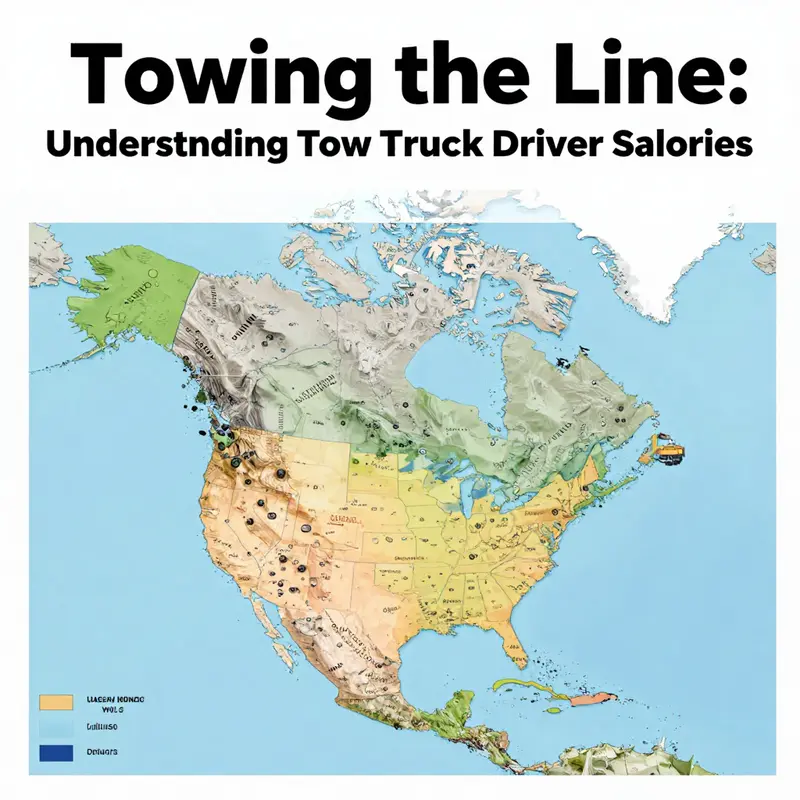
Tow truck driving presents a mosaic of wages that mirrors the geography of Canada. It isn’t enough to know the job title or the general rate; the real story sits in where you work. Local demand, urban density, cost of living, and the pace of traffic incidents shape what a driver can take home every week. The most striking takeaway from recent data is not simply that some places pay more than others, but how stark those differentials can be even within the same country. A driver in a larger city faces a different calculus than a colleague in a smaller town, and those choices ripple through career planning, budgeting, and the decision to relocate for better opportunities. The numbers, in other words, are not just numbers. They are a map of opportunities, risks, and tradeoffs that drivers navigate with every shift that begins at sunset or midflight into a snowstorm. To appreciate the patchwork of pay across regions, it helps to anchor the discussion in concrete snapshots from today’s market. In Dartmouth, Nova Scotia, the hourly figure hovers around $15.70. This is near the national average, offering a sense of stability for those who prefer the maritime pace and the familiar routes that run through harbor towns and service corridors. Yet in Halifax, a few miles away, the same role commands a strikingly different wage, about $27.39 per hour, underscoring how urbanized markets with higher incident volumes and more intense competition can lift earnings substantially even within the same province. The Atlantic provinces exhibit a broad spectrum: Dartmouth’s figure embodies the quieter side of the market, while Halifax’s numbers reflect the city’s higher demand for rapid response, heavier lifts, and longer hours. The contrast within a single region is a reminder that proximity to a bustling center often matters more than a province-wide average when you project what a driver can earn week to week.
Across British Columbia, the contrast is even more pronounced. The province’s overall average sits around $17.85 per hour, yet there is a wide dispersion across communities. Richmond, for instance, shows an average of $24.06 per hour, reflecting the combination of dense urban demand, diverse fleet needs, and the premium placed on timely service in a high-traffic corridor. Job postings in BC corroborate the pattern: some listings advertise as high as $39.50 an hour, while many fall into the $22–$24 range, capturing both entry-level and experienced roles. When the pay is above the provincial average, it is often tied to factors like specialized towing, heavy equipment handling, or the necessity to operate in a 24/7 environment that keeps drivers on call. Monthly salary interpretations also reveal the potential upside: postings that sketch out $4,000 to $8,000 per month suggest not only higher hourly rates but also the possibility of sustained overtime, a common feature in larger urban fleets where demand never truly abates. The BC pattern, with its urban hubs and coastal congestion, illustrates how regional economics—cost of living, traffic density, and the structure of on-call hours—can push an otherwise standard rate into a new tier.
In Alberta, the picture can swing toward the higher end of the spectrum. The market there is strongly influenced by resource activity, city-scale traffic, and the premium employers place on rapid response to accidents and vehicle recoveries. Some postings reach about $45 per hour for certain classifications and locales, with Fort McMurray serving as a reminder that resource-driven centers tend to reward specialized capability and willingness to work demanding shifts. The takeaway is not that Alberta is uniformly lucrative, but that the right combination of location and job scope—such as higher-capacity tow trucks, heavy equipment recovery, or longer standby periods—can yield significantly higher hourly rates. The provincial variance underscores a pattern: where demand is intense and costs of operation are elevated, compensation tends to reflect that economic calculus.
A further layer of variation arises when you translate hourly rates into the language of monthly earnings. In coastal and prairie markets alike, postings often reveal monthly salaries in a broad band—from modest retainers to more robust packages that assume steady overtime, on-call duties, and performance-based bonuses. The phenomenon of monthly ranges from $4,000 to $8,000, reported in some BC postings, speaks to a labor market that rewards not just skill but reliability, working nights, weekends, and through weather events. In practice, this means that two drivers with similar base hours can diverge considerably in take-home pay depending on how many overtime hours they accrue, how many shifts fall on holidays, and how adeptly they manage a schedule that keeps them moving across the region rather than parked at a shop door. The divergence becomes even clearer when you compare Halifax’s hourly lead with the more variable, locale-dependent figures in BC or Alberta. The same job title becomes a different career proposition depending on where you stand on the map.
The drivers who find themselves weighing regional options often ask what drives these delta figures beyond the obvious supply-and-demand equation. Cost of living is a persistent driver: cities with higher housing and transportation costs tend to bear higher wage levels as employers seek to attract and retain talent in a competitive market. But there is more at play than the price of a coffee at the corner shop. Urban centers generate more incidents, more tow requests, and a faster churn of service calls that keep rollovers and recoveries flowing through the day and night. Employers respond to that demand with incentives that reflect the value of speed and reliability—two core assets for a tow truck operation. In regions where the population is denser and the weather more severe, the ability to respond promptly becomes a differentiator, and with it comes the premium. At the same time, regulatory environments, insurance costs, and fleet composition influence how much an employer can and will pay. A region that supports safer, more efficient operations—through better road networks, clearer dispatch policies, and lower incident response times—also tends to support more favorable wage outcomes for drivers. The picture, therefore, is a composite one: wages rise where the economic incentives align with the realities of daily service demands.
For individuals contemplating a move—or simply negotiating a first or mid-career jump—the regional mosaic has practical implications. First, it matters to distinguish between the headline hourly rate and the real take-home pay. An advertised $22 per hour in one city could translate into more favorable weekly earnings than a $27 rate in another if the former includes more overtime opportunities or fewer mandatory on-call penalties. Second, the benefits package—health coverage, retirement contributions, paid time off—often accompanies the wage tier and can tilt the comparison when total compensation is considered. Some roles offer robust overtime pay, shift differentials for night work, or allowances for travel and lodging, all of which can markedly affect monthly income. Finally, the work-life balance aspect, including on-call burdens and the unpredictability of dispatches, is a critical piece of the decision, especially in markets where harsh weather or remote routes are routine. A driver’s satisfaction is not solely driven by the number on the pay stub but by whether the job aligns with personal needs, family commitments, and long-term career goals.
Within this landscape, it can be instructive to view regional data not as a single verdict but as a spectrum of possibilities. Atlantic markets tend to sit closer to the national baseline, but urban pockets within those provinces can surge well above it, reflecting localized economic pressures and an elevated frequency of service calls. In British Columbia and Alberta, the range broadens, propelled by metropolitan demand and the special demands of resource-driven economies. The central insight for readers of this article is that where you work matters as much as how long you have worked in the field. For those who value stability and predictable hours, quieter towns can offer steadier routines even if the hourly rate is lower. For those chasing top-end earnings or the thrill of fast-paced rounds in major cities, the higher end of the pay scale can be compelling, but it comes with longer shifts and stiffer competition for desirable routes. The best-informed path is one that weighs personal preferences against the actual market signals—pricing that reflects risk and load, the likelihood of overtime, and the chance to grow into more complex towing operations.
For readers who want to dig deeper into the practicalities behind these numbers, consider following the broader conversations in industry spaces that synthesize market data with on-the-ground realities. The Island Tow Truck Blog offers ongoing insights into fleet dynamics, emergency-response strategies, and the everyday realities of island and coastal operations. It can provide practical context for how regional market conditions play out in real life, from dispatch patterns to maintenance cycles and beyond. The Island Tow Truck Blog
External resources round out the picture with broader market intelligence and current postings. A reputable baseline reference for market data and job postings across Canada is Indeed Canada, which aggregates salary reports and vacancies that reflect the live market conditions drivers face today. This external resource helps readers calibrate their expectations against real-time data and can be a useful companion as you plan a move, negotiate pay, or map out a long-term career path in tow trucking. For a broader view of market rates and opportunities, see https://ca.indeed.com/.
Final thoughts
As we’ve explored, the salaries of tow truck drivers in both the United States and Canada are influenced by numerous factors, including location, job roles, and experience. Understanding these dynamics is crucial for business stakeholders such as auto repair shops, dealerships, and fleet operators who rely on these essential services. As the demand for towing services continues to grow, businesses must ensure they are hiring skilled professionals who are compensated fairly for their hard work. Employing the right strategies can help optimize costs while also fostering a reliable and efficient towing operation in your local area.