The towing industry is essential for ensuring safe and effective vehicle recovery, providing critical support to local auto repair shops, car dealerships, and property managers. As the need for reliable towing services grows, so does the opportunity for dedicated individuals to forge a rewarding career as tow truck drivers. This guide offers a comprehensive roadmap to becoming a tow truck driver, detailing the required steps, necessary training, and essential legal and safety considerations. Each chapter builds on the previous one, creating a well-rounded understanding of the journey ahead in this vital field.
Tow Routes: Mapping a Practical Path to Becoming a Professional Tow Truck Driver
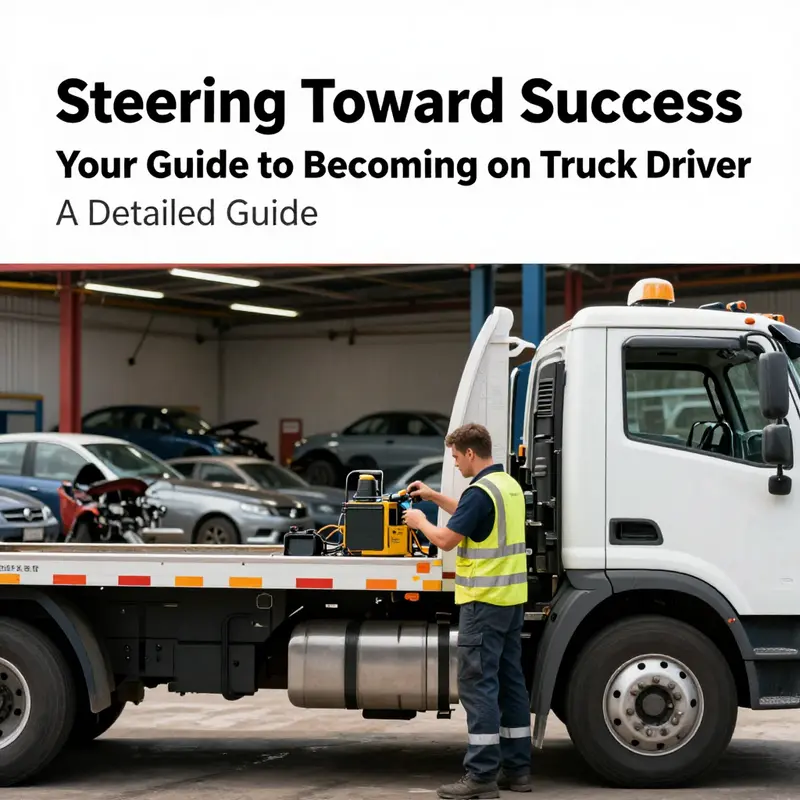
The road to becoming a tow truck driver is less a single leap and more a sequence of careful steps that build competence, trust, and resilience. It is a career forged in the rhythm of road calls, the choreography of quick thinking, and the discipline to keep people and property safe when emergencies collide with busy streets and bad weather. The narrative of this path isn’t about a mysterious credential arriving in the mail, but about assembling the right mix of licenses, training, and real-world experience that together create a dependable operator who can move a stalled vehicle, assist in a multi-vehicle incident, or recover a stranded car from a tricky spot with precision and care. In this chapter, we trace that path in a way that feels practical and actionable, threading together the practical requirements with the daily realities of life on the tow line. The aim is to provide a cohesive map that can guide a reader from curiosity to credible readiness, while keeping the focus on safety, responsibility, and the steady work ethic that defines the profession.
First comes the foundation: a driver’s license and a sense of the responsibilities that come with operating a heavy vehicle on public roads. Most states require you to be at least 18 years old to operate a tow truck, though some jurisdictions set higher thresholds when commercial driving or handling hazardous materials enters the mix. The entry point is, at heart, simple: you must hold a valid driver’s license before you pursue anything more specialized. This is not merely a formality; it signals that you have already navigated the essential basics of road rules, vehicle control, and basic safety. From there, the arc of your qualification begins to tilt toward a heavier responsibility: the Commercial Driver’s License, or CDL. Tow trucks sit in the heavy-vehicle category, and many employers look for a CDL with the appropriate endorsement, commonly known as a “T” endorsement for towing. The precise requirements can vary by region, but the core pattern is consistent across the United States: study the knowledge portion, pass the written exams, and then demonstrate practical skill in a pre-trip inspection, a basic control maneuver, and an on-road driving test.
This is where the picture starts to become more defined. A CDL is not only about handling a larger vehicle; it is about understanding the physics of heavy loads, balancing weight distribution, and mastering the maneuvers that keep other road users safe. The pre-trip inspection is more than a checklist; it is a disciplined habit that should become second nature. You learn to verify brakes, lights, tires, hitch equipment, winching gear, and safety chains. You practice calculating stopping distances and evaluating how tow attachments will behave under different road conditions. The on-road portion tests not only your control of the vehicle but your judgment in real traffic, your ability to communicate with dispatch and other road users, and your capacity to remain calm under pressure. For those who want to go deeper, the federal and state frameworks provide clear guidance. The Federal Motor Carrier Safety Administration, or FMCSA, offers a centralized reference for licensing requirements and testing procedures that aspiring operators can consult to align their preparation with official standards. A reliable way to begin is to review the FMCSA resources, which map out licensing, endorsements, and safety expectations for heavy-vehicle operation. The practical implication is clear: plan for a period of study, practice, and testing that reflects the weight of the vehicle you intend to operate and the environments in which you will work.
Even with the licenses in hand, a tow operator’s life is built on more than technical competence. A clean driving record becomes one of the most valuable assets in the hiring equation. Insurance underwriters and potential employers scrutinize a driver’s history for patterns that indicate risk: recurring speeding tickets, DUIs, or multiple at-fault accidents can derail a budding career. The sobering truth is that the job’s responsibilities extend beyond the tow truck: you are often the face of roadside service, a representative who must calm anxious drivers, coordinate with police or emergency responders, and uphold community safety in the busiest hours. In practice, this means that the healthier your driving history, the smoother your path toward steady work. It also means you carry a responsibility that echoes through every call you answer: do not take risks, protect others, and preserve the integrity of your license by making safety the default setting in every decision.
Beyond the basic credentialing, the journey requires investing in specialized training. While some employers provide internal training on vehicle recovery, winching operations, securing loads, and managing emergency scenarios, others prefer that you enter with a formal program under your belt. This training is not a luxury; it is the difference between fumbling through a difficult recovery and executing a methodical, safe procedure that minimizes damage and injury. The core topics are practical and tangible: how to set up a secure winch line, how to select and deploy the correct tow attachments for different vehicle types, how to secure loads so that they remain stable during transport, and how to respond to roadside hazards, all while maintaining a steady communication line with dispatch and the vehicle’s occupants. The training philosophy emphasizes hands-on practice under supervision and progressive responsibility, letting a new driver learn through real scenarios rather than abstractions alone.
An important factor in the hiring equation is the background check and drug screening that many tow companies administer. In a field where split-second decisions can avert or exacerbate danger, employers seek drivers they can trust when they are alone on a remote call or perched on the edge of a slick ramp at night. The screening process is not merely about compliance; it is about building a team of professionals who share a commitment to safety, accountability, and reliability. This is paired with the requirement for ongoing professional development. Even after you secure a position, opportunities to expand your qualifications can arise. Some drivers pursue optional but beneficial certifications in areas such as hazardous materials handling, first aid, or defensive driving. These credentials are not universal prerequisites, but they can set a candidate apart when a company has to choose between equally capable applicants or when a driver seeks to broaden the scope of their assignments. When you combine a CDL with a few additional credentials and a track record of safe driving, you become a candidate who can adapt from routine roadside assistance to complex recovery operations.
The practical path often unfolds through a blend of on-the-job experience and formal training. Many new entrants start as a driver with a mentor, or as an assistant who learns to observe and contribute to a well-coordinated team. This apprenticeship phase is where you begin to understand the cadence of a tow business: the way dispatch communicates, how routes are planned to minimize wait times, and how to balance a demanding schedule with the need to remain rested and alert. Real-world exposure builds problem-solving instincts that aren’t easily taught in textbooks. You learn to assess a scene quickly: what kind of attachment is needed, what risks are present, how to position the truck for stability, and how to manage bystanders and traffic while you work. The lessons extend to customer service, too. A tow truck driver often meets distressed drivers and frustrated motorists. The best operators combine technical skill with calm, clear communication, explaining what they are doing and setting expectations for the next steps. This blend of competence and composure becomes a hallmark of professional practice.
Insurance considerations and regional requirements also shape the career path. In many regions, tow operators must carry specific insurance coverage and may incur additional certification requirements, particularly if their work crosses into emergency response or vehicle impound scenarios. These safeguards protect the operator, their employer, and the public. They can affect the kind of work you are asked to perform and the environments in which you are permitted to operate. For someone starting out, the practical implication is straightforward: you should anticipate additional training or certification as part of long-term career development, and you should be prepared for the administrative side of the job, including the documentation that accompanies every tow operation. The broader point is that the field rewards steady reliability and a willingness to expand one’s skill set as rules and equipment evolve. It is not a fixed ladder with a single rung; it is a dynamic pathway that changes with technology, regulatory updates, and the needs of communities.
As you consider this path, you may wonder how to translate all these elements into a coherent plan. Start with your local licensing requirements and the timeline for obtaining the CDL with the right endorsement. Map out a study schedule for the knowledge tests, reserve time for the pre-trip inspection practice, and arrange a supervised driving session to build confidence behind the wheel. Build a safety-first mindset that permeates every step: check the load, secure the attachment, assess the route for hazards, and communicate clearly with dispatch and customers. Draft a personal development plan that includes potential supplementary certifications and strategic opportunities to gain on-the-job experience, such as seeking a position with a company that emphasizes hands-on training and progressive responsibilities. When you land your first job, treat it as a launchpad rather than a finish line. Each tow, each call, and each interaction with a customer is a chance to refine your craft, to deepen your understanding of equipment and procedures, and to demonstrate that you can be trusted to operate in often-chaotic circumstances.
To make the guidance concrete, consider the practical resources that can support your journey. Following the licensing steps, you will benefit from real-world insights and procedural refinements shared by experienced professionals. A good starting point is to explore industry-focused content that outlines best practices, common pitfalls, and evolving standards. For example, practical blogs and veteran-led discussions can provide case studies and checklists that complement formal training. One such resource that offers a perspectives on roadside work is the Island Tow Truck blog, which provides context, scenarios, and practical considerations drawn from field experience. You can visit it here: the island tow truck blog.
Along the way, don’t overlook the FMCSA as a guiding authority. While the details vary by state, the FMCSA’s framework helps you understand the licensing pathway, endorsements, and safety expectations that underpin your daily work. Keeping that reference handy helps you stay aligned with regulatory changes and industry standards, which is crucial for long-term employment and growth in the field. With these foundations in place—a valid driver’s license, a CDL with the T endorsement, a clean driving record, formal or on-the-job training, and a commitment to ongoing professional development—you can pursue a tow truck career with a clear, actionable plan rather than a vague sense of possibility. Across regions, the core essentials remain remarkably consistent, anchored in safety, reliability, and a thoughtful approach to problem-solving under pressure.
Diving deeper into the career’s broader context can also illuminate how you might evolve within the industry. Some drivers transition into specialized roles such as heavy-duty recovery, hospital or fleet-based impound support, or even fleet management and dispatch leadership. Others choose to become independent operators, offering service to local businesses, municipalities, or emergency response teams. Each path has its own set of demands, rewards, and educational opportunities, but they all share a common foundation: you must demonstrate dependable performance, a proactive safety mindset, and a willingness to continuously learn. The combination of hands-on experience and formal knowledge will equip you to handle the most challenging roadside moments and the moments you will face again and again—protecting lives, reducing vehicle damage, and restoring traffic flow after disruption.
The journey, while practical, is also deeply personal. It asks for endurance, attention to detail, and a steady sense of purpose. It asks you to show up on cold nights, in humid heat, or during storms, to lift, tow, or secure vehicles while maintaining composure and respect for the people you encounter. The professional you become is shaped as much by how you respond to unexpected events as by the rules you memorize. The discipline of regular equipment checks, the habit of documenting each operation, and the courtesy you extend to drivers and bystanders all become the auras around your day-to-day work. In this sense, becoming a tow truck driver is not just about mastering a vehicle; it is about cultivating a reliable, safety-first approach to a role that sits at the intersection of public service and mechanical skill. When you bring together the required licenses, the targeted training, the proven record, and the mindset that prioritizes safety and service, you position yourself to contribute meaningfully to your community while building a career that can endure the test of time.
For readers who want to chart a practical course, the essential steps are clear, and the path forward is navigable with intention. Begin with the basics: secure a standard driver’s license, then pursue a CDL with the appropriate towing endorsement, all while maintaining a clean record and preparing for the required tests. Seek out hands-on training through an employer or a registered program, and accumulate on-the-job experience that builds your problem-solving instincts and your ability to work under pressure. As you approach the next stage, consider certifications that align with your interests and the needs of your region, keeping in mind that these credentials are steady investments in your employability. Above all, cultivate a professional demeanor that blends technical skill with empathetic communication, because tow work is, at its core, service delivered under stress. In this way, the journey to becoming a tow truck driver becomes not only possible but sustainable—a trajectory that honors safety, reliability, and the steady, steady pace of a career built on support for the road and its travelers.
External resources and ongoing learning opportunities will keep you ahead as the landscape of the industry shifts with technology and regulation. As you finish laying the groundwork, you can round out your understanding by consulting broader guidance on career development in transportation. For readers seeking a broader, international perspective, a good reference point is the Indeed Australia guide on how to become a truck driver, which offers step-by-step context that complements the U.S.-focused framework described here. External resource: https://au.indeed.com/career-advice/finding-a-job/how-to-become-a-truck-driver
From Classroom to Tow Yard: Building the Training Pathway and Certifications That Turn Aspiration into a Road-Ready Tow Truck Driver
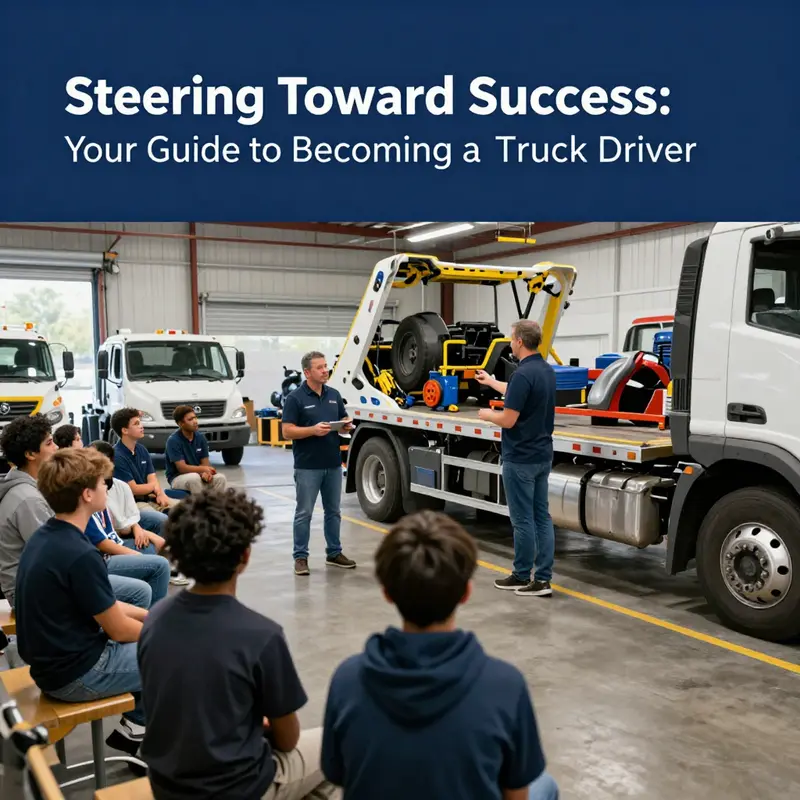
Becoming a tow truck driver is rarely a matter of flipping a switch from learner to licensed pro. It is a deliberate progression that marries regulation with hands-on skill and the calm decision making needed on the roadside. The training path is not a one-time hurdle but a sequence of learning phases that starts with state requirements and ends with ongoing education to stay safe and competitive. A responsible operator treats training as a field that never ends because technology and safety standards keep evolving, and the roadside remains an ever-changing classroom. The journey is as much about mindset as it is about technique. It asks for patience, a willingness to learn under pressure, and a commitment to safety that protects the driver, the vehicle being towed, other motorists, and the big responsibility carried by every call to help a stranded person. This chapter traces the throughline from initial regulatory steps to the deeper, craft-level skills that separate merely competent drivers from practitioners who can handle complex recovery events with calm and precision. It explains what to study, where to train, and how to keep your knowledge fresh as you move from the first permit to a fully real-world, customer-facing career.
To begin, consider the regulatory framework that shapes every tow truck operator. In the United States, most routes to driving readiness revolve around two core pieces: the vehicle code for operating commercial equipment and the licensing pathway that grants you the legal right to drive heavier tow trucks or to perform specialized vehicle recoveries. For many aspiring drivers, the first practical step is aligning with age and license prerequisites. You must be at least 18 to start the journey toward a commercial license, with 21 often cited as the minimum age to apply for a CDL in many states. Some jurisdictions enforce stricter age limits, so the prudent route is to verify your state’s requirements early so you don’t invest time and money into tests you cannot yet take. Alongside age, a valid driver’s license forms the bedrock of your eligibility. Most people begin with a standard Class C license or an equivalent noncommercial license and then plan the upgrade to a CDL if the tow operation you pursue requires it. The why behind this is simple: many tow trucks are heavy commercial vehicles, and weight thresholds, passenger-carrying rules, and other factors trigger CDL requirements or specialized endorsements.
The core CDL element in tow work is the proper endorsement set and the ability to pass both knowledge and skills tests. In the commonly cited framework, you’ll need to demonstrate a basic understanding of vehicle inspection, safety checks, and the mechanics of operating a larger truck. The practical tests include a pre-trip inspection to show you can identify potential hazards before you drive, a basic control test to prove you can maneuver a heavier vehicle, and an on-road driving segment to demonstrate safe handling under typical traffic conditions. While the exact endorsement nomenclature can vary by state, the idea remains that towing-specific responsibilities—such as securing tows, managing weight distribution, and performing controlled recovery moves—are covered under the CDL package with the appropriate endorsements. A sound approach is to study your state’s CDL manual, then map those requirements against the CDL class you intend to pursue. The result should be a clear plan for when to sit each exam and how the costs and scheduling will align with your other commitments.
Behind the scenes of this regulatory framework lies a practical emphasis on a clean driving record and a mindset oriented toward safety first. Employers in the towing sector look for drivers with a demonstrated history of responsible driving, low incidence of crashes, and minimal disciplinary actions on their record. A blemish-free or near-blemish driving record becomes a practical signal that you understand risk and can operate a vehicle under pressure without creating new hazards. The emphasis on safety also translates into a willingness to submit to background checks and drug testing as part of the hiring process. This isn’t merely a bureaucratic hurdle; it is a proxy for reliability and a commitment to put road safety and client welfare above all else. You should approach these checks as a professional standard rather than an obstacle, ready to provide transparent information and to address any concerns promptly if issues arise.
Once you have the baseline license and a clear understanding of the regulatory requirements, the next layer is specialized training that equips you with the hands-on techniques and the safety mindset that define professional tow operators. Vocational schools, trade programs at community colleges, and employer-provided academies offer curricula that go beyond the basics of driving. The typical program covers vehicle recovery techniques, winching operations, load securing, and the nuanced handling required when responding to emergency calls or difficult roadside scenarios. You’ll learn how to assess a scene, determine the safest approach to attach a disabled vehicle, and execute recoveries without causing additional damage or injury. The practical portion of these courses often features supervised, hands-on practice with equipment such as wheel lifts, dollies, winches, chains, and straps. In controlled environments you practice lining up a tow, controlling the vehicle’s weight distribution, and applying the right amount of tension to avoid gear failures. The aim is not just to pass a test but to build muscle memory for when you’re standing at the roadside, facing the unpredictability of real-world conditions.
Hands-on training is typically complemented by classroom time that addresses the theory behind these procedures. You’ll study load dynamics, winching principles, and the physics of dynamic stabilizing systems. You’ll also cover safety protocols: what to do in case of cable failure, how to protect bystanders, and the steps to prevent injuries when lighting is poor or weather is changing quickly. This combination of theory and practice helps you translate instructions into action amid the stress of a live rescue, equipment failure, or a multivehicle incident. Another crucial topic is the operation of the tow truck itself—how to set up outriggers or stabilizers, how to deploy any built-in safety features, and how to perform routine checks before departure. The goal is to have confidence that every tool you use is functioning properly and that you understand the limitations of your machine.
As you approach the end of formal training, the emphasis shifts to how well you can apply what you’ve learned when it matters most. Many employers require or strongly encourage additional, company-specific training that safe practice and policy compliance. This training often covers your employer’s preferred procedures for handling hazardous materials, securing loads, and coordinating with other road users during a tow. The content might also include emergency response protocols, radio etiquette, scene management, and customer service standards. It is common to encounter a structured orientation period in which you learn the chain of command, documentation requirements, and the exact formats used for incident reporting. During this phase you will learn not only technical skills but also the professional habits that help a driver integrate smoothly with a fleet, a dispatch center, and the wider public service or private sector you serve.
Beyond the core training and licensing steps, there are optional certifications that can improve employability and expand the range of assignments you’re qualified to perform. Certifications in hazardous materials handling, first aid, and defensive driving are frequently pursued by drivers who want to broaden their scope or increase their reliability on challenging calls. While not always required, these credentials can make you a more attractive candidate to employers who value versatility and a thoughtful approach to risk management. For many drivers, the pursuit of certification is a signal that you take your responsibilities seriously and are committed to operating at the highest safety standards. It also signals an ability to adapt to special assignments, such as towing at accident scenes or transporting vehicles that require careful handling because of fuel or chemical concerns. The more you invest in certifications, the more doors you may open, including roles with larger fleets, longer-haul opportunities, or specialized recovery teams.
As you build toward certification and licensure, you should plan for the ongoing education that keeps you current. The field of vehicle towing and recovery evolves with changes in vehicle design, new safety devices, and updated regulatory expectations. Keeping pace means participating in refresher courses, attending safety seminars, and reviewing manufacturer guidance for the equipment you use. A sustained commitment to learning also supports career longevity. The work can be physically demanding, and the best drivers continually refine their techniques to reduce strain on their bodies and to minimize the risk of on-the-job injuries. Staying current includes understanding evolving best practices around securing loads, protecting against shifting cargo, and preventing collateral damage during towing operations. It also means staying aware of updates to licensing rules, weight restrictions, and endorsement requirements that might affect your eligibility for certain categories of work or changes in your region’s traffic laws.
In sum, the training and certification pathway to become a tow truck driver blends initial regulatory steps with practical, hands-on instruction and ongoing professional development. It requires attention to state-specific rules, a readiness to invest in coursework and practice, and a mindset that prioritizes safety, reliability, and service. The journey from a first permit to a full professional in the field is marked by a set of turning points—a successful pre-trip inspection pass, a confident on-road test, a clean background check, and the completion of one or more specialized certifications—that together establish you as a capable, trusted operator on the road. When you approach this path with discipline and curiosity, you not only meet the minimum requirements; you build a solid foundation for a career that offers steady demand, meaningful responsibility, and the opportunity to grow alongside a fleet that depends on you to keep people and possessions moving through every kind of setback.
For readers who want to explore practical context beyond the training room, a helpful online resource focuses on fleet readiness and emergency response strategies. This material complements the formal training by offering scenario-based insights into how a tow team operates under pressure, coordinates with other responders, and maintains safety margins on busy roadways. You can explore that topic here: essential fleet emergency response strategies.
Finally, when you’re ready to place your training within the broader landscape of the industry, consider the official occupational picture and guidance that help frame expectations for tow truck drivers across the United States. The Bureau of Labor Statistics provides a comprehensive overview of the role, including typical duties, work environment, and growth prospects, which can help you calibrate your plans and track progress over time. For a detailed reference, see the external resource: BLS Occupational Outlook Handbook entry for tow-truck drivers.
Legwork on the Road: The Legal and Safety Groundwork for Becoming a Tow Truck Driver
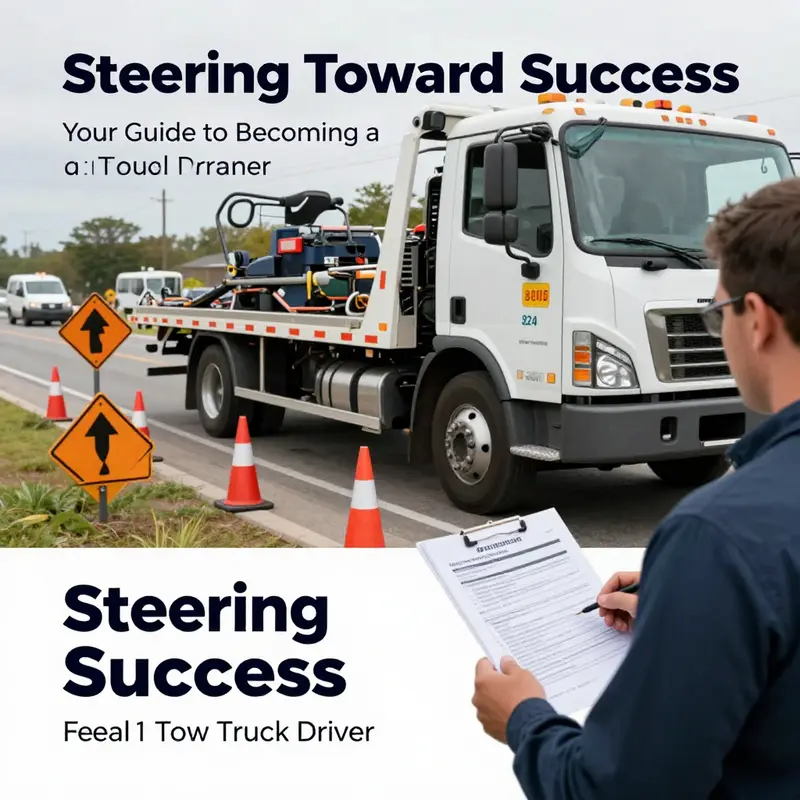
Becoming a tow truck driver begins long before you swing a hook onto a stranded car. It starts with an understanding that the role sits at the intersection of law, safety, and service. The job is less about speed and more about reliability, precision, and a calm decisiveness under pressure. The legal and safety groundwork you lay now will shape not only your eligibility but your day-to-day effectiveness on the road. This chapter walks you through that groundwork, stitching together age requirements, licensing, record safeguards, and the specialized training that turns raw potential into dependable practice. The path is formal in places and practical in others, but at every turn the core idea is the same: you need to be someone who can be trusted to move heavy machines, secure delicate cargo, and respond correctly when things go wrong, all while obeying the rules that protect the public and the people you serve.
First, the concept of age and licensing sets a clear, if sometimes uneven, boundary. In the United States, most jurisdictions expect you to be at least 21 to hold a commercial driver’s license (CDL) with the appropriate endorsements for towing. Some states may allow younger applicants under certain conditions, but those exceptions are uncommon and tightly regulated. Tow trucks, by their very nature, fall under commercial vehicle obligations because of their weight, the complexity of the equipment, and the safety concerns involved in moving other vehicles. The licensing process, therefore, hinges on proving you possess both the knowledge to operate large, powerful equipment and the skill to control it in real-world traffic. The standard progression often begins with a regular driver’s license, because many employers want to see a track record of responsible, law-abiding driving before you even attempt the CDL tests. From there you work toward a CDL with a towing endorsement, commonly a “T” endorsement, and possibly additional endorsements depending on the types of loads you might encounter.
The licensing journey is not a single milestone but a sequence of steps that require preparation. You’ll study the rules of the road, weight limits, braking distances, lane-use restrictions, and the specific mechanics of the tow truck you plan to operate. The tests you face are twofold: written knowledge tests that cover safety regulations and operational procedures, and practical skill tests that include a pre-trip inspection, basic control skills, and on-road driving. The pre-trip inspection is not a mere checklist; it’s a diagnostic mindset. You must demonstrate that you can identify potential issues—brake wear, tire integrity, lighting, payload restraints—and you can describe how you would address them. This emphasis on inspection mirrors the daily realities of tow work, where a single tucked-away problem can escalate into a roadside hazard if left unchecked.
The process presupposes you already hold a valid driver’s license. If your license is in good standing and you can show a clean record, you have a head start. A clean driving record is a practical signal to potential employers: you are someone who manages risk and adheres to rules. The reality is simple: even a single preventable incident can derail your ambitions. Tow truck work requires not just familiarity with large vehicles but a demonstrated discipline behind the wheel. Employers weigh driving history heavily because the job demands immediate, high-stakes decisions in unpredictable environments. A history that includes serious violations or a pattern of careless driving can make access to CDL testing or job opportunities much more difficult, if not impossible.
Beyond licensing, restoring and maintaining a clean public image is reinforced through background checks and drug screening. The industry treats these checks as foundational. A thorough background review helps assess reliability, trustworthiness, and the ability to handle sensitive situations that arise on the road or at a tow site. Drug screening, similarly, is not merely a formality but a safeguard for the crew and the public. Tow operators work in settings where judgment and reaction time matter, from paying attention to pedestrians on a dark highway to coordinating with police or emergency responders when incidents occur. The systematic use of background checks and drug testing reflects a broader commitment to safety and accountability that elevates the whole profession.
Once you clear the gate of licensing and background screening, the focus shifts to specialized training. Employers frequently provide or require training that is specific to tow truck operations. This training covers a spectrum of topics, from vehicle operation and winching techniques to load securement and emergency procedures. It also emphasizes the hands-on realities of working with heavy equipment. You’ll learn how to safely attach and detach towed vehicles, how to calculate load distribution, and how to manage the dynamics of a recovery operation where the vehicle being towed is compromised or unstable. Training emphasizes not only the mechanics of the tow but also the situational awareness necessary in a roadside context. This is the moment when your theoretical knowledge translates into practical competence. You’ll practice with your own equipment or with training towers that simulate the kinds of obstacles you’ll face on the job.
The training is designed to prepare you for a collection of operational challenges that are inherent to towing work. Picture navigating a tight alley with a heavy vehicle, or performing a winch operation on an uneven surface while weather conditions are changing. The instruction tackles such realities head-on, ensuring you can perform with restraint, precision, and safety. It includes the critical topic of load securement, which protects both the vehicle you’re towing and any bystanders or other road users from shifting cargo or dropped parts. It also covers equipment handling, so you’re fluent in the use and limitations of the winch, chains, straps, hooks, and stabilizers you’ll rely on every day. This body of knowledge becomes second nature only through repetition, scenario-based practice, and a mindset oriented toward prevention rather than quick, risky fixes.
Operational competence, the culmination of training, is the bridge between certification and the actual workday. It is here that the training teams you with patterns of practice that help you perform consistently, even under pressure. You develop a mental model of the road and the roadside environment: where to position your truck, how to create safe work zones, how to coordinate with other responders, and how to manage crowds or curious onlookers who might inadvertently endanger themselves. You learn to recognize the unique demands of different recovery scenarios—whether you’re pulling a vehicle from a ditch, recovering a damaged car after an accident, or assisting stranded motorists during bad weather. These experiences cultivate a disciplined approach to risk management. The industry prioritizes not only the ability to move vehicles but the insistence that every move is executed with safety as the first priority. The training you receive is a toolkit you can draw from in moments of uncertainty, and it’s designed to stay relevant as equipment evolves, regulations change, and new safety technologies emerge.
Professional standards in this field are not static. They grow through ongoing education, adherence to legal requirements, and an active commitment to safety culture. A tow truck operator is expected to stay current with regulations and best practices, which often means periodic refreshers on pre-trip inspections, the latest methods for securing loads, and the evolving guidelines around roadside protocol and incident reporting. Industry safety standards emphasize predictable, repeatable performance. This emphasis reduces risk for drivers, other motorists, and the people who depend on tow services in emergencies. The personal discipline of maintaining a clean driving record, submitting to regular screenings, and completing required or optional training marks you as a professional who accepts responsibility for the safety of everyone involved in a tow operation. The practical payoff is straightforward: fewer preventable incidents, steadier earnings, and longer, safer careers.
There are optional certifications that can further enhance employability and versatility. Certifications in hazardous materials handling, first aid, or defensive driving are not always required, but they can strengthen a candidate’s profile. In a field where you might respond to accidents, severe weather, or scenes with multiple hazards, having additional credentials signals a proactive approach to safety. These credentials may also expand the range of assignments you can take on, such as towing hazardous loads or performing specialized recoveries that demand extra caution and expertise. If you’re mapping out a longer career path, these certifications can be stepping stones to more advanced roles within a towing company or in broader fleet operations.
From a practical perspective, the path to becoming a tow truck driver is often nonlinear but structured. It typically begins with securing a regular driver’s license and building a clean record. Then you pursue a CDL with a towing endorsement, sometimes adding an extra endorsement for hazardous materials depending on the nature of the operation you intend to support. You’ll undergo background checks and drug screening as part of the hiring process. You’ll receive employer-provided or employer-required training that covers vehicle operation, safety procedures, emergency response, load management, and equipment handling. Throughout this process, your ability to stay calm, think clearly, and communicate effectively becomes as important as your technical skills. On the job, you’ll continue to learn under supervision, accumulate real-world experience, and gradually take on more complex recovery tasks. The combination of licensing, training, and ongoing professional development creates a solid foundation for a career in a field that sits at the heart of road safety and roadside assistance.
As you chart this course, it is useful to connect the training you receive with broader fleet safety frameworks. Resources such as Essential fleet emergency response strategies offer a macro perspective on how tow operations fit within a fleet’s safety architecture. Such guidance helps you see how your work interacts with other safety roles on the road and how to coordinate effectively during incidents. This perspective reinforces the responsibilities you’re building toward and helps you integrate into teams that value organized, safety-forward thinking. For a deeper dive into the broader regulatory landscape, you can consult authoritative sources that describe licensing requirements, testing procedures, and regulatory expectations. The Federal Motor Carrier Safety Administration (FMCSA) maintains the official framework for commercial drivers, including those who tow. Access to their guidance helps you verify step-by-step procedures and stay aligned with national standards. By combining the hands-on skill-building of training with the formal guidelines provided by regulatory bodies, you establish a robust, resilient approach to tow work that stands up to both scrutiny and the demands of the road.
Along the way, practical preparation also means planning for the everyday realities of tow work. You’ll need to secure work gear, maintain your vehicle in peak condition, and cultivate a routine for on-call shifts, night operations, and physically demanding tasks. Tow work often involves long hours, variable weather, and high-pressure scenarios, so stamina and thorough preparation are essential. You’ll learn to assess scene safety quickly, communicate clearly with dispatch and other responders, and adapt your plan as conditions change. The best drivers bring a combination of technical mastery and situational judgment—an ability to weigh the risks of a restraining operation against the urgency of helping someone in need. The end result is a professional who can deliver timely assistance while upholding the highest standards of safety and responsibility. In the broader arc of your career, these attributes translate into dependable service, steady referrals, and opportunities to advance within a fleet or start your own operation one day.
Finally, while not every jurisdiction or employer require every item on this list, the shared thread across the requirements is a commitment to safety, accountability, and continuous learning. The steps you take—securing the right license, cultivating a clean record, passing background and drug checks, completing rigorous training, and pursuing optional certifications—are investments in your own safety and the safety of everyone you will encounter on the road. The road to becoming a tow truck driver is not a sprint; it is a careful, measured ascent that rewards preparation, discipline, and a steady adherence to legal and ethical standards. If you’re ready to embark on this path, your first move is to map the licensing requirements for your state, identify an accredited training program, and commit to a plan that keeps safety at the center of every action you take. As you progress, you’ll find that the work you do—recovering vehicles, assisting motorists in distress, and contributing to safer roads—rests on a firm foundation of legality, capability, and professional integrity. External resource: https://www.fmcsa.dot.gov
Final thoughts
Becoming a tow truck driver involves navigating a series of necessary steps, engaging in specialized training, and adhering to legal and safety regulations. The growing demand for towing services provides ample opportunity for those equipped with the right skills and knowledge. By following this guide, aspiring tow truck drivers can confidently approach their new careers, ensuring they are prepared to meet the challenges and responsibilities that come with the job. Emphasizing safety and professionalism can lead to a fulfilling and lucrative career in the towing industry.