For enthusiasts and professionals alike, knowing where to find a tow truck in GTA 5 can enhance your gaming experience. Whether you’re managing a property, running a commercial fleet, or simply eager to explore Los Santos, this guide will provide crucial insights into locating these essential vehicles. Throughout the article, we’ll delve into the specifics of the Classic Tow Truck, explore other tow truck locations, highlight their appearances during missions, and share valuable tips on acquiring these vehicles effectively—all tailored for local auto repair shops, car dealerships, property managers, resort operators, and commercial fleet operators who thrive in the vibrant world of GTA 5.
Tracking the Classic Tow Truck: Paleto Bay’s Quiet Corner and the Towing Ways of GTA 5
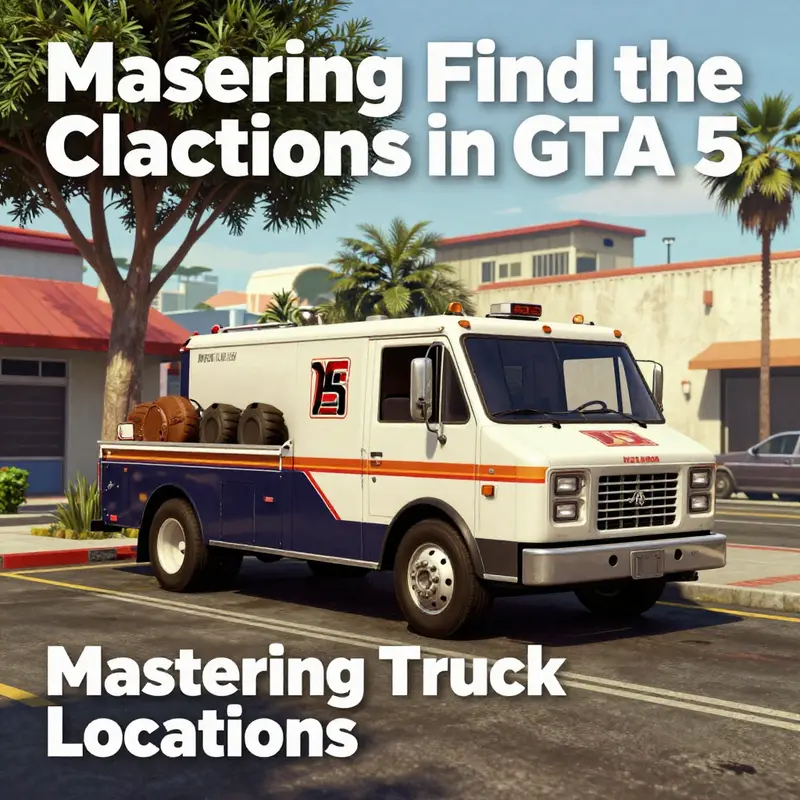
When players set out to collect a vehicle that stands apart from the crowd, the Classic Tow Truck in GTA 5 offers a small, almost sculptural charm on the map. Its retro lines and compact frame make it instantly recognizable, a reminder that the game’s world rewards curiosity as much as speed. The arc of this chapter follows a simple, practical thread: where to find the Classic Tow Truck, how its presence crops up in the wider landscape of the game’s vehicle spawns, and how players can make the most of its distinctive features. The focal point is Paleto Bay, a far-northwest corner of the map whose quiet lanes and propane-faint air set a stage for a vehicle that feels more like a character than a tool. In this settlement’s outskirts, near a small gas station that punctuates the roadside like a node in a larger web, lies a little pocket where the Classic Tow Truck makes its home. Look for the local gas station and nearby the shop that locals call Custom Cars, a shorthand that any GTA 5 player who has spent a late-night session cruising the coastline will recognize. The Classic Tow Truck is often parked right outside this entrance, a position that makes it both a lure for players and a practical starting point for any would-be tow enthusiast who wants a vehicle with a personality all its own. The scene, though simple, is a carefully designed beat in the game’s broader rhythm—an invitation to explore, to observe, and to experiment with how a single vehicle changes the feel of a street, a business transaction, or a late-night heist sequence that might require a tow to pull off a getaway with style.
The Paleto Bay location is not an arbitrary choice. It anchors the Classic Tow Truck within a particular texture of the map: the northwest coastline, the lean wood-and-steel architecture, and the sense that this corner of Los Santos plays by its own clock. The gas station nearby is more than a convenience store; it’s a node in a web of minor landmarks that players learn to read with the same ease they acquire for more prominent sites. When the wind carries the distant engine roar toward the shore, and the lights along the shops blink in a slow, steady rhythm, the Classic Tow Truck becomes a signal—a sign that the map rewards patience and a careful eye for the symmetry between a vehicle’s identity and its surroundings. For any player who loves the game’s quiet, almost texture-like details, Paleto Bay offers a rewarding moment of recognition, a small revelation that the vehicle you’re seeking has a story and a place, not just a set of coordinates.
This is not to say the Classic Tow Truck is the only tow option you’ll encounter. GTA 5 is built on a spectrum of spawn points and mission-driven appearances that give life to a vehicle fleet that feels almost improvised by chance. The Classic Tow Truck—distinctive in design, compact in profile, and unmistakable on the street—occupies a fixed, lore-rich corner of the map. Yet the game’s other tow trucks, the standard kinds you see during missions or appearing sporadically on city streets, do not share a single fixed spawn point. They drift, they appear where a mission requires a vehicle exchange, and they vanish as quickly as they arrive, their appearances tied more to story beats than to a daily routine. If you’re hoping to find a tow truck for a quick mission or for a spontaneous photo-op, you’ll need to adopt a different approach: keep an eye on mission progress, monitor your in-game cycle of day and night, and stay alert in the urban core where the flow of traffic can bring a tow truck into view when you least expect it.
The game sometimes nudges you toward a tow-truck encounter in less obvious places, and a few of these instances have a practical payoff beyond the thrill of discovery. For example, some missions—especially those that involve Franklin and Trevor in sequences tied to certain story beats—can create momentary opportunities where a tow truck is seen cruising a street or parked near a service lot. These aren’t guaranteed spawns, and they don’t happen on a rigid timetable, but they add texture to the player’s sense that the world is alive, with vehicles moving between tasks in the same way a real fleet might shift gears between assignments. In other words, the tow trucks in GTA 5 function as both tools and characters, each one carrying a subtle cue about the world’s ongoing activities, and sometimes hinting at safer, more efficient ways to complete a heist or a delivery by avoiding rough spots and using a tow to reposition assets.
As a practical matter, locating the Classic Tow Truck begins with its most concrete clue: Paleto Bay’s gas station area, and the Custom Cars shop that sits nearby. If you arrive during daylight or at a quiet hour, you’ll notice the shop’s entrance framed by a small canopy and a line of parked cars that feel as if they’re waiting for a valet. The Classic Tow Truck is often parked just outside this entrance, ready to roll in and out with a slight turn of its wheels. Its presence feels almost ceremonial, the kind of detail that makes the city feel smaller and more intimate, a reminder that you’re not just wandering through a virtual sandbox but moving through a living map with recognizable anchors. The sight lines from the gas station toward the shop provide a natural staging area for the moment you decide to approach, climb aboard, and begin your next leg of the journey with a vehicle that still carries a hint of retro flair in its chrome and color scheme.
Once you’ve found the Classic Tow Truck, you’ll quickly discover a few practical features that set it apart from more ordinary pickups. The vehicle’s compact design and its tow apparatus give it a certain versatility, especially when you combine it with the game’s upgrade options. If you want to customize this particular tow truck, you have two easy, well-traveled routes. You can take the Classic Tow Truck to Los Santos Customs, where you can outfit it with performance upgrades, cosmetic touches, and a range of lighting choices that feel faithful to its vintage aesthetic. Alternatively, Beeker’s Garage offers a different flavor of modification, one that sometimes emphasizes durability and a more rugged look that matches the tow truck’s utilitarian purpose. The customization options aren’t purely cosmetic; they also alter how the vehicle feels in motion. You may notice changes to acceleration, braking, and handling, along with subtle shifts in the vehicle’s weight distribution as you tow other cars around the city or along the highway. The rotating amber lights are a small but telling detail: a quick press of the left thumbstick can activate them, turning the vehicle into a moving beacon that commands attention in chaotic traffic or in a heist sequence where every second counts.
The day-to-day possibilities with the Classic Tow Truck extend beyond mere possession. In the context of the game’s broader tremor of activity, your tow truck can be an essential part of your operational toolkit—especially when you need to reposition vehicles for a mission, retrieve a stuck car, or transport a damaged ride to a shop for repairs after a high-stakes escape. Its specialized design makes it a natural fit for certain tasks where a standard pickup would feel incongruous or slow. The trailer hitch, the winch mechanism, the way the truck handles on mountain roads or along the edge-of-town back routes—all contribute to a sense of authenticity. It’s not merely a vehicle you use; it’s a tool that shapes how you approach a problem, almost like a strategic instrument in an improvisational play that is GTA 5’s open world.
Of course, the world of GTA 5 also offers other tow trucks that can appear in different contexts. While the Classic Tow Truck holds a special place in Paleto Bay, don’t expect a fixed map to present you with this vehicle at all hours. In urban areas, you may encounter tow trucks driving around city streets when the narrative leads you to a particular mission or when a salvage objective comes into play. The internal logic of the game places these appearances in service of the story or in response to tasks you’ve accepted, so be prepared to adapt as the plan unfolds. A tow truck might be exactly where you need it when a mission calls for rapid vehicle relocation, or it might be a fleeting encounter you notice only because you’ve trained yourself to look for the subtle cues—the glint of chrome, the shape of the rear lights, the way a vehicle slows and then speeds up as it negotiates a corner. The FIB lot in Los Santos, too, can become a scene of interest in certain mission branches, particularly after completing specific chapters that require the vehicle to be involved in the sequence of events. Here the tow truck appears not as a friendly companion but as a resource that reveals the game’s layered structure: opportunities open up when you’re ready to take advantage of them, and the map rewards those who remain patient, observant, and ready to adjust their plan on the fly.
In terms of strategy, locating the Classic Tow Truck hinges on a blend of patience, observation, and a willingness to explore the map’s quieter zones. Paleto Bay is the anchor, but the surrounding area offers additional micro-narratives—side streets that double as potential staging areas, service centers that hide a vehicle inside like a secret, and a shoreline path where the sound of waves blends with the distant rumble of engines. If you want to leverage the tow truck for a mission or for the simple satisfaction of driving a vehicle with a nostalgic look and feel, you’ll want to approach with a plan. Frame your exploration around a few core ideas: first, confirm the vehicle’s presence by checking the Custom Cars shop’s exterior; second, keep an eye on the wind and light, as the game’s textures and reflections become a clue in themselves; third, when you find the Classic Tow Truck, test its features, including the lighting and the towing mechanism, to ensure you know how to deploy it for your next objective. Learning to use the vehicle’s lights not only adds to the visual drama of your drives but also helps you coordinate with other players in a multiplayer environment, where lighting can be a signal in a crowded street.
If your curiosity extends beyond the map’s immediate geography, you might consider how the classic tow truck in a fictional world mirrors real-world mobility strategies—how fleets position themselves, how service shops become hubs of activity, and how vehicles are upgraded to meet evolving needs. In real-world contexts outside the game, such considerations take on a different texture, but the underlying logic—a vehicle aligned with a purpose, a shop close at hand for upgrades, a network of streets that shape opportunities—resonates with the way gamers experience GTA 5. For readers who enjoy seeing the parallels between a game’s ecosystem and real-world logistics, there is a ready-made bridge: a broader conversation about readiness, response times, and fleet coordination that can enrich both gaming and practical planning. If you want to explore more perspectives on related topics and how similar principles apply to island fleets and emergency planning, you can visit The Island Tow Truck blog for deeper discussion. theislandtowtruck.com/blog/.
As you map out your next outing into Los Santos and its surrounding zones, remember that the Classic Tow Truck’s charm lies not only in its hardware but in the way it fits into the game’s tempo. The hairs of dust along the road, the sway of a tow line as it retracts, the amber lights that flare into life with a simple push of a control—these details make a familiar, almost comforting rhythm out of a busy digital city. The moment you accept that a vehicle can be more than transport, you’ll begin to see the Classic Tow Truck as a partner in play, a tool that shapes your approach to missions and a character that adds texture to your exploration. The map becomes less about chasing numbers and more about following the clues the world lays out—where a tow truck sits, what it can do, and how it feels to drive it along the coastline, over the hills, and into the heart of Los Santos’s urban grid. In that sense, the question “Where to find the Classic Tow Truck in GTA 5?” resolves into a small, convincing discovery—that the game rewards curiosity, patience, and an eye for the map’s quiet corners, where a steadfast vehicle sits waiting to join the next chapter of your story.
External resource: https://www.gtaonline.com
Tow Truck Trails: Mapping Hidden Depots and Spawn Hubs Across Los Santos and Beyond
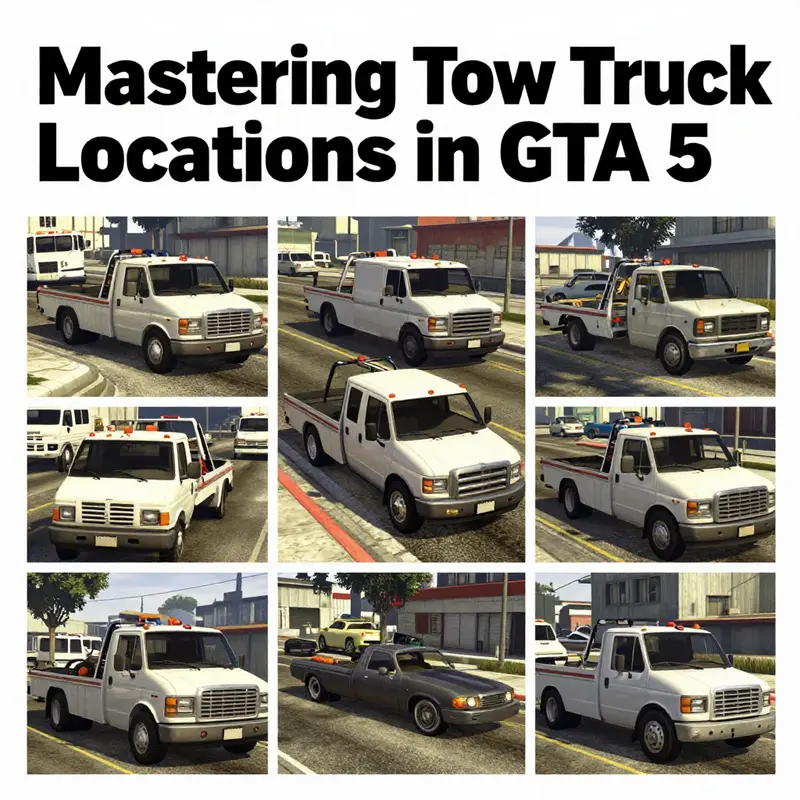
A tow truck in this sprawling map isn’t merely a tool for clearing wreckage or hauling a banged-up ride to a shop. It’s a drifting thread through the city’s industrial spine and its overlooked back alleys, a vehicle that threads the seams of the fictional economy with a patient, workman’s rhythm. When you walk the line between stories and side gigs in this world, tow trucks become a small but telling part of the urban fabric. They show up where work happens, where mechanics and salvage yards form the keepers of motion, where the day’s chaos is sorted into salvage, repair, and return to motion. The broad geography of these trucks—where they spawn, park, or roll by—speaks to a game design that values both predictable landmarks and the occasional, slightly cryptic spawn. It is this blend that invites players to think of the map not as a static display but as a living map of needs, opportunities, and the occasional random encounter that turns a routine drive into a small discovery.
The most commonly cited anchor in the town-by-town lore of this open world is the classic tow truck that many players learned to identify early on. It sits outside a repair front near Paleto Bay, a small town on the map’s far northwest edge. The shop, in the public mind, is often referred to as a car customization hub, and the classic tow truck sits almost as its tacit mascot. In practical terms, this vehicle is a practical avatar for the kind of work that the tow crew does: it arrives on a street or at a service bay with the seriousness of a mechanic who knows the clock and the truck’s own stubborn personality. Paleto Bay sits at a crossroad between coastal calm and the inland roughness, and the Classic Tow Truck feels at home in that perimeter, parked near the gas station and the shop’s sign, as if waiting for the next call to come in from the local streets. It’s a point of reference players use to orient themselves, a reminder that the map’s edges are not merely borders but possibilities: a tow truck can appear as if summoned by the day’s events, or it can linger, half in shadow, waiting for the moment when a wrecked car forces a road alliance between cities.
Beyond this well-known anchor, the map unfolds into a wider field of tow trucks that do not always claim fixed spawn points. Some are tied to mission threads, others drift along the urban arteries, and a few seem to appear most reliably in zones that feel intentionally industrial or commercially active. If you roam the downtown corridors as the sun slides down and the neon begins its quiet glow, you might catch a tow truck threading the gaps between parking garages and repair lots, or you may see one paused at the edge of a loading zone, a deliberate pause in a city that mostly moves at a brisk, purposeful pace. The sense of a living map is strongest in these moments, when a vehicle appears not because you summoned it, but because the city is still operating on its own schedule, as if a small business chain has its own defined hours that you happen to share.
In this broader field, there are several notable locations where tow trucks tend to surface with a reliability that can be understood, if not fully predicted. One such spot is a garage near the city’s center—Los Santos Customs in Richman—where a variety of service vehicles gather. The area around this facility is not simply a point on the map; it’s a node of activity, with tow trucks parked or rolling out in service capacity. The trucks here reflect a different flavor of the salvage economy: not a single cherished classic, but a steady supply of utility vehicles that keep the city’s wheels turning, especially in a run where you might be transporting a damaged vehicle to a shop, or repositioning a salvage unit to a more distant job. The proximity to the city’s core makes the arrival of a tow truck here feel almost natural, a sign that the day’s work has moved into a more productive phase, with these vehicles ready to assist in a range of logistical tasks—from roadside recoveries to the delicate dance of vehicle recovery after a heist or pursuit scene.
If you widen the lens beyond the main city and descend into more rural or industrial zones, the countryside offers another rhythm for tow trucks. In the Countryside Industrial Zone in North Yankton, the scenery changes—large abandoned warehouses, freight yards, and the quiet, stubborn air of long-running industrial sites. Tow trucks appear here not as a casual street encounter but as a practical answer to the needs of heavy industrial traffic and the occasional mishap that follows on the road’s remote stretches. This is a reminder that the map’s edges supply a different flavor of utility: trucks here are less likely to be found idling near a showroom and more likely to be found in places where productivity meets the raw logistics of moving large objects or damaged vehicles through a workday’s churn. The zone’s weathered, wind-swept feel lends these sightings a grounded realism, as if the city itself has a responsibility to the outlying zones—the roads that carry the economy between city and hinterland.
Then there is the human element of the map—the sites that are less neutral and more narrative in their function. Lester’s House in Davis, for example, becomes a quiet vantage point where a tow truck’s presence can feel almost like a casual cameo in a friend’s daily routine. When a vehicle lurks near this residence, it evokes a sense of local enterprise—someone running a small roadside service or preparing for a shift that requires frequent towing or recovery. The chance encounter with a tow truck in this neighborhood can spark a quick, informal mission-like feel: the moment when the player contemplates a spontaneous recovery, a quick tow to a nearby shop, or the reorganization of a few scattered vehicles into a makeshift yard. The effect is understated but meaningful; it underscores how the city invites players to participate in its economy in ways that feel organic, rather than scripted.
Finally, the airport corridor—the Airport Cargo Terminal—offers a different flavor of tow-truck activity. The constant movement of cargo and the frequent minor incidents create a setting where tow trucks congregate, ready to respond as needed. This is a different kind of theater: a place where speed, reliability, and proximity to valuable assets matter. The presence of tow trucks here signals a temporary convenience for pilots of the day’s events, as the airport environment often demands rapid problem resolution. It’s a reminder that the map’s transport logic is not only about moving players and cars from point A to point B; it’s also about provisioning the spaces where the world’s commerce and travel hinge on quick, practical salvage work that never makes the top headlines but keeps the wheels turning.
For those drawn to the mechanics of the game’s economics, the allure of tow trucks extends into modding territory. A popular avenue for players who want to experiment with business-style gameplay is the Tow Truck Garage Mod. Available on community platforms, this mod enables players to create a fully functional tow-truck operation. You can tow wrecked cars into a garage, repair them, and even auction off unreclaimed vehicles. The economic dynamics here are not merely about gleefully towing a car from one spot to another; they’re about building a small, functioning enterprise within the game’s existing framework. The mod’s compatibility with the base game and its mod loader system makes it accessible to a broad audience, turning a routine utility vehicle into the central hub of a real-world-inspired business operation within a sandbox world. The result is a deeper sense of immersion: the player experiences the daily economics of salvage, repair, and resale, and the city’s rhythm adjusts to the presence of a service-focused operation that moves vehicles through an informal, self-managed supply chain.
Those who want to push beyond the conventional play experience will also find value in community-curated resources. Online communities regularly publish spawn points, timings, and practical tips for locating tow trucks under different weather conditions, times of day, or mission contexts. These resources grow from the shared experiences of players who log hours in the world and refine their understanding of where and when a truck might appear. If you’re chasing the thrill of that rare, out-of-sight spawn or testing the reliability of a particular depot, these communities can become a practical guide, a living map that complements your own personal exploration.
If you want a concise reading of these patterns and you’re looking for a quick reference that you can carry in the game’s mindset, consider treating each location as a node in a mental map rather than a fixed waypoint. Think of the Paleto Bay classic as the known anchor that orients your route, the Richman hangout at Los Santos Customs as a mid-route stop when you’re crossing the length of the city, the North Yankton industrial zone as a rugged edge to explore when you want something off the beaten path, Lester’s Davis area as a casual cue for a spontaneous tow routine, and the Airport Cargo Terminal as the high-traffic stage where you’re most likely to encounter multiple units. Merge these with mission-driven appearances—where a tow truck is needed to complete a task—so that your playthroughs feel as if they’re written by the city itself, with calls that arrive and take shape as you move through the map.
For players who want to expand their practical knowledge from the ground up, there is value in observing how these tow trucks behave in different scenarios. A tow truck parked near a shop might sit there for several minutes, waiting in a quiet moment between service calls, or it could roll out within a few seconds after a driver completes a repair and gets a call. The variability is not random so much as a reflection of a world that needs to respond to a constant flux of activity. The same logic applies to mission-driven appearances: a tow truck may become available when the mission’s friction demands a vehicle recovery, but the exact moment of its arrival can depend on timing, distance, and the immediate tactical needs of the moment. Players who keep their senses tuned to these patterns can plan more efficient routes, preserving time and resources while expanding their control over the city’s salvage-driven micro-economy.
To deepen the sense of community and to provide a richer, more up-to date sense of landscape, the narrative of the tow trucks is best understood not in isolation but in dialogue with other players. The collective memory of players who roam the same map—sharing discoveries, noting shifts in spawn behavior after game updates, and comparing experiences across different game modes—creates a living map that no single guide can capture completely. In that sense, the tow truck’s world is a mirror of the game’s broader design ethos: a space where routine labor meets creative play, where everyday tools become catalysts for new kinds of play, and where the city, in its sprawling complexity, invites you to participate in its ongoing story.
For readers who want to explore further nuances beyond the core locations, a simple route of inquiry can yield rich returns. Visit community hubs and read through the latest discussion threads that note changes in spawn behavior after updates, or test your own observational method by visiting each location at different times of day and during varying weather conditions. The same method applies whether you’re pursuing a single, reliable tow truck for the day or building a broader practice of optional side objectives that involve salvaging vehicles across a wide area. If you want a compact, practical touchstone, begin with Paleto Bay’s Classic Tow Truck near the CVS and then branch out, letting your own route reflect the city’s rhythm rather than a fixed, linear sequence. In time, you’ll notice that the map rewards curiosity and patient exploration, turning a simple task—finding a tow truck—into a small, satisfying chapter of your own ongoing game experience.
For those who crave a more structured approach without sacrificing immersion, one practical suggestion is to keep a mental log of what you see at each location during different sessions. Note whether a tow truck appears near the Paleto Bay shop when you complete a nearby mission, or whether the Los Santos Customs in Richman tends to attract multiple service vehicles during peak traffic hours. Observe whether North Yankton’s industrial zones feel more active during certain in-game seasons or after you’ve engaged in specific story beats. Your notes will become a personal, evolving atlas that helps you anticipate rather than chase, reducing aimless driving and increasing productive encounters. The more you engage with the map as a living system, the more you’ll feel like you’re co-authoring a Player’s Guide to the tow-truck economy—one that blends practical knowledge with the pleasure of discovery.
In sum, the tow trucks of this world are not merely fetch-and-haul machines; they are tiny but telling threads in the map’s broader tapestry. Their presence in Paleto Bay anchors a network of depots and spawns scattered at the city’s edge and along its industrial corridors. They appear in Richman’s industrial belt and near the airport, where the demands of commerce and travel create a steady need for recovery and repositioning. They lurk near Lester’s Davis home, adding a layer of everyday realism to a city filled with missions and escapades. And they exist in North Yankton’s countryside, a reminder that the map extends beyond the urban center, inviting exploration and the chance to discover something new on a quiet, windswept road. The chapter on tow trucks, then, is less a directory and more a narrative invitation—to move through a world that rewards attention, curiosity, and a willingness to follow the vehicle’s small signals through a city that never truly stops working.
As you map your own path through these lanes and alleys, remember that one resource often helps sharpen the eye for these patterns: the wider community’s shared observations. For readers seeking additional context and ongoing updates about spawn points and practical tips, you can explore broader discussions through their blog and related community posts, which provide a living companion to any in-game reconnaissance. The journey of locating tow trucks becomes an ongoing conversation with the map itself, a dynamic interplay between what you know already and what the world still has to reveal. If you want a concise pointer to a hub that frequently curates relevant insights and user-tested spots, you can consult The Island Tow Truck blog.
For readers seeking a structured, official reference to the game’s mechanics and locations, the official guide offers a broader, map-wide perspective on how to navigate the world’s vehicles, including service and tow trucks. This resource can be a valuable complement to personal exploration, providing canonical context that helps ground your observations in the game’s designed framework. For further reading and to extend your understanding beyond the local map, see the official GTA V guide.
Internal link note: for readers who want to dive into community-driven explorations and spot compilations, the following resource offers a curated starting point: The Island Tow Truck blog.
External resource: official guidance and deeper context on general vehicle behavior and locations can be found at the game’s official hub: https://www.rockstargames.com/gtav/
Tow Truck Appearances in GTA 5: How Missions Shape the Roadside Helper
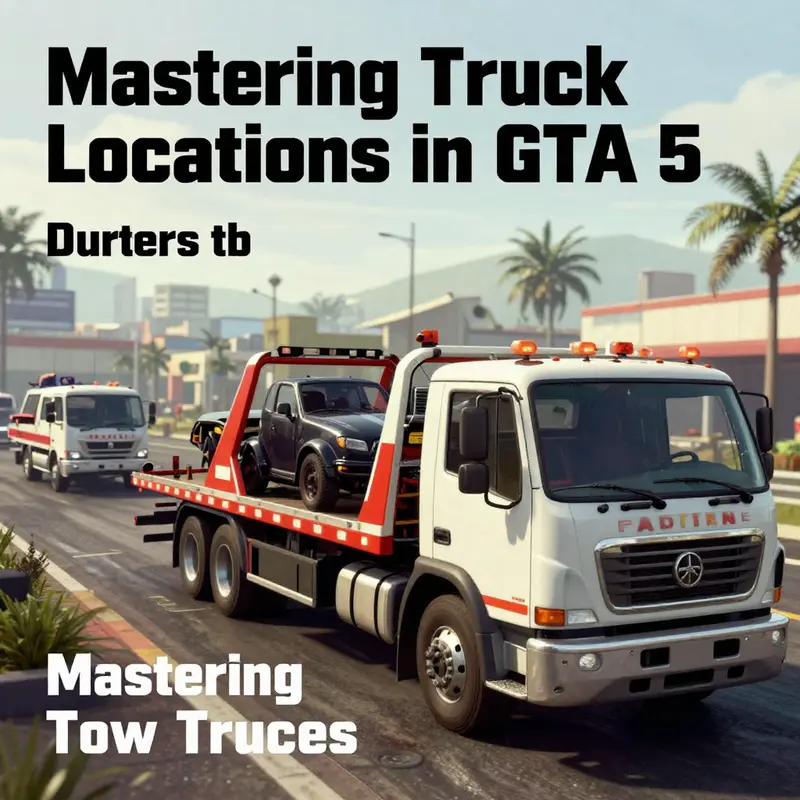
In Grand Theft Auto V, the toolbox of transportation is as telling as the toolbox on the bench. Among the fleet that drifts through Los Santos, a modest, sturdy figure—the tow truck—emerges not just as a vehicle but as a recurring instrument that players learn to call upon at crucial moments. This chapter follows a single, throughline idea: the tow truck is a vehicle with appearances that are both location-based and mission-driven, a nuance that mirrors the game’s broader design philosophy where map geography and story duties intersect in meaningful ways. When you move through Paleto Bay or glide along the boulevards of Los Santos, you’re not simply driving a truck; you’re tracing a pattern that reveals how Rockstar games scripts the world so that a functionable, relatively unglamorous machine becomes essential to progress and mood in both parts of the open world—fictional sandbox and mission-driven task force. The tow truck’s presence is never random; it follows a logic that players can learn, anticipate, and even anticipate once they understand the subtle rhythms of the game’s tempo and its mission design.
If you slow your pace and listen to the map as it breathes, you’ll hear one of the clearest cues: in the far northwest, Paleto Bay hosts a Classic Tow Truck tucked near a car shop that acts as a gateway to the suburb’s mood and function. The vehicle sits outside Custom Works, a shop near the gas station, waiting as part of the town’s everyday surface. It is not just parked there by chance; it is part of Paleto Bay’s quiet narrative about repair, salvage, and the return of vehicles to the road. The Classic Tow Truck is small in silhouette, but its role is outsized because it anchors a set of tasks that require a precise, careful approach. When you pull into Paleto Bay and spot that tow truck, you are not simply noting a spawn point; you’re acknowledging a design choice that invites you into a set of mission possibilities, small tasks that demand a concrete tool and a steady hand. The Paleto Bay location underscores an important point for any player who wants to map out reliable tow-truck appearances: if you need the classic vehicle for a particular objective or just want to see a steady, predictable component in a largely unpredictable world, Paleto Bay is where you start.
Beyond Paleto Bay, the world appears a tad looser in its tow-truck patterns. Standard tow trucks that appear in missions or seem to drift along the street do not have fixed spawn points in the same way as the club’s canonical tow vehicle. They pop into view in urban areas, especially during story beats that center on Franklin and Trevor, when the game’s mission design threads logistics and mayhem together. The car glides along the avenue, and the moment you decide to engage or to tow a vehicle, the game’s tactile pull—how the tow harness snaps, how the winch hums, how the vehicle is hoisted—turns a routine drive into a small, cinematic microcosm. It is an experience that rewards patience and observation: you learn the map’s tempo by watching where the tow trucks appear and how their presence shifts the feel of a given area. The absence of fixed points makes the act of finding a tow truck feel like more than a simple fetch quest; it becomes a dance with the city, a dance that teaches you to anticipate where the next tool might come from and how to use it when it finally arrives.
There are other moments where the tow truck’s appearance is driven by the game’s broader mission architecture. In Los Santos, the Federal Investigation Bureau—commonly known to players as the FIB lot—serves as a different kind of stage for the tow truck. It is not that you will see a tow truck idling there all the time; rather, you may encounter one after you finish specific missions where the vehicle becomes a necessary implement for a sequence, a tool that helps move a vehicle from a scene to a new location or recover it for use in a later objective. The world of GTA V has always treated vehicles as more than just points on a map; they are consumables in the sense that you need them at particular junctures, and the tow truck’s appearances in these mission hubs underscore the design principle that some vehicles gain significance precisely because they are reliable, unglamorous, and perfectly suited to a given task.
The most explicit and thematically resonant example of a tow truck’s mission-driven utility is Tonya’s “Pulling Favors” side missions within the Strangers and Freaks storyline. Across all five missions in this sequence, a specific tow truck appears and reappears, becoming a constant, a dependable tool friends and strangers alike come to rely on in a world that often rewards improvisation more than reliability. This tow truck is more than just a vehicle; it is a narrative device that threads the five tasks together, providing a consistent object that players can summon, maneuver, and employ to tow vehicles or assist with a variety of odd jobs. The process of summoning is straightforward on consoles: a quick press of the Left Thumbstick brings the tow truck to your side, delivering a tangible sense of control and immediacy during the sequence’s tight moments. This small mechanical gesture—holding the stick and watching the taillights throb to life—presses home the game’s emphasis on agency. You are not waiting for a mission to start a sequence; you are actively assembling your own toolkit, and the tow truck is a central piece of that toolkit.
The interplay between these appearances—Paleto Bay’s fixed, almost ceremonial presence; the street-level, mission-driven spawn dynamics in urban centers; the FIB lot’s occasional, context-driven introduction; and the Tow Truck’s role in Tonya’s Pulling Favors—helps explain why players often remember the tow truck not as a mere means of vehicle movement, but as a reliable partner in a diverse set of tasks. It’s a simple truth: the game rewards familiarity and competence with its vehicles. If you learn the systematic patterns—the Paleto Bay anchor, the urban drift that accompanies Franklin and Trevor’s missions, the mission checkpoints that occasionally pop a tow truck into a scene—you gain a practical map for navigating the game’s open world with a specific tool at your side. The tow truck’s appearances become a coherent thread that ties the player’s navigational choices to the story’s procedural demands. In a game where almost every street corner can pivot a mission, a mechanic’s assistant in tow becomes a clear, repeatable option—an option you can rely on when the clock is ticking, when you must move a car quickly, or when your objective hinges on lifting a vehicle with exacting control.
Even as the game promises the thrill of improvisation, the tow truck’s presence offers an alternative rhythm: a steady beat that lets you plan and execute a sequence with confidence. This is where the piece’s larger point about location, mission structure, and vehicle utility comes into focus. The Classic Tow Truck in Paleto Bay acts as a narrative anchor; other tow trucks on the streets fill out the world’s practical reach, aligning with types of missions that depend on roving vehicles rather than a single fixed spawn. The FIB lot and various mission skins contribute to a sense that the city is a living archive of tasks, a place where a simple vehicle—rigid, reliable, and somewhat unglamorous—becomes essential to pushing a sequence toward completion. The tow truck’s repeated appearances across different contexts are not a random marvel of game design; they are a deliberate choice to foreground the idea that tools matter. In a city built on movement, the humble tow truck embodies a quiet, utilitarian ethos that players learn to anticipate.
For players seeking a practical synthesis, it helps to treat the tow truck not as a single object but as a flexible instrument whose appearances map onto the story’s needs. When you’re chasing Tonya’s tasks, the tow truck is your reliable hitch, returning you to a core routine that you can execute with familiar reflexes. When you roam the map to satisfy a mission’s logistics or to collect a vehicle for a later sequence, the tow truck’s multiple spawn patterns remind you that the world is designed to respond to your actions with a predictable but not overbearing degree of responsiveness. The experience is intimate in a way: the more you learn to predict where a tow truck might appear, the more you feel connected to the game’s urban logic, to the way the city’s roads and alleys become a stage for your plan. And if you want to widen your understanding further, you can explore broader fleet contexts through specialized guides that discuss the role of such vehicles in open worlds, including overviews that compile appearances across missions and side tasks. See this in-depth resource for further detail on tow-truck appearances in GTA 5: https://www.gta5guide.com/tow-truck-appearances-in-gta-5/.
As you read these patterns, you may notice how a single vehicle’s appearances can become a kind of compass. If you’re in Paleto Bay and you see the Classic Tow Truck near Custom Works, you know you’re in a zone where a few fixed tasks may be ready to unfold, perhaps connected to a repair or a salvage sequence in a mission or a spontaneous detour that requires a tow. If you’re wandering the urban core of Los Santos and you hear the telltale winch whine or see the tow arm glint under streetlights, you know the game has orchestrated a moment where your skills with the vehicle will be tested. And if you’re on a mission like Tonya’s Pulling Favors, that tow truck will be a consistent, almost familiar companion, a thread that runs through the entire set of tasks and makes the progression feel cohesive rather than episodic. This is the genius at work—designing a city where a specific tool repeats with enough regularity to feel earned, yet in a way that never becomes rote.
In the end, the tow truck’s presence across GTA 5’s landscape is a reminder of how game design can transform a workhorse into a narrative asset. It highlights the balance between predictability and surprise, between a stable anchor point and the dynamic demands of a living, breathing map. From Paleto Bay’s quiet corner where a Classic Tow Truck sits beside a repair shop, to the bustling avenues where a different tow truck might appear as needed for a mission, the device remains a constant, a faithful partner to the player who knows how to use it. And when you finally summon it with the quick push of the Left Thumbstick on console, you feel the simplest burst of control: you call a tool to the scene, and your plan coalesces around it. The tow truck is more than a vehicle; it is a tactile reminder that in GTA 5, even the most unassuming instruments—winches, hooks, and the steady pull of a tow—can anchor a sequence as effectively as any high-octane chase. The next time you plan a route through Paleto Bay, or you travel the sunlit avenues of Los Santos in search of the next objective, keep an ear for that soft whine of the winch and the telltale thud of a tow hitch engaging. If you learn to read the city by its tow truck appearances, you’ll find a reliable companion that makes the game’s open world feel responsive, purposeful, and never arbitrary. That is the subtle artistry of GTA 5’s vehicle design: even the tow truck, a symbol of repair and renewal, can become a conduit for momentum, a vehicle that helps you move through both mission gates and the broader landscape with a steady, confident cadence.
Tow Trails: A Cohesive Hunt for GTA 5’s Tow Trucks and How to Build Your Fleet
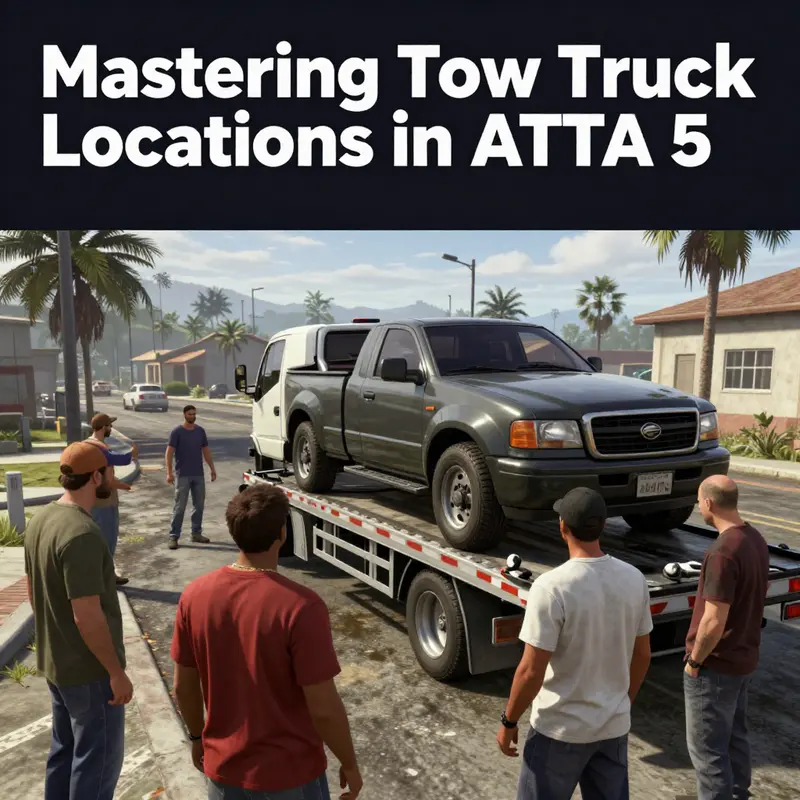
A tow truck in GTA 5 is more than a utility vehicle; it’s a moving piece of the city’s logic, a practical tool that unlocks new ways to interact with Los Santos and the surrounding map. For players who want to roll through the world with a working fleet, the search for tow trucks becomes a small, satisfying quest in itself. The hunt is less about a single fixed point and more about reading the map, knowing the story beats that shift vehicle availability, and understanding the terrain where these sturdy vehicles prefer to dwell. The journey begins with the classic tow truck—the small, distinctive chassis that most players recognize from street scenes, job sequences, and impromptu rescues. The Classic Tow Truck tends to appear in places where the map’s story and its hidden corners intersect. Paleto Bay, a region tucked in the far northwest, becomes a reliable starting point for this particular hunt. In the world of GTA 5, Paleto Bay is not just a scenic flank to the city’s urban energy; it is a staging ground for vehicles that don’t roam the everyday lanes in plain sight. The Classic Tow Truck commonly parks outside the neighborhood industrial nodes that drive the town’s tactile realism, and it is here that many players first develop a sense of how often spawns can occur if you wait, listen, and move with intention. The open line between Paleto Bay and the city’s edge makes this search feel less like a random lottery and more like a practiced routine. The lessons learned in this northern pocket are transferable because the same logic—watchful patience and targeted searching—applies to the other locations that produce tow trucks in the GTA 5 landscape.
The most consistently productive focal points for the Classic Tow Truck lie near specific landmarks that players learn to read almost like a map within the map. In this context, the Chinatown Connection garage in Paleto Bay becomes a central reference. The small garage near the gas station in Paleto Bay sits at a crossroads of activity where workers and vehicles converge, and it’s here that the Classic Tow Truck seems to settle into a predictable cadence. The proximity to Lester’s Garage—an establishment that itself is part of the city’s lore about modified performance and practical builds—adds to the sense that the tow trucks in this region prefer the spaces where work and repair intersect. In a broader sense, the same logic applies to Grove Street, the home base of a different kind of movement and a different cluster of businesses. CJ’s Car Wash, a familiar local fixture, is another anchor spot where the Classic Tow Truck’s silhouette can be spotted resting in plain sight. These locations aren’t random as much as they are nodes in a network of activity, and learning to read them is the first practical skill a player develops when they commit to gathering this vehicle. The power of this approach is simplicity: you scan the usual lanes and service hubs, you keep an eye on the shops that routinely handle vehicle repairs and modifications, and you stay in the rhythm of the city’s daily work. When you combine patience with familiarity, the Classic Tow Truck emerges not as a one-time event but as a recurring possibility.
The larger, heavier cousin—the Heavy Tow Truck—adds a different texture to the hunt. Large tow trucks serve a distinct function, and their presence tends to cluster around abandoned garages that map the map’s more desolate corners. Abandoned Garages scattered across the landscape are the strongest candidates for the Heavy Tow Truck’s home base. Some of these garages lie near the airport, a node of travel that draws a steady flow of vehicles from across the map and funnels them into a few key lanes. Others lie in the industrial pockets of Sandy Shores, where the desert wind seems to carry the sound of engines and the clank of heavy metal. In the more remote desert expanses, near the old gas stations or inconspicuous service areas, the Heavy Tow Truck can emerge from the heat as if the landscape itself condenses the vehicle into a rare, sturdy tool for the terrain. This pattern—the heavy truck’s preference for secluded, service-heavy zones—speaks to a larger truth about GTA 5’s vehicle ecology. Different models are drawn to different micro-environments, a design choice that rewards players who move with a sense of geography rather than simply driving aimlessly.
Beyond the ordinary spawns, there are moments in the story when the tow truck becomes an actual objective rather than a mere backdrop. The mission structure in GTA 5 is built around a set of tasks that pull players toward specific vehicles, and one particularly notable example is the Franklin storyline’s ‘Burning Desire.’ In this mission, you need to steal a tow truck as part of the job, and successfully completing it grants you the vehicle as a reward. This is a reminder that the city can hand you the tool you want if you commit to the narrative arc and follow through with the mission’s demands. It’s not just about wandering and waiting; it’s about aligning your actions with the game’s designed sequences, letting the story guide you toward a resource you can later repurpose for your own in-game ventures.
For players who want more predictable access to tow trucks without chasing missions, the online arena offers a different, more direct route. In GTA Online, you can acquire tow trucks through the Vehicle Dealer within your gang or crew base. This approach is arguably the most reliable path to a known model without the guesswork of world spawns. The in-game economy and inventory system allow you to purchase the exact variant you desire with in-game currency, sidestepping the need to hunt the world for a single, lucky encounter. The online market makes it possible to curate a small, practical fleet that you can deploy for hauling, rescue work, or other creative uses in your role-playing sessions. The ease of access in the online space contrasts with the river of variability in the single-player world, but both tracks converge toward the same practical goal: having a tow truck when you need one and knowing where to look when you don’t.
There are still other avenues that players occasionally overlook because they live inside the game’s catalogue rather than on the streets. In the main game, there are catalogued tasks and challenges that can surface a tow truck as a reward or as a temporary unlock, depending on how you pursue your objectives. This catalogue-driven approach feels a bit like a treasure hunt with rules—it’s not a guarantee, but it adds another layer to the search. The sense of discovery is part of the game’s charm: every playthrough offers the chance to stumble upon a vehicle you didn’t anticipate, a reminder that Los Santos keeps its doors ajar for those who know where to look and how to look. The narrative threads—the Paleto Bay spawns, the desert outposts, and the mission-linked rewards—are the map’s connective tissue, and understanding how they thread together gives players a sense of control in a city known for its unpredictable pulse.
If you want a practical sense of how to approach the town and allocate your time, there’s a rhythm to the search that helps you optimize your efforts without draining your patience. Start with Paleto Bay and move between the island’s northern edge and the city proper. Check the Chinatown Connection garage and the nearby Lester’s Garage as your initial checkpoints. Then widen your net to include the Grove Street area, especially around CJ’s Car Wash, which remains relevant as a recognizable landmark that signals a different kind of car-life ecology—one where everyday street traffic converges with the mechanics of repair and resale. When you’re ready to chase the larger, heavier variant, widen your scope to the abandoned garages that punctuate the map’s more remote zones. Don’t forget the desert corridors near old gas stations, where heat and solitude create an environment conducive to sturdy machines that don’t mind a rough ride. The practical method is to keep a mental checklist of the major spawn clusters and to rotate through them with intent rather than simply driving aimlessly.
A key factor in this search is timing. The game’s day-night cycle, mission progress, and random spawns can shift how often you encounter tow trucks. The Classic Tow Truck may be more visible during certain hours, while the Heavy Tow Truck thrives in areas that players seldom linger, which can make your search feel like panning for gold in a river that never runs dry. It’s easy to grow tired of the hustle if you treat it as a single event; the more rewarding approach is to treat it as a routine aspect of the city’s fabric, a repeating pattern that rewards curiosity and patient repetition. A single afternoon’s walk through Paleto Bay can yield a handful of near-misses and close encounters with the Classic Tow Truck, giving you a sense of the city’s tempo and how to ride its rhythm rather than fight it. As you grow more confident with the map, you’ll begin to sense small cues—a particular parking pattern, a shop’s operating cycle, or a garage’s open hours—that hint at a vehicle’s imminent appearance. These micro-tells become your personal shorthand for the city’s mechanical heartbeat, and they transform the pursuit from a series of random events into a practiced, almost meditative routine.
When you finally lock eyes on a tow truck, the moment is not simply transactional. It’s a chance to reflect on the town’s oddity and its practical ethic: a city that can be navigated effectively when you respect its sites, listen for its cues, and move with a plan. The tow truck is not just a tool; it’s a symbol of how Los Santos balances chaos and utility. The Classic and Heavy variants each tell a different part of that story. The Classic speaks to the city’s more intimate, neighborhood-scaled workflows—the repair bays, the gas stations, the modest garages that keep the town moving. The Heavy Tow Truck embodies the open, industrial edge where larger tasks and more demanding jobs require a vehicle built for endurance. In both cases, the reward goes beyond the vehicle itself. Owning a tow truck changes how you approach missions, how you plan your routes, and how you think about the city as a living, repairable system rather than a simple backdrop for action. This perspective—seeing the map as an integrated network of logistics—transforms a casual drive into a deliberate venture with practical, in-game benefits.
For players who appreciate additional context and want to deepen their understanding of how to navigate this inventory of machines, there are community-driven resources that discuss the best spots and the most reliable spawn points. The journey you commit to can be enriched by reading more about practical fleet-building and vehicle acquisition. A helpful resource that gathers insights on these topics can be found at the Island Tow Truck blog, which offers practical notes and community-tested strategies. You can visit the resource here: theislandtowtruck.com/blog/. This one-page pointer provides a sense of how players have approached the challenge in various playthroughs, and it complements the in-game knowledge you’ve gathered through exploration and mission work. Importantly, while the game’s internal logic governs spawns, the real value of these tips lies in turning your searches into a repeatable routine you can rely on in different sessions and across both single-player and online play.
As you accumulate experience, you begin to see the tow trucks as part of a larger toolkit you can assemble for your Los Santos adventures. A small fleet of tow trucks can support a variety of play styles—from practical business simulations to improvised rescue operations during chaotic mission runs. The idea of owning multiple tow trucks is not about hoarding rare pickups; it’s about enabling flexible responses to the city’s demands. For example, you might keep a Classic Tow Truck available for quick, light-duty tasks around Paleto Bay or Grove Street, reserving a Heavy Tow Truck for the more rugged or remote tasks near the desert outposts. The real advantage is the ability to deploy the right vehicle for the right job, reducing the time you spend hunting and increasing the time you can spend executing your plans. In a city that offers countless ways to create and test your own scenarios, the tow truck becomes a reliable partner rather than a one-off tool.
The broader takeaway is that knowledge of the spawn zones, coupled with a willingness to explore both the map’s edges and its core districts, makes the process of locating tow trucks a satisfying, almost meditative task. It’s a micro-quest that reinforces a sense of place and a practical skill set—how to read a city that is as much a map of tasks as it is a map of roads. The experience rewards deliberate practice: the more you learn the lanes, the more quickly you’ll identify reliable spots, and the more confident you’ll become in your ability to assemble a small, functional fleet. When the effort pays off and you roll out with a tow truck glinting in the sun, you’ll find that the sense of mastery accompanies every subsequent journey through Los Santos—whether you’re moving a spare vehicle, performing roadside assistance for a friend in GTA Online, or staging a clever, vehicle-based sequence for a role-play scenario. The tow truck’s presence on the streets thus becomes a practical emblem of the city’s layered design, a symbol of how players can read, anticipate, and participate in the world as active agents rather than passive observers. In that light, the search is not a chore but a deliberate contribution to your own ongoing GTA 5 narrative.
External resources can illuminate further details for those who want to deepen their knowledge beyond the in-game experience. For official, up-to-date guidance on locations and mechanics, you can consult Rockstar Games’ GTA V Guide, which offers authoritative pointers and updates as the game evolves. This resource helps situate your in-game discoveries within a broader, officially maintained framework and provides a reliable reference point as you refine your route choices and expand your fleet over time.
Final thoughts
Mastering the art of finding tow trucks in GTA 5 can significantly elevate your gaming experience, especially for those involved in property management, auto repair, or commercial fleet operations. From the Classic Tow Truck parked in Paleto Bay to the various encounters during missions, this guide covers the essentials. Combine these insights with engaging gameplay to ensure you’re always ready for the next big challenge. With every tow truck you encounter, your ability to navigate the game’s intricate world deepens, turning every road trip into a thrilling adventure.