Becoming a tow truck driver is not just about having a truck and knowing how to drive. It’s a multifaceted journey that requires compliance with various regulations, invaluable truck operator skills, and a commitment to excellent customer service. For local auto repair shops, car dealerships, property managers, resort operators, and commercial fleet operators, understanding the depths of this profession is essential. In this comprehensive guide, we will dissect the critical steps needed to embark on this career path, each tailored to ensure that you are well-prepared for the unique challenges and opportunities that lie ahead. From age and licensing prerequisites to the significance of communication skills, we will equip you with the knowledge necessary to thrive in this demanding yet rewarding field.
From Age to CDL: The Essential Path to Tow Truck Driving
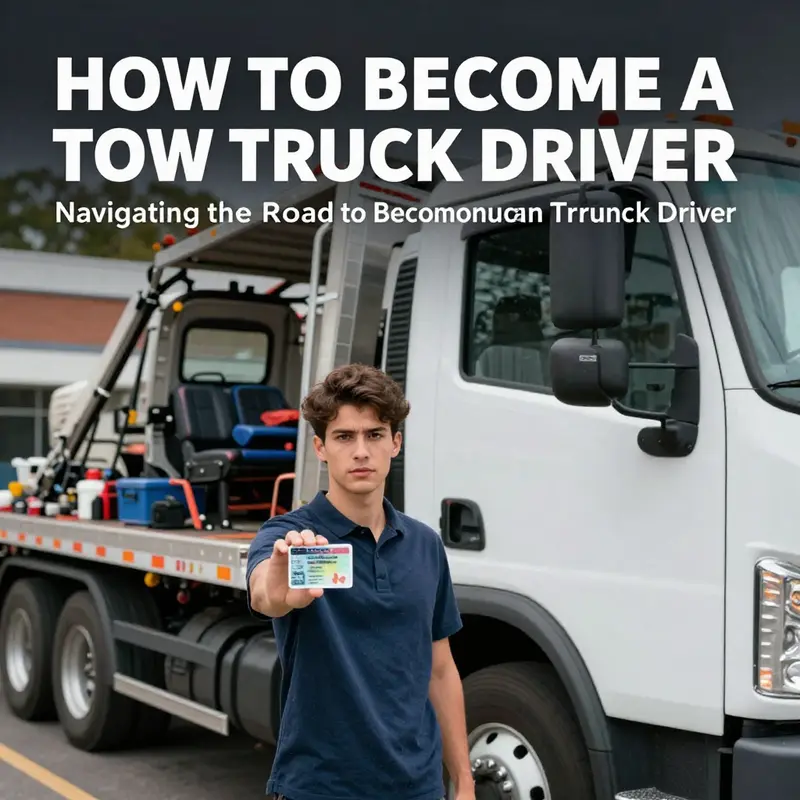
Becoming a tow truck driver is more than knowing how to lift a car. It’s a doorway into an essential sector of road safety and daily emergency response. The journey from curiosity to the first ride along follows a clear, rule-driven path that begins with two nonnegotiable gates: age and licensing. Across most states in the United States, you must be at least eighteen to start working in towing, with the door sometimes open at sixteen or twenty in narrower contexts, but those exceptions come with conditions and restrictions. The practical reality is that most employers want a driver who can legally carry a passenger and who can operate in traffic without undue risk. That is the frame you must respect before you can touch a tow rope, pull a vehicle onto a flatbed, or stabilize a wreck with a winch.
A valid driver’s license is the baseline requirement. If your license is suspended or full of major violations, you’ll likely be sidelined. Many companies want you to have a clean record, because tow work often means dealing with stressed motorists, law enforcement, and insurance adjusters who demand calm, reliable performance after a breakdown or collision. Before you pedal into the profession, make sure your license is current and free of serious infractions. It’s the quiet signal that you understand accountability and safety are not optional extras, but core responsibilities.
Beyond a standard license, you’ll typically need a Commercial Driver’s License, or CDL, to operate most tow trucks, especially larger ones or those with heavy loads. The exact class you’ll need depends on the vehicle you intend to drive. Tow trucks often fall under Class B, particularly when the GVWR is high or when the truck includes specialized equipment like hydraulic lifts, heavy-duty winches, or multi-terrain tires. The path to a CDL is straightforward in outline but demands discipline in practice: you’ll take written knowledge tests that cover road rules pertinent to commercial vehicles, along with a skills test that proves you can handle pre-trip inspections, basic vehicle control, turning, backing, and parking. Those tests aren’t mere formalities; they are designed to simulate the precision and restraint the job requires on crowded streets and alongside other responders.
It’s important to acknowledge that CDL requirements shift from state to state. Some jurisdictions impose stricter standards for the endorsements or add extra testing for certain vehicle configurations. The most reliable way to know the exact steps is to consult your local DMV’s official guidance. In parallel, many tow companies recognize that new hires may still be growing into the craft. They often offer structured training programs that pair you with experienced operators, letting you learn by watching and gradually taking on tasks. In such programs, you’ll learn the rhythm of a tow shift: how to secure a disabled vehicle safely, how to operate the winch system without compromising the tow hook, and how to stabilize a vehicle to prevent further movement during transport. You’ll also study how to respond to on-scene hazards, how to set up traffic control measures with cones and flares, and how to document the incident for insurance and dispatch purposes. The equipment itself becomes second nature once you’ve logged hours behind the wheel and under a truck that smells of oil, diesel, and rain.
Education beyond the road tests can be both practical and strategic. Some drivers attend formal tow truck driving schools, where instructors walk you through the essentials of vehicle operation, towing techniques, and emergency response procedures. Other candidates learn on the job through a company’s apprentice program. Either path demands attention to safety, a keen eye for detail, and a steady, patient approach to learning. Expect to practice pre-trip inspections repeatedly. Those inspections aren’t a ritual; they’re a diagnostic tool that protects you, your vehicle, and everyone else on the highway. A single missed fault in a hydraulic line or a brake component could endanger lives, so the habit of meticulous checks becomes your most trusted companion.
As you embark on this path, consider the value of building a clean, consistent driving record before you apply anywhere. Employers want someone who shows up on time, follows procedures, and communicates clearly when goals shift or plans change. Speaking of communication, you’ll notice that the job blends technical skill with people skills. You’ll be coordinating with dispatchers who assign calls, with customers who need reassurance after a breakdown, with police when traffic control or accident scene management is required, and with insurance adjusters who assess the damage. Basic English literacy matters more than you might expect, because you’ll be reading road signs, completing forms, and following written instructions under pressure. If you’re not yet fluent, you have time to improve through simple, consistent practice, which will pay dividends when you sit in a cab near a busy interchange or on a county road at dusk.
The broader landscape of becoming a tow driver also depends on where you want to work and what kind of towing you want to specialize in. Some drivers focus on light-duty roadside recovery, removing disabled vehicles from the shoulder after minor incidents, or jump-starting and changing tires. Others work with heavy equipment, moving trucks, or trailers, and those roles may require heavier CDL classes and more extensive training. There is a natural progression here: you start with the basics, prove you can handle the essential tasks under supervision, gather miles and experiences, and then step into more independent assignments or specialized equipment. The learning curve is not just about technique; it’s about building a repertoire of effective decisions under time pressure, maintaining composure, and keeping safety at the center of every move.
Another piece of the puzzle is the overall physical and mental readiness for the job. Tow work can be demanding and unpredictable. Shifts may involve late nights, early mornings, adverse weather, and scenes that range from calm to chaotic in a heartbeat. The ability to stay calm, assess a scene quickly, and implement a plan with a clear sequence of steps is what separates reliable drivers from those who struggle under stress. Physical stamina matters because you’ll often be lifting, maneuvering, or guiding heavy equipment, sometimes in awkward positions. The job builds a practical form of problem-solving: every call is different, and the best drivers combine a solid understanding of mechanics with a practical sense of space, timing, and risk.
When you’re ready to turn your plan into action, you’ll find that obtaining your CDL is not the end of the journey but a hinge point. You’ll apply to local towing companies, roadside assistance providers, or fleet services that operate in your area. Your résumé should emphasize a clean driving record, completion of licensed training, willingness to learn, and the ability to communicate effectively with dispatch, customers, and safety personnel. You’ll prepare to discuss real-world scenarios, such as how you would secure a vehicle, how you would manage traffic control at a roadside scene, or how you would coordinate with law enforcement if necessary. You’ll also want to ask thoughtful questions about the types of equipment used, the typical on-call schedule, and the company’s safety culture. A strong interviewer will look for not just a driver’s license, but also a mindset oriented toward safety, reliability, and teamwork.
It can be tempting to view the licensing process as a hurdle to clear, but framing it as the foundation of a solid professional path helps. The CDL unlocks access to the range of tow trucks and configurations that exist in modern fleets, from simple wheel-lift units to hydraulic rollback systems and flatbed configurations. The precise vehicle you will drive depends on your location, your employer, and the service you intend to provide. The key is to approach training with curiosity rather than fear, to absorb lessons about weight distribution, braking efficiency, and the limits of each piece of equipment, and to translate those lessons into safe, repeatable actions. With each drill, your confidence grows, and the vehicle becomes an extension of your control rather than a source of uncertainty.
As you near the threshold of your first role, you’ll notice that the path includes more than just mechanical know-how. It requires practical familiarity with the rules of the road and a readiness to adapt to the rhythms of dispatch, the ebb and flow of emergency calls, and the expectations of clients who count on a reliable tow when they need it most. A clean record and a valid CDL stand as the two central gates, but they open into a broader culture of safety, service, and accountability that defines the best tow drivers. If you’re ready to embark, take a moment to map your steps and set a realistic timeline: secure a driver’s license, pursue the CDL, complete any state-mandated tests or endorsements, seek training either formally or on the job, and accumulate the experience that will let you handle a roadside scene with clear-headed authority.
For those who want a deeper dive into industry resources or community perspectives, there are communities and blogs that can offer guidance and shared experiences as you chart your own course. The Island Tow Truck blog, for example, can be a practical repository of stories and advice from drivers who have walked this exact path. It’s a useful companion as you prepare, practice, and position yourself for the first opportunity in towing. You can explore it here: the Island Tow Truck blog. While the site’s focus is on broader fleet management and emergency planning, the hands-on insights from experienced drivers can illuminate what to expect on the ground.
The road to becoming a tow truck driver is not a sprint. It’s a careful sequence of steps, each building on the last, each reinforcing safety and reliability. The timeline varies by state and employer, but the core architecture remains the same: meet the age gate, secure the license, pass the CDL, accumulate supervised experience, and develop a facility with the equipment and the demands of roadside service. Keep the focus on learning—about the trucks you’ll drive, the typical scenes you’ll encounter, and the people you’ll work alongside. When you reach that first position, you’ll discover that the license truly is a passport to a career that keeps the roads moving, the incidents contained, and the communities safer.
External resources are essential to anchor your planning in official standards. For a comprehensive overview of CDL requirements and the regulatory framework that governs commercial driving, consult the Federal Motor Carrier Safety Administration. The FMCSA site offers updated guidance on licensing, endorsements, and safety requirements that can help you prepare for the tests and the responsibilities that come with operating a tow vehicle: https://www.fmcsa.dot.gov.
From License to Tow: A Thorough CDL Path for Aspiring Tow Truck Drivers
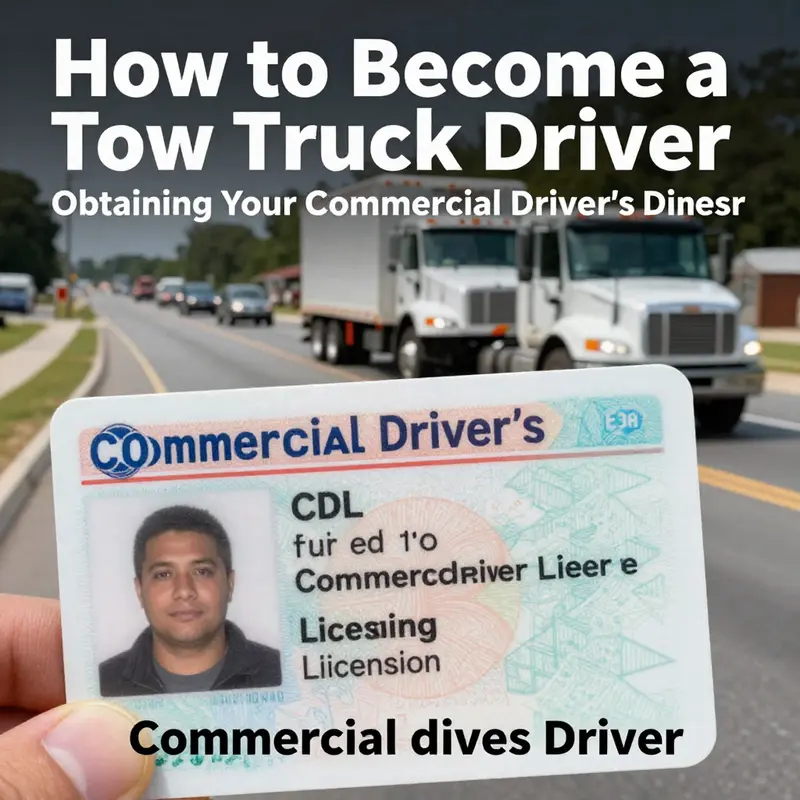
Becoming a tow truck driver starts with a single, concrete credential: a Commercial Driver’s License. This chapter follows the throughline of that journey, not just as a checklist but as a path that builds the safety, reliability, and skill needed to operate in the high-stakes world of roadside assistance. A tow job is as much about judgment and restraint as it is about horsepower and maneuverability. The CDL is the gateway to that blend of precision and presence. It unlocks access to heavier vehicles, specialized equipment, and the responsibilities that come with being first on the scene when someone’s car breaks down, when weather and traffic conspire to complicate a rescue, or when a driver needs a jump-start, a winch, or a stable tow. The process may vary by state, but the underlying logic holds: establish minimum age, demonstrate control of a vehicle that weighs more than a standard car, and prove you can handle the complex choreography of a tow operation with attention to safety, legality, and customer care. In other words, the CDL is not a badge of bravado. It is a credential that couples capability with accountability, a foundation upon which every successful tow operator builds their career.
To begin, you should understand that the entry gate is set by age and licensing. In most states, you must be at least 18 to drive commercial equipment within your own state. If your work will involve interstate travel or operating certain types of towed units, many jurisdictions require you to be 21 or older. This age threshold is not just about maturity; it is tied to medical guidelines, federal rules, and the practical reality of handling heavy equipment in unpredictable road conditions. Even if you can reach 18, the path to a CDL remains clear: you will start with a valid non-commercial driver’s license, prove your driving history is clean, and prepare to transition to the Class B CDL that typically governs tow trucks and other large straight vehicles. The distinction matters because the Class B license carries weight limits and handling characteristics that differ from passenger-car licenses. Your goal, from the outset, is to preserve your eligibility and to show that you can manage both the vehicle and the environment you will operate in—narrow lanes, uneven surfaces, curb checks, and the need to work around other drivers who may be under pressure themselves.
With the baseline age and license in place, you move toward the concrete steps that culminate in a CDL. The next stage is held in balance by two factors: a clean driving record and a clean slate with respect to background checks. Tow truck work often involves interactions with customers who are under stress, with insurance professionals, and with law enforcement officers. Employers want to know that the operator they hire is unlikely to bring additional risk to their fleet. A history of traffic violations or at-fault accidents can disqualify you from obtaining a CDL, even if you otherwise pass the tests. The good news is that many infractions are forgiven if they occurred years ago and you have since demonstrated safe driving. In practice, this means adopting a proactive approach to defensive driving the moment you begin your licensing journey: always wear your seat belt, obey speed limits, avoid sudden lane changes, and stay alert for pedestrians and cyclists near alleys, tow zones, and accident scenes. It also means recognizing the importance of a transparent background check. Employers want to know if you have a record of DUI incidents, license suspensions, or criminal charges that could affect your ability to operate a tow truck safely and responsibly.
Drug screening enters the process in earnest as part of the broader drug and alcohol safety framework that governs commercial driving. Many states and carriers require a drug test as part of the CDL application. This is not merely a formality; it is a signal that the industry takes impairment very seriously. The testing regime serves as a baseline of safety for everyone on the road and at the scene of a breakdown. While the specifics can vary by state, the expectation is consistent: you should be prepared to comply with a pre-employment, and sometimes random, drug testing policy. The emphasis here is not about suspicion but about safety and reliability. Maintaining a clean record and a clean drug-screen history sets you apart and reduces friction in the hiring process. It also reinforces a professional mindset that will help you progress as you gain experience.
The heart of obtaining a CDL is the testing sequence itself. You will typically face three core elements: knowledge exams, a road skills test, and a vehicle safety or pre-trip inspection examination. The knowledge exams cover driving laws, safety regulations, and the specific rules that apply to commercial driving. They test your understanding of weight limits, braking distances, braking techniques, signaling, and basic vehicle control. The road skills test is where you demonstrate your actual ability to operate a tow truck in a controlled environment and on public roads. You will be asked to perform maneuvers such as straight-line driving, basic turns, and a backing exercise that simulates the precision required when aligning a tow setup to a vehicle. The vehicle safety examination emphasizes maintenance awareness: you must be able to identify issues that could compromise the safe operation of the tow truck, understand routine maintenance routines, and explain how you would handle a breakdown or a mechanical problem in the field. The combination of these tests ensures that you are not merely following procedures but internalizing a safety-first approach to every operation.
Across state lines and agencies, the exact procedures may vary, but the overall framework remains consistent: you engage with an authorized licensing authority—usually the state Department of Motor Vehicles or an equivalent body—arrange the appropriate testing, and complete the necessary training either through a formal program or on-the-job with a sponsor. A central piece of regulatory compliance is to ensure you understand the weight class and any required endorsements. Tow trucks often fall under Class B CDL categories, particularly when the vehicle exceeds specific weight thresholds or carries specialized towing equipment. Even within Class B, there can be nuances in endorsements or additional qualifications for certain tow setups, such as winches, dollies, or other heavy-duty devices. The exact classification will influence the written exams you must pass and the practical road test you will undertake. The best approach is to contact your state’s DMV and ask for the precise CDL class, the endorsements you may need, and the specific testing sequence. This ensures you enter the process with clarity, avoiding delays that could arise from pursuing the wrong license type or missing a required endorsement.
Training is another pivotal piece of the journey. While many employers provide on-the-job training after you secure a job offer, others require completion of a formal tow truck driving school. These programs are designed to cover more than vehicle operation: they include safety procedures, towing techniques, load securement, hazard recognition, and emergency response. The value of formal training is twofold. First, it accelerates your comfort level with the actual equipment you will drive and tow. Second, it signals to potential employers that you have invested in professional development and mastered the fundamentals that keep you and others safe on the road. If you pursue a formal program, expect instruction in reading road signs, understanding dispatch instructions, and communicating clearly with customers, police, insurance adjusters, and tow yard staff. Even when the route is on-the-job training, you should treat every day on the job as an opportunity to refine your skills, learn from experienced drivers, and build a toolkit of problem-solving strategies that apply to different towing scenarios—from light-duty winsches to heavy recoveries.
A practical pathway often unfolds as a blend of classroom knowledge, hands-on practice, and time behind the wheel with a mentor. You will need to accumulate experience gradually, starting with supervised tasks and progressively taking on more responsibility as your competence grows. The process rewards patience, deliberate practice, and a focus on safety first—especially when you are working at the roadside, where exposure to traffic, weather, and other hazards can quickly raise the stakes. A crucial element of this journey is your ability to communicate effectively. Basic English skills—reading road signs, following written instructions, and articulating your actions to dispatchers, customers, or law enforcement—are essential. If language proficiency is a concern, seek resources or training that specifically bolster your comprehension and spoken clarity. In this field, miscommunication can turn a routine assist into a dangerous situation quickly, so the emphasis on clear, calm communication cannot be overstated.
As you progress, keep an eye on the bigger picture. The CDL is the gateway to a broader array of opportunities in the mobility and recovery sector. With the license you gain, you can pursue roles that expand your scope beyond a single company or haul, including fleet maintenance coordination, emergency scene management, or supervisory positions that oversee a team of responders. The path is not only about passing tests and meeting regulatory requirements; it is about building credibility through consistent performance, punctuality, reliability, and a demonstrated commitment to safety and service. At every stage, you can look to practical resources that align with the realities of running a tow operation. For ongoing readiness and discipline in fleet operations, consider resources like the essential fleet emergency response strategies, which offer a framework for understanding how to respond effectively to incidents while maintaining safety for everyone involved. This kind of reference helps translate classroom lessons into real-world practice and keeps your mind focused on the end goal—a career built on dependable service, professional conduct, and a readiness to respond when customers need you most.
Finally, equip yourself with an approach that merges compliance with community care. The CDL process is not merely about ticking boxes; it is about preparing to serve under pressure, to manage risk, and to protect lives while moving a vehicle from danger to safety. You will likely start in entry-level roles with supervision, which is normal and expected. Use that period to study real-world case scenarios, learn how to read dispatch signals quickly, and master the routine checks that keep a tow operation safe. As you grow, you will gain autonomy, but you will also bear a heavier responsibility to your colleagues, your employer, and the people you help. The appetite for continuous learning—whether it is advanced towing techniques, load securement standards, or updates in federal safety regulations—will sustain your career over time. And when the day finally arrives that you hold that CDL and step into a tow truck with confidence, you will understand that the journey was never only about a license. It was about building trust, competence, and the ability to bring assistance when it is needed most.
External resource: https://www.fmcsa.dot.gov/
Behind the Tow: How Driving Records and Background Checks Shape a Tow Truck Career
Becoming a tow truck driver is less about toying with a winch and more about earning trust from the moment you roll up to a roadside scene. The job can be demanding in the best possible way: you are a first responder, a problem solver, and, above all, a custodian of safety in real time. The path into this line of work is governed by a set of gatekeeping steps that protect drivers, passengers, and the vehicles you’ll help. At the heart of that gatekeeping lie two things that many aspiring drivers underestimate: your driving record and the background checks that accompany almost every recruitment process. Together, they set the tone for what a company can expect from you under pressure and what the public can rely on when a tow is needed in the middle of a storm, at a busy intersection, or during a grim accident report. These checks are not mere bureaucratic hurdles; they are a compact of accountability that underpins the entire profession.
First, consider the basic entry requirements as the frame of your future career. In most jurisdictions, you must be at least eighteen years old, with the legal possibility to drive heavy vehicles. The next major hinge is your license. Tow trucks, especially those with heavy bodies or specialized equipment, typically require a Commercial Driver’s License. The most common pathway involves a Class B CDL, sometimes with a specific endorsement for towing. Gaining that license is not a single test day; it is a journey that blends written examinations with a rigorous driving skills test. The tests don’t just gauge you on maneuvering a vehicle; they probe your ability to back up with confidence, to execute precise alignment for hooking a towed vehicle, and to respond calmly when the clock and the traffic pressure converge in a single moment. This is where the road you’ve traveled as a driver becomes visible to prospective employers: your ability to stay measured, even as the world around you accelerates and the scene grows chaotic.
Yet a driver’s license is only part of the equation. A clean driving record stands as the most persuasive signal you can send to a potential employer. In this field, yesterday’s speeding ticket or last month’s minor collision isn’t just a line on a report; it’s a portfolio of risk exposure. Tow operators operate on collision scenes, on busy highways, and near pedestrians and other vulnerable users. Any history that hints at reckless or inconsistent behavior can trigger alarms and, rightly, doubts about reliability. Employers repeatedly tell their teams that a spotless driving record is not vanity but a foundational requirement. It shows you can apply steady judgment when time is short and the stakes are high. It’s not about perfection; it’s about predictability. The ability to anticipate, to slow down when needed, to secure loads without unnecessary risk, and to communicate clearly with dispatch, police, and customers—all of these traits are reflected in your driving history. And yes, a clean record often correlates with fewer interruptions to training and a quicker path to independent work beneath the tow truck’s heavy glare of responsibility.
Even with a strong driving record and a valid CDL, you will likely encounter a thorough background check. Employers run these checks to verify identity, confirm previous employment history, and, crucially, assess whether there are any criminal records that could compromise public safety or the trust customers place in a towing service. A clean background does more than satisfy a compliance checkbox; it reduces the emotional and operational friction that can arise at the exact moment you’re asked to assist a stranded motorist. The public rightly expects a tow operator to show up with professionalism and a low likelihood of harmful conduct, given the sensitive environments in which you operate. A company’s willingness to bring you on after a positive background result communicates a shared standard of accountability across the crew, from the office to the street.
Drug screening is another layer many fleets apply, sometimes in tandem with the background check. The practice is not arbitrary but rooted in safety and regulatory compliance. Tow operators often respond to high-stress situations, requiring fine motor control, quick decision-making, and clear, focused judgment. Substances that impair perception or reaction time simply cannot be part of that equation. Drug-screen programs are designed to protect you as the operator, your coworkers, the people you encounter at the scene, and the customers who rely on you for a safe and efficient resolution to their predicament. The emphasis on testing should not be viewed as punitive; it is a shared commitment to safety and to maintaining professional standards that stand up to scrutiny from insurers, law enforcement, and the public.
All of this—the age requirement, the CDL path, the clean driving record, the background checks, and the drug screening—creates a scaffold that keeps tow operations trustworthy and dependable. Yet there is a human element that threads through these processes. The discipline of your own driving, the way you manage stress on the road, and the integrity with which you present your history all combine to craft a professional identity. When you show up for interviews, you are not selling a single skill but a track record of reliability. You are also signaling that you understand the broader responsibilities of the role: you will navigate complex scenes, you will coordinate with police and insurance adjusters, and you will communicate with compassion and clarity with customers who are often in distress. This is not just a job; it is a role that requires a character tuned to service and safety, and your record is a reflection of that character.
Preparing for this path begins long before you enter a classroom or sit behind the wheel of a tow truck. It begins with daily habits that keep you in good standing—staying mindful of traffic laws, avoiding avoidable violations, and keeping your vehicle well maintained so that its safety features perform under pressure. A clean driving record is more than a document; it is a daily practice of careful driving, courteous interactions, and responsible choices that extend beyond the road. The background-check process, in turn, invites honesty about past circumstances and a demonstrated commitment to turning any past missteps into lessons learned. If there were moments when you faced consequences—such as a court appearance, probation, or a traffic-related incident—there can still be a path forward. Employers look for evidence of rehabilitation, accountability, and consistent improvement. The narrative you present in interviews, the way you describe how you’ve mitigated risks since, and the steps you’ve taken to strengthen your safety practices can carry significant weight.
To lay the groundwork, many aspiring drivers engage with formal training programs or tow-focused schools that offer comprehensive instruction on vehicle operation, safety protocols, towing techniques, and emergency response. Even when a company provides on-the-job training, spending time in a structured program can yield an advantage. You gain familiarity with the equipment you will later operate, learn from instructors who have seen thousands of roadside scenarios, and build a network of peers who can share real-time insights about regulations and common industry practices. This is not merely about acquiring a license; it is about building a professional habitus—an internalized set of standards for how you show up on every call: punctual, precise, respectful, and prepared to adapt as conditions change within minutes.
As you chart your course, you might notice a broader pattern: the emphasis on readiness extends beyond the workshop and the DMV. It echoes the careful preparation you would expect in any high-stakes operation. The mindset of safety, accountability, and ongoing improvement aligns with concepts found in broader fleet operations and emergency response planning. In that sense, the journey toward becoming a tow truck driver is a microcosm of a larger culture of preparedness that applies to all road-based services. This is why a single document—the driving record—spoken aloud in a hiring interview, can sometimes speak volumes about your potential for long-term success and trustworthiness in the field. It is not about fear of failure; it is about recognizing that the job demands a level of consistency that is earned through time and lived through steady practice.
In this light, consider the practical steps you can take while you prepare. Maintain a clean driving history by obeying traffic laws, attending to vehicle maintenance, and avoiding high-risk behaviors behind the wheel. When you face a mistake, own it, learn from it, and show how you have shifted your practices to prevent recurrence. If a potential gap exists in your record, seek guidance from a driving instructor or a career counselor who understands how employers evaluate risk and how to present mitigating evidence of responsibility. During interviews, be ready to discuss how you’ve kept yourself aligned with safety standards and how you would apply those standards on a tow truck, where every decision can influence the safety of the people around you and the integrity of the tow.
The point is not to promise perfection but to demonstrate a consistent, safety-first approach that translates into real-world reliability. When you think about the steps on your roadmap, imagine the tow in your future not just as a mechanical task but as a social contract. You are promising to show up prepared, to communicate clearly under pressure, and to apply your training to protect property and lives while restoring access and mobility wherever you operate. The gatekeeping around driving records and background checks, far from being a barrier, becomes a channel through which capable, trustworthy individuals enter a demanding line of work where reputation matters as much as rotor height and winch capacity. If you stay patient, stay compliant, and stay committed to continuous improvement, the chapter you are writing with your driving history and your ethical stance will eventually open the door to the next exciting phase of your tow truck career. For readers who want to explore a broader framework of readiness that informs fleet operations and emergency response, see the resource on emergency preparedness for island fleets.
External resource for further guidance on licensing and the career path: https://au.indeed.com/career-advice/what-to-know-about-becoming-a-truck-driver
The Engine Behind Your Tow Truck Career: Training, Experience, and Road-Ready Skill
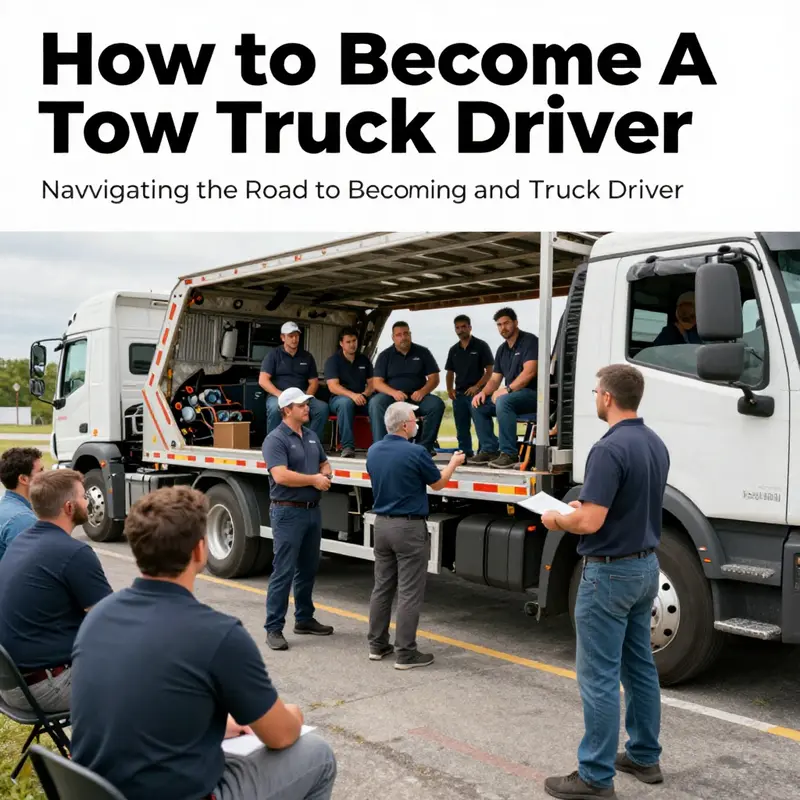
Choosing to become a tow truck driver is a decision to blend technical skill with composure under pressure. The path to competence combines training that turns basic driving into precise handling of heavy and awkward vehicles, with experience that teaches you to read scenes, manage risk, and communicate with drivers and responders. Training is the catalyst that moves you from simply holding a license to delivering reliable roadside assistance. It is a sustained program of practice, feedback, and real-world tuning that shapes judgment as much as reflexes. If you want a career where every call is different, then training and experience become the engines driving your success.
The early steps include basic eligibility: age, a valid driver’s license, a clean driving record, and often a background check or drug screen. Once you clear those gates, you begin a training phase that blends classroom instruction with hands-on mastery of equipment and the scenarios you’ll encounter on the road. The heart of this phase is the Commercial Driver’s License (CDL), the credential that grants access to heavier tow trucks. Depending on the weight and configuration you’ll operate, you pursue the class appropriate for that vehicle. Tow trucks often fall under Class B, but requirements vary by jurisdiction and vehicle specification. The testing typically includes knowledge examinations and a skills test, with the skills portion covering maneuvers like backing into tight spaces, positioning a vehicle for towing without damage, and securing a compromised or immobilized car for transport.
Many employers provide on-the-job training, while others offer dedicated tow truck driving schools or professional programs. These programs compress the essential competencies into a focused timeline, teaching pre-trip inspections, safety procedures, and the techniques of towing and recovery. You’ll learn how to approach a scene with situational awareness, assess a vehicle’s condition, coordinate with responders, and practice securing vehicles with appropriate restraints and winching equipment in controlled environments before you face real roads. The aim is to build a safe habit pattern you can rely on when the stakes are high.
Beyond the mechanics, training builds a professional temperament. Tow work often places you at accident scenes, stalled roadways, or remote locations where calm, clear communication matters as much as technical skill. Experience grows as you accumulate hours behind the wheel and at the winch, learning to read the road and weather, anticipate wheel slip, evaluate a scene, and coordinate with law enforcement and insurers. Experience expands as you encounter different tow configurations and environmental conditions, enabling you to balance speed with safety, urgency with care, and reliability with empathy. The result is a growing professional credibility and confidence.
A final note is the emphasis on safety and emergency response. Training programs commonly include scene security, hazard recognition, and basic first aid. The outcome is a reliable, scalable skill set that serves communities in need and supports a career that can evolve toward leadership roles or business ownership.
Tow Truck Driving Mastery: The Critical Role of Communication, Empathy, and Professionalism in Getting Hired and on the Road
Becoming a tow truck driver is often framed as a matter of engine power, hook and chain, and the ability to lift a stubborn vehicle off the shoulder. Yet the work you actually do begins the moment a call comes in and ends only when the vehicle is safely loaded, documents are explained, and the customer heads on their way with a sense of relief. The core skill set that differentiates a competent operator from a truly dependable one sits not only in how you drive, but in how you converse. Your voice, your questions, your posture, and your capacity to calm fear are as essential to a successful tow as your ability to back a rig into a tight space. In this chapter, we explore how communication becomes a driver’s most reliable tool, shaping how you are perceived by customers, dispatchers, law enforcement, insurance adjusters, and your own team.
When a tow call begins, the scene is rarely routine. The caller may be stranded in traffic, overwhelmed by the suddenness of the breakdown, or anxious about an appointment they must keep. The first moments set the trajectory for the entire operation. A driver’s ability to extract essential details without sounding invasive is a subtle art. It starts with clear questions: the exact location, the vehicle type, the nature of the problem, and any safety hazards. Yet probing questions must be tempered with reassurance. A calm, steady voice signals control and safety, which can immediately reduce the caller’s anxiety. As you gather information, you mirror the caller’s pace and reflect back what you hear. This practice—active listening—lets the customer know you’re paying attention and that you will translate their needs into actionable steps.
On the road, on-site communication becomes immediate and personal. You are stepping into someone’s moment of frustration or helplessness, and your approach can either escalate or de-escalate the situation. Politeness and professionalism are not optional add-ons; they are the operating system. A simple, respectful greeting, a concise explanation of what you will do, and a clear update about timing can transform a tense encounter. When you arrive, introduce yourself with your role and what the customer can expect next. If a vehicle is damaged, explain the safety considerations and the process of securing the scene. If the customer questions costs or insurance requirements, acknowledge their concern, then offer a straightforward breakdown of charges and potential coverage options with plain language rather than jargon. In stressful moments, people cling to predictability, so providing ETA estimates, step-by-step actions, and visible checkpoints helps restore a sense of control.
Discipline in communication also requires precision with dispatch and coordination with other responders. Clear, concise radio or phone communication reduces the risk of misinterpretation. You relay your status accurately: arrival on scene, securing the vehicle, the method of towing, and any deviations from the plan. For someone who works in a busy corridor or a crowded highway, a few well-chosen words can prevent cascading delays. It’s not merely about speed; it’s about accuracy and credibility. When you relay information to law enforcement or emergency personnel, your tone should be respectful, your language precise, and your intentions transparent. You are part of a larger safety ecosystem, and your communications help keep everyone moving toward a safe resolution.
A central pillar of effective customer interaction is empathy. Tow drivers encounter people in moments of embarrassment, inconvenience, or distress. The empathetic engagement begins with acknowledging the caller’s feelings: you might say you understand how frustrating it is to be stranded, or you can recognize the stress of a deadline you’re helping them meet. Empathy does not require you to agree with blame or to become personally involved in the outcome; it requires you to listen with intention and respond with humanity. When customers feel heard, they become more cooperative and more likely to accept the plan you propose, even if there are costs involved. Part of empathetic communication is translating technical steps into human terms. Instead of focusing on the mechanics—what the tow company will do—emphasize outcomes: you’ll have the vehicle safely loaded, you’ll arrive promptly, and you’ll keep the process transparent.
The practical side of conversation—clarifying procedures, costs, and timelines—often surfaces questions about insurance and liability. People want to know who pays for what and why. A driver who can articulate a clear estimate, outline what is included, and distinguish between base towing, winching, roadside assistance, or vehicle recoveries helps customers make sense of the situation. This clarity reduces second-guessing and post-incident disputes. It also reinforces trust: customers who feel informed are less likely to perceive the driver as opaque or untrustworthy. Where there is uncertainty, offer to document the plan in writing or provide a brief summary of the agreed steps for the customer’s records. If a caller requests a price before the service is rendered, be careful to explain that variability exists—fuel surcharge, distance, vehicle weight, or additional equipment may affect final costs—while offering a preliminary, itemized quote that can be adjusted as needed.
Communication is not only about words; it is about the whole demeanor you bring to each encounter. Your posture, your eye contact (when possible), and your attentiveness contribute to how the interaction unfolds. Even when you are performing a difficult or dangerous maneuver, maintaining composure and a steady tone can influence how the customer perceives safety and competence. It is natural for people to respond to calm leadership, and a driver who models restraint and respect creates space for cooperation rather than confrontation. This is particularly important when you are working with a distressed motorist who may be venting or pointing fingers. Acknowledging their feelings, offering a practical solution, and then proceeding with the plan can diffuse hostility and reframe the experience as a controlled, predictable operation rather than a chaotic disruption.
In the broader ecosystem of tow operations, the ability to communicate effectively extends to teamwork. A driver does not work in isolation; you coordinate with police, fire or EMS when necessary, with insurance adjusters who may require vehicle history and incident details, and with other roadside services that may need to converge on a single scene. The more you master the vocabulary of safety and procedure, the smoother these collaborations run. For example, if you need to cordon off a lane or request a different equipment configuration, you should be able to convey that requirement succinctly and without ambiguity. The consequence of weak communication is not merely a delayed tow; it can mean longer exposure to risk on a highway shoulder or a missed critical update for a person who is waiting for a resolution. The operator who builds a reputation for reliability is the operator who consistently communicates with precision, courtesy, and accountability.
Training paths for aspiring tow drivers increasingly reflect this reality. Beyond the essential driving knowledge and the requirements to obtain a Commercial Driver’s License, many programs and employers integrate modules focused on customer service, conflict de-escalation, and crisis communication. These modules help you rehearse real-world conversations—handling a heated customer, explaining insurance terminology without jargon, and coordinating with enforcement and third-party responders under pressure. The aim of such training is not to turn you into a perfect negotiator but to provide you with a practical toolkit for maintaining safety, trust, and efficiency in every encounter. Employers recognize this competence. They know that a driver who can keep a scene calm, deliver clear instructions, and maintain transparent communication is not only more likely to complete a tow smoothly but also to build a positive rapport with the communities they serve.
For readers seeking practical context from practitioners and a sense of daily realities, a wealth of real-world perspectives can be found in field-focused resources. For practical tips and real-world stories, see The Island Tow Truck Blog.
As you map out the path to becoming a tow truck driver, remember that the journey involves more than the mechanical act of towing. It requires you to cultivate a professional persona that others can trust. Your ability to listen, validate, explain, and adjust in the moment defines your effectiveness on the road and your prospects for advancement within the industry. This is especially true in entry-level roles where early impressions can shape training opportunities, supervision, and future responsibilities. The steps you take to develop communication and customer-service acumen will compound over time, turning what could be a simple driving job into a long and rewarding career in a field that is, at its heart, about service under pressure.
For those who want to anchor their professional development in established standards, there are industry bodies and certification paths that emphasize not only vehicle operation, but also the interpersonal skills that keep people safe and informed. In the broader landscape of professional trucking, organizations like the National Private Truck Council provide frameworks for training, ethics, and customer service expectations, offering a structured path to ongoing growth and formal recognition. When you combine solid driving competencies with effective, empathetic communication, you create a compelling profile for potential employers and a steadfast foundation for serving communities on the road. For more on industry-standard training and certification resources, see the National Private Truck Council – Training & Certification.
Final thoughts
Embarking on the journey to become a tow truck driver is a significant commitment that requires dedication, resilience, and a willingness to learn. Each chapter of this guide highlights essential aspects of the profession—from meeting age and licensing requirements to honing communication skills that elevate customer service. By embracing the training and experience necessary to excel in this field, you can not only build a rewarding career but also contribute positively to your community by providing reliable towing services. As you move forward on this path, remember that every driver you help is a step towards mastering your craft and fostering trust within your local area.