Starting a tow truck business is more than just owning a truck; it’s about understanding your market, creating a solid plan, and establishing reliable connections with local partners. With towing services in high demand among local auto repair shops, car dealerships, property managers, resort operators, and commercial fleet operators, this guide will help you navigate the essential steps to establish a successful towing enterprise. From refining your business model to developing a targeted marketing strategy, each chapter outlines the critical components to help you create a thriving venture that meets the needs of your community while ensuring compliance and professionalism.
null
null
null
null
null
null
Tow Truck Startup Readiness
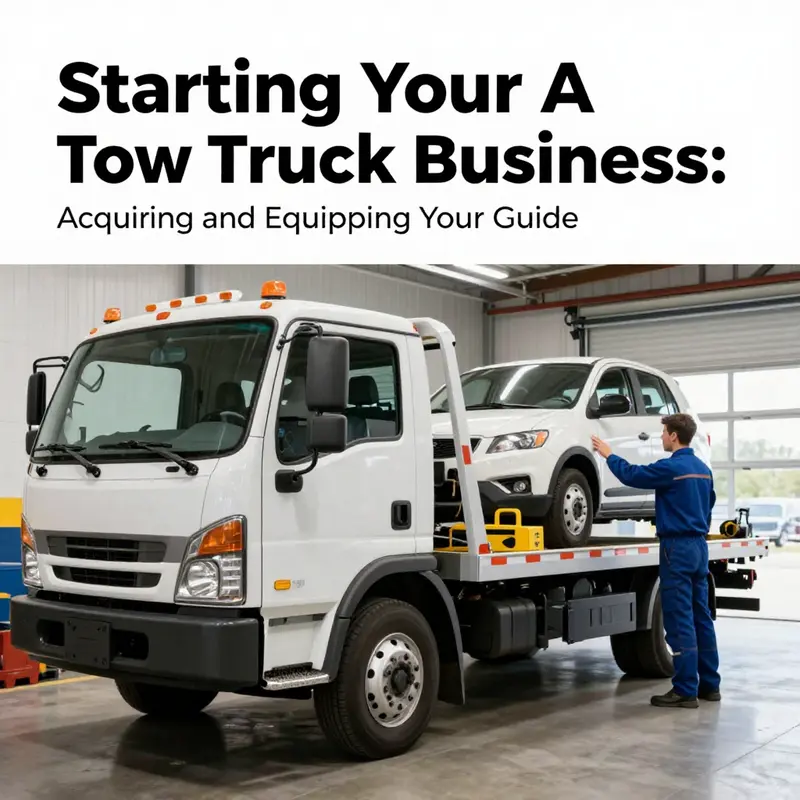
This chapter explains how to secure, inspect, and equip a tow truck for a dependable startup. It covers vehicle choice, safety equipment, and basic compliance considerations to help you launch with confidence.
From Partnerships to Profit: Building a Marketing Engine for a Tow Truck Startup
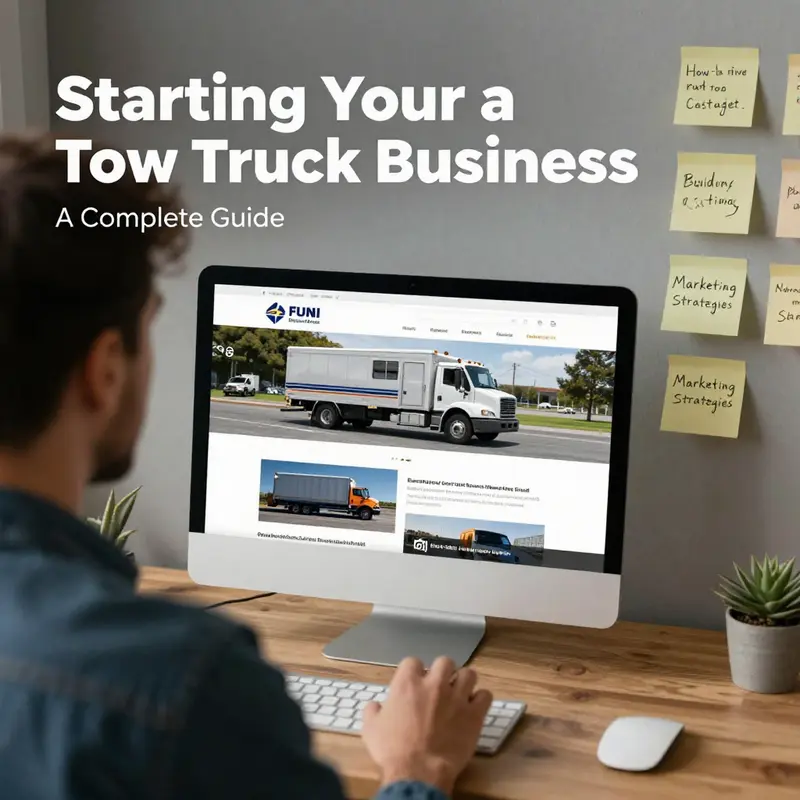
Launching a tow truck business requires more than reliable equipment and a strong driver. It hinges on the quality of your partnerships and the clarity of your marketing strategy, two forces that together create a dependable stream of work and a growing reputation. As you set out, think of partnerships as the steady backbone of your early growth and marketing as the voice that invites new customers to experience your reliability. When done properly, these elements reinforce each other: every contract or referral adds credibility, and every well-executed job adds a story to tell in your next outreach. The goal is to establish a network of trusted collaborators while presenting a professional, transparent, and responsive service that makes clients want to rely on you again and to recommend you to others. In this space, the old rule remains true: start small, stay consistent, and let reputation do the heavy lifting over time.
Building strategic partnerships begins with understanding who values dependable towing and why. Insurance companies, for example, seek providers who can respond quickly, document thoroughly, and handle vehicles with care. They want partners who minimize claim delays and protect their customers from further inconvenience. Instead of approaching insurers with a laundry list of capabilities, frame your pitch around reliability, process, and proof. A well-defined response protocol helps you stand out: an agreed-upon average dispatch time, a mapped service area, a standard set of documentation that travels with every job, and a commitment to timely communication throughout the incident. When you present a clean, repeatable workflow, you become less of a vendor and more of a trusted auxiliary partner that can be relied upon when a claim needs swift action and careful handling.
Auto repair shops and dealerships inhabit a slightly different value proposition. They may not require as formal a contract as insurers, but they do need a tow partner who can coordinate drop-offs, pick-ups, and on-site delivery with minimal disruption to a busy shop floor. Building relationships with these shops is less about a single transaction and more about becoming part of their operational rhythm. Start by offering predictable service windows, transparent pricing, and proactive communication. If a shop knows you’ll arrive within a reliable window, handle documentation correctly, and leave their customer satisfied, they are more likely to send repeat referrals and even allocate preferred status for certain vehicle types or service scenarios. A practical approach is to arrange cross-promotional opportunities—shared signage, a joint customer education effort on safe vehicle handling, or a simple referral incentive—so that both sides gain from every successful collaboration.
Roadside assistance networks operate on a different cadence, aggregating calls from drivers who need urgent help. To position your business here, you need to become a dependable member of their roster. The value you bring is consistency under pressure: rapid dispatch, clear status updates, and the ability to handle a spectrum of incidents—from flat tires to immobilized vehicles—without compromising safety or timeliness. The power of a strong partnership in this realm lies in predictability. When a network can count on you to respond correctly and to communicate through every step, they will increase the likelihood that you appear as a preferred option during peak hours or in high-demand zones. You can reinforce this by sharing performance metrics, such as average response time and completion rate, and by maintaining a transparent system for incident documentation.
Fleet management represents the long-term, scalable horizon for a tow operation. Small fleets can grow into mid-sized programs if your services align with their scheduling, risk management, and cost controls. The promise you offer is straightforward: reduced downtime, predictable maintenance windows, and minimized losses due to towing errors or delays. To win this space, craft an offering that includes tailored service level agreements, predictable pricing, and a dedicated account manager who understands a fleet’s geography, peak periods, and vehicles in rotation. As you win these contracts, your business gains not just revenue but a level of reputational gravity that makes new customers receptive to your messaging and proves your consistency matters beyond a single call.
With partnerships in place, your marketing strategy becomes the amplifier that converts relationships into recurring demand. A professional website is no longer a nice-to-have; it is a critical hub where potential clients evaluate your capabilities, pricing expectations, and response philosophy. Your site should present a clear service map, a straightforward contact or booking option, and tangible proof of your credibility—truck photos that convey proper equipment and safety features, real-world testimonials, and a transparent description of how you handle common incidents. Integrate a simple online booking flow or at least a visible, easy-to-use contact method. The user experience should reflect the same reliability you promise in person. Online content, including safety tips for drivers and a transparent explanation of response times, helps search engines understand what you do and for whom, and it reassures visitors that your business can be trusted during stressful moments.
Local search optimization becomes the engine behind discoverability. People often search for emergency towing with urgent intent, using phrases like emergency towing near me or 24/7 tow truck service in a particular city. Your marketing work should target these local queries through a well-structured Google Business Profile, consistent NAP (name, address, phone) across listings, and localized website content that answers questions relevant to your service area. The goal is to appear in the local pack when someone in your region needs immediate assistance, which is where a judicious mix of on-page optimization, accurate maps data, and customer reviews can push you ahead of competitors who lack a robust local footprint.
A measured social presence extends your reach without eroding your professional emphasis. You don’t need a constant stream of dramatic posts, but you should use social channels to reinforce competence and approachability. Share safety reminders, short behind-the-scenes glimpses of trained drivers handling difficult recoveries, and timely updates during incidents that illustrate your commitment to protecting vehicles and people. Social content should feel human but responsible, avoiding sensationalism while still conveying urgency when appropriate. This kind of content supports your partnerships by humanizing your brand and showing prospective partners that you prioritize safety, communication, and accountability as core operating principles.
Promotions and referral programs are natural accelerants, especially in a market with limited early work. A modest first-time customer discount or a bundled service offer can lower the barrier to trial while you demonstrate your value. But promotions work best when paired with a robust referral framework: a simple reward for customers who bring in new business, a clear path for partner referrals, and a system to track attribution so you understand which channels deliver the highest value. When designed with margin in mind, promotions become a disciplined way to attract attention without sacrificing long-term profitability. Remember, trust compounds over time; a new client who has a positive first experience is more likely to become a repeat customer who also advocates for you to others in their network.
Community engagement strengthens both partnerships and reputation. Sponsoring local events, supporting school or neighborhood initiatives, or aligning with community safety campaigns creates goodwill that translates into word-of-mouth referrals. Community involvement demonstrates that your tow business is invested in the area it serves and not just in growing revenue. This kind of visibility often yields opportunities with municipal or organizational partners that go beyond individual calls, such as inclusion in local emergency planning exercises or participation in fleet safety seminars. The more your presence is felt as a dependable, responsible member of the neighborhood, the more likely it is that potential clients will think of you first when they require assistance.
Operational discipline underpins every successful partnership and marketing effort. A robust dispatch and communications system is essential to deliver on promises and to keep partners informed. Real-time GPS tracking, automated status updates, and a clear, documented handoff process for each incident reassure insurers, repair shops, and fleet managers that your operation is current, accountable, and compliant with industry standards. You should maintain thorough job logs, including times, service types, vehicle information, and any customer feedback. This level of documentation not only supports internal quality control and training but also provides credible evidence in the event of disputes or audits. In tandem, a disciplined driver-training program—emphasizing safe towing practices, professional communication, and defensive driving—ensures that your brand lives up to its promises on every call.
As you weave partnerships with a solid marketing strategy, you create a business texture that feels cohesive and resilient. Your partnerships offer a predictable flow of work, while your marketing ensures that new customers understand what sets you apart and why they should choose you now and again when the next emergency arises. The synergy comes from consistency: consistent safety practices, consistent communication, and consistent service quality. This consistency is what turns a one-truck operation into a scalable enterprise. It also makes the case for gradual expansion, as encouraged at the outset of this journey: begin with a single vehicle, prove your reliability, and expand once your reputation and systems have earned credibility with partners and customers alike.
To deepen the knowledge you bring to these efforts, you can find practical, industry-relevant perspectives in specialized resources that discuss how fleets prepare for emergencies and respond to breakdowns. For example, many operators look to focused literature on emergency response strategies and fleet preparedness to fine-tune dispatch, recovery, and safety protocols. For ongoing, up-to-date guidance on broader regulatory and infrastructure considerations, trusted sources in transportation policy can provide context for the standards you will meet as your business grows. External resources, such as official government guidance, can help you align your practices with nationwide expectations while you tailor them to your local market. For more insights from practitioners and industry commentators, consider exploring the Island Tow Truck blog, which offers practical perspectives on fleet management and field operations. Island Tow Truck Blog
In practice, the path to durable growth is incremental and disciplined. Start by building one strong, reliable relationship with a partner who can provide steady referrals or a dependable fleet contract. Pair that with a marketing approach that conveys competence and transparency, and ensure every employee understands the importance of safety, documentation, and courteous customer service. Your aim is not to chase every possible lead at once but to create a network of reliability that can be scaled. As you accumulate contracts, you will gain the leverage to negotiate better terms, expand service lanes, and invest in additional equipment and personnel in a controlled manner. This balanced approach—partnerships that enhance credibility and a marketing machine that attracts and educates customers—forms the foundation of a tow truck business capable of weathering market fluctuations and growing steadily over time.
As you navigate the regulatory environment, keep a steady eye on compliance, because it underpins every successful relationship you cultivate. Some states require specific licenses and bonds for towing operators, and others impose unique record-keeping or equipment standards. The complexities of licensing, insurance, and dispatch systems can be daunting, but they are not obstacles when handled with a clear plan and a collaborative mindset. Your marketing and partnerships should reflect this seriousness. Let your contracts specify service levels, reporting expectations, and escalation paths if issues arise. Let your marketing emphasize safety, reliability, and customer-first communication. And let your daily operations demonstrate that your business is built on a foundation of trust, accountability, and continuous improvement.
External resource: https://www.transportation.gov
Final thoughts
Launching a tow truck business involves navigating a complex landscape of market needs, regulatory requirements, and operational logistics. By clearly defining your business model and understanding your target market—whether they’re auto shops, dealerships, or property managers—you can create a strong foundation. A well-crafted business plan and securing the necessary licenses and equipment are also pivotal steps. Lastly, developing strong partnerships and marketing strategies within your community not only enhances your visibility but also fosters trust and reliability. Remember, a successful towing business is built on strong relationships and an unwavering commitment to service excellence.